What’s the most surprising part of being a writer?

What’s the most surprising part of being a writer?

The most surprising part for me is that I know how to write. For many years, my life was shadowed by the sadness of having no innate talent for writing. I’m not being modest — I really couldn’t write a novel or anything worth reading except for some snippets of poetic thoughts. When I decided to write a novel despite that lack of talent, I set out to learn everything I could about developing a readable story. Most of the how-to books confused the heck out of me — the authors would talk about rising conflicts and motivation/reaction units, and I didn’t have a clue what they meant. It’s only recently that I realized I actually know what I’m doing.

Here are some responses from others authors about the most surprising part of being a writer. The comments are taken from interviews posted at Pat Bertram Introduces . . .

From an interview with J J Dare, Author of False Positive and False World

The most surprising aspect of being a published writer is the positive feedback I’ve received from readers. Only a few weeks ago, I had a reader ask when the third book in the Joe Daniels’ trilogy would be coming out.

From an interview with Smoky Trudeau Zeidel, Author of “On the Choptank Shores”

The awe some people display when they find out I’ve not only written a book, but written several! Really, I don’t tell people I’m an author to stun them! It’s what I do, just like some people are gardeners or bank tellers or forest rangers. But there is something about being a writer that makes other people think you’re pretty cool — even if you aren’t!

From an interview with Sheila Deeth, Author of “Flower Child”

I’ve surprised myself by finally learning to tell people I’m a writer — maybe that’s what I should have said has changed since my first book was published.

From an interview with Beth Groundwater, Author of “A Real Basket Case”

The amount of non-writing work involved! There’s the contracting process, research, promotion, networking and all of the other ancillary activities that are part of having a writing career, but that take precious time away from the writing itself.

So, for you, what’s the most surprising part of being a writer?

(If you’d like me to interview you, please check out my author questionnaire http://patbertram.wordpress.com/author-questionnaire/ and follow the instruction.)

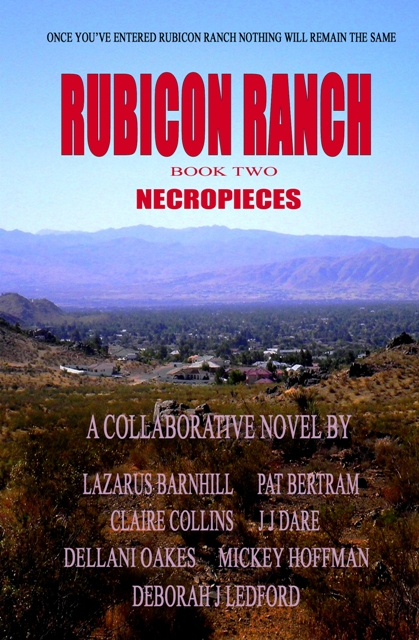
Sneak Preview of Rubicon Ranch: Necropieces

Rubicon Ranch is a collaborative and innovative crime series set in the desert community of Rubicon Ranch and is being written online by the authors of Second Wind Publishing. Seven authors, including me, are involved in the current story — Rubicon Ranch: Necropieces.

Residents of Rubicon Ranch are finding body parts scattered all over the desert. Who was the victim and why did someone want him so very dead? Everyone in this upscale housing development is hiding something. Everyone has an agenda. Everyone’s life will be different after they have encountered the Rubicon. Rubicon Ranch, that is.

Although some of the characters were introduced in Rubicon Ranch: Riley’s Story, a previous collaboration, Rubicon Ranch: Necropieces is a stand-alone novel. The first chapter will be posted on Monday, June 11, and one chapter will be posted every Monday after that.

We hope you will enjoy seeing the story develop as we write it. Let the mystery begin! Whodunit? No one knows, not even the writers, and we won’t know until the very end!

Chapter 1: Melanie Gray
by Pat Bertram

Melanie Gray woke with tears on her face. She sat up in the bed she’d shared with her husband Alexander, put her elbows on crossed knees, and cradled her face in her hands. The pain she tried to hide even from herself erupted, filling her chest with such agony she could only breathe in shuddering gasps.

She’d been doing so well, concentrating on shooting the photographs to finish their coffee table book on desert life, photos that Alexander should have taken, would have taken if he hadn’t died. So why the upsurge in grief? Then it came to her—today marked the third month since Alexander’s death.

Three months! Melanie saw the months marching on, one by one, each carefully counted while she grew old alone. She was only forty-three, which meant a lifetime of loneliness ahead of her.

I can’t do this.

But she’d already been doing it—living each shocking day as it came.

First, she’d found out that Alexander had died in a one-car crash under suspicious circumstances — maybe an accident, or maybe something worse, something she couldn’t bear to think about. Then she had discovered that he’d been texting a woman when he died, a woman who claimed to be his mistress. Finally, she learned that somehow he’d managed to spend the considerable advance they’d received for their book, leaving her with a six-month paid lease on this house, barely enough cash for groceries, and a book contract she needed to fulfill. No savings. And no car.

At least the desert was close, so she didn’t need a car to do her job. Rubicon Ranch, the bedroom community where they’d rented the house, bordered on the high desert of inland California, and offered gorgeous vistas, wildlife . . . and death.

“Damn you, Alexander! Why did you have to die? You were the one who was supposed to shoot the photos. I only wrote the words. If you’d paid attention to your driving, you’d still be alive, and I’d never have found that little girl’s body.”

Poor little Riley Peterson. Kidnapped as a baby, dead at age nine without ever knowing that her biological parents had spent her whole life searching for her.

Melanie let her tears fall for a few more minutes, took one more shuddering breath, and hauled herself to her feet. As bleak as her life seemed, as sad and as lonely as she felt, she was still alive. And she had work to do.

As always, she dressed in white — loose cotton pants, billowing long-sleeved top, wide-brimmed straw hat, flowing scarf. She checked her pockets to make sure she had her cell phone, camera, and extra memory card. Then she grabbed a canteen of water, slung the strap over her shoulder like a bandolier, and stepped outside.

A perfect early fall day. Clear blue skies, the deepest blue she’d seen since she’d moved to Rubicon Ranch. A hint of a sweet-scented breeze wafting up Delano Road. Temperatures in the high seventies, though they would probably rise to the mid-eighties by noon.

The grizzled homeowner across the street picked up a newspaper from his driveway, waved it at Melanie, turned, and stood still. Wondering what had caught his attention, Melanie followed his gaze.

A tan bullmastiff towed a pretty woman up the street. The woman’s dark hair, drawn into a ponytail, swished jauntily as she ran to keep up with her exuberant dog. What should have looked like a carefree moment seemed one of desperation to Melanie, as if the woman were running from demons only she could see.

“Funny how art often imitates life, eh?” came a deep voice from behind Melanie.

She jerked her head in the direction of the voice, and gaped at Morris Sinclair, her next-door neighbor, who had managed to sneak up on her without her noticing.

Morris, an international bestselling horror novelist had been a suspect in Riley Peterson’s death. The sheriff had declared the author innocent of the murder but guilty of buying stolen crime scene photos. And guilty of feigning Alzheimer’s. Melanie didn’t know how the sheriff had come to that conclusion. As far as she could see, if Morris had been feigning Alzheimer’s, he must have been trying to hide the truth — that he was insanely evil. Or evilly insane.

“Or maybe, in her case, life is imitating art,” Morris said.

“What are you doing here,” Melanie demanded. “Does Moody know you’re on the loose?” Moody, Morris’s daughter, had spent time in prison for the accidental death of a child. You’d think a man as perverse as Morris would be proud of her for that accomplishment, but he treated his daughter with even less regard than he treated everyone else.

“Am I my daughter’s keeper?” Morris intoned.

Melanie backed away from him. “I’m sorry. I don’t have time for this.”

“I know. You have to go out into the desert to shoot more of your little photos.” He bared his long, old-ivory-colored teeth at her in what might have been meant as a smile but came across as a predatory leer. Pointing a bony finger at her camera, he added, “You know how to use that thing, right?”

Melanie lifted her chin. “I do.”

“I’ll offer you the same arrangement I had with your husband.”

“You had an arrangement with Alexander?”

“Yeah. Alexander. Did you have more than one husband?”

Melanie stared at him in confusion, but when his dark opaque eyes met her gaze, she ducked her head.

“Alexander used to take certain . . . photos for me.” Morris raised his voice. “Photos of body parts.”

“Body parts?” Melanie asked. “You mean like arms and legs? You can find photos of those anywhere.”

“But I need amputated body parts. Dead parts. Lots of blood and gore. Necropieces.”

Melanie recognized the name of Morris’s most famous horror series — Necropieces — but none of his other words made sense. “You’re telling me Alexander took photos of amputated limbs for you?”

“And entrails. And organs. He loved shooting the images. Had a nicely developed sense of the macabre.”

“No,” Melanie said in a normal tone of voice. Then, all at once, the agony of the past few months gathered itself and launched a scream. “Nooooo.”

The word seemed to echo up and down the quiet street. She caught a glimpse of movement on the porch a couple of houses away, and she realized the old man who lived there, Eloy Franklin, had heard her shriek, but she didn’t care. She had enough of insanity and things that didn’t make sense.

“You leave me alone, Sinclair,” she shouted as loud as she could so that Morris would get the message, “or I’ll be shooting your dead body parts.”

“Every one of you bastards wants me dead!” Morris screamed, matching her decibel for decibel. He threw his arms wide as if to address the neighborhood. “Kill me! Kill me! Kill me. Cowards, every one of you! None of you have the guts to do anything but sit in your dark little caves and try to wish me away. Cowards! And you—” He turned to face Melanie. “I dare you. Kill me like you killed Alexander.”

Melanie gasped. “Alexander died in an accident.”

“An accident you created,” Morris said calmly, as if he’d never raised his voice. “Before that little girl died, she told Moody you’d messed with your car.”

“You’re lying.” Melanie’s words barely squeaked through her clenched teeth.

“Ask Moody.” Morris put a finger to his chin and cocked his head to one side. “So, will you take the photos for me? I’ll pay you well.”

Getting My Kicks on Route 66

Each year,  the California Historic Route 66 Association selects one of the eight states through which Route 66 runs to host the Route 66 International Festival. This year, the festival will be held from August 9-12, 2012 at the San Bernardino County Fairgrounds in Victorville, CA. Making it an even more historic event, the fairgrounds are on old Route 66!  With the theme “California Dreamin’ on Route 66”, the Route 66 International Festival 2012 will attract thousands of Route 66 enthusiasts, historians, fans and custodians of the “Mother Road” from across the country; including international visitors from 17 different countries, as well as local residents. And me.

I’ve been accepted as a participant in the festival, and I’ll be there signing my books on August 10th and 11th. Except for Daughter Am I, the story of a road trip from Colorado to Chicago, my books don’t have anything to do with Route 66, but I’ve had little luck with writer’s conferences and library presentations, so I’m going to try something completely different. It should be interesting. I’ll have to stay for the two days rather than do what I normally do at festivals — walk around for a few minutes then leave. (I never did know how to have fun. At least not what other people consider fun.)

So, if you’re going to be in Victorville on August 10 and 11th, be sure to stop by the fairgrounds and look me up. I’ll be waiting for you.

“I don’t worry about a thing because I know nothing is going to be all right.”

A friend told me about an old woman who was the most joyful person she knew, though the woman had suffered grievous losses in her life. I couldn’t fathom how the woman could be so joyful, and yet now I can. . . . almost. Perhaps the woman knows that everything comes to an end. Perhaps she knows that the little things are important. Perhaps she has found herself in all of the losses.

Or, like me, perhaps she has an awareness of death, of knowing, deep down, that her life will end, maybe even badly. Since I’ve become steeped in the grief culture, I’ve heard stories of terrible deaths, either doctors keeping people alive past any usefulness or alertness, or the person’s own will keeping them alive long after they wanted to be done with it. I’ve heard stories of so much pain and suffering that it’s amazing any of us ever manage to smile let alone be joyful in such a world.

We all know we are going to die, but after the death of someone we are profoundly connected with, we KNOW deep within our psyches. People tell me not to dwell on death, and I don’t. It’s more that the knowledge of death now is a part of the very fabric of my being and can never again be unknowable. This knowledge makes life on Earth seem both more and less significant, which adds a strange flavor to my days. I don’t know how this knowledge will affect me long term, but there is freedom in knowing that things will end.

I heard a song today by Mose Allison. “I don’t worry about a thing because I know nothing is going to be all right.” It sounds cynical, but it isn’t necessarily negative unless you give up and stop trying to do whatever you can. Does it matter what success you had here on earth when you are dead? Does it matter how many toys you had when you died? Of course not. It only matters that you lived.

It’s like writing — all stories are the stories of someone’s life, and as such, end in death. What we as writers do is end the book at an upbeat point for a happy ending and an ironic place for a more tragic ending, but still, life continues on past those significant moments.

I know how my life is going to end — the same way all of our lives are going to end. It will end in death. I’ve always been a bit of a worrier, but with death on the horizon (the far horizon, considering my longevity genetics) worry seems a bit foolish. All that counts is today — not future successes or failures, not future acquisitions or losses. Just today.

There is peace in that, maybe even joy.

Waiting for My New Life to Begin

I never had much of a yen for travel; I’m too much of a homebody. I wouldn’t mind seeing exotic places, but it takes too much time to get there, and plane travel is simply no fun. Still, the only way I’ve been able to make sense of the death of my life mate/soul mate and my ensuing grief is to do things that I wouldn’t have done if he had lived. Since he had been sick so long, we hadn’t been doing much, so it leaves the whole world open to me. I’ve visited museums and art galleries, taken day trips and plane trips, gone to county fairs and other festivals.

I’ve even done less edifying things such as putting together jigsaw puzzles. I’ve always hated jigsaw puzzles. They seem so pointless, but in a world where everything now seems pointless, they make as much sense as anything else. And, oddly, for such a structured activity, jigsaw puzzles seem to be stimulating my creativity. I’ve been trying to do whatever I can to create new pathways in my brain, to get out of the cerebral ruts I’ve gouged for myself, and the puzzles are doing the trick. Maybe it’s because of the pattern recognition skills? For whatever reason, I’m getting interested in writing again. I even printed out my WIP (which has been stalled for so long, I call it my work-in-pause) so I can read it and see where I am. It’s a silly story (was meant to be silly) and I haven’t been in the mood for silliness for a very long time, but poor Chet has been incarcerated in the human zoo long enough. It’s time for me to let him move on.

One day, I’ll be moving on, too. Right now, I’m taking care of my 95-year-old father, but when he’s gone, I’m going to have to figure out where to go next, both geographically and mentally. Where do I want to be? Who do I want to be? Tough questions, both of them.

I’ll be in a unique position, though, free of responsibility — except for myself, of course. I’ll be continuing my quest to try experience new things, to do that which I wouldn’t have done if my mate were still alive, and so far, such plans entail travel (and a means of making money to pay for the trips).

I’ll taking a cross-country road trip with a bereft author friend, perhaps to check out book stores and do signings, but mostly to run away from our sadness and look for fun. She wants to visit Times Square and other such populated areas. I’m more interested in bucolic spots.  Should be an exciting and eclectic trip.

Another friend wants to take a bus trip. Greyhound offers a pass for unlimited travel, so we would go wherever we wished, get off the bus whenever we wanted. Her desire is to see Washington DC and Cape Cod. Sounds good to me. I would never have chosen either of those destinations, which is the beauty of such a trip. I want to do things and go places I would never before have considered.

And still another friend, my first ever online friend, wants me to visit her in New Zealand. The thought of such a long plane trip makes me cringe. Besides, last year I flew to St. Simons Island and Seattle, so air travel holds no novelty. But . . .! She told me I could go by freighter. I had no idea such travel was still possible. It takes approximately two weeks to get to New Zealand by water. Just think of it — two weeks on the open sea (well, four if I return by freighter). A real voyage. And perhaps a voyage of self-discovery?

That pretty much covers all methods of travel except train. So, of course, I’ll take a train trip. A long one. And go first class — rent a room. Where will I go? I don’t know, but it will be somewhere I’ve never been before.

It sounds exciting when I tell people of such things, and yet these experiences don’t make up for a second of my mate’s being gone. But still, I have to do something, so I might as well experience life to the fullest. Or, at least plan to experience life. I’m still waiting for my new life to begin.

New Steps on the Journey Through Grief

I’ve reached a new level of grief. I’m still sad, but I can barely remember why. I still feel the absence of my life mate/soul mate, who died two years and two months ago, yet I can barely remember the living man. The life I shared with him is receding, as if it happened to someone else. There is still a hole in my life and a decided lack of “life” — no sparks kindling new ideas, no electricity of excitement, no radiance — but I no longer have anything with which to compare that lack of life. It’s as if these sad and lonely days are the way it has always been for me.

During those years when we were together, I had someone to talk to, someone who could help put life into a different perspective, and now there is just me. To tell the truth, I still talk to him, but he never offers a different perspective. I used to feel a tenuous connection to him (or at least to our shared past) when I talked to him, but now I have no idea if I’m even talking to him or simply talking aloud.

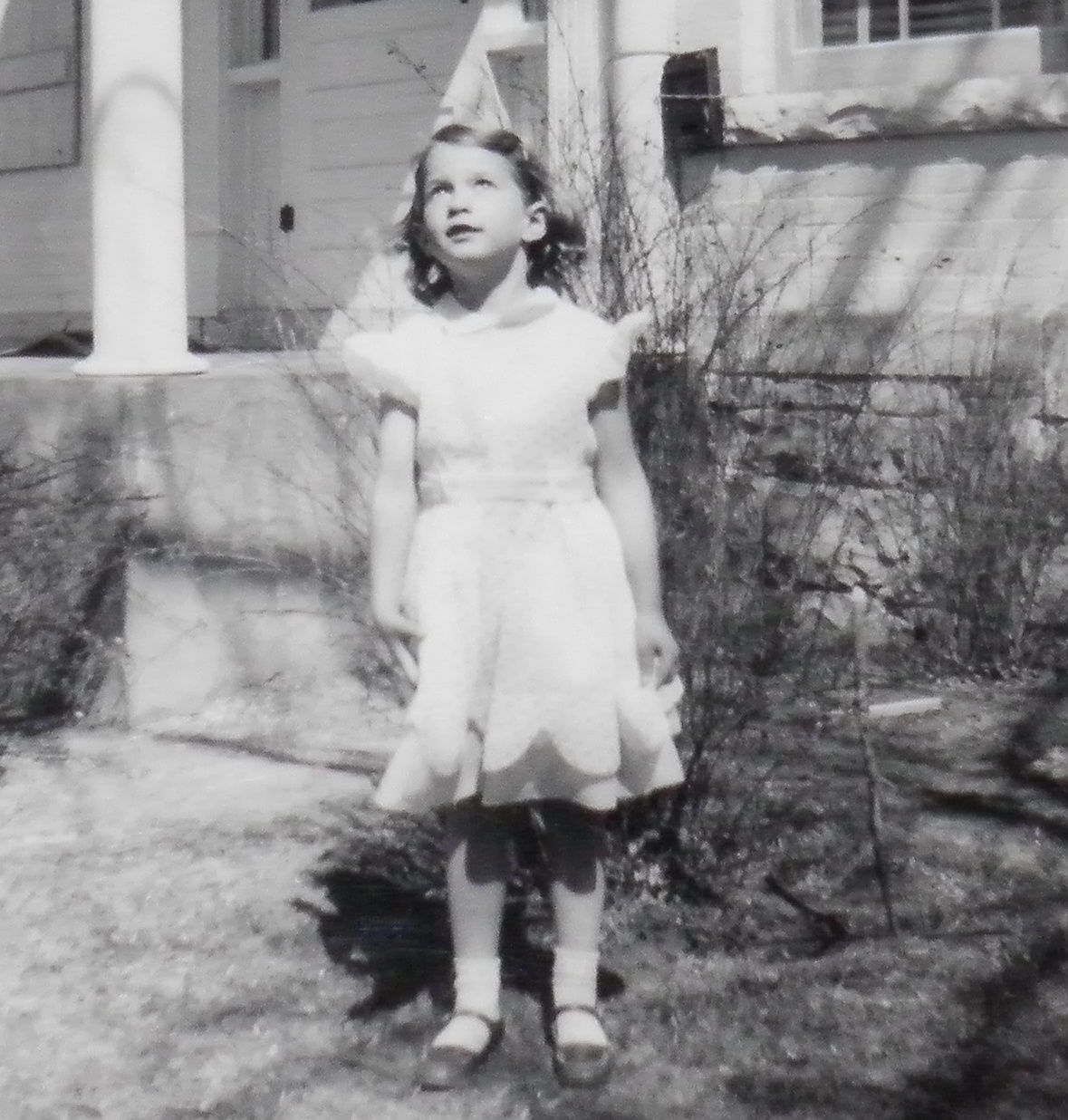
With our shared life moving further into the dim past and my memories of him fading, I worry that I will forget him. I know I’ll forget the person I was when I was with him. No matter how I change, I’m always just me, and yet, (for example) I cannot remember this little girl, cannot remember being her. She has receded far into my past. Or perhaps she’s become subsumed into my current persona? Either way, she no longer exists even in memory. And so will the person I was with him disappear as I move further into the future without him.

The irony is that I was in such pain after his death that I made a special point to experience new things so I could create new memories. I thought new memories would help cushion the severity of the break between our shared life and my life alone, yet those very memories are taking me further away from him.

I might not completely forget him. I have moments when I flash onto a vivid image of him, and as heartbreaking as those moments are (because I am reminded once again that he is dead), they are all I have left of him except for some of his things. It seems cruel that their things outlive the dead. Shouldn’t people live longer than things? Or else, shouldn’t the things disappear when our loved ones do? And yet, as my memories fade, the things I kept of his and the things I kept of ours, such as our household goods, will be all I have to remember him by.

Every new step on the journey through grief brings its own grief. It saddens me that he is forever receding from me. Yet I am still here, and I must live. I can’t cocoon myself in memories of him and our life together. I can only go on doing what I have been doing — experiencing new things and making new memories, even if they take me further away from him.

The Story Behind Rubicon Ranch

Almost a year ago, I got the idea to write a collaborative novel online. I broached Second Wind Publishing authors with the concept, and I found eight other writers willing to participate in the experiment. It took a few months to hammer out the details, which seemed an endless task back then, but now I see as incredibly swift. The story was, after all, a committee production.

We started out with what we considered the most heinous of crimes — the death of a little girl. In the first chapter: Chapter 1: Melanie Gray — by Pat Bertram, which was posted on October 24, 2010, Melanie found the girl’s body stuffed in an abandoned television console when she was wandering in the desert, trying to come to terms with the death of her husband. Poor Melanie. So much death!

Each author created a character who might have a reason to kill little Riley. And each character was hiding something.

Could Kourtney and Jeff Peterson have killed their daughter, mischievous nine-year-old Riley, to protect their secret?

Moody Sinclair had once killed an eight-year-old boy. Has she killed again?

Fifteen-year-old Dylan McKenzie is a straight A honor student. By day. Did Riley discover the other Dylan, the one who prowls at night?

Cooper Dahlsing does strange things while sleepwalking. Could he have killed and not known it?

Mark and Jamie Westbrook, self-styled private investigators, show up to help solve the murder, but perhaps they had a hand in creating the crime?

Eighty-two-year-old Eloy Franklin sits on his porch and watches. But does he do more than watch?

Forty-three-year-old Melanie Gray found Riley’s body stuffed in a television console that had been dumped in the desert. But is she as innocent as she seems?

Sheriff Seth Bryan is bitter and cynical at having lost everything he values. Is he manufacturing crimes to bring him the notoriety he craves?

So many villainous characters! And until the very end, no one knew who committed the dastardly deed, not even the writers.

The novel was supposed to be a promotion stunt, but halfway through, it got derailed by life. One author had to deal with colon cancer, including three debilitating operations. Another author had to deal with a flooded house that was uninhabitable for six months. Still other authors had to deal with grief after the loss of significant people in their lives or heavy job pressures. When we started in again, we’d lost all our readers, so there was no longer any promotional value, but still we persevered.

And now the book is finished. You can read the entire novel online for free. If you prefer to read the book on an ereading device, Rubicon Ranch: Riley’s Story is available as a Kindle or in the ebook format of your choice from Smashwords. It’s also available in print from Amazon and Second Wind Publishing.

But . . .

That is not the end of Rubicon Ranch! Though some of the authors went on to other projects, enough wanted to continue the Rubicon Ranch saga, so we lassoed a few additional authors into creating characters. And now we have a new story.

Three months after finding the body of the little girl, poor Melanie is again wandering in the desert, still having a hard time dealing with her husband’s death, when she sees a congress of ravens pecking at a dismembered foot. Who was the victim and why did someone want him so very dead? Everyone in this upscale housing development is hiding something. Everyone has an agenda. Everyone’s life will be different after they have encountered the Rubicon. Rubicon Ranch, that is.

Although some of the characters from the previous collaboration are featured in the new story, Rubicon Ranch: Necropieces is a stand-alone novel. The first chapter will be posted Monday, June 11, 2012 on the Rubicon Ranch blog, and a new chapter will be posted every Monday after that.

I hope you will join us in this new serial adventure. It should be a devious tale.

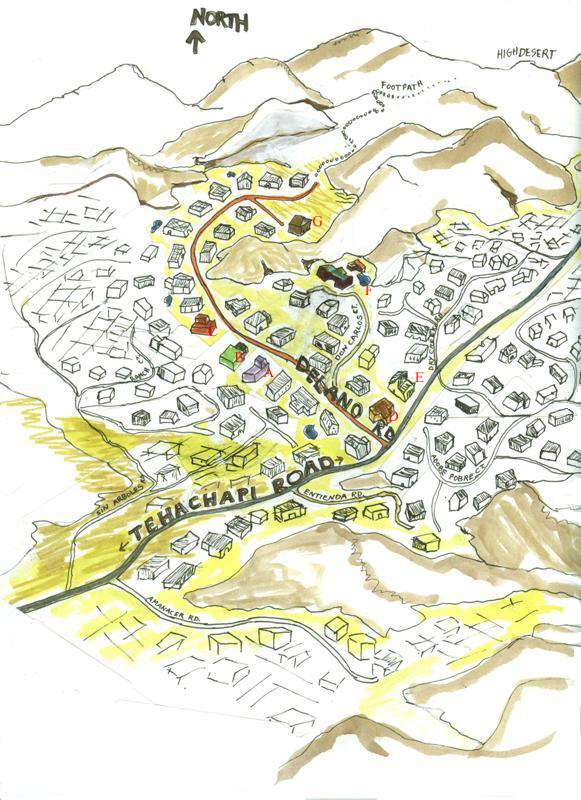
Map of Rubicon Ranch.
A) Melanie Gray
B) Moody Sinclair
C) Eloy Franklin
D) Leia Menendez
E) Ward Preminger
F) Egypt Hayes
G) the Peterson house

The Cloth of Sloth

We live in a strange society where the names of clothing matter more than the yardage used to create the garments. We don’t wear “underwear” out in public, not even if it is made of thick cotton and covers most of our torsos, but call something a “swimsuit” and no matter if it barely covers the salient issues, it is acceptable. (Well, maybe not acceptable in church, but depending on where you live, it could be acceptable almost everywhere else.)

If you live in the United States and you wear something called “pajamas,” which used to be the standard of clothing in certain countries and which covers you neck-to-ankle, that is not acceptable. But if you wear tiny shorts and an even tinier crop top, that is acceptable. There are all sorts of wonderful pajamas on the market now that are made of soft cotton and look like jeans and a casual shirt, but if you wear the clothing out in public, that is so not acceptable. In fact, I’ve lost count of the number of blogs I’ve read where bloggers turn up their nose at those who dare to be comfortable and wear such clothing anywhere but in the privacy of their own bedrooms.

If you wear a “slip,” that is not acceptable, even though many cocktail dresses are created using that same basic pattern. But if you wear skintight clothing that leaves absolutely nothing to the imagination, well, that is acceptable to most people, though if you aren’t as thin as a model, you do run the risk of having people look askance at you.

The same double standard goes for footwear. If you wear slippers out in public, even the kind that cover your whole foot, you are considered slovenly, but flip-flops and even bare feet are acceptable.

And worst of all is if you were to wear your bathrobe outside!! Think of it. You’re in a grocery story line and you see someone in a soft fleecy robe belted over clothes, what do you do? You edge away from her, wondering if she is in his right mind. And if she is wearing pajamas beneath the robe, oh, my. How terrible. But why is it terrible? Simply because of the name of the garments.

In “The Time for Bathrobes,” Barbara Holland wrote: “America has never been a nation of bathrobe wearers. If the mailman catches us in our bathrobes, we mumble and blush. It has nothing to do with modesty. It is the shame of being thought inactive. Bathrobe’s the cloth of sloth.”

Little by little, my solitary life is beginning to nudge my consciousness out of its established groove, and ironies such as those I mentioned here seem to stand out in high relief. Perhaps I’m spending too much time in my own head? I’ll be careful, though, and not go to the store in my bathrobe. I wouldn’t want to get arrested for decent exposure.

The point of writing is simply . . . writing

The book statistics continue to dishearten me. A recent study of 1,007 self-published authors shows that romance authors earned 170% more than the average, while science-fiction writers earned 38% of the average, fantasy writers 32%, and literary fiction authors just 20%. Even though I’m not self-published, these figures matter because they show the trend. Most of the books that are selling are romances, and most of the selling romances are written by well-educated women in their forties. Typically, 75% of the total sales were made by 10% of the authors.

That’s good news for women who write romances, but what about the rest of us? I don’t want to write to make money — I want to make money from what I write, which is something completely different. Considering that my books are genre-benders and that most readers seem to stick with recognizable genres and story lines, it’s not surprising that my books are slow sellers. Even if I wanted to write to sell, I’m not sure I could. Chances are, if I were to start out writing a romance, it would end up being something completely different after I filtered it through my writing voice. (Whatever voice that might be.) We can only write the books that are in us. And romance novels are nothing I have any interest in, either to read or to write.

Oddly, despite what I see as a dismal book climate, I am getting interested in writing again. My work-in-pause — a tongue in cheek apocalyptic novel — is so far out of the realm of any recognizable genre that it would probably be impossible to sell. (Even my father admits that it’s weird, and he likes my books.). But I’ve concluded that selling isn’t the point of writing, at least not for me. Nor is communicating with others. (That’s what this blog is for — to communicate with others.) The point of writing is simply . . . writing. Using my brain. Creating a world that didn’t exist before. (Could that be the point of life? The creation of a world that didn’t exist before? Hmmm. I wonder if there’s a book in that idea.)

I suppose my renewed interest in writing is inevitable. I’ve been spending less time online and more time in the real world. And for me, writing takes place in the real world. Or at least the real world of my mind.

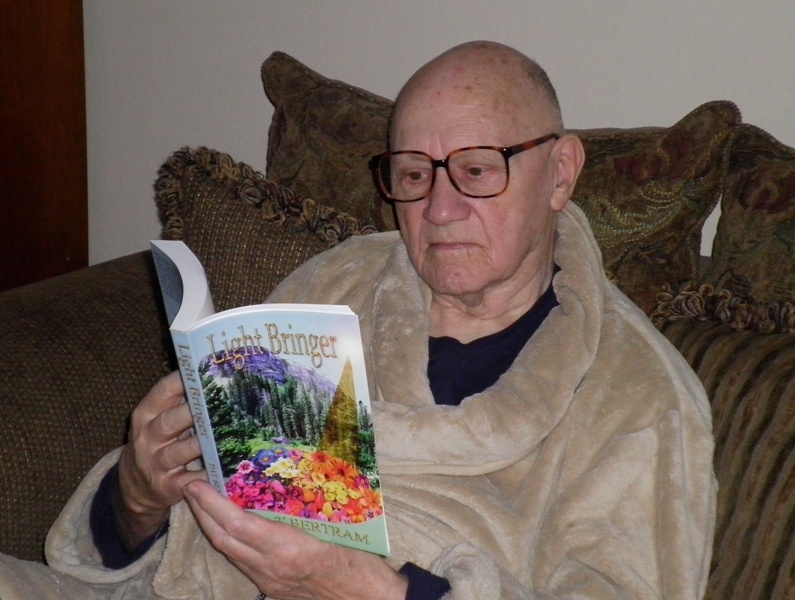
Great Reviews for Light Bringer

I got a great review for Light Bringer yesterday from S.M Senden. “Pat Bertram has woven a wonderful story that weaves together imagination with history, science fiction, love, power and so much more, and it works so well. If you are looking for a good story, well written, then read this book. I hope you will love it as much as I did!”

I am thrilled when readers love any of my books, but especially Light Bringer.

First, it is very difficult to classify, even for reviewers. As Aaron Lazar wrote, “Light Bringer is something completely new and surprising . . . surprising in its freshness, originality, its genre bending brilliance. Part thriller, part fantasy, part sci fi, part mystery . . . its plots were large and complex, encompassing themes that plague us every day; offering social and world commentary blended with weather trend observations (where ARE all those tornadoes and tsunamis coming from??) I do believe Bertram has defined a new genre, and it is a pure delight. Fresh. Original. Riveting. The characters are real and engaging.”

Second, it is the result of twenty years of research into conspiracy theories and myth. Many researchers have traced the drive toward a one-world government conspiracy back 7000 years. Others believe that the black death was a man-made epidemic, created in an effort to “dumb down” the inhabitants of Earth. (William Bramley, author of Gods of Eden, wrote: “Strange men in black, demons, and other terrifying figures were observed in other European communities carrying ‘brooms’ or ‘scythes’ or ‘swords’ that were used to sweep or knock at people’s doors. The inhabitants of these houses fell ill with plague afterwards. It is from these reports that people created the popular image of death as a skeleton, a demon, a man in a black robe carrying a scythe.” This is the origin of the grim reaper) In fact, myths all over the world speak of the gods giving and the gods taking away. According to the Popul Vuh, the gods created the first humans exactly like the gods themselves. Displeased that the simple creatures of their making were also gods, the creators took some of the god-like abilities away from them, and we are the result. And from all that research came the idea for Light Bringer.

Third, the lyricism of the book seems to bring out a corresponding lyricism in reviewers. Sheila Deeth called Light Bringer “mysteriously beautiful and musical,” and then added, “Pat Bertram’s novel soars in her descriptions of mystery and scenery. The song of the rainbow flows through the characters, binding them together, while the silence of the great unknown drives them and pulls them apart.” Tracy Fabre wrote, “This novel is color and sound and more color, described as it’s never been described before. Part sci-fi, part small town life, part intrigue, part romance, part rainbow explosion, this is a tale of two people who are not like other people yet end up in a little out-of-the-way community where a lot of strange things have happened and continue to happen. It’s a multi-layered story she should be very proud of, and incidentally will make you crave muffins. Consider yourself warned.”

***

Light Bringer: Becka Johnson had been abandoned on the doorstep of a remote cabin in Chalcedony, Colorado when she was a baby. Now, thirty-seven years later, she has returned to Chalcedony to discover her identity, but she only finds more questions. Who has been looking for her all those years? Why are those same people interested in fellow newcomer Philip Hansen? Who is Philip, and why does her body sing in harmony with his? And what do either of them have to do with a shadow corporation that once operated a secret underground installation in the area?

Click here to read the first chapter of Light Bringer by Pat Bertram

Click here to buy Light Bringer from Second Wind Publishing, LLC

Click here to download 20% free at Smashwords or to buy any ebook format, including Kindle.

(Also available from Amazon and B&N)