The Bob

Daily writing prompt
How have you adapted to the changes brought on by the Covid-19 pandemic?

I was going to make this a lighthearted post because I’ve adapted well to the changes brought on by the “Bob.”

In case you don’t know, I call it the “Bob” after an excerpt in my novel, A Spark of Heavenly Fire, where protagonist Greg, and his boss, Olaf, are discussing research papers. Olaf says:

“Convoluted writing and obscure terms are a way of intimidating the uninitiated, keeping the profession closed to non-scientists, and adding to the scientific mystique. Just think, if diseases had names like Bob and Carol and Ted and Alice, doctors wouldn’t make anywhere near the amount of money they do now.”

Greg laughed. “That’s an idea. They do it for hurricanes, why not everything else?” He mimed seizing the phone and dialing. “Mr. Olaf? I can’t come in today. I’ve got the Bob.” He hung up his imaginary receiver and looked inquiringly at his boss.

Olaf nodded. “Works for me.”

All during the worst of the shutdown, I hated giving the malady — both the physical ailment and the widespread cultural and financial ill — the hated name. I didn’t want to grant the horror more power than it already had and, too, I didn’t want to surrender to the fearmongering. At least, not for myself. I don’t get the flu, and besides, I’d made a vow never allow myself to get caught up in another scarifying scheme such as happened with the Swine Flu fiasco of 1976. Outwardly, I made a point of following their dictates. I stayed home. (Yay!! Such a good excuse to take a break from socializing.) I made sure to stay 6 feet away from anyone I did happen to see. (Again, yay!! I’ve never liked people standing on my heels while waiting in line.) I wore the mask. (Another yay! I liked the anonymity.) And I always made sure I had an easy answer when asked if I’d gotten the vaccine. (It wasn’t a lie, but not the strict truth, either.) And even though we’ve been paying for the stimulus checks with inflation for the past few years (each of us has probably spent more in inflationary dollars than we ever received for “free”), they were a nice bonus for me at the time.

So, for me, it wasn’t a hardship. The worst thing, I think, was keeping from getting caught up in the fear. And the best thing was having an excuse to be alone, and that still holds true to this day.

So why did I change my mind about a lighthearted post? Because other people weren’t so lucky. I know several women who lost their husbands and subsequently their way of life. (Too often widows end up in financial straits, as if losing that one special person isn’t trauma enough.) I know others who have lost beloved family members. And I know still others who have become lost in a cycle of never-cured illnesses.

If this had been a naturally occurring illness, there might be some sense of fatalism to help with acceptance, but I doubt there’s anyone out there who still believes it “just happened.” We (the people) might never know the truth. Might never know who to blame. Might always be shadowed by the spector of “if they did it once, they can do it again.”

One thing I do know: we — individually and as a people — will always be changed forever by the “Bob.”

***

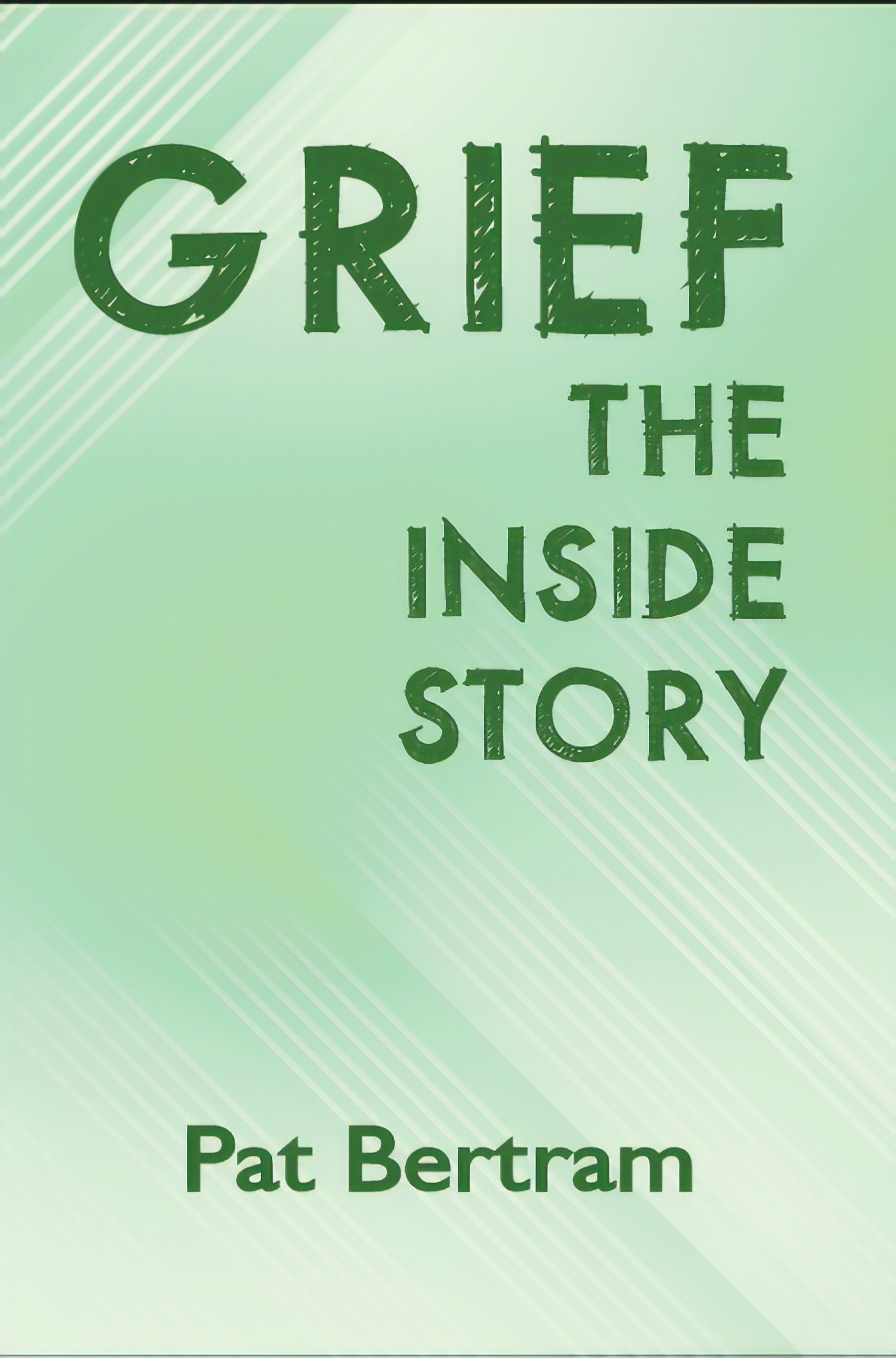
Pat Bertram is the author of Grief: The Inside Story – A Guide to Surviving the Loss of a Loved One.

What My Life Is Like Today

Daily writing prompt
What’s something most people don’t understand?

Today is the sixteenth anniversary of Jeff’s death. I’m sitting here mindlessly playing a game and scrolling through a few articles, trying to decide if I want to write about this anniversary. I will remember him, of course, and think of him and all he brought to my life, but I’m not sure it’s something I should still be talking about it. After all, his death belonged to him, not me. Still, I suppose I should at least mention the anniversary — for years I wrote about my grief, laid it all on the line (laid it online?), so it’s only fair that I talk about what my life is like today.

Life, that’s what it’s like.

Too many people bury their grief, letting others tell them how long they should grieve, how long it’s acceptable to talk about their feelings, how long they’re allowed to feel whatever it is they feel. But that is a disservice to grievers. I truly believe it’s important to feel all the myriad emotions, physical sensations, and mental fogs so that the body and mind can work its way through the changes to end up . . . renewed. Or if not renewed, then at least able to go through life without holding in the stress of grief like a too-tight girdle.

Despite the importance of that message, I still wavered about doing another grief post until I happened to notice today’s blog prompt: What’s something most people don’t understand? Such a blatant sign shouldn’t be ignored, especially since there is something I know about that most people don’t understand — Grief, especially grief at the death of child, a spouse, a soul mate.

Everyone thinks they understand grief because most people have felt sadness and despair and even shed tears at the loss of an acquaintance or a job or something else important to them. But not all grief is the same. Not all losses are the same.

The reality is, the most stressful event in a person’s life by far is the death of a life mate or a child. The reality is, such a death is so devastating that the survivor’s death rate increases by a minimum of 25% percent. The reality is, such grief brings about brain chemistry changes and lowers the capacity to function. Someone who hasn’t gone through the trauma of dealing with all the losses those deaths bring about — not just the body and mind changes, but the loss of identity, one’s way of life, sometimes income, and a thousand other changes — cannot understand and so has no business telling anyone how long to grieve or how to grieve. Grief belongs to the griever, not to the onlookers to people’s grief. Admittedly, no one likes to see others in pain, but that pain is often made worse by having to hide it to keep from bothering others.

People who are allowed and who allow themselves to go through the process of grief — because, at its most basic, grief is a process, a way of moving a person back into a semblance of life — end up able to simply live.

For years, I felt as if I were living as a reaction to Jeff’s death or in spite of it, felt as if grief bound me to him and to a way of life that had died with him, but now — I feel as if I am simply living. Maybe I’m just used to that deep undercurrent of sadness, but even so, it doesn’t change the fact that after sixteen years, what my life is like today is . . . life.

***

Pat Bertram is the author of Grief: The Inside Story – A Guide to Surviving the Loss of a Loved One.

Feeling Like a Poseur

For a long time, I’ve felt like a poseur, embarrassed to admit I had written books. I’ve hesitated to even look at any of my published works lest I find out how mediocre they are, and proving that yes, I am a poseur. I don’t know when the embarrassment at calling myself a writer took hold. In a blog post in June of 2018, I wrote that “when it comes to writing, I don’t feel like a fraud” so it started sometime after that.

A lot of people, especially successful women, are beset by “imposter syndrome,” where they feel as if they don’t belong in the position they are in, but that isn’t my case. First, I’m not successful, and second, I’m not in any position — I stopped writing books years ago. For many months, I even stopped blogging. Can one be a writer if one isn’t writing anything, isn’t even selling the books that are already written?

Whatever the answer to that, the non-sales of books all these years whispered to me that perhaps I really was simply posing as an author rather than being one in truth. And somewhere deep down, I figured if I admitted I was a non-successful author, then I’d have to admit that maybe I wasn’t a good enough writer after all.

I don’t know where I got the courage (desperation at not having anything to read?), but I’ve been reading my books lately, something I’ve never done once they were published. I’ve been amazed by how good they are. Well written. Interesting stories. Characters that have to deal with life-changing events. Even though I’ve mostly forgotten the stories except for a brief synopsis, it’s possible that something in me recognizes the books as ones I’ve written and so see something that is not there, but I don’t think so. I tend to think they really are as good as they seem.

Unfortunately, they don’t seem like the types of books that will appeal to many people, which makes sense since I started writing them when I could no longer find the books I liked to read. (You’d think that would be a clue to their salability, wouldn’t you?)

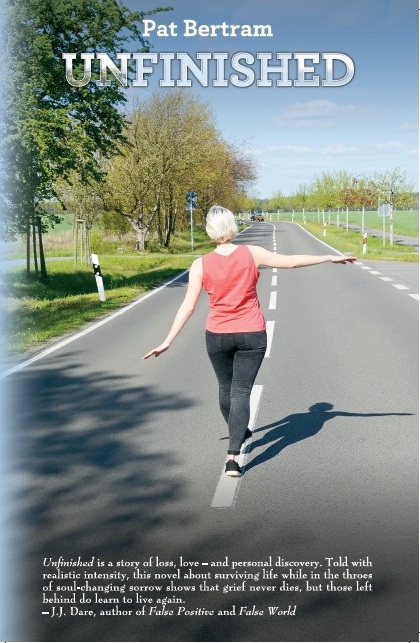
The first two I read, Bob: The Right Hand of God and Light Bringer, are books that take place in familiar earthly circumstances but develop an otherworldly strangeness about them. The last one I read, Unfinished, is very earthly, nothing strange about it except the portrayal of the insanity of new grief. Whenever, as a reader, I’d get annoyed by her tears or frustrated by the disconnect between reality and her perception of it (knowing her husband was dead but still expecting to encounter him alive), the scene and the energy would change to some other facet of her struggle to cope and so keep me interested.

One thing that was well done, I think, was showing how she’d been affected by the horror of her husband’s last year — she’d been left in limbo because he didn’t want anything to do with her and in fact often couldn’t remember who she was and yet, like a child, needed her care. Toward the end of that year, she’d engaged in a cyber affair with a guy who was going through the same thing she was. She thought she was done with grief and was starting over, yet when her husband died, all the feeling she’d been denying descended on her, and there she was, torn between two impossible loves. And finding out her husband had secrets of his own was just topping on that whole unpalatable cake.

I hesitated to read the book, thinking it would be too depressing, but she started to find her way through that emotional mess, and the book ended on a hopeful note.

I really liked the book. Although not a lighthearted story, it was very well written and definitely did what I wanted it to do — show the insanity of new grief.

Luckily, the next book I read will be lighter since one thing I do know is that this was the heaviest of the lot.

It really is an interesting experience reading these books. I know I wrote them, but since I forgot them, I can come at them as if they were written by a stranger. And truly, the author is a stranger; someone I was long ago but no longer am. No wonder I feel like a poseur.

***

Pat Bertram is the author of Grief: The Inside Story – A Guide to Surviving the Loss of a Loved One.

Quandary

Many of my posts this year have been prompted by outside sources: a few in answer to official blog prompts, a few in reaction to articles I read, and more than a few in response to my reread of the first eleven Wheel of Time books.

I’ve mostly given up reading online articles. I don’t want to know what is going on in the world, but more than that, I’m trying to live in the offscreen world. I was going to say I’m trying to live in the real world, but the Wheel of Time isn’t the real world, though it often feels like it since it’s a reimagining of our world, myths, legends, cultures. But even so, I’ve been trying to read other books for now.

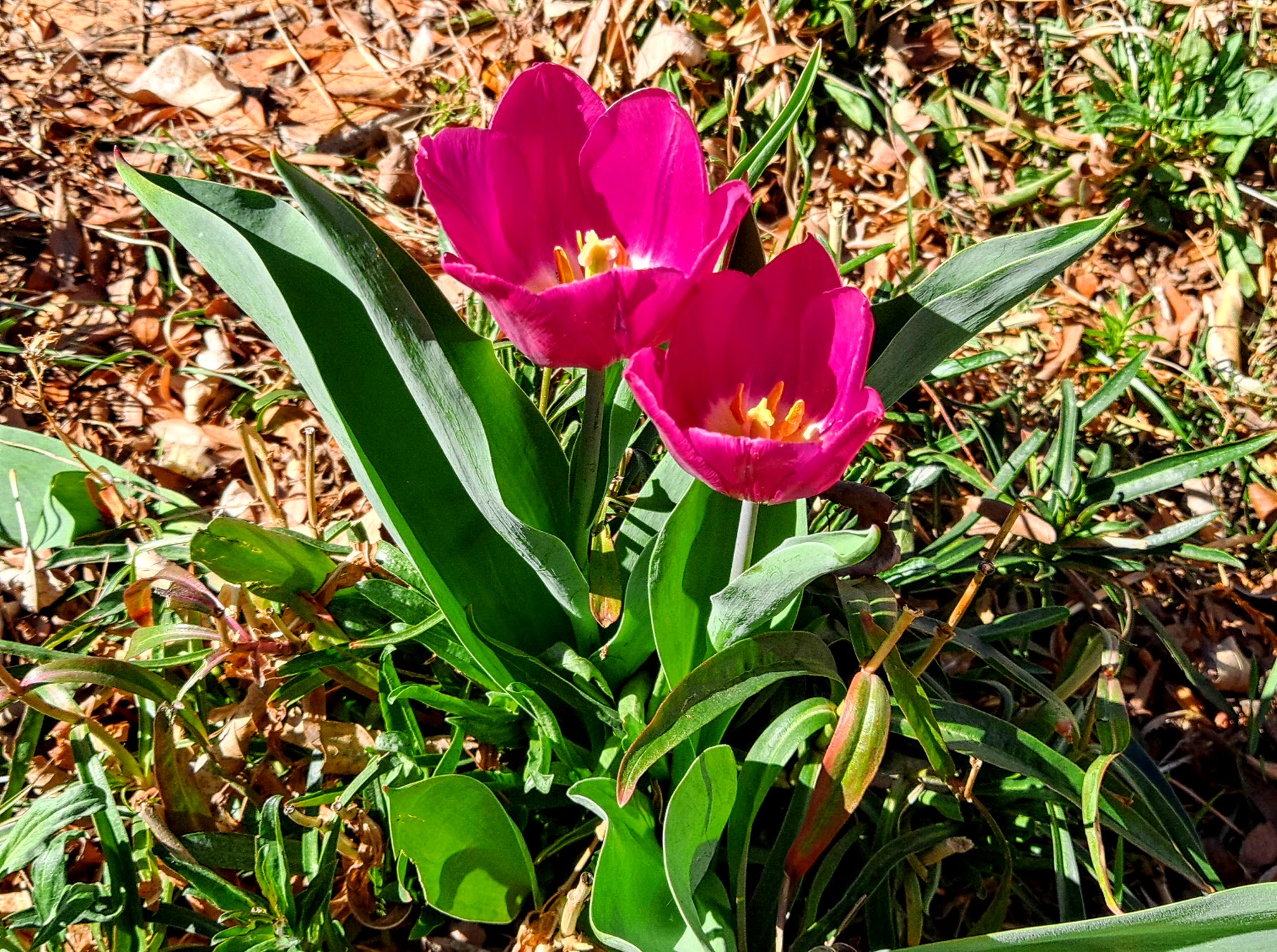
Which leaves me in something of a quandary since there’s not a whole lot left to blog about. Most of the official blog prompts aren’t that interesting to me, and with the up and down weather as well as the hazy days from out-of-state smoke, I haven’t been doing much outside, which gives me even less to write about. (Though I did find one lone hyacinth in my yard to celebrate the first day of spring!)

Since I never actually decided to blog every day, it won’t be going against any principle if I simply stopped, but I’m on a streak — 79 days and counting — so it seems a shame to give up now.

I should be glad there’s nothing much to say, especially with the anniversary of Jeff’s death coming up. Normally that in itself would have brought an onslaught of words, but our shared life ended sixteen years and a whole-lot-of-living ago. As a memorial, I had considered reading Grief: The Great Yearning, more or less my journal of that first year of grief, but I leafed through it the other day trying to see if there was any significance to a moment of sadness I experienced, and nope. Nope to finding any significance to sadness on that particular day. And nope to rereading the book. Sheesh. Just what I saw was enough misery to sink a tanker. It’s better for me to leave all that emotion between the covers of the book.

So . . . quandary. What to write when there’s nothing to write?

With any luck, I’ll find an answer in time to write tomorrow’s post.

***

Pat Bertram is the author of Grief: The Inside Story – A Guide to Surviving the Loss of a Loved One.

Not a Private Forum

I got an email from a woman who had left an emotionally raw comment on one of my grief posts. She had been hurting and wanted understanding as so many grievers do. But then as the rawness passed, she got on with her life. She googled herself to see what prospective employers would see, and she was shocked that the comment she left here on this blog showed up in search results. She said she thought this was a private forum otherwise she would never have responded to my post. She asked me to remove her comment, which I did.

I didn’t know comments on blogs could show up on search results. This blog is a rather small cubbyhole — pinhole, actually — in the vastness of the internet, so it never occurred to me that comments were searchable. (Especially since, come to think of it, few people leave their names, and those who do usually want to be recognized.) That this blog itself is searchable is all to the good — searching for help with grief is the major reason that people find me.

I only mention this to warn you not to put anything in a comment you don’t want strangers to find. Of course, by now, most of us know that there is no privacy online anymore, if, in fact, there ever was. Knowing this, there are a few things I never post here — my birthday, my house address, my email address, and probably a hundred other things I am so used to keeping private that I don’t remember. Other than those personal privacy issues (I’ve had a few blog stalkers over the years, and I certainly didn’t want any of them showing up at my doorstep!), my life is an open book. Actually, my life being an open book is why I’ve been careful about those privacy issues. I don’t want all the dots to be connected by people I don’t want connecting the dots.

Quite frankly, sometimes it makes me nervous about how much of myself is on here, especially all the things I wrote about during my grief years. As someone once told me shortly after I started telling a truth few wanted to admit, “It’s time to take off the mantle of grief,” but I never did.

So far, when I’ve found myself feeling nervous about any previous posts, I’ve managed not to delete them. And I won’t. But that means, your comments are there, too.

Anyway, I hope this doesn’t deter you from leaving comments. I cherish every response I get.

***

Pat Bertram is the author of Grief: The Inside Story – A Guide to Surviving the Loss of a Loved One.


Dreaming up a Home

Daily writing prompt
Write about your dream home.

I’m sitting here with a smile on my face, thinking about my dream home. For me, my dream home isn’t a fantasy, it’s a reality. It’s the very house I am now sitting in. What makes it a dream home is that I dreamed it up.

Years ago, I went through a huge change in my life. My life mate/soul mate of thirty-four years, Jeff, died, leaving me stranded here in this world without a home (he was my home) and with a single responsibility left to me — to go and help care for my aged father. I also was left with a sense that somewhere after the dark present, there would be a brighter future for me. During those long years of grief, I held to that thought. After my father died, I was adrift again, becoming a serial nomad — renting rooms and taking long trips.

I never thought of owning a house. It seemed too far from reality to even dream of it — just the thought of the upkeep seemed burdensome to say nothing of all the financial obligations a house engendered.

I spent years trying to figure out what to do, then when a relative suggested buying a house, it hit a chord. I had a bit of savings, but nowhere near enough to buy a house, or so I thought. Except, there was one corner of the world where house costs were still unbelievably low. I visited the area, and it was okay — way out on the plains, far from any major city, but I didn’t care. I just needed a place to live out my years.

A realtor took me around, and though I didn’t find a house I liked or could afford or that was still on the market a day or two after it was listed, I made friends with the real estate agent. Then I went home, thought about all I’d seen, and I dreamed.

I dreamed of a house with a new galley kitchen, a bathroom that would still be accessible no matter what old age brought, a living room with lots of screened windows,

an office with a day bed for reading and working/playing on the computer. Oh, I dreamed and dreamed, dreaming every single detail of what I would like into existence.

Then one day I got an email from Zillow though I’d never signed into that real estate site and certainly never signed up for emails. The email showed a simple house and said I might like it. I checked out the photos of the inside and gasped in disbelief. There it was — exactly what I’d dreamed up.

It wasn’t so much the looks of the house that got to me but the inside since I live in rooms and don’t spend a lot of time looking at the outside of where I live. I immediately called the realtor. She went to look at it, told me what she found, arranged for an inspector, and when I asked her to arrange the sale, she panicked and had me sign an affidavit that it was my choice to buy the house unseen. But I knew it would work out okay. After all, it was my house.

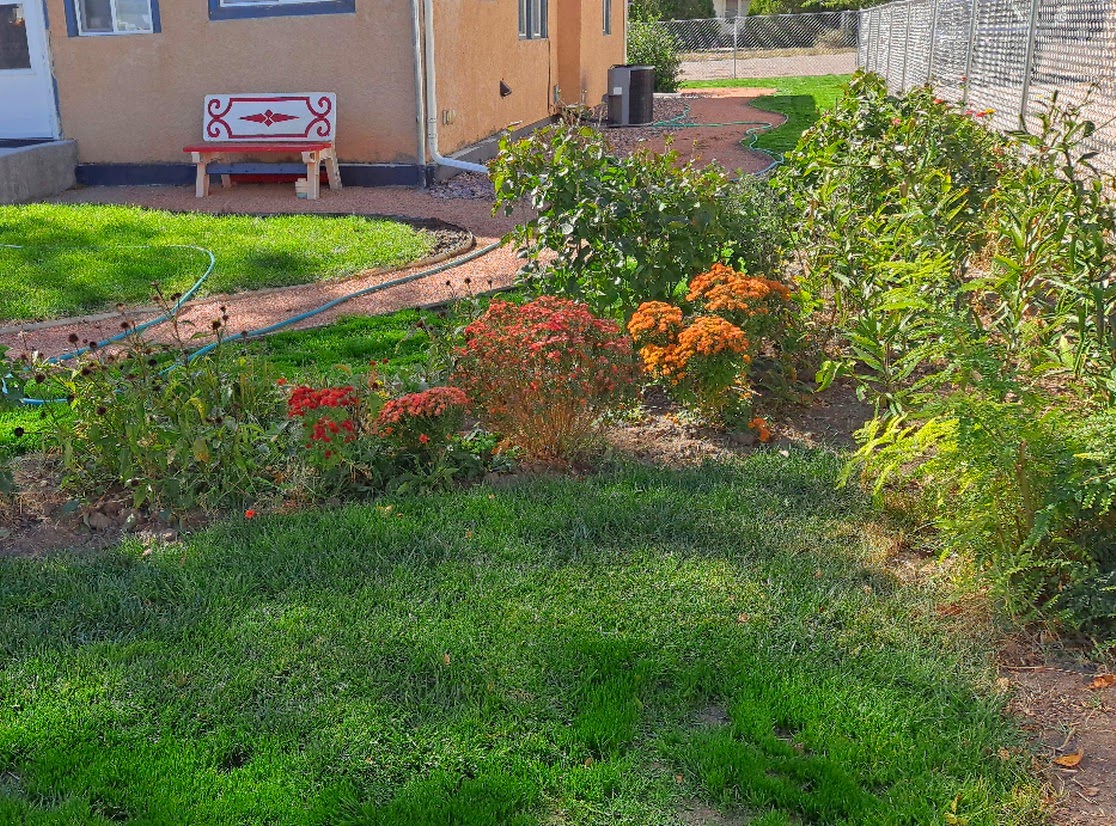
Three things were not in the dream — 1) the town itself because at that point I didn’t really care where I lived, I just wanted not to have to worry; 2) friends because I moved for the house and my future; the friends I’ve made have been a true blessing; 3) a landscaped yard because I didn’t want to have to take care of a lawn or a garden, and yet, over the years, I’ve created a beautiful outdoor space for myself.

So here I am, sixteen years after Jeff’s death, seven years after the Zillow email, living in that brighter future I’d believed would come. Living in the very house I dreamed up.

***

Pat Bertram is the author of Grief: The Inside Story – A Guide to Surviving the Loss of a Loved One.

Mission Statement

Daily writing prompt
What is your mission?

For a couple of decades, my mission was to write the best books I could, to get published, and ultimately to make a living as an author. I succeeded in the first two, and despite my focus and determination, I never figured out how to accomplish the third task.

Eventually my focus shifted, and I felt as if my mission was to tell the truth about grief: that there weren’t any clearly defined stages to climbing out of the pain but instead was a chaotic spiral of never ending and ever recurring emotions, physical side effects, and mental fog; that grief lasted longer than anyone could imagine; and that eventually you would become the person who could handle the soul-searing loss.

I kept at my truth-telling long after people told me I should “drop the mantle of grief” because so many grievers were helped by my raw writings, though to be honest, in real life, I did learn to cloak my sorrow, mostly to keep other people from feeling bad about my situation.

As the years passed, and I became the person I needed to be to survive the death of the person who made my life worth living, I felt less need to continue the mission. Those writings are all there for new grievers to find, but I no longer have anything to say on the subject.

Now my focus is taking care of myself so I can remain strong and independent and living in my own house until my road ends. This is not a mission so much as an intention. There’s no feeling as if this focus is a calling, no sense that it’s a quest, just a vague attempt to do the best I can for myself each day.

Maybe someday I’ll find another mission, but for now, I’m just as glad to drift, dealing with what comes as it comes, without an all-consuming purpose.

***

Pat Bertram is the author of Grief: The Inside Story – A Guide to Surviving the Loss of a Loved One.

Fifteenth Anniversary

I wasn’t sure if I wanted to post a grief anniversary blog this year. It seems as if after a certain number of years, one should stop counting, but we do always count birthdays, wedding anniversaries, and other milestones, and Jeff’s death was a huge milestone date for me, so perhaps counting is still acceptable.

If that’s the case: today is the fifteenth anniversary of that painful date.

To be honest, this isn’t an especially noteworthy day. Well, except for the near-record temperature. 86 degrees! It will cool down to normal temperatures in a couple of days, so I took the opportunity to do various outside chores, such as mow the grass, pull a few weeds, maybe fertilize (I say “maybe” because I’m not sure how well the dispenser I attached to the hose works). I even took a very short walk. (Those days I had to spend on the computer updating my email address wreaked havoc on my knees, and they’re still not working as well as I hoped.) And I visited with a neighbor in the middle of the street.

In a way, I suppose, all those normal activities do make this a noteworthy day. It wasn’t that long ago that I had no plans, no place I wanted to be, nothing I particularly wanted to do. But the years passed. And here I am.

Oddly, that’s about all I have to say about this anniversary. There’s no real vestige of grief left, though I do still feel his absence, more of a vague feeling that something’s missing than the gaping hole I used to feel. Those times when the missing is more than a vague feeling, I talk to him, which helps bridge the gap. I’ve also noticed that I still dream about him, but not in any message-from-the-dead sort of way. He’s just part of the lexicon of my dreams, forgotten when I wake along with all the rest of what went through my sleeping mind.

I did get a flower today, only the second bloom in my yard so far this spring. A fitting reminder that life goes on.

***

Pat Bertram is the author of Grief: The Inside Story – A Guide to Surviving the Loss of a Loved One.

Fourteen Years

I’d stopped writing about grief a while ago — I stopped writing about anything, actually, except for an occasional post to give long time readers an update on my life. I certainly hadn’t intended to write anything else on the subject, although for many years, I felt it was my mission to document my grief so that others who were going through the same thing understood the truth: no matter how crazy grief feels or how long it takes, it’s a normal response to the death of a special loved one. I no longer have the zeal to help grievers, but today is the fourteenth anniversary of Jeff’s death, and I didn’t think the day should go uncommemorated. To be honest, I’m not sure why I feel as if I should commemorate the day. Although I still feel the jagged crack in my soul from where he was ripped from my life, the emptiness has been mostly filled with new memories, new experiences, new foci. Besides that, he has been gone so any years that I no longer feel as if I have a claim on his life. Or his death. Nor do I feel the anniversary in my very soul as I did in the beginning. If not for having it marked on the calendar, I might have let the day pass without acknowledgement. (I remember the date, of course, it’s just that time and calendars don’t seem to correlate to my daily life as they once did.)

Still, both his life and his death affected me enormously. I would not be the person I am today without knowing both love and grief, though I’m not sure that matters — the part about me being the person I am today, that is. For all I know, if things had been different, I might have been a better person, though I could have been worse or simply different or perhaps even the same. We can never know what might have been. All I know is that when he died, my life was sent on a completely different trajectory, and I ended up living a life I could never have imagined when we were together.

I wonder sometimes if we met up today if he’d still like me, but that is a futile speculation. He is gone. He has as little claim to my life now as I have to his. And yet, I do miss him, and perhaps always will.

A friend who has been widowed (widowered?) twice has just married his third wife. I can’t imagine the courage it takes to love again after losing a much-loved spouse not once but twice, nor can I imagine the hope it must entail.

But we all do the best we can to get through our days, and today, the best I can do is to think of Jeff.

And to remember.

***

Pat Bertram is the author of Grief: The Inside Story – A Guide to Surviving the Loss of a Loved One. “Grief: The Inside Story is perfect and that is not hyperbole! It is exactly what folk who are grieving need to read.” –Leesa Healy, RN, GDAS GDAT, Emotional/Mental Health Therapist & Educator.

Thirteen Years

I’d stopped writing about grief a while ago and hadn’t intended to write anything else on the subject, but today is the thirteenth anniversary of Jeff’s death, and I didn’t think the day should go uncommemorated. To be honest, I’m not sure why I feel this way. Although I still feel the jagged crack in my soul from where he was ripped from my life, it has been mostly filled with new memories, new experiences, new foci. Besides that, he has been gone so any years that I no longer feel as if I have a claim on his life. Or his death.

Still, both his life and his death affected me enormously. I would not be the person I am today without knowing both love and grief, though I’m not sure that matters — the part about me being the person I am today, that is. For all I know, if things had been different, I might have been a better person, though I could have been worse or simply different or perhaps even the same. We can never know what might have been. All I know is that when he died, my life was sent on a completely different trajectory, and I ended up living a life I could never have imagined when we were together.

I wonder sometimes if we met up today if he’d still like me, but that is a futile speculation. He is gone. He has as little claim to my life now as I have to his. And yet, I do miss him, and perhaps always will.

Shortly after he died, I met an old woman who told me she’d been married and widowed three times and that she still cried for all of her husbands, even though the first had been gone for decades, and the second and third for many years. I can’t imagine the courage it takes to love again after losing a much-loved spouse, nor can I imagine the courage it takes to deal with so much grief piled on grief.

But we all do the best we can to get through our days, and today, the best I can do is to think of Jeff.

And to remember.

***

Pat Bertram is the author of Grief: The Inside Story – A Guide to Surviving the Loss of a Loved One. “Grief: The Inside Story is perfect and that is not hyperbole! It is exactly what folk who are grieving need to read.” –Leesa Healy, RN, GDAS GDAT, Emotional/Mental Health Therapist & Educator.