 Why are periods and commas put inside quotation marks and exclamation points and question marks put outside the quotation marks?
I’d never pondered this question until recently — I just followed the punctuation rule — but now the rule so often seems illogical.
For example: Did you read my short story “The Willow”? This is the logical placement of the end punctuation, right? The title of the short story (which is published in the Change is in the Wind anthology, by the way) has no period in the title, but if I rephrase the sentence to make it a statement, it seems as if there is a period after the title. I hope you read my short story “The Willow.”
Apparently, this rule of placing periods and commas inside quotation marks is only practiced in the USA. In Britain, they do things differently, but since my books and blogs are mostly read and rated by those in the USA, that’s the rule I have to follow, even if it’s (sometimes) against my inclination.
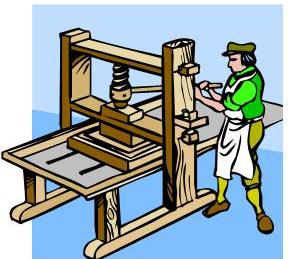
It is an outdated rule. Apparently, when type was set by hand for printing, if the period and comma were placed outside the quotation mark, the delicate pieces were in danger of getting bent out of shape, knocked out of place, or broken off, and so were placed inside the quotation marks for protection. With electronic type, there is no danger of punctuation marks wandering astray, but still the rule lingers.
No one seems to care one way or another about this anachronistic placement, but since it’s one of those rules so many people don’t seem to remember, I have a hunch period and comma placement will become a non-issue, with everyone simply doing as they please.
***
Pat Bertram is the author of the conspiracy novels Light Bringer, More Deaths Than One, A Spark of Heavenly Fire, and Daughter Am I. Bertram is also the author of Grief: The Great Yearning, “an exquisite book, wrenching to read, and at the same time full of profound truths.” Connect with Pat on Google+








 Bertram's Blog
October 13, 2012 at 3:34 pm
I’m afraid I’m a bit more of a purist, prone to follow Strunk and White in “The Elements of Style” and Sheridan Baker in “The Practical Stylist” and the thought of everyone just punctuating any old way gives me shudders. Your history of the reasons why things arose the way they did, however, is quite interesting.
October 13, 2012 at 9:13 pm
With so many people self-editing or not editing at all before they publish, the traditional grammar styles are slowly being eroded. I’ll stick with the traditional ways. Makes things easier.
October 14, 2012 at 7:04 am
Yes. What also helps consistency (but gets me confused sometimes when I’m making a particular choice) is that the question mark and exclamation point also go inside the quotation marks if they are part of the punctuation of the sentence. Or so the style books say. But you’re right about the British system, it seems to be almost the polar opposite, as well as using double quotes where we use single quotes, and conversely single quotes where we use double quotes. You wonder who ever thought up all this stuff anyway. Must’ve been a true punctuation advocate!
October 13, 2012 at 5:23 pm
I wrote a post on this subject myself, as I found the whole thing a bit confusing. But I think I’ve got the rules down now, though, like you, I think our American way is odd.
October 13, 2012 at 9:11 pm
I’ll keep doing it the way I’ve always done, too. Standardized grammar makes reading easier since you don’t have to decipher what the author meant.
October 13, 2012 at 6:08 pm
I’ve been wondering myself about this recently. Thanks for telling me the history; from now on I’m doing this the logical way–because somebody has too!
October 13, 2012 at 6:52 pm
A lot of writers take this stuff very seriously. I, for one, think we use too many commas. But you know that because we’ve had this conversation before, or have we? haha
Ah, the life of a writer.
October 13, 2012 at 9:09 pm
It seems as if some people take all of this too seriously, and others don’t take it seriously enough. A lot of self-published authors seem to make up their own rules since they have no editors keeping them to the usual standards, which is adding to the normal language slippage.
October 13, 2012 at 9:00 pm
Pat, as you know I write a weekly newspaper column. There the convention is for a series of words like x, y and Z that you leave out the comma before the and (just the opposite in fiction) so it drives me crazy.
For newspapers it’s all part of “saving space.” Just like most numbers are numeric and in fiction they are spelled out. Same reason, save space.
October 13, 2012 at 9:07 pm
Lucky for you, John, the Oxford comma is no longer required in fiction, so you can do all your comma-ing the same way.