Season’s Creepings — A Halloween Story in Miniature

A drabble is a short story of exactly one hundred words with a beginning, a middle, and an end. I have been experimenting with this story form as a way of improving my writing, trying to get as strong an image as possible in just a few words. Here is a miniature story for Halloween:

       Cuddling her baby, Cassie went to answer the door.

       Anna, eyes bright beneath hooded lids, smiled at her. “I came to see my newest neighbor.” She bent forward and peered into the baby’s face. “Oooh, he’s so sweet I could just eat him up.” She held out her arms. “May I?”

       Pride welled up in Cassie’s chest. “Sure.”

       With a sudden sinuous motion, Anna took the baby, popped him in her mouth, and swallowed him whole.

       Unable even to scream, Cassie stared at the bulge in the woman’s midsection.

       “What?” Anna gave her a puzzled look. “You said I could.” 

***

Pat Bertram is the author of the suspense novels Light Bringer, More Deaths Than One, A Spark of Heavenly Fire, and Daughter Am I. Bertram is also the author of Grief: The Great Yearning, “an exquisite book, wrenching to read, and at the same time full of profound truths.” Connect with Pat on Google+. Like Pat on Facebook.   

Excerpt From “Grief: The Great Yearning” — Day 214

GTGYthmbI’ve come a long way in the three years since I wrote the following journal entry.  I still don’t understand the nature of life or death. Still don’t understand the point of it all, but the questions don’t haunt me quite as much as they did during the first years after the death of my life mate/soul mate.  I’m learning to live without him, learning even to want to live without him. Sometimes I see his death as freeing us — me — from the horrors of his dying, and I don’t want to waste the sacrifice he made.

I still yearn to talk to him, though. I miss talking to him, miss his insights, miss the neverending conversation. (“Neverending” is a misnomer — the conversation that began the day we met and continued for decades until he got too sick to hold up his end of the dialogue, did eventually end.) He was easy to talk to. He never misunderstood what I said. I could make a simple comment to him, and he understood it was a simple comment. He didn’t make a big issue out of it, just answered back appropriately. It seems now every remark I make to anyone becomes a major deal as I try to explain over and over again what I meant by the first remark. It’s exhausting.

I’m  grateful we met and had so many years together. Grateful for all the words we spoke to each other. Grateful I once had someone to love. Grateful that when my time comes to die, he won’t be here to see me suffer. Grateful he won’t have to grieve for me or be tormented by unaswerable questions.

Excerpt from Grief: The Great Yearning

Day 214, Grief Journal

Life/death has me very confused. I still don’t see that a person lives after they are dead. What survives, if anything? The part of us we never knew—the un-sub-conscious? If so, how would we know who we were after we were dead? Is it just the energy in our bodies that is released? If so, for sure we would not know who we were.

On the other hand, without some sort of afterlife, life simply does not make sense. What’s the point of it all? To survive? For what—more survival until there is no more survival? To help others? Why? So they can survive? For what?

If there is life after death, what do you do with eternity? You have no ears to hear music, no eyes to read or watch a movie, no legs to walk, no hands to caress another, no mouth to talk, no brain to think. Sounds like a horror movie to me. And what will we do if Jeff and I meet again? Bask in each other’s light? That would get boring after a minute or two.

I guess it doesn’t really matter. Whether life ends or continues after death, this is where I am now. So what do I want from the rest of my life? I don’t know. I’ve never really wanted much. I never even wanted happiness—I thought other things were more important, such as truth. But now? I truly do not know what I want, except that which I cannot have. I yearn desperately to talk to Jeff—not about anything in particular, just to talk. It’s like a voice hunger, or a word hunger. A dozen times a day I think of something I want to say to him, to ask him, to marvel at. Sometimes I just want the feeling of connection. I still yearn to put my arms around him and protect him from what will happen, but it’s already happened, and anyway, my touch never had the power to heal.

I know I’m strong enough to handle this—after all, I am handling it—but I DON’T WANT TO!!

Click here to find out more about Grief: The Great Yearning

***

Pat Bertram is the author of the suspense novels Light Bringer, More Deaths Than One, A Spark of Heavenly Fire, and Daughter Am I. Bertram is also the author of Grief: The Great Yearning, “an exquisite book, wrenching to read, and at the same time full of profound truths.” Connect with Pat on Google+. Like Pat on Facebook.
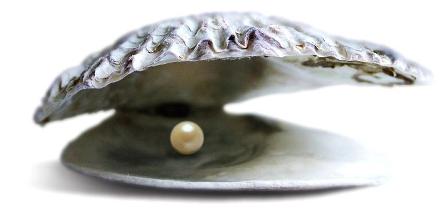
The World’s Mine Oyster

The book world is changing rapidly. Now you can have an entire library of ebooks at your fingertips for less than $10.00 a month.

According to Smashwords, who will be delivering books for the new Oyster app:

oysterA reader downloads the beautiful Oyster app, available for the iPhone and iPad. If they subscribe to the $9.95/month service, the customer gains access to a massive catalog of ebooks, of which Smashwords books will soon be included. Readers can read as much as they want or as little as they want. The books are contained within the Oyster app, and cannot be transferred or shared. If the customer ends their subscription, they lose access to the book. This is fair and reasonable. The customer is subscribing to a service, and for as long as they maintain their subscription, they read whatever they want. It’s a very similar offering to Spotify in music and Netflix for film and television entertainment.

A single Oyster user could conceivably read multiple books by the same Smashwords author in a single month, and the author will be paid for each book. As a Smashwords author or publisher, you’ll earn 60% of you book’s retail list price whenever an Oyster subscriber reads more than 10% of your book, starting from the beginning of the book forward. It’s an author-friendly model. That’s the same rate Smashwords authors earn when we sell ebooks through the major retailers such as Apple and Barnes and Noble.

Oyster’s subscription service will help you connect with a segment of the reading audience you’re not reaching anywhere else. Oyster will also give authors yet another reason to steer clear of exclusivity and embrace full distribution with Smashwords.

The first books to be delivered to Oyster by Smashwords will be their bestsellers, but eventually, my books will be available, too. Although this seems like a good deal for everyone, I doubt I’d ever subscribe to such a service. It spooks me that someone would keep track of what I am reading, and would know as soon as I read more than 10% of a book. Besides, by the time I got used to such a book delivery system, something newer and even more innovative will come on the market.

And anyway, I don’t have an iPad, iPod, iPhone or any other iProduct.

***

Pat Bertram is the author of the suspense novels Light Bringer, More Deaths Than One, A Spark of Heavenly Fire, and Daughter Am I. Bertram is also the author of Grief: The Great Yearning, “an exquisite book, wrenching to read, and at the same time full of profound truths.” Connect with Pat on Google+. Like Pat on Facebook.
I’m going to Blog for Peace. Will You?

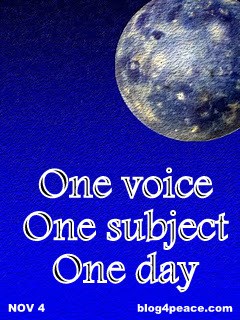
Blog 4 PeaceOn Monday, November 4, people all over the planet blog for peace. This year, I’m going to join the the Blog Blast for Peace, and you can join the movement, too. You make your own peace globe/statement or simply choose one pre-made at http://blogblastforpeace.com, and become – a peace blogger.

Peace bloggers believe that words are powerful, and that this event matters.

So, check out the above website or check out on Facebook: https://www.facebook.com/BlogBlastForPeace.

How To Blog For Peace The short version:

1. Choose a graphic from the peace globe gallery http://peaceglobegallery.blogspot.com/p/get-your-own-peace-globe.html or from the photos on Facebook https://www.facebook.com/BlogBlastForPeace#!/BlogBlastForPeace/app_153284594738391 Right click and Save. Decorate it and sign it, or leave as is.

2. Send the finished globe to blogblast4peace@yahoo.com

3. Post it anywhere online November 4 and title your post Dona Nobis Pacem (Latin for Grant us Peace)

Sounds cool, doesn’t it? See you on November 4!

***

Pat Bertram is the author of the suspense novels Light Bringer, More Deaths Than One, A Spark of Heavenly Fire, and Daughter Am I. Bertram is also the author of Grief: The Great Yearning, “an exquisite book, wrenching to read, and at the same time full of profound truths.” Connect with Pat on Google+. Like Pat on Facebook.
And So Grief Goes . . .

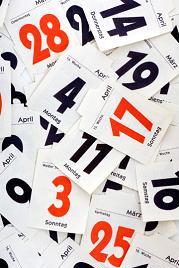
When you lose a soul mate or any person who connects you to the world in a significant way, you are born into the world of grief. At first, like any infant, you count your age in days, then weeks, and finally months and years.

I am long past counting the days and weeks since the death of my life mate/soul mate, though I can figure it out. (In case you’re curious, I calculated that it’s been 1,310 days or 187 weeks.) I’m even past counting the months. Today is an anniversary of his death, but without stopping to figure it out, all I know is that it’s been more than three and a half years but less than four.

numbersThis is a significant development. People who have never had to deal with the death of such an important person in their lives were spooked by my counting the days for so long, thinking I was unhealthily obsessed with the past, but that wasn’t the case at all. The days were milestones, ways of proving to myself that I could get through my grief one day at a time. And I have mostly gone through it. The horrendous pain, angst, and confusion of those first months isn’t even a memory. I can’t imagine anymore what I went through, can’t imagine how anyone could go through such a series of losses and come out the other end stronger and able to face whatever traumas life has in store. (In my case, not only did I lose my life mate/soul mate, I lost shared hopes and dreams, my most devoted fan, my best friend, and my home.)

When I talk about my grief, people assume I mean I still mourn him. To me, grief is the process, the whole spectrum of grief-related advancements including healing and rebuilding one’s life. The spectrum flows from the deepest black of despair to the brightest white of joy. Mourning is the sadness, the tears, the screams, the soul-deep pain — the physical manifestation of grief. I am long past the soul-deep pain, but I am still a long way from joy, so although I seldom mourn him any more, I still consider myself a child of grief.

Someday, that too will pass. Grief has taught me what we already know: things change. I never thought I’d laugh again, never thought I could live again. And yet here I am, all these months later, laughing and enjoying myself on occasion. I never thought I could forget him, and yet he is not always on my mind. For so long, I couldn’t bear the thought of settling down anywhere when I leave here (I am temporarily staying with my 96-year-old father, looking after him so he can be as independent as possible). All I wanted was to keep on the move. Travel See what life has to offer. I still think of leading such a spontaneous and unsettled life, but I am also weighing the possibility of settling down. I used to fear stagnation, but I am surer of myself and my solitary place in the world, and I doubt I would stagnate. I would do . . . something.

And so grief goes . . .

***

Pat Bertram is the author of the suspense novels Light Bringer, More Deaths Than One, A Spark of Heavenly Fire, and Daughter Am I. Bertram is also the author of Grief: The Great Yearning, “an exquisite book, wrenching to read, and at the same time full of profound truths.” Connect with Pat on Google+. Like Pat on Facebook.

Only Human?

At least three times in the past few days, people have reminded me that we’re only human, and each time I could feel myself sliding down our evolutionary tree until my knuckles were dragging on the ground.

(Interestingly, that fall isn’t as far as it once was. Recent finds have shown that what scientists once assumed were three different species have been idenwarriortified as normal variations in the physical features of a single species. But we lay folk already knew that, didn’t we? It’s only common sense that not every member of a species has exactly the same physicality. The shortest living person measures 21.5 inches. The tallest measures 101 inches. I’m sure craniums also have big discrepancies, as do bones and bone density.)

Saying that “we’re only human” masks the truth of us, and believing it allows us to accept the basest part of our natures without feeling the need to aspire to anything more. Sure, we’re human, but we’re also divine, or at least have a glimmer of divinity in us. Even those who don’t believe in God believe we are sparked by something eternal — an energy that can neither be created nor destroyed.

We were born with god-like powers:

The power to interact with the world around us, to become part of the fabric of creation. (Life flows through us, the air becomes part of us, the very earth itself enters our body by way of the food we eat. We are creatures made of stardust.)

The power to participate in creation by way of procreation, making art, writing, living the life only we can lead.

The power to love, to laugh, to sing, to dance, to feel grief and joy, to be compassionate, to forgive.

The power to grow, to transcend who we are and become more of what we were meant to be.

Rob McNamara wrote, “Life will not let you divide the sacred and the mundane. You cannot separate the unsubstantial from the significant for they are married to a union fundamental to the very fabric of existence.”

Yet saying we are only human divorces us from the sacred and leaves the mundane. Why should we aspire to so little?

***

Pat Bertram is the author of the suspense novels Light Bringer, More Deaths Than One, A Spark of Heavenly Fire, and Daughter Am I. Bertram is also the author of Grief: The Great Yearning, “an exquisite book, wrenching to read, and at the same time full of profound truths.” Connect with Pat on Google+. Like Pat on Facebook.
Elegant English

In The Dimwit’s Dictionary, Robert Hartwell Fiske describes elegant English as that which is “expressed with music as well as meaning, with style as well as substance.” He goes on to say that “It is time we aspire to becoming who we were meant to be. It is time to aspire to expressing ourselves well. Elegant English is grammatically correct English, it is uncommon or forgotten English. In all instances, elegant English is English rarely hear, English seldom spoken.”

Everyday English uses such constructions as “It is me,” “okay,” “the fact that,” “I don’t think so.” The corresponding elegant constructions are “It is I,” “as you wish,” “that,” and “I think not.” Everyday English commonly uses “how come?” where elegant English uses “how is it that?”

MusicEven though I don’t like what Fiske calls “quack equations,” I still find myself using them on occasion. Quack equation are expressions such as “a deal is a deal,” “a rule is a rule,” “what’s right is right.” He says such quack equations “readily explain behavior that the dimwitted otherwise find inexplicable, and justify attitudes they otherwise find unjustifiable.”

Occasionally such phrases are inescapable. They are a way of acknowledging that some events are inexplicable, for example: it is what it is. No matter how we try to find the meaning in inexplicable happenings, sometimes the meaning eludes us. Sometimes there is no explanation besides “it is what it is.”

(I have a hunch he would have despaired at the definitions of elegant and elegance in my dictionary. Elegant is defined as “marked by elegance,” and elegance is defined as “something that is elegant.”)

He also rails against plebian sentiments such as “a little knowledge is a dangerous thing,” “I just work here,” “that’s life,” or “you think too much.” “That’s nice” is particularly plebian because it is used to dismiss what a person has said, though it suggests interest. He asserts that plebian sentiments reflect the views and values of the least thoughtful among us, that they blunt our understanding and quash our creativity, and “actually shield us from our thoughts and feelings, from any profound sense of ourselves. People who use these expressions have not become who they were meant to be.”

I consider myself well spoken. I don’t use a lot of colloquialisms or bad grammar, but even I have found my English slipping way past elegant into banal. In my case, it started out as protective coloring. I had a big vocabulary when I was young, though I didn’t always know how to pronounce the words. (I still remember the laughter that greeted me many years ago when I said something was mackaber instead of macabre.) But still, if I wish to lead a more elegant life, and aspire to be who I am meant to be, I should relearn how to speak (and write) more elegantly.

***

Pat Bertram is the author of the suspense novels Light Bringer, More Deaths Than One, A Spark of Heavenly Fire, and Daughter Am I. Bertram is also the author of Grief: The Great Yearning, “an exquisite book, wrenching to read, and at the same time full of profound truths.” Connect with Pat on Google+. Like Pat on Facebook.
Leading an Elegant Life

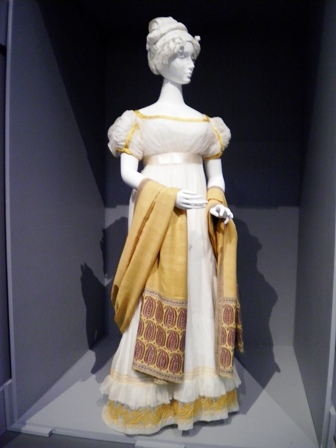
Elegance. Such an elegant word, evoking images of times gone by, when clothes gracefully draped the human form, and people wrote with stylish hands.

Several times lately, I’ve stumbled across the word elegant in reference to both language and living, and I’ve become enamored with the idea of leading an elegant life. When people speak of elegance, they generally refer to things — the materiality of life — such as elegant dress or elegant furnishings, but what does that have to do with life itself?

According to my dictionary, elegance means pleasingly graceful; excellent, splendid. According to Wikipedia, elegance is a synonym for beautiful that has come to acquire the additional connotations of unusual effectiveness, simplicity and focusing on essential features.

So an elegant life would be a life of grace, excellence, effectiveness, and simplicity. Finding the essence of life and paring away that which is cumbersome, unattractive, or unnecessary. Overcoming the limits we have set for ourselves (or that others have set for us). Dreaming of becoming more of who we are.

Sounds lovely, doesn’t it?

During these past years as I’ve struggled to find a way through grief after the death of my life mate/soul mate, I’ve often talked about wanting more, though I have never quite known what I meant by “more.” Well, I still don’t know the specifics of what I mean, but at least I have a better way to describe what I want — an elegant life.

I have a hunch aspiring to lead an elegant life is not an easy task, but beauty and elegance never come without a price.

And it just so happens I have the rest of my life to spend on the pursuit of elegance.

***

Pat Bertram is the author of the suspense novels Light Bringer, More Deaths Than One, A Spark of Heavenly Fire, and Daughter Am I. Bertram is also the author of Grief: The Great Yearning, “an exquisite book, wrenching to read, and at the same time full of profound truths.” Connect with Pat on Google+. Like Pat on Facebook.

Life After the Death of a Soul Mate

What I love most about blogging is that sometimes when I start writing a post, new or buried thoughts percolate to the surface, ending up on the page and surprising me with insights. Yesterday, when I wrote Living Offline, I had no idea I was starting to look forward to the rest of my life. I’ve kept my head down, plodding along, trying new things, meeting new people, visiting new places, and apparently, somewhere along the line, I went through a renewal of sorts.

Many people who had gone through a grievous loss have told me that it takes three to five years to find a renewed interest in life, and so it is with me. In just a few days, it will be three years and seven months since the death of my life mate/soul mate, and I find myself involved deeply in life, not just with such difficult matters as looking out for my 96-year-old father and dealing with problematic family members, but also with taking care of myself and my well-being.

Sierra Club conditioning walkI’m physically active, eat right, and have accidentally become part of an intelligent and talented coterie. I say “accidentally” because when I joined a group of walkers, I didn’t expect to end up going to art shows that feature members’ work, hearing one member in a choir of madrigal singers, and seeing others dance. Because of these people, I’ve also learned not to fear old age. Although people of all ages walk with us, some of the most active members could be considered elderly, but I can barely keep up with those in their seventies. I have no idea what life has is in store for me, of course, but I do know that getting older doesn’t necessarily mean getting feeble. It just takes a bit of luck and a lot of physical activity and mental stimulation.

Grief goes in cycles, so chances are I will still be experiencing occasional grief surges (especially on the weekends when I can’t feast on the endorphins and friendship of the group walk), but now I know the truth: there is life after the death of the person who connected you to the world. There is even laughter. Maybe even joy.

***

Pat Bertram is the author of the suspense novels Light Bringer, More Deaths Than One, A Spark of Heavenly Fire, and Daughter Am I. Bertram is also the author of Grief: The Great Yearning, “an exquisite book, wrenching to read, and at the same time full of profound truths.” Connect with Pat on Google+. Like Pat on Facebook.

Living Offline

I seem to have more of an offline life lately than I do online, which is a throwback for me. I didn’t get a computer or get on the internet until 2007, but they came at a time of upheaval in my life (my mother was dying and my life mate/soul mate was declining) and they proved to be lifesavers. Well, mindsavers. I needed something to occupy my mind to keep from giving in to foolish worry (foolish because there was nothing I could do about either situation except to be available when needed), and learning has always been my forte. So I learned what I could about using computers, navigating the internet, blogging, social networking, and everything else that goes to making up an online life.

Origidesknally, I was gifted with a year of the internet, and after checking out libraries and finding other interesting sites such as the Internet Movie Database, I wondered how I could possibly use this unexpected gift. I figured that by the end of that first year, either I would find something to do, or I would get rid of it.

It didn’t even take a year, just a few months. Not only did I find something to do, I found a life, excitement, friends, even love of a sort. (I loved blogging from the first time I posted an article and understood what blogging was all about.) I also found support and encouragement. I don’t know how I would have dealt with the death of my life mate/soul mate if it weren’t for the bereft I met because of opening myself to the blogosphere.

Now, almost three and a half years after his death, I’m looking around my offline world, and I’m finding life, excitement, friends, even love of a sort. (I love walking with the local Sierra Club.) I no longer seem to need the screen of a computer to filter the worst of my worry or pain. I see the world through the excited eyes of child rather than the angst-ridden eyes of a bereft and lonely woman.

Parts of my offline life are hard, of course. I’m looking out for my 96-year-old father, dealing with problematic family members, and experiencing occasional upsurges of grief, but what isn’t hard is easy. Fun, even.

Instead of fearing the rest of my life alone, now I’m looking forward to seeing what I will make of myself.

***

(Pat Bertram is the author of the suspense novels Light Bringer, More Deaths Than One, A Spark of Heavenly Fire, and Daughter Am I. Bertram is also the author of Grief: The Great Yearning, “an exquisite book, wrenching to read, and at the same time full of profound truths.”) Connect with Pat on Google+. Like Pat on Facebook.




