A Halloween Fable by Pat Bertram

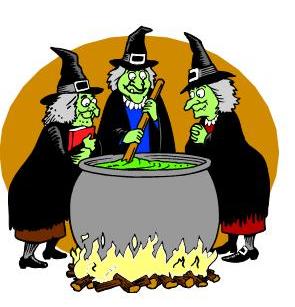
Once upon a time,
Long ago and far away,
Lived the queen of the witches,
Griselda the Gray.
If you think all witches are tall and thin,
You are wrong about that.
Griselda the Gray was short
And extremely fat.
Like everyone else,
Griselda tried to be good.
Griselda never did anything bad
Like normal witches should.
This upset the other witches
Because they had to copy their queen.
They had to be nice
When they wanted to be mean.
So they all got together
And mixed up a brew.
They gave it to Griselda
When they were all through.
The brew was so rotten
Griselda had a fit.
She screamed and yelled
And hollered and bit;
She howled and cackled
And made such a noise
That the other witches were happy
And began to rejoice.
“Griselda is bad
And we are glad.
Griselda is ghastly
So now we can be nasty.
Oh, what a happy, horrible day!
Hurrah for our queen, Griselda the Gray!”

The moral of this story is that witches should
Never try to be very good.

***

Pat Bertram is the author of the conspiracy novels Light Bringer, More Deaths Than One, A Spark of Heavenly Fire, and Daughter Am I. Bertram is also the author of Grief: The Great Yearning, “an exquisite book, wrenching to read, and at the same time full of profound truths.” Connect with Pat on Google+

I’m going to Blog for Peace. Will You?

Blog 4 Peace

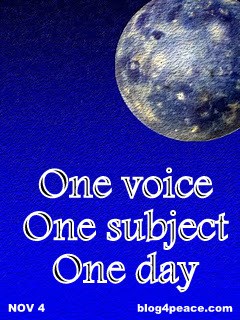
If words are powerful, then this matters.

On November 4th every year, people all over the planet blog for peace. This year, I’m going to join the the Blog Blast for Peace, and you can join the movement, too. You make your own peace globe/statement or simply choose one pre-made at http://blogblastforpeace.com, and become – a peace blogger.

Peace bloggers believe that words are powerful, and that this event matters.

So, check out the above website or check out on Facebook: https://www.facebook.com/BlogBlastForPeace.

How To Blog For Peace The short version:

1. Choose a graphic from the peace globe gallery http://peaceglobegallery.blogspot.com/p/get-your-own-peace-globe.html or from the photos on Facebook https://www.facebook.com/BlogBlastForPeace#!/BlogBlastForPeace/app_153284594738391 Right click and Save. Decorate it and sign it, or leave as is.

2. Send the finished globe to blog4peace@yahoo.com

3. Post it anywhere online November 4 and title your post Dona Nobis Pacem (Latin for Grant us Peace)

Sounds cool, doesn’t it? See you on November 4!

***

(Pat Bertram is the author of the suspense novels Light Bringer, More Deaths Than One, A Spark of Heavenly Fire, and Daughter Am I. Bertram is also the author of Grief: The Great Yearning, “an exquisite book, wrenching to read, and at the same time full of profound truths.”) Connect with Pat on Google+. Like Pat on Facebook.


Trying to Fill the Hole in My Book

When my life mate/soul mate died, I went into a tailspin of grief that lasted years. It came as a shock to me because I thought I was stoic and had my feet so solidly on the ground that I would be sad and lonely and then get on with the business of grief. The sort of grief I felt, I had never heard of before. I’d seen a few characters in movies shrieSunrise/Sunsetk in agony at their husbands’ funerals , but these theatrics always seemed more for effect than as a sign that half their soul had been ripped away.

The few mentions of grief in novels were pretty lame. One book said, “She went through the five stages of grief.” That was the only mention of how the woman felt after the death of her husband, and it especially seemed phony because there are not five stages of grief or seven. There are an infinite permutation of emotions that come again and again in ever widening spiral until finally the spiral is wide enough you don’t feel the loss every moment of every day.

A character in another book cried one night, then woke up the next morning, with a determination to be done with tears, and she was. Again, this was a phony reaction. Sure, we can be determined to be done with tears, but grief has physical life of its own, throwing hormones out of whack and interfering with brain chemistry. Those physical effects cannot be ignored. They are there whether you want them or not. It’s not just that we go through grief, but grief also goes through us.

So, being both a writer and a woman who experienced grief, I decided I needed to write a novel about a woman going through grief. I wrote much of it during National Novel Writing Month the November after his death so I could show the emotions while they were fresh. To do the daily word counts required to “win” the challenge, I wrote whatever chapter came to mind.

Now, all these years later, I’m trying to put those scattered chapters into a reasonable facsimile of a novel. I’ve had to get rid of thousands of redundant words, had to winnow out many of the paragraphs that talked about her pain rather than showing her going through grief, and I have to struggle to make her likable even though she doesn’t much like herself. (Many of us don’t like ourselves when we are grief-stricken.) We are so bludgeoned into believing that we must be upbeat at all costs, that crying is for sissies, that emotions are to be controlled, that a character going through grief sounds like a whiner or a loser or a weakling.

I had envisioned the ending of the book as her driving off alone, probably because since I am alone, I can’t envision a different life. And anyway, it’s too soon for her to hook up. If I keep that same ending, I have a huge hole in the book, not just a lack of about 25,000 words, but a lack of character growth. You can’t have a woman whining and crying and screaming for most of a book, and then suddenly, it’s over with. What a cheat for the reader! If you suffer through all that sorrow, you need a bigger payoff. (Of course, in life there generally is no payoff, but in a story, there needs to be.)

So, this is what I’ve been doing the past couple of weeks when I haven’t been blogging — trying to figure out how to dig myself out of the hole. No success yet. Although I wanted to finish this book, I might have to set it aside when I get all those original chapters typed up and inserted into the proper place in the story. You can’t survive with a hole in your heart where love once lived, and a book can’t survive with a hole in its heart, either. I do have a cyber romance for her. I suppose I could fill that out a bit. I also have a a mystery about why her husband has a gun — I suppose I could fill that out too.

But still, the hole is there.

Could it be because I still have a hole inside me? If so, there’s not much I can do about it. Apparently, that hole is here for good.

***

(Pat Bertram is the author of the suspense novels Light Bringer, More Deaths Than One, A Spark of Heavenly Fire, and Daughter Am I. Bertram is also the author of Grief: The Great Yearning, “an exquisite book, wrenching to read, and at the same time full of profound truths.”) Connect with Pat on Google+. Like Pat on Facebook.

Out With the Old, In With the Older

Two-and-a-half years ago, when one of the women in my dance class found out I am an author, she suggested that I write a book about our class, and even volunteered to be the victim. I thought about it for more than a year, planning the story and trying to figure out a way around the many problems I could see, such as the women hating what I’d written about them. During a pleasant interlude, a little over a year ago, while staying with a friend, I started writing the book. And there it sat, all this time. Seven weeks ago, after making a commitment to write 250 words a day, I dug out the book and worked on it.

And now it is finished! I will let it sit for a while until I can read it with a fresh mind, then go over it one more time. And then — who knows. My publisher and I are at a standstill. He thinks he should have final say about such matters as typos and formatting because he is funding the project, and I think I should. I would rather not have the book published than give up even those simple rights, so who knows what will happen. Either way, it wouldn’t be published until latesmiley next year. Meantime, I am offering to send the manuscript to folks who want to read it in exchange for noting any typos they find. Let me know if you want to be one of these first readers.

Today, I dug out another unfinished manuscript. This one is much more complicated. I started writing it in November of 2010, a few months after Jeff died. I wanted to try NaNoWriMo — National Novel Writing Month — where writers are challenged to write 50,000 words in the thirty days of November. The only way I could manage the word count was to write chapters as I thought of them. So now I am faced with a stack of unrelated chapters with a lot of repetion and no idea  how to string them together. Even worse, they are all hand written, so I also have to type them. Worst of all, scenes I thought I’d written, I hadn’t, and now I don’t remember what needed to go into those crucial scenes to make the story work. Eek.

I do have the first fourth of the book typed and in chronological order, but it shows a woman in the first throes of grief, and I worry that her many tears and screams would be off-putting. Still, that is a job for the editing process, when I’ve gotten the story into a first draft. But, mingled with the tears are hints of a deeper story. A gun hidden in a closet. A suicide note. A box with gun oil and stained rags. A file that was password protected. Oh, and a cyber affair.

The woman was married to a preacher and will be evicted from the manse, which adds even more pathos to the story, but I can’t find the eviction scene. Maybe I decided they had bought a house, and she turned it over to her daughter? I guess I’ll find out in the writing! I do like the idea of one trauma piled on another, though. The woman seems a bit weak, all those tears and whines about not knowing who she is if she doesn’t know who her husband was, and putting her through more stress than a person can handle would be a good way of seeing what she’s made of.

I’d actually planned to finish another book first, one I started the year before Jeff died. It will actually be easier from a writer’s point of view because the book is three-fourths finished, and I know what the story is, but it’s harder from an emotional point of view. The idea came from him, and it hurts that he won’t be in at the finish.

Still, it’s best to do the emotional books first, get them out of my head.

Since, apparently, I am working backward, the final book will be the complete revision of my first book. The idea still intrigues, but I started it long before I learned how to write, maybe seventeen years ago, so I will probably have to start from scratch. There is a sex scene in the book, though, and I hope that is salvageable since each book I write seems to become more chaste than the last.

Meantime, I am dealing with this mess, trying to wrangle it into a cohesive story.

Ah, the fun that awaits me!

***

(Pat Bertram is the author of the suspense novels Light Bringer, More Deaths Than One, A Spark of Heavenly Fire, and Daughter Am I. Bertram is also the author of Grief: The Great Yearning, “an exquisite book, wrenching to read, and at the same time full of profound truths.”) Connect with Pat on Google+. Like Pat on Facebook.