Having a Human Experience

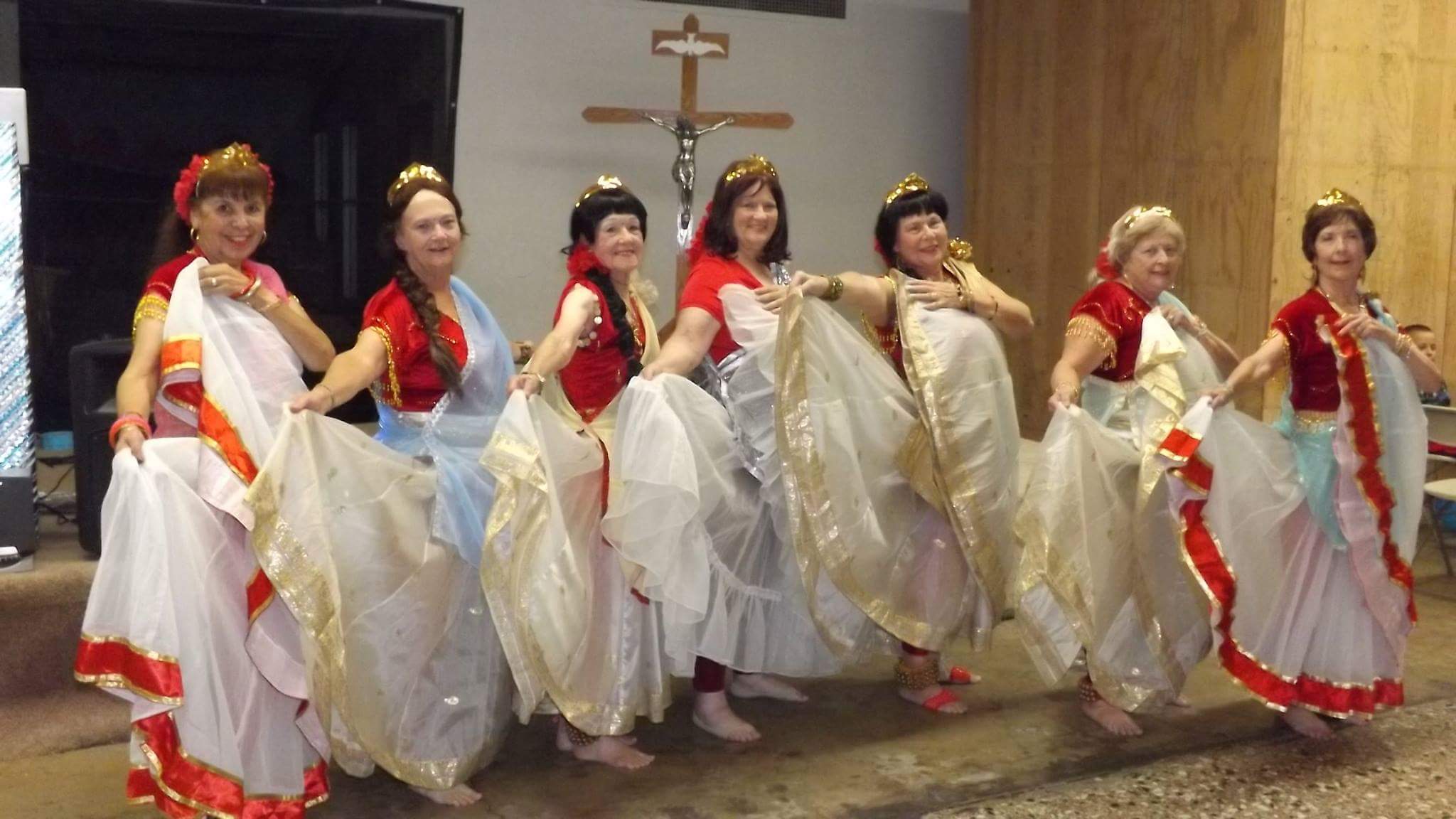
I did a Bollywood dance performance eight nights ago, and a few minutes later, I was lying in the parking lot outside the theater screaming in agony. Apparently, as I crossed the parking lot to my car, I tripped over a free-standing cement parking curb. Shattered my left wrist. I drove myself to the hospital (I didn’t want to leave my car in the lot, and somehow, fueled by adrenaline and unreasoning pain, it seemed the most expedient solution for getting to the emergency room.)

After a night in the ER, I was admitted to the hospital until they could do the surgery a couple of days later. When they got me on the cart to wheel me to the operating room, they told me the only panties I could wear were the mesh hospital panties, and since I was already wearing those, I didn’t think anything of it. Then, before they wheeled me away, the nurse came and pulled off the panties under the mistaken assumption they were not allowed. And I started crying. Up until then, I’d accepted the pain, the emergency room, the drugs, the hospital stay and everything else that happened to me with equanamity (or the numbness of shock?) but the removal of the panties did me in. I felt unutterably vulnerable and alone.

I still do.

I’m out of the hospital, dealing as best as I can with drug-fuddled mind and only one usable hand/arm. I’m trying not to feel sorry for myself, and mostly succeeding, but this is the culmination of a very traumatic ten years. It started with the death of the brother closest to me in age nine years and eleven months ago. Since then, I have had to deal with my mother’s illness and death, my life mate/soul mate’s long dying and subsequent death, my elderly father’s care and his death. Also, I broke an ankle, scalped myself, lost a tooth, and now have multiple fractures in my wrist/arm.

Lots of life — and death — going on.

But for now, what’s important is the current injury.

People ask me how I am interpreting this particular experience and what the message is. I am trying not to find messages. Trying to see the fall as simply an accident because anything else, such as the possibility that internal conflicts could manifest themselves physically, is simply too frightening.

Although I don’t believe in rites, such as funerals, I went to my mother’s funeral to see everyone in my family one more time. But shortly after I got there, I broke my ankle. Spend the viewing at the ER and the funeral at the bone specialist’s office.

And now, once again, I’d been faced with doing something I didn’t want to do — that dance performance. I really, really didn’t want to be part of a multi-day show and even told my class if they badgered me into it, something bad would happen. Somewhere along the line, I stopped saying no and ended up being understudy for that one particular show because they truly did need me. I enjoyed the performance, did it perfectly. And then, a few minutes afterward, I lay screaming in the parking lot.

If there is a message, it’s for me to stop doing things I don’t want to do. Or more accurately, to stay away from internal conflict. (There are actually two internal conflicts at play here — the dance recital and the book I am writing. I don’t want to write it, but I want to finish it, and now I am forced to take a hiatus.) But the truth is, I don’t want to believe that there is any correlation between internal conflict and broken bones. Way too frightening!

It’s better if I think of this latest trauma, as with all my traumas, as my being a human person having a human experience.

If I say it enough, I might actually come to believe it.

***

(Pat Bertram is the author of the suspense novels Light Bringer, More Deaths Than One, A Spark of Heavenly Fire, and Daughter Am I. Bertram is also the author of Grief: The Great Yearning, “an exquisite book, wrenching to read, and at the same time full of profound truths.”)

Grief, the Internet, and Other Unpolitic Matters

It seems funny to me that I managed to write a blog post every day for more than four years, and now I can’t come up with four posts a month. There is so much I don’t want to talk about. Or rather, that I do want to talk about but don’t think it . . . politic. (Weird, isn’t it, that talking of politics is no longer politic? Not that I particularly want to talk about what’s going on in the world, but it’s hard not to want to have my say.)

During all my years online, I’ve heard people say that the internet is a harsh place because people hide behind their online personas and spew filth, but until this past week, I’ve never encountered such hatred and anger. Online, people are screeching about racists and xenophobes and misogynists and bigots, but offline, people are respectfully and calmly talking about why they voted the way they did, and not one of them voted for racism. Except that in today’s world, if you disagree with standard group-think for any reason, the first word that comes up in retaliation is “racist.” Or “anti-feminist.” As if the only reason to vote for a Broken heartwoman is that she’s a woman like you. (Apparently, women are not allowed to look beyond gender to the issues dear to their heart.)

None of this has anything to do with me, really, but I see the hurt caused by such divisiveness. I have never lost so much respect for so many people so fast as I did this past week. The election results didn’t upset me. I know that historically any Republican president brings out the activists, which mitigates the power. But the hatred and lies and name calling is something I can do without. Not only am I a person who wants everyone to get along, but such contention exacerbates my ongoing sadness.

When I was writing my dance class book, I was in a good place mentally. But now . . . not so much. I’m not experiencing grief; really, it’s more that all the vehement rhetoric makes me miss the one person I knew who could look rationally and historically beyond the hype on both sides to the truth, who understood my feelings, who knew my thoughts and agreed with them because they were his thoughts too. I realize having such a person in my life was a blessing, but sometimes it’s hard to still count that particular blessing because it ended so very long ago. In a few months, it will be seven years since he’s been gone. Long enough to forget occasionally that I had him in my life, but not long enough to completely fill the hole he left behind.

Working on my current book, a novel I started six years ago about a woman who lost her husband to death, is resurrecting the sadness, which shows me grief is still there, buried under my renewed equanimity. (I never used to be an emotional person, but his death slammed me way off course.) I periodically think about scrapping the book. I don’t know if anyone will ever read it. A grieving woman is not the sort of heroine that people seem to admire. A person experiencing grief is at the mercy of her hormones and brain chemistry, her emotional and spiritual tornadoes, the sheer debilitating exhaustion of the process. No amount of determination, no power-woman tactics can get you through it. Only going through it can get you through it.

Such a character and her manifest weakness, no matter how temporary, is not exactly something most people find inspiring. And yet, that’s the whole point of the book. To show the truth of grief. I got so sick of books where the woman lost her husband, cried herself to sleep, and woke up the next morning thinking, “Okay, that’s done with.” Or as one author wrote, “She went through all five stages of grief.” Yeah. That’s deep.

There is a reason why books featuring fictional widows and widowers generally start three to five years after the spouse’s death — those first years are not pretty.

And my poor heroine’s story is the first two months after her husband’s death. Oh, my. What have I gotten myself into!

But, despite my misgivings, I keep plugging along with the book and my life. And maybe someday both will find an acceptable resolution.

As for the world outside my own little world? Nope. Not a hope. People have become too addicted to their own opinions to ever see the truth in the opposition. The situation would break my heart if it weren’t already broken.

***

(Pat Bertram is the author of the suspense novels Light Bringer, More Deaths Than One, A Spark of Heavenly Fire, and Daughter Am I. Bertram is also the author of Grief: The Great Yearning, “an exquisite book, wrenching to read, and at the same time full of profound truths.”) Connect with Pat on Google+. Like Pat on Facebook.

My First and Only Sort-of Political Post

I’m smiling today, not in celebration of a Trump victory or a Clinton loss, but because, well . . . because it’s a new day. The sun is shining, I have nothing to do but write, and history has been made.

This 2016 political campaign was set up to be an historical election from the beginning — the total political insider vs. the total outsider. Not racists and misogynists vs. liberals. Not good vs. bad (because all voters did the best they could with a bizarre candidacy). Not urban vs. rural, though that’s the way it turned out to be. Not rich politician vs. poor politician because both runners had more money at their disposal than most cities do. Not hate vs. . . . well, not love, that’s for sure because from what I could see, Hillary lovers/Donald haters have nothing but hate — or at least contempt — for the folk who elected him. It wasn’t even intelligence vs. ignorance, because a huge portion of The Donald voters approached the election with intelligence while many of the Hillary folk came from a position of ignorance with no clue why people would vote for such a buffoon.

Hillary was slated to be the first woman president. What we got instead was the first non-politician/non war hero president. History.

Though it seems like this was a male vs. female race, it was all about the insider vs. the outsider. The Clintons did not spring up out of the pack, being chosen by “we the people” for their stellar qualities. They were chosen in college and have been groomed for their leadership positions their entire lives because of their charisma and their ability to talk a whole bunch of people into doing what the power elite want. (Ever wonder what all those standardized tests were for? Well, now you know one reason — to give the power elite a clear vision of who we are and how they can use us.)

[As an aside: Nixon was found and groomed by Prescott Bush, the daddy of the first Bush president, after Nixon answered a classified ad. Remember when Nixon said “they” wouldn’t have him to push around any more? It wasn’t you and me he was talking to. It was his handlers. The power elite.]

Yep. The power elite. Do you really think a president has all that much power? Take comfort in knowing that while the US president is powerful, there are other forces, such as the puppetmasters, that are way more powerful. These international power brokers don’t care who wins because they win either way.

(You didn’t know I was of a conspiratorial bent? That I am against government of all kinds? That while I know of the power elite, there is no way I approve of such a shadow force? Then you haven’t read my books. In More Deaths Than One, I tell of the mind control experiments the government has perpetrated on unsuspecting citizens. In A Spark of Heavenly Fire, I talk about biological warfare, again, some of which was done on US citizens. In Light Bringer, I pull from Sumerian cosmology by way of Zecharia Sitchen showing the possibility that this movement toward a one-world government is more than 7,000 years old; also William Bramley, author of The Gods of Eden had some influence on my novel.)

Have you ever wondered why Donald chose to run? Did he wake up one morning and think, “Geez, I think I’ll run for president”? I do. I wonder who contacted him. Or who he contacted.

The Electoral College was set up to keep out those not qualified to be president because it was believed that the people weren’t intelligent enough to vote for the right candidate. (Also to give the states themselves a voice because after all, we are a nation of states. If it weren’t for the states’ rights, we’d have a couple of urban areas control of the entire country.) I figured that if Donald got the majority vote, the Electoral College would give it to Hillary, and they still might. The Electoral College, which votes on December 19, does not have to follow the votes for their state — they can vote for whomever they wish.

December 19 is the real election, the one that will determine who is president.

Hillary got the popular vote, but Donald won the electoral votes, so it’s vaguely possible she will still get the presidency if enough republicans decide to protest Donald’s election. If Donald’s election is upheld, it will make me wonder why he was chosen, by whom he was chosen, and ultimately, for whom he will be working. (Have you ever wondered why so many new presidents age rapidly their first year in office? They find out the truth. Some say that’s why JFK was assassinated — he was insistent on being a real president, not just another figurehead.)

Although I am basically apolitical, I am aware that historically more good is done when a Republican is president, not because of him (or, one day, her) but because when a Republican is president, a whole slew of sleeping grass roots organizations come out of hibernation and provide a foil for his policies. When a democrat is president, these organizations go to sleep because they think all is well with the world. Is it any wonder that all of the major U.S. wars in the 20th century—World War I, II, Korea and Vietnam—were entered by Democratic administrations? Harry Truman, a Democrat, is still the only world leader to use a nuclear bomb on a population. So, something to think about. Donald being president for “all the people” as he claimed might actually come true, because one way or another, whether for him or against him, people will work for the greater good. (I already see signs of those grass roots growing. Lists of pro-women, pro-lgbt, pro-abortion, pro-imigrant and anti-bigotry organizations are being shared on FB.) And, power elite or not, true power — the power of numbers — is in our hands if we work together.

Campaign rhetoric is just that — rhetoric meant to get the votes. Nothing new there. If you were to read Lincoln’s campaign speeches, you’d see that sometimes he said he’d abolish slavery, sometimes he said he wouldn’t, depending on the beliefs of people he was talking to. The truth will out in the coming years, but I do not think this election has set us back a hundred years. It’s always about today, this very moment, and today is the same as yesterday. All else is speculation.

I have removed a whole slew of FB friends not because of their political beliefs but because of their nastiness. Cripes, get a grip, folks. I realize a lot of people are angry, many are scared (including some who voted for Donald), others are grieving. But this win isn’t the end of the country. The president, whoever it might be, isn’t the United States. The USA is you and me, our neighbors and friends, our church members, classmates, and fellow workers.

I hear democrats screaming about the idiots who voted for racism and misogyny, but those histrionics are just that. Histrionics. Although I know a lot of people who voted for Donald, not one of those friends voted for racism or misogyny. These people (with misgivings for the man they voted for) generally voted against something — against late term abortion, against the status quo, against illegal immigration (because, duh, it’s illegal), against the New World Order, against Hillary herself. A few people I know were gung-ho Trump supporters, but they came to their position with a wide view of the world. Still, whatever the reasoning behind the votes, these people are United States citizens. The neo-liberals are not the only people in the country. This nation is made up of all kinds, and all deserve a voice.

So please, stop the nastiness. Be kind. This is a new day. The sun is shining — or not. And we are alive.

Peace to all. And to all, a good day.
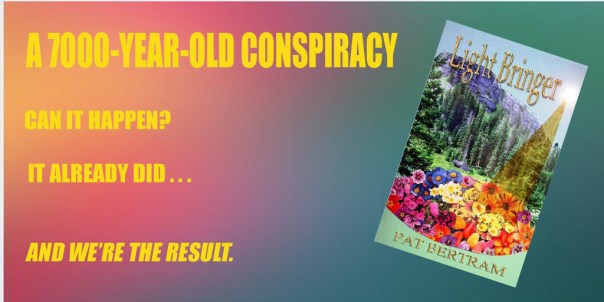
Light Bringer

***

(Pat Bertram is the author of the suspense novels Light Bringer, More Deaths Than One, A Spark of Heavenly Fire, and Daughter Am I. Bertram is also the author of Grief: The Great Yearning, “an exquisite book, wrenching to read, and at the same time full of profound truths.”) Connect with Pat on Google+. Like Pat on Facebook.
Dona Nobis Pacem

Thousands of bloggers from all over the globe are Blogging for Peace today.

One subject. One voice. One day.

Words are powerful . . . this matters.

peace blog

***

(Pat Bertram is the author of the suspense novels Light Bringer, More Deaths Than One, A Spark of Heavenly Fire, and Daughter Am I. Bertram is also the author of Grief: The Great Yearning, “an exquisite book, wrenching to read, and at the same time full of profound truths.”) Connect with Pat on Google+. Like Pat on Facebook.