
What Everyone Should Know About Grief – Part 9

I recently read that Nietzsche said people tended to exaggerate their traumas. I don’t know whether Nietzsche actually said it since I couldn’t find such a quote from him, but I do think the sentiment is true, at least to a certain extent.

It’s this tendency to exaggerate our traumas that leads others to downplay the role that grief plays in our lives. If we tell the truth, they assume exaggeration, and so they shrug off as hyperbole what is very real to us. Since most people have experienced some sort of grief in their lives, they assume they know what grief is. If we try to explain what we are feeling when we lose someone intrinsic to our lives, someone to whom we are profoundly connected, it doesn’t match with what they feel, so they think we are over dramatizing ourselves.

It’s not surprising people can’t imagine what we feel. Most of us who lost our mates couldn’t believe what was happening to us — couldn’t even imagine it though we were living it. Because of this all-consuming feeling, there is no way we could ever have imagined grief exaggerated beyond what we experienced.

The truth is, there is no way to exaggerate profound grief. Profound grief is exaggeration — an immense magnification of emotion. An amplification of loss. An excess of pain. A trauma that affects every part of us and our lives. A process that changes us and our relation to ourselves and all that surrounds us.

This blog post itself seems an exaggeration, especially in the bright sun of this day so many years after Jeff died, and yet, I know the truth.

My message is as it always is — if you are experiencing what seems to be an insane level of grief, it is normal. Horrendously painful, but normal. Know that one day, you will find peace.

If you haven’t experienced such grief, be kind to those who are dealing with a profound loss. If you think someone is exaggerating grief years after the death of a child or soul mate, give them the benefit of their own truth. Don’t dismiss their feelings or downplay their grief as self-dramatization. I’m sure they wish that’s all it was — a bit of melodrama — but be assured they still feel the loss in every cell of their being.

Wishing you all a peaceful — and kinder — day.

***

Pat Bertram is the author of the suspense novels UnfinishedMadame ZeeZee’s Nightmare, Light BringerMore Deaths Than OneA Spark of Heavenly Fireand Daughter Am IBertram is also the author of Grief: The Great Yearning, “an exquisite book, wrenching to read, and at the same time full of profound truths.” Connect with Pat on Google+. Like Pat on Facebook.

What Everyone Should Know About Grief – Part 8

Marrying again after the loss of a life mate can be a tricky business because a new love does not negate previous loves. Nor does a new love negate grief.

I’ve met people who started dating quickly after the death of their spouse because they couldn’t stand the pain and loneliness of their grief any longer. To their shock, and to the shock of their new mate, grief did not abate. In at least one case, the new spouse felt betrayed by his wife’s continued grief, thinking his love should have made a difference to her grief, and she felt isolated — and unloved — because he didn’t have compassion for her bouts of sorrow.

Whether we remarry, embark on a long-term relationship without remarrying, or never find anyone else to love, the emotional attachment for the first partner remains a part of us. Despite continued grief for one partner, both men and women are able to form new attachments that can be just as strong as the previous one. The key is to understand the nature of grief and love and to let grief continue to happen, which is why the strongest remarriages are often between widows and widowers.

This concept — that remarrying does not negate grief — is important for both grievers and their friends and family to understand. Sometimes friends and family us urge us to “move on” (meaning to find someone else), and as well-meaning as this might be, it ignores the intrinsic nature of grief — that grief is how we move on after the death of our beloved mate. A new love will not change that. Occasionally, friends or family will feel conned if a widow or widower “moves on” too quickly, thinking that perhaps the grief was a sham or that the griever hadn’t really loved their first partner.

Many of us never find anyone else to love. This doesn’t mean we are holding on to our grief, are not “moving on,” or are refusing to accept a new love. We can’t control what happens to us, and love doesn’t always happen again. We do the best we can with what life (and death) deals us and all we can do is hope that our loved ones will support us even if they can’t understand what we are feeling.

***

Pat Bertram is the author of the suspense novels UnfinishedMadame ZeeZee’s Nightmare, Light BringerMore Deaths Than OneA Spark of Heavenly Fireand Daughter Am IBertram is also the author of Grief: The Great Yearning, “an exquisite book, wrenching to read, and at the same time full of profound truths.” Connect with Pat on Google+. Like Pat on Facebook.
What Everyone Should Know About Grief – Part 7

We don’t need to be angry at someone or something to feel anger as part of grief. This anger is not a stage of grief, not a complication, but an intrinsic part of the process. Since much of grief is visceral — a response to perceived danger — we experience a tremendous fight or flight hormonal upsurge. The panic we feel after the death of a life mate is a natural part of this survival mechanism; it alerts us to the danger of being suddenly alone. Anger is the other side of this mechanism, the part that generates the energy necessary to take action.

In many cases, the anger comes first, and the reason for the anger second. Our minds scurry around trying to find a reason for how we feel because as rational beings, we cannot accept unfocused anger, so we search for a focus. Sometimes there really are causes for anger, such as doctors who don’t tell us the truth or who made horrendous mistakes that caused the death. Other times we focus on the deceased, for example, a smoker who died of lung cancer after refusing to give up smoking. Other times we are angry at the cancer that stole our loved ones, at death, at the loved one for leaving us, at ourselves even for not being more of whatever we think we should have been.

Anger is generally considered to be a negative emotion, but like all emotions, it has a positive side. In small doses, anger is a good thing. Anger can give us the strength to survive. Anger can give us the energy to do things we couldn’t do under normal circumstances. Anger can give us a feeling of control in uncertain times, and for sure, grief is an uncertain time. Anger can keep us going when we want to give up. Anger can give us the courage to live with the injustice of death. Anger can motivate us to find solutions to problems, can motivate us to undertake dreaded tasks, can motivate us to change our lives.

Much of grief is a process of change, of adaptation, taking us from a relatively-safe shared life to a relatively-safe solitary life. And it is anger that helps get us there.

In those first weeks after Jeff died, not only did I have all those ghastly end-of-life chores to do by myself, such as arranging for the disposition of his body and dealing with banks and government agencies, I had to pack up and leave our home to go take care of my ninety-three-year-old father. I managed to do everything necessary by using the power of anger. When I was too enervated to do anything, when I was too dazed to think or too stressed, I cried, or paced, screamed or went to bed, but when waves of anger came over me, I didn’t fight the feelings. Instead, I used the faux energy of anger to get things done.

After the initial anger dissipated, I clung to the vestiges of anger to help me get through the lonely days.

The wild grief for a life mate/soul mate makes us feel as if we are out of control or even crazy, but understanding the process and realizing what we are feeling is normal, can make it easier to deal with those feelings.

***

Pat Bertram is the author of the suspense novels UnfinishedMadame ZeeZee’s Nightmare, Light BringerMore Deaths Than OneA Spark of Heavenly Fireand Daughter Am IBertram is also the author of Grief: The Great Yearning, “an exquisite book, wrenching to read, and at the same time full of profound truths.” Connect with Pat on Google+. Like Pat on Facebook.

Dona Nobis Pacem

Thousands of bloggers from all over the globe are Blogging for Peace today.

One subject. One voice. One day.

Words are powerful . . . this matters.

May the Light of Peace Shine Upon You.


***

Pat Bertram is the author of the suspense novels UnfinishedMadame ZeeZee’s Nightmare, Light BringerMore Deaths Than OneA Spark of Heavenly Fireand Daughter Am IBertram is also the author of Grief: The Great Yearning, “an exquisite book, wrenching to read, and at the same time full of profound truths.” Connect with Pat on Google+. Like Pat on Facebook.
Adventurous Spirit

A legacy of my grief for my life mate/soul mate is a sense of adventure. During the worst of my grief, this adventuresomeness was more of a need than a sense. I don’t know if the extra effort adventure took helped balance the pain, if doing something epic helped make me feel alive, or if I simply wanted to keep from drowning in loneliness, but for whatever reason, I sought adventure.

Now, after more than eight years, I don’t crave adventure in the same way but a sense of adventure has become part of me.

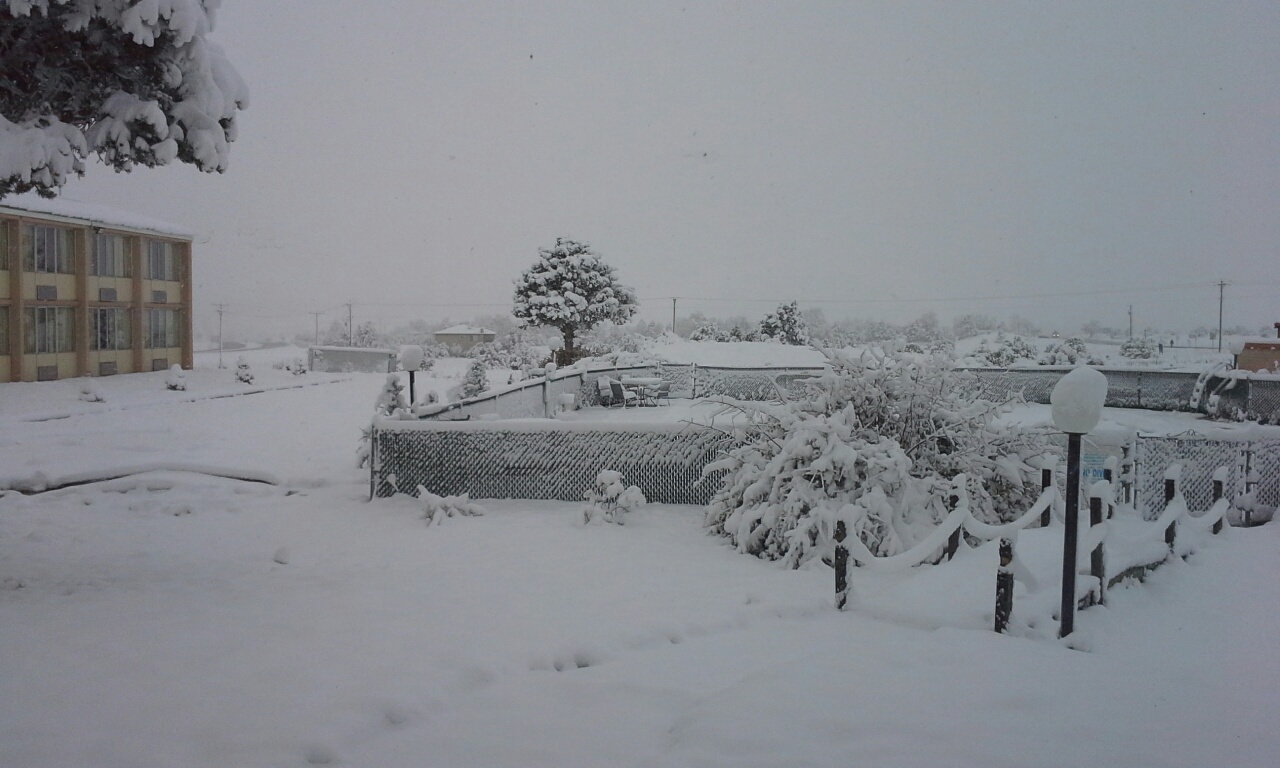
I’m on a road trip, and because of an unexpected snowstorm road trip, I had to stay an extra night at a motel rather than heading on down the road, which tickled me. And when the motel lost power for a few hours, I couldn’t help smiling. It all just seemed so . . . adventurous.

I can live with that.

***

(Pat Bertram is the author of the suspense novels Light Bringer, More Deaths Than One, A Spark of Heavenly Fire, and Daughter Am I. Bertram is also the author of Grief: The Great Yearning, “an exquisite book, wrenching to read, and at the same time full of profound truths.”)




