Going Home

It wasn’t until after my Jeff, life mate/soul mate, died that I understood what home meant to me. It turns out, he had been my home. Wherever we were, as long as I was with him, I was home.

And then Jeff died, and suddenly, just like that, I lost my “home.”

For me, home was definitely not a case of “home is where, when you go there, they have to let you in.” I left the house and state where Jeff and I had lived and moved 1000 miles to go look after my aged father. I’d visited my parents several times while my mother was dying, but I had never lived in that house, so it was not in any way a homecoming. And although I was there for four years with my father, it never felt like home. I was awash in too much grief, missing Jeff, feeling bereft and lost and adrift.
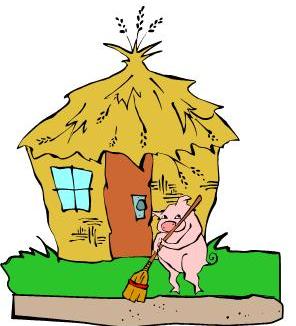
When my father died, the house had to be sold, so I lost that place of residence, too. And oh, I wanted desperately to go home. But my home was gone from this earth. Because he was gone, and because I felt lost and rootless wherever I was, there didn’t seem to be any reason to be one place rather than another, so I drifted.

I tried to find home within myself, and to a certain extent, I succeeded because wherever I am, there I am. I have lived on the road, babysat houses and a bed and breakfast, stayed with friends, rented rooms, camped out, spent more nights than I can count in motels. It worked because one place felt no different from any other. I was always myself, always doing my best to celebrate life despite missing my dead.

Recently, my homeless brother died, and I started thinking of a different kind of home — a house of my own I can turn into a home. A place where I can set down roots. A place where I can grow old in peace, maybe.

Such a strange feeling! I’ve never wanted to own a house. Never wanted the problems, the aggravation, the expense, the very fact of owning something so . . . big. Jeff and I were minimalists before minimalism became a fad — we didn’t even own much furniture — and yet, here I am, all these years later, suddenly wanting, needing, a house to turn into a home.

I daydreamed a house into existence — a very small, very old house in a very small, very old town. A house just big enough for one person, a house with a walk-in shower and a modern galley kitchen.

I’m now in the process of buying the house (closing is almost upon me — in thirteen days to be exact), and I am starting to feel as if I am going home despite never actually having seen the house, only pictures of it. And oh, yeah — I don’t know anyone in the area, either. I am going back to Colorado, but to a corner of the state where I’ve never lived.

I’m taking a leap into the unknown, into my future. An epic adventure!

It’s actually not as much of a risk as it sounds. An inspector and a contractor both assured me it was a cute little house, and solid. More than that, what do I need to know? I will have a refrigerator to myself!! A kitchen of my own. A yard.

If anything comes up, I will deal with it. If I don’t like something, I’ll change it. If it doesn’t feel like home, I’ll create a home within its walls. If neighbors are noisy, I’ve learned to live with earplugs.

But none of that is important. I’m going home, not to settle down (which still scares me because I am afraid of stagnating) but to settle in (which sounds comforting).

I truly have no qualms about any of this. I don’t understand it, but Jeff’s death shattered my life and my world, and now it feels as if my brother’s death is gluing my life back together. I feel as if this house is meant to be.

It’s hard leaving my dance teacher, who has become like a sister to me. It’s hard leaving dance class and my dance friends.

But . . . a house!

A home.

***

Pat Bertram is the author of Grief: The Inside Story – A Guide to Surviving the Loss of a Loved One. “Grief: The Inside Story is perfect and that is not hyperbole! It is exactly what folk who are grieving need to read.” –Leesa Healy, RN, GDAS GDAT, Emotional/Mental Health Therapist & Educator.
Video Trailer for “Grief: The Inside Story”

Learning About Ourselves From Grief

Someone asked me if we could learn more about ourselves from grief. The question  made me stop to think because whatever we might learn would in no way offset the loss of our loved one, would in no way offset the pain of grief.

But . . .

Like any traumatic experience that we’ve survived, grief teaches us that are all stronger than we believe we are, braver than we can imagine, more emotional than we ever expected, and have the ability to pick ourselves up and take another step when all we want to do is dive into oblivion.

Mostly, though, grief is a process of change, of becoming a person who can survive our loss and our grief. Often what we learn about ourselves is not something that was present before grief gripped us, but something that comes during the process. Values are turned upside down — what was once important is no longer important, and what was once unimportant becomes less so. For example: Not wasting time used to be something I valued, so waiting in line at a grocery store used to irritate me. It was such a huge waste of time. After my life mate/soul mate died, it no longer mattered if I was one place rather than another. It no longer mattered if time passed slowly or moved quickly. It no longer mattered if I wasted time or used my time effectively. So I stood patiently in line. It’s not that I learned I was patient, but that I become patient.

Sometimes people find they are more independent than they expected, but often they are forced to become independent rather than learning that they’d always been so. My mother had been a traditional wife, always catering to my father, cooking for him, cleaning, etc. After she died, I wouldn’t have been surprised if he remarried right away so he’d have someone to look after him, but my brothers taught him to “cook.” And oh, how proud he was of his new-found ability to heat up a frozen dinner or fix instant coffee and toast! He’d always been rigid, and yet, he didn’t suddenly learn he was resilient. Her death had forced him to become resilient.

A friend whose daughter had been murdered set out to learn everything she could about the law and how to get boyfriend who’d murdered her daughter. Although already forceful, she became utterly relentless in her pursuit of justice.

So yes, we learn about ourselves from grief, but often that which we learn didn’t exist before our loss. We became that person we are learning about.

***

Pat Bertram is the author of Grief: The Inside Story – A Guide to Surviving the Loss of a Loved One. “Grief: The Inside Story is perfect and that is not hyperbole! It is exactly what folk who are grieving need to read.” –Leesa Healy, RN, GDAS GDAT, Emotional/Mental Health Therapist & Educator.

Grief: Divorce vs. Death

A week after Jeff died, I had to go to the bank to open a new account in my name only, and the woman who helped me said she had recently undergone a devastating, unasked for divorce. She was the first person I met who understood at least part of what I was going through, and we commiserated with each other.

Up to a point, there are many similarities between the two losses. Both involve:

  • Deep emotions: shock, pain, yearning, angst, loneliness.
  • The death of hopes, dreams, the future the two of you had planned for yourselves.
  • The ripping apart of the pair bond, the survival unit, which causes a fight or flight hormonal upsurge and puts tremendous stress on the body.
  • A disruption of habits. Once a behavior becomes automatic, the prefrontal cortex no longer has to make decisions about that particular behavior, which saves the prefrontal cortex from becoming overwhelmed. Disruption of routine after the loss of a life mate, however, destroys this balance, and contributes to brain fog.
  • Being suddenly uncoupled in a coupled world. Ours is a culture of couplehood. Many songs, movies, books, holidays are about love and the importance of being with that one special person, and now you are expected to slough off the weight of this culture and go on as if nothing happened.
  • Dealing with betrayal and rejection. Divorce is a betrayal and a rejection, but so is death. The fact that someone who died of illness did not choose to leave does not mitigate the betrayal and rejection. It’s not as if a person has done these things to us, but as if life itself turned its back on us.
  • Learning a whole new way of living. What you once did together, now needs to be done by you alone.

But there is a divergent point, and that point is death. With all a person has to contend with while going through a divorce, they do not also have to deal with death as a concept or as a reality. Death is shrouded with an element of blank. It is the great unknown and unknowable, and our brains are not equipped to handle the immensity. And yet, while we bereaved are going through the most traumatic event of our lives, we also have to learn to deal with and accept this utterly unfathomable concept.

We all know, of course, we are going to die, but we don’t KNOW. And now we do. This knowledge sends so many chemical and electrical signals throughout our bodies, setting off a cascading series of hormonal reactions, that it leaves us feeling bewildered and traumatized. This is all in addition to our emotional grief. We feel the loss, feel the death, in the depths of our soul. We feel the very winds of eternity screaming through the gaping wound in our heart where our love had been amputated from us.

Divorced people know where there erstwhile mate is, and if they don’t, they can find out, but we bereaved don’t know, can’t know. We call for them, we wonder how they are doing, look for them in crowds. But they are no longer here in the flesh.

When people would tell me how much worse divorce is than death, I would fight back my tears and wish that Jeff really had divorced me. At least I would know he was happy (once I got over being furious with him, that is), at least I would know he was well.

Beyond this empirical evidence, there is an actual, factual difference between the two types of losses, and statistics bear out the truth of it. On a scale of 1 to 100, the loss of a life mate or child tops all at 100. Divorce, the second worse stressor is 73.

I’m not trying to downplay anyone’s pain. We all deal with the traumas life throws at us the best way we can, but ever since Jeff died, my goal has always been to help the bereaved understand what they are going through, and to help their friends understand the enormity of their loss.

Whatever your loss, I wish you peace.

***

Pat Bertram is the author of Grief: The Inside Story – A Guide to Surviving the Loss of a Loved One. “Grief: The Inside Story is perfect and that is not hyperbole! It is exactly what folk who are grieving need to read.” –Leesa Healy, RN, GDAS GDAT, Emotional/Mental Health Therapist & Educator.




