Upsizing

I’m sitting here at an open window — my window — enjoying the pleasant breeze. Later, I’m sure, it will be hot, but for now, it’s perfect weather. (Meaning I am neither huddled in layers of clothes nor dripping with sweat.)

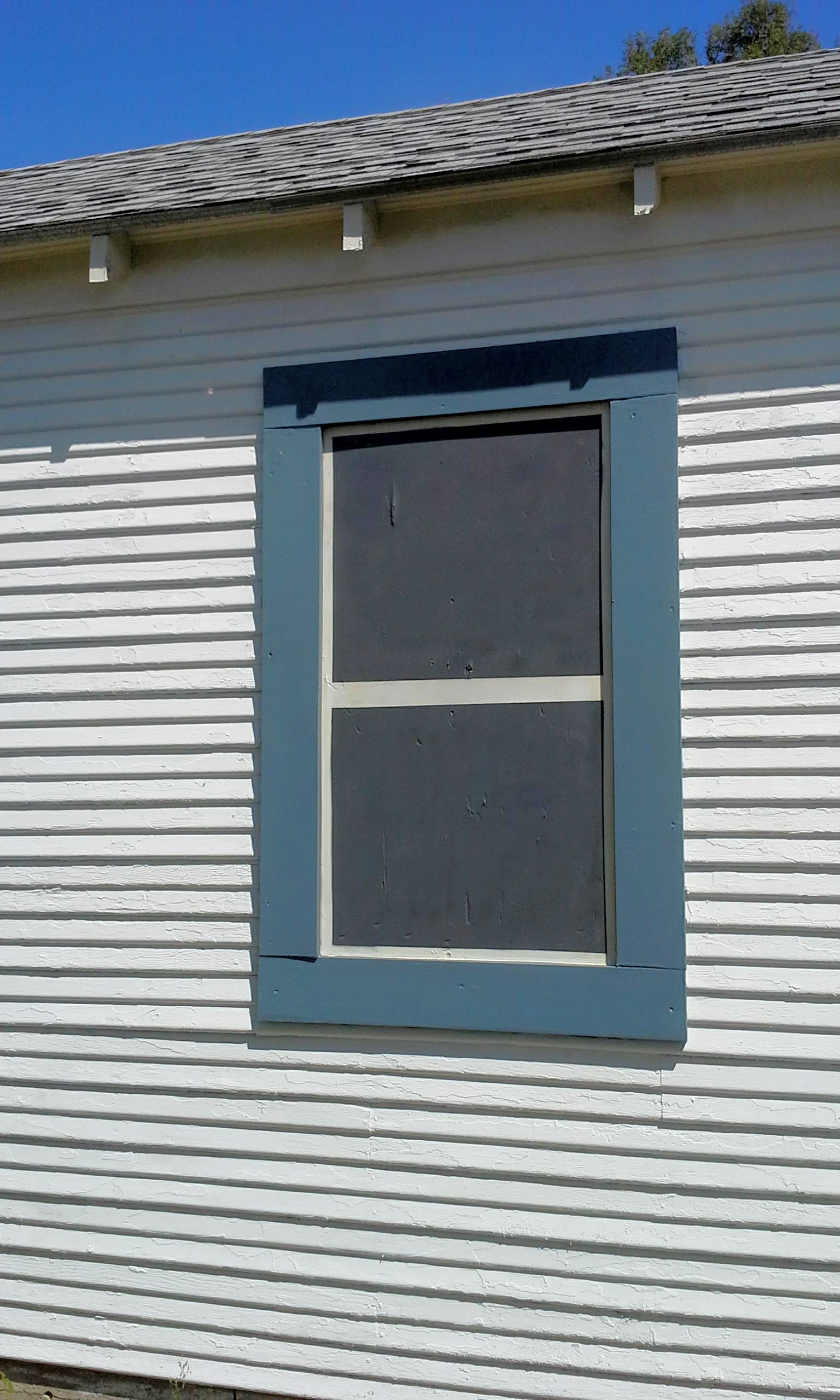
It’s odd to think that I own a window. Actually, seventeen windows. (Eighteen if you count the board on the garage I painted to look like a window.)

It’s odd, too, to think I own a floor.

I haven’t become entirely used to thought of owning a whole house, but the idea is growing on me. Still, when I was admiring my freshly mopped floor the other day, it struck me that the floor belonged to me. I’ve always rented or lived with someone else, and I assumed I’d always live in a house or room someone else owned. I’ve also always been a minimalist since possessions tend to weigh me down, but here I am, upsizing when so many others are downsizing.

So now I own windows, floors, ceilings, walls, roof. And furniture!!

I also own a town. Well, I don’t own it in that I don’t have a deed to the town, but I own it by dint of walking the streets, buying at the stores, volunteering for various events, talking to people I meet.

All this ownership has masked one lack — there is nowhere close by to hike. I could drive long distances to go to the mountains, and someday I might, but for now, I stay close to home.

I did find a nice loop walk, though. It takes me along the edge of town and out to the country. The views are simple — I live too far east of the mountains to catch even a glimpse of a peak.

I’ve almost always lived within view of the mountains, so this viewlessness is rather a change, but (juggling hands, here) my own house . . . or . . . mountain view. Not a hard choice!

***

Pat Bertram is the author of Grief: The Inside Story – A Guide to Surviving the Loss of a Loved One. “Grief: The Inside Story is perfect and that is not hyperbole! It is exactly what folk who are grieving need to read.” –Leesa Healy, RN, GDAS GDAT, Emotional/Mental Health Therapist & Educator.
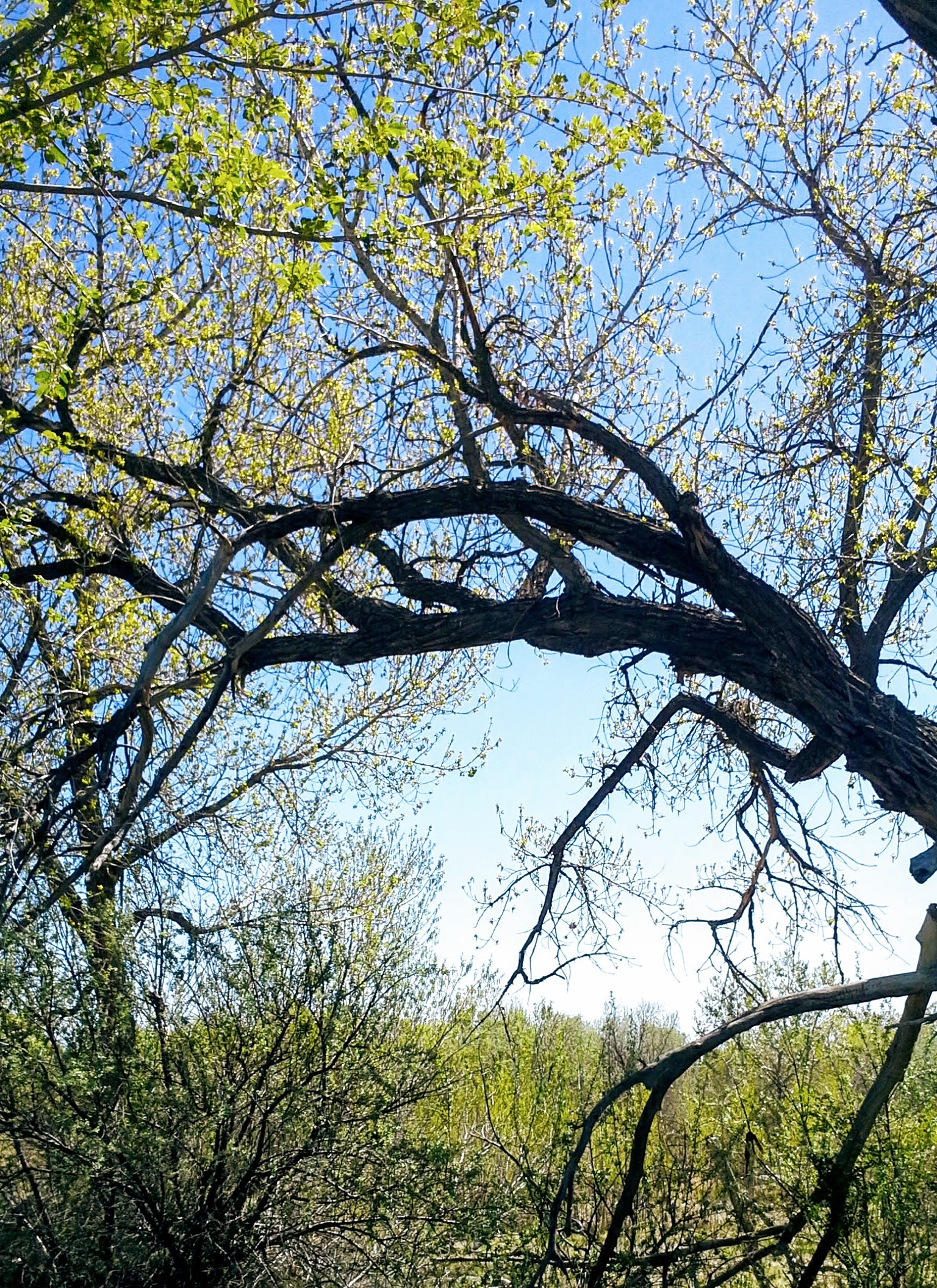
Handling Someone Else’s Grief

In the book I am currently reading, a thirty-year-old woman lost her 5-month old baby to crib death, and now, nine months later, she is still grieving, still depressed. Because of a divorce, she and the baby had been living with her parents, and since they can no longer handle her grief — they feel as if they’d lost her as well as their grandchild — they ship her off to her godmother. The godmother is freaking out because she doesn’t know how to help the bereft woman, doesn’t know how to bring her out of her depression, and the godmother is emoting through many pages about her inability to cope.

This sort of story — this attitude — makes me so very frustrated!! It’s not enough that we (they) lost someone intrinsic to our lives, we have to deal with people’s need to help.

Here’s a clue, folks. For all of you who have asked me over the years how to help someone who is grieving: don’t help.

Let them grieve. So what if you can’t handle their pain. It is their pain. Sometimes love means letting your loved one hurt, letting them nurse their pain. Grief is how a person becomes someone who can handle the loss. You do not go from being an ecstatic mother to being a happy non-mother in a few months. It is not possible. Grief takes you where you need to go, takes you to a happy-but-sad (sad-but-happy?) place, though it takes way more — years more — than a mere nine months.

Nine months is nothing when it comes to the loss of a life. Sure, the baby had only lived a few months, but what the mother grieves along with the loss of those few months, are the young girl, the young woman, the happy wife, the radiant mother, the grateful grandmother the baby would have been. That is a whole lot of grief to deal with.

If you can’t handle a griever’s pain, realize that what they are feeling is a thousand times worse than what you are feeling. Have empathy. Swallow your pain and let them talk about their loss and sorrow. Prepare food for them if you must, but don’t guilt them into eating it.

Grief is in control. Not the griever. Not you.

It is their grief. Whether it takes nine months or nine years, it is none of your business. Sorry to sound harsh, but it isn’t. Grievers go through more than you can ever imagine, more than can ever be expressed in one silly story about helping someone overcoming the loss of their baby. So let them get on with their grieving.

You can and should be there (and still love them) when the grievers become someone you don’t know. Because they will become such a person. It is the nature of grief. And you cannot hurry grief.

It is this sort of simplistic view of grief that made me write about grief from the very beginning. It’s important for people to know the truth. It’s not the griever who has to change their attitude toward grief. It is the friends and families of grievers who must accommodate their loved one as grief takes the bereft where they need to go.

***

Pat Bertram is the author of Grief: The Inside Story – A Guide to Surviving the Loss of a Loved One. “Grief: The Inside Story is perfect and that is not hyperbole! It is exactly what folk who are grieving need to read.” –Leesa Healy, RN, GDAS GDAT, Emotional/Mental Health Therapist & Educator.
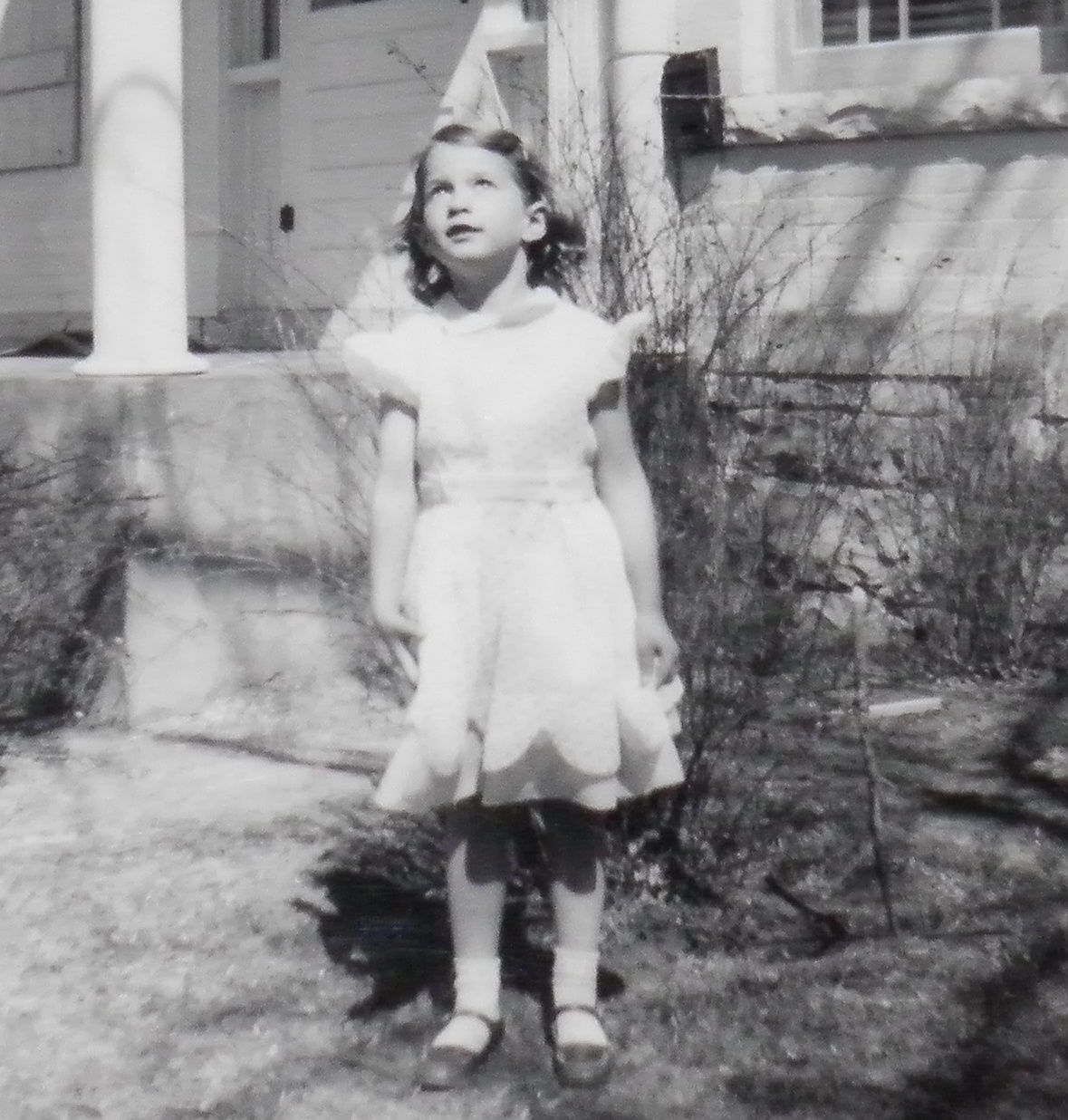
Recognizing Ourselves

I just finished reading a book where a woman woke up with total amnesia. When she looked in the mirror, she freaked out because the face peering back at her wasn’t hers. The face had chubby cheeks, extra chins, and an unfamiliar nose rather than the gaunt, model thin face she was used to.

The woman unknowingly had been a twin, and she and her twin had been in the vicinity of a car bombing. The model-thin twin died. The one who weighed a bit more (just a few pounds — she was far from obese) survived but with total amnesia. (Though she did remember how to talk, and apparently, she remembered how she thought she looked.)

Supposedly, the two women had somehow become mingled in the same body, the reason for the unfamiliar face in the mirror, but to me, that was a cop out. The real story would have been how we see ourselves deep down, beneath thought and memory.

My sister once told me that when she was thirty-five, our mom mentioned that she felt she was thirty-five, thought of herself as thirty-five. My sister thought that was cool, that she and Mother were basically the same age.

In my case, I don’t see myself as young as my mother and sister, though I do tend to think of myself as younger, thinner, more agile than I really am. I certainly don’t see myself as truly young. In fact, I no longer remember who that little girl was, perhaps because I never really did see myself as a child. I always felt old when I was young.

So, if I ended up with no memory of myself, would I freak out when I saw the truth of myself in the mirror? Would I freak out when I felt the truth? (The aches and pains in the morning would certainly discomfit someone who thought they were much younger.)

Once, in my early middle years, I was walking past a store window and caught a glimpse of my mother. I looked around, confused. What was Mother doing in that town so far from where she lived? Not seeing my mother, I looked once more at the reflection in the window, and realized I was seeing myself.

Now that freaked me out! I had no idea I looked so much like my mother at that time. I no longer look like her. In fact, I look more like her mother. Or rather, the photo on my driver’s license looks like a photo I once saw of my grandmother — a faded but staunch and stoic country woman from the old country.

So, if I were to lose all memory of myself, who would I see when I looked in the mirror? Would I see “me”? (Whoever that might be.) Would I look too old? Too heavy? Too sad or morose? Or would I see a pleasant woman with bright eyes and a nice smile? (Assuming, of course, I would be able to smile under such circumstances.) Would I care?

We tend to grow into our bodies, to identify with our bodies, but we are not our bodies. Perhaps, without memory, we wouldn’t even remember ourselves as having a body, so any reflection of ourselves would seem unfitting.

What about you? If you didn’t know who you were, would you recognize yourself in the mirror?

***

Pat Bertram is the author of Grief: The Inside Story – A Guide to Surviving the Loss of a Loved One. “Grief: The Inside Story is perfect and that is not hyperbole! It is exactly what folk who are grieving need to read.” –Leesa Healy, RN, GDAS GDAT, Emotional/Mental Health Therapist & Educator.
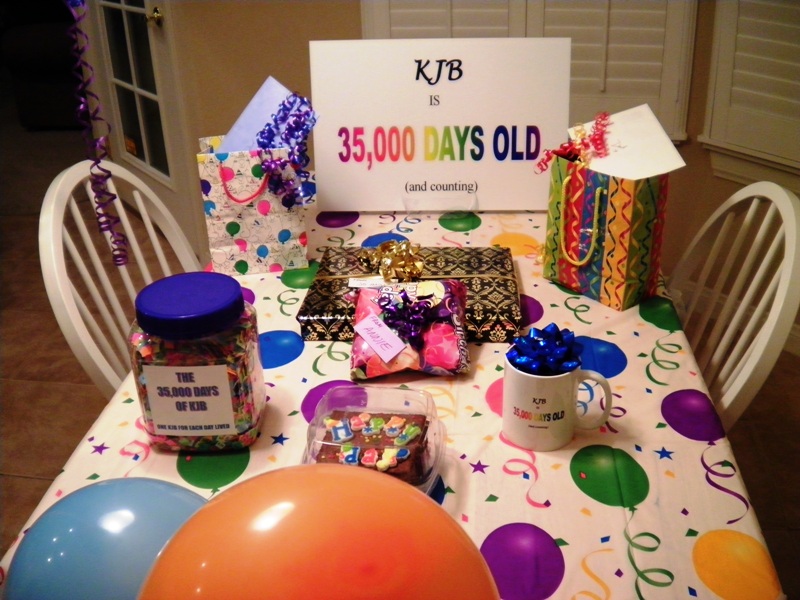
Happy Decimal Birthday to Me

A decimal birthday is any birthday that can be evenly divisible by ten, and though it can refer to yearly birthdays, a decimal birthday is most often counted in days. The more zeros, the more significant the decimal birthday, such as 10,000, 15,000, 25,000.

When I discovered my father was going to reach his 35,000th day, it seemed so significant, I created a party for him.

Today is my decimal birthday, one of the significant ones (though many thousands of days away from 35,000). I’ve been trying to think of something special to do to celebrate, then I realized I don’t need to celebrate the day. The day itself is a celebration, as is any day I am alive.

I’ve always tried to make each day special, particularly after Jeff died. (Before that, every day was a celebration because of his presence. Even the days that weren’t particularly pleasant were worth celebrating because we were together.)

The worst of my grief was a sort of celebration — a celebration of life, both his and mine. The grief was proof that he once lived, that I once loved greatly. Every day I lived through the agony and angst was a day of triumph because I did live through it. Those days were of such heightened pain and sorrow that ironically, I felt more alive than any time since. And that, in itself, was a celebration of sorts.

My celebrations (and triumphs) are much less cosmic today than they were during my time of grief, but still, each day is a celebration — a day that is mine to do with as I can. (I was going to say to do with as I wish, but so often, life does not grant us such wishes, but it does grant us the ability to do something.)

I’ve been spending my most recent days alone. Not lonely, just alone. And that is a celebration in itself, a boon, since the non-loneliness was a long time coming.

During all the years of grief, I had a hard time reading — I couldn’t handle books that feted death such as thrillers because I’d had enough of death, couldn’t handle books where two people got together in the end because I didn’t have that, couldn’t handle two people not getting together because I did have that and knew how it felt. But I’m finally past that time, and have reverted back to my youth when reading was like breathing. Something I did without thinking. In fact, the local library had a summer reading program for adults, and I was the big winner.

I haven’t just been reading, of course, because now I have the house, and the house needs attention. Each little project has definitely been a celebration. I never expected to own a house, never even wanted to, but here it is. And here I am.

Some of the projects were simple and fun, such as painting a boarded-up garage window to look like a window.

Some of the projects have been simply fun, such as ordering bulbs to plant in my front yard this fall. I’m not sure how much fun it will be to plant all 200+ bulbs but, as I have learned, a lot can be accomplished little by little. Besides, there is no better way to celebrate life and hope than to plant flowers.

Until then, there is today — a special day because it is a day that has been granted to me. To all of us.

I hope you will take a moment to celebrate this day.

***

Pat Bertram is the author of Grief: The Inside Story – A Guide to Surviving the Loss of a Loved One. “Grief: The Inside Story is perfect and that is not hyperbole! It is exactly what folk who are grieving need to read.” –Leesa Healy, RN, GDAS GDAT, Emotional/Mental Health Therapist & Educator.
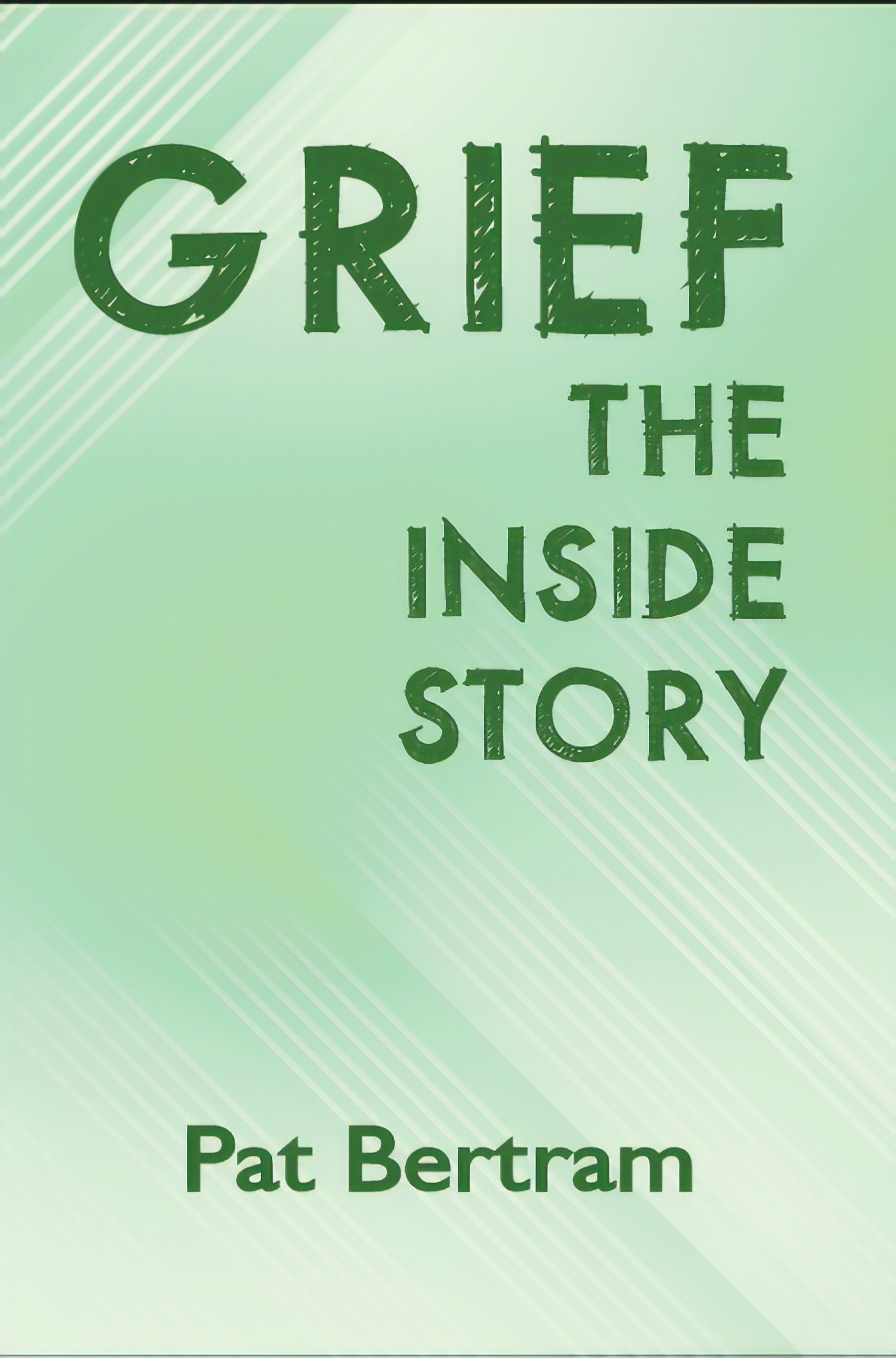
Grief: The Inside Story

One common challenge facing all of us — grievers, friends of grievers, and health care professionals — is how to help those who are experiencing grief after bereavement.

Coping with the death of a loved one can be the most traumatic and stressful situation most people ever deal with — and the practical and emotional help available to the bereaved is often very poor. I found this to be true as I recovered from the loss of my life partner.

How long does grief last? What can I do to help myself? Are there really five stages of grief? Why can’t other people understand how I feel? Will I ever be happy again? Questions like these aren’t easily dealt with, and much of the literature aimed at the bereaved can read either like a medical textbook.

My new book Grief – The Inside Story: A Guide to Surviving the loss of a Loved One aims to answer these big questions in a straightforward way, and it may be of help to you or someone you know.  If you would like to know more a free easily-downloadable sample of the book, and a complete and detailed listing of its contents, is available here: https://www.docdroid.net/klBIjLB/grief-by-pat-bertram.pdf

The book trailer is here: https://www.youtube.com/watch?v=CtLwOpGpm_w

Grief – The Inside Story is now available from Amazon (www.amazon.com/dp/0368039668), and all good bookstores. If you have any questions I’d love to hear from you.

In the Past? Or Still to Come?

Now that I’m getting settled in my new place, I seem to be reverting to the life I lived before I met Jeff — reading, a few chores, an occasional meeting with acquaintances. I don’t spend much time on the computer (except for solitaire, of course). Don’t use my phone much at all except for an occasional call. Haven’t been promoting my grief book like I should. Haven’t even been writing.

Such a simple, unconnected life it was back then and so it is again.

This feeling of reliving the distant past is so strong that strangely, I find myself looking forward to when I will be meeting Jeff — not in an afterlife, but in this life. As if he’s waiting for me to find him. As if we will be starting our life together. As if what I thought was in the past might instead still be to come.

I don’t know where this feeling originates, but somedays it is very strong. And, as always, when the truth hits — that he is truly gone from this Earth and anything else is just make believe — I can’t breathe, can’t help getting teary.

I seldom look at the photo of him I have by my bed, though it is often in my periphery, just as he is in my periphery. I still have his ashes, though I’d forgotten about them until I noticed them in my car the other day. (They’re waiting, I suppose, until I go back to the north fork of the Gunnison where we used to live.)

And I get caught up in this new single life of mine.

So I’m not sitting around bemoaning my loss.

But somewhere inside, I always know he’s gone. I still don’t know how that can be — even after all these years, his utter goneness makes no sense to me. We’re supposed to be preparing for our old age together. We were supposed to beat the odds, and find health and happiness and vitality together in our final years.

No matter where this feeling of the past being the future comes from, I know the truth of it. I’m preparing for my own old age, not ours.

And yet, and yet . . . in my heart, I can’t help thinking that someday I will walk into a store, just as I did all those years ago, and there he will be, behind the counter, happy and healthy and waiting for me.

***

Pat Bertram is the author of Grief: The Inside Story – A Guide to Surviving the Loss of a Loved One. “Grief: The Inside Story is perfect and that is not hyperbole! It is exactly what folk who are grieving need to read.” –Leesa Healy, RN, GDAS GDAT, Emotional/Mental Health Therapist & Educator.
What To Do

I live in a county where over four hundred species of birds have been sighted, but except for a few robins, all I see — and hear — are doves. My days are filled with the incessant sound of these creatures calling “What to-do, what to-do.”

I understand this need to know. For so many years after Jeff died, that call was my frequent lament. What do I do with myself? Where do I go when I have no real reason to be anywhere? What do I do?

Not able to answer the big “what to do”s of my life, I concentrated on the small things. Typical of someone grieving the loss of an intrinsic part of their life, I surrendered to busyness. I walked. Took dance classes. Blogged. Took day trips and road trips.

Now that I have found a home and am building my nest, now that I’ve met people and am falling into a routine of sorts, I find it harder to step into unfamiliar territory by myself. It’s easy to go with others — they can help fuel the trip either literally by driving or figuratively by contributing their energy.

But to set out by myself? Even for a small thing? Harder.

The community center here is offering free porcelain painting classes, a six-week commitment, and although I was interested enough to take a photo of the flyer, I just did not feel up to taking that initial step. For a whole day, I wondered what to do.

Well I did it. I went.

The first class was about learning the basics of the art form, but next week, we will get our piece of porcelain (a plate for me) and will start tracing the design. Should be fun!

Odd how paint seems to figure so much into my life at the moment. I finished caulking the windows and painting the trim, finished painting the four doors on my enclosed porch (one goes outside, one to the basement, one to the kitchen, and one to the back bedroom) and now I’m working on priming the garage. The new foundation still isn’t poured, but we’d powerwashed the outside walls six weeks ago, and I worried that the weather — alternating rain and high heat — would rot the siding.

This has been another example of stepping into unfamiliar territory — I’d never owned a house before, so previously, all such work had been done by the landlord. I never even knew I could do this sort of house work, especially work that needs to be done on a ladder.

But I am careful. I use a step ladder rather than a leaning ladder. I don’t go up more than three steps, and most importantly, I make sure the ladder is solidly on the ground before I take the first step. I so do not need to be falling off ladders!

I can’t say these projects have been fun — it’s too hot and they are way too much work — but it certainly does give me a sense of accomplishment.

Speaking of unfamiliar territory — when I was back behind the garage, I discovered some hideous bug carcasses that made me extremely nervous. It turns out they are cicada exoskeletons. Never in all my life have I seen or heard a cicada. I didn’t even know they lived in Colorado.

I will refrain from posting a photo of the cicada shell. If you know what it is, you don’t need to see it. If you don’t know what it is, you definitely don’t need to see it.

There is, of course, no photo of the porcelain plate since I have yet to work on it.

So here’s a photo of the garage I am working on. The lower right hand side of the photo shows what a mess the building was in until I started painting. Already the primer makes it look better. (Eventually, it will match the house.)

As for the poor blind window — I’m thinking of painting it gray to look more like a window, but I’m not sure.

Oh, what to do. What to do.

***

Pat Bertram is the author of Grief: The Inside Story – A Guide to Surviving the Loss of a Loved One. “Grief: The Inside Story is perfect and that is not hyperbole! It is exactly what folk who are grieving need to read.” –Leesa Healy, RN, GDAS GDAT, Emotional/Mental Health Therapist & Educator.