Horseracing Scandal

I’ve been trying (still!) to figure out the mystery for the murder mystery dinner. Apparently, sometime back in the 1920s, there was some sort of racehorse scandal around here, which I thought would be a fun basis for the mystery, but so far no one has been able to find the details, so I need to make them up.

The trouble is, I know nothing about horseracing (except what I’ve read in Dick Francis’s books). I do know that women wear fancy hats for the Kentucky Derby, though I don’t know why. (My research shows that no one else really knows why or how the Kentucky Derby hat craze started, either, though it could be because a Derby is also a hat and they extrapolated from that, or it could be that southern belles and society ladies wore hats to the Derby, and when television showed the hatted women to the world, others wanted to join in.)

Despite the hat/horseracing connection, my mystery won’t have anything to do with hats except that both actors and guests are dressing up in 1920s attire for the dinner, and hats were one of the definitive cultural aspects of the era.

Rural horseracing would probably be different than at the big tracks, but I don’t know that it would matter except that the jockey’s might be easier to get to in the smaller venues, which would add to the mystery.

I think it would be fun to have so many different people try to fix the race in question that it will be the slowest race in history, with every jockey trying to lose, but I’m afraid such a scenario might get too complicated for a mystery dinner. But maybe not. We have about a dozen people lined up who want to have parts, and we will be assigning roles to anyone else who wants to play, though most of those roles will be along the lines of having them to talk about their big winnings or maybe their bigger losses at the track.

Although the dinner won’t take place until February, the story needs to be done sooner so that plans can be made. Which means, I’m down to just a week to figure it all out. I suppose if it’s too complicated, the other members of the art guild (the group that’s putting on the dinner) will help me sort it out, but they can’t sort it out if I don’t have anything to present.

It sounds like I just talked myself into going with the complicated scenario.

Luckily, I don’t have to write a novel, just the scenario, a few conversations, a few instructions, and then it will be done. So simple!

Except for the part about sitting down and actually writing it.

***

Pat Bertram is the author of Grief: The Inside Story – A Guide to Surviving the Loss of a Loved One. “Grief: The Inside Story is perfect and that is not hyperbole! It is exactly what folk who are grieving need to read.” –Leesa Healy, RN, GDAS GDAT, Emotional/Mental Health Therapist & Educator.
Struck Home

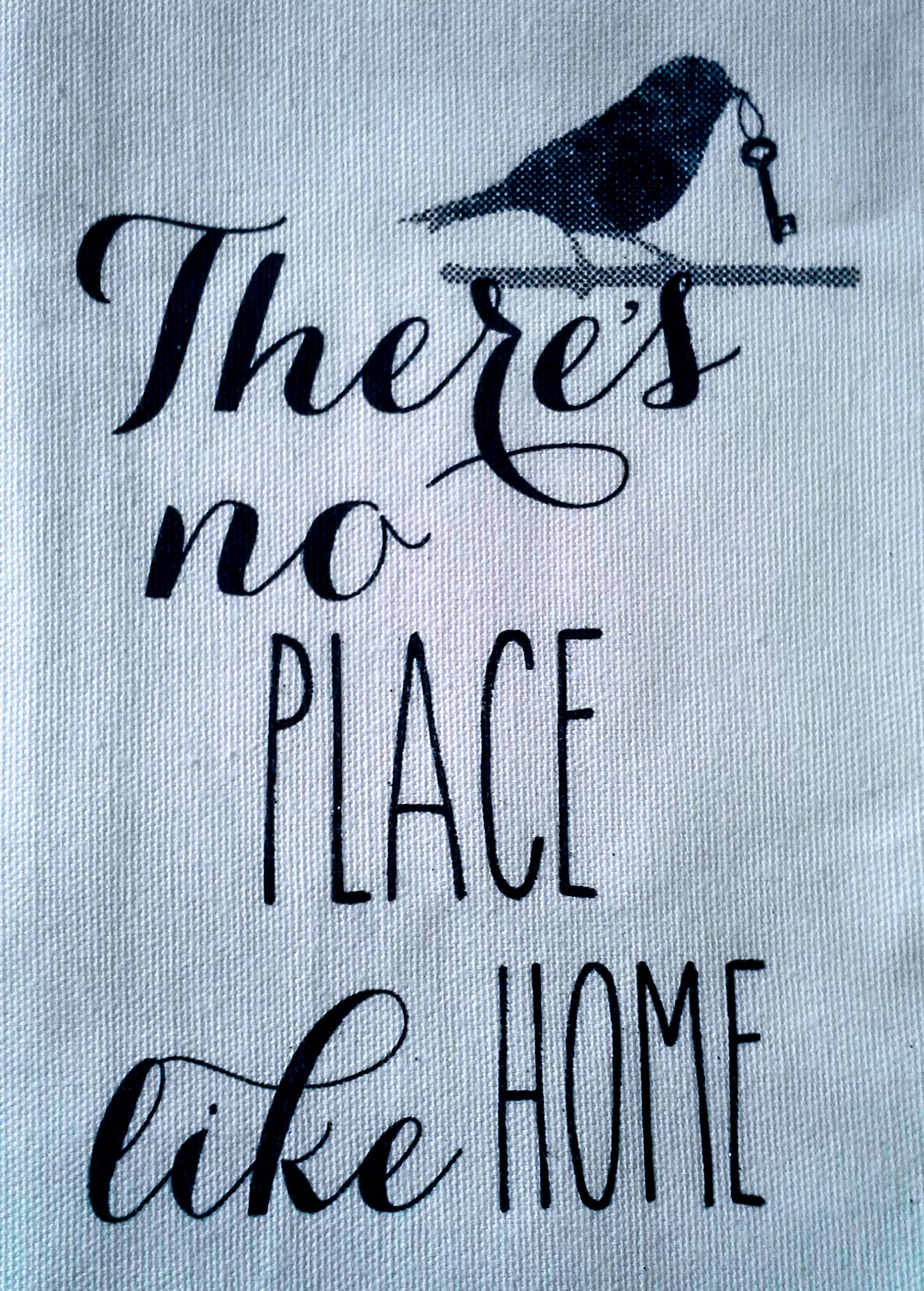
For Christmas, I received a tea towel with the saying “there’s no place like home” on it, and when I saw towel lying there in the box, the saying really struck home.

Ever since Jeff died, even though I’ve always found a place to rest my head at night, I often felt homeless. He had been my home. Wherever the two of us were, that was home.

After he died, I went to stay at with my father. His house wasn’t the place where I’d grown up, and though I was comfortable at my father’s house, somehow it never felt like home. Although he mostly took care of himself, I had to always keep an ear out in case he needed me so I couldn’t completely relax, and even more than that, I was aware that those living arrangements were only temporary.

When I took my cross-country road trip, I felt at home in national parks and monuments. After all, as a citizen, those parks did belong to me, and the space where I pitched my tent especially was mine. Gradually, as the months passed, I learned to find home within myself, so that I felt at home no matter where I was, not just in a campground, but in a motel room or at a friend’s house.

When I returned from the trip, I lived in a series of rented rooms, rooms I was able to make my own, though I was always aware the house — and the rules — belonged to someone else.

Life has a way of taking unexpected turns, and now here I am in my own house. At home.

And I know for sure, there truly is no place like home.

***

Pat Bertram is the author of Grief: The Inside Story – A Guide to Surviving the Loss of a Loved One. “Grief: The Inside Story is perfect and that is not hyperbole! It is exactly what folk who are grieving need to read.” –Leesa Healy, RN, GDAS GDAT, Emotional/Mental Health Therapist & Educator.

Spam

I wonder how many people fell for the following bit of emailed spam. It’s cleverer than others I have seen, but still obviously a scam. I’ve printed it exactly as I received it, though I must admit, I itched to correct the punctuation:

Greetings to you.

Please I am writing to you out of despair.

I was living with a foreign contractor ,I know he is not related to you but he is of the same last name with you ,I got a child for him, in the same year he was attacked by pirates on the coast of Island of Malta.

Before the attack, he shipped (Bucyrus continuous miner with other refurbished mining machines) to a firm based in Brazil on an agreement to be paid after confirmation of the functionality of the machines (which precisely was to be within November 2013).

Because of attack incident, they did not pay as at the stipulated time. I decided to wait ,hoping that the family of my daughter’s father would contact me ,thus we can make a claim to be paid. but ever since ,they never contacted us ,which prompted me to call the company’s lawyer that drafted the contract agreement.

He spoke with the company and invited me to come ,I have met with the company ,after our deliberation ,they said they prefer to pay the money to the family directly since I am not legally married to him.

Their lawyer asked me to invite the family for the money or let them call him for directives .and sincerely ,I am helpless with their decision ,because I don’t know his people ,they never contacted us since the incident. which is extremely understandable that they don’t know about us.

Therefore please ,I wish to beg for your cooperation to stand as his relative since you are bearing his same last name please so that they can release the money to you and you transfer back to me.

Please I pray you to help me for the sake of my child’s support please ,even if you can take 30% please.I beg you o help me.

I am worried with a hope that you reply so soon please .

Miss Suzy Bikam

***

Pat Bertram is the author of Grief: The Inside Story – A Guide to Surviving the Loss of a Loved One. “Grief: The Inside Story is perfect and that is not hyperbole! It is exactly what folk who are grieving need to read.” –Leesa Healy, RN, GDAS GDAT, Emotional/Mental Health Therapist & Educator.

It’s Never Too Late to Make a New Year’s Resolution

Only 8% of people keep their New Year’s resolutions until the end of the year. Most people abandon them in the first month or even the first week.

This sad state of affairs makes us seem wishy-washy at best and lazy at worst, but there is something more at work than simply a lack of . . . well, a lack of resolve.

I’ve come to realize that instead of losing our resolve, we lose the clean-slateness. After only a few days, the sense of a new beginning dissipates. We become used to writing the new year on our checks. We’re back into the routine of our lives, probably more tired, more broke, and fatter than we were before the holidays. And somehow, in the comfort of our old lives, we forget the idealism we had when embracing a new year. We forget that for a moment we believed anything was possible, that we could become better, stronger, healthier, wiser, richer, more beloved if only we . . .

I abandoned the practice of making resolutions when still a child after I realized that by the end of that first week, I’d completely forgotten my resolution. (I only remembered when the next new year rolled around and I tried to, once again, make that same undoable commitment.)

Too many things happen during the year to make us either forget our resolve or to make us stop caring. So perhaps another reason we can’t keep New Year’s resolutions is that we make them too early in the year. What if we made the resolutions after birthday celebrations, Valentine’s Day, anniversaries, summer, Halloween, Thanksgiving, Christmas are passed?

Today seems a perfect day to make New Year’s resolutions for 2019 — especially since I started these resolutions yesterday. So from now until the end of the year, I resolve eat more vegetables, drink more water, and do a bit of exercise.

Now I have to remember those resolutions.

Oh, the pressure!

***

Pat Bertram is the author of Grief: The Inside Story – A Guide to Surviving the Loss of a Loved One. “Grief: The Inside Story is perfect and that is not hyperbole! It is exactly what folk who are grieving need to read.” –Leesa Healy, RN, GDAS GDAT, Emotional/Mental Health Therapist & Educator.

In and Out of Kilter

The origin of “out of kilter” is unknown, though the phrase itself has been in use since the 1600s. Kilter or kelter means good condition, so you can be both in kilter or out of kilter, though generally at separate times. “Off kilter,” which is a variation “out of kilter” and means the same thing, seems to have originated in the 1920s.

The origin of “out of whack” is also unknown, though the word “whack,” meaning to hit something, was used as early as the 1700s, and “out of whack” itself has been used since 1885. It’s been conjectured that “out of whack” refers to machinery that needs to be whacked to get it going, but the truth is anyone’s guess.

The origin for haywire is known, however, and is a relatively new term, only about a hundred years old. The etymology is obvious when you think about it: hay + wire. Haywire or baling wire is a thin, flexible wire that is used to hold bales of hay together, and was the equivalent of today’s duct tape. I’m sure you’ve heard of old vehicles being held together by baling wire. So not only does haywire refer to shoddy or makeshift work, the wire itself, once it’s off the spool, gets easily tangled. Hence something that is out of whack or off kilter is also haywire.

So why all this talk of things being out of order?

I seldom break things. Though stuff does slip through my fingers all too frequently, the items are either unbreakable or they fall softly without breaking, but last night I knocked over a champagne flute that was on the kitchen counter, (I was toasting the day after my first Christmas in my first house with sparkling cider). Although the flute simply fell over onto its side, it shattered. Took me forever to clean up all the crystal crumbs!

Then later, as I was lounging on the couch drinking tea and reading, I got a text. After responding to the text, I reached out to put my phone on the table and knocked over the empty mug. It too shattered.

Neither of these breakages meant anything (except that I had one less flute and one less mug), but it showed how far I’ve come in the last ten years. About seven months after Jeff died, I dropped a mug. It shattered on the hard tile kitchen floor, and set me back into full grief mode. I couldn’t stop crying for days. It was one more thing gone out of the life we shared, and it struck me as horrendously sad that stuff was going to break, wear out, get used up until there was nothing left of “us”?

Last night, there was no emotional aftershock. The things broke, and I cleaned them up. End of story. Well, except for the part of wondering why things were so off kilter. Which of course, led me to wonder what kilter meant, which led me to out of whack, which led to haywire.

Which leads to my New Year’s wish for you — that your life remains in kilter all next year.

***

Pat Bertram is the author of Grief: The Inside Story – A Guide to Surviving the Loss of a Loved One. “Grief: The Inside Story is perfect and that is not hyperbole! It is exactly what folk who are grieving need to read.” –Leesa Healy, RN, GDAS GDAT, Emotional/Mental Health Therapist & Educator.

Facing the Unfaceable

We who have lost our spouses, life mates, soul mates often have to show empathy and understanding to others rather than receiving it from them. We are the ones hurting, so why do we need to be understanding of their feelings? Because it is far easier for us to remember what it felt like to be in their situation, than it is for them to imagine what it must be like in ours.

Shortly after Jeff died, I had to let a man know of the death, though I don’t remember how I conveyed the information. It took months before I could actually say the words, “Jeff is dead.” But I do remember his response. “I know what you’re going through,” he said. “My dog just passed away.”

I stared at him, unable to process those words. To this day, his remark appalls me, though I have come to understand he was reaching out the only way he knew how.

Death is shrouded with an element of blank. It is the great unknown and unknowable, and our brains are not equipped to handle the immensity. While we are in the grip of our grief, the survival mechanisms of those around us are triggered. To avoid facing the unfaceable, people close to us will indulge in self-protective behaviors that shut us out.

Sometimes long-time friends, especially couples, draw away from us. The death of our spouse and the demise of our couplehood change the dynamics of our friendships. People fear we will now be uncomfortable in the company of couples. At the same time, they are uncomfortable with us because all unwittingly, we are a reminder of how fragile life really is.

This drawing away is often an unconscious reflex — they know we are hurting, know they feel helpless in the presence of our pain, but they don’t really know they are acting any different and certainly they don’t know why.

The jargon of grief is that of illness, of negativity, of . . . fault, as if somehow we who are grieving chose our state and now we have to overcome, heal, recover, move on, get over, return to normal. By blaming us for grieving too long, by refusing to admit that our grief is normal, onlookers to our grief can more comfortably return to their job of surviving, and leave us alone with our sorrow.

Even those who are kind to us bereft, even those who continue to be supportive, lose the urgency they had at the beginning. They cannot sustain that same level of support because grief takes way too long, and they need to focus on their own lives.

Despite these protective behaviors and the almost bumbling way people treat the bereaved, and despite my occasional acrid comment about the insensitive things people say to grievers, people do care, and they do want to say the right thing. In the last couple of days, more than 3,300 people landed on my blog post What Do You Say to Someone Who is Grieving at Christmas? after Googling such things as “how to say Merry Christmas to someone who is grieving.” “how to wish someone a Merry Christmas after a loss,” “Christmas greeting for grieving person,” “how to wish Merry Christmas to someone who is grieving.” In fact, since I posted that particular blog in 2011, more than 80,000 people have viewed the article.

Many thousands more have viewed What to Say to Someone Who is Grieving.

The true villain here is death. While the very idea of death drives non-grievers away, it draws us grievers in, forces us to face the unfaceable, makes us an accomplice. And yes, even allows us to show empathy to those who don’t understand but who try to show sympathy the only way they can.

***

Pat Bertram is the author of Grief: The Inside Story – A Guide to Surviving the Loss of a Loved One. “Grief: The Inside Story is perfect and that is not hyperbole! It is exactly what folk who are grieving need to read.” –Leesa Healy, RN, GDAS GDAT, Emotional/Mental Health Therapist & Educator.

A Gift for You

Merry Christmas, Happy Holidays, Season’s Greetings, Peace and Joy, Warmest Wishes, Happy Solstice, Good Yule, Noel, Good Cheer, Good Tidings, Merry Xmas, Happy Holy Holidays, Warm Greetings, Holly Jolly Holidays, Let it Snow, Ho Ho Ho, Feliz Navidad, Joyeux Noel, Mele Kalikimaka, Buon Natale, Buone Feste Natalizie, Feliz Natal, Nollaig Shona, Fröhliche Weihnachten, God Jul, Wesołych Świąt, as well as any other greeting you use to acknowledge this special day.

Click on the gift to open. Have fun!

***

Pat Bertram is the author of the suspense novels UnfinishedMadame ZeeZee’s Nightmare, Light BringerMore Deaths Than OneA Spark of Heavenly Fireand Daughter Am IBertram is also the author of Grief: The Great Yearning, “an exquisite book, wrenching to read, and at the same time full of profound truths.” Connect with Pat on Google+. Like Pat on Facebook.

Getting Back on My Horse

If getting back on a horse after falling off is a good thing to do, then I figure it’s just as good to get back on shank’s mare after taking a tumble. I really was leery about going for a walk, though walking isn’t the fear — falling is. I try to be careful, but accidents do happen (did happen!), especially when one is concentrating on something other than carefully walking around tools and supplies littering one’s yard.

I still hurt today. My knees are a bit sore, though worst pain is on the side of my foot that was caught in the strap, and my triceps. I can’t figure out why those arm muscles hurt. Maybe I jarred them when I fell or perhaps I somehow strained them when I pushed myself up onto my feet.

But arm muscles aren’t necessary for walking. So I did. Go for a walk, that is.

You will be pleased to know that, before leaving my yard, I removed the strap from the carport support pole. There might be other falls, but it won’t be because of that murderous piece of webbing.

I didn’t go very far — just to the grocery store. When I’d been there right before my fall, I’d seen Bailey’s Irish Cream chocolate chips, but I passed on by. I mean, really, who needs something like that?

Apparently, I do.

That was my excuse for the walk, those Bailey’s baking chips. Despite the stiffness and soreness, I did fine. Even better, I didn’t fall.

I’d planned to back out from my plans to get together with some friends and acquaintances at Christmas, but on my walk, I met a couple who offered to take me with them, so I might still go. I know I won’t be the only one suffering some sort of pain, and though I liked the idea of spending my first Christmas in my first house by myself, it will probably do me good to get out.

Or not.

I’ll see how I feel. It’s hard to be sociable when one is hurting.

Meantime, getting back on the horse with ten toes was the smart thing to do. At worst, I put any fear to rest. At best, I got those Bailey’s chips!

***

Pat Bertram is the author of Grief: The Inside Story – A Guide to Surviving the Loss of a Loved One. “Grief: The Inside Story is perfect and that is not hyperbole! It is exactly what folk who are grieving need to read.” –Leesa Healy, RN, GDAS GDAT, Emotional/Mental Health Therapist & Educator.

The Trip of a Lifetime

The trip referred to in the title is not a day trip or road trip or any kind of fun trip. It is a trip, as in . . . splat.

It was a gorgeous day with mostly clear skies, a warm sun, and a caressing breeze. I went for a walk because it seemed the perfect way to participate in such bounty at the very beginning of winter. As I passed the carport on the way out of my yard, I noticed the strap that was still attached to one of the support poles. The strap had been used to secure my just-delivered gates and even though the gates have now been installed for a few weeks, the strap is still there. Why? I don’t know. Haven’t a clue why the workers left it there.

There are a lot of tools and supplies spread out over my yard waiting for the contractor and his employees to return to work. Even more than the rolls of fencing or the bucket of ties, that strap suddenly struck me as hazardous, and I thought I really should do something about it. But I didn’t want to interrupt my walk, so I continued on.

Since I was out, I stopped by the grocery store, and headed home with several pounds of apples, a pound of nuts, a pound of butter, and maybe a pound or two of something else. A lot of pounds, in other words. I wasn’t carrying the groceries in my hand but on my shoulders via a BackTPack, which is supposed to be better for the back than even a properly fitting backpack.

A couple of blocks from the house, I felt a desperate need to relieve my bladder, so I quickened my steps. “Just a few more minutes,” I told myself as I opened the gate into the yard. I hurried, bypassing the zigzagging sidewalk and cutting through the carport and —

Yep. You guessed it.

It was the hardest I had ever fallen, partly from the velocity — I was really hurrying when my foot got caught in the strap — and partly from the weight of the groceries I was carrying. Even when I’d destroyed my arm, I hadn’t fallen as hard. Back then, I landed on my wrist, and bounced onto my arm, pulverizing the wrist, destroying the elbow, and splintering my radius. I had no other injury, not even a bruise, since that arm bore all my weight.

This time, I landed flat, a full-frontal drop onto the bare ground. Luckily, I caught myself before my face hit the concrete sidewalk that I should have been walking on. I lay for a few seconds, shocked and scared and hurting and angry at myself and ruefully aware of the irony of the situation (not just the strap that I hadn’t moved when I should have, but also having mentioned just the other day that the last instructions my orthopedic surgeon gave me before releasing me from his care were that I wasn’t allowed to fall). When I took stock, I realized nothing was broken, nothing was sprained, so I clambered to my feet and hobbled into the house. I divested myself of my groceries and coat, emptied my still-full bladder, got cleaned up, slathered my knees with arnica gel, and dug out my ice pack. (Not peas, but a medley of stir-fry vegetables.)

My left knee hurt the most, so it got the attention. Later, though, other pains started making themselves felt. Since I was so stiff and sore and afraid of my joints stiffening up even further in the night, I took a couple of ibuprofen at bedtime. (Oddly, I never even thought of taking pain pills until a friend mentioned she needed to take some to relieve the pain from her fall, which had happened shortly before mine). I managed to sleep, at least as well as I ever do.

Today, I can feel the rest of my body, not just the knees. Ouch. Ouch. Ouch. Some of the pains I understand, like that knee (which must have been the first thing to hit), and the side of my foot, which might have been wrenched by the strap. Some pains I don’t understand, such as my very sore triceps. Nor do I understand why my deformed wrist and forearm don’t hurt. Don’t get me wrong — I’m glad they don’t — but I distinctly remember landing on that hand, too, and there is a small bruise on my wrist to prove it.

Needless to say, I am taking it easy.

I’m hoping this really is the trip of a lifetime, and that I never fall that hard again. But dare I confess? I have yet to go out and find a way to remove that strap.

***

Pat Bertram is the author of Grief: The Inside Story – A Guide to Surviving the Loss of a Loved One. “Grief: The Inside Story is perfect and that is not hyperbole! It is exactly what folk who are grieving need to read.” –Leesa Healy, RN, GDAS GDAT, Emotional/Mental Health Therapist & Educator.

Get Over It. Move On.

I notice that my latest grief posts have an edge to them — not anger exactly; more like disapproval.

This aversion is not towards grievers — never toward grievers — but towards those who don’t understand, won’t understand, can’t understand, and yet still feel they have a say in how people grieve.

Not all comments from non-grievers are as appalling as the one that prompted my post a couple of days ago, Grieving at Christmas. The comments are generally more clichéd, such as “get over it” and “move on.”

Luckily, I am past receiving any comment on my grief. Not only do I not let anyone know (except here on this blog) when I am feeling a bit of a grief upsurge, but I have mostly found an internal place to put my loss so that I can think of him and not think of him at the same time. (Or maybe I mean think of him sadly and think of him happily at the same time.)

But there are always new grievers, and the newly bereft do not need people’s attitudes. Do not need to be told to get over it. Death does not negate love. Telling someone to get over it is like telling someone to stop loving.

Sometimes when people urge grievers to move on, they are not expressing insensitivity so much as a misplaced understanding of the nature of grief. (Which is why my book Grief: The Inside Story – A Guide to Surviving the Loss of a Loved One was written both for grievers and for anyone who wants to understand this thing we call “grief.”)

Although people often think they are helping by urging grievers to get over it and move on with their life, they are merely showing that they themselves can’t handle the griever’s grief. Showing that they can’t handle the new person the griever is becoming. Friends and family want grievers to be the way they were before their loss, and the griever can’t be. Loss changes you. Grief changes you.

If those people were truly caring and sensitive to the griever, they would simply be there for the griever even years later, listen to the griever’s pain, understand that grief is a necessary mechanism, realize that no matter how much the griever’s pain upsets them, the loss suffered upsets the griever even more.

What I really want to say to all of those people who are impatient with a griever’s grief is, “Get over it. Move on. Their grief does not belong to you.”

See? Edgy. And not necessarily kind or helpful.

***

Pat Bertram is the author of Grief: The Inside Story – A Guide to Surviving the Loss of a Loved One. “Grief: The Inside Story is perfect and that is not hyperbole! It is exactly what folk who are grieving need to read.” –Leesa Healy, RN, GDAS GDAT, Emotional/Mental Health Therapist & Educator.