Food For the Body and Soul

In the west, we are often fed stories of racial tensions that cripple the south, so I was a bit leery about traveling to such hostile territory by myself. But I have encountered no hostility, no resentment, no reserve. In fact, everyone has treated me with a warmth and kindness that feels genuine. Eyes spark with friendliness, and I have yet to see the dulled gaze that comes from holding oneself apart.

The deeper I got into the south, where I saw more blacks than whites, the more confused I became. Sometimes I am the lightest-skinned person around, yet no one has ever made me feel out of place. I have wanted to ask someone about this conundrum, this difference of perception, but I was afraid of opening a perhaps unwelcome discussion, of hurting someone by acknowledging a color difference.

I was pondering this very question when I happened to see a billboard advertising a buffet. I took the appropriate exit to Mebane, North Carolina, and entered The Iron Skillet. My server, a lovely black woman, was welcoming, kind, and gracious. In no way did I get the feeling she was putting on a show for the sake of a tip, especially since there is a general, though hopefully fading, belief that women are poor tippers. She was simply a kind woman.

I had a wonderful meal chosen from the buffet of real home cooked dishes, the kind you would make for yourself: smoke sausage with onions and peppers. Rice, chicken, and cheese casserole. Chicken and vegetables. In addition, there was a good salad bar and a great selection of cooked vegetables: tasty squash, black-eyed peas, green beans, broccoli. All the things that are so hard to find when one is tripping the highways of the United States.

In the middle of my meal, there was a change of servers. The new woman, white this time, was equally attractive, kind, and friendly, so much so that I ventured to voice my quandary. She seemed a bit unsure of my question at first, as if race wasn’t an issue, and perhaps for her it wasn’t. She explained that in previous generations there might have been a problem, but starting with her generation, everything got mixed up. Kids all grow up together and learn to ignore the differences. That made sense to me, and I planned to drop the subject, but when I saw my original sever at the cash register, I wondered if she had the same view. I gathered my courage and told her of my experiences in the south. She didn’t hesitate to expain why she treated everyone alike. “We’re all God’s children,” she said. “We all have the same color blood.” We talked for a few minutes about the need for everyone to work together to save our country, then I thanked her for being so kind. She gave me a radiant smile that lit up her eyes, and said she was glad of the chance to have such a dialogue. We shook hands and exchanged names (hers is Tatiana, a lovely name for a lovely woman), then I headed on down the road.

I don’t suppose this encounter at The Iron Skillet will have any great affect on how we all do or don’t get along, but it was nice to come away with not only food for my body but also food for my soul.

***

(Pat Bertram is the author of the suspense novels Light Bringer, More Deaths Than One, A Spark of Heavenly Fire, and Daughter Am I. Bertram is also the author of Grief: The Great Yearning, “an exquisite book, wrenching to read, and at the same time full of profound truths.”)

***

Water, Water Everywhere

For someone who has always lived in arid areas — in Denver at the foot of the Rockies, in the high plains of western Colorado, or in the parched Mojave Desert of California — it’s hard to believe that this is a water planet.

I’ve been to the ocean, of course, and visited various other bodies of water, but always the water seemed an afterthought, as if it merely decorated what was essentially a landscape. This trip, however, has shown me a different side of the world. Well, just a different side of the United States since the U.S. is the only part of the earth I have ever been to, but the eastern part of the country does seem as if it could be a different world.

Water. Water everywhere.

Besides seeing torrents of water falling from the sky (such an strange occurrence for someone from drought-ridden climes), on this trip I have seen almost every sort of water body there is.

Oceans. Gulf. Sound. Bays. Lakes. Swamps. Marshes. Lagoons. Inlets. Ponds. Pools. Puddles. Rivers. Streams. Creeks. Waterfalls. Runoffs. Reservoirs. Rills. Irrigation ditches.

Water everywhere.

I hadn’t planned to go to the outer banks of North Carolina (hadn’t really planned most of what I have done, to be honest), but it seemed an adventurous thing to do, especially since I’d never camped within earshot of the Atlantic Ocean, spent much time on an island, or been on a narrow spit of land between two immense bodies of water. (No matter where you live in continental United States, you are living between two great bodies of water, but the country can hardly be called a narrow spit of land.)

I wasn’t particularly fond of the drive down to Cape Hatteras — too much development for my taste — but I was impressed with the Cape Hatteras National Shoreline. I camped on Hatteras in the woods where I became a walking buffet for the mosquitoes that lived there. The next day I took a ferry to Ocracoke Island, which was a thoroughly enjoyable experience. I stood at the prow of the boat, where only a narrow mesh fence separated me from the water. I let the sea breeze and the sight and sound of the placid water wash away all thought. Just stood. Watched. Felt.

I camped at the National Park Service campground on Ocracoke, took walks over the dunes and along the beach, and made a friend — another woman tent camper.

Then came the best part of this leg of my journey, the thing that turned my Outer Banks adventure into pure gold (and worth every one of the hideous 50+ mosquito bites I got along the way).

The ferry ride from Ocracoke to Cedar Island across Pamlico Sound.

Oh, my. Two and a half hours of pure bliss. Twenty-two miles (the same as the English Channel) of open water.

Although I have no fondness for wind, I stood at the front of the ferry and let the strong chill winds blow through me. Swayed with the boat as the restless waves rocked it from side to side. Imagined myself out on the open seas, and then suddenly I no longer had to imagine it. We were totally surrounded by water, not a bit of land in sight. What a treat!

Although I had never been on a ferry before visiting the Outer Banks (except perhaps in New York when I was too young to remember), I had a conception of ferries being boring. Tame. Not worth the time. This came, I am sure, from all the movies I have seen of oblivious people on ferries, reading newspapers, drinking coffee, talking, doing anything but paying attention to the ride. And so it was with this particular crossing. Most people sat in their cars as if they were in a stalled traffic pattern, while boys ran around as if on a playground. (Don’t kids go to school any more? I thought spring breaks were over with, but apparently not.)

But me? I was totally enthralled and awed by the experience. Couldn’t bear to tear myself away lest I miss a moment of seeing water, water everywhere. Of being on the water. Of being.

***

(Pat Bertram is the author of the suspense novels Light Bringer, More Deaths Than One, A Spark of Heavenly Fire, and Daughter Am I. Bertram is also the author of Grief: The Great Yearning, “an exquisite book, wrenching to read, and at the same time full of profound truths.”)

***

Deep in the Dismals

Several people have contacted me, wondering if I were okay since it’s been a week since I last posted.

Yes, I am okay, or as okay as one can be with more than fifty mosquito bites and a particular sensitivity to the horrific little creatures. I have tried every salve on the market and every home remedy. So far, nothing works to stop the itching, so I just have to grit my teeth and try not to scratch.

I’d been staying with friends during much of that missing week, mostly catching up on the volunteer work I do with my publisher. It’s hard for me to write or even think when I am with others, and besides I wanted to make the most of what I thought would be the final visit of my journey. Since I don’t know anyone along the I-40 corridor, I figured I would be on my own most of the time during my return trip.

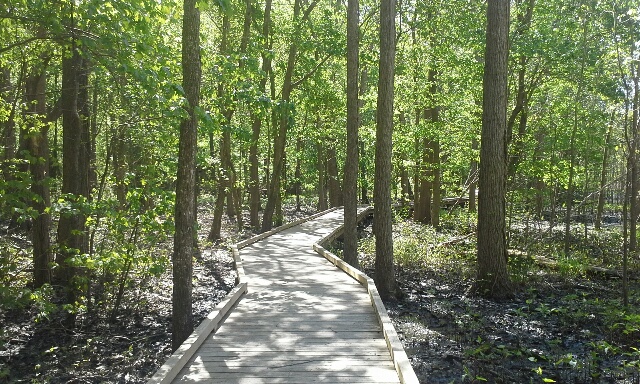
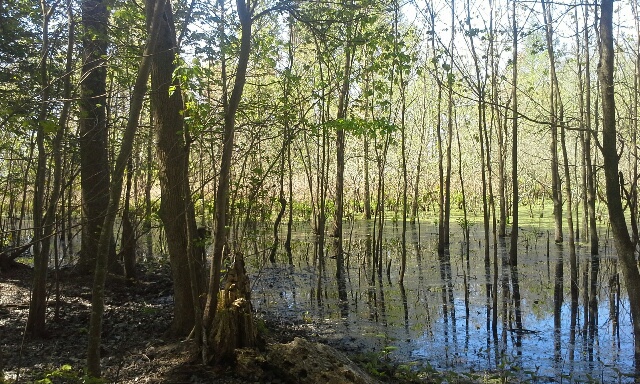
When I left my friends, and to be honest, even before I left, I was beset by sorrow for no reason I can fathom other than that I would be returning without having found what I was looking for. (My visit to the East Dismal Swamp seemed a fitting place to have such an attitude, though a little hike on the wooden walkway temporarily dampened my personal dismals.)

People had told me of a sign outside Wilmington, North Carolina, where I-40 begins. The sign gave the mileage to Barstow where the highway ends (and not far from where I had been hanging out) so I went in search of the elusive sign. I found the beginning of I-40 with no problem, but didn’t see the sign. Unlike most highways I am familiar with, in the east, often there is no on ramp corresponding to the off ramp, so there is no easy way to get back on the highway. Sometimes following signs that were supposed to get me back on, led me far from my destination, which made circling back to look for the sign a tiring task. I finally gave up and headed north on East I-40, but the next day I went back and tried again to find the sign. I even stopped at the nearest gas station, but no one I asked about the sign had ever seen it. I finally realized the sign must have been removed.

That little episode (four hours of circling back on the labyrinth of highways) seems a metaphor for this journey: driving endless miles only to find that I am searching for something that isn’t there.

Don’t you have to know what you are looking for, though? I don’t know what I am looking for, so perhaps I did find it after all, and just don’t know it yet. I had been looking for adventure, and that I have found, even if all the adventures weren’t felicitous.

When staying with my friends, I tagged along to dinner at a restaurant. One guy asked about my trip, and after I told him a few of my more memorable experiences, he asked, “Was there anything you did like?” I was speechless for a moment. Do all experiences have to be likable to have meaning? Part of my desire for this trip was a need to pit myself against the world (and embrace it), to find inner resources and a deeper sense of belonging. (A reason for my sadness, I am sure, comes from the feeling of unbelonging I get when I stay with others, especially couples. No matter how kind they are to me, no matter how much they want me, no matter how at home they make me feel, I have an awareness of being in someone else’s orbit, of encroaching on their space.)

I have to count both my allergies and these mosquito bites as experiences that I didn’t like, but they came as collateral damage to things I did like, such as camping on the outer banks. (The furthest stretch of this journey was down to Cape Hatteras where I got all the bites — I used repellant on my exposed skin but didn’t think to spray my clothes. All the bites were in unexposed areas.)

I have much to ponder in the coming weeks, such as where to go next and what to do with my life, but as long as I can see to the next curve in the road, I will be fine.

I hope you didn’t waste too much worry on me, but thank you for caring.

***

(Pat Bertram is the author of the suspense novels Light Bringer, More Deaths Than One, A Spark of Heavenly Fire, and Daughter Am I. Bertram is also the author of Grief: The Great Yearning, “an exquisite book, wrenching to read, and at the same time full of profound truths.”)

***
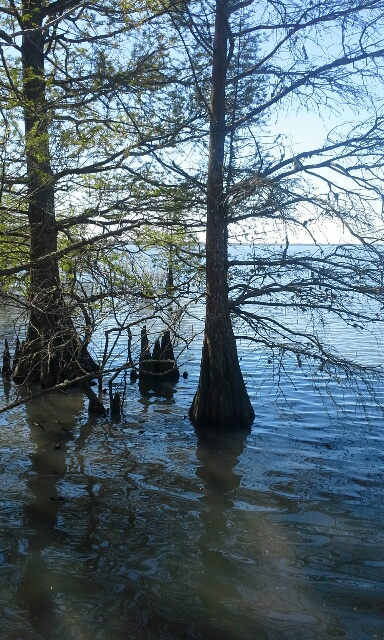
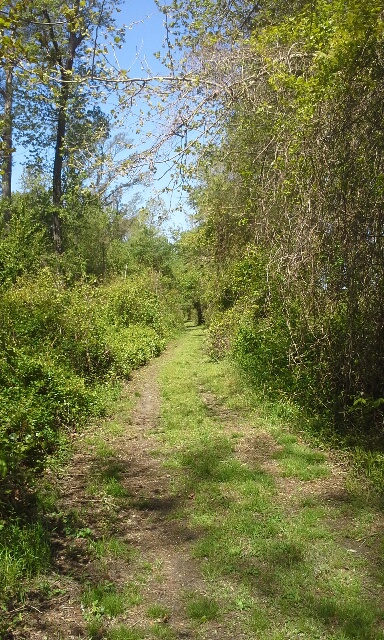
All these photos were taken in or by the East Dismal Swamp. The lake is Lake Phelps, the second largest lake in North Carolina.

Finding the Gem at the End of the Rainbow

This trip/journey/quest I am on was never supposed to be a sightseeing trip but more of a sight-experiencing trip. Still, it’s hard to bypass the touristy sites — often they are the most memorable places, places my host or hostess wish to show me.

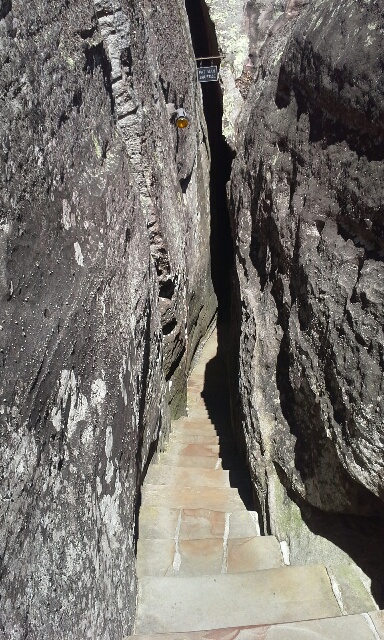
Which is how I ended up at City of Rocks on the border of Georgia and Tennessee. At first I didn’t know what to make of it. Fake fairy tale scenes and garden gnomes dotted the rockery, and people pushed and shoved their way through narrow openings between boulders.

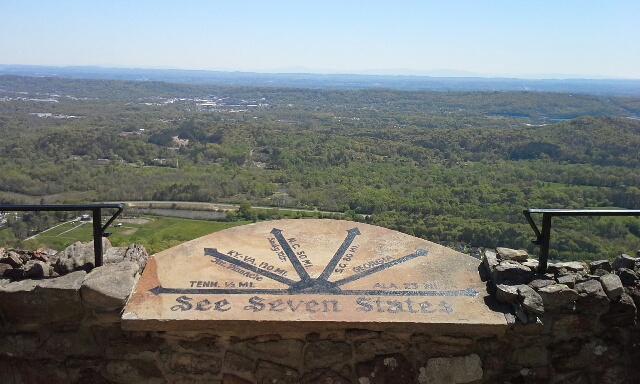
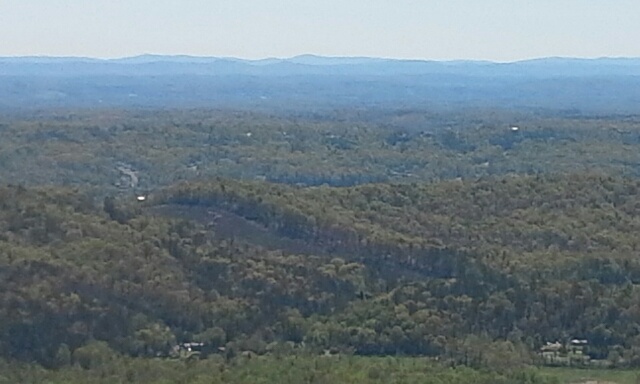
But then I found the gem at the end of the rainbow trail — an incredible panoramic view that supposedly allowed someone standing there to see seven states.

One of those states was North Carolina, the next stop on my journey. North Carolina seems like such a diverse state (most of them are) that I’m not sure what I want to explore. Some people have suggested Cape Hatteras or Wrightsville Beach. Others think I should go to Natahala Gorge. I suppose I should at least step on the Appalachian Trail.

When I began this journey, I thought by the time I reached North Carolina, I would be ready for a backpacking trip, and yet, I am now in worse shape than when I started. I haven’t hiked much at all in the last few weeks, spending my time non-driving time visiting people and places.

My return journey will be completely different. Because of the weather, I won’t be going further north, so there won’t be any more people to visit.

I am looking forward to seeing what I will do and what gems I will find.

***

(Pat Bertram is the author of the suspense novels Light Bringer, More Deaths Than One, A Spark of Heavenly Fire, and Daughter Am I. Bertram is also the author of Grief: The Great Yearning, “an exquisite book, wrenching to read, and at the same time full of profound truths.”)

***


Memories Vastly Older Than I Am

Still more adventures waited for me in Georgia, a state that seems like an unending park, with trees, green grounds, and flowering trees everywhere.

And memories vastly older than I am.

In the northwest corner of the state, in a town called LaFayette (emphasis on the fay), dwells a highschool classmate I haven’t seen since graduation lo these many years ago. (Incredibly, she is still friends with women she met in school, talking to them at least once a week.) We’d become friends on Facebook, and when she first heard of my planned adventure, she invited me to visit her.

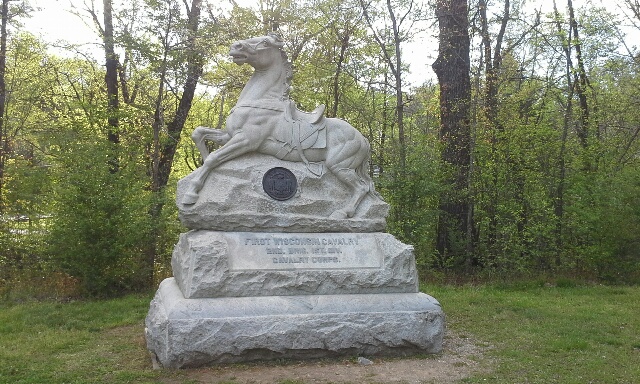
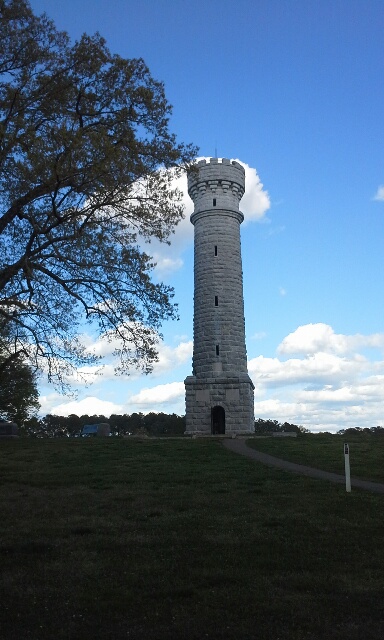
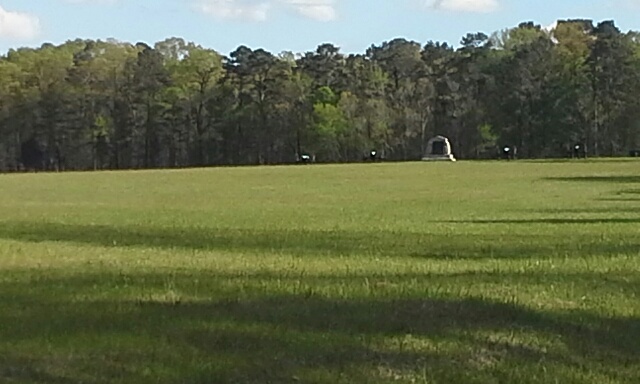
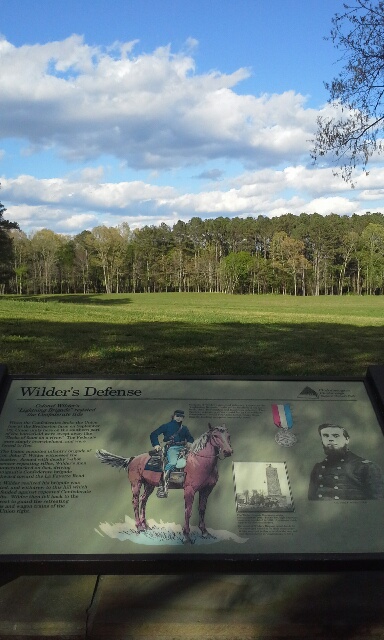
Just about the first thing she asked me when I got there (after we’d hugged hello and eaten the best BBQ I’d ever tasted) was if I’d like to see the battlefield. I shook my head no, having little interest in historical sites, but later when I needed to find a cell signal so I could post my blog and let people know I’d arrived safely, she happened to drive past the national military park commemorating the battle of Chickamauga. I could only gape in amazement at the vast number of monuments and memorials dotting the 9,000 acres where once more than 120,000 men had fought and 34,000 died. (Before that, the Cherokee had been rounded up there and forced onto the trail of tears.)

I’m not really sure what amazed me — the scope of the battle, the weight of all that passion, pain, and death, or maybe just the dedication of those determined to keep the battle alive if only in memory. (Which leads me to wonder, if we commemorated all battlegrounds, large and small, would there be any land left for us to live?)

What stunned me just as much was the realization of my presence in the south. Having lived my life in the west, I am used to thinking of the Civil War as having taken place long ago and far away, and there it was — in my very presence.

Amazing.

***

(Pat Bertram is the author of the suspense novels Light Bringer, More Deaths Than One, A Spark of Heavenly Fire, and Daughter Am I. Bertram is also the author of Grief: The Great Yearning, “an exquisite book, wrenching to read, and at the same time full of profound truths.”)

***

When in Rome

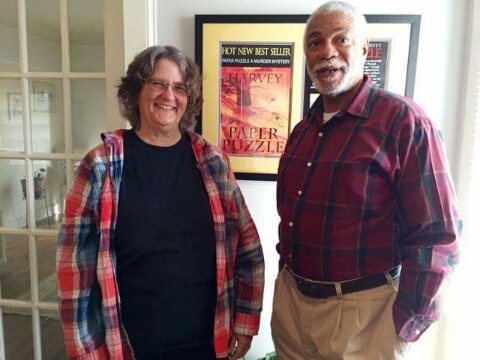
On my way to Rome, Georgia, I stopped in Atlanta to have dinner with Harold Michael Harvey, author of the legal thriller Paper Puzzle and a collection of essays about the American jury system called Justice in the Round. Over a delicious quinoa and asparagus casserole made by the author, Harvey Michael and his wife entertained and educated me with stories of their involvement with civil rights matters. The thing that struck me most about our disparate lives was that both of them had two sets of grandparents who were influential in their early years while I had none. It was strange to think that everything in our three lives led to that special dinner. Our rapport was so great, I found it hard to tear myself away, but I needed to get to Rome before dark. It is hard enough to navigate back roads in the bright of day — at night, it is almost impossible.

My next stop was with another author that I had waited many years to meet — Malcolm R. Campbell, blogger extraordinaire and author of several acclaimed books, including The Sun Singer and Sarabande. The three of us, Malcolm, his wife, and I stayed up most of the night talking. As with all my online-now-offline relationships, there wasn’t a single blip of strangeness as we sequed from our various e-methods of conversing to real life.

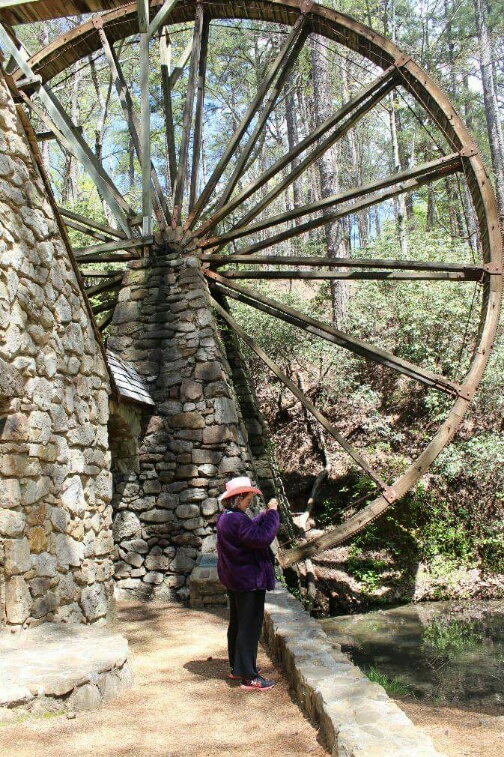
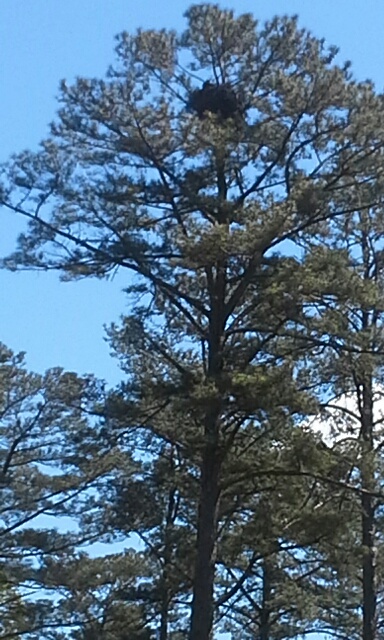
In the morning, Malcolm took me on a tour of the magnificent 34,000 acre Berry College campus where he once taught. The highlight of the day was the bald eagle’s nest, where one of the eaglets peeked over the rim of the nest, searching for its parents. We hung around hoping to see the adult bald eagles heading home but didn’t catch so much as a glimpse of them. (You can see the eaglets live at http://www.berry.edu/eaglecam)

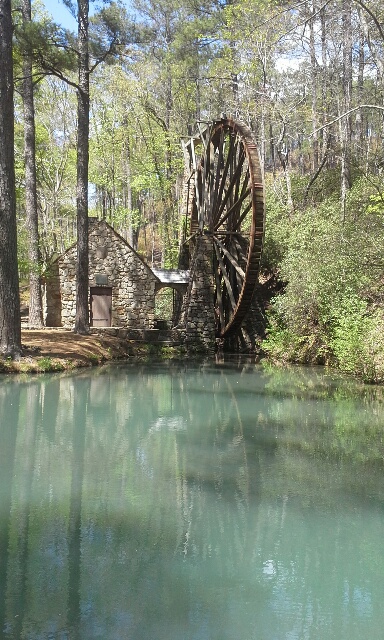
We topped off the tour with a visit to the old mill on the campus, the largest overshot mill wheel in the world, or so the college brags. Water is piped up the stone column and over the wheel, causing it to turn. It still works, and on occasion they run it. Unfortunately that day was not such an occasion.

During these two visits, the authors and I solved all the ills of the world. Now if we could just get the world to pay attention!

***

(Pat Bertram is the author of the suspense novels Light Bringer, More Deaths Than One, A Spark of Heavenly Fire, and Daughter Am I. Bertram is also the author of Grief: The Great Yearning, “an exquisite book, wrenching to read, and at the same time full of profound truths.”)

***
Georgia on my Mind

Georgia is an awe-inspiring place. So often on this journey I travelled gorgeous tree-lined roads, but in the sameness, the prettiness palled. In the Pine Mountain region, however, every turn brought a new view, which increased my appreciation.

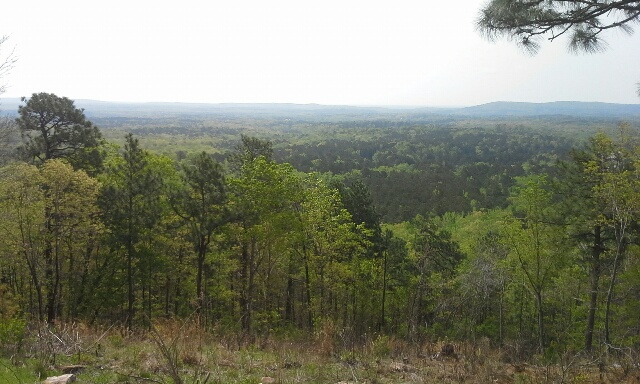
When I first arrived in the area, I didn’t understand why it was considered mountainous. The terrain had risen gently, the hills so subtle, its mountain-ness seemed more of a name than a fact. And then I pulled into an overlook, and a world of tree tops lay far below me. Such a fantastic view!

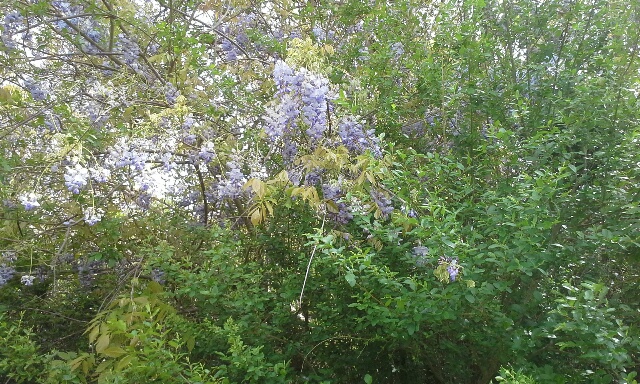
In many areas, I saw trees draped in purple flowers. I should have just enjoyed the vision of loveliness instead of researching the blooms because I discovered that instead of being the mountain laurel I thought it was, it turned out to be Chinese wisteria, an invasive parasite that eventually can strangle its host.

But then, nature always was a bit of a brute, hiding its ghastly ways beneath a cloak of beauty.

And oh, there is so much beauty!

***

(Pat Bertram is the author of the suspense novels Light Bringer, More Deaths Than One, A Spark of Heavenly Fire, and Daughter Am I. Bertram is also the author of Grief: The Great Yearning, “an exquisite book, wrenching to read, and at the same time full of profound truths.”)

***
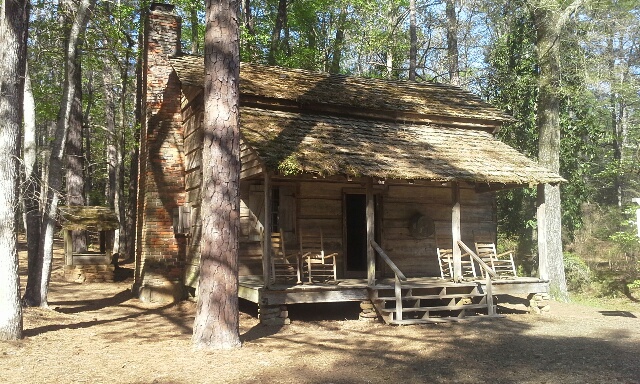
(When I saw the log cabin, I was reminded of the current small-house craze, which shows how history repeats and reinvents itself.)

The Most Beautiful Place on Earth

I visited Callaway Gardens on a perfect Georgia day. Warm. Cloudless. Soft breeze.

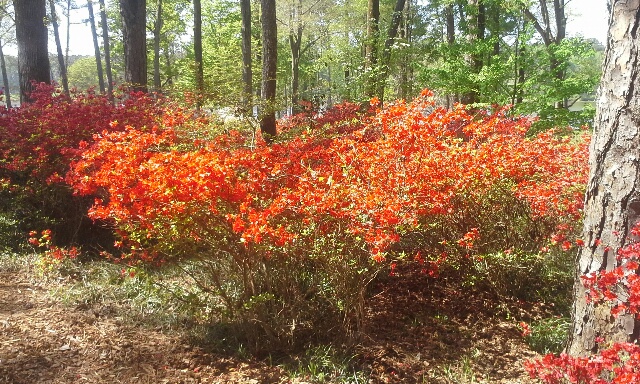
At the beginning, I wasn’t all that impressed. The place was scenic in a “seen it” sort of way. Roads meandering among wooded areas and around lakes. Golf course. Pastoral views. Then I reached the Overlook Azalea Garden, and oh, my!

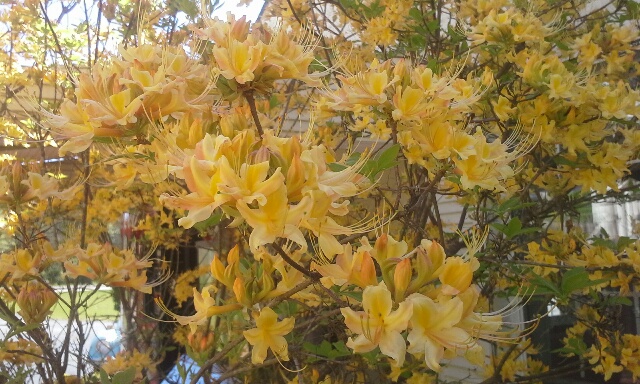
Callaway Gardens calls the Overlook Azalea Trail the most beautiful place on earth, and although I would hesitate to agree — there are many spectacularly beautiful places all over the world and especially in the United States — the trail through the azalea garden is truly lovely. At times it seemed as if I’d wandered into an impressionist’s painting. Other times it seemed as if I’d turned a corner into a heavenly sent and heavenly scented eden.

I lucked out in that without planning it, my visit corresponded to the bloom season. Such beauty seems hard to fathom, but there it was, all laid out before me, as if the very earth were so glad I had come for a visit, it donned it’s loveliest raiment.

***

(Pat Bertram is the author of the suspense novels Light Bringer, More Deaths Than One, A Spark of Heavenly Fire, and Daughter Am I. Bertram is also the author of Grief: The Great Yearning, “an exquisite book, wrenching to read, and at the same time full of profound truths.”)

***

Seduced by the South

I’ve been struggling with allergies ever since I hit Florida, so when I discovered that I felt well driving after I left Amelia Island (outrunning the pollens that bedeviled me?), I kept driving.

I’d seen a picture on Facebook of Callaway Gardens near Pine Mountain in Georgia, and since Amelia Island was only a long days drive from Pine Mountain, I decided to head that way. I set my phone to Google maps and let Google lead the way. It took me through many small towns, some very lovely and oh, so southern, such as Euphaula, Alabama. (The tree-canopied highway swept past well-kept mansions, some with ornate gingerbread trim, some with classic columns.)

I’d planned to spend the night halfway, making it an easy two-day journey, but I didn’t see anywhere I particularly wanted to stay, and since I continued to be able to breathe easily, I kept driving. I was way too late to get a place in Callaway Gardens, but luckily I found a small motel in Pine Mountain. And what a find! White Columns Motel is family run, inexpensive, and has all the charm of a resort bed and breakfast. (In fact, they did fix breakfast for me after my good night’s sleep in a four-poster bed.)

I am now sitting in the sun on a swing outside my room, breathing azalea-scented air, basking under cloudless blue skies, bonelessly relaxed. A sporadic breeze blows away the flower scent and brings me the cool clear odor of pine from the forest behind me.

I suppose I should go visit the gardens as I had planned, but the swing has seduced me. I feel like a heroine in an historic novel, a southern belle with nothing to do but indulge my indolence. Luckily, I am not such a character, because after the indolence comes chaos (otherwise there wouldn’t be a story), and I am enjoying this moment far too much to have it interrupted with plotlines.

If you don’t hear from me in the next few days, don’t worry. I’ll still be here, letting the gentle movements of air and swing caress me.

***

(Pat Bertram is the author of the suspense novels Light Bringer, More Deaths Than One, A Spark of Heavenly Fire, and Daughter Am I. Bertram is also the author of Grief: The Great Yearning, “an exquisite book, wrenching to read, and at the same time full of profound truths.”)

***
Gator Aid

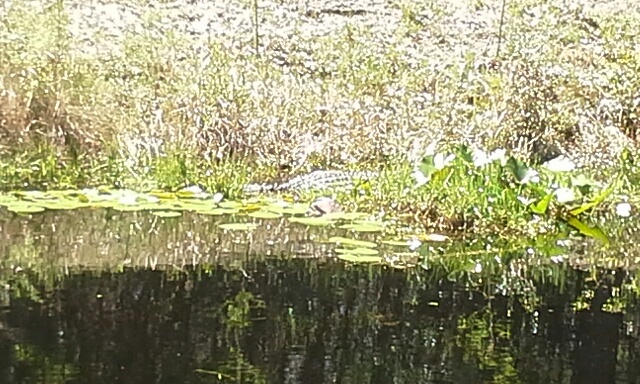
The very word “swamp” makes me itch. Visions of marauding mosquitoes, clouds of black flies, and other inhospitable creatures come to mind, so I had no real interest in visiting Okefeenokee Swamp. Still, the swamp called to me before I had completely passed the entrance to the Okefenokee Swamp Park, so I cut across the highway and headed down the five-mile road. Part of this journey is about facing my fears, and I fear mosquitoes the way some people fear bees. The bites swell enormously at times, and often the site of old bites itch when I get a new bite as if to welcome the company. (I still have scars from all the bites I got last summer.)

I sprayed myself with the most natural bug spray I could find (some eucalyptus & lemon thing manufactured by Repel that Consumer Reports had found to be as effective as Deet) and hoped for the best.

About a mile in, I got caught behind a car parked in the middle of the road. Young boys were hanging out the window, so I glanced to where they were pointing.

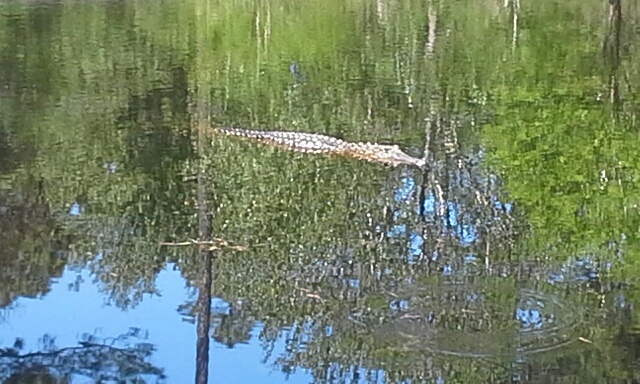
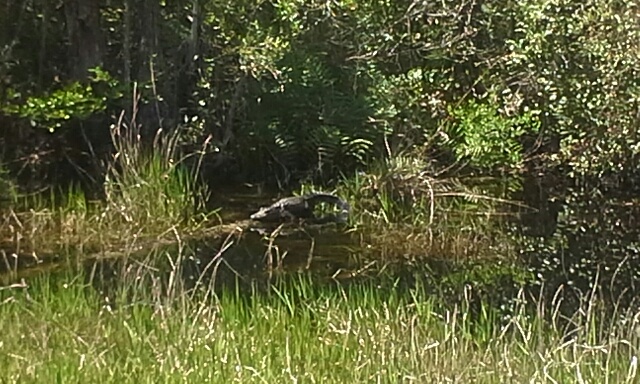
Oh, my. Alligators!

I don’t know why it hadn’t occurred to me to look for alligators in the swamp, maybe because I hadn’t seen any in Florida, but it was a great thrill to see the beast less than ten yards from my car. Very respectfully, I got out of my car to take a photo, then continued to follow the car. Several other times those same boys aided in my spotting an alligator.

This wasn’t the first time I received such gator aid — at Davis Bayou, I was taking a photo of a heron when a woman walking her dog came and pointed out the alligator all but hidden in the mud a few feet from the bird.

I’ve always known I wasn’t observant (I’d be one of those witnesses to an accident who wouldn’t be able to tell you the color of the cars or even the victims), so I was glad of the help in getting attuned to looking for the prehistoric creatures until I could find them for myself.

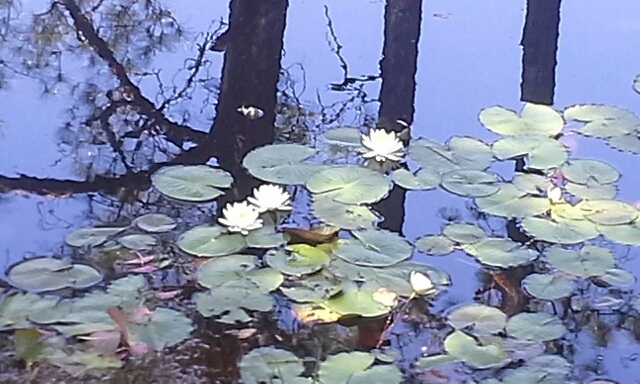
Almost as big a thrill as seeing the alligators was seeing the lily pads with blooming flowers.

On my way out of the park, I again stopped by the side of the road. No alligators, but I did see turtles sunning themselves on a log. (They were shy and slipped into the water before I could take a picture.) In the quiet, I heard a long low call, too gutteral to have been a bird, but I never discovered what sort of creature made the noise.

The lovely outing was made even lovelier by the lack of mosquito bites. I can’t verify the efficacy of the spray I used because to tell the truth, I didn’t see or hear a single mosquito.

Still, I am just as glad I didn’t hang around until dusk so the day-shy denizens of the swamp could find me.

***
(Pat Bertram is the author of the suspense novels Light Bringer, More Deaths Than One, A Spark of Heavenly Fire, and Daughter Am I. Bertram is also the author of Grief: The Great Yearning, “an exquisite book, wrenching to read, and at the same time full of profound truths.”)

***