Grief’s Strange Blessing

We think we know who/what we are, but that image of ourselves is often at odds with what other people think. For example, if I disagree with some people, they call me negative. If I say no when someone asks me to do something, I risk being called contrary. If I want to do things my own way, I’m accused of being manipulative. If I try to set boundaries, I am called a vindictive, vengeful bitch.

Actually, only one person in my life ever dared called me a bitch. If anyone else did, he would not be in my life. It’s not that I want such a person in my life, of course, but my father allows my homeless brother to camp out in the garage, and it is my father’s house. (I don’t want to get into the morality of the situation, or how I am “enabling” my brother by not calling the cops, or how I should leave and let my 97-year-old father fend for himself. I’ve heard it all before, and anyway, that’s not what this post is about.)

When you live with someone with mental problems who insists that it is you who are out of touch with reality, it’s even harder at times to know the truth. Perhaps I am vindictive and vengeful as he says. Perhaps I’m negative, manipulative, and contrary as others say. I don’t think I am, but if I were, would I know?

A friend’s mother is going blind. One day this friend wore a pair of mismatched socks (they were part of a fun set of puposely mismatched socks, not mismatched by accident). The mother looked at the one purple sock and the one pink sock and said, “I love your red sSayingocks.” No amount of talking could convince the woman the socks were anything but a matched pair of red socks. It’s what she saw, and since she believed her eyes, what she saw must be the truth. And in a way, it was the truth — her truth. She did see red socks even though everyone else saw pink and purple.

Besides all the other nastiness my brother spews, he claims I have a dissociative personality disorder. If I did, would I know? I think I would — there should be gaps in memory, strange looks from friends, questions about things I have said — but my brother is the only one who insists I said things I don’t remember saying, who says I did things I don’t remember doing.

There was a time in my younger years where I would have worried about the truth of his allegations because I did feel unbalanced, as if one mental step to either side would send me over a cliff to insanity, but now I know the truth. I am sane. (It’s possible, of course, we are all insane, that life is a form of insanity, but that’s a path I don’t want to explore.)

So, what gives me the confidence to believe I am sane when others allege the opposite? The profound grief I experienced after the death of my life mate/soul mate.

Grief is a totally insane situation, with hormones of all kinds on overdrive, brain chemistry out of whack, emotions out of control, pain so deep it makes it impossible to breathe, tears that flow like open faucets without your volition, dizziness and nausea and a loss of equilibrium that make the world seem totally alien. And yet, somehow, through it all, I could feel the truth of grief, that whatever I experienced was normal. It’s this belief in the normality of grief’s insanity that gave me the courage to write about grief and connect with others going through the same thing. It’s what gave me the ability to explain grief to my fellow bereft, and to assure them that despite what they were feeling, they were not crazy.

And neither was I.

Grief brings strange blessings, and this was my blessing, the thing that is now helping me through a bizarre situation — the utter belief in my sanity.

***

Pat Bertram is the author of the suspense novels Light Bringer, More Deaths Than One, A Spark of Heavenly Fire, and Daughter Am I. Bertram is also the author of Grief: The Great Yearning, “an exquisite book, wrenching to read, and at the same time full of profound truths.” Connect with Pat on Google+. Like Pat on Facebook.


In a Cavern, in a Canyon, Excavating for . . .

Unlike Clementine’s father, I haven’t been excavating for a mine, but I have been excavating in the caverns and canyons of my workspace.

I turned on the computer a couple of hours ago to write my daily blog. Although I began this blog in 2007, I’ve only been daily blogging for the past 966 days. The miracle is that I’ve found something important to say each of those days (important to me, anyway), but today I’m dragging my feet. I don’t want to talk about what is most on my mind — the insanity of my life. My 97-year-old father is continuing to decline, and my crazy brother is getting increasingly crazy, blaming me for everything wrong in his life. He claims I am the one who’s crazy, tells me I am a jealous, revengeful bitch, but the truth is, I am too tired to be anything but what I am — a person who is doing the best she can under burdensome conditions.

Not wanting to go into the particulars of today’s insanity, I’ve been procrastinating writing this blog, cleaning around my computer and sorting through all the notes that accumulate.

I found a ndeskote indicating that, as of right now, Jeff — my life mate/soul mate — has been dead for 1513 days. Although I am not actively grieving for him, I still feel a blankness inside that his presence once filled.

I found an information sheet from my poppy trip that I hadn’t yet read. Apparently, the local Indians believed the Great Spirit sent this Fire Flower to drive away the evils of frost and famine, and to fill the land with warmth and plenty.

I found a phone number, and when I googled the number, discovered it was for a dollar store, though why I have the number, I can’t say. I also found an address for the county jail, and I do know why I have that. I had to go pick up my brother one day after he’d been arrested for public intoxication.

Barely discernible on a paper with many strange hieroglyphics — long forgotten calculations and cryptic notations — I found a great quote: Screw Romeo and Juliet. I want a love like Gomez and Morticia. Oh, my, yes! Now that was a great love affair, albeit unsung. It’s only those who die for love who become fodder for the bards. To be honest, though, I don’t want any love affair. One excavated note reminded me that my subscription to the dating site OurTime expires at the end of the month, and I don’t intend to renew it. I considered asking the one guy who didn’t pose with a motorcycle if he’d like to go to lunch just so I could say the subscription wasn’t a total waste of money, but I only sent him a brief lob to see if he’ll return my serve. (What I know about tennis is almost nothing, so I have no idea why I used a tennis metaphor, especially since I don’t know if I used it correctly.)

The most interesting thing I found in my excavations were notes about Blackwell’s Island. Apparently my family comes by its insanity naturally — we inherited it. Our great-grandfather, who once worked with Edison, and who invented the postmarking machine that continued to be used until the digital age made it obsolete, had been married twice. One wife he threw down the stairs. The other he consigned to the Lunatic Asylum on Blackwell’s Island (renamed Roosevelt Island in 1973). The asylum was supposed to be a state of the art facility, with patients classified as to their illness, rather than all thrown in together, the violent and harmless alike. The Asylum was also supposed to be moral, treating the patients like humans rather than like depraved animals. This humane mental institution never materialized. Instead, the asylum was a dreadful place that journalist Nellie Bly described as a “human rat trap.” Even worse, since convicts from the nearby penitentiary were used as guards and attendants, the patients were “abandoned to the tender mercies of thieves and prostitutes.”

No one knows which of my great-grandfather’s wives is my great-grandmother, but even if she weren’t the one committed (especially since there’s a chance he had her committed for his own reasons rather than her mental state), the insanity could come from good old great-grandfather himself.

The best part about this excavating through the caverns and canyons of my workspace is that now the space is neat and clean. And I did write a blog after all.

***

Pat Bertram is the author of the suspense novels Light Bringer, More Deaths Than One, A Spark of Heavenly Fire, and Daughter Am I. Bertram is also the author of Grief: The Great Yearning, “an exquisite book, wrenching to read, and at the same time full of profound truths.” Connect with Pat on Google+. Like Pat on Facebook.

I Am Not an Arthur

Last night I got together with some people for a group walk and the first thing one of the women said to me was, “Are you an arthur?” Although my name is not Arthur, I knew what she was asking. A bit hesitantly, not sure if it were something to be proud of or ashamed about, I admitted I was an author.

The woman said, “I’ve just started writing. You should come over to my house so you can take a look at what I wrote and tell me what you think.”

I didn’t know this woman. Had just met her a few seconds before. And she wanted me to look at her writing? Eek.

As graciously as I could, I said, “I’m sorry, I don’t do that.”

“Why?” she asked.

“Because it’s a good way of making enemies,” I responded.

“Why?” she asked.

“Because people don’t like what I tell them.”

“Why?”

“Because I tell the truth.”

“That’s what I want,” she said. “The truth.”

knightBy this time, I was feeling besieged. I live with people who constantly want/need things from me. I am always fielding online requests for help from people I don’t know and a few that I do. What I needed last night was a respite from such burdens.

Still trying to be gracious, though my irritation seeped through, I said. “No you don’t.”

And it’s true, whether she knew it or not: she did not want the truth as I see it. She had no writing experience. She wrote longhand and, because her wrists hurt, she hadn’t written much. She admitted she didn’t know how to spell, and when I told her that computers did that for her, she said she didn’t have a computer, didn’t know how to use one. She didn’t know grammar, either. Didn’t read books on how to write, didn’t read anything, actually, except a very occasional Stephen King.

So yes, I can guarantee she wouldn’t like anything I had to say about a few scribbled pages full of misspellings and grammar errors, and an absence of story elements. What she wanted was 1) for me to tell her that underneath all the obvious errors her writing was great and 2) for me to tell her everything I knew about writing in a few quick sentences. And there was no way I would do either. Besides, even if her writing was execrable, it’s not my place to tell her so and ruin her enjoyment.

I suggested that she read, but her wrinkled brow told me she couldn’t see the similarity between writing and reading. Finally, I told her just to write. To have fun with it. Not to worry about anything else. (Without a computer and with no desire to learn how to use one, she could never be anything but a hobbyist, so she might as well have fun.)

I learned something from last night’s experience, though — the next time anyone asks me if I’m an arthur, I’m going to say no.

***

Pat Bertram is the author of the suspense novels Light Bringer, More Deaths Than One, A Spark of Heavenly Fire, and Daughter Am I. Bertram is also the author of Grief: The Great Yearning, “an exquisite book, wrenching to read, and at the same time full of profound truths.” Connect with Pat on Google+. Like Pat on Facebook.

Grateful to be Breathing Easily

Today I am especially grateful that I can breathe easily.

Late last night, my father’s oxygen concentrator machine broke down, so I spent most of the night dealing with him and people from the oxygen company. While we waited for a callback, my father became so short of breath, he started going into a panic, so I dragged out the portable emergency canister. He said he’d rather not use the canister, and it’s just as well. Although I’d been told all I have to do is turn it on, no one told me how to turn it on or how to adjust the flow so I didn’t poison my father with too much oxygen.

When the on-call guy from the oxygen company called me, he tried to explain how to set up the portable oxygen canister. I got the oxygen turned on, only to discover the tank was empty, so I had to take the regulator off the empty canister and put it on a full one. Sometimes the littlest things make life difficult, and so it was last night. The reguSlator had a ridiculous hard plastic washer to keep the oxygen from leaking, but when I tried to screw on the regulator, the washer kept falling off. If I tilted the canister to lay the regulator over the “snake teeth” as he called the prongs that went into the holes toward the top of the canister, I couldn’t keep the phone propped on my shoulder to hear his instructions.

Finally, the on-call guy said he’d just come out and replace the concentrator machine. Shortly after I hung up the phone, I was able to put the regulator on the canister, but I had no idea how to adjust the flow. Well, now I do. The on-call guy showed me. Also left me a regulator with a washer that snaps into place. By the time he left and my father was sleeping peacefully, it was a bright 7 am. I tried to sleep for a bit, but I couldn’t help thinking that despite the complications of the night, supplemental oxygen is mostly a simple matter. I remembered tales and pictures of iron lungs from my youth, and felt grateful such machines were no longer needed.

Um, wrong. Out of curiosity, I Googled “iron lung” and discovered there are still polio victims living in iron lungs, have been for the past sixty years. I remember when I was young, how terrified I was of those hideous looking machines and even now the thought that some people were sentenced to a lifetime in such a contraption would have given me nightmares if I had been able to fall asleep. Oddly, the people who need to use the tanks because there is still no other way to force their diaphragms to work seemed to have good attitudes. Even that is unimaginable to me. But I suppose the alternative is even worse.

Breathing seems such a simple thing, so simple we mostly do it without even thinking. We draw in air, filter it through our lungs, and exhale the waste. And yet, even that natural act is beyond some people.

I hope you will take a deep breath with me and be grateful you can still perform such a simple, live-affirming action.

***

Pat Bertram is the author of the suspense novels Light Bringer, More Deaths Than One, A Spark of Heavenly Fire, and Daughter Am I. Bertram is also the author of Grief: The Great Yearning, “an exquisite book, wrenching to read, and at the same time full of profound truths.” Connect with Pat on Google+. Like Pat on Facebook.
Cliché, Classic, Cheat, or Convention?

I’ve been collecting mystery genre clichés to use in a whimsical mystery story. Some of the suggestions people have given me are true clichés — clues, characters, or plot devises that have been so overused they hold no surprise anymore. For example, “the butler did it.” The butler was such a ubiquitous character in older mysteries, and such an unobtrusive character, that the choice of the butler for villain was innovative the first time or two, but it quickly became clichéd. After the butler as villain became prevalent, there came a series of mysteries where the butler was the first suspect, but he was so obvious because evebutlerryone knew the butler usually did it, that he was quickly dismissed as a suspect, but the wily detective eventually discovered that it was, in truth, the butler. Then there were the mysteries where the butler became the detective. Now, of course, any use of a butler is clichéd, but it doesn’t matter because no one has a butler anyway. I suppose it would work if a character was named Butler. Hmmm. Might be a possibility for my mystery. Could be a fun gag if nothing else.

A convention is the way something is done. For example, in a mystery there must be a mystery, otherwise it wouldn’t be a mystery. There must be someone trying to unravel the mystery, and there must be clues, false trails, and various other common conventions that make up a mystery novel. And especially there must be a satisfying ending to tie up all the story threads. Just because these elements are in all mysteries, it doesn’t make them clichés. A cliché is something that has become so overused that it no longer holds any meaning or surprise, and the whole point of the mystery genre is meaningful and surprising revelations.

The mystery itself, or a specific type of ending could be clichéd, though. For example, the ending where a detective gathers all the suspects together has become a cliché, mostly because everyone today has at least a modicum of an idea of how the police really work, and the cops simply do not gather all the suspects together to unravel their case in public. Even amateur sleuths, such as the clichéd old lady who noses around because she thinks the police are bumbling idiots, don’t do such clichéd gatherings because they should be smart enough to know that’s how people get killed. And anyway, even if she does do a group unveiling, what difference does it make? Any unveiling of the killer or any confession wouldn’t hold up in court. (We did such a gathering for the end of Rubicon Ranch: Riley’s Story, a collaborative novel I wrote with several other authors, but what made it tolerable was my character’s derision of the whole idea.)

The only ending worse than the clichéd gathering is when the villain has the hero cornered, but spends so much time bragging about how he (or she) did it that the hero gets the upper hand. (Or vice versa — the hero has the villain cornered, but spends so much time congratulation himself that the villain gets away.)

Some clichés aren’t really clichés, but are more of a classic story element. For example, a locked room. Locked room mysteries are a subgenre of murder mysteries, and in fact, I will be using a locked room in my story. Locked rooms add a separate element to the mystery, because not only do you have to figure out who killed the victim and why, you also have to figure out how the heck they got into the locked room. And, of course, the locked room has to be an integral part of the story, otherwise it becomes a cheat with no other reason for being than to add cheap suspense. In my case, I can’t do anything but the locked room mystery. The mystery will revolve around a dance studio, and the only time the studio is unlocked is when people are there. It’s hard to commit a murder unseen in a crowd, though it has been done.

Occasionally clichés are cheats. Someone gets a letter from the victim or killer at the beginning of the story, the person puts the note in a pocket or desk drawer unread, but finds it at the end in time to keep the killer from killing again. It’s a cheat because if the fool had read the letter at the beginning, there would be no story.

In a mystery, the main characters have to act to the best of their ability at all times. A woman who is told not to go some place where danger lurks, and she goes simply because she was told not to, is someone who is not acting to the best of her ability. Stupidity is not a plot ploy. It is a cheat.

So, there you have it, a brief primer on the differences between clichés, classics, cheats, and conventions.

**

Pat Bertram is the author of the suspense novels Light Bringer, More Deaths Than One, A Spark of Heavenly Fire, and Daughter Am I. Bertram is also the author of Grief: The Great Yearning, “an exquisite book, wrenching to read, and at the same time full of profound truths.” Connect with Pat on Google+. Like Pat on Facebook.

Let’s Play the Cliché Game!

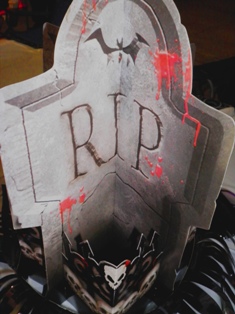
My exercise class suggested I write a book about them. One woman even volunteered to be the victim, though I can’t imagine why anyone would want to kill her. She is lovely, charming, and utterly delightful. I wasn’t going to write the story since it seemed a good way to lose a lot of friends, but at the lunch the other day, I almost whacked one of my classmates with my exercise bag, and she deadpanned, “I’m not the one who volunteered to be the murder victim.” So I decided to write the book. I mean, how could I not use such a perfect line?

I’d like to do the book campy with exaggerated uses and sly mentions of mystery clichés. For instance, I could get a call from one of the women who says she has information, but won’t give it to me over the phone. I immediately rush over there, of course, since such a call is a precursor to being murdered in cheap mysteries, but when I get there I find . . . I don’t know. Something innocuous. That the cell phone battery went dead. (Or better yet, I call the cops, and they think I’m hysterical.) Then there’s the “Don’t Go There” ploy, advice that a character ignores. When she does Go There, she almost gets herself killed. (Someone suggested this should be a buxom blonde, and of course, I know the perfect person for the role — a lady in red who is a buxom blonde or rather a buxom sometimes-blonde, and she definitely would Go There.) Of course I would also mention the old fictional women from small towns who stumble on so many murders, there couldn’t possibly be anyone left alive in the vicinity. Perhaps even use the alcoholic, donut-eating cop, misogynous cop.

I’m going to start out writing the book the way the idea unfolded in real life, beginning with the suggestion of my writing the book, our planning the murder, etc. leading up to the day we go to class and find her dead for real. The victim is such a good sport, she let me take a photo of her being dead to use for the book cover. (She sank to the ground gracefully, and fell into the perfect pose. Hmm. Maybe she is an eminently suitable victim after all. In the mystery world, she would be too good to be true.)

For now, I’m collecting clichés to use in the book. What do you think are the top clichés in mystery/suspense/thriller fiction? Who are the stock characters? What clichés and other mystery genre conventions do you absolutely hate?

But be careful! You might just end up in the book.

***

Pat Bertram is the author of the suspense novels Light Bringer, More Deaths Than One, A Spark of Heavenly Fire, and Daughter Am I. Bertram is also the author of Grief: The Great Yearning, “an exquisite book, wrenching to read, and at the same time full of profound truths.” Connect with Pat on Google+. Like Pat on Facebook.

The One / Three / Five / Seven / Ten / Fifty Exercises You Should Never Do

A couple of weeks ago, I came across an article entitled, “The One Exercise You Should Never Do.” The never-do was one of those machine exercises that strengthens and bulks up your quadriceps without also strengthening the hamstrings. I didn’t pay attention to the exercise since I never do it and never would do it, so I have only a vague idea of what the exercise is (seated knee extensions, I think). The reason for not doing the exercise interested me, however: not only does the machine put an unnatural strain on the knees, if you build-up the quadriceps without also building up the hamstrings, the powerful muscles in front of the thighs pull at the knees in an unnatural manner.

I wanted to read that article again because I referenced the unnatural weight issue in my Planning Sponteneity post, but I couldn’t find the citation. Instead, I found a whole slew of articles telling me what exercises to do and what not to do — The One Exercise You Should Never Do. The Three Exercises You Should Never Do. The Five Exercises You Should Never Do. The Five Exercises You Should Always Do. The Seven Exercises You Should Never Do. The Ten Exercises You Should Never Do. The Fifty Exercises You Should Never Do. Yikes. What a morass!

One article said to never do Smith Machine Squats, whatever those are. It also listed five must do weight-training exercises: lunges, pull-ups, planks, squats, and burpees. For you uninitiated, “burpees” does not refer to a seed company, but is an exercise you probably know as “squat thrusts.” Despite the endorsemennapt in this article for burpees, other articles say that burpees are the one exercise you should never do.

Some say never do squats, or rather deep squats. Some say never do crunches, some say crunches are a great exercise. Some say never jog, others say to jog. Some say never jump on concrete. (No one, of course, disagrees. Jumping on concrete is a great way of destroying your knees.) Some say seated exercise is the best way of protecting your back, knees, etc. Others say we sit enough and don’t need to do any more sitting. Some say don’t use light dumbbells. Some say never use a Smith machine, others suggest various exercises such as Smith Machine Squats. Some say never do overhead triceps extensions with dumbbells, others recommend doing them. Some say never do clean and jerk, others recommend doing them. Some say don’t ever do bridges, others say do them. Some say don’t do the dead lift because it’s too hard on your back, others say to do it. Others say to eschew working out at a moderate pace for long periods of time.

It seems to me that the exercises to never do are those you don’t like doing. If you don’t like doing them, there’s probably a reason, perhaps they hurt or are they are beyond your ability or strength. And the exercises to do are the ones you will do.

So, where do I fit in all these must-dos/never-dos? Of the first five must-do exercises, the only one I do is the plank: a pose similar to the beginning of a push-up, only you balance on your toes and forearms (or knees and forearms, which is all I can do) for a certain number of counts. It’s also simple and safe, though I can’t attest to its effectiveness. I just do it. As for squats — I can barely do a grande plié, which is sort of a squat without weights. And the only thing close to a lunge I do is a yoga warrior pose, again without weights. And I don’t even want to talk about burpees. I hated doing them in gym class when I was a kid, so even if I could do them (which I can’t) I wouldn’t. I could probably do a pull up if I lost three fourths of my body weight, but maybe not since I’d be too emaciated to do anything, not even pull myself up out of bed.

As for the rest, I use light dumbbells — eleven pounds each for a total of 22 pounds (but only because I’m too lazy to set up my barbells, which would be heavier. Jeff always did that and now somehow I just can’t find the will to do it for myself). Using light weights with many repetitions builds strength, where heavy weights with few repetitions build bulk, or at least that’s what I’ve read. I generally walk at a moderate pace because that way I can walk longer with no pain. And yes, moderate walking burns fat without eating muscle. (Ever wonder why there are no bulky long distance runners?)

All this talk of exercise has worn me out. I think I’ll go take a nap.

***

Pat Bertram is the author of the suspense novels Light Bringer, More Deaths Than One, A Spark of Heavenly Fire, and Daughter Am I. Bertram is also the author of Grief: The Great Yearning, “an exquisite book, wrenching to read, and at the same time full of profound truths.” Connect with Pat on Google+. Like Pat on Facebook.

All is Well, Safely Rest

The story of “Taps” might seem a bit of a stretch for Mother’s Day, but my mother has been gone for six and a half years now, so death is on my mind today.

Apparently, there are all sorts of myths circulating about this touching bugle call. One such story claims that in the middle of a battle near Harrison’s Landing in Virginia, a Union officer found a dying soldier and dragged him back to camp. When he lit a lamp, he saw that the man was a confederate soldier, and that he was dead. He turnedtaps the man over and drew in an agonized breath. The soldier was his son. The boy was supposed to be studying music, not fighting for any army, let alone the confederate army.

The heartbroken father wanted to give his son a full military funeral. His request was granted, but since the son was an enemy soldier, he was only allowed a single musical instrument. The father chose a bugle, and he asked the bugler to play the few notes he’d found in his son’s pocket.

The truth is a bit more prosaic. Taps is a revision of an older bugle call, “Scott’s Tattoo,” first published in 1835. In 1862, Gen. Daniel Butterfield worked with his bugler, Private Oliver Willcox Norton, to rearrange the tattoo, lengthening some notes, shortening others. When the new call met with Butterfield’s satisfaction, the General ordered “Taps” to be sounded at night in place of the traditional French tune “Light’s Out” they’d been using. When buglers from neighboring brigades heard the call, they visited Norton and asked for copies of the music. Within months, both Northern and Southern forces were sounding “Taps” at the end of the day.

There are no official words to the music, but these are the ones most of us know:

Day is done, gone the sun,
From the hills, from the lake,
From the sky.
All is well, safely rest,
God is nigh.

All is well, Mother. Safely rest.

***

Pat Bertram is the author of the suspense novels Light Bringer, More Deaths Than One, A Spark of Heavenly Fire, and Daughter Am I. Bertram is also the author of Grief: The Great Yearning, “an exquisite book, wrenching to read, and at the same time full of profound truths.” Connect with Pat on Google+. Like Pat on Facebook.

Planning Sponteneity

It seems silly at times to spend so much effort in figuring out the future when the future often takes care of itself, and yet I would like to live a more spontaneous life than I’ve done so far, and that takes planning.

For example, I would like to set off on an adventure in an effort to live spontaneously, just go where the wind blows (or, considering how much I dislike wind, go where the wind doesn’t blow), but whether I am on foot or in a car, I will need to be prepared in case my adventure takes a disastrous turn. And even if there is no major disaster, just minor calamities like blisters, such mishaps could take some of the spontaneity and all of the fun out of an adventure.

There are many things I cannot know — or plan — until I am free of my current responsibilities looking out for my 97-year-old father. It could be that my father outlives me. It could be that I would want to hang out in this town for a while longer, especially if I weren’t ready to leave my friends and my various activities. It could be I would want to do a more structured adventure to begin with, such as a women’s wilderness adventure. It could be I would want to — or need to — take a car trip first to get used to living an unsettled life, then gradually work up to a walking trip. It could be that I won’t bemind physically capable of walking for miles on end. It could be that that after all these months — and eventually, perhaps, years — of planning, I decide to quit after a day or two.

For now, thinking about an epic walk is like working a puzzle. What would I do with my glasses at night? What would I need at bare minimum? How would I carry those necessities? What would I wear?

I carried a five-pound weight in a backpack on one of my local walks, thinking it would be a good way to get acclimated to carrying extra weight. I didn’t expect any problem at all — five pounds is not much, and I’d recently lost at least that much weight. After three miles, however, my buttocks hurt and so did the tops of my feet. I still don’t understand why there would have been any noticeable difference, unless it is where I carried the weight. The five pounds was on my mid-to-lower back, but when you carry an extra five pounds of body weight, that weight is distributed throughout your body, so no one muscle would feel the effects. I’ve been wondering if a belly pack would offset some of the weight of a backpack, giving a better distribution of the weight, but my online researches have turned up no answer. I do know that if you develop your quad muscles at the expense of your hamstrings, you can end up with knee problems, so it’s possible the same sort of physiology would hold true when carrying weight. I suppose one of these days I’ll have to get both a pack and a belly pack and see how it goes.

Speaking of backpacks, many of them weigh four to five pounds. Yikes! That’s close to the maximum of what I want to carry. If I do get a pack, I’ll be checking the weight. And size. I always thought you just saw one you liked at the price you liked and bought it. Apparently not.

Then there’s the matter of clothing. Experienced hikers say not to wear cotton, to wear fast drying wicking fabrics, especially for garments that hug the skin, like socks. One woman went so far as to say that anyone who wore cotton socks even for walking short distances was an idiot. Apparently cotton keeps the feet wet, provides no warmth, and causes blisters, while wicking fabrics “wick” the moisture away from the skin and keep the feet dry. My problem is that synthetic fabrics make my skin sweat, so perhaps my skin would be warm and dry, but I’d be walking in a swamp. This past winter I got some wicking ear warmers. I never knew ears could sweat so much! So now I’m back to using silk scarves to tie around my ears for protection. I’ll have to look into silk sock liners. Or alpaca socks. I never even knew there were such things.

The more I try to figure out the logistics of such a trip, the more I want to scrap all my plans. Just take off. Nothing but me, some random clothing, and whatever I can fit into my pockets. Now that’s a plan for spontaneity!

***

Pat Bertram is the author of the suspense novels Light Bringer, More Deaths Than One, A Spark of Heavenly Fire, and Daughter Am I. Bertram is also the author of Grief: The Great Yearning, “an exquisite book, wrenching to read, and at the same time full of profound truths.” Connect with Pat on Google+. Like Pat on Facebook.

Preparing for My Next Adventure

I got an email from NRA’s Woman’s Programs, telling me about a planned wilderness escape. The attendees would learn to shoot smallbore rifle silhouette, scoped/tactical carbine, long range high power rifle, conventional and tactical pistol, historic firearms and shotgun (five-stand), and archery. Other activities included in the program are bow hunting, a mock hunt, and survival training.

campingAlthough I enjoyed the day I spent learning about gun safety and shooting various weapons at the local gun club (I thought someone who has killed as many people in books as I have should know how to shoot), I can’t imagine being steeped in gun culture for eight days. Nor am I certain I’d be willing to pay $1800 for the privilege. Still, the idea does tug at me, as do all things I’ve never done before. If nothing else, the shooting complex would be an interesting setting for a murder, and I could chalk up the week to research.

One thing in the invitation especially caught my attention: Whether you are a novice or a seasoned outdoor enthusiast, it’s an experience that will prepare you for your next adventure!

Do they know about the adventure I’m considering, walking up the Pacific coast? Oh, my, I sure hope I won’t need to know how to shoot for that expedition. Guns are heavy! I tend to take as little as possible, probably way too little (though not as little as The Peace Pilgrim who carried only a pen, comb, map, toothbrush, and the clothes on her back). I’m not planning on walking for peace, exactly, but am aiming for a peaceful walk. Not only would a gun overload my pack, it would make me nervous, as if it were calling out to be used. (Can you feel my shudders?) So not the spirit of peace!

Still, I would take pepper spray or bear spray or some other sort of unfriendly creature spray, and I figure as long as I remember to point it away from me, that’s all the expertise I’d need.

***

Pat Bertram is the author of the suspense novels Light Bringer, More Deaths Than One, A Spark of Heavenly Fire, and Daughter Am I. Bertram is also the author of Grief: The Great Yearning, “an exquisite book, wrenching to read, and at the same time full of profound truths.” Connect with Pat on Google+. Like Pat on Facebook.