Celebrating the Chinese New Year

When was the last time you did something for the first time?

As a person gets older, the first times dissipate. At the beginning, of course, everything is a first — first step, first word, first tooth, first birthday, first day of school, first night away from home, first date, first kiss, first job, first apartment. When the obvious firsts are gone, there are others to look for, such as first overnight hike, first cross-country trip, first mortgage. And then there are the other firsts that no one should ever have to deal with yet all of us do, such as the death of a loved one.

After the firsts come the seconds and thirds and the ho-hum of having done everything so many times before, that it seems as if there are no firsts left. And yet there are more firsts — at least I hope there are.

What made me think about all this is that just yesterday was the last time I did something for the first time — I celebrated the Chinese New Year.

This Asian holiday is something I’ve never before celebrated, never even considered celebrating. After all, I’m not Chinese or from Chinese ancestry, so it didn’t seem right to be glomming on to another culture’s traditions, but yesterday I was invited to join the celebration by my friend who does have a Chinese heritage. We didn’t do much, just dressed in red and went to a Chinese restaurant, but that seems to be the main way of celebrating — family, friends, and food.

To make sure I didn’t commit any major faux pas, I looked up Chinese New Year and found that the Chinese don’t call this holiday “Chinese New Year,” which makes sense. That’s like us calling our January 1st celebration “American New Year.” They simply call it New Year or Spring Festival. The problem with calling this Lunar New Year a Chinese New Year is that many other Asian countries also celebrate a lunar new year. Luckily, since my friend is of Chinese heritage, my calling it the Chinese New Year (as she did) didn’t offend her.

Anyway, it was nice starting this particular new year by doing something new, and it was it was especially nice celebrating the newness with good friends and good food.

***

Pat Bertram is the author of Grief: The Inside Story – A Guide to Surviving the Loss of a Loved One. “Grief: The Inside Story is perfect and that is not hyperbole! It is exactly what folk who are grieving need to read.” –Leesa Healy, RN, GDAS GDAT, Emotional/Mental Health Therapist & Educator.

Where to Go from Here?

Lately I’ve been wondering where to go from here. I don’t mean geographically — I’m settled here in my house for the duration. It’s more about wondering what to do next with my life, if I want to keep doing what I’m doing, and if I need to do something more satisfying.

I am still blessed with a job that adds some structure to my life, and come spring and summer, of course, I’ll be spending a lot of time on my yard, an activity that makes me too tired to wonder if there is anything else for me.

But now, in the dead of winter, when I probably spend more time than is healthy inside — reading, playing games on the computer, and blogging a bit — I can’t help but question my life.

Reading is becoming problematic — too many novels are way over the top. Years ago, I used to enjoy Lee Child’s books, probably because contrary me had read a review that said women wouldn’t like the books, but also because Jack Reacher reminded me of a harder and less focused Kwai Chang Caine from the 1970’s television series Kung Fu. Whatever it was that appealed to me about Child’s character has completely disappeared. I’d given up reading the series long ago, but out of curiosity, I picked up the most recent book, and yikes. There is absolutely no redeeming virtue to either the badly written story or the character. Reacher has become a thug, pure and simple, a villain as bad or worse than any of those he tries to vanquish. The next book I read (by a different author) was just as bad, though in a different way. The characters’ actions seemed quixotic, unmotivated. They just did things, flashed back to the past way too often for any sense of story continuity, and yapped endlessly. Still, there are plenty of books that have enough of a plot to keep me reading, but it’s possible there will come a time that I give up reading again. Although reading often seems to be as necessary to me as breathing — and as effortless — I have gone through periods where I don’t read at all, once when I was young and depressed and books made me even more depressed, and again after Jeff died.

I could, of course, go back to writing my own fiction, but that is anything but effortless. Besides, I have yet to think of any characters that would keep me interested in their plight for the year or more it would take me to write the story. Oddly, although I am a writer, I have no real yen to write another book, probably because blogging scratches the writing itch and keeps me satisfied.

As for the game I got addicted to — I’m becoming unaddicted. It’s not as compelling as it was in the beginning, but I still play because it gives me a break from reading. And from thinking.

My knees are doing well, but not quite well enough to allow me to do the hours of roaming I used to do. I still have hope that my roaming days will return, but only locally. I used to spend a lot of time hiking, traveling or at least thinking about where I want to go, but my wanderlust, like my writinglust, seems to be sated.

Where I am falling short is on the social front. When I moved here, I jumped feet first into the social scene such as it is — going to the senior center for games and an occasional lunch, attending community dinners, joining various groups. When The Bob put a stop to all that, I reverted quite happily to my natural quasi-hermit state. Eventually, I started back in with one of the groups, but although I know I need the social interaction, I’m not sure I want to continue. The group is growing, which is good for them, but not so much for me. I get claustrophobic around too many people, and it takes all my energy to keep from running away. (The only reason I don’t is that generally I get a ride when the meeting is out of town and so have to wait until the end before I can leave.)

I am aware that my life is already too restricted, yet I’m secretly thinking of restricting it even more. Even if I don’t voluntarily make changes to restrict my activities, age and circumstances will eventually change things. For now, I am quite content with my quiet days, but it’s certainly not surprising that I’m wondering what’s next.

Luckily, it’s only two months until spring (though almost four months until spring planting), and then I’ll be too tired and too busy gardening and taking care of my yard to wonder where to go from here.

***

Pat Bertram is the author of Grief: The Inside Story – A Guide to Surviving the Loss of a Loved One. “Grief: The Inside Story is perfect and that is not hyperbole! It is exactly what folk who are grieving need to read.” –Leesa Healy, RN, GDAS GDAT, Emotional/Mental Health Therapist & Educator.

A Storm with No Name

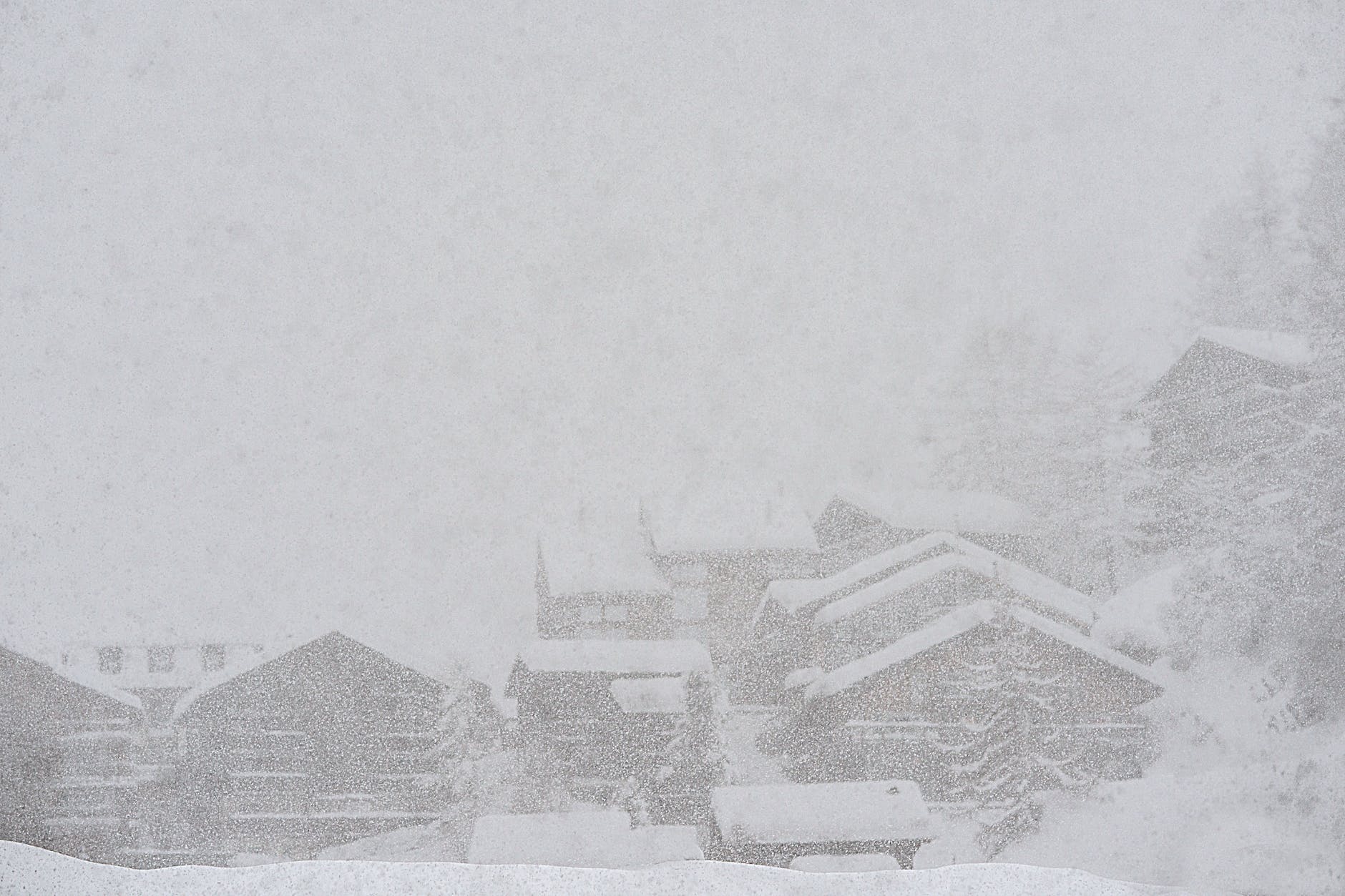
I don’t notice any difference between a named storm and a storm with no name. Either way, if you give it a name like “Winter Storm Iggy,” or just call it “snow,” it looks the same from my front door. And it shovels the same.

I truly didn’t think it would snow, and for a silly reason: I planted my wildflower seeds yesterday morning. I figured there was a good chance this storm was just a rumor as they so often are in this forgotten corner of the state, and that the seeds would blow away, but surprisingly, they are now buried under six inches of snow. The seeds might be overkill, since I did put some out there after the first snow had melted (it only took a month!) and before the next snow sprinkling came, but I don’t think it will matter. They are desert seeds, so they might not like the volatile weather we get here. And even if they can get acclimated to the weather, some of the seeds take a year or two to germinate.

I hadn’t expected to, but I am enjoying this snow. I have nothing I need to do, nowhere I need to go, so I figure, let it snow. Not that the snow cares what I think — it’s coming down anyway, as it has been since about 6:30 last night, and will continue as long as it wants whether I give it permission or not.

It will be interesting to see what affect these snows that come and stay will have on my yard this spring. It sure would be nice to see a plethora of blooms! And it would be nice to see if my defunct grass will green up without my having to replant it.

But for now, the white is nice.

***

Pat Bertram is the author of Grief: The Inside Story – A Guide to Surviving the Loss of a Loved One. “Grief: The Inside Story is perfect and that is not hyperbole! It is exactly what folk who are grieving need to read.” –Leesa Healy, RN, GDAS GDAT, Emotional/Mental Health Therapist & Educator.
Nice Day of a Different Sort

Yesterday was a lovely winter day here in southeastern Colorado — plenty of sun, still air, dry streets, highs in the forties — though elsewhere in Colorado people were digging out from the heavy snows that had been dumped Wednesday night. Because of the nice day we experienced in my corner of the state, I went for a couple of rambles around town, once by myself and once with a friend. Interestingly, everyone we met mentioned the coming storm.

According to the weather forecast on my phone, there is only a 48% chance of snow today, though they also say there could be an accumulation of five to six inches. I thought it was another of those taunts that the forecasters deal out — too often, there is no snow despite their predictions. In fact, the only real snowstorm we got this winter was supposed to have left behind a mere drifting of flakes. But then today I got an email from the regional energy supplier reminding us customers to take safety precautions because “Winter Storm Iggy” is going to bring heavy snows to this area.

Perhaps that’s true. After all, despite the sun that’s shining right now, it’s supposed to get cloudy with conditions that are right for snowfall, but what I really got focused on was the whole “Iggy” thing. What the heck is a Winter Storm Iggy? When did they start naming storms? They’ve named hurricanes and other tropical storms for decades, but this was the first I’ve heard of an intracontinental (rather than a coastal) storm being named. But what do I know? I don’t watch television or listen to the news or visit any of the online sites where people share news, fake and otherwise.

So I do what I always do — turned to Google. And I’m still confused. Is Iggy the name of this particular storm? Or is it a type of storm? Last year in February, there was an Iggy in Australia. And an Izzy in the United States.

As it turns out, it’s no wonder I’m not familiar with names of storms since it’s strictly a television phenomenon. The National Weather Service does not recognize names for winter storms. Nor do they have any plans to do so. It was The Weather Channel that started naming storms a decade ago, and these names have become part of the vernacular.

Sheesh. It’s bad enough trying to keep up with weather without having to try to remember what storms have names and what don’t. I certainly don’t want to clutter my mind with television idiocies especially since I can barely remember the names of people to whom I’ve been introduced and whose names I need to know.

I’m getting off the track here. Or maybe not. Maybe there isn’t a track. All I know is that yesterday was a nice day, and today will be a nice day of a different sort, snow or no snow.

***

Pat Bertram is the author of Grief: The Inside Story – A Guide to Surviving the Loss of a Loved One. “Grief: The Inside Story is perfect and that is not hyperbole! It is exactly what folk who are grieving need to read.” –Leesa Healy, RN, GDAS GDAT, Emotional/Mental Health Therapist & Educator.

Reducing Clutter

Today’s blog prompt, courtesy of WordPress: Where can you reduce clutter in your life?

There are a couple of places where I have things to clear out. My garage, of course, where I’ve stored boxes of belongings that I am either not ready to dispose of or that I don’t quite know what to do with or that perhaps I might use someday, such as my camping gear. My kitchen cabinets, especially the high ones where I’ve stored appliances I never use but that I keep just in case. For example, the blender. It’s not something I use, but it’s one of those items that really has no substitute, so I’ve been keeping it. I have a Magic Bullet now, which is a small blender, so I could get rid of the stored one, but since it’s not in the way, there’s no rush.

Despite the dubious disposition of these items, they are not really clutter. Clutter signifies untidiness and things lying around, impeding movement, reducing effectiveness, or wasting space, and everything I use on a regular basis — as well as things I don’t — are all neatly stowed away.

The place that is cluttered and where I definitely need to reduce that clutter is in my mind. I tend to mentally “rehearse.” For example, when the temperature gets below zero, my water meter goes haywire. Last year the water company charged me for 19,000 gallons of water I never used. I tried to get them to remove the charge, but they insisted the electronic meter was not at fault, that I had an intermittent leak or that I unknowingly left the water running or that someone stole water, none of which were true. I got tired of trying to get them to listen to me, so I paid the bill. Meantime, they raised the rates, so this year I have no inclination to let it go. The bill covering the period where the temperature got way below zero is due at the end of the month, and I find myself mentally rehearsing all the things I can think of to try to get them to realize the truth — that despite what they (and the company who sold them the meters) say, the meter is at fault.

I also have a tendency to obsess over things I cannot control, and so the same thoughts clutter my mind until a new one comes along to push the old obsession out of the way. Getting the recent bill for my homeowner’s insurance made the overage on the water meter seem like pennies. I budgeted for a hefty increase in the insurance, but this bill is exorbitant — an increase of 50%. Yikes. I’m trying to find a cheaper insurance, but I did that last year, and found nothing better than what I have, so now I clutter my mind with thoughts of how to pay the bill. Even more mind-cluttering are thoughts of future bills with additional increases.

I am doing a lot better about just letting things go, letting the clutter drain away, so I’m sure I’ll soon be able to declutter my mind of these things, too. At least I hope so. It’s much better — and more peaceful — to have an uncluttered mind.

As for the rest of it — my unused things are neatly packed away, so I’m not in any hurry to figure out what to do with them, though as I get older, I will have to make more of an effort to get rid of those stored items.

What about you? Where can you reduce clutter in your life?

***

Pat Bertram is the author of Grief: The Inside Story – A Guide to Surviving the Loss of a Loved One. “Grief: The Inside Story is perfect and that is not hyperbole! It is exactly what folk who are grieving need to read.” –Leesa Healy, RN, GDAS GDAT, Emotional/Mental Health Therapist & Educator.

Do-It-Yourself State

I read the other day that you don’t need a blood test to get married in Colorado. Wondering if that was true, I checked various sources online, and yes. That’s true. What truly surprised me, though, is that in Colorado, self-solemnizing marriages are legal. This means that in Colorado you don’t need to have a judge or a minister or even a friend officiating at your wedding. You don’t need witnesses or vows or a wedding gown or guests or any of the other trappings of so many weddings. In fact, when you apply for your marriage license from the Clerk and Recorder, you can both sign it right there, give it back to the county clerk, and it’s done. A mere twenty minutes after you enter the building, you’re married.

You can, of course, get your marriage license, go to the mountains or your back yard or some other special place, dress up, exchange vows, sign the license, then return it to the court within thirty-five days, and you’re married. (You don’t even have to be a citizen of Colorado, which makes this an even easier place for a quick wedding than Nevada because in Nevada, there must be an officiant and witnesses.)

If you don’t want even that minimum hassle of getting married, you don’t have to do anything — since Colorado one of the few common-law states, all you have to do is say you’re married, act married, let people think you’re married, and you’re married. Without the license, though, there could be problems. If one of you dies and there is no will, the property rights of the remaining spouse could be contested, though property rights in Colorado are the same whether a traditional marriage, a self-solemnized marriage, or a common law marriage. Strangely, if you’re common law and want to break up or marry someone else, you need to go through the courts to get a divorce, though if it’s an amical dissolution, you can do the paperwork yourself.

Another interesting situation in Colorado is that it is legal to bury someone on your property, though the burial must be recorded with the county clerk within thirty days. You can scatter cremains on your property without having it recorded — you just do it. If you want the ashes all in one place, such as beneath a tree, you need to neutralize the cremains because they contain an exorbitant amount of salt which is toxic. There are various mixtures you can buy that will turn the cremains into soil, or you can make sure you scatter them widely to mitigate any danger.

Colorado is also the only state that doesn’t license funeral homes and crematories. Colorado law even allows families to forgo a funeral director and conduct their own home funeral and burial service, though it has to be within 24 hours of death, otherwise the Colorado requires the body to be embalmed. It’s also the only state with a legal, open-air funeral pyre.

Apparently, this is a do-it-yourself state, from home births to self-affirming marriages to personal burial practices. Who knew? Certainly not I. At least not until now.

***

Pat Bertram is the author of Grief: The Inside Story – A Guide to Surviving the Loss of a Loved One. “Grief: The Inside Story is perfect and that is not hyperbole! It is exactly what folk who are grieving need to read.” –Leesa Healy, RN, GDAS GDAT, Emotional/Mental Health Therapist & Educator.

Communicating Online

Today’s blog prompt is: In what ways do you communicate online? I had to think about this one because except for an occasional phone call, almost all my not-in-person communication is online. (I had to check to see if texting is considered online, and it is.) I don’t participate in social networking anymore, or at least not much. I do check for personal messages on Facebook occasionally (about once every week or two), and I check Twitter every month or two, and LinkedIn every year or so, but for the most part, I eschew that sort of communication. I used to be big on all those sites, mostly to try to promote myself as an author, but the response has dwindled so much over the years and the aggravation has increased so much that it’s just not worth it.

I never did get involved in any of the other major networking sites. I tried Pinterest, and never saw the point. By the time I got a smart phone and could join Instagram, it had been bought by Facebook, and I didn’t want to increase my exposure to that company, especially since they treat me so poorly. I have no interest in video communication of any kind, not even just watching videos, so that leaves off a few more communication opportunities. For a while, I participated in Quora, answering questions about grief, but that lost its charm when they accused me of plagiarism, though it was only myself I was quoting.

[Is it even possible to plagiarize yourself? Seems silly to me. I mean, I own what I write, so I can do with it what I wish. Still, I checked online and apparently self-plagiarism is bad because you are passing off old material as new and original, which is considered academically dishonest, though if not in an academic situation, and if one is not being paid, I still don’t see anything wrong. I suppose, in spirit of honesty, I should admit that very occasionally I do copy parts of previous blogs posts or rework one I especially like that hardly anyone ever saw. After all, WordPress has a feature where one can copy a post to repost it — it’s all part of the process — so once or twice a year, I make use of that facet of the platform.]

After jumping feet first into communicating online when I first got my computer about fifteen years ago, I’ve cut way back on the ways I communicate. Now I text via phone, communicate via emails, and write this blog. All very basic for these days.

In what ways do you communicate online?

***

Pat Bertram is the author of Grief: The Inside Story – A Guide to Surviving the Loss of a Loved One. “Grief: The Inside Story is perfect and that is not hyperbole! It is exactly what folk who are grieving need to read.” –Leesa Healy, RN, GDAS GDAT, Emotional/Mental Health Therapist & Educator.

Do You Know That for Sure?

When I was chatting with my friends this weekend during our day trip, the conversation segued into a discussion of “made in USA” products. Although I do look for that label, I also understand that just because it says “made in USA” it doesn’t mean it’s made in this country by non-sweatshop workers. In fact, there is an island not far from China that is a commonwealth of the USA, and despite its gorgeous weather and scenery, it was a horror for the workers from China and the Philippines who had been lured there with promises of higher wages (higher than mainland China, though significantly less than USA minimum wage) and living on American soil. Despite the horrendous lie and deception (not only deceiving the workers but deceiving those of us who prefer to buy products made here by people who are paid at least minimum wage) many well-known companies with well-known brands utilized those poor workers, while boasting that their designer-label clothes were made in the USA.

My companions had never heard of such a place, and one asked me, “Do you know this for sure?”

I had to admit that I didn’t. I do know for sure that I read about this island, and I do know for sure that it had been documented and well-researched because when I first heard about this travesty (long before the internet and Google) that’s all the non-fiction I was reading — books with pedigrees.

Still, what do I know? What do any of us know? Besides what we have seen or felt or experienced ourselves, we don’t know anything for sure. In my case, I have to trust my sources, and back then, it was easy — in the back of the books I read were indexes of the research involved and sources for further reading — but now, with the internet and the easy spread of . . . non-truths, let’s say . . . it’s hard to know what is or is not true.

Curious, I set about looking for this island. Not surprisingly, I couldn’t find anything on Google, but surprisingly, it was easy to find via Bing.

And yes, there is an island — Saipan — in the Northern Marianas. And yes, American garment manufacturers did utilize what amounts to slave labor. Luckily, after the scam and abuses were exposed in the early 1990s, and after millions of dollars in settlements from the apparel brands, things changed. But that’s not the end — a few years ago, the same scam was re-instigated, but this time the abused workers were construction workers.

Because of earlier scams and deceptions, even though I look for the “made in USA” label, I am leery of it. I tend to believe manufacturing shenanigans and sleight of hand still exist, but that is merely supposition gleaned from my knowledge of the corporate race to rake in as much profit as possible. But as with so much else I think I know, there’s no way to know for sure.

***

Pat Bertram is the author of Grief: The Inside Story – A Guide to Surviving the Loss of a Loved One. “Grief: The Inside Story is perfect and that is not hyperbole! It is exactly what folk who are grieving need to read.” –Leesa Healy, RN, GDAS GDAT, Emotional/Mental Health Therapist & Educator.

So Many Treats

Yesterday was a day of treats. I went on a day trip with a couple of friends to the big city. Or rather a big city since Colorado has more than one big city. I often joke about having gone to the “big city” when in fact I merely went to another small town, though one that is three times the size of the town where I live. But this time — yep, a big city. We also went to a medium-size city, but that doesn’t sound as exciting as a big city. Since these cities are on the front range, I was able to see mountains! (Contrary to what a lot of people think, there is a large swath of Colorado, including where I live, that is so far east it has no view of the mountains.)

In the big city, we went to an Asian market — a supermarket full of Asian food products and housewares. For my Asian friend, it was like going home. For me, it was like going to a foreign country. If that was the only store I ever had to shop in, I’d probably starve to death, which just goes to show that what is a delicacy to one person is completely unappetizing to another person. (I’m trying to be diplomatic here, so I had to find an adjective other than “gag-worthy” or “revolting.” And yet, what do I know? I have eaten a hot dog or two on occasion.) I’m sure there were plenty of tasty things in that store, but I was just as glad not to have to take a chance.

After we left that “foreign country,” we went to a buffet which was very nice and very tasty, then on to a warehouse store that seemed just as foreign to me as the Asian market. So much food and sundries, and in such huge quantities! I was surprised to find eggs — and not just eggs but pasture-raised eggs, which is a classification that I’d not seen before. Surprisingly, the eggs were cheaper than regular caged-chicken eggs, but even if they weren’t, I would have bought them. I know it’s not exactly a topic most people care to think about, but truly, most egg production in this country is truly appalling.

The biggest treat of all, was that we got back in the dark, so when we dropped off my friend at her place way outside of town, I got to see . . . stars!!! Lots and lots of stars as well as the bright band of the Milky Way. Wow.

It’s funny — when I went on my cross-country trip, I looked for places with dark skies, but I’d never seen any sky as dark or any stars as bright as what I saw last night. Even the previous times I’d been out there at night, the stars weren’t so stark. The moon hadn’t yet risen last night when I was out last night and wouldn’t do so for several more hours, and there was very little humidity in the air, both of which contributed to that totally dark sky and the so very bright stars.

So many treats!

And that’s not all. Today, I’m spending the day by myself, and that too is a treat.

***

Pat Bertram is the author of Grief: The Inside Story – A Guide to Surviving the Loss of a Loved One. “Grief: The Inside Story is perfect and that is not hyperbole! It is exactly what folk who are grieving need to read.” –Leesa Healy, RN, GDAS GDAT, Emotional/Mental Health Therapist & Educator.

Happy Saturday the 14th!

cat

Whew! We made it through another Friday the thirteenth! I hope you managed to hide from bad luck and dire deeds. I sure did.

To tell the truth, I have no particular opinion or fear about thirteen or Friday or Friday the thirteenth, though I do find a lot of irony associated with the avoidance of thirteen. For example, buildings with more than 13 floors don’t call the 13th floor the 13th floor, but instead skip the number and go directly to the 14th floor or call it 12A. It’s still the 13th floor, right? So do people simply fear the number rather than the actual floor? And if they fear the number, do they refuse to buy baker’s dozens of donuts or cookies? (Though perhaps that is dating me — I don’t think I’ve come across a baker’s dozen of anything in a long time.) And if it’s the number thirteen they fear, why is only Friday the thirteeth a fearful day? I realize it’s the conjunction of fateful Friday and the ominous number that causes friggatriskaidekaphobia, but still, for those with the simpler case of triskaidekaphobia, wouldn’t any thirteenth day of the month be cause for concern?

(Interesting side note — in many Spanish speaking countries, Tuesday the thirteenth is the unlucky day, so for them, the movie Friday the Thirteenth was renamed Tuesday the Thirteenth.)

If Friday the thirteenth were really an unlucky day as more than 20 million Americans believe, to be on the safe side, shouldn’t the calendar makers follow the example of builders and change all 13s that fall on a Friday to 14 or maybe even 12A? And speaking of calendars, our current calendar was not universally adopted in Europe until the eighteenth century. So is our current Friday the thirteenth the real Friday the thirteenth? Wouldn’t the day fall on other dates using other calendars?

Whether or not you believe that Friday the thirteenth is bad luck (and if you do, please forgive my levity), I hope you had a fearlessly wonderful day.

***

Pat Bertram is the author of Grief: The Inside Story – A Guide to Surviving the Loss of a Loved One. “Grief: The Inside Story is perfect and that is not hyperbole! It is exactly what folk who are grieving need to read.” –Leesa Healy, RN, GDAS GDAT, Emotional/Mental Health Therapist & Educator.




