Snow of a Different Sort

The most recent snow finally melted under the oh, so welcome sun. Unusual for Colorado, the skies glowered at us for several days, maybe even a couple of weeks, without even a hint of sunshine, but the weather is back to more normal temperatures and bright sunshine. Tonight, another storm is expected, but it shouldn’t be long lasting because the temperature for the next days (as in the previous couple) will be well above freezing.

Meantime, I found snow of a different sort:

Yes! A snowdrop!

This must have been one of the bulbs that survived the drought of last winter and the searing heat of the summer, because I didn’t plant any snowdrops last fall. I’ll be curious to see if any other of the previous year’s bulbs will make an appearance, but I am just as thrilled with a single blossom as I would be with a whole slew of them. Well, almost as thrilled. Someday I hope to have a yard full of flowers and flowering bushes, but until I learn enough, and until I plant enough, I’ll be grateful for every flower that decides to bloom.

By next week this time, the weather is expected to be spring like. I’ve been hunkering down because of the cold, I wonder what it will be like to un-hunker. Probably not much different, actually. The last couple of weeks I’ve been back doing errands on foot, and that will continue, as will all the hours spent reading and blogging and playing games on the computer.

There won’t even be any gardening to speak of — around here, the last frost isn’t until the first week in May, so there’s no point in planting anything until then.

But I can dream of flowers to come.

And I can enjoy the flower that came.

***

Pat Bertram is the author of Grief: The Inside Story – A Guide to Surviving the Loss of a Loved One. “Grief: The Inside Story is perfect and that is not hyperbole! It is exactly what folk who are grieving need to read.” –Leesa Healy, RN, GDAS GDAT, Emotional/Mental Health Therapist & Educator
Warm War

A blog reader mentioned that he is wondering to what extent life will be altered by our experiences over the last year or so, and now I’m wondering, too. I have thought about the future now and again, not the particulars so much as the fact of it: no matter what happens with The Bob, our lives will be changed, it’s just that I don’t know — can’t know — how far reaching these changes will be.

It seems to me that the world will settle down eventually into new patterns, but again, there’s no way of knowing right now what those patterns — economic, social, political — will be. There’s also no knowing if those in power will ever let us know.

All of this rearranging of the world, our mores, what we’re willing to give up to for a facsimile of safety reminds me of a world war, because that is what happens during a world war. Everything is different, chaotic, but eventually life settles back into a new pattern, and younger generations never realize things were ever different. For example, think of all the millions of people who are alive today who have never experienced a world without airport security and checkpoints. They’ve never gone to the waiting room with their departing loved ones, never stood at the window waving good-bye as the airplane took off.

I’m sure, in that same way, upcoming generations will accept as right and proper whatever the world becomes after The Bob, because they won’t know anything else.

This obviously isn’t a hot war, with military conflicts killing off the young and strong. Nor is it a cold war being fought mostly with propaganda and fear, where countries are in a perhaps fatal stalemate, waiting for one or another to tip the balance of power. So what is this that we’re going through? A warm war? People are dying in vast numbers, though for the most part, the casualties of this war aren’t the young and strong but the old and weak. (A friend believes this is all about depopulation, though again, there’s no way to know for sure. There are always a dozen or a dozen dozen reasons for any worldwide conflict, with everyone involved trying to gather more power for their own particular interest groups.)

As I said, there’s no way for me to even begin to guess what the end result will be. We’re simply not being given enough information about important matters such as who, actually, was tweaking this virus, who let it loose and why. Was it on purpose? An accident? All these are the same questions my characters in A Spark of Heavenly Fire asked when a deadly organism was unleashed on the world, but that was a novel, and novels need some sort of resolution. Not so “real life.”

It’s easier to speculate about alterations on a more personal level, since although I don’t know all the particulars of The Bob and the reasons behind it, I do know how it is affecting my life. So far, I’ve managed to stay healthy, but a lot of that is due to spending most of my time alone. It’s hard to catch something from yourself, though I have done that — allergy attacks that become so devastating they might as well be a infectious disease. Mostly, though, I have managed to maintain my health during this time — no colds or flu or anything catching — which tells me that staying away from people is good for my health.

I’ve always been a bit of stickler when it comes to opening doors, such as those to a public restroom, making sure I use a paper towel to turn the door handle, and that won’t change, though I won’t feel as abashed about it. Nor will I ever use a public restroom again except in a dire emergency.

I’ve always been a bit antsy about standing in lines, and I will no longer do so unless people keep their distance. I have never liked people breathing down my neck, and even more so now.

I have a hunch, as things get back to a state that at least feels normal compared to the siege mentality we are now experiencing, I won’t be as loose and free as I was during the previous few years. I won’t be as willing to attend events where more than a few people are present, won’t be as willing to embrace strangers as I did, won’t be as determined to be sociable. It was always hard for me to be outgoing, but I did make the attempt because not to do so would be limiting my life in an unhealthy way, but I’m not sure if I’ll ever get back to the point where I feel the necessity.

But then, what do I really know? This warm war will change us, all of us, even me. And the “me” to come might be more willing to be bold, to get out in public and let life — and death — fall where they may.

***

If you haven’t yet read A Spark of Heavenly Fire, my novel of a quarantine that predated this pandemic by more than ten years, you can read the first chapter online here: http://patbertram.com/A_Spark_of_Heavenly_Fire.html

Buy it on Amazon here: https://www.amazon.com/gp/product/B0024FB5H6/

Download the first 30% free on Smashwords: https://www.smashwords.com/books/view/1842

Too Much Time Alone?

The book I am currently reading is about a computer genius, which makes me wonder: what did computer geniuses do before computers? Were those the folks back in prehistoric times who notched rocks to tally up goods or time or simply as the development of mathematical thought? Or were these the folks the village idiots, unable to do anything practical because the tools of their trade had not yet been developed? Or perhaps these are the folks in insane asylums, banging their heads against the walls because they have no other way of processing the codes they can see inside their minds?

Or did our brains evolve along with the computer? Since obviously there was no need for computer geniuses until the computer was invented, did the universe or natural selection or whatever it is that decides these things, keep our brain development in line with our tool development?

Can you tell I am spending too much time alone? With no other stimulation than the books I read, the computer game I play, or interacting with people via this blog, I am pretty much left to my own devices, which means wondering about foolish things.

It could be worse, though. I talked to an acquaintance today who was off work for two months battling The Bob.

I’m always hesitant to wish for things because whoever it is or whatever it is that grants our wished is utterly diabolical. A couple of months ago, this person wished he had more time at home with his wife, and do I need to tell you what happened? Yep, both got sick, so they got to spend a lot of time together.

They’re both mostly doing okay now, which is nice because others I know didn’t survive.

Since I no longer follow any news source, my only news comes in the form of sporadic gossip, so I don’t know the truth of this or not, but supposedly, they are expecting The Bob to be around and causing havoc for the next seven years.

Ouch.

I do have hermit tendencies, but seven years of mostly being isolated? At the end of that time, the questions spinning around my head probably won’t be anywhere near as cogent as the ones plaguing me now.

But who knows — by then, I might even have come up with a few answers.

***

Pat Bertram is the author of Grief: The Inside Story – A Guide to Surviving the Loss of a Loved One. “Grief: The Inside Story is perfect and that is not hyperbole! It is exactly what folk who are grieving need to read.” –Leesa Healy, RN, GDAS GDAT, Emotional/Mental Health Therapist & Educator

Arrogant Authors

I finished reading a cold war era spy novel, and weirdly, the very next book I grabbed was a futuristic spy novel. I say weirdly because I don’t particularly like spy novels and seldom read them.

The first book was readable and had a recognizable story, but the second one started in the middle of the story, recounted events minute by minute, and never actually went anywhere. Apparently, this was the second book in a series; the story was set up in the first book, continued in this one, and might be finished in a third book or even a later one, but it won’t matter because I won’t be reading anything else by this author. Ever.

Besides the lack of story, there was no characterization whatsoever. The story people could have been crash test dummies for all the personality they showed, and what was shown was truly bizarre. The female narrator of the story had an identical twin, and she kept saying that no one could tell them apart. In fact, the sister kept impersonating her, even though the sister was more flirtatious, wilder, immodest. Oh, and taller and prettier and thinner. All through the book, the narrator kept saying things like, “She thinks nothing of walking around with nothing on and maybe I would too if I had her body.” Huh? Identical but not? I suppose it’s possible the two really are identical but the narrator has body image problem. Or else it was simply poor writing in a book that has way too much poor writing.

The author supposedly researched the book for two years, and she managed to insert all two years of research into the book, leaving no room for a story. The book is replete with sentences such as: “The vehicle included a HEL that fires from a RAT. Both work hand-in-hand with the TATL to warn and defend again SLAMs and other AGs.”

And, even though this is a world-renowned millionaire author, her writing style has become execrable. Way too many non sequiturs, often as many as four or five to a page. I suppose some readers can pass them by without paying attention, but they sure called out for my attention. For example: “I recognize the man from the motel, and the woman has short black hair.” “Opening the door and she hugged me.” “Mom made chili, cornbread, and I was hungry.”

Yikes. The only good thing about this abomination is that I picked it up at the library and didn’t have to waste a cent on the book, though I sure wasted my time. I should have stopped reading early on, but I have a hard time returning a book unread. Besides I wanted to know why she and her sister had been implanted with all sorts of electronic gadgets, turning them into living computers, and I wanted to know when it started. There were hints that the twins were conceived for this purpose, but it was never explained.

What it does show is that once authors start making a fortune for their publishers, they never have to deal with . . . oh, I don’t know . . . writing, perhaps? It’s possible they were always atrocious writers but had good editors, and now they have no editors. Or if they do, the editors are probably kids just out of college and too intimidated by the stature of the author to make any corrections.

Either way, there is a huge amount of arrogance that goes into writing and publishing a book that does nothing but insult the reader.

Still, if I sold as many books as this author does, I might be just as arrogant.

***

What if God decided S/He didn’t like how the world turned out, and turned it over to a development company from the planet Xerxes for re-creation? Would you survive? Could you survive?

Click here to buy Bob, The Right Hand of God

Altering the Truth Without Altering the Facts

In the cold war era spy thriller I’d spent the past couple of days reading, a Russian says to an American ally, “You have a unique gift of altering the truth without altering the facts.”

Quite frankly, it doesn’t seem like a unique gift to me; it seems to be the basis for most politics, legal maneuverings, and news reporting nowadays. Often manipulation is propaganda, pure and simple, a way of interpreting the facts to put the best possible spin on what could be a damaging fact. Other times it’s a way of getting people to vote for someone or to approve of something that they would not normally go for.

It’s also called fake news. Not that the news item is necessarily fake, but if someone calls it fake news, then it immediately casts doubt on the truth.

I am currently staying away from all news sources, fake or not. There have been too many times lately where the facts were spun so much that nothing but mush remained. And there were too many times where the very people involved were the ones who vetted the news to prove it fake, which means the facts could be false or the vetters could be playing false with us. I have never, in all my years, been so confused as to the truth of anything. There were so many undisputed facts, false “facts,” half-truths, truth told as lies, lies told as truth, videos and photos altered to show a different story than what actually happened, as well as dirty tricks I’m sure I missed, that it was impossible to sort out the truth.

For example, when it comes to the disease I call the “The Bob,” we the people know almost nothing. Oh, we know a few facts — there is a virus running around infecting people because we all either got sick or knew someone who did. We knew people who died, but beyond that, all we have to go by is what the “authorities” tell us, and those very authorities are the ones who know how to alter the truth without altering the facts.

The so-called authorities are not the only ones with this not-so-unique gift. A lot of people on all levels of society know how to alter the truth without altering the facts simply telling only the facts that leave them in a good light. For example, someone can say, “Yes, I went to the store. I bought a few snacks and a couple of sodas,” leaving out the salient fact that they also bought alcoholic drinks or illegal drugs or that they visited the person they are seeing on the side.

To be honest, I wish I had that sort of talent, to lie by telling only part of the truth, but generally, I’ve found it best to tell the truth as much as possible. It’s a lot easier to remember what I’ve said that way! Now that I think of it, though, almost no one tells “the truth, the whole truth, and nothing but the truth.” Unless you are a representative of the people, in which case you owe the people the truth (though the folks in power don’t believe that at all and certainly don’t act on it), you don’t really owe anyone the truth. Or the facts.

As I said, I generally tell the truth, though sometimes on this blog I alter things a bit to protect either the guilty or the innocent, or even myself. I also sometimes use false birth dates and such because I am — or at least was — so active on the social networking sites that I needed to protect myself.

As for “altering the truth without altering the facts,” it also works the other way around. Novelists do is all the time: alter the facts so we can tell the truth.

But however you look at it, in our current society, it doesn’t seem as if there is a whole lot of truth going on.

***

If you haven’t yet read A Spark of Heavenly Fire, my novel of a quarantine that predated this pandemic by more than ten years, you can read the first chapter online here: http://patbertram.com/A_Spark_of_Heavenly_Fire.html

Buy it on Amazon here: https://www.amazon.com/gp/product/B0024FB5H6/

Download the first 30% free on Smashwords: https://www.smashwords.com/books/view/1842

Saying “No” to Outrage

In a cold war spy novel I am currently reading, I came across the sentence, “Outrage is a luxury available only in the West.” It was meant to explain the stolidity of the Russian workers, and I might not have even noticed the sentence if not for all the outrage that is so prevalent. Outrage in the USA is growing, and was most especially noticeable during the last presidency. Too many people thought they were the only ones who knew the truth, were the only ones who knew the best thing for the country. It didn’t matter what side of the line they were on, they were outraged at the folks on the other side for being liars, cheaters, racists, communists, sexist, for not caring enough about the poor, not caring enough about the economy, and on and on and on.

Outrage has been called a drug, one we really can get addicted to because it makes us feel smarter than other people, more in the know, more powerful. When outraged folk make comments, in their mind, it’s not opinion, it’s fact, even though the comment is no such thing — no matter how widespread, an opinion is just that — what something assumes is the truth.

Even worse are the outraged folks who do “research,” which means they read an article or two on the internet that solidifies their opinion.

Worst of all, of course, are those who try to ruin other people’s lives and careers because those other people deserve it for not agreeing with the current party line. And the person who did the ruining gets to feel puffed up and self-righteous when all they are is ignorant and arrogant.

Still, whatever the truth of the assertion that outrage is a luxury available only in the West, and however dangerous outrage is, outrage does seem to be one of the last freedoms we have.

Over the years, our freedoms have gradually been eroded in the name of safety. (Which is why I wrapped the story of Bob, The Right Hand of God around the theme of freedom vs safety. How much freedom we’re willing to give up for safety, and how much safety we’re willing to give up for freedom.)

Until outrage came along, the mainstay of freedom was the ability to say “no,” which is basically a power of the powerless, but gradually, that freedom is being taken away. For example, at the moment, it’s a choice whether one gets the current vaccine, though some people want to make it mandatory. In other words, saying “no” is no longer always possible. We’re so used to going along with the flow, doing what we’re told, that most of us no longer even think to say “no,” even when it is possible.

So what’s left is outrage. A luxury, perhaps. A freedom still.

Personally, I have no interest in being outraged about anything, which is why, except to see if someone left me a comment, I no longer spend any time on Facebook, watching the news, reading novels based on current policies, or anything that might draw me into the outrage culture.

It’s simply not worth it.

Luckily, I still have the freedom to say, “no.”

***

What if God decided S/He didn’t like how the world turned out, and turned it over to a development company from the planet Xerxes for re-creation? Would you survive? Could you survive?

Click here to buy Bob, The Right Hand of God

Cold War Spy Story

I’m reading a spy novel from the early eighties. Back then, the story would have been straight from the news and a real nail biter. Many decades later, I would have thought it would be more of a curiosity than a compelling novel. After all, there was that whole glasnost and perestroika thing in the late eighties, which should have relegated all these old cold war era book obsolete, but here we are, once again, in a competition with the Russians.

And so this old book is, for the second time, straight from the news.

I’m still rather mystified by the whole thing. I mean, there we were in the nineties and aughts, one big happy family, with only the middle eastern terrorists spiking our Kool-Aid. Makes me wonder what the heck is really going on now.

To be honest, the cold war conflict wasn’t much of a war. Oh, we were told it was, and the newspapers did their job of riling up folks, but behind it all, if you dig deep enough, you can find western countries (most notably the USA), parceling out technology to both sides. Apparently, Eisenhower’s “military industrial complex” was too complex to willingly let go of all the power they’d garnered during WWII and then Korea. And so they kept us frantic about the possibility of a wide-scale nuclear conflict. (Nu-clee-ar, not nuc-u-lar!) [If you’re curious, Anthony C. Sutton, a British-American economist, historian, professor, and writer, was one of the incredibly knowledgeable researchers who tended to find out the truth of such matters.]

Still, the cold war hostilities did come to an end for whatever reason. Probably because nuclear power became old hat. Other means of annihilation are so much more efficient. Just think what would happen if some erstwhile favored country didn’t like the USA’s new economics policy that tried to even out the trade deficit, and instead of unleashing their nuclear weapons in a great show of force, they gradually let out a lethal bio-weapon that killed off the old and feeble rather than the young and healthy as the old way of war did. A lot of people would become causalities of a war they didn’t even know was being so stealthily fought.

Of course, that could never happen to such news savvy people as we are.

And anyway, we are back to the old days where Russia is once again the enemy. I have no idea what happened to glasnost and perestroika. Apparently, I was so busy reading about the past, I neglected to keep up with the present, so it came as a shock to find that Russia is once again up to their old anti-American spy tricks. (Or perhaps being put up to their old tricks?)

The end of the movie Blast from the Past was supposed to be humorous, with good old Christopher Walken unable to believe the truth that the Russians were no longer the enemy. Knowing how wily they were, he immediately began planning a new bomb shelter to protect his family from them. And what do you know — the ending of the movie turns out to be less than simply humorous and a lot more prescient.

***

If you haven’t yet read A Spark of Heavenly Fire, my novel of a quarantine that predated this pandemic by more than ten years, you can read the first chapter online here: http://patbertram.com/A_Spark_of_Heavenly_Fire.html

Buy it on Amazon here: https://www.amazon.com/gp/product/B0024FB5H6/

Download the first 30% free on Smashwords: https://www.smashwords.com/books/view/1842

Taking Life As It Comes

In a group text conversation, several women I know mentioned how they could hardly wait for spring, and it struck me as odd. The sentiment, of course, isn’t odd; in fact, it’s understandable, considering the heavy snows and arctic temperatures we’ve been served this winter. What is odd is that I am so out of the habit of longing for things to be different that I had forgotten other people were still in the habit.

Oh, don’t get me wrong. I’m glad the weather is clearing, even temporarily (more snow on the way!), and I am glad that we’re returning to more normal temperatures for this time and place, but it never occurred to me to want something different. This is what I have, so this is what I have to deal with. Admittedly, these arctic times are worrying; I have an old car, a battery that’s past its prime (though technically, it still has a couple years of use left), and an old house. I won’t know if there’s any problems with the car until I try starting it when it warms up a bit more, but a frozen water pipe was my only problem with the house, and even that wasn’t a problem. It was defrosted quickly, and it gave the workers a chance to insulate the pipe and to see a crack in the foundation that needs to be fixed. (The crack would have been fixed if the weather had cooperated; they’d bought the necessary supplies right before the snows came.)

What also is odd about my reaction to that conversation is that I hadn’t realized how much I really do live for the day. I make plans, of course, and worry way too much (though I am trying not to), but longing for things — even something as minor as weather — to be different died somewhere during my decade of deaths. (During a ten-year span, not only did Jeff die, but so did both my parents and the two brothers closest to me in age — one a year older, one a year younger.)

No amount of longing, wishing, hoping, changed one iota of those deaths or my grief. Nor did it change any of their lives. My parents lived long and happy lives, but Jeff and my brothers all died relatively young, and at least one of them had a miserable life. And I could not go back and change a single thing about any of it.

So a long, hard winter? Child’s play compared to all that. Besides, as I have learned, things change. Spring will come, bringing its own problems (wind!!), and then summer, and before we know it, we’ll be back in the midst of winter. There’s no real point in wishing my life away, in longing for something that’s either laid to rest in the past or is yet to be unearthed in the future.

Of course, this is today. By tomorrow, I might be longing for spring as much as everyone else, but for now, for today, I’m taking life — and the weather — as it comes.

***

Pat Bertram is the author of Grief: The Inside Story – A Guide to Surviving the Loss of a Loved One. “Grief: The Inside Story is perfect and that is not hyperbole! It is exactly what folk who are grieving need to read.” –Leesa Healy, RN, GDAS GDAT, Emotional/Mental Health Therapist & Educator
Disdaining Improper English

A character in an older book I just finished reading was a stickler for proper English. Many of his objections were constructions I had no idea were improper, such as the use of “due to unforeseen circumstance” rather than “owing to unforeseen circumstances.” Since I didn’t know it was improper, I’ve always said “due to” rather than “owing to,” though now I will make sure I say it properly.

It made me wonder what other phrases I have been using improperly all my life, which led to the realization that my own disdain of improper English is probably misplaced. If improper phrases such as “due to unforeseen circumstances” are so prevalent as to seem proper, then today’s ridiculous constructions that I abhor will become (in some cases have already become) the preferred usage among the populace. “Veggies,” for example. I despise the cutesy word, suitable only for small children who have to be enticed to eat food they don’t particularly like. It isn’t at all a grown-up word, and yet everyone uses it. I can’t remember the last time anyone but me used the proper word, “vegetables.”

“Intestinal fortitude” is a phrase used in place of courage and the strength of mind to bear adversity, which is utterly silly. “Fortitude” alone means exactly that. I imagine somewhere along the line, someone thought they were being cute, using an erudite-sounding construction instead of saying “guts,” but eek. The phrase “intestinal fortitude” irks me as much as “veggies” does.

“Supposably” instead of “supposedly” has become so common, it no longer grates on my poor ears, though I will lop off my tongue if I ever hear myself say it.

An “executive decision” is one made by a person or group of persons who have executive power, so a person who decides something for a group of people is making an executive decision, but a person making a decision for himself alone, one that affects no one but himself, is not making an executive decision, but going by what I read and hear, everyone nowadays must be an executive because they are all making what they claim to be executive decisions. A decision is a decision. It needs no qualifier.

As for “get out of Dodge.” I can’t believe how often I read that phrase in books. Characters no longer get out of town, they always “get out of Dodge,” even if they are living in a major metropolitan area that in no way could be compared to Dodge. Luckily, so far, it is only a common phrase in fiction; I don’t hear many people saying it in real life.

Did you see what I did here? I said that my disdain of improper English is probably misplaced, and yet here I am, being disdainful. At least I kept the list of words and phrases I abhor short. Be thankful I didn’t go on a diatribe about the president of the United States being called the leader of the free world. Does anyone in France consider POTUS their leader? Does anyone in England? Or Germany? Or Canada? And what is the free world anyway?

Oops. I almost went on a diatribe after all.

***

What if God decided S/He didn’t like how the world turned out, and turned it over to a development company from the planet Xerxes for re-creation? Would you survive? Could you survive?

Click here to buy Bob, The Right Hand of God

Freeze!

The temperature last night was twenty-three degrees below zero (Farenheit). Is that even a real temperature? Adding in the wind chill factor brought the temperature down to thirty-five below.

I’ve been warm. Although part of the county lost power last night, this area didn’t. What I did lose was the cold water in my kitchen. It was amazing how quickly the pipe froze. I made myself a cup of tea, using the cold water from the faucet, and then, an hour later, I decided to leave the spigot open slightly to keep the pipe from freezing, and there was no cold water. Almost an instant freeze!

I knew from the previous owner that the cold-water pipe in the kitchen had a tendency to freeze, but an insulation cap on the outside faucet was supposed to take care of the problem. And I thought the had solved the problem because the pipe hadn’t been an issue until last night. I just figured it was the immensely cold temperatures (more than forty degrees below average for this area). I put a space heater down in the basement near that particular pipe, but it didn’t help.

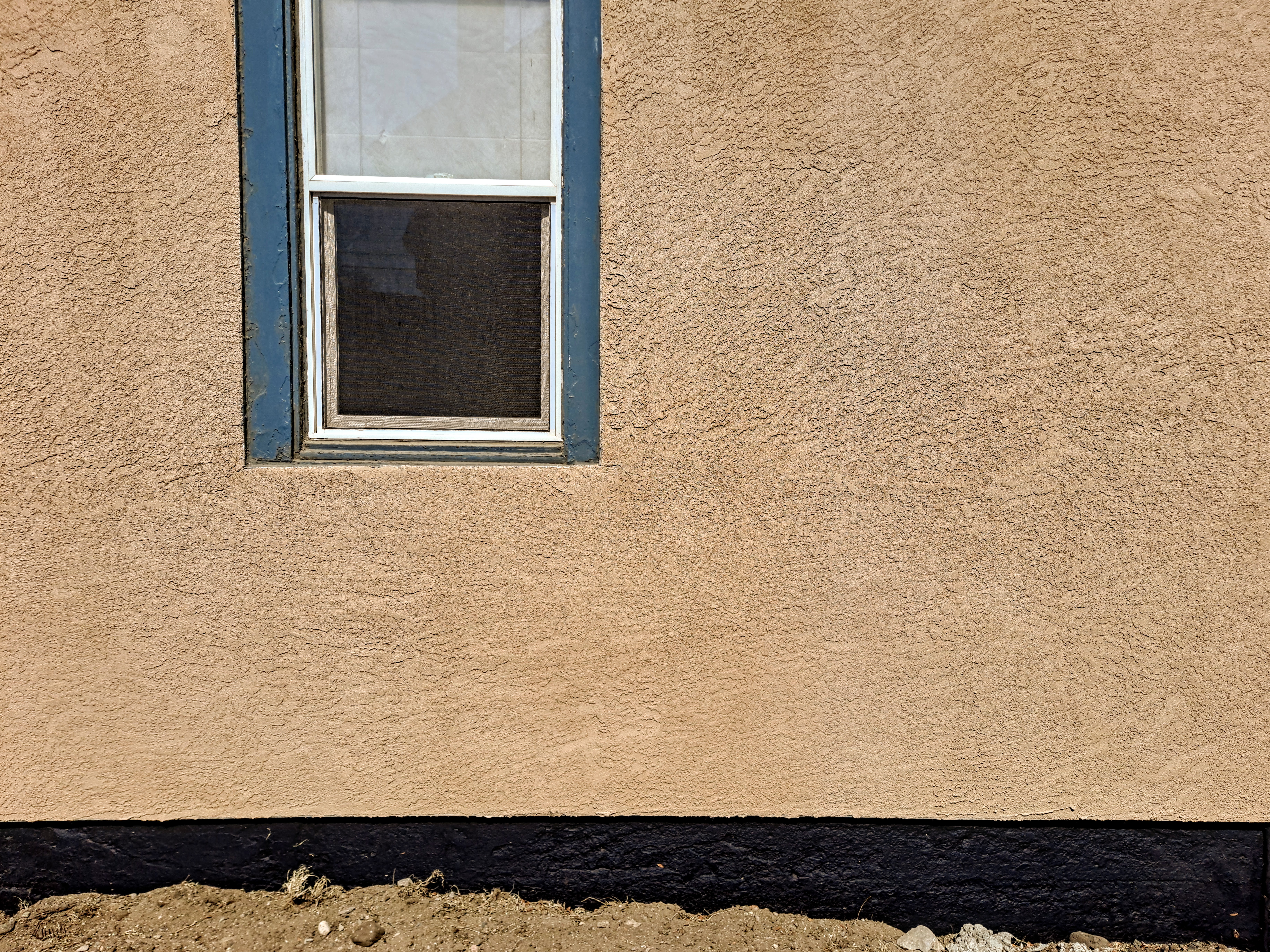
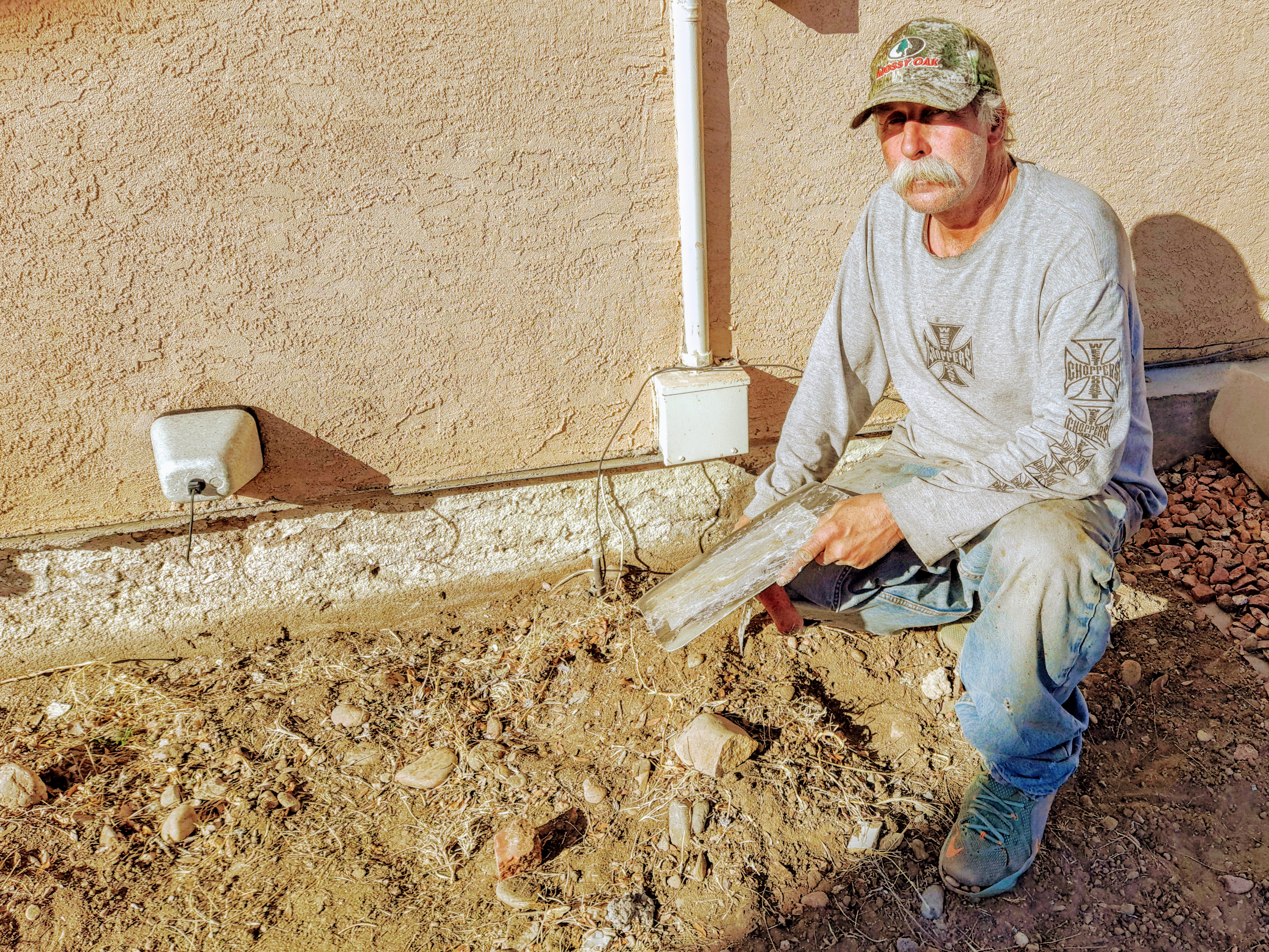
So I called my contractor. That’s not the sort of job they normally do, but he’d invited me to call him whenever there is a problem with the house. A little later he showed up with a couple of his workers. One shoveled the sidewalk from the house to the garage (a lovely surprise!) while the other located the frozen water pipe. No wonder the space heater didn’t solve the problem — it was a different pipe than I thought it was, so the insulation cap was doing its job. The frozen pipe ran along the inside wall by one of the cracks in the foundation (cracks that were being fixed before all the storms hit). So, the men unfroze the pipe and insulated it.

No damage was done, which sort of surprised me because the pipes, although not more than a decade old, are brittle and need to be replaced. That job is on the contractor’s to-do list, but it hasn’t been a priority, and I didn’t want to make it a priority until some of the started jobs are finished. So, whew! I don’t have to worry about replacing the pipes for now.

The town has been talking about trying to get more retirees to the area, thinking it’s an ideal location for older people since houses are relatively cheap (though the prices are going up a bit), and it’s touted as a mild four-season climate. I wonder how these temperatures will affect those plans? Not that I care except as a matter of curiosity.

What I do care about is staying warm and keeping my pipes from freezing. Luckily, we’re in a heat wave — it’s up to zero degrees right now, and the low tonight will be only minus four.

I know one thing — until it warms up to a decent temperature and all danger of pipes freezing is past, I’m just going to let the kitchen faucet drip.

***

What if God decided S/He didn’t like how the world turned out, and turned it over to a development company from the planet Xerxes for re-creation? Would you survive? Could you survive?

Click here to buy Bob, The Right Hand of God