Yang and Yanger

When I was young, I thought the world would be a different place when women began to run things. Oh, my — what was I thinking?

Looking back, I suppose I was thinking that the women who would achieve leadership would bring feminine attributes to the position, a mother earth (or earth mother) who sees all, gently ushers us to peace and prosperity, shows us the way to kindness and caring, displays wisdom and understanding and especially creativity — an outflowing of life-giving forces that take us where we need to be.

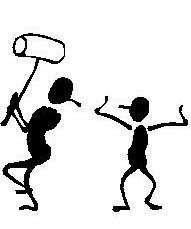
Instead, what we have are a whole slew of Lucrezia Borgias and Lizzie Bordens. Women who will do anything to achieve their ends (their ends, not our ends), to do what is best for them (best for them, not best for us). Women who, it seems, will bludgeon us with their power and if that doesn’t work, they’ll bring out the axes. (I’m probably maligning Lucrezia and Lizzie for the sake of parallelism, but they were the first names that come to mind for examples of women who are seen as more vicious than men.)

I know the consensus is that women have to be more ruthless than men (unless you were a supreme court judge, then you needed to be simply ruth), stronger and more aggressive to get ahead, but if this is the case, then what do we need women in power for? We already have men playing those games. Instead of the balance of yin and yang, we now have yang and yanger. This doesn’t bode well for a well-rounded world, which, in fact, isn’t round but is an oblate spheroid or oblate ellipsoid, but you get my point.

Their point, the point of those in power, that is, has nothing to do with a well-rounded society at peace with itself and the world. It has everything to do with . . .

I had to stop here and think. What is the point of those in power? What are they trying to gain? More power for themselves, of course, as well as a ton of money, but other than that, I haven’t a clue. All I know is that both men and women are struggling for a power that doesn’t seem to have anything to do with making us or our lives better.

It’s disappointing to me (the me that was once young and idealistic) that women are settling for so little. I thought we were better than that.

Apparently not.

***

Pat Bertram is the author of Grief: The Inside Story – A Guide to Surviving the Loss of a Loved One. “Grief: The Inside Story is perfect and that is not hyperbole! It is exactly what folk who are grieving need to read.” –Leesa Healy, RN, GDAS GDAT, Emotional/Mental Health Therapist & Educator

Learning the Tarot

I’m still doing my one card a day tarot study, though I’m not sure if I’m learning anything. The whole thing confuses me — if the card tells me what I already know about myself, then it seems unnecessary. It it’s supposed to help me see where I am going, then that too seems unnecessary since I will know what I know when I get there. And if it’s about delving deeper into my psyche and coming in contact with my higher self — well, so far that hasn’t happened.

It’s possible the lack is in the tarot itself. After all, the tarot is only a deck of cards — specialized cards, but still just cards. Although each card is assigned a meaning of sorts, a core truth, the cards are open to interpretation, so whatever a person thinks the card means that particular day is the meaning, and that meaning can be different on a different day. This all seems too imprecise and ambiguous for my logical and concrete mind.

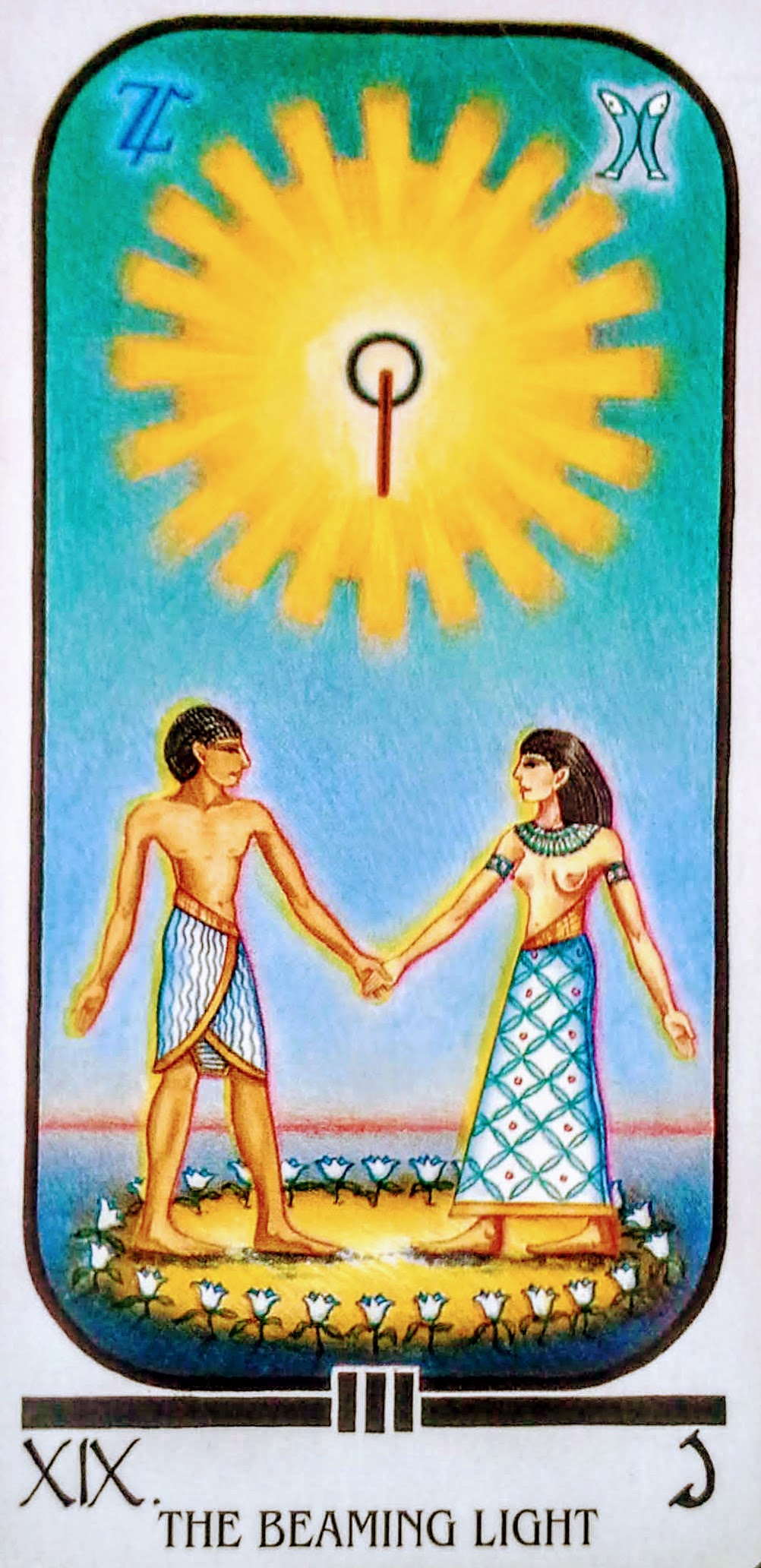
It’s possible the lack is in me, not just my inability to intuit any meanings, but my inability to connect with any particular deck. It’s possible I’ll be able to find such a deck — after all, I have dozens of them. Each month I use a different deck, and so far, the ones I’ve used are off-putting. The artwork doesn’t speak to me, and the symbolism of the artwork seems specious at best. Still, I’m sure I will find an affinity with at least one, and then we’ll see if my studies take a different turn.

Having said that, I’ve been keeping track of my daily card, and I do see a pattern to the cards I pick, vague though that pattern might be, because the same cards seems to show up again and again. For example, the king and queen of pentacles show up at least once every month, sometimes two or three times. Since I pick a card randomly, this repetition seems to indicate that more than mere chance is at work. If I used the same deck all the time, I’d think that perhaps the card hadn’t been shuffled well enough or was sticky or had some sort of defect that made the card stand out, but I use a different deck every month.

These two cards do seem to be a reflection of my life. The queen, in a few words, represents someone who is secure in her personal possessions and in her place in life, and the king refers to stability and not having to prove oneself. Since the cards are open to interpretation, and since every tarot writer has assigned various meanings, these few words don’t tell the whole story, but they suffice for the purposes of this article.

Another and seemingly opposite card that I get frequently is the ten of swords which spells ruination, disaster, calamity, though this seems to reflect my thoughts about the current USA situation rather than my own. The card is also a reminder that though I can’t change the actions of another person, I can change how I respond, which seems a timely reminder, for sure.

The cards I pick are mostly swords and pentacles. Very few cups or wands. Very few of the major arcana, though The Tower shows up periodically, which among other things, points to changes — a release of tension that has been building up, a flash of sudden insight, or maybe a warning.

So does any of this mean anything? I don’t know. My daily card pick is helping me get used to the tarot, and it is getting me familiar with the various way experts interpret the cards, so that’s something. The card itself sometimes seems to refer to me, sometimes it seems to refer to what’s going on in the rest of the country, sometimes it seems to be a reflection of my worries. But does it add anything to what I know? Not that I can see.

Sometimes the cards tell me I am more intuitive than I know, other times they seem to think I rely on my intellect. Either way, does it matter?

I do try to find a bit of advice in the daily card, as I did with the ten of swords mentioned above, but these are merely reminders of what I already know.

I suppose it’s possible that after years of study, I might find . . . something. But then, that’s not the point of my studying. I have the cards, and I do find the array of the different decks compelling, and if there is any esoteric knowledge hidden in the cards, I’d like to know what it is. But more than that, it’s about connecting with my deceased brother, the one who collected the cards. “Connecting” might be the wrong word since I’m not trying to connect with him in any psychic way. It’s more that I am connecting with my memory of him, with the private person buried beneath his polarizing personality, the beloved brother I lost way before his death.

That connection, if nothing else, does give my daily card reading a meaning.

***

Pat Bertram is the author of Grief: The Inside Story – A Guide to Surviving the Loss of a Loved One. “Grief: The Inside Story is perfect and that is not hyperbole! It is exactly what folk who are grieving need to read.” –Leesa Healy, RN, GDAS GDAT, Emotional/Mental Health Therapist & Educator

Kill Your Darlings

“Kill your darlings,” is a quote by Stephen King. No, it was William Faulkner. No, it was Agatha Christie. No, it was F. Scott Fitzgerald. Well, of course, they all said it, but the first use of the construction appeared in print a hundred years ago by Sir Arthur Quiller-Couch, who urged wannabe writers to murder their darlings. (Quiller-Couch was the inspiration for Rat in “The Wind in the Willows.” It’s amazing the things you can find out with a bit of research!)

By definition, darlings — those parts of our manuscripts that we love even when they don’t advance the story — are painful to kill, but some are more painful than others. Originally, More Deaths Than One was designed to be a series of stories told to Bob Stark (so named to remind me that he seems an ordinary fellow, but is stark of speech). It was through listening to the various stories that he was to discover the truth about himself, but though the idea had merit, the first draft was terrible. Bob barely surfaced in his own story, and the storytellers themselves seemed disembodied. I rewrote the book several times, trying to find the right way to tell the story, but it wasn’t until the fourth draft when I gave Bob a love interest, a waitress he met at a coffee shop, that the story took off. He had someone to butt heads with, someone to ooh and aah over his achievements, someone to be horrified at what had been done to him.

After the story took focus, the original idea of Bob learning about himself from tales told to him had to be scrapped, and some of those tales — those darlings — had to be scrapped. It was hard to get rid of those sections, but I did it for the sake of the story.

In my soon-to-be-published novel, I didn’t have any darlings — at least, I don’t think I do — because as I was writing the book, I remained focused on what I needed to accomplish. This is the first book I wrote with a theme in mind, and that helped considerably. If something didn’t further illuminate the theme of freedom (how much freedom we’re willing to give up for security, and how much security we’re willing to give up for freedom) I didn’t even bother to develop the scene.

Not everyone is able recognize let along kill their darlings, especially if those darlings are the whole reason for writing the book. For example, I just finished reading a novel that had been given to me by a friend of the author. It was readable, but his darlings destroyed the story. The book reads as if it’s a roman à clef, a story of the author’s struggle with alcoholism, which would be fine if that’s what he wanted. But apparently, he also wanted to write a political thriller, which gave the book a rather strange duality, as if two different stories had been cobbled together.

Authors, of course, can write whatever they wish, with unkilled darlings galore. But once they decide to write a particular type of story, they have to focus on the story they want to write, and to edit out anything that doesn’t fit. (Like a sculptor, chiseling away at all of the marble that doesn’t benefit the artist’s vision.)

Because the first half of this particular book was all about the personal story, the second half with the political intrigue was shortchanged. The author relied too much on current events to piece the story together, which kept him from having to fully develop the president or the situation he was involved with. The author just assumed everyone would know. Even worse, there was no conflict in the political part of the story, just internal vacillation as the character tried to decided if he wanted to finish the course of action he had started.

The author would have been so much better off using the personal part to add depth to the political part. Also, adding conflict to the political intrigue would have turned it into the thriller the blurb described.

The only reason this matters to me is that I read the book. If I hadn’t, I wouldn’t have cared because I wouldn’t know.

I suppose more than anything, this book is a reminder to myself to kill my darlings or, even better, don’t bring them to life in the first place.

***

Pat Bertram is the author of Grief: The Inside Story – A Guide to Surviving the Loss of a Loved One. “Grief: The Inside Story is perfect and that is not hyperbole! It is exactly what folk who are grieving need to read.” –Leesa Healy, RN, GDAS GDAT, Emotional/Mental Health Therapist & Educator.

I’m going to Blog for Peace. Will You?

One month from today, on November 4th, people all over the world will blog for peace. Blog4Peace was created and founded by Mimi Lenox, who believes that because words are powerful, blogging for peace is important.

Mimi began blogging for peace in November, 2006. Thirteen years and thousands of peace bloggers later she — and all those she inspired — are still blogging for peace. On every continent. In 214 countries and territories. In war-torn countries and peaceful villages. Whole families. Babies in utero (yes, really!) Teenagers. Senior citizens. Veterans of war. Poets and singers. Teachers. Classrooms. Authors and artists. Doctors. Lawyers. Cats (many, many cat bloggers). Dogs. Gerbils. Birds. Goats and Bunnies. Scientists. Designers. Researchers. Stay-at-home-parents. Kids. Baby Boomers. From the Netherlands to Kansas. And everywhere in between.

I joined the peace bloggers in 2012. And I still blog for peace. 

This year’s theme is “Peace in the time of quarantine,” and that is a theme I can adopt. Although I do not believe in the possibility of world peace (because war and stressful times are never our personal choice but are fostered by others or foisted on us by circumstances) I do believe in personal peace, in finding peace within ourselves no matter what happens to provoke us into chaos.

And yes, words are powerful. And yes, this matters.

How To Blog For Peace:

  1. Choose a graphic from the peace globe gallery http://peaceglobegallery.blogspot.com/p/get-your-own-peace-globe.htmlor from the photos on Facebook https://www.facebook.com/BlogBlastForPeace#!/BlogBlastForPeace/app_153284594738391 Right click and Save. Decorate it and sign it, or leave as is.
  2. Send the finished globe to blog4peace@yahoo.com
  3. Post it anywhere online November 4 and title your post Dona Nobis Pacem (Latin for Grant us Peace)

Sounds cool, doesn’t it? See you on November 4!

***

Pat Bertram is the author of Grief: The Inside Story – A Guide to Surviving the Loss of a Loved One. “Grief: The Inside Story is perfect and that is not hyperbole! It is exactly what folk who are grieving need to read.” –Leesa Healy, RN, GDAS GDAT, Emotional/Mental Health Therapist & Educator.

Rigor Mortis Setting In

I seem to be switching between the effects of rigor mortis inching into my life and my gradually healing knees. The change is as pronounced as dark and light. Oh, wait — the change is all about dark and light! Or rather, the relative inactivity of night and the relative activity of day.

Sometimes when I have to get up in the middle of the night, I am so stiff, I can barely inch along using the wall for balance, and I wonder if a walker is not far behind. I have gotten in the habit of stretching a bit before I get out of bed, which helps, as well as making sure my legs can hold me before I start making my way to the bathroom.

And then, the daylight comes, and I wonder why I presumed there was problem. As long as I don’t sit too long in one position, I’m fine. Actually, more than fine. I walked almost five miles today, something I haven’t done in a very long time — maybe a couple of years. The last quarter of a mile today was a bit draggy, and I expected to feel sore the rest of the day, but apparently, my body is waiting until tonight when the rigors of mortis will once again make themselves felt.

I do know, of course, that one does not “catch” rigor mortis while one is still alive, but aging does make it feel as if death and those rigors are slowly creeping in.

I’m hoping, of course, that the nighttime stiffness will eventually dissipate a bit as my knees continue to get stronger, but even if the status remains quo, I will still have my daily walk to sustain me.

I think it helps, in a way, that I live close to an assisted living facility as well as an unassisted facility for older folk because I see so many people using walkers. It keeps me walking a bit more than I would normally feel like doing, perhaps in an effort to store up that feeling of independence in case I get to the point where I’m unable to depend only on my own legs. And, of course, it reminds me that using the ability to roam while I can will help insure that I will remain ambulatory into my elder years.

But what may or may not happen later on isn’t important. What is important is that today I walked. Today I was able to challenge myself.

Today I lived.

Hopefully, that feeling of living will be something to remember tonight when I am slowly creeping through the dark hall, like some sort of half-dead ghoul, in answer to the needs of my body.

***

Pat Bertram is the author of Grief: The Inside Story – A Guide to Surviving the Loss of a Loved One. “Grief: The Inside Story is perfect and that is not hyperbole! It is exactly what folk who are grieving need to read.” –Leesa Healy, RN, GDAS GDAT, Emotional/Mental Health Therapist & Educator

54321

I don’t often get caught up in politics or the news, but this year has certainly been compelling, with all the lies and the absolute inability of people to see those lies, the rampant hatred, the destruction in our cities and our way of life and the disinclination of the mayors and governors to do anything about mob rule, as well as the mask mandates and other laws that further isolate already isolated people. It all makes me so very sad.

And stressed.

And I don’t want to be sad or stressed.

Recently, I read about the 54321 technique for grounding oneself during a panic attack: focus on five things you see, then four things you can feel, three things you hear, two things you can smell, and finally, one thing you can taste.

Although I’ve never had a panic attack, I can get “ungrounded” and lose focus on what is around me. And what is around me is a lot of beauty. I see zinnias, Halloween bulbs, and New England Asters in my yard. I saw a waterfall when I was out doing errands. And I see the stack of books I got from the library as well as one I was gifted.

I feel my fingers on the keyboard, the chair I am sitting on, the wooden table beneath my arms as I type, a bit of chafing on my elbow. I hear a distant train, the tapping of the computer keys, the refrigerator. I smell — well, not much of anything. The air is smoky today from distant forest fires, which shuts down my smeller, but I can taste the smoke.

Ah, there. So much better! This exercise doesn’t, of course, change anything that is going on elsewhere in the country, but I don’t see how I can change anything anyway.

This way, at least I won’t be adding more complication to an already complicated world.

***

Pat Bertram is the author of Grief: The Inside Story – A Guide to Surviving the Loss of a Loved One. “Grief: The Inside Story is perfect and that is not hyperbole! It is exactly what folk who are grieving need to read.” –Leesa Healy, RN, GDAS GDAT, Emotional/Mental Health Therapist & Educator

Changes in How I Feel About Myself

I love my sidewalk and stoop! What a weird thing to say, right? But I do. For the first time since I moved here, I can step outside the back door without risking my life (or my knees). The step was steeper than normal steps, and has always been hard for me, though not as impossible as it has been the past few months. I’ve had to use the front door, and try as I might, I couldn’t help tracking mud into the house. And now, what a joy to be able to use my back door, to sail right down the sidewalk to the garage. To keep the mud and dirt out of my living room.

This fixing up a place seems to be one step forward and one back, and the current backward step isn’t a big deal — at least as long as it doesn’t rain. The Cat skid steer they used to transport the concrete from the mixer to the backyard pretty much tore up the yard, which wasn’t in any great shape to begin with since I haven’t been watering whatever grass there is, but now, the bare dirt is exposed. Eventually, of course, we will be putting in pathways so I can walk around the yard without stumbling, which will solve the mud problem.

For now, I’m enjoying the progress we have made toward a safer and more old-age accessible place. The house is already accessible — one floor, a new galley kitchen, a walk-in shower with hand bars. There are stairs to the basement, but I only need to go down there two or three times a year to change the filter on the furnace.

An odd thought struck me yesterday when I came home from work. Having this place — owning this place — is changing how I feel about myself. I’m not really sure how. More confident, possibly, or maybe just less tentative. Maybe more positive about myself as well as having a firmer foot upon the earth. Maybe even a bit of pride — having something concrete (pun intended) to take pride in

I’ve never been one to see myself through my possessions; things generally have not mattered that much to me. The reason I have an iconic vintage car and why I identify with it to an extent is that it’s been around so long. I’ve had it for more than forty-eight years, so it does have some effect on me and especially my relation to strangers — people stop to talk about my car or just to yell out in passing that they love my bug.

I have a set of dishes that I’ve had since my sixth grade Christmas. The only time I was possessive about these silly things was when Jeff was dying. I didn’t want him cutting meat or anything on them or using foods that would stain them worse than they were, but he kept using them. Up until then I didn’t care, they were just some of “our” dishes. I suppose my possessiveness was sort of weird way of punishing him for leaving me or a way of taking back my life. I never did understand that episode. (They are currently stored on the top shelf of my dish cabinet — I can’t bear to use them now. If I ever need them, I’m sure that will change.)

Although I read about a book a day, I don’t particularly like owning books. Once they’ve been read, the book itself is just a thing. (I do have some books, dictionaries, thesauruses, and various other research materials, though with the internet, I seldom use them.)

So this notion that my very identity is changing as this property changes, that I am changing because of homeownership, because of things, comes as a surprise to me. Though perhaps it shouldn’t be that much of a surprise. I never wanted the responsibility of owning a house, never even considered it because I thought it impossible with my meager resources. And even when I did find out that my savings would buy a house, it didn’t change my attitude about myself much because I presumed the house, by necessity, would be in an impoverished area, which seemed fitting.

But the town doesn’t feel impoverished to me. It’s rich in friendship and neighbors and the amenities I need. The house isn’t a rundown shack as the price might have indicated, but a lovely — and welcoming — home. Everyone who has stopped by feels at ease here, possibly because of the atmosphere, but also because I don’t have a lot of clutter. (Except in my office/den, of course.)

All my life I’ve lived on the edge financially, and to be honest, I still do live marginally (or rather, I will when my house-fixing-up funds are depleted), but now I feel . . . comfortable. Confident. Hopeful about the future even as I am planning for my old age.

After Jeff died, I tried to rush through grief (though grief can’t be rushed) because I thought there had to be something wonderful on the other side.

And it turns out that there was. Me. Here. In this house. With a new garage and newer sidewalk. Changes in how I feel about myself.

Definitely wonderful!

***

Pat Bertram is the author of Grief: The Inside Story – A Guide to Surviving the Loss of a Loved One. “Grief: The Inside Story is perfect and that is not hyperbole! It is exactly what folk who are grieving need to read.” –Leesa Healy, RN, GDAS GDAT, Emotional/Mental Health Therapist & Educator

Thirty Days Hath September

Am I the only one who has to recite the ditty whenever I need to know how many days in a month? Thirty days hath September, April, June and November . . .

I thought the above was a clever way to begin a blog on this last day of September, but I have no more cleverness with which to follow it up. The month is almost over and tomorrow begins another month, but that’s nothing new or clever. It generally happens every thirty or thirty-one days. Though I must admit, turning over a clean page on my calendar is rather nice.

Not on a lot is written on my calendar for October yet — a couple of birthdays, a notation of when I next need to turn in my time sheet, a reminder to post a pre-blog-for-peace blog on the fourth. (Every year, bloggers all over the world blog for peace on the fourth of November; and this year is no exception.) I also have a note that at the end of the month, my sister will be 21,000 days old. I’m trying to think of something special to celebrate the day, but in the end, I’ll probably just send a text. Since it’s not exactly a Hallmark occasion, no cards or gifts for the special day are readily available.

Missing as yet from October’s calendar is the day of publication, the day my newest novel will be available for sale. When I get that date, I can assure you, it won’t just go on my calendar, but will be blasted all over the internet. Well, blast might not be the word, but I will announce it especially since I know people will want to read a book about God deciding s/he’s fed up with humanity and decides to recreate the world. To be honest, with all that’s going on, I’m surprised it hasn’t happened in real life rather than simply in my febrile imagination.

This upcoming novel is a real departure for me — no mystery or suspense other than the suspense of wondering what God and his right-hand entity are going to do next to our luckless hero and how the poor guy is going to survive the re-creation. But maybe it’s not that big of a departure now that I think of it. A minister once told me, “You have a marvelous ability to write the longest parables in all of literature. You unglue the world as it is perceived and rebuild it in a wiser and more beautiful way.”

This new novel is definitely about ungluing the world and rebuilding it (though whether wiser and more beautiful is still to be determined), so the parable nature is one way it ties in with all my other books. It also has an underlying humor to it, maybe more so than my other books. In earlier blogs, I referred to it as a whimsically ironic apocalyptic novel, also as Humor Metamorphosing into Horror Metamorphosing into Allegory. My publisher is classifying the novel variously as absurdist, urban fantasy, humorous science fiction. Which is another sign of a Pat Bertram novel — one that can’t be easily categorized.

But I’m getting ahead of myself. This is still the old month, even if it is on its deathbed. I still have September time left to water my plants, walk, work my few hours, and read.

Sounds like a nice way to spend a lovely fall day. Hope you too enjoy your thirtieth day of September. Toodaloo until next month.

***

Pat Bertram is the author of Grief: The Inside Story – A Guide to Surviving the Loss of a Loved One. “Grief: The Inside Story is perfect and that is not hyperbole! It is exactly what folk who are grieving need to read.” –Leesa Healy, RN, GDAS GDAT, Emotional/Mental Health Therapist & Educator.

Always Some Excitement

There’s always some excitement when one owns a house. This morning, it was the infernal chirping that sounded as if the smoke alarm in my hallway needed attention. I changed the batteries even though I had changed all the batteries in the alarms just a month or so ago. When the alarm still chirped, I figured the culprit had to be the smoke alarm a mere three feet away on the other side of the hall doorway. So I changed those batteries, too.

Still chirping.

Thinking that maybe one or the other of the batteries I’d just switched out were bad, I changed the batteries again. It didn’t make any difference.

There is a third smoke alarm a few feet away from the hall alarm — this one right inside my bedroom. I went into the bedroom and shut the door so I could hear if the alarm was in the room. Nope. It was very obviously on the other side of the door.

I checked online to see if there was something I was overlooking, and the article I read mentioned that if the battery door wasn’t closed properly, the alarm would still chirp. I checked, and yes, the door on one of the alarms hadn’t clicked completely shut. I heaved a sigh of relief, thinking the problem was solved.

But no.

Still chirping.

For a second, I considered the idea that a real live cricket had managed to find its way inside, but crickets don’t chirp ever minute or so like clockwork. And as far as I know, they don’t chirp in the daytime.

I stood in the hallway, surrounded by all those alarms, and listened, wondering what I would do and who I could call if I couldn’t figure out this dilemma. I could call my contractor, and although it’s not the sort of thing he normally does, I know he’d come and help if he could, but he’s working several towns away and probably wouldn’t be able to stop by today. I considered pulling out the chirping alarm but I didn’t know which alarm to pull or how to remove it. (I know how to remove the alarm cover, but don’t know how to disengage the wiring.)

The law says an alarm has to be outside a kitchen, and inside and outside the bedrooms, and this is what led to the mess I have, with so many alarms in such a very small area, making it almost impossible to pinpoint the troublemaker. Despite that, I did manage to rule out the alarm behind me in the hallway as the faux cricket.

There is also a carbon monoxide detector in the same vicinity, and as I stood in the doorway between the two detectors, I realized the chirping wasn’t coming from above, but at my feet. I didn’t even know a carbon monoxide detector that was plugged into an outlet could chirp. But obviously, it could because after I pulled it out of the outlet, the chirping stopped.

Blessed silence.

Luckily, I knew that particular outlet was connected to a gfci breaker in the basement, of all places. (A couple of days after I bought the house, the former owners stopped by to tell me about the bizarre placing of that particular gfci reset button and a few other idiosyncrasies of the house.) So I went down the stairs, reset the breaker, and plugged the carbon monoxide detector back in.

Still silence.

I considered moving the detector to another outlet, and maybe I should, but then I wouldn’t know if that breaker was tripped. But does it matter if I know? It’s not as if I’m going to be doing anything in the basement, and I hope that anyone who goes down there to work would know enough to reset the breaker if the outlet didn’t work. I don’t know why it would have tripped anyway except that the workers who were last in the basement had left a cord plugged into the outlet that wasn’t attached to anything on the opposite end. Just the cord. No appliance or tool. (It’s not something I would have done, but then, what do I know.)

Such excitement!

I’m sitting here enjoying the silence, but hanging over me is the thought that there will be another time.

Still, I manage to survive this episode. Chances are I will survive the next.

***

Pat Bertram is the author of Grief: The Inside Story – A Guide to Surviving the Loss of a Loved One. “Grief: The Inside Story is perfect and that is not hyperbole! It is exactly what folk who are grieving need to read.” –Leesa Healy, RN, GDAS GDAT, Emotional/Mental Health Therapist & Educator.