Grief Update — Thirty Months of Survival

My life mate/soul mate/best friend died two and a half years ago today. Thirty months. Written out like that, thirty months seems like a very long time, but looking back, it’s no time at all. It takes three to five years to find renewed life after such a grievous loss, or so I’ve been told, and I am only halfway there. It might seem to you as if this talk of grief means I do nothing but cry for him, but the truth is, I do quite well, with only a few unshed tears stinging my eyes now and again.

Feelings other than sadness are beginning to arise, though.

Throughout all these months, I’ve tried not to use the word “loss” when referring to my deceased mate because he isn’t misplaced, he is dead. But now, sometimes out of the blue, I’ll get that dropping elevator feeling of having misplaced something — something of untold value or something I desperately need — and I don’t know where or how I lost it. This sensation is not connected to any memory of him, and is not the same as the feeling of bereftness or yearning I so often had during the first couple of years, but still it makes the world seem precarious and alien at times.

Most things are getting better — I do not have the unimaginable pain I experienced in the beginning. Nor does the yearning for him claw at me, though I still miss him, still long for one more smile, still wish for one more word. But something is getting worse, something akin to a soul thirst or a soul hunger. For many years, being with him satisfied a need in me that I wasn’t aware of. Perhaps a recharging of my energy after a long day or maybe a regeneration of spirit. (For someone who writes and thinks as much as I do, I should be able to come up with a word to describe this need, but I only know it as a void, as something I once had but am no longer getting.) When I am hungry and do not eat, I get hungrier. When I am thirsty and do not drink, I get thirstier. And when this particular soul need is not slaked, I get needier.

I am finding other ways of fulfilling the roles he played in my life. Wherever he was, there was my home, and now I’m learning to find home wherever I might be. He was my playmate for many years before he got too ill, and now I have friends to do things with — have lunch, go to festivals and fairs, take yoga classes (and maybe Tai Chi — something I’ve always wanted to do). There is no one with whom I can talk to about all the things he and I used to discuss, but I can spread those topics around, discussing each with a different friend.

But so far I have not found a way around the role he filled for electrifying my spirit, (for lack of a better word). Walking in the desert helps, being with friends helps, but neither of those things sustains me once they are over. Perhaps a new love — another person or a passion — would help, but I am too new for another relationship (I’m still learning how to be me), and so far something to care passionately about remains beyond my reach.

I hope you understand that I am merely chronicling yet another step on my journey and not feeling sorry for myself or asking for pity. I once had something that few people get to experience — a soul connection with another human being. It was not always a happy or comfortable connection — at various times we both railed against it — but through it all, the good times and the bad, we were together.

I saw a plaque today: We can do anything as long as we’re together. I really believed that when he and I were together, we could do anything, though it turned out not to be true. We couldn’t make him well. We couldn’t keep him from dying. And now, we are not together, have not been together for thirty months, and will not be together for the rest of my life.

A person can get used to anything, so eventually I will get used to plodding along without that galvanizing connection with him, but for now, I’m still trying to find my way.
Can We Be Whoever We Want to Be?

There is a fallacy that dogs us our whole lives, instilled in us by our parents, teachers, preachers, writers, and everyone else who has influence over young minds. We are told over and over again that we can be whoever we want to be, but this simply is not true. We can never be anyone other than ourselves, no matter how hard we try, and anyone who has ever taken a vacation to get away from it all knows this. No matter where you go, there you are.

We can participate in the creation of ourselves, trying on new styles of dressing and living, for example, but that does not change the essence of our being. We go through many metamorphoses during the course of our lives, from infant to adolescent, from adolescent to adult, from adult to . . . whatever one is called in the last stage of life. (Odd that there isn’t a noun to denote such a person. There are words to describe all the other stages of life, but not that one.) We also go through traumas and grief and come out the other side feeling like a different person, but that person is just another facet of our being, not a completely new entity.

Often when we are told we can be whoever we want to be, the speaker is referring to our occupation or vocation, not our essence, but even this variation of the saying is a fallacy, because we cannot always be whoever we want to be. For example, a short, fifty-year-old man with small hands and an inability to handle a basketball will never be a professional basketball player, garning millions of dollars and fans, no matter how much he desires it. Not every girl who dreams of being romanced by the love of her life and living happily ever after achieves her dream. Too often the frogs she kisses are simply frogs. Or the love of her life dies before the relationship can come to full flower, leaving her alone and grieving, which happens way more than we ever imagine.

Even worse than being made to believe we can be whoever we want is being made to believe that we cannot be who we want to be.

When I was in high school, my sophomore English teacher told me that she saved papers from all the students she thought would make it as a writer but that she never saved any of mine. It was sort of a strange and very cruel thing to say, particularly since she knew I planned to write. I never thought of her as cruel, so her words puzzled me, but other than that, the slur never really mattered. I had no burning desire to be a writer — my saying so was more of a statement of my love of words, and I have kept that love throughout all my life.

I never really had dreams, though I often wanted not to be me, which is why my current commitment to being me is so important. But now I wonder if I need to find (or create) a dream, too. Are impossible dreams important, helping us through the traumas of our lives? Or does the unfilfillment of those dreams cause other traumas? Sometimes a miracle does happen, and the impossible suddenly becomes possible, but a dependence on miracles seems a rather inept way of planning for one’s future, no matter what our age. So maybe the fallacy that we can be whoever we want to be isn’t important. Perhaps it’s the instillation of dreams that is important.

Writing My Life

I’m writing a short story for the Second Wind Publishing holiday anthology, and it just occurred to me that the main character is the first one I have created since the death of my life mate/soul mate who isn’t a grieving widow.

I started a novel a couple of years ago, wanting to capture what it felt like to lose a spouse while my feelings were fresh, but I haven’t finished the book. The pain that seeps into the story is too raw for me to handle yet, and besides, I still don’t know what the point of the story is. Is it primarily to show what it feels like to grieve? Is it primarily the mystery of why her minister husband would get out of his deathbed to kill a neighbor? Is it primarily the mystery of who she is now that she is no longer a minister’s wife? Is it a story of renewal, love, acceptance? Unless I figure it out, that poor widow is doomed to grieve forever in the pages of that unfinished manuscript.

The next piece of fiction I attempted was in Rubicon Ranch, a collaborative mystery series I’m writing online with other Second Wind authors. My character is Melanie Gray, a writer whose husband died in a car accident, but certain inconsistencies are showing up in the investigation, pointing to something other than an accident. Melanie’s attempts to come to terms with her life and to find the truth of his death are a couple of the unifying themes in the series, though they are not the focus of the stories.

The third piece of fiction I wrote was “The Willow,” a short story I did for Change is in the Wind, a previous Second Wind anthology. My character in that story is a woman who found renewal in the spring of her second year of grief.

My fourth project is a steampunk collaboration I am doing with several authors I met online. It should come as no surprise that my character is grieving woman. The deaths of her husband and his mother are the catalyst for the story, since her father-in-law goes back in time to try to save them. This sentence hints that maybe her grief (and mine) is waning: Flo stood motionless and stared at her husband. She wanted to run to him, to embrace him, but he looked different somehow. Unapproachable. There seemed to be a bit of flabbiness around his middle, a discontented tilt to his head, a defeated slump to his shoulders. What had happened to the radiant young man she remembered? Had her vision of him changed over the past year, become idealized? Or had she stopped seeing the truth of him even before he died?

In the story I am currently writing, the character’s boyfriend doesn’t die. He leaves her. She doesn’t go into paroxysms of grief, at least not much, but she does cut her hair in an entirely unconscious symbol of mourning (so biblical!). I had her lopping off her long tresses more out rebellion than out of sorrow, since he had always demanded that she didn’t change.

It is strange to see such a pattern show up in my writing. From stark grief, to sustained grief, to a semblance of peace, to seeing the deceased as not so perfect, to easing the focus on grief. Apparently, no matter what I write, I am somehow writing my life (though oddly, the characters are getting progressively younger).

I’ll be interested to see what I write next.

Using the Whole Sphere of my Being

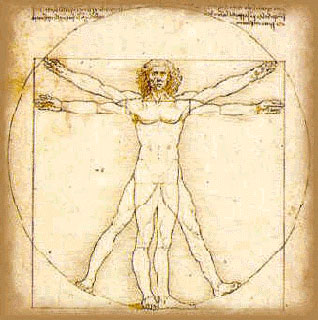
In a yoga class I took yesterday, the teacher made a comment that caught my attention. She said that we live in a personal sphere, the space taken up by outspread arms and legs. As we age and become more fearful of missteps, we shrink into the center of our spheres, shortening our stride, hunching into ourselves.

Even if we’re not to the point where age is making us shrink into that sphere, our sedentary ways certainly do. Here I am sitting at a computer, taking up very little space, making tiny movements of fingers, eyes, head. Not exactly using the whole sphere of my being, am I? So I paused, stretched out my arms, and suddenly I’m not so hunched into my space any more, and I feel a tad more alert.

Grief has the effect of drawing us away from the outer limits of that sphere, too. Life has dealt us the worst blow of all when it removes the one person who connects us to the world, and we shrink from additional punches.

As my grief has waned, I have tried to open myself up to the world, going out to the desert, flinging my arms wide, taking deep breaths, but until now, I’ve never paid any attention to my personal sphere. A beautiful image, isn’t it? Living in our own sphere, on the sphere of the earth, in the sphere of our solar system, on the edge of the sphere of our galaxy. Okay, so the galaxy isn’t a sphere, but still, it’s an interesting concept, all these spheres within spheres.

It doesn’t take any training to live more fully within one’s sphere. All we have to do is unfold our arms, raise our ribcage, lift our head, roll back our shoulders, take longer strides. I tried taking longer strides today while out walking, and it felt good for the first twenty minutes or so, and then — ouch, ouch, ouch. I could feel the painful stretch of my inner thighs. Apparently, without my even being aware of it, I’ve been taking smaller and smaller steps.

I will keep at it and see where this awareness of my personal sphere takes me. Perhaps it will help me live more expansively, maybe even help me think more expansively. At the very least, using more of my personal space will help my posture, and that in itself is not a bad thing.

There is No Journey Through Grief

People often talk of the journey through grief. (I myself have iterated this adage.) During the past few months as my grief is waning, I’ve come to see that there is no separate journey through grief. There is only the journey through life. Grief accompanies us part of the way, maybe even most of the way, though not always with the intensity of new grief. Grief, in fact, has driven me through the steep rocky path of my life during the past few years, first a numbing grief at my life mate/soul mate’s dying, and then later, a soul-shattering grief at his death.

Like many bereft, I was not always sure I want to continue living, but I wasn’t particularly ready for death, either, so I did the only thing I could do — continue my journey, taking each day as it comes, trying new things, finding comfort in knowing that nothing lasts forever.

By sheer waves of happenstance, I’ve been temporarily beached in a residential area that borders the desert. (If you have been following the Second Wind online collaboration called Rubicon Ranch, you will be familiar with this community, though so far, unlike my hapless alter ego, widow Melanie Gray, I have not yet stumbled upon body parts out in the desert.)

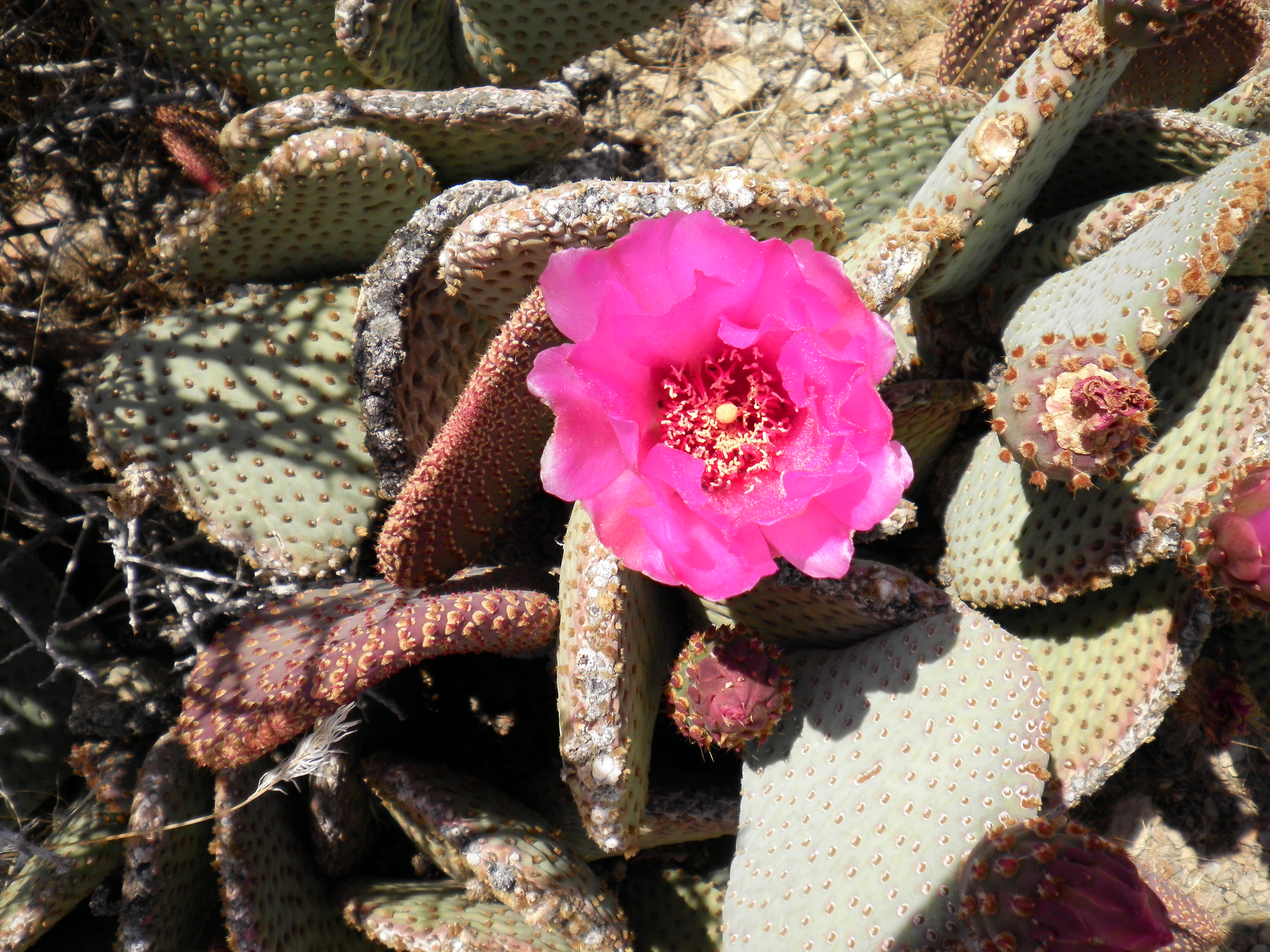
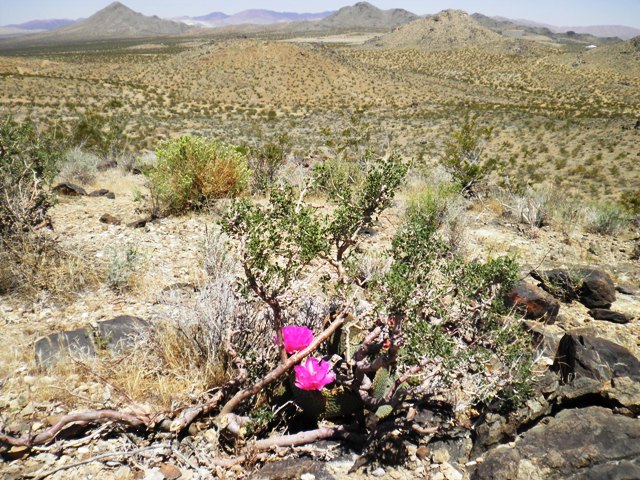
Someday, those waves of chance might sweep me into other climes, so I am making sure I use this opportunity to get to know my desert self. There are few frills in the desert, no vibrant colors or showy flowers (though brilliant cactus flowers do bloom in the spring). There are just stark hills, creosote bushes, hard-packed sandy soil. The bleak landscape suited me when I first came here, sodden with tears and steeped in pain, and it suits me still. There is peace in starkness — no particular sight rivets my attention, no exotic sounds or aromas tantalize my senses. There’s just me, the hills, the air I breathe.

Other waves of happenstance landed me in a yoga class. The teacher has a different approach, focusing not on the forms so much as breathing and being. That, too suits me.

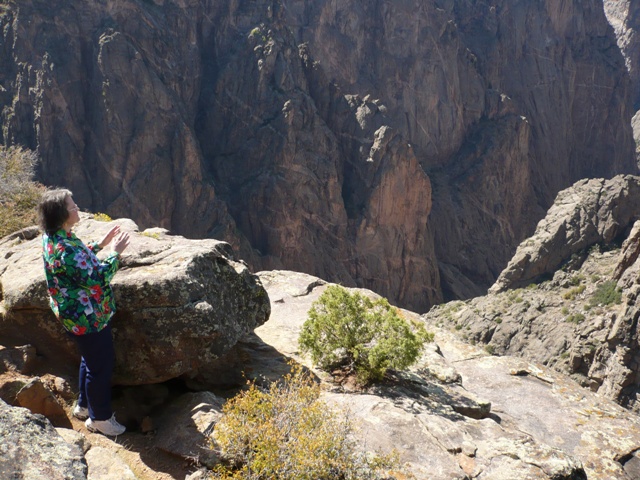
I’ve added a few of those exercises to my morning perambulations. I stand out in the desert, away from the things of humankind, open my arms and breathe in the desert. In that moment, I am happy. There are no shadows of grief, no sad memories or niggling fears. There’s just me, believing I am where I am supposed to be.

Why the Struggle to Write?

While checking my Facebook feed yesterday, which is mostly comprised of updates by other authors, it struck me how many of them are struggling with writing. They are struggling to find the time to write. They are struggling to reach word-count goals. They are struggling to overcome writer’s block. So much struggling!

One writer posted an article about how to find the time to write, and the post had such a drill sergeant approach that it appalled me. The point of the article was that we must find time to write every day, and to do so we might have to sacrifice an outing with a friend, a trip to the movies, and other such “treats.”

Why? What is so important about writing that we need to forego time with family and friends in order to string a few words together? Truly, it is an unimportant skill. It can’t comfort a crying baby, can’t smile at a friend, can’t add another minute to a dying man’s life. It’s an inherently selfish activity since it’s about communing with ourselves. It’s also an unhealthy activity because we sit with limited motion for hours at a stretch. The hope is that ultimately others will read and understand what we write (and so understand us), and perhaps even allow us to make a living from our efforts, but still, writing is communication at one reserve. We are not sitting conversing with a loved one, and to supplant such a real conversation in the now with one in our heads seems a paltry trade.

Of course, if you have a contract that must be fulfilled, that is one thing, but if you are merely writing to satisfy yourself (and if you’re not, what’s the point of writing?) that is something completely different.

I can hear you now. “But I have to write!” If writing fulfills a need, then you don’t need to be urged to write — you are already doing it. If you have to write but don’t, then obviously, you don’t have to write. The world is not coming to an end because you are not writing. It hums along just fine without your words.

Many people do feel more in tune with themselves when writing, and why not? It’s therapeutic to let all the built-up words and pent-up emotions flow out of your head, just as blowing out a deep breath lets pent-up stress flow out of your body. And yet, for some people, such as mothers with small children and a demanding outside job, there simply is no time. To make such writers feel as if they are doing something wrong by not writing every day is unconscionable. For other people, such as those caring for a dying spouse or an aged parent, they might have the physical time but not the mental time — they might not be able to let themselves get immersed in their writing since their inattention could have disastrous results.

Nowadays, books aren’t even a physical thing — they are merely stray electrons temporarily held together by creative energy. So why the struggle to write? I truly don’t know. It seems simple to me: write, or don’t write.

For me, writing is a tool I use to help me make sense of life. It’s a means of being creative, a way of being playful, even, but writing is not life. Living is what’s important. If I don’t live, sense, experience, there’s nothing to write about. When I don’t feel like writing, I don’t struggle to overcome that feeling, and I certainly don’t let drill sergeant tactics make me feel bad about not writing every day. I know the truth: it’s not how much you write that makes you a writer, but what you say.

So I go with the flow, being me, living each day as it comes, and eventually, when the time is right, when I have something to say, I simply start writing.

Yet Another Saturday, My Sadder Day

Yesterday was Saturday, my sadder day. The love of my life died one Saturday almost two and a half years ago, and I have not yet managed to get completely over it. You don’t ever get over such a grievous loss, of course, but you can come to an accommodation with the absence, develop a new focus, perhaps even find happiness. It just takes a very long time — three to five years, or so I’ve been told. I’m doing well, all things considered, but I still struggle to find my way.

I loved him with all my being, and I continue to love him. My love for him has no outlet — I can no longer do anything for him or with him — so his share of my love fills my heart like a pool of unshed tears. I try to use that love to propel me into my future, knowing he wouldn’t want me to be sad for him, but the truth is, he has no say in the matter. (I don’t always a have a say, either — grief comes and goes as it pleases, following a timetable I seldom understand.) He’s gone, and that goneness continues to shadow my life. I feel his absence like an itch deep in my soul. I feel it in the world around me, in the very air I breathe. I’m practicing being part of the world, planting my feet on the ground, feeling connected to my self and my surroundings. Still, the world feels alien with him not in it.

I’ve come a long way from the shattered woman who screamed her pain to the uncaring winds. I’ve made new friends, seen amazing sites, tried different activities, sampled exotic foods, wrote hundreds of blogs, walked more than a thousand miles. I’ve done the best I can to life fully, but the truth is, I’m tired. I’m tired of his being dead, tired of having to put a positive slant on a situation that has no upside, tired of trying to live whole-heartedly with half a heart. Just . . . tired.

I’m not young anymore, but I’m not old, either. Sometimes the future yawns before me like a bleak and empty landscape. Most times, of course, I can look to the future with hope, though I probably will always be saddened and bewildered by his goneness, especially on Saturday, my sadder day.

Trusting in My Journey as a Writer

I am not a natural storyteller. It took me my whole life to learn the elements of storytelling and to learn to write in a manner that pulls readers into my stories. After that, it took years to get published, because at the same time I was writing my first four novels, I had to learn the industry, such as what was required and who required it. I finally found a publisher who loved my books, and when the first two were released simultaneously, and a third six months later, I thought I stood poised for greatness. I was prepared to do what it would take to make a name for myself, but then, before that could ever happen, the gates of the book business burst open, and a horde of self-publishers surged into the arena. Not only did I have to compete with the established writers, I had to compete with millions of unknowns who were much better at marketing than I could ever hope to be.

Well, fate had other challenges in store for me. Five months after Second Wind Publishing released my third book, my life mate/soul mate/best friend/personal editor died, shattering me and my life beyond all recognition. One of the problems with losing the one person who connects you to the earth is that you no longer know who you are. For more than two years now, I’ve been tormented with the question of my place in the universe. With so many billions of people alive today, what is the point of being me?

I recently realized that the point of being me is simply to be me. I am the only me in the universe as far as I know, unique in a way only I can be. In the past few months, I have learned to trust in my life’s journey. I am trying to believe I am where I am supposed to be, being who I am supposed to be.

I now have five books released — the final novel my life mate helped me edit, and a journal of my grief — and I still have not reached the readership I’d hoped to find. I’ve been feeling as if I were adrift in an ocean of books, and I haven’t been able to find a reason to continue writing fiction. The books that apparently appeal to book buyers seem to have been written to capitalize on a trend — vampires, zombies, eroticism, bondage, symbols, serial killers — and my books are completely different from any of those. With so many millions of people publishing today, what is the point of my being one more unbestselling author?

If you’ve been reading my recent articles, you know how much this question about the meaning of writing has plagued me, and yesterday I found the answer. The point of writing is the same as the point of living — to be me. No one else can write the books I write. No one else sees the world in the same way as I do. Even better, most people who read my books love them. Such an incredible thing — to have written a book that even one person truly loves, and there are many who love my books. Would it be nice to make a living by writing, to be a bestselling author? Yes, of course, but in truth, it’s important for me to just write.

Now all I have to do is learn to trust in my journey as a writer. To believe I am where I am supposed to be. To write what only I can write. To be me.

Echoes of Grief

Today marks twenty-nine months since the death of my life mate/soul mate/best friend. I’ve come a very long way from that shattered woman who screamed her pain to the winds, who cried for hours when she accidentally broke his mug.

I still miss him, still want one more word from him, one more smile, one more day. I still have an upsurge of sorrow when I remember he is gone. And although I know — I feel — how very gone he is from my life, I still am prone to the foolish fantasy that when I am finished looking after my father and leave here to start a new life, my mate and I will be starting it together. But . . .

I barely remember our life together. It seems so very long ago and as if it happened to someone else. (Which is true — it did. Because of what I have endured these past two years and five months, because of embracing the challenges of the present and opening myself to hopes for the future, I am not the same as I was then.) I’ve turned enough corners now that even my grief seems unreal, as if that, too, happened to a different person. And yet . . .

Our shared life is very much a part of me still. Almost everything I do is accompanied by an echo from our past, almost everything I use originates from that time. I’ve bought a few new things — bits of clothing, mugs with my book covers on them (a totally indulgent purchase since I seldom use mugs), but I don’t really need anything. Most of our possessions are in storage, and I both dread and look forward to the day when I unpack them. I’m not sure whether I will find comfort in having our things around me, or if I will find more pain, but that puzzle is for another day, and perhaps another person. I am changing rapidly and will continue to change as my life changes, so the person who will need to deal with those possessions is not the me of today.

In a strange sort of way, I have been getting messages from him. Not messages from wherever he is now, but from where he was when he still inhabited this earth.

He used to tape movies — movies that we both liked, and movies that spoke specially to him. I am going through his movie collection, watching in backward order (from the ones he taped last to the ones he taped first), and I catch glimpses of what concerned him toward the end of his life. Death, of course, and me, perhaps. So many of the movies he taped that last year were about people (mostly women) whose spouse had died, forcing them to create new lives for themselves.

We watched these movies together when he first taped them, and I thought I knew then why he liked them — he was always fascinated with second chances, new beginnings, characters who came out of catastrophes to find renewal. But now, seeing the movies from this side of his death, they have a whole new meaning for me. Over and over again is the message: take care of yourself, accept the challenge and the change and the freedom that death brings, and most of all, find happiness again.

Sheesh. I made myself cry. But dang it — this new life would be so much more happier if he were here to share it.

Becoming Who I Need to Be

For a long time, I lamented that I hadn’t been changing, and I thought I should have been.

After the death of my life mate/soul mate, I was totally blindsided by grief. I’d lost my mother a couple of years previously, and a brother the year before that, so I thought I understood what grief was. Besides, I knew my mate was dying. We’d spent the last three years of his life disentangling our lives and severing the connection so we could go our separate ways — he to death, me to life alone. I truly thought I’d moved on, yet after he died, I experienced such agony and angst that it shattered me, my identity, my understanding of life . . . everything. An experience like that should change a person, yet month after month I remained . . . just me.

Now, two years and four months after his death, the changes are occurring on an almost daily basis. I’m still just me, but the person I am today is not the same as the one who screamed the pain of her loss to the uncaring winds. Nor am I the one so connected to another human being she still felt broken more than a year after his death. I left those women out in the desert somewhere. I’ve walked about 2,000 miles since he died, and a bit of that me evaporated with every step.

I am stronger than that person was, maybe even wiser, certainly more confident and open to whatever comes, willing to accept life on its own terms.

I no longer fear growing old alone as she did. I might not live to a great age, and if I do, I might not be alone, but even if I am, that woman will not be the me of today. She will older, used to dealing with the infirmities that come with age, perhaps even experienced in the ways of dying. She will have lived her life to the fullest of her ability, and might even be able to wake each morning feeling the joy of living one more day, no matter how painful. Or not. But the point is, I am not in that place today, and the person I am today will never be in that place. So there is no reason to be afraid.

For so long, I’ve been worried about what will happen to me now that I am alone. I worried that I’d become the crazy cat lady (sans cats) or the pathetic, lonely old woman that everyone whispers about (when they remember her at all). If I end up alone and lonely, so be it. I’ll be okay. I am quite comfortable with being alone. (I always was, to be honest. Grief skewed things, made me desperately fearful of loneliness.)

But I am not alone now. I have friends to go to lunch with, online friends to plan trips with, siblings to talk to now and again, an aged father to look after. I thought it would bother me no longer being part of a couple, but the other day at lunch when some women my age were talking about maybe meeting guys and falling in love again, I asked, “Why?” All of a sudden it seemed strange to want such a thing. Three of us had mates with compromised health, and now that they are gone, we are free to simply be. It’s not out of any loyalty to my deceased mate that I find myself unwilling to pursue a hypothetical relationship right now, but out of loyalty to me.

And that brings me to the biggest change of all. It bothered me that no matter what happened, I was always just me. Now I see that as a good thing. No matter what happens in my life, no matter what challenges I face, I will always be there, becoming who I need to be, even if it takes longer than I think it should.