Is There a Message in Your Writing You Want Readers to Grasp?

Most writers claim they write only to entertain, and yet messages do creep into our books whether we will it or not. I don’t write to entertain but to write the stories I want to read, stories that no one else has written. And still, the messages are there: nothing is as it seems, we are not necessarily who we think we are, history did not necessarily happen the way we think it did, and what we see is not necessarily the truth. But all that was more of a side effect. Mostly I just wanted to write good stories with good characters that I would have loved to read.

Here are some messages that crept into other authors’ books. The comments are taken from interviews posted at Pat Bertram Introduces . . .

From an interview with Dale Cozort, Author of “Exchange

I’m not big on putting messages in fiction, but one snuck into Exchange. We live in what my daughter calls a ‘bubble-wrap’ society, one that is obsessed with reducing risk to the point of keeping us from doing a lot of things we want to do and/or need to do. How does that kind of society react to suddenly being in a world that is wilder and more dangerous than the Wild West ever was? A lot of us take the benefits of the bubble-wrapping for granted, but dream about getting away from the restrictions. Unfortunately, the risk reduction and the restrictions are often a package deal. I try not to hit people over the head with that message and you can read and enjoy Exchange without ever noticing it, but it is there.

From an interview with Stephen Prosapio, Author of “Ghosts of Rosewood Asylum”

Typically I like to have lessons and character growth. I like to show how characters make either correct or incorrect choices. Sometimes the difference between good and evil is simply taking the right or wrong action. I’ll let the readers take what morals they want from the story.

From an interview with J. Conrad Guest, Author of “January’s Thaw”

The January books are composed of a number of messages. In January’s Paradigm the reader learns that there are people in the world—men and women alike—who are not very nice, and that men don’t have a corner on the mean market. Men, too, can be hurt through a woman’s infidelity. One Hot January shows that no government is benign and that we must care about a world we will not see. While January’s Thaw is largely about redemption, that it’s never too late to close the door on the past and to live in the moment, for tomorrow.

From an interview with Benjamin Cheah, author of Eventual Revolutions

The real world is complicated. Don’t seek simple answers. Seek instead complete answers. Don’t be satisfied with what people tell you. Always look for the full picture, and discard everything that does not meet the test of logic and reason. Always strive towards a greater understanding of the world, without settling for dogma or over-simplicity. Every action has a consequence. And always remember that you are free – and with this freedom comes the necessity, burden and power of choice.

From an interview with Bonnie Toews, Author of “The Consummate Traitor”

Yes, I do demonstrate a message in all three of the novels in this trilogy. What I have observed at the crossroads of humanity is that victims of atrocities can never forget what they have endured, and their resulting bitterness perpetuates revenge. This convinces me that as long as victim and perpetuator seek retribution against the other, true peace can never be achieved. But, there is an answer: the ACT OF FORGIVENESS. We understand the idea of God’s forgiveness, but the act of forgiveness becomes meaningless if we cannot first forgive ourselves and then one another. To make a difference in world peace, victims and their perpetrators must forgive themselves before they can forgive one another and live in harmony.

Is there a message in your writing you want readers to grasp?

Three Things Television Tells Us About The Future of Writing by Dale Cozort

Please welcome Dale Cozort, the author of Exchange, published by Stairway Press. I met Dale during a contest on Gather.com before either of us was published, and we still hang out at The Writin’ Wombats, a writers’ discussion/support group on the site. Dale writes science fiction; time-blending, mind-bending, brain-teasing novels and essays. These mashups of alternate history, science fiction and mystery realistically reshape the past and create new worlds that never were. Dale is one of the smartest people I have ever encountered — a real thinker — and I am honored that he is a guest here on Bertram’s Blog today.

_

Three Things Television Tells Us About The Future of Writing
By: Dale Cozort

Book publishing is going through a transition with an uncertain endpoint. The trends of the last few years in television may give us insights on the future of books, in three areas. As in TV, the transition will involve flattening the pyramid, writers and audiences franticly searching for one another, and increased competition with the past.

I’m showing my age a little when I say this, but when I was very young we had three television networks, each with about three hours of prime-time programming per night. I watched cable television turn those three channels into ten channels and then fifty and then over five hundred. I looked forward to each expansion, thinking that it would free up huge amounts of latent creativity and give me the freedom to watch programs I really liked instead of generic programs intended for a wide audience. That sort of happened, but with some downsides that can help us predict how a similar but even bigger expansion in the number of ways to get a book to the public will play out.

Expanding the ways to market will flatten the pyramid. In the old days of three network channels, TV writers, actors, directors and other creative types formed a steep pyramid. At the top were the stars, directors and writers in hit shows. Below that were the less successful actors, writers and directors who were actually on television or had a show on TV. Below that were a mass of people aspiring to get there, combining bit parts and day jobs to keep up the dream. Aspiring actress often meant waitress. Aspiring screen writer often meant administrative assistant.

The opening up of television meant that while most of those aspiring television types still couldn’t quit their day jobs, more of them could, a lot more. More TV channels meant a flatter pyramid, with more people making a living or coming close to it at the bottom end. That also had a downside of sorts: the top of the pyramid wasn’t quite as high. As the major networks lost market share, few programs reached the kind of audiences that programs routinely reached in the heyday of the three networks. Smaller markets made it more difficult for the networks to justify the kinds of expenses and production values that they could routinely use earlier.

Until recently, the major New York publishers have played somewhat the same role as the three networks, though they’ve never had as complete a control of the market for books as the networks had over television. Funneling writing through the major publishers resulted in the same kind of income pyramid we saw in television, though with much lower incomes throughout the pyramid. In terms of income and exposure, there are a very few rich and successful writers at the top, a few more writers who earn a moderate to upper-middle class income, and a huge number of people who never come close to earning an income from writing.

Opening up the publishing process will probably flatten the pyramid for writing, just as it did for television. As in TV, the base should grow; should make it possible for more people to make money writing. At the same time, more publishing venues fighting over a static or declining audience will make it more difficult for people who aren’t already at the top of the pyramid to reach the kind of audience size and financial security that existing big name authors enjoy. In other words, it will get easier to earn a few hundred or a few thousand dollars a year writing, but it will be more difficult to be the next Steven King, or even the next moderately successful writer earning a living wage, simply because there will be more competition for reader attention.

Frantically searching for your audience: Television also gives us a preview of the challenge most writers will face in a world with more publishing channels: finding your audience. If I turn on my TV and flip through the channels, I find very little of interest. A lot of times I end up turning off the TV because there not only isn’t anything on I want to watch, but there isn’t even anything on that I can stand to watch, not even as background. At the same time, I come across quite a few shows that I would have loved, but they came and went before I found them. Finding new programs to watch among five hundred channels is a challenge. Finding new authors to read is already challenging. It will get more challenging as the publishing channels broaden. Finding the people who love would love to read what you write is going to be the biggest problem new writers face as they try to establish themselves.

Competing with the past: If you flip through the five hundred television channels on your cable, you’ll notice that an awful lot of them are reruns, with whole networks devoted to bringing you the best TV shows of past decades. E-books especially bring somewhat the same theme to book publishing. There are decades worth of out-of-copyright books out there that can easily go on a Nook or a Kindle. Readers can go directly to Gutenberg Project, or pay a dollar or two to get collections with better organization and extras. Old television competes with new shows for TV-watching audiences. Old books also compete with new ones for reader audiences, and the easy availability of those books on e-readers makes the competition more direct.

As writers who aren’t at the top of the pyramid, most of us want to get at least far enough up it to make a living writing. E-books and the ease of self-publishing give us new routes to that, but there are downsides, as we’ve seen. The new routes to publication mean more competition, readers having more difficulty finding compatible writers and vice versa. The changes aren’t all good or all bad, but they are inevitable and writers need to try to understand and adapt to them.

See also:

Click here to read: Excerpt From “Exchange” by Dale Cozort

Click here for an interview with: Dale Cozort, Author of “Exchange

Grief: Feeling The Absence

I must be getting a grip on my grief despite the recurring upsurges of sadness because more and more I’m seeing the bizarreness of the process rather than simply experiencing it. On Friday, it will be twenty-two months since my life mate/soul mate died and though I’ve never felt his presence the way some people sense a connection with their dead mates, sometimes I feel his absence as if it’s a living entity.

I was sitting in the dentist chair yesterday, waiting alone for the verdict on my gum infection, when all of a sudden I started crying. We’d always gone together to the dentist, doctors, optometrists, etc, and yesterday, sitting alone, I could feel that he wasn’t waiting for me. I could actually sense that he wasn’t in the reception area, could feel the substance of his absence like a white hole (as opposed to a black hole). Just one more bizarre aspect of grief.

Oddly, I didn’t realize what a comfort his presence was at such times until it was gone. I took his presence for granted (not him — I never took him for granted), but it was as if his presence were part of the very air I breathed, and now that he has disappeared from my life, I’m stuck breathing the standard nitrogen/oxygen mix. And it’s not enough.

I don’t mind that I don’t feel his presence. If he still exists somewhere, I hope he has something more thrilling to do than watch over me, and I certainly hope he has something more thrilling to do than wait at the dentist’s office for me. But . . . I truly don’t understand how he can be dead. Don’t understand where he has gone. Don’t understand what death is. Don’t understand what life is, either, to be honest.

All I know is that he is gone from my life, and never again will I feel the comfort of his presence.

But it makes me wonder: did he feel the comfort of my presence? I was there at the end of his life. I was there when he took his last breaths. I hope he felt my presence the way I used to feel his. I hope it gave him comfort. Hope it still does.

“Just Right” and The Power of Three

I don’t like to get too personal on this blog (well, except for the whole grief thing, though that’s beginning to seem less personal and more mythic) but today something happened that is making me veer off my normal track.

I needed an antibiotic for a gum infection, and when I went to pay for the order, they told me it would be $67.99. My poor sore tooth about dropped out of my mouth. I’d recently picked up a prescription for antibiotics for someone else, and it came to $11.95. The last time I needed antibiotics, the prescription was $18.50. The pharmacist today said this particular brand was stronger than the others, but when I asked if it was fifty dollars stronger, he wouldn’t give me a straight answer. So I called my dentist’s office. They agreed that this particular brand was strong, but that another, slightly cheaper one would do as well.

I went back to the pharmacist to pick up the new prescription. I was expecting a twenty- or thirty-dollar transaction, but this time the bill came to $4.00. Say, what? A four-dollar drug gives the same result as a sixty-eight dollar drug? I asked the pharmacist if I should stick with the stronger one. Again, no straight answer, just a bit of mumbling about teeth needing a special antibiotic due to the teeth’s connection to the heart.

So, I called my dentist again. Asked if this cheap antibiotic would work as well as the more expensive one. She said, “It should.” Um. Should? Not exactly the answer I was looking for. Finally she admitted they should have prescribed the cheaper one in the first place. So. Here I am with my $4.00 antibiotic that seems as underpriced as the first seemed overpriced, and it makes me itchy. Where’s the third option, the “just right” one?

“Just right” is the rule that is ingrained in us. We learned the power of three as kids via the story of the three bears. First too much, then too little, and finally, just right. The story would have been completely different and had little appeal if, after trying the papa porridge and finding it too hot, Goldilocks tried the mama porridge, found it too cold, but ate it anyway. Or if, after she lay down on the papa bed and finding it too hard, she tried the mama bed, found it too soft, but fell asleep anyway.

See what I mean about the just right? The antibiotic I’m now taking probably will work, but with the final third of the formula missing, I’ll never feel quite right about taking such a cheap medication. And that is exactly what many drug companies count on. A lot of them arbitrarily raise their prices so that they are between the highest and the lowest, knowing it will make us feel just right even if the stuff is no different than the cheaper version. And darn it! It works, even when we know better. Such is the power of three.

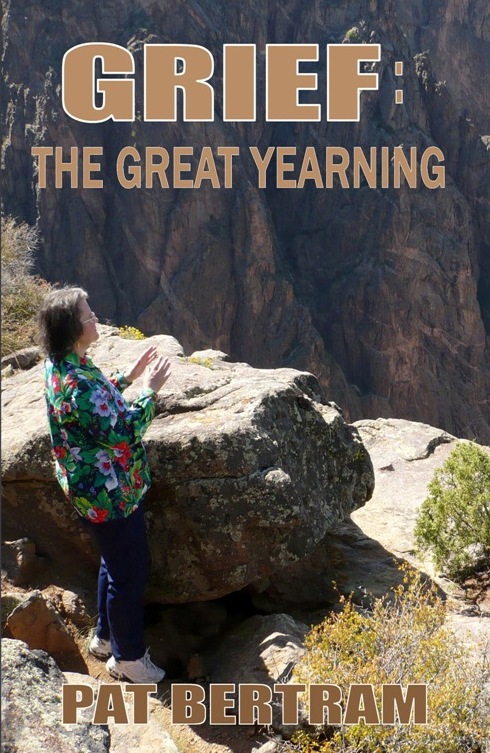
(I was checking my blog archive for when I’ve previously mentioned The Three Bears and the power of three, and I came across this remark I wrote in September, 2009: Someone asked me recently if I ever considered writing a novelization of my life, and I just laughed. There is no story in my life – nothing noteworthy ever happened to me, and I never did anything that millions of others didn’t also do. A bit ironic considering that in just a couple of weeks, a book about me and my grief journey will be published. Now that I think about it, I was right. I never did do anything that millions of others didn’t also do, but that’s the beauty of Grief: The Great Yearning. My journey is universal. And, unfortunately, it isn’t a novelization. It’s the truth.)

There is Something Totally Bizarre About Grief

Sometimes grief strikes me as being totally bizarre. For example, the eighteen-month mark is particularly difficult, sometimes even more so than the one-year anniversary. I do not know why, I just know that it is because so many of us bereft experience the same thing. In my case, for a couple weeks around the eighteen-month mark, I felt as I had during the first months after my life mate/soul mate died. Somehow, someway, it seemed as if he just died. And maybe in a way, he had. Grief is a journey of starts and stops, retracing steps, standing still to catch your breath, and then being pushed into the future again. Each step forward in grief’s journey is a step further away from our loved one, a step further away from the last time we talked, or hugged, or smiled at each other. Now, all we have left of them are our memories, and as each memory fades, a bit more of our loved ones die.

But such incremental deaths do not explain the upsurge of grief at eighteen months. (Here’s an ironic twist — I googled “Why is there an upsurge of grief at eighteen months? And the top three links that came up were links to this blog.) Oddly this upsurge is not a conscious one. I knew the date, of course, but I had no expectation of feeling any different at eighteen months than I had at seventeen months, so once again, grief took me by surprise. But the upsurge happens even if you lose track of time.

I received this email from a bereft friend today: I woke up crying at 6 this morning and didn’t stop until after noon. This reminds me of those months right after he died. I haven’t had such severe morning cries for a long time. I guess I might be heading into that upsurge a little earlier than expected.

I emailed her back, saying she was right on time since this was her eighteenth month.

Her response: Good grief. Time is losing meaning for me. I’ve been thinking my 18th month starts in February. I guess I’ve been subconsciously trying to avoid it.

See? Even when you get the date wrong, your body knows. There really is something totally bizarre about grief.

Grief: Yearning for a World that Makes Sense

In a week, it will be twenty-two months since my life mate/soul mate died. Sometimes it seems like he slipped out of my life just yesterday; sometimes it seems as if he’s been dead forever. And I still cannot fathom his goneness. It makes no sense that he is no longer here on this earth.

The worst trauma I am facing now is his continued absence. I don’t have the totally mind-numbing pain that I did in the beginning, nor do I head to another room in search of him a dozen times a day. I do, however, still desperately yearn to talk to him, and the longer I go without talking to him, the more the yearning builds up with no way to relieve it. (Yearning sounds so mild for the longing that claws at me, but it’s still the best word to describe what I feel.)

My own experiences and the experiences of my fellow bereft have shown that it is not anger or any of the other Kübler-Ross stages that fuels our grief, but yearning to see our mates once more, to have one more conversation, one more word, one more smile. I do talk to him, especially when I’m walking in the desert. (Though why there I don’t know. He didn’t like the desert, didn’t like the heat.) But he never answers back. One-sided conversations do little to satisfy the yearning, though sometimes they bring a bit of comfort.

I am lucky in that we had a chance to say everything we needed to say before he died, so there are no lingering issues or questions I have to discuss with him but, for me, need is not the issue. I want to talk to him. He had a great grasp on the intricacies of life and on modern history, he had a well-researched historical perspective on current events, and he loved books and movies. We could talk about anything and everything, and not once in our thirty-four shared years did he filter my words through his prejudices or beliefs. That is such a rare quality in a world where it’s so easy to bang one’s verbal shins on the rocks in other people’s heads.

We all have rocks in our heads — the rocks being our opinions, prejudices, beliefs, stubbornly held viewpoints, preconceived notions, assumptions, attitudes, falsehoods we hold to be true. Sometimes the rocks are soft and fall apart under the touch of reason. Other times the rocks are boulders that take up all available space, leaving no room for a new idea. If my mate had any rocks, they were more like a few shifting grains of sand that could take into account anyone’s truths, and that made him easy to talk to.

I should be glad I had him for all those years since so few people find someone they can truly talk to, someone who will listen, and I am glad. But . . . how can the earth survive without him? After he died, the planet felt tilted, and I had a hard time keeping my balance, but now I’m growing used to living on the slant. But I still yearn for a world that makes sense the way it used to, and I still yearn to talk to him.

My Grief Book is One Step Closer to Publication

Grief: The Great Yearning is one step closer to publication. Today I received what might be the final copyedits. One of my fellow bereft volunteered to proof the book for me (actually, a mutual friend volunteered him, and he was kind enough to go along with the suggestion), and he turned out to be a phenomenal copyeditor. Found mistakes that all the rest of us missed. We don’t even have the excuse that we couldn’t see the words for the tears, since he had the same problem.

Very few people have managed to get through the book dry-eyed. Even though each person’s grief is different, there are enough similarities that this book speaks to everyone. It’s been called powerful, profound, exquisite, wrenching, raw, real. One woman wrote me, “I really like your book. When my husband died I devoured books about loss of spouse…maybe 30-40. The ones that were most helpful were similar to yours in that they recounted the journey. NONE were as complete as yours and that is what I wanted.”

Some people think the book will be best as a companion to those who are grieving. Some people think it will be best as a book to give their friends and relatives to help their loved ones understand what the bereft is going through. Some people think it should be required reading in classes for would-be therapists. Some people think it should be handed out to everyone whose spouse signs up with hospice so they are not shocked and bewildered when grief hits.

I never set out to write a book about grief. I merely cried out to an unfeeling void, looking for whatever comfort I could, trying to understand what had happened to him and me and our shared life. Apparently all that chaotic feeling ended up on paper, and now those emotions are tidily packed away into a book. Well, packed away until someone opens the book; then emotion explodes out of the binding.

Writing fiction comes hard to me. I have to drag every word out of my depths, but the words in this book came gushing forth. Of course, I was writing for me, not for others, and I didn’t have to create emotion out of nothing. I had emotion to spare.

Perhaps the time is right for this book. Perhaps it won’t mosey along like my novels, but will burn up the atmosphere when it takes off. Perhaps I really did write an important book. What a strange thought.

Appalling Remarks People Say to Those Who Are Grieving

People make appalling comments to us bereft. At a time when we can barely manage to drag ourselves through our days, we have to find the energy and graciousness to make allowances for people’s tactlessness, ignorance, and downright meanness. Most people are unaware of what it feels like to lose a significant part of their life, such as a spouse or a child, and they seem to be terrified of even thinking about that unthinkable happenstance, so they distance themselves from our pain with unfeeling words. They want to believe that the universe makes sense; that God is in his heaven and all is right with the world (except for that one little slip when he let your loved one die); that everything happens for the best. It is almost impossible for people to comprehend that bad things happen for no reason at all, so of course, the deceased had to have done something to cause his or her death.

Although people were generally kind to me after the death of my 63-year-old life mate/soul mate, I still got my share of inexcusable remarks such as:

Blank stare, then, “My second cousin’s great aunt just died.” (How does that in any way relate to my having lost the man with whom I shared the past thirty-three years of my life?)

“I didn’t know he smoked.” (He didn’t. And what does smoking have to do with kidney cancer?)

“How did allow himself to get so sick?” (He took excellent care of himself, better than anyone else I ever met.)

“I know how you feel. My cat just died.” (There simply is no response to this.)

“You’ll find someone else.” (What kind of comfort is that supposed to be, especially a few days after the death of the one man who ever truly loved me and had time for me?)

“It’s God’s will.” (You don’t want to know what I think of a God who allows a good man to suffer for years and then die a horrible death just to satisfy His whims.)

“God never gives you more than you can handle.” (Wanna bet?)

“Everything happens for the best.” (Who’s best?)

As grief continues, even those who started out kind become impatient. They say things such as:

“You have to get on with your life.” (This is my life).

“He wouldn’t want you to grieve.” (Well, then, he shouldn’t have died!)

“Get over it.” (I’ll get over it when he gets over being dead.)

But the worst thing anyone ever said was:

“God will never take something away from you without replacing it with something better.” It’s bad enough to say (as so many people did) “God never closes a door without opening a window.” At least this door/window analogy acknowledges that the replacement might not be as good as what was lost. But for someone to say that He will replace what was taken with something better is totally reprehensible. How could He possible replace my life mate/soul mate/business partner/best friend/comforter/supporter/companion with anyone or anything that would be better than what I had? If you lose a job, perhaps (in a good market) you can find a better one. If you lose your wedding ring, perhaps you can buy a better one. But a person? How can one unique individual be replaced with another?

Besides, I know for a fact that the aphorism is wrong. It’s been twenty-one months since my mate was taken from me, and though many things, both good and bad, have happened to me in these months, nothing comes even close to being as good as what I once had.

Click here if you want to know: What to Say to Someone Who is Grieving

The Conundrum of Grief

Tolstoy wrote, “Without knowing what I am and why I am here, life is impossible.” This is especially true of those of us who have lost our soul mates. What we once were (or thought we were) has died along with our loved ones. Now we’re wandering the desert of aloneness and wondering why we are still here. Since we don’t know, life seems impossible.

Recently, there was a news article about an elderly couple who died within hours of each other. This is the sort of romantic story that we all believe in — that when one of a pair of soul mates dies, the other will die also. Unfortunately, that does not happen very often, which is why it is noteworthy when it occurs. Life is at once very fragile and very tenacious. Having watched my life mate/soul mate’s struggles, I know how difficult it is to die. People can suffer for years, fading slowly and painfully, hoping for death to release them from their agony, but still endure.

New grief feels as if it will kill you, but it seldom does. Such grief is so very strong that it takes your very breath away. It makes you feel as if you are having a heart attack and some sort of terrible gastrointestinal disease at the same time. It can cause Post Traumatic Stress Syndrome, make wounds difficult to heal, retard recovery from illness. The death rate for those whose life mate’s died increases by 25% for all causes of death — disease, accident, trauma. Despite this, almost all of us, to our shock, find that we have survived the trauma of such a heinous loss.

Here is the conundrum of grief: if they got the better end of the deal, if they truly are in a better place, then why are we still here? And if life is worth living, how can we not care that it is being denied our loved ones?

I always thought I’d die when he did, and I wonder if that’s where some of my deep sorrow comes from — an unconscious feeling of not having loved enough, been connected enough to die at the same time as he did. But the truth is, I wanted to live, though I don’t know why.

About a year before he died, I hugged him and somehow so aggravated his pain that he pushed me away. A voice deep inside me, beneath conscious thought, proclaimed, “He might be dying, but I have to live.” I have no idea what that voice was. I’d only heard it once before, and that was when I met him. Thirty-six years ago, I walked into a health food store to buy whole-wheat pastry flour, and after talking to the owner for two minutes, that voice wailed, “But I don’t even like men with blond hair and brown eyes.” It wasn’t love at first sight, our meeting, more of a primal recognition. And that same part of me recognized that our shared life was over. After that day, our lives started to diverge — he to death, me to continued life.

I don’t know why I was so determined to live then, and don’t know why, almost twenty-two months after his death, I am still determined to live. Curiosity, perhaps. Curiosity to see what I can make of my life alone, to see what I am, to see who I become. Curiosity to see how I will make life seem possible once more.

Who Gets to Define What is Art?

I’ve been discussing the wild new frontier of the book business here on this blog, and it turns out the question of what qualifies as a book nowadays is not an isolated conundrum. The music business is going through the same upheaval.

When Lady GaGa’s debut album was released, Amazon sold 400,000 copies of “Born this Way” at 99 cents each as a promotion for their online storage service, and now Billboard has decided those weren’t really album sales, and so they don’t count. What qualifies as an album sale now anyway? It used to be a physical product, first a record album, then a tape, then a CD and now there are digital streaming services, iTunes, Utube, and other possibilities I’m not even aware of. (Turns out I’m not aware of a lot when it comes to music today. Haven’t a clue who Lady GaGa is.)

What seems to be really going on in the creative world today, whether writing, music, painting, is not just about new forms of distribution, but a matter of who gets to define what is art.

I never cared who authors were (except as a means of finding similar stories), why they wrote what they did, or if the books had any meaning other than that which I brought to them. I used to enjoy reading so much more when I saw books as something separate from the author, something that existed in its own right. Then the publishers started putting the author’s name above the title, the author became more important than the work, and books were demoted from art to commodity.

Or perhaps books were always a commodity. The point I am trying to make is that I somehow got the impression there was a great god out there, someone above us mere mortals, judging which books, which paintings, which music pieces were art and which were not. When control of one’s creative output was in the hands of publishers and producers, with professional reviewers handing out their opinions as if they were writ in stone, there was a narrow range of creativity that fell under the heading of ART. Now, anyone can publish, anyone can produce, anyone can review. So who is to say what is art?

Some of the books that have won prestigious awards are so appallingly awful I couldn’t get through them without gagging. Some artworks that command huge prices I wouldn’t even hang in a dark closet. Yet someone, somewhere, decided these things were art. (I wonder at times if they are perpetrating a joke on us, and they know the stuff is bad but want to see how many people they can talk into believing it is good.)

In her blog post “Why is That There?”, Mickey Hoffman, author of School of Lies and Deadly Traffic asks, “Is it necessary for someone to read books about a writer’s life to enjoy or understand their work? Will a biography or an art historian’s research actually tell you how a creative person thought and felt? . . . Do I really have to explain? Can’t you get whatever meaning you wish to get and be content? Either you like it or you don’t.”

And maybe, that’s the truth of it. Maybe there is no standard, no judgment from on high, and the question of whether something is ART comes down to us mere mortals and whether we like it or not.