Curmudgeonly

It’s 72 degrees (Fahrenheit) outside right now. In a mere fifteen hours, it will be 16 degrees. Wow, what a drop! I insulated my outside faucets because I won’t be watering for a few days, though by Wednesday, it will probably be warm enough to give my lawn a rinsing.

It will be good to have a break. Too often, standing out there watering, staring at all that green, I find myself thinking that grass is like hair for the ground. And just like hair, it needs periodic trimming and conditioning, shampooing and rinsing (mowing and fertilizing, watering). As you can see, not a whole lot goes on in my head when I am taking care of my new lawn.

On the other hand, when I am out and about, too much goes on in my head. For example, I’ve been seeing Santa Claus decorations, and for some reason, I have taken a dislike to the mythical old gent. (St. Nicholas may or may not be a myth, but the obese, red-garbed, bearded gent who harnesses wild animals to take him around the world in a single evening sure is.)

I think this dislike started around the time of that Polar Express movie. Here’s a kid who doesn’t believe in Santa Claus, but he’s taken to the North Pole, meets elves and sees a huge Christmas present manufacturing system, and then it still takes a huge leap of faith before he believes in SC. Why? It should have been obvious from the beginning that something was going on. Then, when he gets older, he’s rather smug about still believing. Um. If you know something for a fact, if you’ve seen with your own eyes, then it’s not believing. It’s knowing. And how can he feel superior to those who didn’t go on the Polar Express, who had only their own mundane experiences to go by? As you can see, that ridiculous movie still brings out the curmudgeon in me.

Although I’m not particularly religious, religious decorations don’t bother me at all, mostly because they are an intrinsic part of the Christmas story, beginning a couple thousand years before the bearded guy was ever thought of). Mostly, though, the decorations that speak to me are the seasonal ones. As in seasons. Holly. Wreaths. Trees. Cranberries. Snow. The snow part is decoration, you understand; I’m not particularly fond of white Christmases. I’m surprised more people aren’t leery of snow at Christmas. Obviously, snow makes travel difficult, and so many people do travel at that time of year.

Not that any of this matters. It’s just my curmudgeonly side coming to the fore.

And speaking of being curmudgeonly — apparently, I use the phrase “this matters” (as in none of this matters) rather frequently because almost every day now my grammar check tries to tell me I should be writing “these matters.”

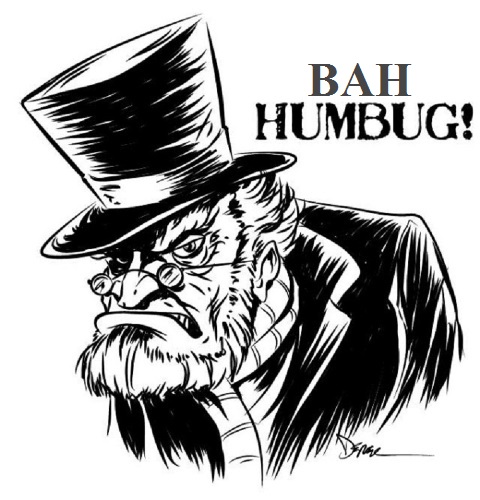
Bah, humbug!

***

What if God decided S/He didn’t like how the world turned out, and turned it over to a development company from the planet Xerxes for re-creation? Would you survive? Could you survive?

A fun book for not-so-fun times.

Click here to buy Bob, The Right Hand of God.

Collecting Local Stories

I’ve been collecting local stories in case I need colorful fillers in my new haven’t-yet-written-a-single-word novel, though to be honest, I have my doubts about some of the stories.

For example, right before I got here, a fellow was killed in a cottage across the alley. (Around here, a cottage is a house built onto the back of a garage.) Supposedly, they were drug users who got in an argument. Or maybe they were drug dealers. Or maybe they were narcs scoping out the drug situation in this neighborhood. In support of the third possibility, one neighbor told me that the dead guy was seen around the courthouse in a nearby city. In opposition, if they were DEA agents, they weren’t very good ones because another neighbor (who has since moved away. Yay!) was the local purveyor of illegal substances, and they never caught him. Though I suppose it’s possible they were looking for his supplier. The general belief, however, is that they were drug users who had a falling out.

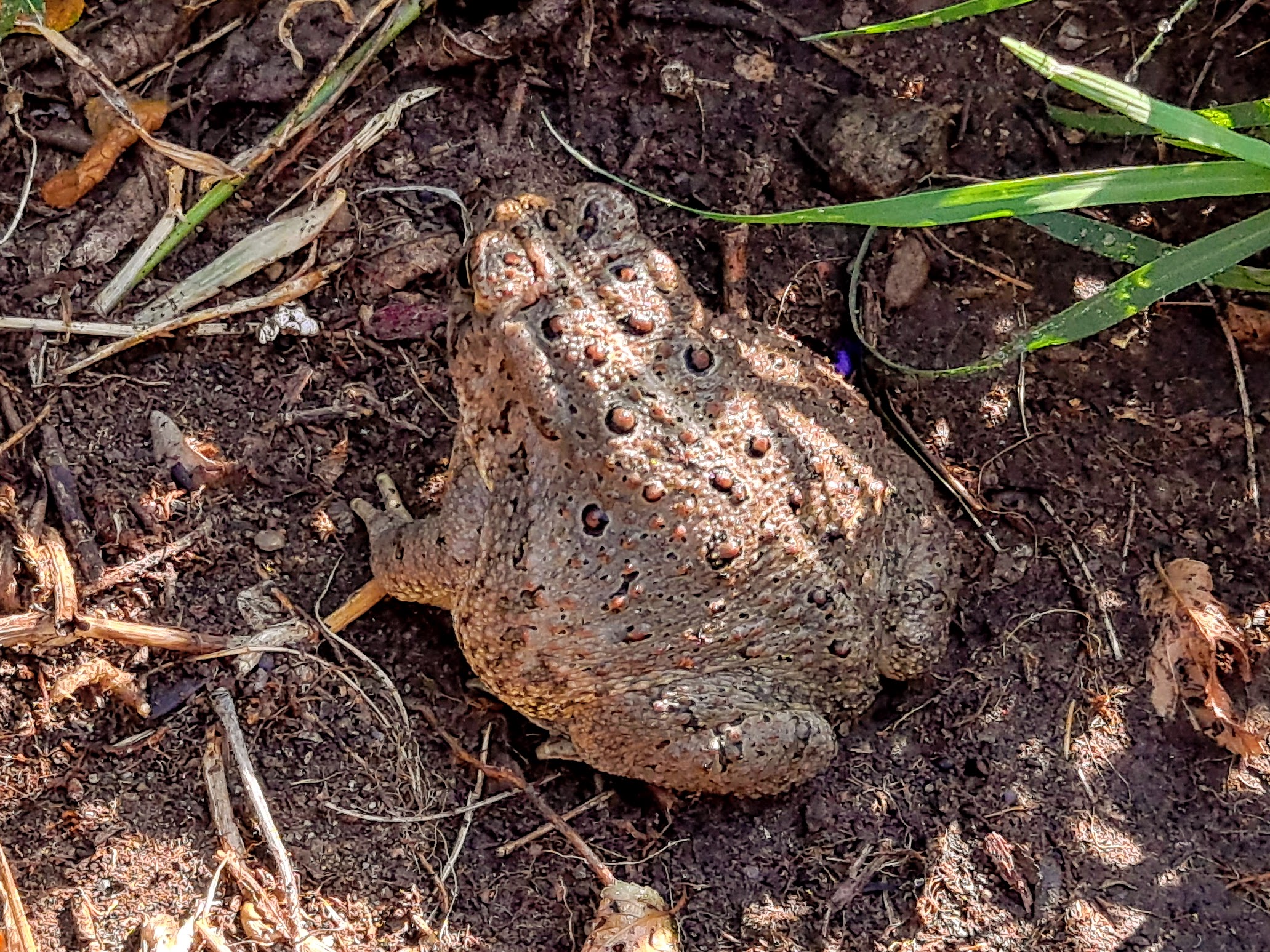
Another interesting story is that a while back, many years before I got here, someone a few blocks away decided to put in a frog pond. He created the pond, then ordered a thousand frogs. Those frogs turned out to be toads who prefer a damp shady environment rather than a wet one, so they disappeared during the night. The toads I see are supposedly descendants of the mail order toads. It’s a cute story, but such a tale is not necessary to account for all the toads around here. After all, there are rivers and irrigation ditches, which could also be a source for the toads. When I lived on the western slope of Colorado, in a rural plains area similar to this (though surrounded by hills and mountains rather than the flatlands we have here), there were also toads. There seem to be seasons for toads because I remember one year when the baby toads were as plentiful and as fidgety as the grasshoppers.

There are other stories, such as the family who had fourteen kids, the fellow who won’t let anyone in his house because he doesn’t want anyone to see that he is a hoarder, the lady who lets all her dogs get killed, the dispatcher at the sheriff’s department who was married to the local drug dealer, the ex-soldier who was so “ex” there is no record of his being in the service. (His story is spooky, reminiscent of my novel More Deaths Than One). As everywhere, there are gossips and godly people (sometimes one and the same), courteous folk and curmudgeons, those who have lived here for generations and those who are elbowing their way into the power structure (such as it is).

I don’t know what I will do with all the stories I am collecting. I don’t even know if I can use any of them because I wouldn’t want people to think I was writing about them, even if I were. And even if I weren’t. (People often see themselves in a character even though I didn’t put them there.)

Some people would like to be in my book. In fact, the wife of the ex-soldier would like me to tell her husband’s story, but I don’t want to do another mind control novel. Though come to think of it, much of the latter part of that story is similar to stories of people who have been alien-abducted, which could be a way of introducing the story, and then only later letting it be known that our own government was the abductor. Still, it’s too tragic a story for me to want to tackle. I’d prefer a more lighthearted story I wouldn’t mind living since an author does live his or her story for however long it takes to write it.

But none of this matters at the moment since I’m just in the collecting phase of my new haven’t-yet-written-a-single-word novel. Once I’ve collected a critical mass of information, then perhaps the story will explode out of me, and I’ll finally rack up another novel.

***

What if God decided S/He didn’t like how the world turned out, and turned it over to a development company from the planet Xerxes for re-creation? Would you survive? Could you survive?

A fun book for not-so-fun times.

Click here to buy Bob, The Right Hand of God.

Walking in the Dark

Here I am again, scrambling to write a blog post before the day runs out, though this time it’s not because of laziness or procrastination but because I was working all day and just got home. Not much happens to inspire me on such days, though I did enjoy walking home in the dark. I so seldom get out in the dark any more — there’s generally no need to — so even though I am always offered a ride home (sometimes insistently), I refuse. It’s only two blocks, and the problematic dogs are gone — one moved away with the problematic neighbors and the other canine died. (That woman should never be allowed to own pets. She told me that if she were a dog, she’d rather run free even if she ended up getting hit by a car, and guess what. Since I’ve been here, she’s had three dogs, and all three were killed. Weirdly, I even know the person who killed her last dog. Even weirder, now that I think about it, he knew it was her dog, so her blasé attitude must be well known.)

What I’m getting at is that the walk is as safe as possible. (Obviously, nothing is completely safe, but there are relative matters of safety. For example, there are a heck of a lot of places I’ve lived that I’d never even set foot out of my door in a dark evening, let alone at night.) It’s also fun this time of year seeing the colored lights. There are nowhere near as many here as there were in my dad’s neighborhood — those people must have thought that the only way to offset a non-snowy desert Christmas was to flood the town with Christmas lights. The decorations are tepid here in comparison, but still enjoyable.

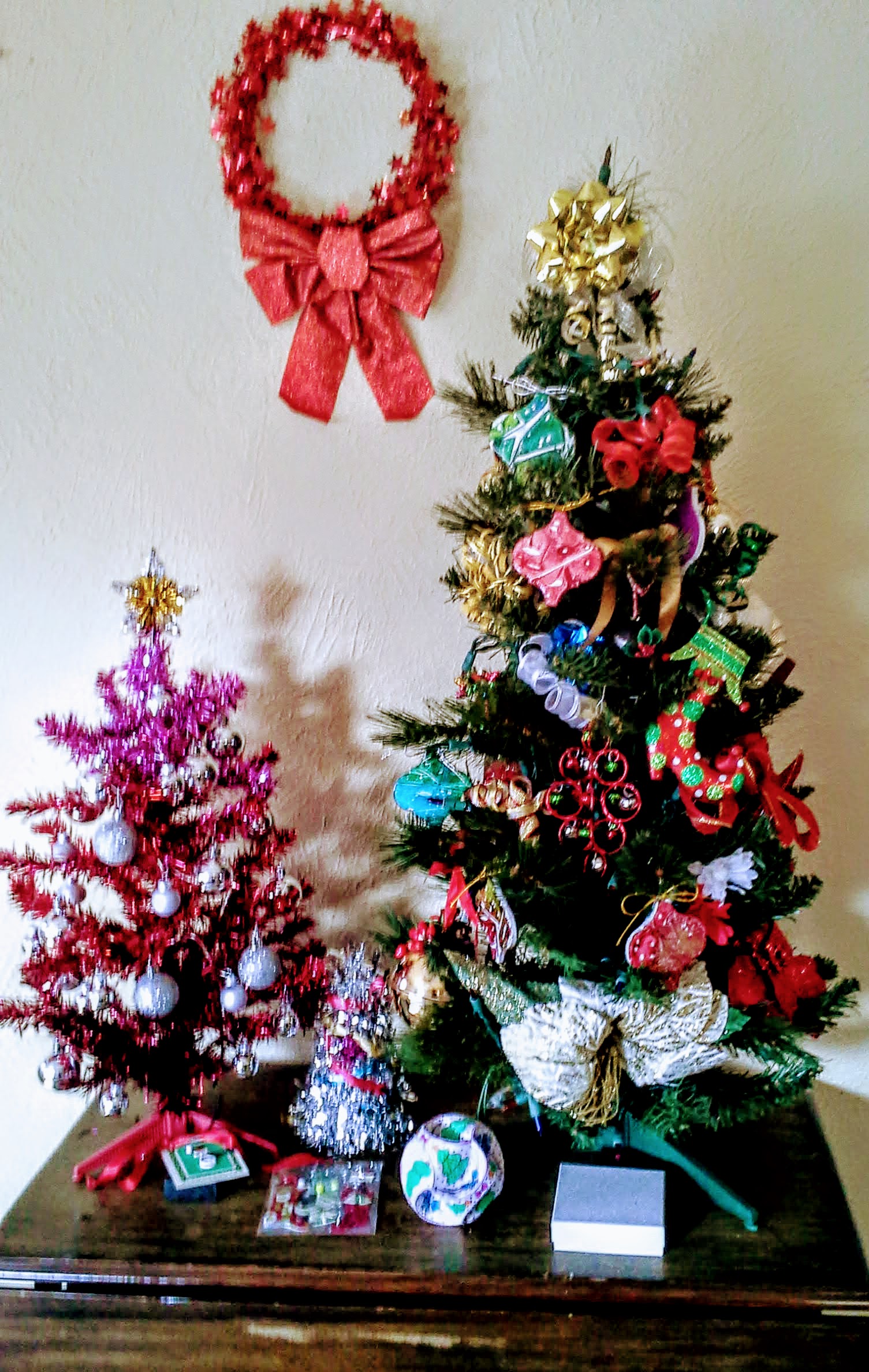
The past few years I’ve made a point of doing a bit of inside decorating for Christmas — putting up a small tree and my bowls of lights if nothing else — but I’m not sure I want to make the effort this year. I will be spending the day by myself, and it seems rather absurd to put in so much time digging out the decorations and setting them up just for me, but then, on the other hand, perhaps that’s when it’s most important to make the effort.

I still have time to decide. Or not. We’re already into December! Amazing how that happens — time passing in huge chunks when one isn’t paying attention.

I used to think all those folks who got ready for Christmas early were jumping the gun, but now that I am aware of how fast time goes, I’m surprised more people don’t start getting ready in September or August or July.

But I am digressing. I was talking about walking home in the dark. Not only are the artificial lights pleasing, so are the natural ones — the stars that make themselves seen. You’d think out here there would be more stars visible, but admittedly, the lack could be in me and my old eyes rather than the meager light pollution generated by the sparse street lights. Luckily, there are enough lights to brighten my way when walking home, so I really shouldn’t complain about light pollution.

I got home safely, and in the end, that’s what counts.

***

What if God decided S/He didn’t like how the world turned out, and turned it over to a development company from the planet Xerxes for re-creation? Would you survive? Could you survive?

A fun book for not-so-fun times.

Click here to buy Bob, The Right Hand of God.

Raking Up the News

I didn’t watered my grass for a couple of days — the first day was too cold, the second day was very warm but I had to work all day. Even though I didn’t notice any difference in the grass, I gave it a good watering today, letting the hose run while I raked up leaves. Odd how I have no trees except a couple of babies, and yet I get a yard full of leaves from all the neighbors’ trees. In previous years, I never paid attention to the leaves, but I need to make sure they don’t damage my sod, so I did the work. I considered giving the leaves back to the neighbors, but despite my blisters, I was glad to get the leaves. I dumped them among some bushes, thinking they will help rejuvenate the soil when the leaves break down. As someone once said to me, “Compost happens.”

I had to unfortunate task of laying off a handyman who was working at the house I’m taking care of. He was in such a panic over the loss of income, that I hired him to do a couple of small paint jobs the contractor has been putting off. I was kind of surprised (but just kind of) when he never showed up, so even though I’d paid twice for those jobs, I ended up doing them myself. At least the raw wood surfaces are protected now.

A friend had some good news today — my contractor is going to work on her house, which was left unfinished when her husband died. It’s a huge job, and they are both glad to be connected — she needs the work done, and he needs to keep his employees busy. I’m not sure what it will mean for me, though I tend to think my jobs as always will be delayed. I’m not really sure I care, at least not all that much and not all the time, because the undone work gives me a sort of lien on his time. When I have an emergency, he comes right over or sends one of his guys. If all the work around my house was finished, perhaps he wouldn’t be as conscientious about taking care of my problems. On the other hand, he probably would especially now that I recommended him for that big job. And anyway, he does try to look after me when he can.

I asked my friend if she minded if I mentioned her and her unique situation, and she said okay. She was born in Malaysia of Chinese parents, and educated by Irish nuns. She has three sisters — one lives in Malaysia, one in Singapore, one in Australia, and she, of course, lives in the United States. Talk about a far-flung family! Luckily, there is Skype. The sisters talk every weekend, which is more than I do with my own siblings, and they live here in this country.

She would make a great character for my book, though I’m not sure how her story would contribute to whatever story I come up with. For now, I’m just collecting interesting characters and waiting to see if they want to engage with one another, literarily speaking.

Well, that’s about all the news I can rake up for you. I hope you had a more exciting — and blister-free — day than I did.

***

Pat Bertram is the author of Grief: The Inside Story – A Guide to Surviving the Loss of a Loved One. “Grief: The Inside Story is perfect and that is not hyperbole! It is exactly what folk who are grieving need to read.” –Leesa Healy, RN, GDAS GDAT, Emotional/Mental Health Therapist & Educator.

A Day to Celebrate

Despite the controversy surrounding Thanksgiving in the United States — people say that it celebrates colonialism, brutality, genocide, epidemics, and slavery — it’s still a day of celebration for most of us. We don’t celebrate the mythical origins of the holiday, we merely take the day as it is presented to us — a day of being thankful, of being grateful for the good in our lives.

And truly, that is a wonderful thing — people getting together to celebrate thankfulness.

Languages evolve over time, meanings evolve, holidays evolve. What a holiday once meant, it no longer does. (In fact, the word “holiday” no longer means what it once did; it’s come a long way from the original “holy day.”) Just look at Halloween. It means something different to everyone, from the most religious to the most profane, and yet, there it is.

Thanksgiving is turning out to be the same. For most of us, the story of the first Thanksgiving has no meaning. We are newcomers. (I am a second generation American. The woman I spent the day with is a naturalized citizen.) And so we create our own traditions layered upon the older traditions.

I had no intention of getting into all this even to the extent that I did, but I wanted to point out that despite its mythical and self-serving origins, Thanksgiving is still an important day. Though come to think of it, I don’t need to have a day set aside to remind me to give thanks. Every time I look around my house or meander the paths in my yard, I give thanks for what life has offered me.

Today I did have a special reason to be thankful. A friend spent the day with me, and we feasted both on food and good conversation.

And that, too, is worth celebrating.

***

Pat Bertram is the author of Grief: The Inside Story – A Guide to Surviving the Loss of a Loved One. “Grief: The Inside Story is perfect and that is not hyperbole! It is exactly what folk who are grieving need to read.” –Leesa Healy, RN, GDAS GDAT, Emotional/Mental Health Therapist & Educator.

Life’s Path

The weather pattern was weird today. Normally, at this time of year, the highest temperature is around 2 or 3 o’clock in the afternoon, but today started out in the fifties (Fahrenheit), and got increasingly colder. Luckily, I checked the weather before I made plans — though to be honest, my plans are rather uncomplicated. In fact, I had no plans (plural) for the day. I had just a plan (singular). And that plan was to water my grass. Since I checked the weather, I was able to get out when it was relatively warm (relative to the expected lows of 18 degrees), though relatively warm still meant wearing a coat.

I must admit, I do feel silly being out there watering in these last brisk weeks of fall, but I would feel even worse if my grass were to die of neglect before it even rooted itself. And anyway, it gives me a chance to meander around my paths. They don’t form a labyrinth, but as with walking a labyrinth, walking my paths seems to center me. A labyrinth is a journey into wholeness, a symbol of life’s path, and a reminder that we are on the path we are supposed to be on, and with my paths, I am literally on the path I’m supposed to be on. I don’t need the symbolism of a labyrinth. (The photo is of a labyrinth I walked when I was on my cross-country trip.)

I am hoping that over the years as I become more adept at gardening, every bend in my paths will lead me to something beautiful to contemplate, whether flowers, a bit of artwork, and of course, the grass that I am so assiduously caring for.

I still haven’t planted my wildflowers yet. I’m waiting until right before the first snow, though despite the chill today, it doesn’t seem as if we will have snow for a while. If there still isn’t any snow by Christmas, I’ll plant the seeds anyway and hope for the best. If they don’t come up in the spring, I can always plant more in the spring.

I’m trying not to hurry myself through the fall and winter months (I try to take each day as it comes), but I am looking forward to seeing where my paths (both life and garden) lead me.

***

Pat Bertram is the author of Grief: The Inside Story – A Guide to Surviving the Loss of a Loved One. “Grief: The Inside Story is perfect and that is not hyperbole! It is exactly what folk who are grieving need to read.” –Leesa Healy, RN, GDAS GDAT, Emotional/Mental Health Therapist & Educator.

Reading to Sleep

I was reading when I had to stop and think about what I’d just read. Oh, it wasn’t anything important, not one of the issues of the day or the eternal questions, just a silly thing, really. In the story, a mother read her child to sleep. It’s a common thing, for sure, but suddenly, it struck me as all wrong. By reading to children until they fall asleep, it makes sense that it would give them a love of stories and perhaps help them develop the habit of reading, but just as often, wouldn’t it tell youngsters that books are boring? That they are a soporific, not an intrinsic part of one’s day?

My parents didn’t read us to sleep, but I do remember my mother reading to me once when I was sick. (“The Land of Counterpane” from A Child’s Garden of Verses.) I’m sure she read to us at other times, just as I read to my younger siblings, but it was never at night. I realize one example does not prove a point, but I am a reader and my parents never read me to sleep. Coincidence? Who knows.

On the other hand, but still on the subject of reading to sleep (which is what I do, come to think of it — read myself to sleep — but then, I also read myself awake, read while I eat, read while I wait, read while I think), I wonder if that learned tendency to fall asleep when reading is why so many books promise to keep you awake all night or at least until you finish the book. (I also wonder how that sales technique works with insomniacs since so many find reading an effective sleep aid.) The truth probably has to do with the plethora of boring books. I tend to fall asleep even in a bright afternoon if the book is boring enough. So saying that a book will keep you awake is just another way of saying that the book isn’t boring. But boring is in the eyes — and mind — of the reader; one person’s thriller is another person’s yawner.

It’s funny, now that I think about it, that such an intellectual activity as reading has become so intrinsically entwined with both falling asleep and not falling asleep. I wonder why that is. Maybe I need to add that query to the list of eternal questions, such as the meaning of life, if the dead still exist, and where consciousness came from.

***

What if God decided S/He didn’t like how the world turned out, and turned it over to a development company from the planet Xerxes for re-creation? Would you survive? Could you survive?

A fun book for not-so-fun times.

Click here to buy Bob, The Right Hand of God.

Being Myself

It’s no surprise that people all over the world have ill-formed ideas about people from the USA, and that we have ill-formed ideas about people from other countries. Unless one is well read (meaning a familiarity with books by various authors from various countries on various subjects), one’s perceptions are created by the media. It’s the news agencies — national and international — that decide what is worth printing or talking about or recording, and decent people going about their daily activities of taking care of themselves and their families are not fodder for news. Instead, the world is fed a constant diet of articles and editorials showcasing the worst behavior of people in the United States, for example.

That’s the same here. The worst behaviors are newsworthy, and so that’s what we hear about. If I only knew of my fellow citizens by what I read in newspapers or see on television, I’d be disgusted, too. Luckily, I don’t read newspapers or watch television (except sometimes with the older woman I help care for), so I am free to make up my own mind — without preconceived notions — about the people I meet. I have also defriended people online who are so single-minded they can never conceive that their ideas, fostered by the media, can be wrong, and so they perpetrate the same myths about the horror of life here in the USA.

It’s a good thing, too, that I accept fiction for what it is — made up stories told by people with their own particular world views — otherwise, I’d really have a bad idea about this country. When so many books detail murders and serial killers and vigilantes, you’d think this truly was a terrible place to live. As would be Canada and Britain and France and Scandinavia and all the other places where the books I read take place. All those countries would also be places that are riddled with ghosts and things that go bump in the night as well as enough heat from sex scenes to add to the ambient temperature.

Wait!! I just thought of something. Around the same time that global warming began to be heavily touted, books began to serve up steamy loves scenes at a greater rate and greater heat than ever before, a direct result of ebooks. People who would not be caught dead reading soft porn paperbacks could suddenly read such fodder without anyone knowing, and “hot” books proliferated. Could there be a connection? (You do know I’m being facetious, right? At least, I think I am.)

If grief — and my writing about grief — has taught me nothing else, it’s that we are all so much more alike than we ever imagined. I have “met” people from all over the United States, from every economic strata, from cities to farms, as well as people from all over the world. And we are all suffering the same sorrows, all going through the same patterns of grief, all missing the one we love.

So, in my own little way — just being myself, writing about my grief, my trips, my dreams, my life, and now my house and yard — I am promoting a sense of peace and amity (and sanity) so often lacking in the news media. I don’t delude myself that it makes a big difference, but I’m not adding to the negativity, either.

***

Pat Bertram is the author of Grief: The Inside Story – A Guide to Surviving the Loss of a Loved One. “Grief: The Inside Story is perfect and that is not hyperbole! It is exactly what folk who are grieving need to read.” –Leesa Healy, RN, GDAS GDAT, Emotional/Mental Health Therapist & Educator.

Assumptions

In my wanderings through the internet, I came across one of those ubiquitous articles trashing the USA, written from the perspective of people from other countries. I don’t know why I even looked at it since I don’t appreciate such articles, mostly because they don’t reflect my life at all. What people hate about us are so often the policies enacted by politicians without regard to any of us — neither those of us living here, nor those living elsewhere. And if it’s not those policies that earn us such disregard, it’s the international corporations that destroy us as much as anyone else. (Why such corporations are considered to be American, I don’t know. Maybe because it’s easier to talk about how horrible the people in the USA are then point the finger at themselves?)

What stuns me is how much contempt people have for us while at the same time they have their hand out for the USA taxpayer’s money. (I read somewhere once that the United States should declare itself a third world country, that way some of our foreign aid could go to fix our own problems.) As for why we are handing out money — I don’t understand that, either. For example, we send money to China, yet we borrow money from China so that we can send it to them. Even more absurd, the people we send aid to hate us just as much as everyone else. And most absurd of all, so many of those same people want to move here so they can change this country to be just like theirs.

But none of that was in the article I mentioned above. It was more about cultural expectations and assumptions. Some people found it shocking that each of the states and each section of each state has its own particular culture and history and lifestyle. Others found the level of patriotism a bit over the top. Others were appalled at both the level of fitness in the country as well as the level of obesity. Some were shocked by the huge open spaces while others were stunned by the reality of the big cities, as if they’d assumed New York and Chicago were sets created as backdrops for various movies, even though neither are in the top ten of the largest cities worldwide. Some people thought the number of stores ridiculous, even though some areas (such as where I live) have very few stores. Some people were shocked that contrary to the hype, we generally are a friendly bunch. And on and on and on.

To me, this article wasn’t about the terribleness of the United States, but about the ignorance of the people who made these assumptions. A few minutes spent with Google, for example, can tell people that New York is real, and as large as it is, other cities in other countries are so much more populous.

Also, a brief look at statistics can show why assumptions of any kind regarding the USA are ridiculous, especially for those who are looking for some sort of uniformity throughout the country. Although the corner of Colorado where I live is approximately the size of the Netherlands, only about 100,000 people live here compared to the 17.4 million living in Holland, and yet this area is part of the same country that includes unwieldy cities such as New York, Chicago, and Seattle. And that’s not all. The USA and Europe are roughly the same size, though there are twice as many people living in Europe as live in the USA and 45 times more countries in Europe than in the USA. (45 European Countries vs. 1 USA country.)

So, what have I learned from all this other than that assumptions are simply assumptions and not fact? That’s easy. Stay away from articles purporting to tell me how terrible we in the USA are.

***

What if God decided S/He didn’t like how the world turned out, and turned it over to a development company from the planet Xerxes for re-creation? Would you survive? Could you survive?

A fun book for not-so-fun times.

Click here to buy Bob, The Right Hand of God.
Eternal Good Luck

1000 origami cranes is called a senbazuru, which translates as “1000 cranes.” Legend says the crane lives for 1000 years, and from that legend arose the mystique behind the senbazuru. Paper cranes have come to be a symbol of peace. Before that, they meant healing. Before that, a person who folded a 1000 paper cranes was said to have one special dream come true. Originally (at least I think it was originally — the legend has become so entwined with the story of Sadako and Hiroshima that it’s hard to find the original meaning), folding 1000 paper cranes gave a person longevity and happiness — one crane per year for a thousand years — as well as eternal good luck. (Which is why the cranes are often associated with weddings.) Further, the cranes must all be folded within a year. 

I had no special wish when I started folding my 1000 cranes at the beginning of this year, though I was taken with the idea of good luck forever.

I’m not sure my 1000 crane project is strictly a senbazuru because from what I can gather, a senbazuru has come to mean 1000 cranes strung together and mine are in plastic bags, 10 cranes per sandwich bag, ten sandwich bags per gallon bag. That was the easiest way for me to keep track of how many I had folded, and now that I am finished and my good fortune stowed so neatly, I see no reason to string them. (Though I did string some other origami birds and hung them in my garage so I know where to stop when I pull into the garage.)

Whatever the name — “senbazuru” or simply “1000 paper cranes” — I just finished folding my origami cranes, well within the required time frame. So now it’s a matter of waiting to see what will happen.

Even if the cranes came with a guarantee of eternal good luck, I don’t expect my life to change all that much. I used to think I was bedeviled by bad luck, but over the years I have come to see that I have more good luck than perhaps I deserve. So often, I don’t get what I want (becoming a better selling author, for example) but more often, I get what I need (a temporary job, for example,) Even better, I sometimes don’t get what I neither want nor need (the Bob, for example. I didn’t want it, didn’t need it, and didn’t get it even though I was definitely exposed to the virus).

The biggest example of more luck than I deserve comes in the form of my house and even perhaps my yard, which, with a little more luck will one day be breathtakingly beautiful as well as safe for an aging woman to navigate.

Whatever the future holds, I know I did my part by folding 1000 origami cranes this year.

***

What if God decided S/He didn’t like how the world turned out, and turned it over to a development company from the planet Xerxes for re-creation? Would you survive? Could you survive?

A fun book for not-so-fun times.

Click here to buy Bob, The Right Hand of God.