Surprised By Life

I have relocated, and am now staying with my 93-year-old father. We’re muddling on okay together, we two virtual hermits who have lost our mates. He keeps to his schedule, and I keep to mine, though my schedule is less structured than his. I try to take a walk most days, and I bring my camera with me to see capture whatever beauty I might see. It’s a practice I started a couple of years ago to help me with my writing, a way to replenish my creative wells.
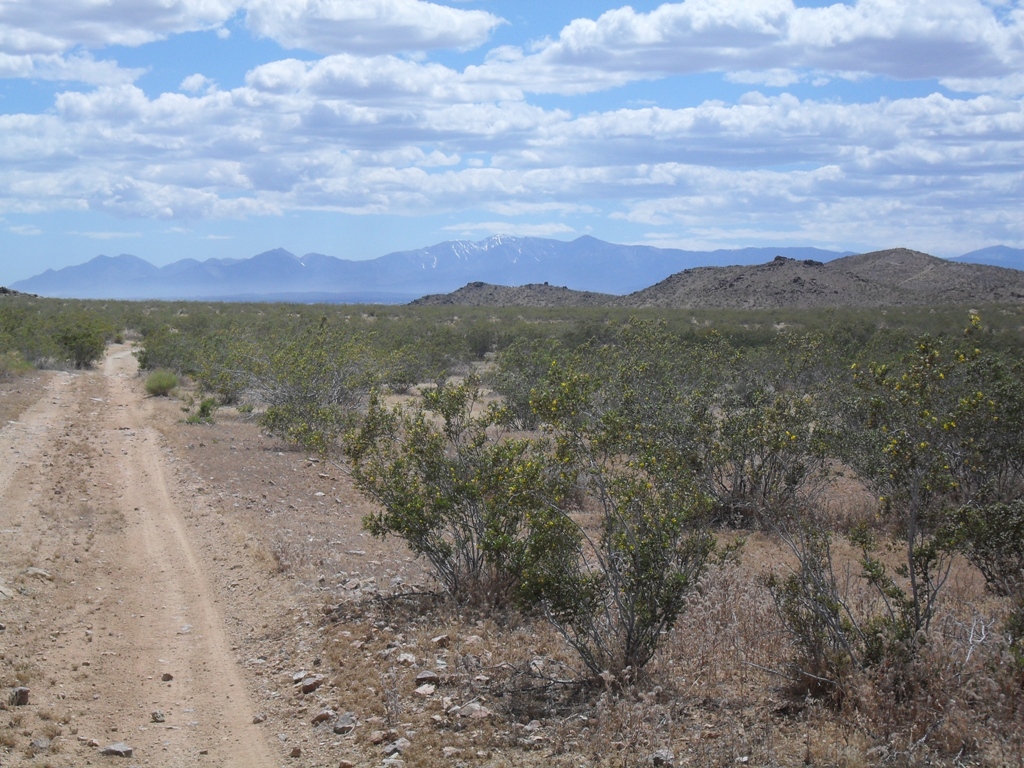
I had forgotten that this valley, like the mesa where I had been living for the past two decades, is surrounded by mountains, so mountains still form the backdrop of my life, making me feel a bit more at home than I expected from such an alien place. And it is alien — high desert rather than high plains, and city rather than country. I’d expected to have to walk along suburban streets, getting lost in the labyrinth of subdivisions, but on one of my first treks, an arroyo beckoned — sort of an alley way between houses — and I took that untraveled path. (Well, not exactly a path, more like a place for flash flood waters to run off. Good thing the day was clear and dry.) And then there I was — in the middle of the desert. Yup. Just me and mountains and knolls and sandy roads. And a few very tiny flowers struggling to live in the bleak sand and heat. (Seems like a good metaphor for my life right now.) Surprised the heck out of me.
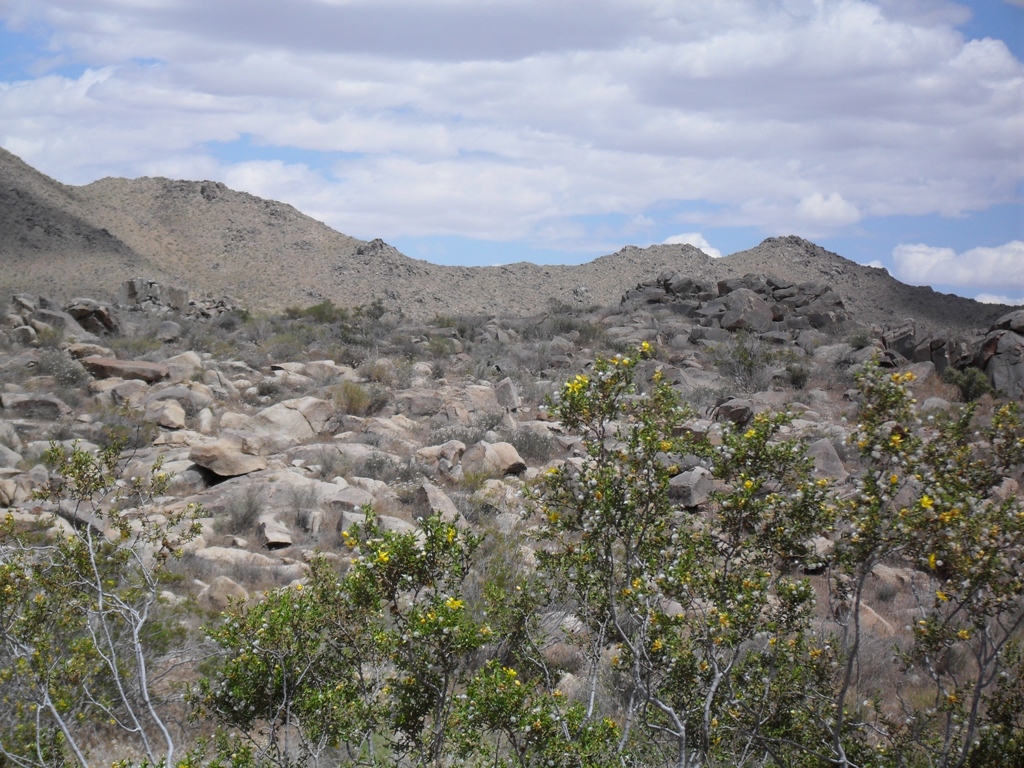
Life has held many surprises for me lately, most of which were not good, and since I don’t know what I’m doing or where I’m headed, I’m sure life will continue to surprise me.
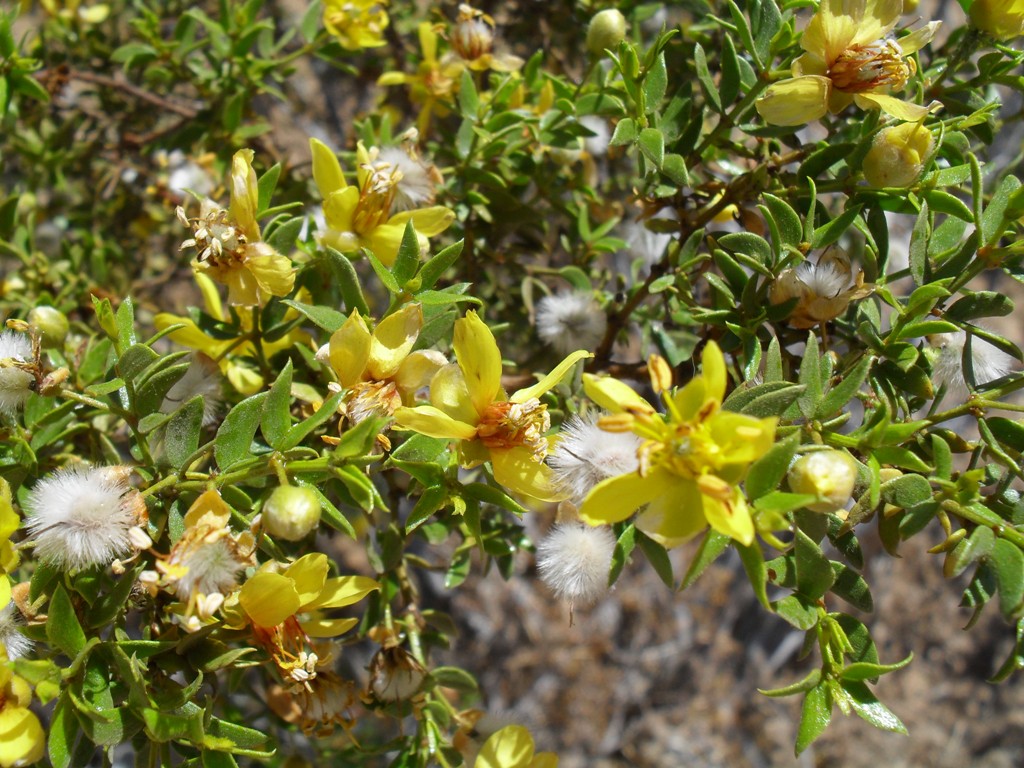
(These yellow flowers are those on the bushes in the other photos.)

Tempest Tossed

I’m going to be without the internet for a couple of weeks, so don’t worry if I don’t post for a while.

I’d always planned to follow the conventional wisdom and not move for at least a year after my life mate died, but here I am, two months into my grief, and I am moving — not by choice, but circumstance. Right now I’m rattling around in an empty house, filling it with tears. Though I’m mostly moved and packed and the house cleaned, I am not ready to go — it is way too soon. But even if I could stay, it wouldn’t change anything. My mate would still be dead. And I’d still be homeless — he was my home, not this house.

Despite my declaration (after having to throw away so much stuff these past weeks) that I would never buy anything again (except electronics) I did buy a new camera (a cheap little thing, but it works, and besides, a digital camera is electronic, right?). I took pictures of this place today: our cars parked next to each other, the bushes we planted that enclose the house and give it privacy, the hybrid bush/tree I borrowed for my soon to be published novel Light Bringer (which will always be tinged with sadness for me since he never got to read it). I don’t know if I will ever be able to look at the photos without weeping, but at least I have them if I want to take a peek.

From what I’ve heard about the loss of a mate, as hard as the first months are, the second year of grieving sometimes is even worse. I cannot imagine that. But then, I never could have imagined the pain I am feeling now. I don’t know why, but occasionally the loss hits me anew, as if it just happened. Which is what I am feeling today. And, apparently, that too is normal. It still happens to some people even a decade later.

Our life together — his and mine — is receding, even in memory, as if it’s a fantasy, a dream, a mirage. When he was alive, the past always seemed present. Now it seems so very past (passed?). That’s one more loss to add to so many.

I feel tempest-tossed. As if I am unmoored. Swept away on an emotional storm. Besides all the other emotions that beset me, I find I panic easily. I took up the mat on the floor of the driver’s side of my car where my feet rest (I was cleaning the car, getting it ready for the trip), and I discovered . . . rusted-out holes. Yikes. I’m about to go on a long trip with holes in my car? Panic! There is no such thing as ER for car bodies as I discovered after a spate of phone calls, so when I calmed down, I patched the floorboard using aluminum foil, metal tape (way cool stuff!), oven liners, and cardboard. Should last as long as my car.

I’m sure I will be okay, eventually. Just not yet.

I Am a Two-Month Grief Survivor

I have now survived two months without my life mate — not easily and not well, but I have managed to get through all those days, hours, minutes. The absolute worst day, though, was last Thursday. You would think it would have been the day he died, but that was a sadly inevitable day, one I actually had looked forward to. He’d been sick for so long and in such pain, that I was glad he finally let go and drifted away. After he died, I kissed him goodbye then went to get the nurse, who confirmed that he was gone. She called the funeral home, and I sat there in the room with him for two hours until they finally came for him. (They came in an SUV, not a hearse. And they used a red plush coverlet, not a body bag.) I might have cried. I might have been numb. I don’t really remember. All I know is that I sat there with him until almost dawn. I couldn’t even see his face — they had cleaned him and wrapped him in a blanket — so I just sat there, thinking nothing.

But last Thursday I spent all day cleaning out his closet and drawers, and going through boxes of his “effects.” He had planned to do it himself, but right before he could get started, he was stricken with debilitating pain that lasted to the end of his life, and so he left it for me to do. I did know what to do with most things because he had rallied enough to tell me, but still, there were a few items that blindsided me, such as photos and business cards from his first store (where we met). Every single item he owned was emotionally laden, both with his feelings and mine, and I cried the entire time, huge tears dripping unchecked, soaking my collar.

How do you dismantle someone’s life? How do you dismantle a shared life? With care and tears, apparently.

A couple of days later I started cleaning out my office (I have to leave the place we lived for the past two decades, as if losing him isn’t trauma enough). I didn’t expect any great emotional upheaval — it was my stuff after all — but still it turned out to be an emotional day, though nowhere near as catastrophic as Thursday. This is the first move as an adult I will make alone. It will be the first move I ever made with no real hopes, no lightheartedness. I’m going to a place to write and to heal, not to settle down for good. And my mate will not be there.

Part of me is glad to be getting away from this house, this area — our life here started our with such hope and ended in such despair. Part of me feels as if I’m running away from the pain of losing him, but I have a hunch the pain will always be with me. At least I will never again have the agony of clearing out his things. Oh, wait! I’ve sent several boxes of his stuff to be stored, the things I cannot yet get rid of. Eventually I will have to dispose of the things I can’t use, but perhaps I can wait until it won’t be such a traumatic event. I never want to live through another day like last Thursday. I’m surprised I lived through it this time.

Personal Totem Pole

Totem poles told stories, recounted historic events, celebrated cultural beliefs, symbolized a person’s life. Some were simply artistic presentations. The most important symbol went on top, the least important on the bottom. (Of course you knew this because of the saying “low man on the totem pole.”)

An animal was often used to represent a person. For example, a raven stands for introspection, courage, and self-knowledge. I just picked “raven” randomly, but oddly enough, that seems to be a good totem for me (at least I hope it is — I still have my doubts about the courage). And, coincidentally, my last name means “bright raven.” Since a raven is a bird, it could also mean that I am ready to try my wings. Or I will be someday.

My totem would also include a rose hip. A rose hip grows after the rose has died, and it becomes the source of a new life. (Okay, that may be a bit fanciful, but that’s the point of this particular exercise.)

A pen would be a part of my totem. So would an aquamarine — it protects health, and since I am at high risk because of grief, I need all the protection I can get. I could include a seesaw because I always seem to second-guess myself, but I will leave it off since I would want my totem to represent hope for the future.

If you were to create a personal totem pole, what would you include to represent your life, your dreams, your beliefs? What would your totem animal be? (You can find your totem animal here: Native American Totems and Their Meanings.)

Coming of Age in Middle Age

Coming of age novels chronicle a young person’s transition from childhood to adulthood, and often (in movies anyway) the term refers to the first sexual experience. In a broader sense, however, coming of age refers to a young character’s growth during the course of a story, either by losing innocence, assuming responsibility, or by learning a lesson.

It is not only in youth that one has to deal with such growth. Every transition in life leads to a new coming of age, and the death of a mate is probably the greatest of these events. Death is undoable. Irrevocable. By middle age or late middle age, we have all lost people who are dear to us, but losing a mate is different because not only is the person gone, so is the life you shared and the plans you made. Adding to the difficulty, everything you do, everything you eat, everything you see is a reminder that he is gone. Forever. That is a bit of innocence that can never be recouped. A bit of hurt that can never be repaired. A true coming of age that makes one’s adolescent transition seem trivial by comparison.

I have not written fiction for a very long time. Perhaps the story I was meant to write had not yet been lived, so I had nothing to say. But now I do have something to say. I am steeped in grief still, but when I can step away from myself for a moment and am not involved in the pain, it strikes me as such an all-encompassing experience that I would like to explore it in a novel. It is a story that needs to be written — it is so little understood, this coming of age in middle age.

I Am a One-Month Grief Survivor

I have survived my first month of grieving. I’m surprised it was so hard, and I’m surprised I survived it (at times my lungs stopped working and my heart felt as if it would burst with all the pain) but in the world of grief, a month isn’t much. Still, I’ve come a long way. I can look to the future, though I know the best way to deal with that future is to deal with each day as it comes — thinking of living the rest of my life without my mate makes me sick to my stomach.

And I have moments when I can stand outside my grief and see the process for what it is. Grief is an enormous undertaking (I hesitated using the word “undertaking” since it’s so close to “undertaker,” but it’s a good analogy because grief is, to a certain extent, facing the death of a part of you). Grief involves physical, emotional, psychological, spiritual, and in my case, geographical changes. Grief rocks you to the very depths of you being — a soul quake. Grief changes your sense of self, your sense of your place in the world. Grief affects your self-esteem. There is only one other experience of such immensity — falling in love.

I have come to realize hate is not the opposite of love, grief is. Grief encompasses all the wild emotions, the life-changing experiences, the immensity of love, but in reverse. Falling in love with the man I was to spend decades with and grieving for him are the bookends of our life —  not my life, my life will continue, though changed —  but our life, the life we shared.

I wonder sometimes if I’m going to change out of all recognition. I’ve gone through so many life-changing experiences in the past year that I no longer know who I am. And if one doesn’t know who they are, how can they write? Because isn’t writing is essentially an expression of who we are? If, as L.V. Gaudet rebuts, writing is more of a discovery of our inner selves, then when I get back to writing, the writing itself will change me.

Will he recognize me if we ever meet again? Will he be proud of what I become? I guess that is part of the future, not of this day. And right now, this day is all I can handle.

The Problem With Grief

The problem with grief is its immensity. If it were only a matter of being sad that the loved one is gone, as I thought grief was, it would still be hard but doable. Instead, grief affects every part of your life. It’s not just a matter of the person being dead, but also all hopes, dreams, plans, expectations that you had with him. If there was a misunderstanding of any kind, it can never be put right. If a person filled many roles in your life, as my lifemate did for me, then all those needs go unmet. And grief is not just about sorrow. It’s about anger, fear, depression, loneliness, despair, and many emotions I have not yet identified.

Grief is also physical. Losing a mate ranks at the very top of stressful situations, and that stress itself causes physiological changes. Sometimes I can barely breathe. I don’t sleep well, though that is nothing new. Food nauseates me. I have trouble concentrating, and I am always exhausted — grieving takes an unimaginable amount of energy.

Grief also affects one’s self-esteem and identity. He was my focus for so many years. Without that focus to give my life meaning who am I? How do I find meaning, or at least a reason to continue living? The irony of this particular aspect of my grief is that I never wanted to be so involved with anyone. I always thought I was independent. And perhaps I once was and will be again, but I apparently I haven’t been for many years.

Because of all these different aspects of grief, grief is ever changing, so one can never get a handle on it, at least not for a long while. And grief grows the further one gets from the loved one’s death, because you see more of the person’s life. In my case, the man he was at thirty, at thirty-five, at forty, are all gone now too. Which is another aspect of grief I had never considered: The sheer goneness of the person.

During my mate’s last years, I’d started doing things on my own, such as finding a new life and friends online, and I thought I was doing well in my aloneness. But there is a vast difference between being alone with someone and being alone with aloneness. As William Cowper said: How sweet, how passing sweet, is solitude! But grant me still a friend in my retreat, Whom I may whisper, Solitude is sweet.

That is one more thing for me to mourn — the friend in my retreat. He is gone. And solitude is no longer sweet. Do I have the courage to grow old alone? The courage to be old alone when the time comes? I don’t know.

Grief changes a person in ways I cannot yet fathom, but one’s nature does not change, and I always tended toward solitude. Perhaps someday I will welcome the solitariness, or at least come to terms with it. As Jessamyn West said, “Writing is a solitary occupation. Family, friends, and society are the natural enemies of the writer. He must be alone, uninterrupted, and slightly savage if he is to sustain and complete an undertaking.”

Until then, I will continue to find a reason to get up each day. And always, I will miss him.

Grief Update

It’s been three weeks since my lifemate died. I feel as if I am in an emotional whirlpool, spinning round and round, never quite knowing where I am or where I am going. I have days of relative calm where I can be glad he is finally at peace, then something happens to remind me of  my loss, and grief pulls me under. Most recently, I was cleaning photos out of my computer when I came across an image of him I didn’t know I had. (We did not take pictures of each other, so the only other photo I have was taken 15 years ago, and it does not look like him at all.) Last August, we took a trip to the north rim of the Black Canyon. (It’s only 20 miles away, but because of the bad road, it might as well have been 200.) The photo I found is of him, alone in that desolate place, with his back to me, looking at . . . eternity, perhaps.

I never expected to grieve so much. He was sick for so long and in such pain that we didn’t have much of a life together the past year or two. I struggled to live while he was dying and thought I succeeded, but nothing prepared me for this total devastation. It turns out that all of it, the good and bad, was part of our life together. In the movie Three to Tango is a film clip of a movie I have never seen — I think it’s Of Human Bondage.  The woman in the clip asks: “Will we be happy?” He answers, “No, but does it matter?” And, for us, it didn’t matter, at least where each other was concerned. We were connected, no matter what. And now that connection is broken. And I feel that I am broken, too.

I know someday I will find my way again. I know someday I will be able to laugh, to find joy in living again. I know that someday I might even find a new love. But for now, I don’t know how to be.

Hospice hosts a grief support group, and I’m thinking of going. If he were alive, I would never consider it — we were always each other’s support group. But if he were alive, I would not be grieving.

I hesitated about posting this — I do not want people to feel I am soliciting sympathy — but this is a writer’s blog, and what is writing if not life?

A New Form of Kidnapping?

I recieved a much forwarded email entitled “A New Form of Kidnapping”. Supposedly, a woman finished shopping, went out to her car and discovered that she had a flat. She got the jack out of the trunk and began to change the flat. A nice-looking man dressed in a business suit and carrying a briefcase walked up to her and said, ‘I notice you’re changing a flat tire. Would you like me to take care of it for you?’

The woman was grateful for his offer and accepted his help. They chatted amiably while the man changed the flat, then put the flat tire and the jack in the trunk, shut it and dusted off his hands. The woman thanked him, and as she was about to get in her car, the man told her that he left his car around on the other side of the mall, and asked if she would mind giving him a lift to his car.

She was a little surprised and she asked him why his car was on other side.

He explained that he had seen an old friend in the mall that he hadn’t seen for some time and they had a bite to eat, visited for a while, and he got turned around in the mall and left through the wrong exit, and now he was running late. The woman hated to tell him ‘no’ because he had just rescued her from having to change her flat tire all by herself, but she felt uneasy.

Then she remembered seeing the man put his briefcase in her trunk before shutting it and before he asked her for a ride to his car.

She told him that she’d be happy to drive him around to his car, but she just remembered one last thing she needed to buy. She said she would only be a few minutes; he could sit down in her car and wait for her; she would be as quick as she could be. She hurried into the mall and told a security guard what had happened. The guard came out to her car with her, but the man had left. They opened the trunk, removed the locked briefcase and took it down to the police station.

The police opened it (ostensibly to look for ID so they could return it to the man). What they found was rope, duct tape, and knives. When the police checked her ‘flat’ tire, there was nothing wrong with it; the air had simply been let out.  It was obvious to them what the man’s intention was, and obvious that he had carefully thought it out in advance. 

This might be the true story it purports to be, but I doubt it. It has all the earmarks of an urban legend. Besides, whoever came up with the story was not a writer — writers cannot get away with such slipshod plotting. She remembered seeing him put a briefcase in the trunk? Why the memory of it? Was it so commonplace for strangers to put briefcases in her trunk that it never struck her as strange until later? And why did he put the briefcase in her trunk? If he was bent on kidnapping her, you’d think he’d need the knives and other paraphernalia to keep her subdued while he did whatever he was going to do to her. And how did the police check her tire? Visually? Many punctures are hidden within the tread. Besides, a perfectly good tire can go flat if a bit of stone gets between the rim and the tire — that has happened to me. And why was it obvious what the man’s plan was? I often carry a brief case full of rope, duct tape, and knives. Well, perhaps not. Still, it’s apparent that the story was not “carefully thought out in advance”. (Excuse me for being picky but isn’t “in advance” redundant?)

Baby Steps

I’ve heard that the death of a mate and the ensuing grief change a person, and perhaps this is true. If one is part of a couple, when he dies, so does the “we.” One cannot be the same after such a splitting apart. The world one lives in cannot be the same.

I feel like a toddler, taking shaky steps in this newly alien and dangerous world. I exercised this morning, took my vitamins with a protein drink, wrote a letter to my deceased mate (the only writing besides blogging I am doing at the moment), and I took a walk. I even managed to eat. The one thing I had never expected was how the thought of his being gone makes me sick to my stomach. When I do eat, I eat healthy, though. I got rid of all snacks a while back, so all that’s in the house is real food.

All these baby steps that I’m taking serve to take me further away from him, deeper into  . . . I don’t know what. I  just wish I could skip the coming months of pain and go directly to the part where I emerge strong, wise, confident, and capable of handling anything. But, ironically, those painful months will be the catalyst.

I never planned to talk about my grief. I thought I would just continue online as if nothing cataclysmic happened offline, but blogging seems to be in my blood. Once I started writing about my grief, I worried that I would become maudlin, but Donna Russell, a true friend on facebook, said:

You’re not being maudlin, Pat; you’re grieving. There is no right or wrong way to do it, no proper time period for it to last, no right or wrong way to feel. I just finished reading The Healing Art of Pet Parenthood by Nadine Rosin. In her book, Nadine makes this observation: “We are so careful in this culture to ignore death and anything associated with it as much as possible; it is so uncomfortable for us to have it in the open. Grief is such an isolating experience in and of itself, it’s a shame that our mores about it are so quick to support and intensify that isolation.” Perhaps if we were all more open and honest about it, as you are being, it wouldn’t be quite so uncomfortable.




