Death and the Death Penalty

I’m reading a book about an innocent guy who was executed by the state after spending nine years on death row. The story was supposed to show the horrors of death row as well as the immorality of the death penalty, but it made me think beyond moral issues to the whole death thing.

When Jeff died, people told me that he was in a better place, that God needed him more than I did, that he at been taken home.

So, according to all these comments, death is a good thing, right? Then how can death be a punishment? Of course, people justify the dichotomy by talk of heaven vs. hell, but when someone dies, no one brings up the possibility that the deceased might not be in a better place.

Although, to my way of thinking, if God created an evil person (ie: if the person was born evil rather than being created through torment and abuse) then it’s not exactly fair for that person to be consigned to hell. (I’m only being a trifle facetious here because it is a real conundrum.)

Sometimes death is a good thing, especially when the person has suffered longer than is humane, for no other reason than death puts them out of their misery. My take on that has always been that the poor benighted folks shouldn’t have suffered in the first place. And there are other ways of relieving suffering besides death if we but knew them, such as . . .  oh, I don’t know . . . finding a cure, perhaps.

Also, if there is life after death, then killing a killer doesn’t actually remove that person. It just puts them in a different place. (That better place so many people assured me exists?) It seems to me if people are really bent on vengeance, it would be better to keep the evildoer alive as long as possible.

I truly don’t know what the answer is, and it’s not one I have to decide. Other people decide such things as retribution and punishment.

Luckily, I am in the last phase of the book where all those who conspired to put the innocent guy on death row get their comeuppance. And then I’ll be done and will be able to stop thinking about all this.

***

Pat Bertram is the author of Grief: The Inside Story – A Guide to Surviving the Loss of a Loved One. “Grief: The Inside Story is perfect and that is not hyperbole! It is exactly what folk who are grieving need to read.” –Leesa Healy, RN, GDAS GDAT, Emotional/Mental Health Therapist & Educator

Good Girls

I’m reading a book about a dying rapist/killer who is remorseful for what he did and wants to atone before the end. Is this plausible? Or are such folk unable to see that they did anything wrong? Could they change so much at the end? I suppose anything is possible, but mostly I’m looking at this from my life and so the truth of the character doesn’t really matter.

I am very glad I didn’t do anything terrible in my life, at least, not that I know. We all do things that affect others, and somewhere down the line, our innocent actions might have dire consequences, but since we don’t know what those consequences might be, we have no reason to feel remorse.

I was always the “good girl,” though I didn’t want to wear a halo. I just didn’t want to be punished. I remember as a teenager and how some of the kids got into trouble with drinks or drugs or sex, but I never did. Even then, I understood the long-term effects of alcoholism, drug addiction, and teenage pregnancy, and could see no viable reason for flirting with disaster.

When you’re young, being considered a goody-two-shoes or whatever the current phrase might be, is a terrible fate, and although I railed against such names, I never gave in. My logical mind always stood in the way of peer pressure. Of course, as time went on, people just crossed me off without hassling me, but the name stuck.

Now that I am far beyond those younger years, I can be glad for that lack of “bad girl” behavior. I have a hard enough time with remorse for my small unkindnesses, petty transgressions, and lapses in generosity of spirit. I can’t imagine trying to deal with the crushing remorse of actually having done something that got someone killed or maimed or sent to prison.

I don’t even have to worry about my lungs, or at least not much. Like me, my mother never smoked, yet she died of lung cancer, and her death certificate erroneously called her a life-long smoker. So, I might not have smoke-damaged lungs, but that doesn’t mean I don’t have damaged lungs from other causes, like breathing, perhaps.

I do find it interesting that people who started smoking after the sixties can still blame their habit on ignorance. The information was available when I was a kid, which is why I stayed away from such things. Well, that, and a distaste for the activity as well as an allergy to smoke.

I don’t mean to sound smug and judgmental, especially since some of you might have succumbed to some habit or other. I’m just glad I never got talked into being a getaway driver, or heard voices telling me to kill someone, or became so angry, I fatally lashed out. It makes these last years so much more peaceful than they could have been if I had been other than that scorned “good girl.”

***

“I am Bob, the Right Hand of God. As part of the galactic renewal program, God has accepted an offer from a development company on the planet Xerxes to turn Earth into a theme park. Not even God can stop progress, but to tell the truth, He’s glad of the change. He’s never been satisfied with Earth. For one thing, there are too many humans on it. He’s decided to eliminate anyone who isn’t nice, and because He’s God, He knows who you are; you can’t talk your way out of it as you humans normally do.”

Click here to buy Bob, The Right Hand of God

More of Life’s Confusion

Yesterday I mentioned how much of life, dying, death, grief still confuse me, though now I am usually able to store such things in the back of my mind rather than dwell on them. Writing about that confusion made me remember how often I’ve been confused in life.

When I was very young, almost everything confused me. People always seemed to know things I didn’t, and I didn’t know how they learned such things. For example, everyone knew the names of the streets, and even though I knew the streets around where I lived, once we got out of the neighborhood, I hadn’t a clue what the streets were, and yet everyone else did. It wasn’t until after I got glasses in fourth grade that the confusion cleared. So that’s how everyone knew what the streets were! There were signs, and they could read them.

I came from parents who never used slang and who wouldn’t let any of us use it in their presence, who wouldn’t buy a television or let us listen to the radio unsupervised, so when I went to school, I didn’t understand what most of the insults meant. I remember asking a friend once what “fart” meant, and she turned bright red, and could barely stammer out the meaning.

There were many other episodes, such as the day a group of girls on the school bus were giggling about double-barreled slingshots, and when I asked what those were, they just laughed harder and made fun of me for being such a baby.

Many years later, I saw a Beverly Hillbillies show where the once-poor country girl who knew nothing of women’s underwear, called a bra a double-barreled slingshot. And suddenly it all made sense. I hadn’t been “such a baby.” I simply didn’t have the same cultural references than they did. I read. They watched television.

Although I liked my school classes, mostly because it was cut and dried (1+1=2) so there was no confusion, I still got confused at times. Years later, when I researched those confusing subjects, I learned that the reason I was confused was that the lesson — whatever it had been — was not the truth, or not the whole truth.

And then even later, listening to politicians, I’d get confused until it finally dawned on me that this particular brand of confusion acted as my own particular lie detector. It still works, though now I recognize it for what it is. (Oddly, during this past election, the only person who did not set off a spate of confusion was the one person most people were convinced was a liar.)

Such a lot of confusion! No wonder I spent my life reading and researching. All that not knowing set up a craving in me to know. I do know some things, but mostly what I learned is that just because everyone else knows something, it doesn’t make it true. And I learned to live with not knowing. Although some things we can know, such as the names of the streets and what a double-barreled slingshot is, there are other things we cannot know.

Perhaps this acceptance of not knowing is part of maturity. Maybe it’s just an excuse for being mentally lazy or some other not-quite admirable trait, but I am comfortable (usually) with confusion.

If nothing else, it keeps me from being arrogant. At least, I think it does.

***

“I am Bob, the Right Hand of God. As part of the galactic renewal program, God has accepted an offer from a development company on the planet Xerxes to turn Earth into a theme park. Not even God can stop progress, but to tell the truth, He’s glad of the change. He’s never been satisfied with Earth. For one thing, there are too many humans on it. He’s decided to eliminate anyone who isn’t nice, and because He’s God, He knows who you are; you can’t talk your way out of it as you humans normally do.”

Click here to buy Bob, The Right Hand of God

Wishes for You

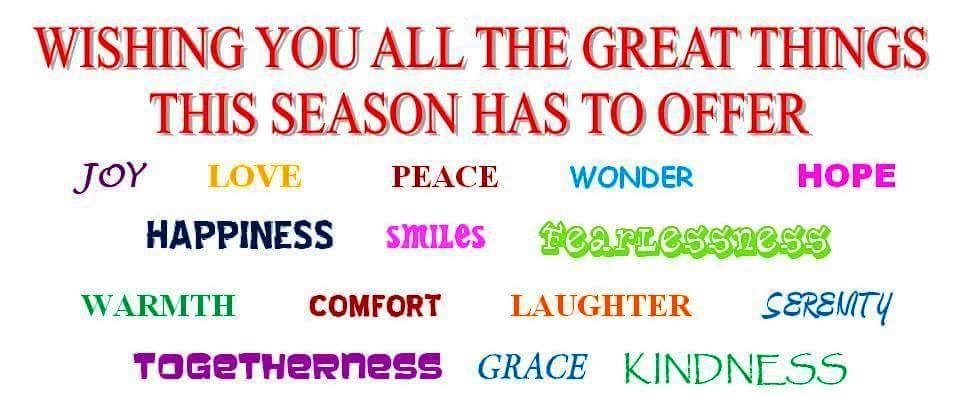
Merry Christmas, Happy Holidays, Season’s Greetings, Peace and Joy, Warmest Wishes, Happy Solstice, Good Yule, Noel, Good Cheer, Good Tidings, Merry Xmas, Happy Holy Holidays, Warm Greetings, Holly Jolly Holidays, Let it Snow, Ho Ho Ho, Feliz Navidad, Joyeux Noel, Mele Kalikimaka, Buon Natale, Buone Feste Natalizie, Feliz Natal, Nollaig Shona, Fröhliche Weihnachten, God Jul, Wesołych Świąt, as well as any other greeting you use to acknowledge this special day.

***

Feeling the Feelings

Sometimes when I speak or write, a truth comes out that I didn’t know I knew, but I’ve come to trust those words as if they were . . . well, true.

A few days ago, I was talking to a friend about emotions that are considered negative, such as sorrow and anger and loneliness. She said she didn’t have anyone but me to talk about such things with because other people want her to feel more positive.

I heard myself saying, “There are no positive or negative feelings. There are simply feelings.” And I realized that’s true. What we do with those feelings — such as take out our anger on our families — could be construed as negative, but the feelings themselves have no positive or negative connotations. Like in physics. Protons have what is called positive charge while electrons have what is called a negative charge, but there is no good/bad connotation for those names. As far as I can understand, they are more about push/pull than what we think of as positive and negative. Batteries have a positive and negative side, but again, but sides work together as a whole rather than one side being good and the bad, or one being right and the other wrong.

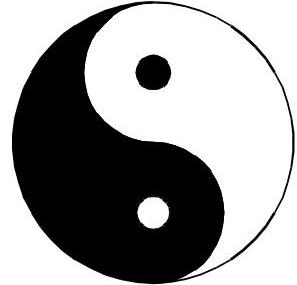
It’s the yin/yang of life — the cosmic duality, the two opposing and complementing principles that guide the universe and all things in it.

And so it is with feelings. We feel happiness and sadness, anger and fear, pride and shame — sometimes both sides of the feeling at the same time. Other humans are always trying to categorize us in some way, not just by our vocation or avocation (writer, scientist, teacher, parent) but also what sort of personality we have (optimistic, pessimistic, melancholic) as well as our political and religious beliefs, but we are not any one thing.

The truth is, we are not one-dimensional creatures; we are each a universe unto ourselves and have an infinite number of sides. We aren’t limited to the so-called “positive” feelings; we have a wide-range of feelings that we can — and should — feel.

It’s not important what we feel at any given moment. It’s only important that we feel. (Even if we’re not actively feeling anything, we’re feeling something — serenity, perhaps.)

Even the less compelling emotions, the less admirable ones such as envy or loathing are important to feel if we’re feeling them, if for no other reason than to figure out why we feel such things. Do we want to be more like those people we envy or loathe? Do we see ourselves in them? It’s only after identifying the reason for the feeling that we can take action to neutralize the effect of the feeling. But the feeling itself is merely a feeling. It is not a judgement call.

On a more personal level, grief for a life mate/soul mate might be uncomfortable for others to witness, but that grief belongs to us. We need to feel it; it’s how we become what we need to become to continue living in this world without our mates. We don’t need to figure out why we are feeling the chaotic mix of emotions that comprise grief. We know what caused it — the death of a person dear to us. We just need to feel what it is we are feeling.

Feeling a whole range of emotions teaches us to be compassionate and understanding of others. It allows us to accept compassion and understanding from others. It helps us understand (and perhaps even create) ourselves. It help us take action when necessary. It helps us survive in the wilderness of human interactions.

So, whatever I am feeling, I let myself feel it. Whatever you are feeling, just feel it. Don’t let anyone try to squelch your feelings.

Feeling the feelings is better for all of us in the long run.

***

Pat Bertram is the author of Grief: The Inside Story – A Guide to Surviving the Loss of a Loved One. “Grief: The Inside Story is perfect and that is not hyperbole! It is exactly what folk who are grieving need to read.” –Leesa Healy, RN, GDAS GDAT, Emotional/Mental Health Therapist & Educator

Happy End of the Creeping Darkness!

The creeping darkness ended this morning at 3:02 am MT. “Creeping darkness” is a phrase I created, which is probably why you haven’t heard of it before (unless, of course, you are a reader of this blog).  I have a hard time with this time of year and the way the darkness comes earlier and earlier, stealing light from my days, and so “end of the creeping darkness” seems a perfect name for this particular event. The correct term, of course, is “winter solstice.”

“Solstice” comes from two Latin words, sol meaning “sun” and sistere meaning “stationary” because on this day, in the northern hemisphere, the sun seems to stand still, as if garnering it’s strength to fight back the darkness.

Technically, the winter solstice marks the moment when there is a 23.5-degree tilt in Earth’s axis and the North Pole is at its furthest point from the sun — from here on, the days will get longer, gaining us an additional 6 and 1/2 hours of sunlight per day by June 21st when the days begin to get shorter again. (This is reversed in the southern hemisphere, so today those down under will be celebrating their summer solstice.)

Though neo-pagans have claimed the solstice for their own, this is one of those natural holidays (holy days) that we all should be celebrating. The end of the lengthening nights. The triumph of light over darkness. We don’t even need the metaphors of light=good and dark=bad to find reason to celebrate this day. It’s simply a day of stillness, of hope. A day to give thanks for the promise that even in our darkest hour, light will return.

My celebration was simple. I turned on my bowls of light and went outside to toast the winter sun with a splash of Bailey’s Irish Cream in my coffee. The sun shone brilliantly in the pale blue sky, and spoke of hope and good will to all of us.

Wishing you a bright and hopeful end of the creeping darkness.

***

Pat Bertram is the author of the suspense novels Light BringerMore Deaths Than OneA Spark of Heavenly Fireand Daughter Am IBertram is also the author of Grief: The Great Yearning, “an exquisite book, wrenching to read, and at the same time full of profound truths.” Connect with Pat on Google+. Like Pat on Facebook.

Too Many Days

The past couple of years, I couldn’t find a calendar, not even one for sale in the stores I frequented, so I downloaded a calendar template and printed out my own calendar. It was a nice simple calendar with large enough blocks for writing notes. Since it was just plain paper, not glossy, I was able to use a pencil, which I prefer because of its erasability. (My spell check does not like that work and keeps changing it to eras ability, whatever that means.)

I went ahead and printed out a calendar this year, and then I got a couple of calendars in the mail. And then another. And yet another. I’ve lost track of how many calendars I have, but I feel the weight of all those days.

With a single calendar, each year has but 365 days. With a surfeit of calendars, it feels as all those days (365 per calendar) are stacked one on top the other. That’s way too many days for me to deal with!

I’m being a bit facetious here. I know that no matter how many calendars I have for 2021, there will still be only 365 days for the year, but I feel all those calendars reaching out to me, wanting to be filled.

But truly, one day per day is more than enough! Though that thought does lead to a story idea — some poor benighted character burdened with more than one day every day.

Luckily, I am not a character (except in my novel Madame ZeeZee’s Nightmare — I was a character in that book), and once I get rid of all those extra calendars, I’ll do fine living but one day each twenty-four-hour period.

***

Pat Bertram is the author of Grief: The Inside Story – A Guide to Surviving the Loss of a Loved One. “Grief: The Inside Story is perfect and that is not hyperbole! It is exactly what folk who are grieving need to read.” –Leesa Healy, RN, GDAS GDAT, Emotional/Mental Health Therapist & Educator

Fifty Shades of Greed

I recently read Fifty Shades of Black & WhiteThe Anatomy of the Lawsuit behind a Publishing Phenomenon, written by Mike Farris and Jennifer Pedroza, and published by Stairway Press. As I’m sure you can guess from the title, the publishing phenomenon in question is the Fifty Shades trilogy. As I mentioned in a previous post, Fifty Shades of Grey and its sequels were originally published by a small independent publishing company that seemed to specialize in fan fiction, and when The Shades went big, this small publishing company sold the rights to a major publisher. They ended up getting around $35,000,000 just for the rights. The major publisher, of course, earned way more than that, as did the author.

It truly mystifies me why 125,000,000 people bought the book. All I can think is that the world is vastly different — baser and less literate — than I ever imagined it to be. But that’s not what I want to talk about.

This book, Fifty Shades of Black & White, has all the elements of a blockbuster novel because of all those millions of dollars as well as the greed of one of the publishing partners who managed to snag all that cash for herself. The major conflict, too, is a catchy one — the naïve and trusting vs the scheming and manipulative. But what really sticks in my mind and tickles me is the irony.

(What follows in no way gives away the story if you don’t already know it from the news. It’s all in the first chapters.)

Apparently, one of the clauses the greedy partner stuck in the contract she had her trusting friends sign was a non-compete clause. Any time the defrauded woman tried to do anything in the publishing world, she got a cease-and-desist letter from the greedy woman’s greedy lawyer. So she and a fellow refugee from the original business decided to do something different — make soap. They did well, but when some authors they knew wanted to buy soap and put the images of their covers on the soap wrapper for giveaways, the greedy woman got even greedier and threatened to sue if they didn’t stop.

Realizing the greedy woman would never leave them alone, the two refugees finally got a lawyer, not to sue but to try to keep from being sued. Things escalated from there, and the only redress they had was to be proactive and start a suit themselves.

And it’s this irony — more than the millions and the catchy conflict — that makes the story so compelling. If the greedy woman had been satisfied with what she had already absconded with, if she had left the others alone, she would never have been sued.

It just goes to show that one shouldn’t get so greedy that one’s greed gets in the way of one’s own best interests. Or maybe it shows karma at work. Or maybe it shows the necessity of leaving well enough alone. Or something.

It makes me wonder if the greedy woman and her husband are still married. To hide the millions she grabbed, she turned them over to her husband to put into his name and his businesses. Depending on the law of where they lived, if he divorced her, he’d end up with it all. Instant retribution!

Still, I’m satisfied with and amused by ironic twist to the story.

***

If you haven’t already, please check out my new book.

“I am Bob, the Right Hand of God. As part of the galactic renewal program, God has accepted an offer from a development company on the planet Xerxes to turn Earth into a theme park. Not even God can stop progress, but to tell the truth, He’s glad of the change. He’s never been satisfied with Earth. For one thing, there are too many humans on it. He’s decided to eliminate anyone who isn’t nice, and because He’s God, He knows who you are; you can’t talk your way out of it as you humans normally do.”

Click here to buy Bob, The Right Hand of God

Breaking Bread

I’m feeling proud of myself lately, and for a rather trivial reason. I try to eat right, or at least not to eat too many things I know are bad for me (not necessarily bad for you, but definitely for me), but it’s always hard for me to say no to gifts of food, to invitations to meals, to social occasions that involve food (and they almost always do).

Some people can sit with a group and not eat anything if they are on a voluntarily restrictive diet, but I’ve never been able to do that. It always seemed . . . I don’t know . . . unsociable or even self-righteous, as if I were subconsciously condemning them for eating less than healthy foods. At the very least, it makes people uncomfortable to eat if they are the only one eating, and I am always cognizant of trying to make people around me feel comfortable. Beyond that, though, so much of being with friends is “breaking bread together,” a simple phrase that used to literally mean sharing a loaf of bread, but is now mostly used as the name of religious rite. Even when the phrase is used in a secular manner, to mean sharing a meaningful connection over a meal, it’s still a spiritual rite. I’ve always intuitively understood the need of sharing a meal (one friend and I literally used to share a meal — every time we went out, we’d get one order of whatever and split it) and all that went along with the meal. Because of course, you don’t just share a meal, you share a space, an exchange of energy, a sense of camaraderie — a connection, in other words.

A shared meal feeds the soul, so this ritual of breaking bread has always been more important to me than the need to stick to my self-imposed food restrictions (sugar-filled desserts, baked goods, fried foods to name a few), so it was always a struggle to maintain any sort of food routine. I’m one of those who does well as long as I don’t ingest any of my verboten foods, but one reason I try to stay away from them is that they set up cravings for more of the same. My only hope of not gaining weight (I seldom lose, but I gain easily) is to remain true to my diet.

The first year I was here, I gained a lot of weight because of all the sociability. Every time I got together with people, it was over food. And there always seemed to be such occasions. And the food was always on my proscribed list. Still, I broke bread with my new friends.

Even before The Bob, I’d started backing away from social occasions. Although I enjoyed being with people, I didn’t particularly enjoy the meals, and didn’t like the way I felt after eating them. The isolation because of The Bob has helped me get into my “groove,” so now I don’t even want any of the foods I shouldn’t eat. And because of it, I can finally say “no” when it comes to eating with people.

For example, I always fix a snack for the woman I sit with a few hours a week, and she wants me to eat with her. So I scrounge, and if there is something in her refrigerator I can eat, I will. If not, I just smile at her, then turn aside to give her privacy so she doesn’t feel like a prize exhibit in a one-person eating contest.

When it comes time to socialize again — if it ever comes time — I hope I remember this and remain firm to my own self-interest. I know I will be giving up something by not being able to break bread with people, but I gain, too. The last time I decided it was okay to eat anything put in front of me (actually, I didn’t decide, I just did it), it took years to get back on my regime. Suffice to say that at the moment, I am feel good about being able to stick to doing what is right for my body.

And that is what I am proud about. See? A trivial thing, but important to me.

***

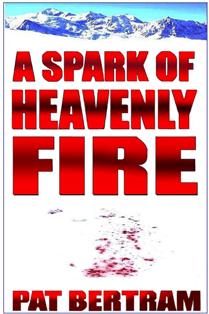
If you haven’t yet read A Spark of Heavenly Fire, my novel of a quarantine that inspired me to call this current disease The Bob, you can read the first chapter online here:  http://patbertram.com/A_Spark_of_Heavenly_Fire.html

Buy it on Amazon here: https://www.amazon.com/gp/product/B0024FB5H6/

Download the first 30% free on Smashwords: https://www.smashwords.com/books/view/1842

Waste Paper

I was ripping my name off a slew of catalogs I got in the mail when I remembered a talk some man gave my class when I was in the eighth grade. This was decades before the internet, decades even before computers were commonplace. In fact, back then, a computer occupied almost two thousand square feet and weighed fifty tons. Any cell phone today has 1,300 times more power than those computers did, but those computers fueled the imagination. And what that man talked about was simply his imaginative extrapolation of what the world would be like in the future.

He talked of personal phones we could carry with us, though I don’t think he mentioned the multiple functions those phones now have. He talked about computers running the world, about how menial jobs would be a thing of the past since computers would do all the work, and how we’d all have more free time, though the truth is, working folks today have less free time than people did back then.

What he did say, what many people have said over the years, and what stuck with me and inspired this blog, is that we would be a paperless society in the not-too-distant future. Well, that talk was in my distant past, and as far as I know, there has been no reduction in paper. Some statistics say we use more per capita, some say we use less, so I don’t know what the truth is. But considering the number of catalogs I receive and the amount of junk mail, my personal consumption of paper is way up.

I do get a couple of bills via email and pay online, but the elimination of those few pieces of paper is offset a hundred times by the avalanche of catalogs. If I request no catalogs, they sell my name to someone who will send me catalogs.

Yep, here we are, way beyond that not-too-distant future, and paper use is astronomical.

Don’t get me wrong — I love paper. Plain white paper. Colored paper. Wrapping paper. Note paper. Lined paper. Notebook paper. Origami paper. All kinds and thicknesses of paper. It’s an amazing and versatile product that brightens my day, especially when I get a greeting card or read a book or jot down possible topics for this blog. I am especially grateful that the tarot cards I’m trying to learn are just that — cards — and not some electronic device that will shuffle and deal the non-existent cards for me. (There are such programs, and I do check one out occasionally, but that’s different than my getting a feel for the cards.)

Although I’m now in the habit of writing using a keyboard, my first books were all written longhand because I have much better brain/hand coordination than I do brain/keyboard. And although I do read ebooks, I am still old-fashioned enough to like physical printed books.

As you can see, it’s not paper as a valuable commodity I would like to see less of, just a lot less waste paper.

***

“I am Bob, the Right Hand of God. As part of the galactic renewal program, God has accepted an offer from a development company on the planet Xerxes to turn Earth into a theme park. Not even God can stop progress, but to tell the truth, He’s glad of the change. He’s never been satisfied with Earth. For one thing, there are too many humans on it. He’s decided to eliminate anyone who isn’t nice, and because He’s God, He knows who you are; you can’t talk your way out of it as you humans normally do.”

Click here to buy Bob, The Right Hand of God