Gossip: Healthy or Destructive?

For more than three decades, I didn’t spend much time in the company of women. I didn’t plan it, it just sort of worked out that way. My life mate/soul mate and I did most things together, including work — trying to build our business. He was also my best friend, the person I most wanted to be with. We had wide-ranging interests, and we talked about life, books, movies, history, philosophy, ideas.

I knew some women, of course, but not well, and I never participated in any group activities. After his death, though, I got afternoon teainvolved with many people. I joined a grief support group, and we had plenty to talk about — our deceased loved ones, our many losses (we lost not just the person, but the life we shared, our hopes, plans, and a feeling of “home”), our pain, our slow rewakening to life, and ourselves.
It wasn’t until recently, when I started taking exercise classes and came in close regular contact with a group of women that I ended up in a situation I wasn’t prepared to deal with. Idle chitchat. Gossip. Talking about each other, especially about those who weren’t present.

At first, I didn’t think anything of it since the remarks weren’t malicious, but when I found myself making comments (nothing bad, just things another person had done or said to me) I began to feel uneasy. I’m no paragon, but I do like to do the right thing. Eventually I came to the conclusion that we’re women. We talk about people. It’s who we are. (Though studies have shown that men gossip just as much as women do.) I have no delusions of being exempt as a topic of gossip — I always figured that in my absence they talked about me, but it didn’t matter. It’s not my business what other people think of me. (Strange. I just realized that once I took the opposite tack, that it is my business.) In fact, after one lunch — yep, we often exercised then went to lunch afterward to replace more than the calories we burned — I had to leave before everyone else, and when I got up to go, I gave them a big smile and said, “Now you can talk about me.”

To be honest, we talk mostly about ourselves (though food is a strong second topic). The comments about others were quite remarkably sparse, perhaps because we spent most of our time togther concentrating on our movements. Talking about our families and absent friends was simply a way of passing inactive moments.

But the truth is, even if I thought there was anything wrong with the remarks, I would not have walked away. I found such talk compelling. Intriguing. Connecting. Privileged.

After coming to an accommodation with gossiping, I didn’t think anything more about it until a few days ago when one of the women called to let off steam about a reprimand she’d gotten that day, which she felt was uncalled for. Since I too was upset about something that happened in that class, we commiserated with each other at great length. I thought it was over and done with until today when she called to ask if I’d repeated a specific, totally innocuous remark she’d made during our commiseration. I hadn’t repeated her remark, but she was so upset, the call ended on a bad note.

As a result, I am rethinking my position. I want to try to stay away from any remarks about others, which sort of leaves a void in the conversation. Most people after or even during exercise have no interest in deep discussions of important ideas or significant events, (not even me, though at other times I’m all for such discussions), but I’m used to being quiet, so it shouldn’t be too much of a problem.

The idea of not being privy to insider remarks, however, has left me feeling bereft. Such conversations were so compelling, I can still feel the pull — a sort of magnetism — when I think of the exchanges (though to be honest, I can’t remember many of the actual remarks. They truly were innocuous and not at all malicious.)

I’ve spent the past few hours doing what I always do when faced with a conundrum — research, in this case, researching why gossip is so fascinating. (Not celebrity gossip — I have zero interest in such unimportant folk. Unimportant to me, anyway.)

According to an article in Psychologies Magazine, Gossip builds social bonds because shared dislikes create stronger bonds than shared positives. Two people who don’t know each other will feel closer if they share something mean about a third person than if they say nice things about them. It’s a way of demonstrating their shared values and sense of humour. Add to that the thrill of transgression, since we’re supposed to be nice and positive.

However much we may disapprove of gossip in theory, it’s very common behavior, says social psychologist Laurent Bègue. “About 60 per cent of conversations between adults are about someone who isn’t present, and most of these are passing judgement.”

Anthropologist Robin Dunbar has suggested that gossip is a vital evolutionary factor in the development of our brains; language came about because of the need to spread gossip, and not the other way round.

Participants in a one study were asked “to gossip with a friend about a mutual acquaintance, as the researcher filmed the exchanges. Those who rated their self-esteem highly showed a clear pattern: they spread good gossip when they felt accepted and a more derogatory brand when they felt marginalized. The gossip may involve putting someone else down to feel better by comparison. Or it may simply be a way to connect with someone else and share insecurities. But the end result is often a healthy relief of social and professional anxiety.

Other studies show that gossip is a way of defining group behavior and keeping the group intact, which is a survival skill left from our tribal days. Even today, talking about what others have done is a way of defining group values. If you talk about someone who disrupted a class or who slacked off at work, it’s an object lesson, showing the rest of the group what actions are acceptable. (Do what the teacher says, don’t play around in class, make sure you shoulder your share of the burden.) Talking also helps prevent problems from getting out of hand by letting members of the group vent their frustrations with other members.

So, according to an article in C. Health “We shouldn’t think about gossip as just a time-wasting, tacky habit. It can actually be a valuable social tool to help us understand and get along better with those around us.”

Whether gossip has a healthy role or merely a destructive one, we are infinitely fascinated by other human beings, and gossip tells us not only about the gossipee but also the gossiper.

Still, I think I’d feel better if I stop making comments about what other people said or did to me. At least most of the time. Anne Lamott said of writing, and the same might be true of talking: “You own everything that happened to you. Tell your stories. If people wanted you to write warmly about them, they should’ve behaved better.”

***

Pat Bertram is the author of the suspense novels Light Bringer, More Deaths Than One, A Spark of Heavenly Fire, and Daughter Am I. Bertram is also the author of Grief: The Great Yearning, “an exquisite book, wrenching to read, and at the same time full of profound truths.” Connect with Pat on Google+. Like Pat on Facebook.
Break Time and Time Travel Conundrums

I recently watched The Final Countdown, a 1980 science fiction film about a modern aircraft carrier that travels through time to a day before the 1941 attack on Pearl Harbor. (Considering that this movie is 34 years old, I doubt the aircraft carrier would still be considered modern, but who am I to argue with IMDb.)

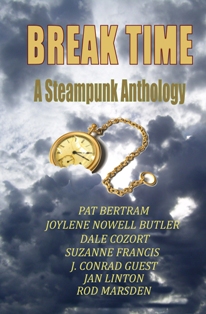
breaktime-3bsmallThe theme of time travel is timely, considering that Break Time, the steampunk anthology I’ve been working on for the past two years with six other authors, is nearing publication. Yay!!

I’ve always enjoyed the conundrum of time travel. In fact, Ray Bradbury’s story “The Sound of Thunder” is one of my all-time favorite short stories. (Hmm. Apparently I’m trying to use the word “time” as many times as possible.) When I first read Bradbury’s story, I hadn’t yet studied chaos theory and the butterfly effect, but it seemed logical that one small change millions of years ago would make a difference to us today. Oddly, in the story, everything was still the same in our world after the misstep, though the language was different and a dictatorial candidate won the election instead of the more egalitarian choice. Despite that seeming contradiction, I enjoyed the story and the ensuing mind calisthenics. The way I figured it, since the changes were so minor, it’s just as possible that the dead butterfly affected the passage of the time machine rather than the passage of time itself, and the travelers ended up in an alternate universe.

In Millenium, another time travel film, the butterfly effect is countered by the theory that insignificant changes can be made that would not affect the whole, such as removing people who were about to die in an airplane crash and taking them to another world. (Who knows, maybe the butterfly in Ray Bradbury’s story was newly dead of natural causes, and all that was affected was an infinitesimally insignificant patch of compost.)

Once a long time ago, I read a story about sightseers from the future who came to watch catastrophes here on earth. (There are several movies with that same theme, but the story I read predated the films by decades.) The tourists could watch the unfolding drama, but could in no way interfere. I used to think that was inhumane, sort of like reporters who simply film the death throes of victims before help arrives without ever pausing to offer assistance. However, when I watched The Final Countdown, my sympathies lay with those who thought it important not to change history by attacking the Japanese before they attacked Pearl Harbor. Who are we to change what was? Sure, all those American deaths would have been prevented, but what other atrocities might have taken their place? Though people consider it a conspiracy theory, the fact is that Roosevelt knew about the attack and let it happen. (A strange aside. People always talk about the Americans having broken “The Purple Codes” but before they were called the purple codes, they were red and various other colors. They were so named because of the color of the folder in which they were stored, not because of any esoteric reason.) Roosevelt’s point was to get the uninvolved Americans into the war. And so, ultimately, many worldwide changes were brought about.

Perhaps the world is unfolding as is should. If so, would I, as a time traveler, have the obligation to leave things as they are? Or would I be part of the unfolding, perhaps the catalyst for the unfolding, and if I did nothing, my inaction would effect other changes? If I ever had to make such a decision, the decision would be made by not deciding. As the old poster from the 1960s proclaimed, “Not to decide is to decide.”

In Break Time, Alexander Giston’s wife and grown son are killed in a steam engine accident. He goes back in time to cajole them into taking another mode of travel. They agree, and this time, the aeroship they are in crashes. The third time, they take their own Stratosphere Steamer, the automobile of our particular steampunk era. And yep. It too crashes. This leads me to wonder if perhaps it’s impossible to change the past. If the past will always self-correct.

If you are a time travel buff, be on the lookout for Break Time. Meantime, check out “Time’s Winged Chariot,” Rod Marsden’s phenomenal article listing time travel movies, books, comics, and television shows.

***

Pat Bertram is the author of the suspense novels Light Bringer, More Deaths Than One, A Spark of Heavenly Fire, and Daughter Am I. Bertram is also the author of Grief: The Great Yearning, “an exquisite book, wrenching to read, and at the same time full of profound truths.” Connect with Pat on Google+. Like Pat on Facebook.
 

Stepping Outside My Comfort Zone

A couple of months ago when my exercise class was asked to do a demonstration for a seniors’ expo, I agreed to do it. It seemed like a life-altering experience since I’d never performed in front of a group before. I had once given a speech at a writers’ conference, and after the first few minutes of nervousness and a shaky voice, I did great. But speaking about a subject I know well is one thing, and doing a new, physical activity is another thing completely, and way out of my comfort zone.

Despite all my walking and exercising, I am not really fit. (When a friend found out about all my physical activities, she asked if I had an ounce of fat left on my body. I could only laugh.) I’m not being self-denigrating when I say I’ve never been particularly graceful or rhythmic. (Except for walking of course. One foot in front of the othstageer — I can do that!) Despite this, I thought it would be good for me to go in front of a crowd with my classmates, do the best I can, and let the mistakes fall where they may — a celebration of who I am at this moment.

The past two months have been a flurry of practice, costume discussions and creations, and more than a few disagreements, followed by a disastrous dress rehearsal and even more upsetting final practice. At one point, I thought of dropping out, but I reminded myself of how important the experience would be. I mean — me? Going in front of a crowd? Performing?

The exhibition was on Saturday. All the participants were asked to get there at noon, though my group wasn’t on until three. So there was plenty of time for nervousness, and I was, just a bit. But then we got on stage, did our number, and . . . that was it. Oddly, although I’d been looking forward to the applause, it never registered. I can’t even remember it.

Afterward, I waited for the triumphant feeling I expected, waited for a shift in myself. Waited for . . . I don’t know what. But nothing was different. Then this morning it dawned on me — as so often happens with life-altering experiences, the changes came in the doing. All those weeks of preparation turned me into the sort of person who could go on stage and give it her all without much ado.

Bad things seem to have an effect all at once, but good things have a slower, less obvious demarcation. (A therapy friend says that this is survival. It’s important to remember the bad things and the bad effects so we can try to keep them from happening again, but good things don’t matter much when it comes to survival.) Still, in my case, I did get the effect I wanted, just not the great emotional payoff. And that’s okay. Emotions fade. Confidence and competence remain forever.

***

Pat Bertram is the author of the suspense novels Light Bringer, More Deaths Than One, A Spark of Heavenly Fire, and Daughter Am I. Bertram is also the author of Grief: The Great Yearning, “an exquisite book, wrenching to read, and at the same time full of profound truths.” Connect with Pat on Google+. Like Pat on Facebook.

Happy Astrological New Year’s Eve!

There is a new moon tomorrow, and this new moon in Aries signifies the beginning of the Astrological New Year. Not that I know anything about astrology, but a friend keeps me abreast of the changing sky and how it affects us, and she sent me to Mystic Mamma.

According to Mystic Mamma, we are entering a time of collective rebirth and that “It is time to find and trust our own unique expression, and use our voice, our being, and our vibration to embody the changes and the energies we wish to experience.

ariesCathy Pagano says, “The best thing you can do is stay centered, married to yourself, so you can open up to the energies in a conscious way.”

Dipali Desai says, “This New Moon, suggests to embrace your individual spark and to have the courage to take action in life. Even if you do not know where it leads, the Archetype of the Inner Compassionate Warrior (symbolized by Aries) will help you explore a new way of life or expression. Go forth with gusto as this may just bring delightful surprises you may not expect.”

Divine Harmony says, “This New Moon cycle also takes us into a radical month of shake ups, wake up calls, breakdowns and breakthroughs of massive proportions.

Robert Wilkinson says, “This is a heavily transmutational New Moon, with the ability to ‘raise the natural to the human,’ or see the natural magic in who we are once we drop old emotional sludge or baggage that may not have ever been ours to begin with.”

I’ve never seen a correlation to the stars and my life except perhaps in my birth chart — horoscopes sure don’t seem to match up with anything I am going through — but I do like what this new moon supposedly means. New beginnings. Delightful surprises. Change. Embracing our individual spark. Having the courage to take action. Breakthoughs. Seeing our own natural magic.

I especially like the part about dropping emotional sludge that might not ever have been ours to begin with. I have a lot of such sludge, some leftover from childhood, some a legacy of my thirty-four year union with my now deceased life mate/soul mate. I’m sure some is even left over from my own past, with me hanging on to ideas or feelings that no longer pertain.

And most especially, I like the idea of being married to myself. Centering myself. Being true to myself. Finding harmony within myself. Connecting with a deeper aspect of myself. (To me this “marriage” is metaphorical, but I googled “marrying yourself” and there were one heck of a lot of hits. Apparently, people actually marry themselves, with a ceremony and everything else that goes along with marriage.)

Whatever this new lunar month brings, whatever the astrological new year signifies, the truth is, I will do what I always do — embrace life to the fullest and see what happens.

***

Pat Bertram is the author of the suspense novels Light Bringer, More Deaths Than One, A Spark of Heavenly Fire, and Daughter Am I. Bertram is also the author of Grief: The Great Yearning, “an exquisite book, wrenching to read, and at the same time full of profound truths.” Connect with Pat on Google+. Like Pat on Facebook.

Look What I Caught!

Did you miss me? I was gone from the internet for 24 hours. Went fishing for life. And look what I caught!

Some friends and I went on an excursion to see Les Ballets Trockadero de Monte Carlo, an all male dance troupe that parodies classical ballet. The men, of course, played the women’s parts, too, and it was amusing seeing hairy chests rising above the costumes. The Trocks stumbled at inopportune times, tried to upstage one another, and played up every romantic ballet cliché. Adding to the fun, the performers sported evocative names such as Innokenti Smoktumuchsky, Maya Thickenthighya, and Jacques d’Aniels.

As funny as the performance was, the real treat came in seeing how athletic, graceful, and truly accomplished these men are. The simplest thing they did is beyond most of us. You try standing on tiptoe on one foot, the other foot poised delicately behind with the toe barely skimming the ground, and arms rounded above your head. And do this for many seconds at a time without wobbling. Yeah, right.

A special joy for me was sitting between two accomplished dancers who pointed out any feats or bits of humor that a neophyte such as I might have missed.

More than anything, though, I enjoyed the company of the people I went with. During lunch, they suggested I write a book centered around a dance studio. They all volunteered to be characters in the book, and one lovely woman offered herself up as a victim, though why anyone would want to off her is beyond my imaginings. Interestingly, the would-be-victim’s husband is a criminologist, and she also offered his expertise if I needed help keeping the investigation accurate, which is tempting indeed.

Who knows, I might even follow through on the book someday.

***

Pat Bertram is the author of the suspense novels Light Bringer, More Deaths Than One, A Spark of Heavenly Fire, and Daughter Am I. Bertram is also the author of Grief: The Great Yearning, “an exquisite book, wrenching to read, and at the same time full of profound truths.” Follow Pat on Google+. Like Pat on Facebook.

Excerpt From “Grief: The Great Yearning” — Day 359

GTGYthmbI’ve come a long way in the three years since I wrote the following journal entry.  I still don’t understand the point of it all, but the questions don’t haunt me quite as much as they did during the first years after Jeff’s death.  I’m learning to live without him, learning even to want to live without him. Sometimes I see his death as freeing us — me — from the horrors of his dying, and I don’t want to waste the sacrifice he made.

I no longer feel as if I am squandering time when I am doing trivial things because I have come to realize there are no trivialities. Everything we do is living, taking part in the great panoply of life. Whatever we do adds to the Eternal Everything.

I still yearn to talk to Jeff, of course. I miss talking to him, miss his insights, miss the conversation that began the day we met and continued for decades until he got too sick to hold up his end of the dialogue. I was truly blessed. He never misunderstood what I said. I could make a simple comment to him, and he understood it was a simple comment. He didn’t make a big issue out of it, just answered back appropriately. It seems now every remark I make to anyone becomes a major deal as I try to explain over and over again what I meant by the first remark. It’s exhausting.

I’m  grateful we met and had so many years together. Grateful for all the words we spoke to each other. Grateful I once had someone to love. Grateful that when my time comes to die, he won’t be here to see me suffer. Grateful he won’t have to grieve for me or be tormented by unaswerable questions.

Excerpt from Grief: The Great Yearning

Day 359, Dear Jeff,

I never felt as if I were wasting time no matter what you and I did—even something trivial like playing a game or watching a movie — so why do I feel I’m wasting time if I do those things alone? Don’t I have just as much worth now that I’m alone as I did when I was with you?

When I was out walking in the desert yesterday, I talked to you. You didn’t answer, of course, or if you did, I didn’t hear. We talked about meaninglessness. If you still exist somewhere, if you still have being, if life doesn’t end with death, then life has an inherent meaning — whatever I do or think or feel, no matter how trivial, has meaning because it adds to the Eternal Everything. If death brings nothing but oblivion, then there is no intrinsic meaning to life. So a search for meaning is meaningless (except on a practical level. We all need to feel we are doing something meaningful so we can get through our days and even thrive). Life either has meaning or it doesn’t. Meaning isn’t something to find but to be. So, I’m going to search for meaninglessness, or at least accept it.

Such thoughts seem as meaningless and as trivial as the rest of life. They get me knowhere. (I’m leaving that error, because . . . wow! So perfect!)

I’ve been watching your Boston Legal tapes again. Nicely meaningless since they put me to sleep. But they make me feel connected to you because we watched them a year ago during your last days at home.

This first year of your being dead is coming to an end, and I still don’t know how to survive the pain of your being gone, but I am surviving. Not thriving, not yet, but I will. There’s still so much to work through — all those years of your being ill, our unhappiness, our shattered dreams. Despite all the bad, we did have a good life, a fulfilling one. We journeyed together as long as we could, now it’s up to me to continue our journey alone. Will it continue to be “our” journey or will it become mine alone? I know who I was when I was with you. Now I need to find out who I am without you. To find worth in being alone.

Adios, compadre. I love you.

Click here to find out more about Grief: The Great Yearning

***

Pat Bertram is the author of the suspense novels Light Bringer, More Deaths Than One, A Spark of Heavenly Fire, and Daughter Am I. Bertram is also the author of Grief: The Great Yearning, “an exquisite book, wrenching to read, and at the same time full of profound truths.” Connect with Pat on Google+. Like Pat on Facebook.
A True Woman’s World

We are bound to the world by society, culture, our shared past. We have no real choice as to what world we are born into — we come as babies to a fully formed structure, learn our way around that structure, and then finally, as adults, either try to live within the structure or try to bend that structure to our needs, hopes, dreams.

warriorI wrote a blog the other day about not believing in women’s issues. The point I tried to make is that both men and women have issues, and that what I believed in were human issues, non-gender issues, such as fairness and respect for everyone. In response, a friend texted me: “You are entitled not to be a feminist. A lot of very brave, determined women won you that right.” Although I commend his willingness to disagree with me since many people don’t want to voice disagreement with my commentaries, his remark hit me wrong. It presupposes that as a woman I have an obligation to be a feminist and that it’s my “right” to choose to forego that obligation.

For thirty-four years, I was deeply connected to another human being — a man. Because of this relationship, I understood the unfairnesses of a man’s life as much as I did the unfairnesses of a woman’s life. I want fairness for everyone, so much so that I have often done the fair thing when it was to my detriment simply because it was the fair thing to do.

It seems to me that those who champion women’s issues don’t want fairness. They want the tables turned where it’s women in the forefront of economic and societal structures. And it’s happening. According to a new analysis of 2,000 communities by a market research company, in 147 out of 150 of the biggest cities in the U.S., the median full-time salaries of young women are 8% higher than those of the guys in their peer group. In two cities, Atlanta and Memphis, those women are making about 20% more. This squares with earlier research from Queens College, New York, that had suggested that this was happening in major metropolises. But the new study suggests that the gap is bigger than previously thought, with young women in New York City, Los Angeles and San Diego making 17%, 12% and 15% more than their male peers, respectively. And it also holds true even in reasonably small areas like the Raleigh-Durham region and Charlotte in North Carolina (both 14% more), and Jacksonville, Fla. (6%).

This disparity is seen as an advance in women’s rights, but where’s the fairness? Are we supposed to continue to champion an equality where one gender is more equal than another?

If it is true that I owe those brave, determined feminists a debt, then I owe it to men, too. It was the urban world the early suffragettes were born into that gave them the time to fight for such things as equality. Women (and men) in non-urban areas were too busy keeping alive to worry about jobs outside the home or politics or bodily automony. So in a way, it was the industrial revolution, the legacy of men, that brought about the conditions that ultimately led to the fight for women’s rights. Oddly, it was urbanization in ancient times that originally contributed to the loss of women’s power, women’s religions, women goddesses. So there is no one to thank, no one to blame, no one to be indebted to for my “right” not to be a feminist — I was simply born into a particular world, the sum of everything that has  gone before.

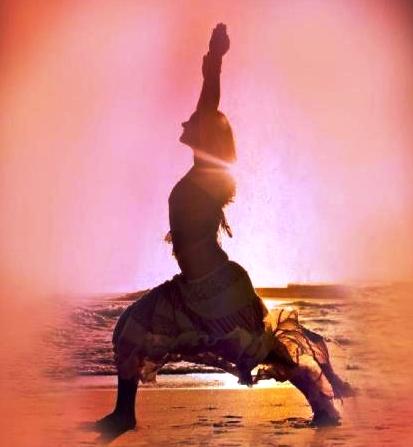
Besides, I believe feminists are settling for too little. Instead of demanding entry into the so-called “men’s world,” I always thought women should create their own world, not the housewifey world that is usually considered a woman’s world though is merely an adjunct to the man’s world, but a true woman’s world — the world of mysteries, wildness, goddessness that is our birthright. A world superior to the world that we were born into.

But perhaps the structures of this materialistic world are too well entrenched, and all we can do is change who controls the materials.

***

Pat Bertram is the author of the suspense novels Light Bringer, More Deaths Than One, A Spark of Heavenly Fire, and Daughter Am I. Bertram is also the author of Grief: The Great Yearning, “an exquisite book, wrenching to read, and at the same time full of profound truths.” Follow Pat on Google+. Like Pat on Facebook.

Embracing My Wild Divinity

When I tell people I want to lead a wild life, to find the wild woman within, some women instinctively understand what I mean, while other folks just give me a blank stare. During my school days, the wild kids were those who smoked and drank, played loud music, partied, gave little consideration to rules or consequences. As young adults, the wild ones were … well, they were pretty much like the wild kids. Smoking and drinking, playing loud music, partying, giving little consideration to rules or consequences, sometimes riding motorcycles, hanging around bars, picking up mates for a night.

I have a hunch that when I tell the blank-stared folks of my desire for wildness, such images come to their minds, but the truth is, I have no interest in that particular kind of tameness. I call it tameness because although it seemed wild to us at the time, the activities were all part of the rebelliousness of youth, a reaction to the strictures of our lives, and, while not perfectly acceptable, perhaps, they were an adjunct to the urbanization and corporatizing of our tame world.

020bTo tell the truth, I’m not exactly sure what I mean by “wild woman.” I tried to do a bit of research into the mythology of wild women and kept bumping into the book Women Who Run With Wolves. My first reaction, of course, was to get the book, but then I changed my mind. I don’t want to know what other people mean by wildness. I want to find out what I mean. I do know that being a wild woman isn’t about getting into trouble or dangerous situations, it’s about embracing my connection to life, being the person I was meant to be without the structure of societal conventions or the bonds of other people’s expectations. It’s about finding the things that call to me from the soul rather than what beckons me from without. It’s about extending my reach, to want what up to now has escaped me. It’s about finding what feeds the hungry beast inside me. It’s about striking out on my own, trusting my instincts yet relying on experience. It’s about the having the courage and boldness to go where I must. It’s about living a natural life, following my own rhythms, being true to myself.

I’ve always been fascinated by the wild places of the world. The places deep within the Amazon that have never been touched by the modern world. The depths of the oceans that lie beyond our instruments. Deep caverns that have never been explored. I don’t suppose there are any of those places left except in my imagination, but still, I am caught by the lure of what might lie beyond our modern society and culture, what might exist beyond man-made (and woman-made) laws and conventions. Of course, any such cultures would have their own conventions that bind their members, so perhaps even the figments of my imaginings are tame in their own way.

And yet, and yet . . .

I wonder what wild places lie in my heart, my mind, my soul. What passions might I feel that I have not yet discovered? What ideas could I have that would spring forth as if from the earth itself? What unheard songs does the universe sing to me?

That is where I will find my wildness, not in bars, in a bottle, or dangling from a bungee cord.

Blessings from John O’Donohue:

“May the angel of wildness disturb the places where your life is domesticated and safe, take you to the territories of true otherness where all that is awkward in you can fall into its own rhythm.”

and

“May the beauty of your life become more visible to you, that you may glimpse your wild divinity.”

***

Pat Bertram is the author of the suspense novels Light Bringer, More Deaths Than One, A Spark of Heavenly Fire, and Daughter Am I. Bertram is also the author of Grief: The Great Yearning, “an exquisite book, wrenching to read, and at the same time full of profound truths.” Follow Pat on Google+. Like Pat on Facebook.

Escaping the Cage

I have always been a highly civilized person. For the most part, I am considerate of others. I am never intentionally rude or bad mannered or insulting. I am not uncouth. I don’t make scenes in public (or private, for that matter). I seldom raise my voice. I listen more than I talk. I dress modestly. I use correct English and am not given to crudeties or foul language. If it’s in my power and nature, I almost always do what others ask. I try to be helpful. In other words, I am tame.

Wheprisonn I was young, a lot of this tameness came from being fearful of doing the wrong thing. I grew up in a shifting emotional atmosphere where from one minute to the next, I didn’t know how I would be treated, so I did the only thing I could — be a good girl. I obeyed. I never talked back. I keep my rebellious thoughts to myself. I did what was expected of me, often before such expectations were even expressed.

As an adult, I continued to be tame. I seemed to know instinctively that any fierce disagreement would only lead to fiercer disagreements, escalating until one of the parties killed the other. Of course, such hostilities generally don’t end in death because somewhere along the line, one of the combatants gives in. Since I knew that in any conflict I would be the one to give in, I never took up the battle in the first place. If I were going to give in, I figured I might as well do so before any damage was done.

I’m still tame, of course. By now it’s not just a habit, it’s who I am. Kind. Conciliatory. Even-tempered. I do experience anger once in a very great while, but those infrequent outbursts flare up quickly and die just as quickly.

Still . . .

There is a untamed side to me — an inner savage, a wild woman, a primitive and elemental being — that I get glimpses of once in a while. I first noticed this untameness when grief descended on me with the all the power of Thor’s hammer. I had no idea I was capable of such feral emotions. Even if I had wanted to, I could not have controlled my grief as I had always controlled my emotions. Grief came in an instant then grew and grew until there was so much pain I wanted to scream. And so I did. Mild-mannered me, tame me, good girl me screamed my agony to the winds.

For the past four years, ever since the death of my life mate/soul mate, I’ve been feeling an itch for “more.” I have never known what this undefined “more” is, but I’m getting an inkling that it is my wild side. I’m not sure how to unleash the wildness, though. Perhaps just by being aware of my connection to the earth. Perhaps by letting the winds take me where they wish. Perhaps by being spontaneous.

As John O’Donohue wrote in Aman Cara, “To be spontaneous is to escape the cage of the ego by trusting that which is beyond the self.”

To escape the cage. To be wild.

Oh, yes.

***

Pat Bertram is the author of the suspense novels Light Bringer, More Deaths Than One, A Spark of Heavenly Fire, and Daughter Am I. Bertram is also the author of Grief: The Great Yearning, “an exquisite book, wrenching to read, and at the same time full of profound truths.” Follow Pat on Google+. Like Pat on Facebook.
I Don’t Believe in Women’s Issues

I made a comment to a friend today about a writer with an over-inflated sense of his talents, and the friend responded, “Did you know he’s a champion of women’s issues?” That made me stop to think. I came to three conclusions: first, women’s issues don’t have much if anything to do with good writing; second, I don’t know what women’s issues are, and third, whatever they are, I don’t believe in them because they are, by definition, gender specific. I don’t even know what plain non-gender-specific “issues” are, so I’ve spent the last hours researching issues and women’s issues, starting with “issue.” “Issue” tugofwarmeans 1) an important topic or problem for debate or discussion and 2) personal problems or difficulties.

Whatever my personal problems or difficulties, I don’t consider them “women’s” issues. They are my issues, and I don’t primarily define myself by gender. Frankly, I don’t define myself at all. For a while, after the death of my life mate/soul mate, I defined myself by his absence since his goneness was so much a part of my very being, but now that the void isn’t as apparent, I’m just me again — a work in progress, a being in flux.

As for women’s issues — the right to bodily integrity and autonomy, to vote, to hold public office, to work, to fair wages or equal pay, to own property to education, to serve in the military or be conscripted, to enter into legal contracts, to have marital or parental rights, and whatever else is on the agenda — they seem more a matter of politics, and I am not a political creature. To be honest, I don’t believe in conscription for anyone, and I’d just as soon we all got along so we could get along without any sort of military. I don’t believe in contracts, either. Since contracts can be broken, entered into with bad faith, ignored, they are only as good as the lawyer you hire, and . . . well, I don’t believe in lawyers, either. (Do you see a pattern here?)

The issues I believe in are the non-gender issues of fairness, freedom, truth, love, kindness, respect, purpose, generosity of spirit. Any so-called women’s issue falls into one of these areas of belief. Equal pay is a matter of fairness. No rape is a matter of freedom, respect, and kindness. Pregnancy/abortion is a matter of freedom, sometimes love, often purpose or fairness. Equal responsibilities for both partners in a domestic situation is a matter of fairness, love, kindness, respect.

Men’s issues are also incorporated into the issues I believe in, especially fairness. Yes, men have “issues.” Although most of the high paying jobs are held by men (at least that’s what is said) some men have a hard time getting any sort of work at all. Sometimes men get passed over because of women’s issue politics — if experience and expertise are equal, the job often goes to a woman for no other reason than she’s a woman. Men are discriminated on the basis of height. Tall men (and women) have the advantage when it comes to high paying jobs because height connotes power. We want leaders we can look up to, not down on. Although height is something we have no control over, short people, especially men, are sometimes seen as weaker unless they have something else going for them — money, aggressiveness, a resounding voice. Men also have more problems with homelessness, violence, workplace deaths than women do, and almost as many problems with domestic abuse and depression.

In a perfect world, everyone’s “issues” would be addressed. And this could be a perfect world. We all — men and women alike — have the capacity for fairness, freedom, truth, love, kindness, respect, purpose, generosity of spirit.

Maybe I should start with myself and refrain from making ungenerous comments about other writers’ abilities.

***

Pat Bertram is the author of the suspense novels Light Bringer, More Deaths Than One, A Spark of Heavenly Fire, and Daughter Am I. Bertram is also the author of Grief: The Great Yearning, “an exquisite book, wrenching to read, and at the same time full of profound truths.” Follow Pat on Google+. Like Pat on Facebook.




