Pacific Crest or Pacific Coast

When I first blogged about going on an epic adventure, I mentioned the Pacific Crest Trail, but I have since discounted the PCT for two reasons. The first reason is silly, but still real. Whenever I’ve mentioned the PCT, people invariable tell me about Cheryl Strayed, and I want my own adventure, not a poor imitation of someone else’s. If I really wanted to hike the PCT, being forever overshadowed might not be a consideration, but the truth is, the PCT isn’t a walk in the park, and I like walks in the park. Or any sort of walk. What I’ve recently discovered is that I’m not fond of hiking.

WheLow tiden you walk, you are light and free, just swinging along, your body in perfect rhythm with its surroundings.

When you hike, you have to pick your way along often uneven terrain, sometimes on narrow trails that are eroded in spots, sometimes on logs that pass for bridges over shallow ravines or waterways. That would be bad enough, but generally you are also carrying a heavy pack (even a light pack — under twenty pounds — is heavy for one who is used to walking unencumbered). When you thru-hike the PCT, you have weather considerations and seasonal changes, such as winter, so you are on a stringent schedule. An ice axe is recommended and in many areas a bear canister is required. (An ice axe is to help you self-arrest if you start sliding down a snow-packed slope, which presupposes you have the strength to hang on, which I don’t. A bear canister is for protecting your food in bear country.) And this year, so I have heard, PCT hikers have been chased by killer bees and are having to deal with detours due to certain parts of the trail being burned out. Eek. So not my idea of a fun outing!

What I’m considering instead is walking along the coastline. Although there is no Pacific coast trail, all three Pacific states are in the process of creating one, mostly by connecting existing multiuse trails, bike paths, and boardwalks. Although the coast walk is partly urban, it also incorporates wilderness and desolate areas. And one 50-mile stretch goes along the shoulder of a highway. I suppose in a way a coastal walk would be even worse than hiking the PCT because not only would you have the possibility of meeting untamed creatures of the wild, you’d also risk meeting untamed creatures of the city, such as feral dogs and brutal humans. (Sounds to me as if I need to add pepper spray to my list of necessities.)

Walking such a variety of terrains is different from hiking in the wilderness. In the wilderness, making a pitstop is as easy as stepping behind the nearest bush, but such freedom does not exist on public beaches. In the wilderness, you can pitch a tent almost anywhere there is room, but on the coast you’re more apt to find yourself stealth camping — camping in undeveloped areas — if there’s no official campsite. However, there is a lot more activity along the coast than the crest, especially in beach areas, so food and water might be more accessible.

By definition, a coast walk includes water. Not potable water, but salt water, and a salt water soak is good for aching feet.

So when/if it comes to a choice between coast or crest, I’ll opt for coast.

***

Pat Bertram is the author of the suspense novels Light Bringer, More Deaths Than One, A Spark of Heavenly Fire, and Daughter Am I. Bertram is also the author of Grief: The Great Yearning, “an exquisite book, wrenching to read, and at the same time full of profound truths.” Connect with Pat on Google+. Like Pat on Facebook.

What Do You Absolutely Need?

I’ve been searching the internet for information about ultralight backpacks, tents, and sleeping bags in case I ever decide to walk up the Pacific Coast. Apparently, the lightest weight for all those things combined is about five pounds. Which, since I am interested in walking rather than struggling along with heavy pack, is still too much weight considering everything else I would need to bring. I suppose it would be possible to forget the tent and just sleep under the stars, or rely on relatives of friends and online acquaintances for a place to California sunrisestay, but emergency shelter is still a good idea.

But let’s forget that for now. It seems to take way more planning than the spontaneous adventure I dream of. Let’s also forget food and water, and assume that whatever I need will appear when I need it. As ridiculous as that might sound, it’s quite logical, since the first month or so of walking up the coast would be rather urban — San Diego, Orange County, Los Angeles, Ventura, Santa Barbara.

And let’s not talk about clothes. That too seems to take more planning and research than I want to do, at least for now, though I am thinking something gaudy. Sometimes camouflage is good, but human hunters so often choose their prey from among those who won’t be missed, and I want to make sure I would be noticed and would be missed.

So, what besides sleeping accommodations, food, and water, and clothes do I really need? Emergency supplies, I suppose, such as bandaids and water purifying tablets. A phone. Maybe extra batteries for the phone. Camera. A sun hat. Bug repellent, though supposedly there are few mosquitoes near the ocean. Toothpaste, toothbrush, dental floss. Lip balm. A bit of cream or lotion to keep my skin from chapping. Handkerchief. Toilet paper. Pee rag. Flashlight. A few pieces of duct tape. Treking poles. Pen. A small notebook. A flower or something frivolous for my hat or backpack to remind me that the trip is supposed to be fun.

Sheesh. That’s a whole backpack full of stuff right there!

If you were going off on some sort of adventure, what would you absolutely need to take along?

***

Pat Bertram is the author of the suspense novels Light Bringer, More Deaths Than One, A Spark of Heavenly Fire, and Daughter Am I. Bertram is also the author of Grief: The Great Yearning, “an exquisite book, wrenching to read, and at the same time full of profound truths.” Connect with Pat on Google+. Like Pat on Facebook.
All Good Stories Begin and End in the Heart of a Man . . . or a Woman

I just finished watching Last of the Dogmen for the fourth or fifth time, and I am still under the spell of powerful storytelling. The story itself is good, but what makes it special is the narration by Wilford Brimley. Oddly, the narration was added after filming and over the objection of the writer/director who was so upset by the use of supplementary text that he refused to write Brimley’s words. Apparently, in some versions of the movie, the narration was subsequently cut way down and redone in another voice, probably in response to viewer complaints since most people seemed to think the narrative annoying, so I’m lucky to have the version I do.

What’s interesting about the narration from a writer’s standpoint is that it’s a good example of tell don’t show. Normally, showing is the way to go, but there are many intangibles that cannot be shown, especially in a movie. What’s interesting about the narration from a viewer’s standpoint is that it adds a different dimension to the film, taking it beyond a fantasy/romance/western into the category of myth.

Broken heartThe narration starts out with Brimley intoning that “the story begins where all good stories begin and end — in the heart of a man . . . or a woman.” I like that line, mostly because of its truth. If a story doesn’t delve into what matters, then the story doesn’t matter. Another line of Brimley’s is “Sometimes you have to put your faith in something you can’t see.”

And that, of course, is why the movie speaks to me. Both characters are searching for something beyond their ordinary lives, as am I, and they find wonder and mystery they could never even have imagined.

Perhaps we are all looking for what lies beyond the façade of normal life, because really, how can this culture of ours be the apex of billions of years of creation? There must be a world of wonder running concurrently with this world of wage slavery and commercialism. We can’t all find Dogmen, of course, but we can find . . . something.

For thirty-four years, I did find “something.” Although I wasn’t looking for it, I found love, companionship, connection with another human being, which was magical in its own way. And now that he’s gone, I want a different form of magic, though I couldn’t even begin to define what I am looking for. Just . . . something.

And that “something” lies where the rest of my story is — in my heart. It’s just a feeling I have, that there’s something out there — or in me — to find. In Joe vs. the Volcano, another favorite movie of mine, Meg Ryan tells Tom Hanks, “My father says that almost the whole world is asleep. Everybody you know. Everybody you see. Everybody you talk to. He says that only a few people are awake and they live in a state of constant total amazement.”

While living in a state of constant total amazement sounds exhausting, it would be nice to waken just once.

As for movies, apparently what appeals to me in film is the mythic quest. Joe vs. the Volcano, like Last of the Dogmen, is another story of people finding what they never knew they were searching for. And it’s a story of luggage, but luggage is a topic for another day.

***

Pat Bertram is the author of the suspense novels Light Bringer, More Deaths Than One, A Spark of Heavenly Fire, and Daughter Am I. Bertram is also the author of Grief: The Great Yearning, “an exquisite book, wrenching to read, and at the same time full of profound truths.” Connect with Pat on Google+. Like Pat on Facebook.
The Peace that Comes from Knowing You are Blessed

I’ve been taking stock of my life lately. Well, to be strictly accurate, my life has been taking stock of me. I am not purposely putting my past into perspective, it’s just that I see the horrible things that happen to people, the terrible physical and mental problems that plague them, the struggles they deal with on a regular basis, and I realize my life hasn’t been so bad. And of course, the request for my resume got me to thinking about what I’ve done (and haven’t done) with my life.

I didn’t have an easy time of it. Money was hard to come by no matter how hard we tried (“we” meaning my life mate/soul mate and I). We often lived hand to mouth; turned the thermostat down in the winter to almost unlivable conditions; didn’t oysterhave an air conditioner, which made the summers just as unlivable; bought food only on sale or at the lowest price available; never bought new cars; seldom bought new clothes or shoes.

And yet . . . I didn’t have a hard life, either.

We always managed to get through the winters and summers, had enough to eat (and it was all delicious and healthy since we cooked everything from scratch). We kept our vehicles running, always had plenty of library books around, planted dozens of trees and bushes and watched them grow. And we had each other. Although his dying about killed me, I got to be there with him through it all, and even was privileged to feel profound grief for him after he was gone.

I’ve been healthy more often than I’ve been ill. I’ve suffered bouts of depression at various times in my life, but my happy days outnumbered the sad/depressed ones. I laughed more than I cried, smiled more than I frowned. My mind works. (At least I think I it does. Since it’s my mind telling me that it works, would I know if it wasn’t?) My immune system is chugging along — even my allergy problems are a sign that my immune system is doing what it’s supposed to do. My body mostly does what I ask of it, and seems to have as much — or rather, as little — balance, elasticity, and endurance it always had.

Even my current situation — looking after my 97-year-old father and doing what I can for my dysfunctional brother — is a blessing. I have free time to indulge in blogs such as this, live in a nice area, enjoy being with friends, have the ability to participate in activities such as walking and exercise classes that help keep my body and mind in working order.

At the moment, I have no regrets, feel guilty about nothing, am angry about nothing. I haven’t even had a grief upsurge in a while. (As a matter of fact, the 27th of the month — the day of his death — passed with but the briefest acknowledgment of the date.)

I’m not sure why I’ve been taking stock — maybe getting ready for the next part of my life when I have to start dealing with the negative aspects of aging, when I have to deal with being on my own with no one to love or care for, when all that stretches before me is unchartered territory. Meantime, I’m enjoying the peace that comes with knowing I am blessed.

***

Pat Bertram is the author of the suspense novels Light Bringer, More Deaths Than One, A Spark of Heavenly Fire, and Daughter Am I. Bertram is also the author of Grief: The Great Yearning, “an exquisite book, wrenching to read, and at the same time full of profound truths.” Connect with Pat on Google+. Like Pat on Facebook.
If You Want to be Happier …

A recent study by the London School of Economics measured the relative value of different leisure activities, giving them the emotional equivalent of a raise in pay.

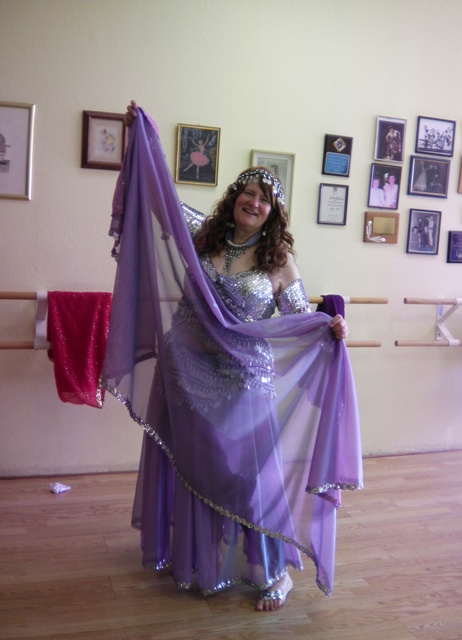
Their conclusion: dance is associated with the happiest people, and was worth £1,671 ($2,808.28) a year.

Swimming came next with a worth of £1,630

And visiting libraries came in third with a worth of £1,359

Other values of your search for happiness:

Taking part in team sports – £1,127

Arts and crafts – £1,020

Attending plays – £999

Individual sports – £828

Attending concerts – £742

Conversely, keeping fit through classes and gym exercise brought so much unhappiness, it was the equivalent of a pay cut of £1,318.

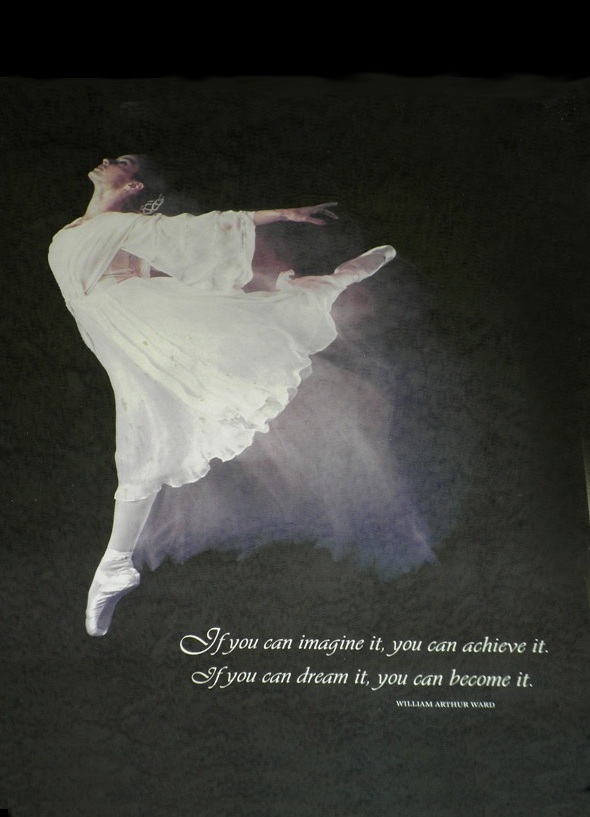
So, if you want to be happier, dance! As Snoopy said, “To live is to dance, to dance is to live.”

Untitled-2

***

Pat Bertram is the author of the suspense novels Light Bringer, More Deaths Than One, A Spark of Heavenly Fire, and Daughter Am I. Bertram is also the author of Grief: The Great Yearning, “an exquisite book, wrenching to read, and at the same time full of profound truths.” Connect with Pat on Google+. Like Pat on Facebook.

Are We Responsible for Responsiblity?

I’ve been thinking a lot about responsibility lately. Well, no wonder — I’m looking after my 97-year-old father and doing the best I can for my dysfunctional brother. I’ve always had an enormous sense of responsibility but now I’m wondering if perhaps that isn’t a good thing.

I was the oldest girl in a large family, and as such, I had responsibility thrust on me at an early age. (I never used to admit I was from a large family. I felt ashamed, as if I had been the one to choose to have a large family in overpopulated times. It took me half a lifetime to realize I had no blame in the matter. No responsibility.)

Responsibility means: 1) the state or fact of having a duty to deal with something or of having control over someone. 2) the state or fact of being accountable or to blame for something. 3) the opportunity or ability to act independently and make decisions without authorization. 4) a thing that one is required to do as part of a job, role, or legal obligation. 5) a moral obligation to behave correctly toward or in respect of.

It’s unusual for all the definitions of a word to apply in one of my ramheavenbling discussions with myself, but in this case, all of them do. Well, except for perhaps #3. I often have a hard time making decisions when all things are equal and it doesn’t make any difference to me what I decide. For example, I can never decide where to go to lunch if I’m out with friends. It’s being with the friends that matters to me, not the food that accompanies the conversation.

I’ve never liked having control over anyone, another leftover from childhood when I would be left in charge, yet I do often feel as if I have a duty to certain people, or perhaps a moral obligation to them. I also sometimes feel responsible for situations that have nothing to do with me, other than that I am there and I care. For example, if I express an opinion or preference, no matter how casual, and another person acts on that opinion with bad results, I blame myself, though I’m learning not to.

Some of my youthful research into spirituality added to this sense of responsibility. If life is created by thoughts, including ours, then everything we do affects the whole. I don’t believe, as many people do, that we create our own illnesses, or that we remain sick because our belief isn’t strong enough to make us well. Nor do I believe we create our problematic situations. I do know that sometimes (maybe most times) things simply happen, and all we can do is deal with them, and yet, the idea still lingers that somehow, somewhere, we are the authors of our lives, the ones responsible for putting ourselves in crises.

I once liked the saying: “No snowflake in an avalanche ever thinks it’s responsible.” It wasn’t until just now that it dawned on me that no snowflake is responsible. The snowflake didn’t create the weather, didn’t create the snowfall, didn’t create the conditions for an avalanche. It didn’t even choose where it was to land.

I’m not much of a snowflake in our society. I’ve only owned one car, and that still-running 42-year-old vehicle has but 153,000 miles on it. I recycle the old-fashioned way — wear out, use up, make do. I trod as lightly as I can, and yet, I am still a snowflake, however unwittingly, causing the avalanche of human destruction on this earth.

So, where does responsibility begin and end? Am I responsible for the earth, for our society’s problems, for my family, my father, my brother?

Am I responsible for the death of my life mate/soul mate? Now that I know the answer to. Of course I am not responsible, and yet there is something deep in me, something beyond consciousness, that believes perhaps I didn’t do enough, didn’t hold on to him tightly enough, didn’t love enough.

See? An enormous sense of misplaced responsibility.

So, are we responsible for responsibility? If things go wrong in the world (or in a family or community), how much of the accountability or the blame belongs to us? Do we in fact have control over anything, or do things just happen — will we, nill we?

Research into the mind shows that often a decision is made before we become aware we made the decision. One test had people choose which light to light up, but often the light lit up before it was chosen, which led researchers to wonder if the people chose the light in the millisecond after it lit up. Perhaps, as this research might indicate, we have no real choice in what happens. In which case, how can there be responsibility?

I suppose it’s also possible that no matter what we do, we’d get the same results. Although that idea wasn’t formulated when I wrote the first chapter of Break Time, the soon-to-be-published steampunk anthology, it’s how the story progressed. Every time Al went back to the past to save his wife and child from death, they ended up dying in another accident. If the end is the same no matter what we do, how can there be responsibility?

And is it possible (or even acceptable) to unshoulder a lifetime of responsibility?

Just wondering.

***

Pat Bertram is the author of the suspense novels Light Bringer, More Deaths Than One, A Spark of Heavenly Fire, and Daughter Am I. Bertram is also the author of Grief: The Great Yearning, “an exquisite book, wrenching to read, and at the same time full of profound truths.” Connect with Pat on Google+. Like Pat on Facebook.

The Reality of Water

Whenever I think of taking off on foot and seeing where the trail leads me, I always come up against one truth that pops the dream and brings me back to reality.

Water.

There is a drought in the west this year. Water is being drained from Lake Mead as if it were a bathtub with the stopper removed. Some communities are warning residents to conserve, while the developers continue to build houses by the hundreds in this area alone, which will cause further problems in the future. Certain watering spots along the southern SANYO DIGITAL CAMERAportion of the Pacific Crest Trail have dried up, forcing thru hikers to carry more water, drink less, or arrange for water deliveries.

A gallon of water weighs almost nine pounds, and hikers generally consume a gallon a day so carrying just a couple of days worth of water makes for a very heavy pack. Some cross-country walkers fashion pushcarts to carry the necessary water through the long desolate waterless areas, but wheels of any kind are usually not allowed on trails in national parks, so that is not a solution for PCT thru walkers.

More than anything else we take water for granted, and yet it is the one thing we cannot live without. Supposedly we can live without food for three weeks, but a mere three days without water puts us in serious trouble. Actually, we’d be in trouble long before the three days were up, with skin rashes, thick tongue, and hallucinations leading the list of dehydration horrors. Add heat and wind to the trauma, conditions that often prevail in the desert west, and we’d have a serious problem within just a couple of days.

Considering that 75% of us are chronically dehydrated, there is a chance that we wouldn’t even last two or three days. And considering that in 37% of Americans, the thirst mechanism is so weak that it is often mistaken for hunger, we could be dying of thirst and not even know it.

Even mild dehydration will slow down our metabolism as much as 3%. And a mere 2% drop in body water can trigger fuzzy short-term memory trouble with basic math, and difficulty focusing on the computer screen or on a printed page. And perhaps even lead us to make critical errors of judgment on the trail. To make matters worse, our thirst mechanism often doesn’t kick in until we’ve already lost 2% of our body’s water volume, which means we need to drink before we even get thirsty.

Water is vastly important, more than simply a means of survival.

One glass of water shut down midnight hunger pangs for 100% of the dieters in a University of Washington study.

Lack of water is the #1 trigger of daytime fatigue.

Research has indicated that 8-10 glasses of water a day could significantly ease back and joint pain for up to 80% of sufferers.

Drinking eight glasses of water daily will decrease the risk of colon cancer by 45%, plus it can slash the risk of breast cancer by 79%, and one is 50% less likely to develop bladder cancer.

In addition, extra water can help alleviate pain from heartburn, arthritis, colitis, angina, migraines. It can help lower cholesterol, help cure asthma, hypertension, excess body weight, and ulcers.

And, if that’s not enough to make you want to drink more water, water can also help plump up the skin and make you look younger, especially if you are aging prematurely.

Drinking eight glasses of water a day is considered old-fashioned now, and unnecessary, but who are the ones telling us this? Doctors, pharmaceutical companies, and the soft drink industry, that’s who, the very people who will benefit by our dehydration.

Even though I do drink plenty of water, I tend to get dehydrated easily, which leads to chest congestion (probably to protect those delicate tissues), coughs, and fatigue. I always carry a bottle of water with me, sometimes two. I can’t even imagine going without water for a single hour out in the desert winds and heat, let alone two or three days. (I’m going to have to rethink my water source. I can’t stand the taste of this tap water, though the unpalatable truth is that it takes three times the amount of water to make a water bottle than it does to fill it. Yikes. I always used to attach a filter to my water faucet, but since this isn’t my house, I can’t do that.)

I suppose I could pick a trail with plenty of watering spots and just carry a load of water purifying tablets, though considering all the hikers who have warned me I would need to pack antibiotics and drugs that would cure Giardia if I should get infected, I’m not sure I’d trust those purifiers.

There has to be an answer to my dilemma — going on an epic adventure without having to deal with water issues — but so far, I haven’t found it.

Meantime, I’m going to take a break and drink a glass of water. I hope you will too.

***

Pat Bertram is the author of the suspense novels Light Bringer, More Deaths Than One, A Spark of Heavenly Fire, and Daughter Am I. Bertram is also the author of Grief: The Great Yearning, “an exquisite book, wrenching to read, and at the same time full of profound truths.” Connect with Pat on Google+. Like Pat on Facebook.

Gyro Thinking

A gyro ball is a piece of exercise equipment used for strengthening the wrist, fingers, and forearm. It’s about the size of a tennis ball, and is composed of an outer covering and a free-spinning inner gyroscope. The faster the inner ball spins, the more strength you need to hold on to the device, and yet, all you need to keep the gyro going is a gentle circular motion of the wrist.

It seems to me that sometimes we can get caught up in gryo thinking where our thoughts spin and spin, and all it takes to keep those thoughts accelerating with ever increasing strength is to nudge ourselves with reminders of those thoughts. Sometimes the gryo gains such strength that it seems impossible to ever break the cycle.

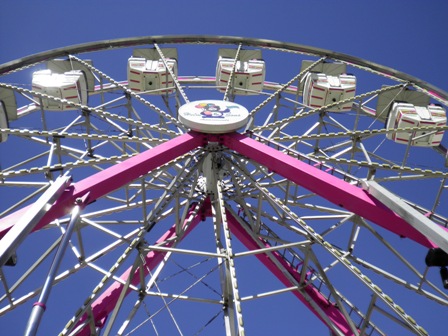
In my case, what winds up my gyro are affronts. Pure hurts I can deal with face on. Pure anger generally burns itself out Ferris wheelwithin a few hours or maybe a couple of days at most. But affronts — being disregarded or deliberately disrespected — go deep, probably because they touch on ancient hurts and ancient angers.

This is a game two can play. If another person also experiences a similar slight or an offense from the same source, you can really rev each other up. You start out by talking things out, but so often what you are really doing is keeping each other’s wheels spinning.

I’ve never heard of gyro thinking, though I’m sure there is another, more technical name for it. It’s just something I have recently become aware of. (Which makes me wonder — did my having a name for such thinking make way for the concept itself? I only made the correlation after hearing about a gyro ball exerciser and learning how it works.)

I’m not subject to such spinning thoughts very often any more, but when I do feel affronted, I am learning not to feed the gyro. Learning to let the thoughts pass through my mind without holding on to them. Learning to let the spinning wheel turn on its own until it comes to a peaceful stop.

***

Pat Bertram is the author of the suspense novels Light Bringer, More Deaths Than One, A Spark of Heavenly Fire, and Daughter Am I. Bertram is also the author of Grief: The Great Yearning, “an exquisite book, wrenching to read, and at the same time full of profound truths.” Connect with Pat on Google+. Like Pat on Facebook.
Scheduled Obsolescence

I’ve grown up with planned obsolescence, so that idea is nothing new to me, but scheduled obsolescence took me by surprise.

There are various types of planned obsolescence. Psychological obsolescence is common in the fashion and automotive industries. Each year, the companies create new designs to make last year’s designs psychologically less appealing, though the product itself is still usable. Physical obsolescence is prevalent in other manufacturing fields, where the designers decide how long a product should last and then only use materials geared to last that long. (In a way this makes sense — if a vegetable grater, for example, goes dull after a year or two, there’s no real reason to make the thing out of expensive materials that will last long after the product has outlived any usefulness.) Often, manufacturers even go so far as to use inferior materials that will make the product wear out faster and speed up replacement time.

Some people argue that planned obsolescence encourages competition and improvement while others claim it increases waste. I don’t believe in waste, though I do understand the need to keep the economy going — if everyone was like me, the economy would have ground to a halt years ago. I mean, how many people out there bought a car forty-two years ago and are still driving it as their one and only source of vehicular transportation? (If you guessed the car is a Volkswagen you’re correct. Back then, Volkswagen bragged about not believing in planned obsolescence, which has worked in my favor.) And then there’s my poor hair dryer that died just this morning — it was only twenty-five years old! If you’re smart (or thrifty) you can often bypass planned obsolescence by doing such things as unplugging lamps and other electrical equipment rather than using the cheaply-made and soon-to-break on/off switches. As for fashion — well, I couldn’t even begin to tell you what was in fashion, either today or twenty years ago.

In some cases, planned obsolescence worked in my favor. Planned obsolescence (thank heavens for spell check! I have mistyped the word obsolescence every single time I’ve used it!) helps keep products cheap. When my camera died after only a couple of years (oddly, the screen burned out right after I took what turned out to be the last photo of my now deceased life mate/soul mate), it would have cost more to repair the camera than to replace it. And when that second camera died in a tragic fall shortly after purchase, I was able to get a replacement that works better than either of the others.

But I’m getting off track. As I said, I’m used to planned obsolescence, but last night I came up against scheduled obsolescence. The end of support for Windows XP made me interested in when support for Vista, my current operating system, will end. I discovered that the end had been scheduled for April 10, 2012, but that they extended it to April 10, 2017. Whew! I still have three years! By then, of course, my computer will be so outdated and so slow I will probably be glad to update my whole system. Or maybe technology will have changed out of all recognition making me want to hang on to this poor machine until its last byte. If nothing else, I could use it as a word processor, unconnected to the internet. That way any vulnerabilities won’t be a problem.

Still, it does seem strange to have the exact date when my operating system is scheduled to become obsolete.

***

Pat Bertram is the author of the suspense novels Light Bringer, More Deaths Than One, A Spark of Heavenly Fire, and Daughter Am I. Bertram is also the author of Grief: The Great Yearning, “an exquisite book, wrenching to read, and at the same time full of profound truths.” Connect with Pat on Google+. Like Pat on Facebook.
Are You Lazy? Am I?

There are hundreds of laziness tests on the internet that will tell you how lazy you are, that is if you’re not too lazy to take the tests. A Facebook friend recently took one such test and posted it on his profile. He commented, “Some of the choices are disgusting!” And he is right. Some of the choices are disgusting — it’s amazing to me that anyone thought of putting them on a list, let alone considered doing such things. The test seemed more an indication of how much of a slob you are than how slothful you are.

But . . . (you knew there would be a “but”, didn’t you?)

The test made me think about what laziness really means. According to my dictionary, “lazy” means “disliking activity or exertion; not energetic or vigorous.” It comes from the Middle Low German word lasich meaning “feeble.”

To us, laziness has negative connotations. When we say someone is lazy, we are generally referring to an able-bodied person who has the ability do a task but doesn’t. The word itself, however, has no such pejorative meaning. Just because people dislike exerting themselves, it doesn’t mean that they won’t. And just because people like to be involved in activities, it doesn’t mean that they will. And anyway, who is to say that disliking exertion is wrong? You don’t always have a choice in what you like or dislike. Besides, the whole thrust of human invention has always been about making things easier for us rather than harder.

napIf you are in a communal situation, such as a marriage, a family, a job, it is necessary to keep up your end of the work, but failure to do so isn’t necessarily because of laziness — it could be a sense of entitlement, insensitivity, or thoughtlessness. But if no one is depending on you, who is to say what is laziness? If you’re not engaged in any activity, but don’t need to be, what is wrong with lolling around doing nothing? Who says we have to fill our days with activity? I consider myself lazy because I am not currently working on a novel, but why should I write? Just because I can? At the moment, writing won’t improve my life, won’t gain me recognition or riches. It will simply use up time, and for now, I am using my time for more physical pursuits. (Oddly, the idea of my laziness — my lack of energy — is so ingrained, I don’t consider myself unlazy while doing these various physical activities.)

Not everyone has the same level of energy. Some of us are “not energetic or vigorous” by nature. We have to push ourselves through life, one trudge at a time. Others shoot through life like rockets, spewing excess energy to the winds. If the low-energy person is resting from his/her exertions while the high-energy person is still zooming around getting things done, why is the first person considered lazy? Both are doing what their natures dictate.

It seems to me that there isn’t really such a thing as laziness. For example, people who scam the welfare system in the USA are often considered as being too lazy to work, but the system is so laborious that many people who are eligible do not have the energy to deal with the bureaucracy. Those who do know how to work the system in nefarious ways are not lazy — they are awash in a sense of entitlement that borders on fraud.

If we can do something but don’t, if we choose to stay in bed instead, it could be that we aren’t lazy so much as that we need the rest. Despite all the machines that have been invented to make our lives easier, our lives are stressful. If someone repeatedly hits the snooze button in the morning, it might not be a sign of laziness but of exhaustion.

More than that, what we call laziness seems to be lack of motivation rather than a true disinclination to work. We almost always find the time/energy to do the things we love if the rest of life doesn’t get in our way. (To most of us, work is what we don’t want to do. The lucky ones are those who get paid for doing what they want to do. Tests have shown that if people are allowed to work on whatever project they wish when they are at their jobs, they are happier, more productive, and work longer hours. If they have to work on a project that is assigned, that they have no affinity for, then their job suffers.)

We get out of bed on Saturday if the sun is shining and we are going for a run/walk/hike/picnic — anything that’s fun. If only bad weather and detestable chores await us, we have no motivation for getting out of bed, so we stay there. And what is wrong with that? Again, I am not talking about a communal living situation such as a family. In that case, it’s only fair to do your share of the chores. But if no one is depending on you, it makes no difference if you wait a few more days to clean the house or do laundry.

Perhaps I’m wrong in my assessment about laziness, but I’ve decided to strike the word from my vocabulary anyway. No more laziness. If I have no inclination to do a chore, then I’m gathering my strength. If I have no desire to write, then I’m letting my ideas steep. If I have no will to exercise, then I’m giving my muscles a rest.

Works for me.

***

Pat Bertram is the author of the suspense novels Light Bringer, More Deaths Than One, A Spark of Heavenly Fire, and Daughter Am I. Bertram is also the author of Grief: The Great Yearning, “an exquisite book, wrenching to read, and at the same time full of profound truths.” Connect with Pat on Google+. Like Pat on Facebook.