Grief: New Year’s Day and Beyond

eternityThis past New Year’s Day was the third one I have lived through since the death of my life mate/soul mate. That first New Year’s Day was one of relief. I’d managed to live through the worst year of my life, and I greeted the day with acceptance and looking toward the future, building hopes and creating dreams.

The second New Year’s Day was a day of dread. The last week of that year was one of waiting. No grief, no strong emotion. Just . . . waiting. But with the dawning of the new calendar year came the dread. I still don’t know why (to be honest, I’ve never totally understood the whys and ways of grief), though perhaps the dread came from an awareness of moving further away from our shared life. I could no longer say, “Last year, we . . .” “Last year, he . . .” There was just me, balanced precariously on the precipice of a life alone.

This third New Year’s Day inexplicably began with tears. Grief had been leaving me alone, and I hadn’t had a strong upsurge for a long time — I thought I was through with grief, to be honest — but when the calendar rolled over from 2012 to 2013, grief came calling once again. And once again, I do not know why.

A new calendar year has never meant much to me — it’s such an arbitrary date, beginning at staggered times around the world, and even celebrated on different dates in various countries and religions. Now that I am alone, however, I try to make a ritual of such things, to note the passing of the days. I need to know that I am still here and I am still alive. And despite the arbitrariness of the date, apparently something in me senses a change from one year to the next and reacts to it.

People tell me that it takes three to five years to find joy in life again, or at least to find a new beginning, and three months into this year will be my third anniversary of grief. It feels like a milestone, though I can’t even begin to guess what it will mean to me besides one more year further away from “us” and one more year closer to . . . I don’t know what.

But I can’t think of that now. If I’ve learned anything during these past two years and nine months, it’s the importance of taking life one step at a time. I’ve already taken three steps into this new calendar year. Tomorrow will be another step. Beyond that, the future will just have to take care of itself.

***

Pat Bertram is the author of the suspense novels Light Bringer, More Deaths Than One, A Spark of Heavenly Fire, and Daughter Am I. Bertram is also the author of Grief: The Great Yearning, “an exquisite book, wrenching to read, and at the same time full of profound truths.” Connect with Pat on Google+

All Right With Death?

Mystical desertA friend who lost her husband sent me an email today, relating something a woman told her. The woman said, “I’m not trying to put anything bad on my husband, but I think that if he died I would be all right with that.”

The statement shocked my friend, not just because of the tactlessness, but because of the lack of feeling.

People have said the same thing to me, and to be honest, it’s the way I felt when my life mate/soul mate was dying. I truly thought I would be okay. He’d been sick for so long and in such pain, I thought I’d be relieved when he died. And I was. For about an hour. Those last years of his life, I did many things to prepare myself for going on alone, and I thought I was prepared. That’s why my grief shocked me so much — it came from somewhere so deep inside, I had no idea such a place existed. My grief was beyond rationality, beyond emotion. It was visceral, as if part of my body and half my soul had died.

Some women truly don’t feel much after their husbands die. Sometimes the husband had been sick for so long they did their grieving before he died. Sometimes their relationship was so bad they were glad when it was over. And sometimes people are unable to feel anything. After all, about 5% of all humans are sociopaths — not killers, simply people without human emotions.

But the woman who made the remark could also be in denial, or not know the power of grief. If you know how you would feel if your spouse died, it would put an unbearable burden on you, especially if you think you are an independent woman. I mean, grief to such an extent as I felt seems anachronistic in this liberated day when we are all supposed to be strong and self-reliant. When people found out about my loss, they often gave me strange looks, as if I were an alien species they could not understand. Sometimes after such a look, people would said they could not imagine how they would feel if they lost their spouse. I always told them not to imagine it. They couldn’t. Until you have been there, you do not know the depths of such grief. You cannot know.

To be honest, I wish I didn’t know. Such grief changes your whole perception of yourself and your relationship to life. It makes you rethink who you are, where you came from, and where you are going, and there are no easy answers. The truth is, I was strong and self-reliant. Sure, my mate and I did everything together, but I was perfectly capable of doing things on my own. Still, 2 and 2/3 years after his death, I am struggling with feelings of pointlessness and meaninglessness, as if our shared life was the only thing that mattered. And maybe it was — then. For thirty-four years he was the focus of my life, and to a certain extent he still is. I feel his absence the way I once felt his presence.

For me, the strangest part of the woman’s sentence is her implication that not only would she be all right after he died, but she’d be okay with his death. In my case, I am mostly doing okay dealing with my mate’s absence. I can even accept the idea that he is dead — I have to so I can go on with my life. But as long as I am alive, I will never be all right with his death.

***

Pat Bertram is the author of the suspense novels Light Bringer, More Deaths Than One, A Spark of Heavenly Fire, and Daughter Am I. Bertram is also the author of Grief: The Great Yearning, “an exquisite book, wrenching to read, and at the same time full of profound truths.” Connect with Pat on Google+

Facing Off With Facebook

windYesterday’s accidental New Year’s resolution was to spend less time promoting books I don’t like and would never read by authors I don’t know. (For the past few years, I’ve been posting book excerpts from any author who sent me one, and then promoting it via Twitter and Facebook.) Today’s accidental resolution is to spend less time on Facebook. This resolution isn’t accidental — I’ve been giving a lot of thought to where I want to go with my online life. What’s accidental is the timing. What was supposed to be simply a resolution has accidentally become a New Year’s resolution.

Like many authors, I joined Facebook as a way of promoting my books, and I “friended” as many people as possible to get the word out. When I realized I wasn’t getting the results I’d hoped for, I started going for quality — trying to get to know the people I was connected with. That worked to a certain extent — I’ve met wonderful people and have had interesting discussions with them — but now the site has lost its luster. Or maybe I am growing beyond what the site has to offer. I never did like the games that keep so many people occupied, but I liked the feeling that something was always going on, that there was always a chance for an incredible encounter.

A growing problem is that for me there are two Facebooks running concurrently. There is the professional side, where I meet and connect with other authors, and there is the personal side. I’ve tried separating out the two — I have both a personal profile and an author page — but I’m still connected to more than a thousand people on my personal profile that I don’t know, and the constant flow of their personal tragedies and triumphs is beginning to weigh me down.

I don’t know which is worse — the brags about how many books people have sold, how many pages they have written, what awards they have won, their ratings on Amazon, or the announcements of anniversaries, illnesses, hospitalizations, accidents, and deaths of relatives and pets. (Actually, I do know what is worst — the happy announcements of wedding anniversaries. They remind me of what I have lost.)

I sound curmudgeonly, don’t I? In a cosmic sense, what happens to each person affects us all, but in a microcosmic way, knowledge of these events can add an immeasurable burden. Yes, I’m glad of people’s triumphs. (Or at least I want to be.) Yes, I’m sorry about their tragedies. But how do my feelings make a difference to their lives? I’m a stranger to them as they are to me. And if I turn off my computer, they no longer exist. (Ah, such power!)

I can’t completely get rid of Facebook, nor do I want — it’s a good way of connecting with people and getting to know them — but I can curtail my time on the site, and that I will do.

***

Pat Bertram is the author of the suspense novels Light Bringer, More Deaths Than One, A Spark of Heavenly Fire, and Daughter Am I. Bertram is also the author of Grief: The Great Yearning, “an exquisite book, wrenching to read, and at the same time full of profound truths.” Connect with Pat on Google+

A Child of Grief

My life mate/soul mate died thirty-three months ago today, and I found myself hesitating before writing this post. I worried it might seem as if I am trying to keep myself in the center of a drama, a drama that has long since lost its power and poignancy. But the truth is, even though I am not actively mourning — at least not often, and not much — grief still shades every moment of my life.

untitledvWhen people fall in love, when they are giddy with hormones, when they get caught up in the emotion of their love and the dream of a wonderful new life together, their friends and family never tell them,  “Okay. Enough. It’s time to get over your love and move on.” The whole world celebrates their love (or so it seems to the new couple), and everything they say and do for the rest of their lives is shaded by this focus on each other.

Grief reflects this process, though through a dark mirror. The newly bereft are buffeted by hormones, caught up in the emotion and pain of their loss, tormented by a future that no longer has any meaning, focused on someone who is no longer there. The loved one might be dead, but the love doesn’t die. (What do you do with love when it is no longer needed? I never have figured that one out.) And the bereft are told, “Okay. Enough. It’s time to get over your grief and move on.”

Other people get tired of our drama, but for us, it is always there — a blankness in our lives. An absence.

I am doing well, trying new things, preparing myself for a future alone. I have hermit tendencies, so to make sure that I don’t stagnate, I am planning adventures — simple excursions and experiences for today and complicated journeys for another time. From the beginning, I embraced my grief, wanting to process the guilts and regrets, the anger and fears as quickly as possible so I could charge into whatever the future held for me. I am now more determined than ever to celebrate life, and yet . . .and yet . . .

I am aware that if it weren’t for his death, I wouldn’t need to worry about my hermit tendencies. We were hermits together, friends in our solitude. Until those last years when he could barely drag himself out of bed, we did everything together, so there was no reason to plan solitary experiences or excursions. Every day with him brought the possibility of something exciting, even if only a long rambling conversation through history, science, philosophy and back to history, so there was no need to find a way to keep from stagnating. But now there is.

Grief has shaped my life in other ways. I am here in the desert because he is dead. I am taking care of my father because I am not needed elsewhere now that my life mate/soul mate is gone. I made new friends through my attendance at a grief support group, and those friendships have long outlasted the group. I am taking yoga classes, learning to find a new way to open to the universe because he is no longer here keeping me connected to the world.

His absence is still a very real presence in my life. I don’t feel his total goneness as much as I did at the beginning, but I am aware of his absence. My yearning to see him once more doesn’t claw at me the way it once did, but I am aware that I will never again hear his voice or be warmed by his smile. I am far beyond the days where I curled up, cradling my new pain and sorrow as if it were some sort of new born creature, but what those days did to me — stealing away the last of my naiveté, lightheartedness, and innocence — will remain with me forever.

I am a child of grief. No matter how adventurous or fulfilling my life might end up being, no matter who or what I grow to be, something deep inside of me will always be aware of the death that made these changes necessary, the absence that made them possible.

***

Pat Bertram is the author of the suspense novels Light Bringer, More Deaths Than One, A Spark of Heavenly Fire, and Daughter Am I. Bertram is also the author of Grief: The Great Yearning, “an exquisite book, wrenching to read, and at the same time full of profound truths.” Connect with Pat on Google+

Christmas Traditions by Default

????????????????????For people in my “grief age,” those who are coming up on the third anniversary of grief, this Christmas wasn’t as hard as the previous two. All firsts are hard but that first Christmas was doubly painful because we were still steeped in new grief. The second Christmas was hard because we were reminded once again that we are without the one person who connected us to the world and to our traditions, and it set off an upsurge of grief. This year was difficult in yet another way — not as sad as the first two, perhaps, but more bewildering. Our loved ones have been gone a long time, and life is starting to close the gap where they were ripped from our lives.

It doesn’t seem possible that life can go on without them. It doesn’t seem possible that we can go on without them. And yet, here we are. Another Christmas without.

My upsurges of grief the first two years took me by surprise. We didn’t celebrate Christmas, so there didn’t seem to be any reason for the holiday to affect me, and yet the day itself creates traditions even in those who don’t celebrate it. We couldn’t treat it like any other day because it’s a day out of the normal routine for most people in this country —- no mail deliveries, no businesses operating, few stores open. We usually spent the day just lounging around, watching our favorite movies, and eating finger foods (meat, cheese, fruit slices) — creating a tradition by default.

Yesterday, my grief was momentary and had nothing to do with Christmas, just one of those normal touches of sadness that I have come to accept as homage to him and our life together. I no longer feed my grief by holding tightly to thoughts of him. Such reminiscences don’t make me feel connected to him, don’t make me feel better about his being gone, so when the inevitable thoughts flow through my mind, creating sadness and bringing on tears, I let them pass. I used to worry that if I didn’t hold on to those thoughts that I was somehow negating him. If he only exists in memory, and I don’t remember him, then he is truly gone.

But he is gone from this earth whether I remember him or not. He is gone from my life whether I remember him or not. Nothing I do or think can ever change that. I still miss him. Always will. But as with yesterday, my missing him probably won’t have anything to do with Christmas memories or traditions, not even the tradition we created by default.

***

Pat Bertram is the author of the suspense novels Light Bringer, More Deaths Than One, A Spark of Heavenly Fire, and Daughter Am I. Bertram is also the author of Grief: The Great Yearning, “an exquisite book, wrenching to read, and at the same time full of profound truths.” Connect with Pat on Google+

Wishing you a peaceful day

Wishing you a peaceful day

and all your troubles far away.

Snowy peaks

Celebrating the End of the Creeping Darkness

I have always disliked the creeping darkness of fall, each day getting shorter, the nights getting longer, so I used to celebrate the day after the winter solstice — the end of the creeping darkness and the beginning of the brightening.

I didn’t much notice either the light or the dark during the past few years. All my days seemed dark, first with the long dying of my life mate/soul mate then with my grief after this death. But now that I am opening up to life again, opening up to a brighter time, it seems fitting that once again I should celebrate the end of the creeping darkness and the beginning of the brightening.

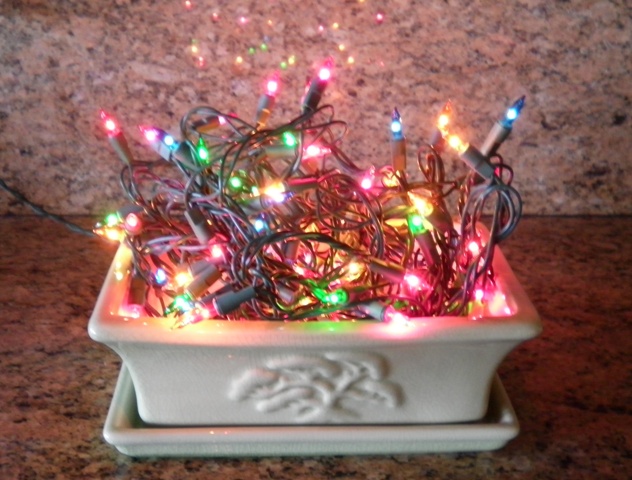
To that end, I have planted light. I wonder if it will grow.

S

Wishing you a brighter day and a new year filled with light!

***

Pat Bertram is the author of the suspense novels Light Bringer, More Deaths Than One, A Spark of Heavenly Fire, and Daughter Am I. Bertram is also the author of Grief: The Great Yearning, “an exquisite book, wrenching to read, and at the same time full of profound truths.” Connect with Pat on Google+

Is Talent More Important Than Passion and Persistence?

In my Suspense/Thriller Writers’ group on Facebook, one author mentioned that she was skeptical of her ability to come up with an interesting idea. Horror writer Rob M. Miller gave a wonderful response that I’m reposting here. Considering the ephemeral nature of Facebook, in a couple of days his comment would have disappeared into the great maw of FB, and I didn’t want it to be lost forever. As to why Rob leaves such helpful and detailed comments, Rob told me, “I’ve been very blessed.  Have had several incredibly talented writers, authors, and editors … well, just give, and give so freely.  Facebook, and blogs like yours, offer opportunities to pay-it-forward.” So, here’s Rob’s take on talent:

Let’s shoot the elephant first: Maybe you have no talent.

Ouch.

But, hey, maybe…?

Talent, though, is over-rated. Heart trumps talent. As does persistence. Talent, or natural ability, only carries a person so far, and then it comes down to heart, passion, time, and yeah, work. Workworkwork. This holds true with just about anything. Certainly with the arts, but also with athletics. Is Michael Jordan a gifted athlete? Absolutely. But such an assertion also masks, or can easily gloss over all of Michael’s hard work.

Personally, I do believe that writers are born with some kind of special something, some X-factor, some proclivity for story, character, situation. It’s indefinable. Writers often don’t necessarily have genius intelligence quotients (I.Q.), but often do have very high emotional quotients (E.Q.).

One might theorize that writers are most often inherently empathetic, or for our sci-fi lovers, are empaths.

Maybe that’s it. At it’s core, maybe it’s about the ability to feel the pain of others.

Author and writing instructor Maralys Wills has put out that in her many decades of experience, she’s found quality writers to have two domineering traits: a) that the writer has been through trauma; and b) they tend to be optimists.

I tend to side with Mrs. Wills on this. (God help the writer who’s a pessimist.)

With that out of the way, let’s presume (’cause it’s better to be an optimist) that you have been born with that magical W chromosome that producers writers, then it can be a confidence issue.

This is common.

Jack Ketchum (or Dallas Meyer), one of Stephen King’s favorite authors — and one of mine — has mentioned more than once of having a writing friend, a gentleman with more “talent” than Jack, but who keeps his writing to himself, afraid to have it seen, afraid of rejection.

And, of course, even amongst the greats, or the commercially successful, one might be surprised to find that even these icons are still (and always have been) quite human. Stephen King has talked about finishing one’s various projects, that even when a writer thinks they’re producing crap, they can be wrong. The cliche is true: We are our own worst critics.

With writing books, classes, critique groups, online writing groups (like this one), etc., there’s often an arrogance involved. Even a necessary degree of arrogance — after all, if a writer didn’t have passion, and passionate opinions, what would they have to say or write about? End of the day, though, despite there actually being sound writing principles worthy of a craftsman taking the time to learn, writing well is often more about what not to do than what to do.

Proof?

Look at the number of times writing rules are broken, and with great impact, such as with Cormac McCarthy work “The Road,” where established guides of good and proper grammar were tossed for the sake of story and delivery.

Sometimes a writer, even those blessed with talent, needs to simply put in the time. Often, this is easy, what with the necessary and very true maxim of: write write write, read read read, write write write.

Sure. But write what? Read what? Practice with what?

As a general rule, I say have your car book, your bedroom book, and yes, a bathroom book … works that are always being read. Always be reading something within your favorite genre of fiction, but always reading a non-fiction work, too, as well as a work on the craft of writing, and another tossed in that’s outside of your favorite genre … perhaps even a work that’s in a field you might not normally consider. For me, that’s chick lit. Though it was akin to pulling teeth, I determined to read Billie Letts’s work “Where the Heart is,” and “The Divine Secrets of the Ya-Ya Sisterhood” by Rebecca Wells. With Letts, I remember being alone in my apartment, taking a bath, reading the final pages, and bawling my eyes out, thankful that no one was around to see me break down. (So much for ever denigrating chick lit again.) And, of course, the novel by Wells is simply brilliant, and brilliantly written.

What else might a writer do?

The could — and probably should — write a bestseller.

In 2001, I attended the annual World Horror Convention in Seattle, Washington, where I met the iconic Michael Slade (pseudonym for Jay Clarke). This brilliant author, during one panel, suggested that developing writers could do far worse than sitting down and transcribing, word for word, one of their favorite bestselling works of fiction, the entire book, front to back.

Sound tedious? It is. And, at times, can be boring. But it helps. A lot. In my case, I spent a bit more than a week transcribing Stephen King’s novel “The Dark Half.” The rewards were many.

Doing such an exercise helps to force a writer to reverse engineer the structure of a book, of a part (i.e., Part I, II, III, etc.), of a chapter, of a scene, and yes, even with paragraphs and sentences. Grammar and punctuation is absorbed as well. So’s how to build suspense … how to characterize. Hell, a lot of things.

I’m thankful I took Mr. Slade at his word; I know many did not — and still don’t. It’s not hard to imagine, is it, that such an exercise would be off-putting? After all, it seems like work.

But that’s the answer for the writer, or a significant chunk of it: putting in the work. Optimism and work. Passion and work.

We should read garbage once in a while to bolster our self-confidence and the greats to remain humble. We should be happy where we’re at, but never satisfied.

And we should work.

We can do that.

Was I born with that amount of talent? With that? Have I been mightily blessed, or merely cursed with a love and desire to write, but without that special something?

Such questions don’t really help. They can, however, hobble an artist, which is never a good thing.

Better to persevere, remembering that those things which are too easily given are often too lightly valued. Better, perhaps, to, through blood, sweat, and tears, develop ourselves.

In the meantime, for something practical, if your own work appears to be missing some needed bit of pixie dust (and maybe it’s not), you might consider Michael Slade’s advice.

And do consider mine: there’s always better and worse writers out there besides ourselves. We are what we are, and we are stuck with ourselves. We have a tendency to flip back and forth between being very thin-skinned (’cause we’re emotionally connected), and covered in rhino-hide (a covering we also need), but let’s never get too wrapped up in comparing ourselves with others, or our work with the work of others. It’s a fruitless waste of time.

All we can really do is write the best we can, practice and learn, and do it all over again.

What fun, what pain, what adventure.

***

With a love for reading and writing that started in his youth, Rob has traveled far to get to the place where he can now concentrate on breaking into the horror market.

Born and raised in the “micro-hood” of Portland, Oregon, he grew up as the oldest of three children, the son of a book-lover and a book-hater.

It was after two years of free-lance stringer work, and a number of publishing credits, that he tired of non-fiction and decided to use his love of the dark, personal terrors, and talent with words to do something more beneficial for his fellow man -– SCARE THE HELL OUT OF HIM.
Desensitizing People to Violence

Clint Eastwood posted a status update on his FB profile today. No, I’m not a “friend” or a fan, don’t “like” him or “subscribe” to him, but his comment is making the rounds of FB, and it ended up on in my news feed. Several times. I found the comment interesting because of my research for More Deaths Than One, a book about mind control, and what I learned about how the military desensitized recruits to killing.

Eastwood wrote: With a lot of thought on this in light of all the shootings in the past few weeks I am very concerned that the left is now going to hit hard on pushing the 2nd Amendment over the cliff.

This is the only amendment that the ‘O’ can attack with any chance of repealing. If this, and God help us if he does, will lead to a barrage of attacks on all the amendments and socialism will be a forgone conclusion.

If anything should be shut down it should be the violent video games. Really, and I know everyone likes their electronics but these are the things that are taking kids and young people out of interacting with society and their peers.

I know I will probably take a lot of flack for that last observation but I’ve taken the flack before.

Have a great Sunday and hug your family.

I’ve written about this before, most recently in If Everyone Wants Peace, Why are there Wars? As I said, many of today’s — and yesterday’s — video games were developed by the military because studies had shown that repeated images of violence and death inured people to killing. During World War Two, as many as 85% of soldiers fired over enemies’ heads or did not fire at all. After World War Two, there was a concerted effort by the military to overcome this natural reluctance to kill, and apparently they succeeded because during close combat in Vietnam, only about 5% of soldiers failed to aim to kill. These same desensitizing “games” were later released as toys for children. Is it any wonder that many people — teens and adults — now seem desensitized to violence? They are playing games that were purposely created to foster killing.

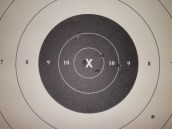
I am not a fan of guns, though I have attended a couple of shooting clinics sponsored by a local gun club. As an author, I thought it important to know how it felt to shoot a weapon at a target. The targets we used were the round kind rather than a silhouette of a human. (Not so incidentally, those human-like targets were also created by the military to get soldiers used to firing at people.) I enjoyed learning how to shoot, but handling the pistols, revolvers, shotguns and rifles did not create in me any desire to shoot at another human being. Guns by themselves do not encourage violence or a desire to kill. Certain video games do. Sociopathic tendencies do. Psychotic characteristics do. Military think tanks do.

Author Lee Child says that we don’t write what we know, we write what we fear, and that certainly is true in my case. I fear the machinations of the powerful, deadly, and calculating men and women who control our lives behind the scenes. And I fear politicians and celebrities who use tragedies to further their own ends.

***

Pat Bertram is the author of the suspense novels Light Bringer, More Deaths Than One, A Spark of Heavenly Fire, and Daughter Am I. Bertram is also the author of Grief: The Great Yearning, “an exquisite book, wrenching to read, and at the same time full of profound truths.” Connect with Pat on Google+

After Grief: Crashing the Party of Life

witchOnce a long time ago, I crashed a Halloween party. It sounds as if I am very bold, doesn’t it? But truly, it was out of character for me, and besides, I was in costume. I remember that the party was given by a friend of a friend, but I have no idea how or why I decided to go — perhaps as a joke to see how long it would take for people to realize they didn’t know me.

I dressed as a comic-book witch — the whole bit: long black scraggly hair, puttied nose and chin almost meeting, heavy black brows, green-tinged skin, cackling voice. I walked into the party as if I belonged there, and for a while I was the belle of the ball as people tried to guess who I was. It finally occurred to one guy that I was a total stranger. So I left. Rather hurriedly.

That’s how I feel now as I am reawakening to the world after the numbness that gripped me during the long dying of my life mate/soul mate and the grief I experienced after his death — as if I have crashed a party, and I don’t know myself or any of the guests. Everyone seems costumed in happiness and success, though I know those facades are as misleading as mine. Our smiles and even our laughter hide old sorrows and new insecurities.

I couldn’t follow my mate to wherever he went, so I this is what is left to me — trying to find my way alone, wondering why I am at the party. I don’t belong, but where else would I be?

I remember the quiet excitement I felt at that Halloween party, the adrenaline rush of stepping out of my normal life, and occasionally I feel that now, as if the world is opening to me, if I only knew what to do with it. I left that Halloween party when the situation became too uncomfortable, but I don’t have that option now. Even though I am not comfortable with life’s party I have inadvertantly ended up attending, I have to stick it out, waiting for . . . what? I do not know.

And so here I am, boldly acting as if I belong, but secretly wondering if anyone will guess that I am a stranger in a strange land.

***

Pat Bertram is the author of the suspense novels Light Bringer, More Deaths Than One, A Spark of Heavenly Fire, and Daughter Am I. Bertram is also the author of Grief: The Great Yearning, “an exquisite book, wrenching to read, and at the same time full of profound truths.” Connect with Pat on Google+