
Thirty-Two Months of Grief

I haven’t been writing much about grief lately. It’s been thirty-two months — 977 days — since my life mate/soul mate died. In that time, many others have suffered grievous losses, and to continue mentioning my grief seems like all I’m doing is whining. Still, this is my loss, and what other people experience, no matter how horrific, doesn’t lessen my sorrow. I don’t have the same sort of raw pain that I did at the beginning, of course, nor do I have the gut-wrenching angst that so often bedeviled me during those first months, but I do experience bouts of sadness and yearning.

My emotions are on a slow Ferris wheel ride, usually sliding down into sadness on Saturdays, the day he died — a day that apparently is etched in my very psyche — and then a gradual climb to hope and possibility on Monday and Tuesday.

Even when Saturday’s sorrow is fleeting, as it often is now, I find that I am at my most vulnerable then, and any hurtful word, thoughtlessness, or setback can send me spiraling down into grief. Without him to talk to, without my being able to casually mention the slights and so slough them off, the unkindnesses take hold and remind me that I am alone. Which reminds me that he is dead. Which makes me grieve.

I can handle being alone. I can even handle his being out of my life. What I can’t handle is his being dead. It’s possible he still exists somewhere, perhaps lolling on the shores of some cosmic sea, a cat purring in his arms, but I have no way of knowing for sure. All I know is that he is out of this earthly life. Gone. Deleted. I still cannot wrap my mind around that. And I still can’t help feeling that he was cheated out of a couple of decades of life.

Sometimes I pretend to believe that he left so that I could experience life in a way we couldn’t experience together, but other times, especially on the day of the month that he died — such as today — I find it impossible to pretend that this new experience of life alone is a positive thing. And even if it is for the best, it comes at the cost of his life, and that is too big of a price to pay.

If I sound discouraged today, the truth is, I am dis-courage-d. Have lost my courage. Sometimes I am strong and forward looking, but on this 977th day of his goneness, I am unable to gather the courage to believe that any good will come from his being dead and my being alone. I’d give anything to see him one more time, to have him smile at me or say an encouraging word, but no matter how much I yearn for such an encounter, it’s not going to happen in this lifetime.

I am used to the ups and downs now, so I know all I have to do is hang on, and in a day or two, when I am less tired perhaps, I’ll find my courage again. And some day I might even come to believe that this new experience of life alone truly is a positive thing.

***

Pat Bertram is the author of the conspiracy novels Light Bringer, More Deaths Than One, A Spark of Heavenly Fire, and Daughter Am I. Bertram is also the author of Grief: The Great Yearning, “an exquisite book, wrenching to read, and at the same time full of profound truths.” Connect with Pat on Google+

If People Are the Same, Why is the World Different?

This world of the early twenty-first century seems completely different from the world of fifty years ago, and for some reason yesterday, that struck me as odd. Except for the accoutrements of our lives, such as computers and clothes, why would things be different? Most people want the same things now as they wanted then — a safe world for their children to grow up in, a degree of comfort and security and happiness, a chance to succeed either in their chosen career or in their daily lives, freedom to live the best way they know how. So why is life today so different from what it used to be?

Admittedly, those were not the halcyon days people remember them as being. There was strong prejudice in certain areas in the United States, though not all people or neighborhoods or cities participated in the prejudice against blacks, woman, gays. There did seem to be restrictions against what women could accomplish, though women who wanted to accomplish big things often managed to succeed anyway. But most women thought they had it good, staying at home, taking care of their husbands and children. Is it any better today when women are forced by circumstances or custom to work?

People are still basically the same, yet now married couples seem to be unable to find a way to stay together. Back then, divorce was rare, and now it is all too common. The number of single parent homes are increasing. Children are being shuffled between parents. Some children have too few parents, and some have too many. You’d think that with the fluidity of life today that people would be more accepting of each other, but our society is still pigeonholing both men and women, forcing them into roles they might not want. We seem to always be categorizing people, foisting labels on them, making them conform to fashionable ideas and attitudes. And we seem to be even more polarized now than ever before, whether religion or politics, with less tolerance for opposing points of view.

Looking back on those long ago days of the mid-twentieth century, it seems a completely different world. Children played in the streets, walked to and from school, rode their bikes to distant neighborhoods, ran errands for their mothers, walked to the park for pick-up games. Were things safer then? Or was it simply that people were not bombarded with images of peril on TV and the internet and so did not know how unsafe they were? No matter how graphic newspaper stories and photos were, no matter how detailed radio news became, they were still static words and images, without the horror that today is thrust into our lives in full color, making us fearful for our safety.

If things were safer then, and it isn’t an illusion of nostalgia, then why were things safer? As I mentioned, people want now what they wanted then. Is it simply that there are more people in the world? Is it that the neighborhood schools have been consolidated into district schools so that the neighborhood is no longer a separate entity? Is it that we move more frequently now so we ever gets to know our neighbors? Are we less trusting, perhaps, and if so, why? Does it make a difference that someone isn’t waiting at home when kids get home from school? Or maybe it’s that no one is home during the day and so whole neighborhoods are deserted, giving us a feeling of being ungrounded? Is it that two salaries or two jobs are necessary to maintain the same level of comfort that one mediocre salary could handle back then? If so, why is that? Is it simply inflation (or perhaps a conspiracy to kill the middle class as some people believe) or is it that more things are necessary now, that a comfortable life today needs more equipment than a comfortable life fifty years ago?

There used to be one car per family, one television, one telephone. (Some families had two of each, of course, but most only had one.) Now each person in each family seems to have their own mode of transportation, their own television, their own telephone, their own computer. Games were simple back then, too — a bat and ball, board games, jigsaw puzzles — and you needed someone to play with. Now expensive game consoles take the place of neighborhood companions.  After school activities seem more structured now, though family life seems less structured — families eating meals together at a set time used to be the norm and now is a special occasion. But then, families themselves are different.

I don’t know if any of this is important or if it means anything. Whatever once was no longer exists, and we can only live in the world of today, but it does seem strange to me that despite people’s goals remaining the same, the world has changed so much.

***

Pat Bertram is the author of the conspiracy novels Light Bringer, More Deaths Than One, A Spark of Heavenly Fire, and Daughter Am I. Bertram is also the author of Grief: The Great Yearning, “an exquisite book, wrenching to read, and at the same time full of profound truths.” Connect with Pat on Google+
Giving Thanks for Words

Every day I find something to be grateful for, even if it’s only that the sun is shining,  that I once had a great love, that I have open spaces to explore (both in my head and in the world). Even when all else seemed bleak these past thirty-one months since the death of my life mate/soul mate, even when I had no hope, there was always something to be grateful for (most often that he was no longer suffering), so I don’t need to set aside a special day of thanksgiving.

Still, during this season of giving thanks, there is something I am especially grateful for, something worth celebrating . . . words.

Words convey thoughts, ideas, hopes from one person to another. They connect us from continent to continent, enabling us to bond with like-minded people all around the world. I have exchanged words — and friendship — with people from New Zealand, Australia, Canada, the Nederlands, India. And for this I am grateful.

Words allow us to read and to write, to find entertainment and enlightenment in worlds created out of nothing but letters strung together. Words allow a story, concocted in one mind, to come to full realization in another. For most of my life, these worlds of words have been my life, or at least a major part of it. Now that I too am a world-creator, I am grateful for the words with which I build my stories.

Words give comfort, especially when distance (either geographic or emotional) does not allow a touch of commiseration. I am especially grateful for all the words of encouragement you (the readers of this blog) have given me during my time of grief, words that touched me. I hope some of my words touched you.

Words mean hope. With words, there is always the hope that we will be able to come to an understanding of each other, and perhaps find peace. (Of course, people would have to shut up long enough to listen to each other’s words; one-way words cause conflict and confusion.)

Words mean community and continuity. Words, both spoken and written, presuppose that there is someone to listen, and that is community. Telling our his-stories and her-stories to each other creates both community and continuity. They tell us who we were, who we are, and who we hope to become.

If there were no one to hear our words, if we existed solely in ourselves, we’d still need words to communicate our feelings and ideas to ourselves. This ability to put our thoughts into words gives us the power to know ourselves and to understand greater truths.

So this week, whether you celebrate the U.S. Thanksgiving or not, stop for a moment to give thanks for words. They are we.

***

Pat Bertram is the author of the conspiracy novels Light Bringer, More Deaths Than One, A Spark of Heavenly Fire, and Daughter Am I. Bertram is also the author of Grief: The Great Yearning, “an exquisite book, wrenching to read, and at the same time full of profound truths.” Connect with Pat on Google+

Today Is a Good Day and I Am Feeling Fine

On the advice of a friend, I have been doing a daily affirmation, telling myself I am happy, but it doesn’t work for me because I’m not sure I want to be happy. Un-unhappy, yes. Unsad, yes. Contented, of course. At peace, for sure. But happy? It’s not a state I’ve ever aspired to. I’ve always believed other things are much more important, things such as love, truth, purpose, freedom, kindness, integrity. Happiness means many different things to many people, but to me, happiness has an element of giddiness, of being glad to be alive, of effervescence, maybe. I prefer being centered, not tipping toward happiness or sadness, but unafraid of my tomorrows, satisfied with my yesterdays, at peace with my todays.

To that end, I have changed my daily affirmation to “This is a good day and I am feeling fine.” This affirmation was gift from my yoga instructor, a short meditation to help us get through the holidays. She suggested we sit quietly, breathe in thinking “This is a good day,” and exhale thinking “I am feeling fine.” And it works for me. Of course, it helps that my days now are good, no real traumas, no sock-to-the stomach bouts of grief, just a slow gentle roll into sadness now and again, and a slow gentle roll back to center. The few tears, when they come, seem more nostalgic than debilitating.

The past couple of days have been especially good — lovely weather, clear skies, warm sun, breezes no stronger than a breath. And I am feeling fine. No overwhelming aches and pains, no worry or stress to weigh down my shoulders. I’m standing tall, breathing deep, opening myself up the world and the future.

I’m still not sure where I am going, what I am looking for, what I expect to find. For now, it’s enough that I am continuing to open myself to possibilities, continuing to believe that today is a good day and I am feeling fine.

***

Pat Bertram is the author of the conspiracy novels Light Bringer, More Deaths Than One, A Spark of Heavenly Fire, and Daughter Am I. Bertram is also the author of Grief: The Great Yearning, “an exquisite book, wrenching to read, and at the same time full of profound truths.” Connect with Pat on Google+

Showing My Particular Vision of the World

All the books about writing I ever read stressed the importance of genre. The books recommended choosing a readily recognizable genre and sticking to it. Apparently, readers like to know what kind of book they are reading and don’t take well to authors who hop from one genre to another (and if readers do accept it, agents and editors sure don’t). The books also suggested developing a series character in that specific genre, one who is so compelling people will be waiting for the next book. And readers who come late to the series go back to read earlier books, so sales take on a life of their own, each book helping to sell the others.

Seems simple enough, but I ignored the advice. Each of my books is a stand-alone novel without a series character, and each straddles a shadowy line between genres. Since I didn’t create a series that helps promote me and my oeuvre, I have to start over each time a new book of mine is published, promoting each book individually, finding a new readership.

I’ve experienced all the setbacks that bedevil authors — too little support, too many rejections, too much time dedicated to writing-related activities, such as editing and promotion, and not enough time dedicated to writing. But the most disheartening of all is the difficulty of generating momentum with non-genre, non-series books.

And yet . . .

We can only write what we are compelled to write. We each have a vision, and we must be true to that vision, true to ourselves, true to our stories.

Diane Arbus, noted American photographer, said, “I really believe there are things nobody would see if I didn’t photograph them.” And so it is true with writers. We see things, either in the world or in the world of our imagination, that nobody would see if we didn’t photograph them with our words.

Each of my books shows a particular vision of the world as I know it. A Spark of Heavenly Fire shows the horror of an all-too-possible pandemic, the even more horrific steps the government is ready to take, and the various ways, both heroic and craven, people might react to such an eventuality. More Deaths Than One shows the unthinkable results of mind control experiments, experiments that have actually been perpetrated without our knowledge. Daughter Am I is a more light-hearted romp, a treasure-hunting tale of finding oneself in a most unlikely way. And Light Bringer, my latest novel, hints at a world where the Sumerian myth of a tenth planet — a planet of doom — is fact.

The disheartening aspects of writing without the scaffolding of a genre are more than offset by the joy of having created four unique visions of the world, dozens of characters who would not have life without me, vivid word pictures that exist only in my books. Like my lake of flowers from Light Bringer:

Becka kept running, needing no footpath to lead her to their destination. She could feel the music tugging at her, guiding her, singing her forward.

At first a faint red trumpeting, the music swelled into a full orchestra: orange church bells, yellow bugles, green violins, blue flutes, indigo cellos, violet woodwinds.

Beneath it all, she could hear the grasses murmuring, “Hurry, hurry.”

And then there it was, spread out before her in a shallow thirty-foot bowl. A lake of flowers— chrysanthemums and tulips, daisies and daffodils, lilies and columbines and fuchsia—all blooming brightly, all singing their song of welcome.

What things would people be deprived of seeing if you didn’t photograph them with your words?

***

Pat Bertram is the author of the conspiracy novels Light Bringer, More Deaths Than One, A Spark of Heavenly Fire, and Daughter Am I. Bertram is also the author of Grief: The Great Yearning, “an exquisite book, wrenching to read, and at the same time full of profound truths.” Connect with Pat on Google+
A Romance with Books

I watched the 1987 movie 84 Charing Cross Road yesterday, and it struck me as particularly poignant considering the current state of the book business. Some people call this movie a romance, though basically, the relationship between Helene Hanff and Frank Doel is little more than a business relationship. The true romance is Helene’s love of books — not just the content of the books, but the volumes themselves.

With the advent of Kindles, Nooks, Palm Pilots, IPads and other reading devices, bound books seem to be valued less and less. Ebook readers sneer at those who profess to love the smell of the book and the feel of the pages, but the truth is, there is a mystique about a printed volume. It exists as a thing separate from its words. You can hold the tome in your hands, riffle the pages, sample a word here and there. There is a tactile connection between reader and story, linking the two parties in a very physical way.

You love your ereader. I get that. I understand you love the ease of being able to cart around an entire library of downloaded stories and novels for a minimal cost. I understand that ereaders, with their ability to zoom in (or do I mean out?) and make the words larger for those with vision problems allow people to keep reading long after their eyes have given up on them. I also understand that such reading devices are the wave of the future.

But . . . here’s my dirty little secret. (Not much in the way of dirty little secrets, I admit, but it’s the only one I have.) I don’t own an ereading device, and I have no intention of getting one until I am forced to. For me, reading has always been a Zen-like experience where I become the book. Not the story. The book. My eyes would be focused on the page. One hand would be grasping the book while the other turned the page, quite mindlessly, I might add. The book might be resting on sternum or stomach, depending on my position. And the story osmosed through my body and into my soul without referencing the words.

For most of my life, I was a constant reader. That’s all I wanted to do, so for several years I did temp work to give myself maximum amount of time to read. To feed my habit, I would take out stacks of books from the library and buy bagfuls of new and used books. Often, I would pass the purchased books on to my mother. One time, I included Oh, God in a stack of books I gave her, and the language appalled her. I shrugged it off, saying I didn’t notice. That really upset her. “I don’t know which is worse,” she said, “that you would be so blasé as not to be bothered by the words, or so naïve as to not know what they mean.”

I tried to explain to her that I didn’t read words, but that upset her even more. I suppose it does sound weird, but it’s the truth. At least, it used to be. As I got older and my eyes weaker, the osmosis didn’t work as well, and I had to start reading words. I did not like that at all! Oddly, my eyesight has changed, and I now have perfect vision about nine inches from my eyes, (though I can’t see beyond that) so I can do the Zen reading thing again, but since I have a hard time finding non-trivial stories to osmose with, I don’t read much any more. (I used to feel guilty at having “wasted” my life reading, but now I’m glad I did.)

Anyway, the point is that while some people love their reading devices, others don’t seem to find the relationship rewarding, and I bet Helene Hanff would have been such a one. All those books she ordered from 84 Charing Cross Road are probably now available free from Google books (because really, who among us except die-hard literature students like Helene would pay to read the unabridged prose of John Dunne), but reading the books on a Kindle wouldn’t be the same for her as reading a leather-bound book with gilt edging. And, although my reading tastes are much more plebian than hers, reading on a device wouldn’t be the same for me, either. I don’t see myself having a Zen-like experience with a Nook or a Kindle.

The lesson of this movie is that it’s important to do things when you can, because one day it will be too late. Helen supposedly carried on a great friendship with Frank — or at least with the bookstore where he worked — but she never once called him, never once sprung for a ticket to London until after the store closed for good. (I’m not giving away any spoilers — the movie begins with her visiting the empty store.) And so it was with me and my romance with books. If I hadn’t wasted my youth reading but waited until now to carry on my romance with books, the romance would have been over before it had even begun.

***

Pat Bertram is the author of the conspiracy novels Light Bringer, More Deaths Than One, A Spark of Heavenly Fire, and Daughter Am I. Bertram is also the author of Grief: The Great Yearning, “an exquisite book, wrenching to read, and at the same time full of profound truths.” Connect with Pat on Google+
Writing and Research: When in Doubt, Twist Things About

When you have lost your way, either in your writing or researching, twist things around, and perhaps it will help you find what you are seeking.

For example, I had to write a story for Second Helpings, the Second Wind Publishing holiday short story and recipe anthology. (Which, incidentally, has now been published. Hint. Hint.) My idea was to tell the story of a woman with an unromantic and inattentive husband. To show her discontent, she kept “poisoning” him by making his favorite fat and sugar-laden chocolate chip cookies. She had an affair with a man who seldom had time for her, and finding that she was just as unhappy, she decided to stay with the man who was present in her life. She broke off the affair, and at the end, she fed her husband cookies made with applesauce and honey instead of butter and sugar to show her change of heart. It was a nice story, but nothing special until I twisted it around and gave her live-in boyfriend the affair. (Since I was changing things, I demoted the husband to boyfriend — I didn’t want to have to deal with a possible divorce.) And then the story took off.

I always knew twisting things around in writing was a good idea, but research? Apparently twisting works for that, too. I’d spent a couple of days researching “thinking caps” for yesterday’s post, and wasn’t getting anywhere. The term only goes back a couple of hundred years (at least in print), though the term “considering cap” goes back four hundred years (again, in print).

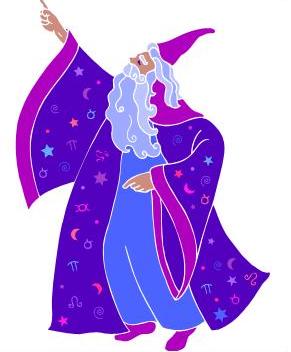
I knew the term had to be older than that, mostly because of a gut feeling that there had actually been such things as “thinking caps” and that the term hadn’t always been rhetorical. So I got to thinking about the opposite of thinking caps, which are dunce caps, and wouldn’t you know — there was the answer I was seeking. As I said yesterday, originally dunce caps were thinking caps. The apex represented knowledge, and that knowledge was funneled through the cap to the brain. Although dunce caps stemmed from the 1200s, they were based on wizard’s caps, and went so far back into the mists of time, that there is no way to ever trace the origin.

It gave me a thrill when I realized that my intuition about the relationship between dunce caps and thinking cap was correct. Now, when I can’t find the answer I want, I will look at the opposite.

So, when in doubt, twist things about.

***

Pat Bertram is the author of the conspiracy novels Light Bringer, More Deaths Than One, A Spark of Heavenly Fire, and Daughter Am I. Bertram is also the author of Grief: The Great Yearning, “an exquisite book, wrenching to read, and at the same time full of profound truths.” Connect with Pat on Google+

Put On a Thinking Cap to Help Increase Creativity

The phrase “thinking cap” or “considering cap” goes back at least 400 years, probably much longer since by the time it first appeared in print, the phrase needed no definition. Most people assume the cap has always been metaphoric, but donning a real cap can help focus one’s thoughts.

In an odd twist, “dunce cap,” which has become synonymous with stupidity and foolishness, started out as a thinking cap. John Duns Scotus, a master philosopher born in 1266 in Duns, Scotland, believed that wearing a high conical cap helped funnel knowledge to the brain. (He’d noted that wizards wore them.) In the 1600’s, when his philosophies were ridiculed as foolish and obtuse, the dunce cap became known not as thinking cap but a fool’s cap.

Scientists today have created a high-tech thinking cap that stimulates the brain and seems to increase creativity, but you don’t need hi-tech devices. If you are dealing with writer’s block, for example, you can use colored caps.

How color vision actually works is still a mystery, but there is no mystery about the profound effect color has on human physiology. Red tends to raise blood pressure, increase pulse rate, and excite brain waves. Blue tends to have the reverse effect, and green tends to be neutral.

So, if you wish to increase your creativity, try a little color therapy. It can’t hurt; at the very least it will give you something besides your computer screen or those same old walls to stare at. And it has the benefit of being exceedingly simple. All you have to do is choose your color from the following list, wear it, hang it on the wall, find a knickknack or a bouquet of flowers that color to put on your desk, then focus on it.

Purple will boost your creativity, and help stimulate your intuitive abilities.

Yellow can help you feel optimistic if your blockage is making you anxious and depressed. It can also induce enlightenment, which is what you are looking for.

Dark blue encourages meditative thinking, so it’s especially helpful if are having difficulty focusing.

Green helps promote harmony if your inability to write is making you irritable.

Red will energize you if you’re too tired to think.

Even if the color therapy doesn’t bring about the effect you wish, playing around with all those colors will give your mind a rest from writing, and perhaps when you return to your keyboard, the problem will have resolved itself.

A couple of other suggestions to cap off this article: you can give your character a thinking cap, such as Sherlock Holmes’ deerstalker cap, which might help you refocus on your story.

Or you can forget writing altogether, put on any hat, go for a walk and let your thoughts wander — that’s what I do.

***

Pat Bertram is the author of the conspiracy novels Light Bringer, More Deaths Than One, A Spark of Heavenly Fire, and Daughter Am I. Bertram is also the author of Grief: The Great Yearning, “an exquisite book, wrenching to read, and at the same time full of profound truths.” Connect with Pat on Google+

A Legacy of Words

Early in the twentieth century, Ivar Kreuger, a match manufacturer, managed to corner the match market. Through various deals, he ended up with the exclusive rights to sell matches in many countries, including most of Europe, but this monopoly was not enough for him. Back then, it was a common practice for two or three people to light their cigarettes from the same match. Ivar realized that if he could somehow keep that third person from using the match, he could greatly increase his sales, so he had his advertising department start the rumor that it was unlucky to light three cigarettes from the same match. Tales were told of dreadful things happening to the third person who used a match, like the bride who had been left at the altar and the soldier who was killed after each had lit a cigarette from a match that two others had already used. Even today, though most people use lighters, the superstition that it’s unlucky to light three cigarettes from the same match persists.

Kreugar’s story shows the power of words, but how many of us use them wisely? We toss out words as if they were as ubiquitous as dandelion fluff and as valueless, yet words have the ability to affect the speaker just as much as they affect the listener. For example, saying “I love you,” not only makes the recipient feel good, it makes the speaker feel good, and it intensifies the bond between the two people. Screaming, “I hate you” effectively disconnects us from ourselves as well as the other person.

The realization that the words can change us as writers as well as others is making me think about my responsibility as writer. If words are so powerful that they can change readers and writers both, then they deserve my best. I don’t think I’ve achieved my best. At least, I hope I haven’t. Once you have achieved your best, you have no place to go but down, and in many respects, I am still at the beginning of my journey as a writer. Supposedly, a writer doesn’t reach maturity until after s/he has written a million words, and I am still far short of that, even including blog words. (Because, though I tend to forget, blogging is writing, too.)

Still, no matter how much better I get at writing, I don’t think I will ever achieve the success with my words that Ivar Kreuger did, and that’s okay. The legacy of his words is a lie. I would prefer the legacy of my words to be a truth.

***

Pat Bertram is the author of the conspiracy novels Light Bringer, More Deaths Than One, A Spark of Heavenly Fire, and Daughter Am I. Bertram is also the author of Grief: The Great Yearning, “an exquisite book, wrenching to read, and at the same time full of profound truths.” Connect with Pat on Google+

35,000 Days and Counting

Just by chance I discovered that in a couple of weeks my father will be 35,000 days old. Such an astonishing number of days should not go unacknowledged, so I’ve been trying to figure out various ways of illustrating that vast number of days.

I thought of giving him a jar of 35,000 bits of confetti in recognition of his days, but confetti comes in ounce packages, and I am not about to count out 35,000 pieces of anything. Can you imagine counting out 34,895 and then losing your place? Admittedly, I could count what was in one package and extrapolate from that how many packages I’d need, but still, there are a lot of pieces in those bags, and anyway, confetti has no significance to his life.

Perhaps give him 35,000 pennies? But 35,000 pennies would be 700 rolls, cost $350.00, and would weigh 210 pounds.

Perhaps licorice jelly beans? Considering that there are approximately 400 Jelly Belly jelly beans in a pound, I would need almost 88 pounds and at 8 dollars per pound, they would cost $704. Freight, however, would be free.

Perhaps personalized M&Ms? But 35,000 of them would cost more than $1,725, excluding freight. And anyway, they would just go to waste. He hates M&Ms.

He does like Snickers bars, so I considered sending him 35,000 calories of the candy, but that would be 125 bars. Since he’s almost 96 years old, it would take him the rest of his life to eat that many candy bars, and they would get stale long before then.

Perhaps 35 1000-piece jigsaw puzzles? But his fingers don’t work that well to manipulate those pieces, his eyesight is bad, and he never liked doing jigsaw puzzles. (Now, if my mother were still alive, I could get them for him and let her work them.)

In the end, I decided to print and cut out 35,000 copies of his initials, each one representing a day on this earth. Will take me about 12 hours to cut all of those bits of paper, but what the heck. It’s a wonderfully symbolic gesture.

I’ll also decorate the house, or at least his breakfast nook, to surprise him. (I haven’t mentioned the 35,000 days date to him, and if any of my siblings ruin the surprise, I will never forgive them.)

***

Pat Bertram is the author of the conspiracy novels Light Bringer, More Deaths Than One, A Spark of Heavenly Fire, and Daughter Am I. Bertram is also the author of Grief: The Great Yearning, “an exquisite book, wrenching to read, and at the same time full of profound truths.” Connect with Pat on Google+




