The Kind of Fiction I Grew Up On

On Malcom Campbell’s blog post yesterday, BOOK BITS: ‘Black Beauty,’ Plagiarism, Donna Small, Larry McMurtry’s ‘Custer,’ Book stories for the election, he described “traditional fiction” as the kind of fiction we grew up on before novels started getting whittled down to novella-lengths and forced into marketing categories. Dare I say, literary fiction is what’s left after publishers and booksellers have sliced and diced readers and books into every possible pigeonhole, slot and category they can possibly imagine? We are, I think, so scared of making our own decisions about what we read these days, that we cannot pick up a book without knowing how it’s been tagged, labeled, categorized and genrefied.”

Ah! Now I have a term for the sort of fiction I write, and it’s the perfect term — traditional fiction. My novels are not genre fiction in any way, and those who try to fit the stories into such pigeonholes end up not liking them. There is not enough romance for the romance readers, not enough horror for the apocalyptic crowd, not enough villainry for the thriller lovers, not enough grue for the horror aficionados, not enough science or fantasy for the scifi folks.

Each of those elements has a place in my books, of course, since each aspect is part of the story’s big picture (in the same way those elements make up the big picture of our lives), but none overwhelms the basic intent of my stories, which is to tell a satisfying tale with archetypal characters and classic themes that can last beyond the fads of the day. In other words, a traditional novel.
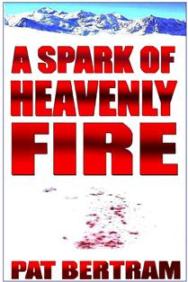
In A Spark of Heavenly Fire, for example, there is plenty of horror, such as the gruesome end of those afflicted with the red death, but generally the horror is more subtle than visceral — empty streets instead of bodies piled everywhere, struggles to maintain a semblance of normality instead of rioting. The experiments done on humans during both the hot wars and the cold wars twentieth century are not experienced first hand by the characters, but the slow reveal of those old horrors affect them deeply nonetheless.

A Spark of Heavenly Fire explores the theme of love in all its guises, not just romance, but friendship, caring, trust. There is love mixed in the villainry, too, because someone had to have lovingly created the organism that caused the red death. Unlike genre stories, there is no hero trying to stop the villain before he can release his “baby.” The deed had been committed before the story even began. We don’t see the story from the villain’s eyes as in a thriller, and it’s only at the end that we realize with what love and glee the villain had set his creation free.

More than horror or history, romance or mystery, A Spark of Heavenly Fire is the story of ordinary women who found only failure in the ordinary world where everyone else seemed to find success, but when the world turned upside down, they found their place and their worth, and they came alive. As Washington Irving wrote, “There is in every true woman’s heart, a spark of heavenly fire, which lies dormant in the broad daylight of prosperity, but which kindles up and beams and blazes in the dark hour of adversity.

This is the kind of fiction I grew up on as a reader, the sort of traditional story that digs deep so that what affects the characters also affects the readers, the sort of ungenrefied story I have always loved. And it’s the kind of fiction I grew up on as a writer. It was halfway through writing A Spark of Heavenly Fire that everything clicked and I became a writer.

***

Pat Bertram is the author of the conspiracy novels Light Bringer, More Deaths Than One, A Spark of Heavenly Fire, and Daughter Am I. Bertram is also the author of Grief: The Great Yearning, “an exquisite book, wrenching to read, and at the same time full of profound truths.” Connect with Pat on Google+

If Everyone Wants Peace, Why are there Wars?

Yesterday, along with thousands of other people, I blogged for peace. If you saw my peace post, you will know that my message focused on being at peace with the world rather than world peace. I don’t believe in “world peace” as a cause, though of course, I do wish for a world at peace.

I can feel your hackles rise and can hear your outraged “What sort of insensitive clod are you? How can you not believe in ‘world peace’ as a cause?” For the record, let me state that I, personally, have never started a war. I don’t think I’ve ever even bloodied another person accidentally or otherwise, and even if I were prone to violence, I still would not be creating world havoc. The truth is, wars don’t just happen. Wars are something politicians and other reprehensible characters create, and never on my behalf and always for their own ends. To say I believe in “world peace” would be like saying I believe in politicians telling the truth. It’s a nice sentiment, but isn’t going to happen until those creating the problem decide to stop creating it.

Traditionally, the United States is a peaceful country. Or at least its citizenry is. We have never wanted war. Politicians, military advisors, tycoons, and other greedy characters are the hawks among us, and they not only have created wars, they have inveigled us into accepting their dictates, sometimes on pain of death. During WWI, so many young men ignored the draft that the only way the warmongers could force them to fight in a war that 90% of USA citizens did not want was to make draft avoidance punishable by death.

A few years later, when world hostilities were fomented anew, the citizens of the USA again did not want to go to war. It took Roosevelt’s manipulations to get people irate enough to want to go. Some of you might have heard but do not believe that Roosevelt knew about the attack on Pearl Harbor and allowed it to occur anyway, but it is the truth. The USA and Britain had broken the purple codes (so-called because that was the color of the folder the codes were kept in) in time to warn those at Pearl Harbor, but Roosevelt and his hawkish advisors chose not to give the warning in order to coerce the USA into the war. (They did manage to move their newest and best warships and submarines out of the line of fire, though.)

Killing is not a basic instinct. Many of today’s — and yesterday’s — video games were developed by the military because studies had shown that repeated images of violence and death inured people to killing. During World War Two, as many as 85% of soldiers fired over enemies’ heads or did not fire at all. After World War Two, there was a concerted effort by the military to overcome this natural reluctance to kill, and apparently they succeeded because during close combat in Vietnam, only about 5% of soldiers failed to aim to kill. (These same desensitizing “games” were later released as toys for children. Is it any wonder that teens today seem desensitized to violence?)

Author Lee Child says that we don’t write what we know, we write what we fear, and that certainly is true in my case. I fear the machinations of the powerful, deadly, and calculating men and women who control our lives behind the scenes. This theme is most prevalent in More Deaths Than One (in fact, I came across the information about desensitization while researching the military, soldiers, and killing for that particular novel) though it shows up in milder forms in all of my novels.

So see? We are naturally a peaceful people who do not want war. It is others who force it on us whether we wish it or not.

***

Pat Bertram is the author of the conspiracy novels Light Bringer, More Deaths Than One, A Spark of Heavenly Fire, and Daughter Am I. Bertram is also the author of Grief: The Great Yearning, “an exquisite book, wrenching to read, and at the same time full of profound truths.” Connect with Pat on Google+

Dona Nobis Pacem

Thousands of bloggers from all over the globe are Blogging for Peace today.

One subject. One voice. One day.

Words are powerful . . . this matters.

The Worst Books by the Best Writers

I got an email today from someone at oedb.org (Online Education Database) asking me to share an article with my blog readers. Generally, I ignore such requests, partly because the articles seldom have anything to do with the topics covered in this blog, and partly because . . . well, this is my blog and my personal soapbox. But I am making an exception in this particular case because I liked the following introduction to the article, “The Worst Books by the Best Writers.”

It is said that even a blind pig finds a truffle now and then. That may be true, but writing a good book (despite what so many deluded amateurs seem to believe) is exceedingly difficult. A lousy writer is unlikely, under even the best circumstances, to produce a novel of any value. The reverse, however, unfortunately happens quite easily. The finest writer, if prolific enough, is still practically guaranteed to come up with a couple of duds. Lest anyone mistake the spirit of this inquiry, in which we look at failures on the part of authors whose reputations remain unimpeachable, let it be understood that our choices, though bound to rankle in some cases, are not meant to offend. It may be that we can learn something from great novelists’ misfires, perhaps as much as we can from their successes.

You can find the rest of the article and the list here: The Worst Books By the Best Authors.

Quite frankly, I’m not sure that I consider any of those writers to be the best. (They list Ernest Hemingway, DH Lawrence, John Updike, Tom Wolfe, S.E. Sinton, Kurt Vonnegut, Flannery O’Conner, Bob Dylan, Alice Sebold, Jeffrey Eugenides). I know don’t remember being particularly enamored of any of their books. But still, the person who wrote the article has a good point, that we can learn to be better writers by considering books that missed the mark.

My current concern is that except for a select group of writers and perspicacious readers, few people seem to value good writing or good books, let alone great books. In a world where everything has devolved into opinion, and one person’s uninformed opinion is the same another’s studied judgement, the only books anyone seems to care about are those that sell, usually because of some sort of titillation, whether erotica or violence. I sound jaded, I know, but what passes for good writing today makes me want to weep. If by chance the writing is okay, the story is often trivial, which is just as bad. Triviality is not the mark of a great writer.

It won’t be too long before literature degrades to the point where all we can do is celebrate the best books by the worst writers.

I’m going to Blog for Peace. Will You?

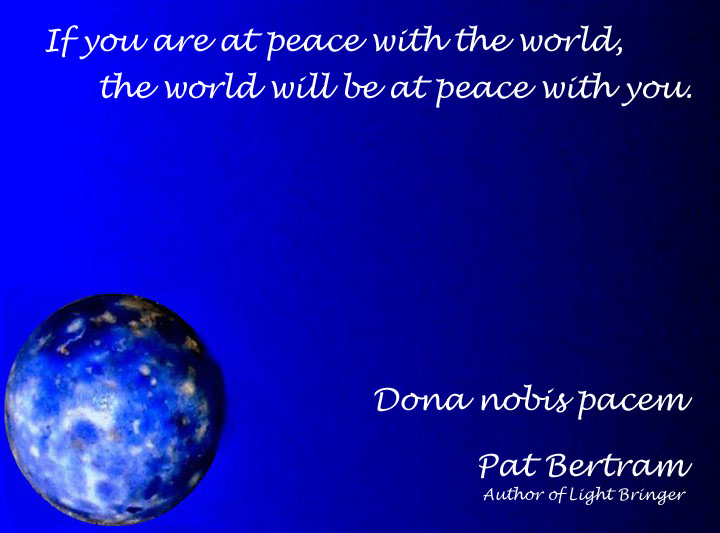
On Sunday, November 4, people all over the planet blog for peace. This year, I’m going to join the the Blog Blast for Peace, and you can join the movement, too. You make your own peace globe/statement or simply choose one pre-made at blogblastforpeace.com, and become – a peace blogger. http://goo.gl/wOaGs

Peace bloggers believe that words are powerful, and that this matters. http://goo.gl/b01KH

So, check out the website or check it out on Facebook.

How To Blog For Peace The short version:

1. Choose any graphic on this page. http://goo.gl/4xepL Right click and Save. Decorate it and sign it, or leave as is.

2. Send the finished globe to blogblast4peace@yahoo.com

3. Post it anywhere online November 4 and title your post Dona Nobis Pacem (Latin for Grant us Peace)

Sounds cool, doesn’t it?

The Surprising Power of Grief

The power of grief still manages to surprise me. I thought I was moving beyond its reach, but apparently, no matter how well I do, it still has the power to bring me low.

I haven’t had a major upsurge of grief for quite a while now. (I can’t remember the last time, to be honest.) Partly, I’ve been aware of my triggers, such as Saturday (the day he died), and being hungry, angry, lonely, tired (H.A.L.T.) and I am especially careful at those times. I’ve put away his photo so I don’t catch sight of it unawares, and I try to look forward, not backward. Still, despite all that, yesterday grief came sweeping into my life, and I had to let it run its course.

Why yesterday? Perhaps because I’m keeping busy as the week heads into Saturday and I maintain that busyness as the new week leaves Saturday behind, so that now I am most vulnerable in the middle of the week when my guard is down.

Perhaps because it was Halloween, and traditionally, Halloween is the night when the dead are closest to us here on Earth.

Perhaps because on Tuesday, for the first time, I felt as if I were awakening to life again. Every step forward seems to be celebrated with an upsurge of grief at what is being left behind, and this was an immense step that could only be celebrated with an immense upsurge of grief.

Or perhaps there was no reason at all.

My life mate/soul mate died two and a half years ago, and despite all those months of grieving, despite all the thousands of words I have written to make sense of what I experienced, I still do not completely understand the forces at work when it comes to grief. All I can do when grief hits is what anyone does in a storm — ride it out the best I can and wait for the calm.

***

Pat Bertram is the author of the conspiracy novels Light Bringer, More Deaths Than One, A Spark of Heavenly Fire, and Daughter Am I. Bertram is also the author of Grief: The Great Yearning, “an exquisite book, wrenching to read, and at the same time full of profound truths.” Connect with Pat on Google+

Have a chilly, scary, rationally-explained Halloween!

Please welcome JJ Dare, friend and fellow Second Wind author. JJ writes thrillers (False Positive and False World), and is one of the collaborators on the Rubicon Ranch serial. Her Rubicon Ranch characters amuse me because they are so unrepentently manipulative and unabashedly malevolent. (How can they not be with such a father as Morris Sinclair?)

Personally, I don’t like to be scared — it’s too . . .  scary — so I invited JJ  to talk what scares us and why we like to be scared:

Along with countless others, I love a good scare and this time of the year is perfect for terror and thrills. Halloween is right around the corner. Ghosts, goblins and zombies reign over the land. Witches, warlocks and evil fairies lurk around sharp corners. That bump-in-the-night sound makes your heart beat faster. The skittering across the floor in a dark room gets the blood pumping. What is that shadow outside flitting across the top of the window?

Why do we love to be scared? It’s a rhetorical question because the answer for one person is probably different for another. For myself, I like the rush of the initial terror followed by a reasonable explanation for the scare. That bump-in-the-night was a cat jumping on a chair that lightly hit the wall. The skittering noise was the dog’s nails clicking on the tile floow when she trotted down the hallway. The shadow was a low-flying owl, circling the window as the two animals took turns taunting him from their inside safety.

It’s a full moon every night for Weredog

Blame the inside animals. That’s what I did the other night. While I like the scares while I’m awake, I’m not so crazy about being abruptly ripped from a deep sleep by noises at night. I don’t like lying in bed for minutes that seem like hours, waiting for that thing under my bed to slowly crawl out and grab me. I don’t dare step onto the floor else I’ll be pulled into the under-the-bed void of my childhood.

As sanity and focus slowly descend, we can laugh at ourselves for our fright. A carryover from childhood, I occasionally have a dream of the purple monster rising in my bedroom window. The fright it gave me at six years old is remarkably the same at my current older age. As it slowly rises up, the malevolence it emanated decades ago is just as strong today. In my nightmares, I know it’s no good but I’m as powerless to stop it now as I was in my single-digit years.

The stories I create in my mind from the scary things happening at night become the roux for some of my written works. While I don’t always keep the story line tight with the dream, I can trace a few of my stories and books to their chilly beginnings from the bumps-in-the-night I experience.

I like to be scared. I love scary movies, thrillers, zombies, flying monkeys, and the like. Shadowy things at night give me delicious chills. The supernatural is delightful – as long as I can explain it away, rationally, in the light of day.

Have a chilly, scary, rationally-explained Halloween!

~~~~~~~~~~~~~~~~~~~~~~~~~~~~~~~~~~~~~

J J Dare is the author of two published books, several short stories and triple digit works-in-progress.

Current enthusiasm is sharpening intangible knives and co-authoring at Rubicon Ranch

***

J J Dare is the author of two published books, several short stories and triple digit works-in-progress.

Current enthusiasm is sharpening intangible knives and co-authoring at Rubicon Ranch

Facebook addiction

Dancing Skeletons, Skulls, and Funeral Services

I participated in a fundraiser over the weekend. (I’m not sure how much I actually participated, to tell the truth — I just signed up for a table to display my books.) The event was to raise money for hospice and bereavement classes, which are causes I believe in. I’m all for helping people get through their final days as easily as possible and especially to offer comfort and support to those left behind. It’s not just that grief slams into the bereft, making it almost impossible to breathe, but they have to deal with all the horrendous “death” chores such as planning a funeral and filling out the required official and financial paperwork involved in “removing” someone from the world.

A couple of the participants in the fundraiser were businesses offering funeral and mortuary services, which fit with the purpose of the event since they were trying to make it easier for those left behind by getting people to “preplan” their funeral arrangements. (I’m restraining myself to keep from ranting about the silly jargon of the death business, such as the redundant “preplan” and the totally ridiculous “cremains.” One rant per post is enough.)

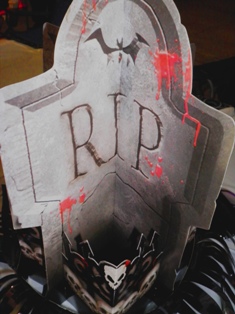
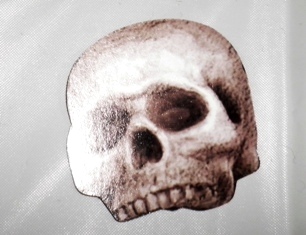
The only trouble with having representatives of the funeral business at the fundraiser is that this was not a serious event. It was a fun Halloween event geared toward children as well as adults. One of the mortuary booths played down their services, mostly providing pamphlets and pens for adults while offering various treats to the children, but the other funeral services participant went all out, decorating their booth with dancing skeletons, skulls, and cartoonish graves.

Perhaps the hushed and grave intonations of old-time funeral directors no longer have a place in our anything-goes society, but still, death deserves respect — for the sake of those left behind if for no other reason. Skeletons and skulls are one thing when they are used far from reality such as in Halloween festivities, but to mix such cartoonish symbols of death with the real thing just struck me as going way beyond taste and tact to downright tacky and insensitive.

They of all people should have known that for some people death is not fun, not a business, but an all too real horror.

(These photos show some of the decorations I’ve been referring to.  The top photo came from the wide border of the tablecloth. The others were a couple of the tabletop decorations. Lest you think I am being too critical, I am the not the only one who found the decorations inappropriate.)

***

Pat Bertram is the author of the conspiracy novels Light Bringer, More Deaths Than One, A Spark of Heavenly Fire, and Daughter Am I. Bertram is also the author of Grief: The Great Yearning, “an exquisite book, wrenching to read, and at the same time full of profound truths.” Connect with Pat on Google+

Near Death Experiences and the Mystery of Life

A friend sent me information about a new book, a neurosurgeon’s supposed proof that heaven is real. I admit I haven’t read the book, but I’ve read articles by the man, seen interviews of him talking about his experiences, read the reviews, and I can’t believe his experiences tell us the truth of what happens when we die. Regardless of what happened (or did not happen) with his cortex, he was not dead, so everything he says he experienced has to do with the mystery of consciousness — of life — not the mystery of death.

I felt such goneness after my life mate/soul mate died, such an irrevocable ending of his presence in my life and on earth, that although I believed in near death experiences during my questing youth, I can no longer believe people who had near death experiences were actually dead. Dead is dead. The neurosurgeon could have experienced something wondrous, something extraordinary and life changing, but he wasn’t dead no matter what his physicians said. It’s entirely possible (in fact, I’d say probable) the machinery that tracks our body processes and the current understanding of those processes, including that of the human biosystem, are imperfect. These NDE stories place too great a reliance on the doctors and the machines that proclaim death. Nothing on this earth — especially no machine and no doctor — is infallible.

During the past thirty-one months of my grief updates, I’ve often mentioned the feeling of utter goneness that I experienced, but I did not begin feeling my soul mate’s “goneness” until two or three hours after his death. Although I have no idea what happens to us after death, I do believe in the possibility of a continuum of life because I remember feeling him leave this earth.

At the moment of his death (when his heart stopped, that is), I did not feel anything except a moment of relief that his suffering was over. I watched the nurses clean his body and shroud it in a blanket, then I waited numbly for the funeral director. After she took away his body (in a black SUV, not a hearse), I left. The highway was dry, but about halfway home, my car suddenly went careening, around and around, back and forth, totally out of control. (I assumed I hit a patch of black ice, but that was such a peculiar night, I can’t say for sure.) I thought I was going to die, but oddly, I never left the road. The car finally came to a halt facing the wrong way on the highway. I was fine. So was the car. As I sat there gripping the wheel, I wondered if he had stopped by on his way out of this world to save me, to leave me a final reminder to be careful, or maybe give a shake of his ghostly head at this evidence of my carelessness. (He always worried that I wasn’t careful enough.) I remember feeling him leaving this earth — like a breath passing over head — but to be honest, I don’t know if I really felt his leaving at the time or if the impression was something my mind created later to explain the bewildering event. It was after this particular near death experience (as out of control as the car was, it truly is amazing that I survived intact), that the feeling of his goneness slammed into me, and I never again have had any sense of his presence in my life.

What was he doing for those hours before he left this earth? Finishing his dying, possibly. Closing down systems of the body and brain that have yet to be discovered. From grief, I have learned the power of our lizard brain, learned that there is way more to the brain — and human biology, psychology, and consciousness — than is in our textbooks. Do people experience things out of their normal lives when they are undergoing severe physical traumas such as almost dying? Many do. Some don’t.

As for the doctor who supposedly offers proof of heaven, the very length of his coma argues against his having died — if he’d been dead, his body would have begun to decay. Even if he was being kept alive by machines, he was still alive. His body was not dead. His brain is part of the body. Therefore his brain was not dead. And neither was he.

I am not denying a life continuum, a spectrum of life where this earth is the part visible to our physical senses, but a “near death experience” is a far cry from a “death experience.” Such stories offer insight into a greater glory, but it isn’t necessary the glory of heaven they offer but instead the glory of us here on earth.

***

Pat Bertram is the author of the conspiracy novels Light Bringer, More Deaths Than One, A Spark of Heavenly Fire, and Daughter Am I. Bertram is also the author of Grief: The Great Yearning, “an exquisite book, wrenching to read, and at the same time full of profound truths.” Connect with Pat on Google+
Double Whammy of Grief

For more two and a half years, Saturday was a sadder day for me. My life mate/soul mate died late Friday night or early Saturday morning, depending on how you look at it, and often my mind/body saw it both ways, with an upswing of grief on Friday that grew to a crescendo on Saturday and didn’t dissipate until dawn on Sunday. Even if I paid no attention to the calendar, grief surged, which always mystified me — how could my body know when I didn’t?

Today is a double whammy — not only is it Saturday, but it is the 27th, the date of his death — but there doesn’t seem to be a great upsurge of sorrow on these days and dates anymore. My sadness is like an underground river running beneath my consciousness, and it doesn’t profoundly affect the hard-won peace of my days, though it does ripple and churn at times, most notably when I remember why he is out of my life. Death is too big for me to understand, and the thought of his being dead always brings tears to my eyes. Even now, after thirty-one months, I cannot bear that he is dead. Perhaps he doesn’t mind, but since he has yet to communicate with me in any way that I can comprehend, I don’t know how he is doing or even if he “is.” (Many people see butterflies or experience things that seem out of place or out of time, but I never have.)

Lately I’ve been posting articles about looking forward, about being me, about trying to open myself to surprises and the power of the universe, and sometimes I wonder if I’m just fooling myself (and you) with this pretense of being okay with my current state of affairs. I’m not okay with it, but I can’t undo death — not just his, but death in general — and so I try to act as if the universe is unfolding the way it should. And perhaps, in the final analysis, that’s all any of us can do — fake it until we make it. (Whatever “it” is.)

Maybe there is a special destiny waiting for me and that is why I am still here, even though I somehow always assumed death would pull me out of this world when it took him. Maybe my being here is nothing but a trick of genetics or a roll of destiny’s dice, but whatever the reason, I am still here. And he is not. It doesn’t seem fair, though I still don’t know which of us got the worst of the deal and which of us got the best. Could it be there is no worst or best? I don’t know, and probably will never know while I’m here on this earth. I can only act as if this is the best for me and go from here to wherever life might lead me.

***

Pat Bertram is the author of the conspiracy novels Light Bringer, More Deaths Than One, A Spark of Heavenly Fire, and Daughter Am I. Bertram is also the author of Grief: The Great Yearning, “an exquisite book, wrenching to read, and at the same time full of profound truths.” Connect with Pat on Google+