Story Excerpt From “Second Helpings” ~ The Gift by Pat Bertram

Second Helpings
An Anthology of Holiday Recipes and Short Stories
From Authors of  Second Wind Publishing

Second Helpings

A perfect gift for short story lovers and food connoisseurs!

From sweet childhood remembrances to fanciful solutions of family dramas to romantic relationships that begin–or end–during the holidays, Second Helpings is an anthology of stories and memories, but most especially of recipes. Our end-of-year celebrations are occasions that bring reunions with unforgettable feasts and that one special, treasured dish. At the end of each story, vignette, reminiscence, you’ll find a recipe or collection of recipes that will make your next holiday memorable as well.

EXCERPT FROM:

The Gift
By
Pat Bertram

Monica Dryden hummed along with the Christmas carols on the radio as she pulled the chocolate chip cookies out of the oven. They were David’s favorite, and she’d baked them for him every Christmas Eve for as long as they’d been together—five years now—continuing a tradition his mother started when he was a boy.

Still humming, Monica transferred the baked goods from the cookie sheet to a plate she’d purchased for the occasion—white china with a cheerful holly border. Her family had been too poor and too indolent to do much for Christmas, so making the holidays special for David brought her extra joy.

David Hollister. Even his name seemed to promise holiday cheer.

She put the plate of cookies and a glass of milk on a tray, added a sprig of holly from the bowl in the center of the table, and bore her offerings to the living room where David watched television.

He didn’t take his eyes from the screen when she nestled against him, but he didn’t pull away either, as he sometimes did. She smiled to herself, thinking how pleased he would be with the burgundy sweater and pinstriped shirt she’d bought him.

“Do you have to do that?” David asked.

“Do what?”

“You’re humming.”

She clapped a hand to her mouth. “I’m sorry. I didn’t realize—”

“Are those chocolate chip cookies?”

“Of course.”

He clicked off the television and turned to face her. “We have to talk.” He spoke the words softly, almost kindly, but still they chilled her.

“Talk about what?” she asked warily.

“It’s not working out.”

“What’s not working out?”

“Us. We’re not right for each other. You’re too . . . predictable.”

She stared at him as if he’d spoken in an alien tongue. “Predictable? Me? You’re the one who insists on my doing the same things the same way. Remember those throw pillows I bought? You said—”

“That’s the old me. The new me wants . . . change.”

Her head snapped back as if she’d been hit. David wanted change? Since when? She opened her mouth and said the only thing that came to her stupefied mind. “Do you want me to make you a different kind of cookie?”

“This isn’t about cookies. It’s about . . .” He looked at her, expecting her to supply the words as she often did. She usually knew what he was thinking and could easily fill in his missing words, but now she couldn’t even hazard a guess.

David’s eyes shifted from side to side as if he were searching frantically for a way out of the conversation. Finally his gaze settled on his hands. “I want a divorce.”

Monica froze, then, getting control of herself, she pulled her shoulders back and lifted her chin. “You can’t have a divorce.”

He jumped to his feet and all but screamed, “I knew you’d be difficult about this. Why can’t I have a divorce?”

“We’re not married,” Monica said evenly.

He gaped at her for a moment, then a grin that broke her heart spread across his face. “That’s right. I forgot.”

Monica slumped forward, elbows on knees, head in her hands. He forgot? How was that possible? Just last week they’d talked about getting married. No . . . wait. She’d talked about getting married. He’d nodded with a faraway look in his eyes that made her think he’d been seeing their future together but apparently only meant he hadn’t been listening.

David’s voice seemed to come from a long way off. “I’ll guess I’ll be leaving.”

Monica jerked upright. “You’re leaving? But this is your apartment.” And then, all in an instant, she understood. “Who is she?”

***

Second Helpings is available in print and all ebook formats from Second Wind Publishing.

***

Pat Bertram is the author of the suspense novels Light Bringer, More Deaths Than One, A Spark of Heavenly Fire, and Daughter Am I. Bertram is also the author of Grief: The Great Yearning, “an exquisite book, wrenching to read, and at the same time full of profound truths.” Connect with Pat on Google+

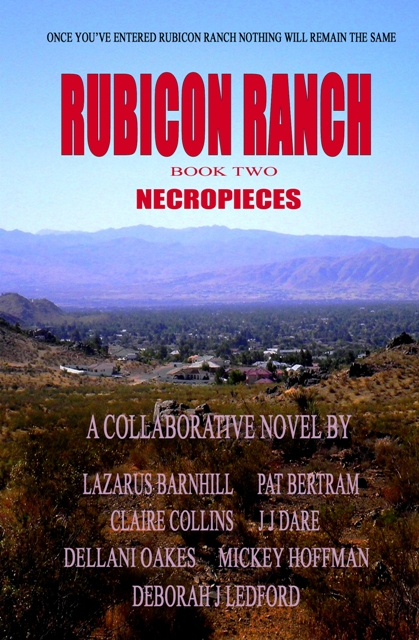
Rubicon Ranch: Necropieces — The Story Continues

Rubicon Ranch is a collaborative and innovative crime serial set in the desert community of Rubicon Ranch and is being written online by the authors of Second Wind Publishing. Seven authors, including me, are involved in the current story — Rubicon Ranch: Necropieces.

Residents of Rubicon Ranch are finding body parts scattered all over the desert. Who was the victim and why did someone want him so very dead? Everyone in this upscale housing development is hiding something. Everyone has an agenda. Everyone’s life will be different after they have encountered the Rubicon. Rubicon Ranch, that is.

Although some of the characters were introduced in Rubicon Ranch: Riley’s Story, a previous collaboration, Rubicon Ranch: Necropieces is a stand-alone novel. A new chapter is posted every Monday.

We hope you will enjoy seeing the story develop as we write it. Whodunit? No one knows, not even the writers, and we won’t know until the very end!

Chapter 25: Melanie Gray
by Pat Bertram

Melanie paced her rented house, wandering through the great room to the bedroom, then up the stairs to her loft office to stare out the window. The clouds that had skirted Rubicon Ranch all day yesterday had settled over the town in the early morning hours. The rainstorm had now weakened to a soft drizzle, but floodwaters were swirling out of the desert and down the middle of the street like dirty bath water in search of a drain.

Melanie half expected to see body parts floating by, but it had been forty-eight hours since she had found the ravens breakfasting on the disembodied foot, so perhaps by now all the necropieces had been discovered. Shivering, she turned from the window, trudged down the steps to the great room and then into the bedroom. She’d spent most of the fifteen weeks since Alexander’s death roaming the desert, and she found it almost impossible to relax during this enforced incarceration. If she were any kind of photographer instead of an amateur shutterbug, she’d be out in the desert despite the rain, chronicling the way the runoff was recreating the desert floor, but her tiny camera wouldn’t stand up to the moisture, and then where would she be?

She plodded back through the great room and up the stairs again. Her cell phone rang, and for just a second, her spirits rose. Alexander! He was finally calling to tell her he was coming back. Just as abruptly, the realization that he was dead hit her like a physical blow, and tears spilled down her cheeks. Why couldn’t she remember that he would never come home? His body had been cremated and the ashes stored in a square brass urn sitting atop the dresser until she could take them high up into the Rocky Mountains in Colorado and scatter them.

By the time she reached her bedroom where she’d left her cell phone on the nightstand, the phone had stopped ringing. The tiny screen showed the number for her agent, and when the phone rang again, she considered not answering. What could the woman say that hadn’t been said a dozen times before? Melanie already knew her deadline had passed. She already knew she owed the publisher either the book or the return of the advance. She already knew . . . Oh, crap. It would be better to talk to Dottie and get it over with.

“Yes?” she said, hating the hesitancy she heard in her voice.

“Dahling!” Dottie chirped. “I’ve been calling and calling. Have I got good news for you! I’ve been talking to Jack, and he says you can have all the time you need to finish the desert book. He’ll even hire a photographer for you. And he’ll send you five hundred thousand dollars, though I’m sure I can get him up to a million.”

“What does he want from me? A kidney?” Jack Nolan, her publisher, had a reputation for wringing every last bit of creative effort from his authors while paying the least possible advance. He got away with it because, despite his miserly ways, he was scrupulously honest, remitting every penny of the royalties his authors earned.

Dottie chuckled. “So cynical, dahling. It’s perfect, really. You’re there. You know the people and the place. And from what I understand, you live next door to the Sinclairs.”

“No,” Melanie said, without a hint of uncertainty in her tone.

“You don’t live next door to them? My sources—”

“I mean, no. I will not write whatever book Jack wants me to write. I’m going to finish the desert book and then . . .”

“And then what? Knowing Alexander, he probably left you not only broke but also in debt. Someone is going to write the book about Morris Sinclair. It might as well be you.”

“Wait a minute,” Melanie said. “How do you know what’s going on here?”

Dottie laughed. “The whole world knows. It’s everywhere. On television, Facebook, Twitter. It’s such a delicious story. The author of the infamous ‘Necropieces’ series has himself become a series of necropieces. His fans don’t believe he’s permanently dead. They are holding vigils, waiting for him to come back to life. And his head was found in the house where that little girl died. Riley? Is that her name? The girl that was kidnapped as an infant and then killed by her biological father? How can you not want to write the story of Rubicon Ranch? It’s going to be huge. Humongous.”

“Not interested.”

“Wait! There’s more!” Dottie said. “You gotta love this stuff. One of the suspects in Morris’s murder is Tara Windsor.”

“Who?” Melanie asked.

“You had to be living out in the boonies somewhere not to have heard of Tara. Oh, right—you’ve been out of the country for the past umpteen years. Tara is an actress. She was in that movie with that actor, you know, the one with the gorgeous abs? No, I guess you don’t know. Anyway, it turns out the suspect isn’t Tara at all. Tara is in Cabo with her pool boy. Don’t you just love it?”

Melanie sank down onto the bed, suddenly weary. “No.”

“And then there’s you,” Dottie said slyly.

Melanie sat up straight. “Me? What about me?”

“The cops say you’re a suspect. You knew that, right? Jack says if you killed Morris and tell all the gory details, he’ll up your advance to two million.”

A suspect. Melanie had presumed the Sheriff’s insinuation that he considered her a suspect was his way of manipulating her and keeping her off balance, but if he or someone in the Sheriff’s department had given out her name, then she really had a problem. She heard the echo of herself screaming at Morris, “You leave me alone, Sinclair, or I’ll be shooting your dead body parts.” Could she have been more foolish?

“Do you know a good lawyer?” She gave a small laugh, wanting Dottie to think the question a joke, but fear clutched at her belly with clammy fingers. Maybe she’d have to write Morris’s story in order to pay for a defense attorney.

“You might not be a celebrity on a par with Morris or Tara,” Dottie said, “but you and Alexander have quite a following. Since there’s been mention of your involvement in Alexander’s death—”

“Who told you I was involved in Alexander’s death?” Melanie demanded.

“Just a guess.” Dottie voice sounded smug, as if she’d caught Melanie out in a secret. But there was no secret when it came to Alexander’s death. Just shoddy police work. “So many important deaths in such a small place make for a good story,” Dottie added.

“All the deaths are unrelated,” Melanie pointed out.

“Perhaps, but it’s more likely they are connected somehow. After all, Morris had autopsy photos of that little girl, and Alexander took some photos of necropieces for Morris.”

“You knew about that?”

“Alexander accidentally included a couple of the pictures when he sent Jack a batch of desert photos.”

Melanie sighed. “Maybe you’re right. Maybe Alexander’s death had something to do with Morris and the evil that this place seems to bring out in people.”

“So can I tell Jack you’ll write the book if he gives you an advance of a million dollars?”

“No. But you can tell him I’ll consider it.”

“Good girl. I’ll see what I can do about finding you a lawyer.”

Melanie set the phone on the nightstand, and put her head in her hands. Oh, Alexander. Look what you’ve done to me. She took a few deep breaths, determined not to cry, but when the tears spilled over anyway, she jumped to her feet, ran up the stairs, and plopped in front of the computer. Immersing herself in research always helped take her mind off herself, and she needed to know more about Morris before she could give Dottie her decision.

Typing “Morris Sinclair” into her search engine resulted in over two hundred million hits. Morris’s website. Book and movie sites. Thousands of fan sites and cult groups. Blogs. Articles. She narrowed her search to “Morris Sinclair biography” and managed to piece together the story of a highly narcissistic and anti-social man in his late sixties who had started out as a normal kid, turned into a troubled and rebellious teenager, and grew into a sadistic beast during his tour of duty in Vietnam.

After Vietnam, Morris married a woman he’d only known for a few weeks. He worked as a roughneck on an oilrig and wrote tales of terror on the side. When the stories were published, they found an immediate readership. He quit work to write fulltime.

Morris and his wife had three children, two boys and a girl. His wife committed suicide while the children were very young. Or perhaps Morris had killed her? That made more sense to Melanie—what mother would kill herself and leave her children to be raised by the devil incarnate?

Although the thought of a million dollars and the freedom it could buy tempted her, Melanie did not want to spend the next few months of her life immersed in the evil that was Morris. She was all set to call her agent and turn down the deal, when the doorbell rang.

She opened the door to find Lieutenant Frio and Deputy Midget standing on her doorstep, their faces set as if in stone.

“Ms. Gray,” Lieutenant Frio said, “we’d like for you to come with us. Sheriff Bryan wants to talk to you.”

Melanie held out her hands, wrists together, but Deputy Midget shook his head. “Sheriff Bryan says not to cuff you unless you give us trouble.”

“Can I get my coat?”

Lieutenant Frio threw Melanie a stern look. “You’re not going to try anything?”

“No.” Melanie darted into the bedroom, grabbed a trench coat from the closet and tucked her phone in the pocket.

Sandwiched between the two law officers, Melanie marched out to the tan Navigator parked at the curb in front of her house. Deputy Midget opened the back door of the vehicle, put a hand on her head to guide her through the opening as if she were a common criminal, then lowered himself into the front passenger seat. The right side of the Navigator sank, and the tires seemed to scream out for relief.

Lieutenant Frio peeled away from the curb. The tires sent up huge plumes of floodwaters that broke over the vehicle, and made it seem as if they were driving through a car wash.

Melanie stared out the window, though she couldn’t see anything but the backwash of water. If she strained her ears, she felt sure she could hear Alexander’s ghostly laughter. During all their years of living in countries with no civil liberties, they had never had a single problem with the authorities, and yet now, not even four months after his death, she found herself at odds with the law.

Maybe this arrest was just another of the sheriff’s games? She had never known what he wanted from her, though when they met after she’d found Riley’s body, he had focused his attention on her, and made her feel . . . seen. No one but Alexander had ever looked at her that closely, and even Alexander had stopped paying attention to her years before. Or maybe what had seemed like manipulation—the sheriff concentrating his attention on her and then ignoring her—had all been in her head, a widow’s cry to be noticed.

Once they hit the dry road of the highway, the thirty miles to Rojo Duro seemed to slip past in an instant. Deputy Midget ushered Melanie to a small room with two chairs and a metal table bolted to the floor, and left her alone.

A mirror on one wall had to be a one-way window, but Melanie put a finger against the glass to be sure. Finger touching finger without any space told her the truth—anyone could be watching her from the other side, and she would never know. She resisted the urge to stick out her tongue in a childish show of temper. Instead, she sat tall in a chair, hands folded on the table, and tried not to think of where she was. Tried not to think of her pathetic life. Tried not to think of her uncertain future.

Nine minutes later, Sheriff Bryan entered the room and locked the door behind him. He perched one hip on the table, and stared at her, no friendliness in his eyes.

After a long moment, he heaved a sigh and said, “Why did you do it, Melanie?”

***

Pat Bertram is the author of the suspense novels Light Bringer, More Deaths Than One, A Spark of Heavenly Fire, and Daughter Am I. Bertram is also the author of Grief: The Great Yearning, “an exquisite book, wrenching to read, and at the same time full of profound truths.” Connect with Pat on Google+

How many subplots in a novel are acceptable?

In my Suspense/Thriller Writers’ group on Facebook, one author asked, “How many subplots in a book are acceptable?”

Most of the writers thought that one or two subplots was enough, but horror writer Rob M. Miller gave a wonderful response that I’m reposting here. Considering the ephemeral nature of Facebook, in a couple of days his comment would have disappeared into the great maw of FB, and I didn’t want it to be lost forever. Rob said:

A broad question begging for a broad answer, of which there is only one that’s truly honest, even if horribly vague:

As many as the author can competently handle.

In the hands of a master, there can be many subplots, even into the double and triple digits, as can be read in the incredible work Shogun by James Clavell, or The Hobbit by Tolkien.

But to have a masterful work, there doesn’t have to be many in order to keep the reader hooked and hungry for — One…More…Chapter!

Wiki Answers says that “subplot is like the secondary plot of your story. It means additional plot(s) to a movie, show, book, or play that help contribute to the main plot. Subplots are less important than main plots.”

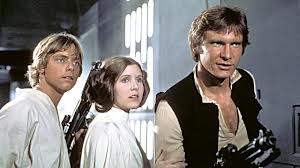
swIn Star Wars you have the following plot or through line: Ragtag rebels work to stop a space station from cementing the evil emperor’s hold on the galaxy.


That’s the plot. The spine. It’s the elevator speech, as well. Short, simple, and concatenates the story. But it’s also a bit simple — isn’t it? — even for Star Wars, which is not the most complex of stories.

How many subplots are in Star Wars?

I concede the number could be argued, but c’mon, fellow writers, there is more than one, and there is more than two. The mentoring of Luke, Chewie and Han as wanted criminals (smugglers), the romantic tripod of Leia, Han, and Luke, and in my view, even more.

Subplots, mini plots, lines of suspense, how many characters there should be and the proper ratio of bad to good. These things can all be made as complicated as desired, or as complicated as hell even when not desired.

The key is to simplify the approach, at least in one’s head, like with the through line given for “Star Wars.” The final product might be beautifully written and wonderfully controlled as an epic master work, such as Martin’s Song of Fire and Ice series, or Tolkien’s set of Hobbit adventures, or a chunky Tom Clancy novel . . . or it can be an equally wonderful, but streamlined story. There are no rules, save for don’t write boring. There are conventions, tropes, schemes and paradigms, some of more value than others.

What to do?

Author, know thyself, and then stretch 10%, putting down a tale as best you can, whether outlined or not, large-staged or mini, small cast or jam-packed.

If you want “one” of something, go for it. Shorts, for example, are a form that generally works better when they are a drag race from point A to B, and which end in a singular climax — but I’ve read exceptions. Perhaps your idea is an exception, too. But don’t be afraid of two, or forty-two. Keep track of stuff . . . be forgiving when it turns out that Hemingway was write about first drafts being shite, and then, like a conductor or architect, you can make sure that all the balls are being juggled properly.

***
With a love for reading and writing that started in his youth, Rob has traveled far to get to the place where he can now concentrate on breaking into the horror market.

Born and raised in the “micro-hood” of Portland, Oregon, he grew up as the oldest of three children, the son of a book-lover and a book-hater.

It was after two years of free-lance stringer work, and a number of publishing credits, that he tired of non-fiction and decided to use his love of the dark, personal terrors, and talent with words to do something more beneficial for his fellow man -– SCARE THE HELL OUT OF HIM.

Talking About How Clothes Make the Character

I am a guest at Joan P. Lane’s Fashion Flashback blog, which is a great resource for readers and writers of historical fiction, and anyone else who has an interest in the history of apparel.

floozyConsidering how little attention I pay to clothes in real life as well as in my fiction — I wouldn’t know a Manolo Blahnik, if it stomped on my foot, and in fact I had to Google the names of shoe designers to get a name to make this point — it doesn’t seem as if Joan’s blog would be a good fit for a guest post for me, but it turned out to be a wonderful experience. I talked about how clothes make the character, and many people left comments, which resulted in a rousing discussion.

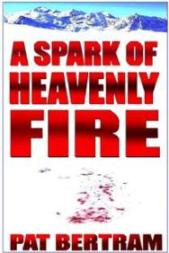
In the post, I explained (among other things) how I used clothes in A Spark of Heavenly Fire. One of the dramatic clothes moments in this story of a state quarantined because of a dreadful disease, is when my clothes-conscious character has to wear blood-soaked clothes for added warmth. (Actually, I don’t think I portrayed her as clothes conscious so much as self-absorbed.)

Clothing can be used as part of the stage action to show the nature of character rather than just to dress him or her. In another scene in A Spark of Heavenly Fire, a girl polishes a fingernail with the edge of her crop top, and in doing so exposes her breasts. It wasn’t a deliberate or flirtatious act on her part. She was a receptionist, and was simply polishing her nails to show her oblivion of the client standing at her desk.

A third significant clothes moment in A Spark of Heavenly Fire goes to show the depth of a woman’s character. She is big, hearty, aggressive, with a braying laugh, yet she wears feminine clothes such as challis dresses and blouses with ruffles.

So you can see that even though clothes are not a big part of my fiction, with very few words spent describing the characters’ apparel, the clothes they wear do have an impact on the story.

You can find the guest post and the ensuing discussion here: Clothes make the character.

What about you? How do you use clothes to show character or to further the plot in your story? If you don’t currently use clothes except to keep your characters from running around naked, how could you better use apparel to further your story?

***

Pat Bertram is the author of the suspense novels Light Bringer, More Deaths Than One, A Spark of Heavenly Fire, and Daughter Am I. Bertram is also the author of Grief: The Great Yearning, “an exquisite book, wrenching to read, and at the same time full of profound truths.” Connect with Pat on Google+

The Next Big Thing

A couple of months ago, Malcolm R. Campbell, author of “The Sun Singer” and “Sarabande”, invited me to participate in a blog chain, where everyone who is tagged answers a few questions about their work in progess, their next big thing. Since then, I have been asked to participate by Sheila Deeth and Dellani Oakes, and I was tagged by Emma McCoy  and Rami Ungar.

I’m not really working on anything of my own right now. I have a half-finished novel in hiatus, disjointed chapters of another novel (my attempt at doing NaNoWriMo a couple of years ago), and a short story I intended to finish this month but keep forgetting about. So, I’ve chosen to talk about Rubicon Ranch, a serial I’m writing with several other Second Wind authors. The first book in the series, Rubicon Ranch: Riley’s Story is available online or as a free download in the format of your choice. Currently, we are working on the second book in the series, and when this book is finished, we will continue with the serial in the hopes that one day it really will be the next big thing.

What is your working title of your book?

Rubicon Ranch: Necropieces

Where did the idea come from for the book?

This is a continuation of the Rubicon Ranch serial. It was conceived as a blog promotion, and it captured the imagination of several Second Wind authors. We each created a character and have sole creative control of that character, which makes the serial seem like a cross between a novel and a role playing game.

What genre does your book fall under?

Mystery, suspense, thriller. Take your pick.

Which actors would you choose to play your characters in a movie rendition?

My character is a forty-something widow, five feet five inches tall, grey eyes, brown hair, fit, oval face, flawless skin. Does that sound like anyone you know? If not, I’d choose any famous actress to play the part to make sure the movie was a success.

What is a brief synopsis of your book?

Residents of Rubicon Ranch are finding body parts scattered all over the desert. Who was the victim and why did someone want him so very dead? Everyone in this upscale housing development is hiding something. Everyone has an agenda. Everyone’s life will be different after they have encountered the Rubicon. Rubicon Ranch, that is.

Will your book be self-published or represented by an agency?

It will be published by Second Wind Publishing since they are the ones sponsoring the project.

How long did it take you to write the first draft of your manuscript?

We’ve been working on the current Rubicon Ranch story about eight months, and it’s not yet finished. You can find the work in progress here: Rubicon Ranch: Necropieces

What other books would you compare this story to within your genre?

I don’t know of any other book like this. It’s written by eight different authors, each taking a turn to write their chapter. We are writing blind — no outline, no idea of who is the killer, and we won’t know until the end. The authors are all presenting their character as a villain, and at the end, we will decide which one did it.

Who or what inspired you to write this book?

I did a round robin with a writers group, where someone started a story, and each writer took a turn at continuing the story. So many of the authors seemed to sabotage the story and other characters by introducing ridiculous elements, that I wondered what would happen if there was a bit more control, where one author could not sabotage another’s efforts. And so Rubicon Ranch was born.

What else about your book might pique the reader’s interest?

You can sign up on the Rubicon Ranch blog to receive notification of new chapters of Rubicon Ranch: Necropieces as they are posted, or you can check back every week. Things are heating up, and each character’s secrets are being revealed. I hope you will stop by Rubicon Ranch and join the fun! Several wonderful Second Wind authors are involved in the project: Dellani Oakes, Deborah J Ledford, Lazarus Barnhill, Mickey Hoffman, JJ Dare, Claire Collins. And me, of course.

Several gallant bloggers have agreed to continue with this blog chain. During the week of December 3rd, look for The Next Big Thing blog posts by Joylene Nowell Butler, A.F. Stewart, Sherri Hansen, Jerold Last, and A. J. Race.  It should be interesting to find out what everyone is working on!

***

Pat Bertram is the author of the conspiracy novels Light Bringer, More Deaths Than One, A Spark of Heavenly Fire, and Daughter Am I. Bertram is also the author of Grief: The Great Yearning, “an exquisite book, wrenching to read, and at the same time full of profound truths.” Connect with Pat on Google+

Love, Truth, Purpose, Freedom

Linda Bonney Olin interviewed me for her blog the other day, and the interview turned out to be special, at least for me, because it made me realize what my values are and how those values find a place in my books.

Linda asked me: Why did you choose to write A Spark of Heavenly Fire?

I responded: “A Spark of Heavenly Fire came about because of a Washington Irving quote: ‘There is in every true woman’s heart a spark of heavenly fire, which lies dormant in the broad daylight of prosperity; but which kindles up, and beams and blazes in the dark hour of adversity.’ When I read those words, I could see her, a drab woman, defeated by life, dragging herself through her days in the normal world, but in an abnormal world of strife and danger, she would come alive and inspire others. And so Kate Cummings, the hero of my novel A Spark of Heavenly Fire was born. But born into what world?

“I didn’t want to write a book about war, which is a common setting for such a character-driven story, so I created the red death, an unstoppable, bio-engineered disease that ravages Colorado. Martial law is declared, rationing is put into effect, and the entire state is quarantined. The world of the red death brings out the best in Kate and some of the characters she comes in contact with while bringing out the worst in others. Most of all, the prism of death and survival reflects what each of the major characters values most. Kate values love. Dee values purpose. Greg values truth. Jeremy values freedom. Pippi, who values nothing, learns to value herself.”

Next Linda asked if my fiction reflected my personal values, and I realized that of course my fiction (and non-fiction) reflects my values. Like Kate, I value love. Like Dee, I value purpose. Like Greg, I value truth. Like Jeremy, I value freedom. Like Pippi, I am learning to value myself. (You can read the entire interview here: Love, Truth, Purpose, Freedom: Pat Bertram.)

More than those qualities, though, I value kindness, and an innate kindness permeates all of my books despite the horrors the characters have to contend with. Though my heroes all have a love interest that helps form the story, none of my books can be classified as romances. The romance angle is not the main focus, and the romance is never conflicted. My couples in love treat each other kindly, showing a united front against the horrors of their world. For the most part, that’s the way I lived, so my characters can do no less.

***

If you would like to interview me, please let me know. I don’t usually open up this way, preferring to interview others, but turnabout is fair play. You can supply the questions, or I can, whichever you wish.

If you would like me to interview you instead, you can find the questions and instructions here: Author Questionnaire.

***

Pat Bertram is the author of the conspiracy novels Light Bringer, More Deaths Than One, A Spark of Heavenly Fire, and Daughter Am I. Bertram is also the author of Grief: The Great Yearning, “an exquisite book, wrenching to read, and at the same time full of profound truths.” Connect with Pat on Google+

Showing My Particular Vision of the World

All the books about writing I ever read stressed the importance of genre. The books recommended choosing a readily recognizable genre and sticking to it. Apparently, readers like to know what kind of book they are reading and don’t take well to authors who hop from one genre to another (and if readers do accept it, agents and editors sure don’t). The books also suggested developing a series character in that specific genre, one who is so compelling people will be waiting for the next book. And readers who come late to the series go back to read earlier books, so sales take on a life of their own, each book helping to sell the others.

Seems simple enough, but I ignored the advice. Each of my books is a stand-alone novel without a series character, and each straddles a shadowy line between genres. Since I didn’t create a series that helps promote me and my oeuvre, I have to start over each time a new book of mine is published, promoting each book individually, finding a new readership.

I’ve experienced all the setbacks that bedevil authors — too little support, too many rejections, too much time dedicated to writing-related activities, such as editing and promotion, and not enough time dedicated to writing. But the most disheartening of all is the difficulty of generating momentum with non-genre, non-series books.

And yet . . .

We can only write what we are compelled to write. We each have a vision, and we must be true to that vision, true to ourselves, true to our stories.

Diane Arbus, noted American photographer, said, “I really believe there are things nobody would see if I didn’t photograph them.” And so it is true with writers. We see things, either in the world or in the world of our imagination, that nobody would see if we didn’t photograph them with our words.

Each of my books shows a particular vision of the world as I know it. A Spark of Heavenly Fire shows the horror of an all-too-possible pandemic, the even more horrific steps the government is ready to take, and the various ways, both heroic and craven, people might react to such an eventuality. More Deaths Than One shows the unthinkable results of mind control experiments, experiments that have actually been perpetrated without our knowledge. Daughter Am I is a more light-hearted romp, a treasure-hunting tale of finding oneself in a most unlikely way. And Light Bringer, my latest novel, hints at a world where the Sumerian myth of a tenth planet — a planet of doom — is fact.

The disheartening aspects of writing without the scaffolding of a genre are more than offset by the joy of having created four unique visions of the world, dozens of characters who would not have life without me, vivid word pictures that exist only in my books. Like my lake of flowers from Light Bringer:

Becka kept running, needing no footpath to lead her to their destination. She could feel the music tugging at her, guiding her, singing her forward.

At first a faint red trumpeting, the music swelled into a full orchestra: orange church bells, yellow bugles, green violins, blue flutes, indigo cellos, violet woodwinds.

Beneath it all, she could hear the grasses murmuring, “Hurry, hurry.”

And then there it was, spread out before her in a shallow thirty-foot bowl. A lake of flowers— chrysanthemums and tulips, daisies and daffodils, lilies and columbines and fuchsia—all blooming brightly, all singing their song of welcome.

What things would people be deprived of seeing if you didn’t photograph them with your words?

***

Pat Bertram is the author of the conspiracy novels Light Bringer, More Deaths Than One, A Spark of Heavenly Fire, and Daughter Am I. Bertram is also the author of Grief: The Great Yearning, “an exquisite book, wrenching to read, and at the same time full of profound truths.” Connect with Pat on Google+

DeBacle (499 Word Contest Entry)

A couple of days ago I wrote Requiem For a Writing Contest to honor the passing of a 499-word Dan Brown tribute contest that used to be sponsored by a writing group I belonged to. Yesterday I posted a previous entry to the contest, and today I’m posting a third entry. This story snippet won a first place prize, and rightly so. The acrostic is made up of all the names of the members of the Writin’ Wombats, the group that sponsored the contest. I had fun doing the acrostic, but it took hours to come up with a message that made at least a little sense.  (FYI — FCR is an acronym for First Chapters Romance, a major writing contest with a book contract as a prize put on by Gather.com. Most of the people in the Wombat writing group met because of that contest, but I didn’t meet them until months later when I entered another first chapters contest on Gather — The Court TV Search for the Next Great Crime Writer contest. I came in about 6th or 7th, but in a round about way, because of that contest, I ended up with a book contract anyway.)

DEBACLE

Robert studied the words on the scorched document.

“Since you say it’s a victory, it’s vital I am not judged unless death intervenes. Just accept my elementary suggestions. Keep everything nice. More importantly, keep everything ready, and never destroy data. Always leave enough people around to create art. Think how you’ll persevere and ultimately live. Be eclectic and know everything. Reason won’t end now. Don’t you jape our heroes nor jail a man inappropriately. Each day and night accept joy in loving liberty.”

Four men, three Alsatians and one stray cat gave their lives to protect this message, and one woman severely burned her hand to save it from a fiery end, yet it seemed to be gibberish — the words, even the sentences made sense, but taken as a whole, they meant nothing.

The legend surrounding this fabled bit of parchment held that it contained the names of some very special people — writers who might make a difference, might even change the world. Why not? Other people had penned words that touched the hearts of millions. Of course, there was that one man whose very initials drew scorn and caused contests to be run in his dishonor, contests known only by the hated initials DB.

But this paper had nothing to do with that DeBacle. It was ancient, extending all the way back to the beginning, back to an era known by the cryptic initials FCR.

Robert sucked in a breath. Cryptic. That meant code, didn’t it? Perhaps the message was encoded. A simple substitution code perhaps. No one but he was intelligent enough to create a code more complex than that. He opened a desk drawer and pulled out a magnifying glass, intending to take a closer look at the matter, but a sound deflected his attention.

Drip. Drip.

Immediately an image formed in his mind of an albino with a severed hand, blood dripping from the stump. Wait. The albino had been in a previous book. And his hand hadn’t been severed; he’d been killed. Sheesh. How was he supposed to keep track of such details? He had more important things to do like . . . like . . . oh, yes, decode this message.

Clump. Clump.

A new sound accompanied the drip. Goosebumps covered his skin as the clumps drew closer. All the more reason to figure out the code quickly. It wouldn’t offer him immunity from a murderer, but it would give him a bargaining chip.

Drip. Drip. Clump. Clump.

No time to decipher the message now. Where could he hide it? He considered eating it — eeyuw — but once the words were digested, the meaning might still elude him.

Too late. The door burst open.

Sophie rushed inside, hair dripping, high heels caked in mud. “It’s raining out there. A day fit only for Wombats. Any luck figuring out the message?”

Heart hammering like an anvil, he managed a single word. “No.”

“Could it be an acrostic?”

“A what?”

“An acrostic. You know — you take the first letters of each word in order and see if they spell anything.”

“I knew that,” Robert said crossly. “Of course I knew that. I am a world-renowned cryptographer.”

He wrote out the first letter of each word, added appropriate spaces, and stared in amazement at the list of names that began with Sy and ended with Jill. Here was the solution! But which would be the next great wordsmith? And which, if any, would be the next DeBacle?

***

Pat Bertram is the author of the conspiracy novels Light Bringer, More Deaths Than One, A Spark of Heavenly Fire, and Daughter Am I. Bertram is also the author of Grief: The Great Yearning, “an exquisite book, wrenching to read, and at the same time full of profound truths.” Connect with Pat on Google+

The Lost Secret (499 Word Contest Entry)

Yesterday I wrote Requiem For a Writing Contest to honor the passing of a 499-word Dan Brown tribute contest that used to be sponsored by a writing group I belonged to. Today I’d like to post a previous entry to the contest. Although the entry was supposed to be a spoof of The Lost Symbol, it now seems as if it would be an interesting story in its own right. I’d have to rewrite it, of course, to lose the similarities between the beginning of this story and the beginning of DB’s, but it might be fun. Someday.

THE LOST SECRET

The secret is how to live.

Since the beginning of time, the secret had always been how to die, or rather, how to make others die — and he’d learned that secret well. Now he needed to learn an even greater secret — how to live . . . forever.

The thirty-four-thousand-year-old Voltari gazed down at the crucible cradled in his palms. It was filled with blood, the blood of all the innocents who had died that he might live.

Drink it, he told himself. You have nothing to fear. Yet he knew the truth — he had everything to fear. Without death, there is no reason to live. Without death, time yawned immeasurably. Without death . . . 

Oh, hell, just drink it.

As was tradition, he’d adorned himself in the latest ritualistic garb — well-tailored white shirt that covered his pale chest and expensive dark suit that made his thin shoulders seem broad. Around his neck hung a noose — a “power-tie” as the brethren called it.

The assembly of brothers encircling him all were adorned in the same funereal regalia. Only the color of their ties varied, from a new-bruise maroon to bright artery-gushing scarlet. Many of these men had powerful stations in life, the rest had powerful stations in death, yet the Voltari knew their ranks meant nothing within these walls. Here all were equals sharing an unearthly bond.

As he surveyed the daunting assembly, the Voltari wondered who in the outside world would ever believe this collection of beings would assemble in one place, much less this place. The room looked like a vault from a great and private banking institution in Switzerland.

The truth, however, was stranger still.

I really am in a Swiss bank vault, with gold stacked everywhere.

The Voltari’s forebears had come to Earth four hundred thousand years ago in search of the gold they needed to granulate like fine sugar and suspend above their world to keep the atmosphere from escaping into space. When the transplanted Voltari workers rebelled at the arduous and unending task of mining, refining, and storing the gold, their leaders had created a race of slave workers, which they facetiously named homo sapiens sapiens, to do the work for them.

And the humans, all unwittingly, had done their job. Most of Earth’s gold now resided in this vault and dozens like it all around the city. In days, weeks at the most, his fellow Voltaris would be arriving for the gold, and he had to make a decision. Now.

He could choose to stay on Earth and rule his financial kingdom forever, or he could choose to return to Votari and be . . . no one.

There was a third choice — not to choose, in which case he would join the ranks of the dead in the netherworld.

The secret is how to live, he reminded himself.

“It is time,” a voice thundered.

***

Pat Bertram is the author of the conspiracy novels Light Bringer, More Deaths Than One, A Spark of Heavenly Fire, and Daughter Am I. Bertram is also the author of Grief: The Great Yearning, “an exquisite book, wrenching to read, and at the same time full of profound truths.” Connect with Pat on Google+

Genre vs. Traditional Fiction

Yesterday I wrote about traditional stories, the kind of untagged, unlabeled, uncategorized and ungenrefied fiction we grew up on. There used to be certain sections for genres in libraries and bookstores, but most books were shelved alphabetically under “fiction.” I read all types of books without discrimination, but I found the most satisfying books not with the genre stories, but in with the general fiction. And that’s the kind of book I tried to write.

I don’t know why genre became the core of the book business rather than the peripheral it once was, but it’s probably because of marketing — as one editor who rejected Light Bringer told me, “I loved the story, and your writing is excellent, but I don’t know how to sell it. It doesn’t have enough science fiction elements to be science fiction, and it has too much science fiction to be anything else.” (The truth is, Light Bringer was never meant to be science fiction. It a traditional story based on both modern conspiracy theory and the Sumerian cosmology, though I admit, it does have elements that are construed as science fiction. Luckily, I eventually found a publisher who publishes traditional fiction as well as genre.)

I don’t know what came first — readers’ need to buy books that fit into certain categories or book marketers’ need to funnel readers into those categories, but it doesn’t really matter. Either way, this genreization of the book business makes me an outsider, both as a reader and a writer. I have a hard time sorting through the 130,000,000 million books available to find ones I want to read, and I have a hard time fitting my books into the available genres. (When I have to give a category, I say “conspiracy fiction.” That’s not a genre, or at least I don’t think it is, but it gives me a pithy and realistic way of labeling my books.)

The hardest of my books to categorize, besides Light Bringer, is More Deaths Than One. It has many of the elements of a thriller, but the story is not about what happened to the main character (Bob) but who is he and how he reacts to what happened to him. In a thriller, there should be some sort of showdown between the hero and villain, but in More Deaths Than One, that showdown is given to an offscreen character, and Bob hears of it second hand. Some readers think the scene is a cheat. Even I think it’s a cheat, or rather I would think so if More Deaths Than One was a thriller. The hero should always be the one who performs the decisive action in the story, but in this case, the decisive action is not the discovery of the truth, but how Bob and Kerry (the woman he loves) deal with that truth.

I could have had the showdown and then Bob and Kerry’s scene afterward, but then their scene becomes anti-climactic. I could have had the two scenes concurrent — the showdown and their reactions, but there is no way Bob would have opened up to her with a dangerous creature in the room. And most of all, he would never have brought her to the attention of the villain since he would have wanted to protect her at all costs.

You’d think that with the emphasis on the two characters that More Deaths Than One is romantic suspense, but it is far more than that (and far less. Those who have read it for romantic suspense don’t like it because the romance isn’t forefront. Nor is the conflict a romantic one — Bob and Kerry get along from the beginning). More Deaths Than One is traditional fiction — a story that demanded to be written in a certain way, regardless of any genre conventions.

As Mickey Hoffman, author of School of Lies and Deadly Traffic, said, “What are you waiting for? Read this book. Now. More Deaths Than One is much better than any ‘bestseller’ out there. The plot is constantly surprising and intricate, the characters draw you into the tale and the overall writing is top notch.”

***

Pat Bertram is the author of the conspiracy novels Light Bringer, More Deaths Than One, A Spark of Heavenly Fire, and Daughter Am I. Bertram is also the author of Grief: The Great Yearning, “an exquisite book, wrenching to read, and at the same time full of profound truths.” Connect with Pat on Google+