Steampunk Collaboration

I’m cheating tonight. I spent so much time writing a possible time travel scenario for the steampunk collaboration I’m involved in with seven other authors, that I didn’t have time to write a blog. So I’m posting the scenario. What do you think?

Possible time travel scenario:

A tourist is found dead in a time travel machine, clutching some sort of gizmo in his hand. Knowing that a death could kill business in what is supposed to be a safe traveling mode, the operators of the Time Travel Company decide to investigate.

They have some sort of recordings of where the traveler has been, one from each era he visited, (secret, of course, since if the tourists knew they were being recorded, it would put a damper on business) and the Time Travel Company sets employees to watching these tapes (crystals? discs? a sophisticated version of Babbage’s difference engine or analytical engine?). Since it’s real time, they all watch at the same time, otherwise it could take weeks for them to see what went on during the tourist’s trip. Perhaps news of the death leaked, and if they don’t discover the truth fast, they will be ruined, so time if of the essence. This is how we could get by the problem of doing five sets of eight chapters. After each set of chapters, the TTC operator and a trusted employee could discuss what they saw, see if there were any abnormalities, and when they don’t find anything out of whack, they continue watching the tapes.

Since our guy is by himself, posing as a tourist, chances are his reasons for traveling are personal. Considering that coal is such a polluter, perhaps his wife died of lung cancer, and if they weren’t wealthy, chances are they couldn’t get out of the city to clean air. Maybe he studies alchemy texts, finds a way to produce clean steam by means of cold fusion or atomic energy (supposedly the alchemists knew how to do this without producing radioactive side effects) or some other energy source, and he wants to go back to the past to find someone who will utilize the machine so that by the time his era comes around, there is no pollution. (There’s no point in his finding backers in his own time since his wife is already dead.) Another possibility is that he is looking for a way to blow a hole in time to change things, so that perhaps by the time he gets back to his era, things will have changed. He is killed before he can put his plans in motion. It would be up to you to decide why your character would want to kill him to maintain the status quo.

If he is lower class (or low middle class) his clothes would not be out of place in any period in the steam era. This would save him from traveling with an extensive wardrobe.

He and his agenda would be the unifying factor of all the POV characters. You tell the story from your character’s POV, but he is a major character in your substory. During each set of chapters, he grows more and more frantic, since he can’t find what he wants (someone to give his gizmo to, or perhaps a way to use it to blow a hole in time to change the future. We don’t see the end of his story, the TTC has to figure it out, because once he is dead, his story ends. We would not know in which era his story ended, because in the past, all time happens at the same time.

The benefits of this scenario are that the authors can decide what year/era they want their character to live in, can write their story without much regard to other authors’ stories (except to keep the tourist consistent), and the tourist would provide the unifying factor without having to spend weeks trying to figure out what all the chapters have in common. Another benefit is that the scenarios wouldn’t have to be based on history, but could be more personal as long as they were consistent with the time period you choose.

The drawbacks are that you might not be able to tell the story you want — you’d have to keep the story simple, focused on both your character’s agenda and the tourists, and somehow link them. You’d have to pick a past era, rather than a fanciful future era since a future era would do our traveler no good. And you’d have to pay attention to how the other authors develop the character of the tourist to keep him consistent.

If you don’t like this scenario, we can still do the one we talked about where all of our characters once were members of a think tank, and now someone is killing all the members. The remaining members (our characters) get together to figure out who the perpetrator is and why he wants them dead, and they discover that the assassin is one of them.

Either scenario would work for our purposes.

“Reading Pat Bertram Gets Better and Better”

I got a wonderful review from Glenda Bixler today. She’s a retired professional book reviewer who now writes about books for fun, and she loves my novels!!

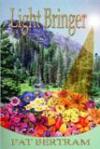
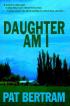
Glenda wrote: “I laughed with Pat while reading Daughter Am I, was scared by what happened in A Spark of Heavenly Fire, sighed with Pat’s Light Bringer (Click to read my reviews of the other books!)

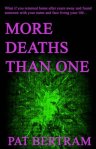
“But, Wow! I sat in amazed suspense as I read More Deaths Than One . . . 

“The first reason I was amazed was that each of Pat’s books are so uniquely different,  The second was that, for me, this, last book was a mystery/suspense — my preferred reading — and therefore the most enjoyable . . . so far! I do hope she continues writing! Her imagination and creativity is exciting and diverse — readers may not be able to rely on what each book will cover, but we can be sure that it will be top rate!” (Click here to read the rest of the review: “Reading Pat Bertram Gets Better and Better”)

Ahhh . . . balm to a writer’s soul.

Some people hated the way I ended the book, thinking I should have shown Bob discovering all that had been done to him, but to me, the story has always been about Bob and Kerry and how they dealt with each other during the terrible revelations. If they had interviewed the perpetrator themselves, the relationship would have been between them and the interviewee. Any interaction between the two of them would have been delayed, and hence would not have had the same impact. By using an admittedly passive third party device, I could concentrate on Bob and Kerry and how the truth affected their relationship in the moment.

And Glenda got it. She wrote:

“One decision by the author proved to end this story in a unique way, one that responded to the need to provide a satisfying conclusion without going into the gory details that took place. The surprise ending was not totally unexpected, since the writer had shown us over and over that there was something strange going on . . . But I had no clue what it was until the last major revelation was made . . . Leaving out the action of those final days or weeks, leaves the reader with the romantic suspense as the primary plot line One that is memorable and, at the same time, allows us to get past what actually happened . . . which was too horrendous to dwell on. Kudos to Pat Bertram for effectively presenting this strange but plausible tale! If you’ve already read Bertram, you should consider this a must-read! Highly recommended!”

Click here to read the first chapter of: More Deaths Than One

Rubicon Ranch: A Collaboration

Rubicon Ranch is a collaborative novel I am writing online with eight other Second Wind authors. 

A little girl’s body has been found in the wilderness near the desert community of Rubicon Ranch. Was it an accident? Or . . . murder! But who would want to kill a child? Everyone in this upscale housing development is hiding something. Everyone has an agenda. Everyone’s life will be different after they have encountered the Rubicon. Rubicon Ranch, that is.

If you haven’t yet checked the story out, you can find what we’ve written so far at: Rubicon Ranch.  Here is the current chapter, told from the point of view of my character, Melanie Gray, a recent widow who found the child’s body.

Melanie had taken the long way home from the restaurant, winding for hours through Rubicon Ranch, stopping to shoot exotic blooms in landscaped gardens and dainty wildflowers in unkempt yards. By the time she reached Tehachapi Road, she was exhausted. She half expected the sheriff to come after her, but apparently he’d accepted her brush-off as final — if you can call a full-fledged tantrum a brush-off.

Why did he keep getting under her skin? He wasn’t her type. Not that she had a type. Alexander was the only man she’d ever loved, and she’d fallen for him so hard she could still feel the bruises twenty-three years later.

Tears welled up in her eyes as she remembered her husband when they first met. His hazel eyes had blazed with golden lights as he smiled at her, and young fool that she’d been, she’d been dazzled. They had a great life, or so it had seemed. She’d felt safe with him as they traveled the world over. And free. What need had she of a house, a car, kids when she had him?

Well, now she had nothing but debts. And doubts. Had Alexander ever loved her as she loved him?

“Are you okay?”

The voice startled Melanie. She scrubbed away her tears and looked around. An old woman with tan, leathery-looking skin and dark eyes shaded by a wide-brimmed straw hat was standing by an open mailbox, envelopes clutched in her hand.

“Are you okay?” the woman repeated as she closed the mailbox.

Melanie curved her lips in what she hoped was a friendly smile. “I’m fine. Just hot.”

The woman brushed a forearm across her brow. “Too hot for this time of day, that’s for sure. Tomorrow is supposed to be even hotter if you can imagine that. Well, at least all this sweat is good for the complexion. Keeps one looking young.”

Laughing, the woman minced up the sidewalk to her front door.

Melanie let the smile drop from her face, glad she didn’t have to pretend to be amused at the woman’s feeble joke. Nothing amused her any more. Not the irony of Alexander dying while texting. He hated texting. Said it was creating a new language and a cult of idiocy. Not the sheriff and his unsubtle attempts at flirtation. Not finding a little girl stuffed in a television set. Had that been someone’s idea of a joke? A fitting resting place for a child who watched too much television?

She hastened up Tehachapi, but her footsteps slowed as she reached Delano Road. This neighborhood had never been welcoming, but now it felt threatening, as if unseen storm clouds were gathering above the custom-made houses.

Maybe, finally, the sheriff was going to investigate the murderer instead of investigating her. Maybe, finally, he was going to turn his predatory gaze in the right direction.

She almost felt sorry for the villain.

What is your goal for your book? What do you want readers to take with them?

I would like readers to take with them a slightly different way of looking at the world, perhaps seeing it in a better light or a maybe just a more truthful slant. And if not that, I’d like them to feel good about having spent time with my characters. The best compliment I ever received was from someone who said he didn’t want the book to end.

Here are some goals other authors have for their books. The comments are taken from interviews posted at Pat Bertram Introduces . . .

From an interview with Jerold Last, Author of “The Ambivalent Corpse”

I try to write books that are fast moving and entertain the reader, while introducing the readers to a region where I’ve lived and worked that is a long way from home for most English speakers. Montevideo, Salta, Machu Picchu, and Iguazu Falls are characters in these books, and the novels will have succeeded for me if some of you say that you’d like to visit these places because they seem so vivid and real.

From an interview with Polly Iyer, Author of “Hooked”

My goal is a good read. I always have issues in my books; otherwise, they wouldn’t interest me. I like to dig deep in my characters’ pasts in order to explain why they’re the way they are. Sometimes, in doing that, I get into some heavy subjects, but that’s okay.

From an interview with Qwantu Amaru, Author of “One Blood”

This is a great question. At its heart, One Blood is a book about the danger of belief. We believe things so blindly that sometimes we find ourselves in situations where that belief is challenged and we react badly. I would like readers to question more and follow less. Find their own paths and if they must believe in anything, believe in themselves.

From an interview with Benjamin Cheah, author of “Eventual Revolutions”

For this book, I want people to recognise that they have free will, that they can choose to make their lives better. It’s not easy, it requires a lot of work, but it’s possible.

From an interview with Alan Nayes, Author of “Smilodon”

My goal—and it’s the same with all my books—is to write the most entertaining story I know how. If the reader finishes one of my novels and can say he/she was entertained, then I did my job and I’m happy. In SMILODON, I did add a brief statement about the big cats of the world, but that was only to remind readers we are reaching a point when some of these magnificent animals may vanish forever, unless some action is taken to protect them and their environment.

So, what is your goal for your book, ie: what do you want people to take with them after they finish reading the story?

(If you’d like me to interview you, please check out my author questionnaire http://patbertram.wordpress.com/author-questionnaire/ and follow the instruction.)

Putting the “Who” in Whodunit

I’m collaborating with several other Second Wind Publishing authors to write a series of novels online on a blog. The first novel is about the death of a little girl. Her body was found in the desert outside a bedroom community that once had been a working ranch, hence the name of the series, Rubicon Ranch.

Collaboration is a bit of an over-statement. Rubicon Ranch is more of a cross between a round robin or campfire tale, with each author taking turns adding to the story, and a role-playing game. We each create and control a POV character, show who s/he is, what relationship s/he has with the deceased, and why s/he might want him dead.

I have it easy — my character, Melanie Gray, is a photographer/writer who wanders the desert taking photos for the coffee table books she used to write with her dead husband. (He wasn’t dead when they were working together, of course.) He died in a one-car accident while texting his mistress, though there are suspicious circumstances leading investigators to think that perhaps he was killed. Melanie has a talent for finding strange things in the desert, such as the child’s body stuffed in an abandoned television console in the first book, and the scattered body parts that will be found in the second book. This is all that leads the sheriff to suspect her.

The other characters, however, have to simultaneously prove that they are the murderer, yet also have a plausible explanation for why they acted guilty if they weren’t the murderer. (That’s because we don’t know whodunit until all the end of the book. So not only do readers of the ongoing story not know who the villain is, neither do we.)

In the first book, the authors solved the problem of simultaneously setting their characters up to be murderers while allowing for the possibility that they were innocent by giving their characters strange characteristics, such as sleepwalking, to keep the characters themselves from knowing if they were the killer.

In the second book that we are in the process of organizing, there is no way the killer can be unaware of having killed the victim. Even if by chance the character killed in some sort of fugue state, the character will still be faced with a dead body, which he or she will cut in small pieces and distribute it around the desert.

So how do you write a character from a strict third person limited point of view, from inside the character’s head, proving that your character is the killer, while at the same time giving yourself an out if the character turns out to be innocent?

Well . . . If your character has killed before, you can have him/her worrying about if the sheriff will find out what s/he did, without being specific as to which crime s/he is wondering about. You can have your character act guilty — perhaps desperately trying to cover something up. You can have him/her try to pin the murder on someone else, offering assistance to the sheriff, which would make your character seem guilty, but in the end (if your character is not the killer) have an alternate explanation. You can be hiding something in your house that can be construed as your having Morris’s body that you’re cutting up bit by bit. I’m sure you can come up with better ideas than these, but you get the idea.

I’m looking forward to seeing what the other authors come up with.

Meantime, if you haven’t checked out Rubicon Ranch, and wish do so, click here: Rubicon Ranch.

How To Keep From Having Too Much Exposition in Your Novel

In an online discussion today, a writer asked what was the best way to keep from having too much exposition in your fiction, and how to insert it if necessary. Apparently, her character spends a lot of time alone, and she needed to know how to insert exposition during the long scenes when he is by himself.

That is a tough situation. Characters alone are hard to write. They need someone to butt heads with, they need to show readers who they are through comparison or contrast with other characters, and they need allies and enemies. When a character is around others, tension is inevitable, so conflict comes naturally. When a character is by himself, he has perhaps less interesting conflicts — the environment, his own nature, personal disasters. A lot of books are based on such non-human antagonists or inner demons, but readers like to see characters acting and reacting with other characters.

In scenes with only one character, it’s best to keep exposition to a bare minimum and focus on the action. One character alone for long periods of time without another character to butt heads with gets boring for readers, and exposition only exacerbates the problem. Feed the exposition into the story bit by bit as you need it, and refrain from long exposition dumps.

My novel Light Bringer, available from Second Wind Pubishing, is based on myth, both Sumerian myths and modern conspiracy theories, and all of that background information had to be presented to show the sweep of history. I created a discussion group among several colorful characters, each with his or her own take on the situation, then used the various conspiracy theories to help create the the characters and show their differences, which became a lively and painless way of dealing with the exposition. In addition, I ended up with a cast of ready-made characters I could pull from whenever I needed a minor character to fulfill a role.

The best way to insert exposition, though, is to make one character desperate to get the information, that way readers will want it, too. I used that technique in A Spark of Heavenly Fire, also available from Second Wind Publishing. The thriller required a lot of background information about biological warfare. I made one character desperate to hear the information, but I parceled it out bit by bit to make his desperation for the truth grow stronger while he became increasingly sickened by what he learned.

But you can’t use that particular technique with a single character, unless perhaps he is ransacking someone’s files, all the while fearful of being discovered. With a single character, it’s best to keep with action. Exposition slows the pace of the book, so does a single character unless he is dealing with a lot of external conflict.

Exposition can also be used to give readers a breather between fast-paced scenes, but even so, information dumps seldom add to the excitement of a story, so they have to be used sparingly. Exposition is best spread throughout a book, feeding readers only that which they need to know in order to understand the current scene.

A common mistake beginning writers make is to think that readers need to know the entire backstory before they can get involved with the characters, and so first chapters are generally exposition-heavy. I have a great fix for that — leave everything as is until the book is completely finished, then cut out the first chapter. (Which is what I did for A Spark of Heavenly Fire.) You will be amazed at how much of that first information dump is spread delicately throughout the book when needed, making the first chapter redundant. Of course, if there is a bit of necessary information in the deleted chapter that does not appear in the remaining chapters, it’s easy enough to find the proper place to insert it. The first chapter of a book should begin in the middle of the action, not before the action even begins. And speaking of first chapters, please, don’t ever use flashbacks in the opening scenes. Establish your  story, and then, if necessary, use flashbacks judiciously.  By definition, flashbacks lack the immediacy of present action.

What inspires you to write a particular story?

Like most writers, I’ve written the beginnings of a few books that have gone nowhere. I have zero interest in pursuing them. On the other hand, for various reasons, the books I did write took hold of my imagination and didn’t let go until they were completed. For example, A Spark of Heavenly Fire came about because of a Washington Irving quote: “There is in every true woman’s heart a spark of heavenly fire, which lies dormant in the broad daylight of prosperity, but which kindles up, and beams and blazes in the dark hour of adversity.” I loved the idea of a woman who felt half-dead when everyone else was doing well, but in a time of dying, she came to life. Since I didn’t want to do a war story, I created a plague — the red death. I had fun with that, and the story so captured my imagination that I had no choice but to pursue it.

Here are a few inspirations other authors. The comments are taken from interviews posted at Pat Bertram Introduces . . .

I was inspired to write Disco Evil because I believe everyone deserves a fair go and that people who go out of their way to be nasty to others really do build up bad karma for themselves. I happen to like quest/adventures stories so that’s how Ghost Dance came about. Two of the women in Ghost Dance are based on certain stand up and be counted sort of ladies I know and love in real life.

From an interview of Malcolm R. Campbell, Author of “Sarabande”

“The Sun Singer” is about a young man’s solar journey. I wanted to look at the other side of the coin, so to speak, and write about the lunar-oriented ordeals of a young woman. Sarabande, my protagonist first appeared in “The Sun Singer.” However, I have written her story so that it can be read as a standalone novel, a woman’s story that could be whole in and of itself.

From an interview of J J Dare, Author of False Positive and False World

I was inspired to write about hidden government agendas and their devastating aftereffects when I thought about why we, as a nation, involve our resources in other nations’ conflicts. My biggest inspiration: the eternal, What if?

From an interview of Joylene Nowell Butler, Author of “Broken but not Dead”

Honestly, one day it occurred to me that there weren’t enough stories about fantastic 50-year-old women. I wasn’t quite 50, but decided that while it might be nice to be young and beautiful like Cheryl Ladd and all those other famous ladies from my era, there’s nothing quite like the wisdom and empowerment that comes with age.

I was inspired to write the book after reading some nonfiction books about contemporary domestic slavery and human trafficking.

From an interview of Sheila Deeth, Author of “Flower Child”

Actually it was a writing competition at our local writing group. The prompt was to write a short piece inspired by music, and I had John Denver’s Rhymes and Reasons spinning around in my head — For the children and the flowers / Are my sisters and my brothers… I found myself putting a childhood misunderstanding together with my adult experience.

If you’re a writer, what inspired you to write a particular story? If you’re a reader, what inspires you to read a particular story?

Balm to a Writer’s Bruised Psyche

Not only do I not understand this new publish-anything world, I don’t understand this everyone-is-a-reviewer world.

It used to be that professional reviewers (I am including reviewers employed by newspapers and magazines in this category) pretty much decided what were considered worthwhile books, and readers either paid attention to those recommendations and bought the books or ignored the recommendations and bought whatever they felt like. Today, anyone is a reviewer, whether s/he is qualified or not. All it takes is an opinion. The thing is, readers who see those reviews don’t take them as an opinion. They give them the same credence they gave the professional reviewers.

To be honest, I don’t know if it’s better to have a certain literary elite passing judgment on the books or if it’s better to have casual readers doing it. Either way, people are “grading” books based on nothing more than a whim. And those whims can destroy a writer’s career, or at least keep people from buying her books.

Light Bringer is my magnum opus, the result of twenty years of research into myths, both ancient and modern. I created an entirely new worldview based on these myths, one that could very well be true if the Sumerian cosmology and today’s conspiracy theories are true. According to the editors and agents who rejected the manuscript, it was unsellable. It had too many science fiction elements to be commercial and not enough science fiction elements to be science fiction. Because of this, I purposely did not send Light Bringer out for review. People generally hate books they can not categorize, and at best, Light Bringer has a narrow niche. Still, a few readers have given the book glowing reviews, so when a reviewer contacted me recently asking for a copy of the book to review, I sent it to her.

I don’t know why she wanted to review Light Bringer.  As it turns out, she’s a romance reviewer, and Light Bringer is not a romance and was never promoted as such. Even worse, she hadn’t a clue what the book was about. To be fair, she is used to paranormal romances she can quickly skim through, but I don’t want to be fair to her since she wasn’t fair to me. She wrote a terrible review and posted it on the review site. Why? What’s the point of posting a terrible review of a book you don’t understand? It’s not as if I asked her to review the book. She asked me. Adding to the insult, the review doesn’t even make sense. If it didn’t have the name of my book on it, I would never have recognized it as my story.

On the other hand, some people do understand Light Bringer and they honor the book with their poetic descriptions.

Sheila Deeth wrote:

Pat Bertram’s novel soars in her descriptions of mystery and scenery. The song of the rainbow flows through the characters, binding them together, while the silence of the great unknown drives them and pulls them apart.

The unknown, when finally revealed, is satisfyingly strange, though, unlike many of the characters, I maintain a healthy respect for the integrity of scientists and science. Romantic subplots are simultaneously lyrical and down-to-earth; dialog is natural and sometimes laugh-out-loud fun; secrets of history and astronomy are intriguing; and the whole is a fascinating read — a touch of old-fashioned sci-fi, blended with modern magic and corporate greed, shaken, stirred and conspired against, then woven into beautiful words.

Aaron Paul Lazar wrote:

I’m already a fan of Pat Bertram’s books. I’ve read them all and loved them deeply. But LIGHT BRINGER was something completely new and surprising… surprising in its freshness, originality, its genre bending brilliance. Part thriller, part fantasy, part sci fi, part mystery…its plots were large and complex, encompassing themes that plague us every day; offering social and world commentary blended with weather trend observations (where ARE all those tornadoes and tsunamis coming from??) I do believe Bertram has defined a new genre, and it is a pure delight. Fresh. Original. Riveting. The characters are real and engaging. I particularly enjoyed the bit of romance between Luke and Jane — yes, another subplot. I couldn’t put it down and extend my highest compliments to Ms. Bertram for her supremely smooth writing — there are no hiccups in this book. Very highly recommended.

Ah, balm to a writer’s bruised psyche.

Rubicon Ranch: A Collaborative Novel

I am involved in a wonderful project with eight other Second Wind authors. Rubicon Ranch is an ongoing collaborative novel that we are writing online. It is the story of people whose lives have been changed when a little girl’s body was found in the wilderness near the desert community of Rubicon Ranch. Was her death an accident? Or . . . murder! But who would want to kill a child? Everyone in this upscale housing development is hiding something. Everyone has an agenda. Everyone’s life will be different after they have encountered the Rubicon. Rubicon Ranch, that is.

Each of us writers is responsible for the development of our own characters. My character is Melanie Gray. She has traveled the world with her husband, a world-renowned photographer. Together they authored many coffee-table books (she did the writing, he the photographs). One of the books told about mountains of the world, one about rivers, one about oceans, one about forests, and now they have a contract to do deserts. After they rented a house in Rubicon Ranch to begin their in-depth study of the southwestern deserts, he died in a car accident.

Now, not only does Melanie have to deal with the pain of losing her husband and figuring out what she’s going to do for the rest of her life, she needs to fulfill the publishing contract or she’ll have to reimburse the publishers, which she cannot do because the advance is all but spent. Since she is not a photographer, she roams the desert bordering on Rubicon Ranch, taking hundreds of photos, hoping that a few of them will accidentally end up being as brilliant as her husband’s photos always were. She finds the child’s body and takes photos of the scene after calling 911. At first she is a suspect but once the Sheriff has ruled her out, he requests her help in reading the desert and desert-related clues. Still, the sheriff does not trust her completely, thinking she is hiding something.

Chapter 26: Melanie Gray — by Pat Bertram

Fury, like wildfire flashed through Melanie. Fury at the sheriff for paying his silly games when people were dead, fury at herself for playing his fool.

She’d been flattered that he thought she could help with his investigation, but apparently the only thing he’d been investigating was her and how to get in her panties. And she’d fallen for it. Cripes, what an idiot! All her resolve not to let him get to her had been for nothing.

And that whole seduction scene—”So maybe, when I need you to help me, I won’t have to bully you. You’ll cooperate with me because you understand that getting my job done honestly is the most important thing to me.” Did he believe his own drivel? And anyway, how could she help when he wasn’t doing anything? It had been two days since Riley died. Didn’t they say that if they didn’t catch a killer within the first forty-eight hours that chances are he or she would never be caught? And the sheriff had wasted those precious hours trying to seduce her.

She’d fallen for Alexander’s crap and apparently she hadn’t learned anything, because here she was again, playing straight-woman for another unprincipled clown. Alexander, at least, had offered her adventure and marriage, and for a while he had even been faithful. But Seth? What did he have to offer? Nothing. He was married, and he was a taker. He’d take everything she had, which wasn’t much, just her integrity, and she’d be damned before she let him tarnish that with a tawdry affair. She’d seen the look in his eyes when he’d said “And I know you’d rather claw out my eyes and slash my throat than let me touch you.” And that look had belied his words. He seemed to think all he had to do was pretend to know her and she’d fall into his oh, so understanding arms.

“What?” he said, sounding as if he didn’t know exactly what was going through her mind. How could he not? He, Sheriff Seth Bryan, the great detective.

“As if you don’t know.” Melanie spit the words from between clenched teeth.

Seth’s brows drew together in an almost believable though comic look of confusion. “That’s such a typical womanish remark. I thought you were different.”

“You thought I was gullible and naïve. You thought since I put up with Alexander’s philandering, I’d put up with yours, too, but that is not going to happen. Only a fool gets involved with a married man, and whatever you think, I am no fool.”

Seth held up his hands, palms toward her. “Whoa.”

“Being a widow does not make me ripe for the plucking. I don’t need to be serviced like a bitch in heat. Believe me, the last thing I need in my life is a man, especially a married man. Calling it separate maintenance does not make you any less married.”

He flashed his teeth. “So you do like me. You’re protesting too much.”

“Not protesting enough, apparently, or else you wouldn’t have that silly grin on your face.”

He lost the grin. “What’s going on here? I thought we were having a nice meal while we went over the case.”

“You should be going over the case with your deputies. They, at least, seem to understand how inappropriate it is for you to include me in your investigation. Unless I’m still a suspect and you’re trying to get me to let down my guard and confess?”

“I told you, you were never a suspect.”

“As if playing with me, gigging me as you called it, is any better. So let’s discuss the case. What were the results of the autopsy? Was Riley murdered or was it an accident? If she was murdered, how was it done and who did it? Were there drugs in her system? Have you interrogated her parents yet to find out what they’re hiding? Have you found out who the dead man is and what, if anything, he has to do with Riley’s murder? You pretty much ignored me when I said he looked liked Riley, but then, that’s understandable. I never got a good look at the girl. All I saw was her jaw line, her nose, and her eyebrows, so whatever I blurted out after seeing the man’s corpse has to be discounted. Did the same person kill both of them? Or were there two different killers? Or . . .” Melanie paused to grab the thought that flitted through her mind. “Did he kill Riley and someone else kill him?”

Seth picked up his sandwich, dipped an end in the au jus, bit off a piece, and chewed slowly.

Melanie nodded. “That’s what I thought. You’re all talk.” She deepened her voice and mimicked him. “‘We have to solve these murders.’ Yeah, like there really is a we. Well, there was a we, but that was Alexander and me. You and I will never be a we.” A cough shuddered through her torso. She took a long drink of water, hoping she wasn’t coming down with a cold but was merely dehydrated from the strong air-conditioning and her rare monologue.

Seth gave her a searching look, opened his mouth and then closed it again with what sounded like a resigned sigh. She wondered what he’d been going to say and why he thought better of it, then she let out a sigh of her own. It didn’t matter. She had enough to do with grieving and fulfilling her book contract. She had nothing left for the sheriff and his investigation. Whatever he might think, she really didn’t know anything. Well, that wasn’t strictly true. She did know one thing.

She threw her napkin on the table and stood, ready to flee.

Seth gaped at her. “What’s going on?”

“I’m going home, Sheriff Seth Bryan. I’m through with your games. You lied about investigating Alexander’s accident. I saw the photos in the newspaper and I visited the scene of the accident. There was nothing there to indicate that the crash had been anything other than an accident. Perhaps someone had tampered with the car, but the only way to find that out was to investigate the vehicle itself. And you didn’t care enough to check it out.”

***

An additional chapter of the book will be posted every Monday. Please join in the adventure — it should be fun! We don’t even know whodunit and won’t know until the end. You can find the earlier chapters here: Rubicon Ranch

All the Elements of “Daughter Am I” Meld into a Life-like Drama

I don’t often get fan mail, so when I do get a personal message, it really perks me up. And when I get a message like the following, it makes my day:

Hi Pat –

I have a confession to make, and this has nothing to do with the fact that you plan to read my book. No ulterior motives.

Normally I avoid buying/reading books by friends online because 80% of the time (a conservative figure) I find myself stuck with a real clunker, then feel frustrated as to what to “report” when the “writer” friend wants my opinion. I don’t like being dishonest but, you know how it is. Underwhelmed is one thing, but having to read a bumbling, disjointed, retch-worthy error-filled story resembling an eighth grader’s essay makes me nuts. So I tend to run the other way.

Discounting my modesty about my writing side, I will freely admit to being a terrific reader. No reason for shyness or modesty there. I know what I like and can tell the difference between the work of a hack and a real talent. Pat — you have talent.

I’m not sure why I broke my own “rule” when I bought Daughter Am I yesterday — but the book hasn’t disappointed me. It’s a great story. The characters are believable, identifiable, purposeful, & entertaining. The scene description is just enough — not undercooked or burnt to a crisp. And the plot moves, holds attention & makes the reader (me) anxious for more. You certainly understand how to make all elements of a story meld into a life-like drama. There you have it — my unsolicited opinion. I’m really impressed with Daughter Am I and thought I’d say so.

Have a great day.

These words brought tears to my eyes. That someone liked my book so much they felt compelled to write me was an unexpected and most gracious Christmas present.

Quite coincidentally, I am being interviewed on my publisher’s blog today about this very book. If you’d like to know more about the novel and its cast of entertaining characters, please click here: Interview With Pat Bertram, Author of “Daughter Am I”

All my books are available both in print and in ebook format, perfect for holiday gift giving. You can get them online at Second Wind Publishing, Amazon, B&N and Smashwords. Smashwords is great! The books are available in all ebook formats, including palm reading devices, and you can download the first 20-30% free!