Last Day for the “More Deaths Than One” Contest

Today is the last day to enter my More Deaths Than One contest. (Entries must be received by midnight tonight EST.)

The premise:

A friend of mine found an obituary in the paper that could have been for his mother — the woman had the same name, lived in the same general area, was the same age, had the same number of children, and one of the children had approximately the same name and age as the friend. There was no relationship, merely coincidence but, joking, I said, “What if her son really is you?” That “what if” eventually became More Deaths Than One.

The contest:

Write at least a paragraph and no more than a page, telling how would you develop a story using this scenario. The three most imaginative entries will be posted on the Second Wind site for readers to vote on. The top entry will win an autographed copy of More Deaths Than One and your choice of two other books from Second Wind Publishing. You can find the entry form at: Second Wind Publishing.

We’ve already received some really great entries, including this one:

I would not develop the story. I am a reader, not a writer. I read and analyze books, not write them. Quite frankly, I am much more interested in seeing how the author Pat Bertram develops the story rather than how I would. How does she make the coincidence believable? How does she maintain the level of suspense throughout the novel? How does the story differ from other books written in the genre?  How is the book innovative? How does the story adhere to more traditional conventions of the genre? It is often said that those who can’t write, teach. On the contrary, writing and analysis (and teaching) are completely different skills, each worthwhile in its own right. I am not a writer. Rather, I am a reader who enjoys reading other authors’ books and using my imagination and analytical skills to review and share books with other readers.

It won’t be long until you can answer those questions yourself.

add to del.icio.us : Add to Blinkslist : add to furl : Digg it : add to ma.gnolia : Stumble It! : add to simpy : seed the vine : : : TailRank : post to facebook

A Spark of Heavenly Fire Update — Copy-Editing Hell
I found additional mistakes to the proof copy of A Spark of Heavenly Fire, so it will be a couple of more weeks before it’s released. I’ve been afraid that I’m going to be stuck in copy-editing hell for the rest of my life, but I’ve decided that perfection at this point really is impossible. I had the idea that single-handedly I needed to eradicate the POD publishers reputation for releasing less than stellar books, but there is a limit to what one (untrained) person can do. I am learning how to copyedit, though, and I do know one thing: however much copy-editors get paid, it is not enough.

The thing with mistakes is that they proliferate when you are not looking. You correct one, and in the process, create another. When I finished my novel, the manuscript was almost perfect — I’d read the thing out loud, so I would be sure to look at every single word, every single punctuation mark. Then . . . I did one final polish, took out all the extra justs and onlys, the particularlys and practicallys, the barelys and hardlys, the began tos, and the wases. The problem is, other words got deleted along the way (don’t ask me how, because I don’t know) and I didn’t catch them. Yikes.

And then there are the choices to be made. Is it ill-prepared or ill prepared? I originally had ill-prepared, but MSword said that was wrong, so I deleted the hyphen. And now I want it back for the simple reason that the hyphen is how it is commonly used. And what about brand new? My dictionary says it’s brand-new, but common usage has it as brand new. So which do I use? I think I’ll leave out the hyphen; that way there will be one less change to make.

Some of the changes  that need to be made entail rewriting a sentence. In the proof copy, smelled is on two lines: smell-ed. Smelled can’t be hyphenated, so now I have to decide how to rewrite the sentence so smelled can fit on one line. I had “He fell silent for a moment, savoring the feel of her tee shirt- and jeans-clad body next to his. She smelled clean and fresh, like cucumber, or melon, or pear.” So how do I change the sentence, so that smelled can fit on one line? “savoring the fell of her thinly clad body”? savoring the feel of her tee shirt-clad body”? Neither of those do it for me. But now, writing this, I see what I can change. I can take out “for a moment”. (Yes, I know that the period belongs inside the quotation marks, but this is proofing, and perhaps whoever is making the changes to the print copy will think the period needs to be taken out.) See what I mean? Copy-editors are not paid enough.

Well, now it’s put up and shut up time. Make the important changes, and try not to sweat the small stuff. I can guarantee, though, that whoever came up with that particular phrase is not a copy-editor. With copy-editing, it’s all about the small stuff.

add to del.icio.us : Add to Blinkslist : add to furl : Digg it : add to ma.gnolia : Stumble It! : add to simpy : seed the vine : : : TailRank : post to facebook

Final Proof of A Spark of Heavenly Fire?

Will you keep your fingers crossed for me? I just received what might be the final proof copy of A Spark of Heavenly Fire. If it’s okay, by this time next week, I will be a published author. If it’s not okay, I’m going to shoot myself.

(Just a glancing blow on a toe, perhaps. What? You thought I meant in the head? I need my head . . . where else would I put my hats?)

Seriously, though, this book has been through several proofing sessions in my effort to make it as perfect as possible. I realize perfect does not have degrees — perfect is perfect — but you know what I mean. No matter how good a job one does, there is always, always something that slips by.

Remember that Persian carpet legend and how the carpet makers purposely put a flaw in their carpets because only God is perfect? It sounds arrogant to me, as if they thought they were so perfect that they had to fake imperfection to prove . . . whatever. Still, if you happen to find a flaw in my book, just remember that it’s there on purpose. (Wink, wink.)

Publication has been a long time in coming. Years, in fact. It took a year to write A Spark of Heavenly Fire, another few months to edit, years of querying and rejections — I queried almost two hundred agents and editors. I did find an agent about three years ago, but she was worthless; she sent the book to publishers who did not carry my genre (whatever that might be). When the contract expired, I started querying other agents and editors. Still no takers.

Odd, but through it all, I believed in this book. I have doubts about my other books for some reason, but never about A Spark of Heavenly Fire. It’s spooky thinking that soon I will know if all the rejecters are right, or if I am.

At least my publisher likes the book. He said, “I was told by some other small publishers with whom I had done research that I was going to get mountains of unacceptable crap for every worthy thing I received. So when I got Pat’s manuscript for A Spark of Heavenly Fire, which was like the first submission to Second Wind, I thought, ‘OMG, is this possible?!’ I knew in the first 20 pages that she was the real thing. Then, as we corresponded, I realized where I knew that name: she and I were neck and neck throughout the FCC contest on Gather.com. I remember reading her first chapter of More Deaths Than One and thinking, ‘Oh, man. I hope her second chapter is messed up! I can’t beat this.’ Well, it just goes to show, if you can’t beat ’em, publish ’em!”

So, I’m off to proof the book again. Here’s hoping . . .

add to del.icio.us : Add to Blinkslist : add to furl : Digg it : add to ma.gnolia : Stumble It! : add to simpy : seed the vine : : : TailRank : post to facebook

Did I Really Write a Feel-Good Book?

It will be interesting to see what people say about my books; I’m beginning to think I have no idea what I wrote. For example, A Spark of Heavenly Fire is the story of four ordinary people who become extraordinary while struggling to survive quarantine and martial law in Colorado. It was supposed to be a hard-hitting novel with an edge, but my proofreader told me, “You might do well. I think people are ready for a feel-good book.”
A feel-good book? Where is the edge? The horror? The feeling of doom? According to said proofreader, “Those elements are in the background, but the characters are the story. And they are heartbreakingly real.” Oh.

I thought I couldn’t write good characters. Most books on writing (and many authors) say that a writer has to feel what her characters feel or else the reader won’t feel the characters’ emotions. If you don’t cry, neither will your reader. But I don’t feel what my characters feel. Writing erases emotion, takes me to a place of serenity. And serenity is not generally where you want to take a reader. But I am deliberate in my choice of words and in the details I include. Perhaps those elements combine to help overcome my lack of emotion.

Of course, I generally don’t feel the emotion in the books I read, either. Often, despite the blurbs and reviews that extol the great characters, the characters seem to be only props on which the author hung the story, and a banal story at that.

Perhaps, after all, I won’t mind if I haven’t written a book with an edge. There are plenty of those out there. But I do like my proofreader’s description of my book. He wasn’t the first to use the phrase “heartbreakingly real” about my characters, and with any luck, he won’t be the last.

I can live with that.

add to del.icio.us : Add to Blinkslist : add to furl : Digg it : add to ma.gnolia : Stumble It! : add to simpy : seed the vine : : : TailRank : post to facebook

“More Deaths Than One” Contest. Win Free Books!

Win an autographed copy of More Deaths Than One (my very first autograph!) and your choice of two other titles from Second Wind Publshing LLC.

The premise:

A friend of mine found an obituary in the paper that could have been for his mother — the woman had the same name, lived in the same general area, was the same age, had the same number of children, and one of the children had approximately the same name and age as the friend. There was no relationship, merely coincidence but, joking, I said, “What if her son really is you?” That “what if” eventually became More Deaths Than One.

Write at least a paragraph and no more than a page, telling how would you develop a story using this scenario. The three most imaginative entries will be posted on the Second Wind site for readers to vote on. The top entry will win an autographed copy of More Deaths Than One and your choice of two other books from Second Wind Publishing.

Rules:

One paragraph to one page of your own version of the “What if?” from above.
Submitted by Midnight (12:00) EST Monday February the 16th 2009.
Only one submission per person.

Judging:

Pat Bertram and Second Wind management will read over all the entries and decide which three are the best — completely subject to our personal opinions as publishers and writers. The three best will be published on the Second Wind website on or around February 23rd 2009. From then you will have a week to vote on the best of the three entries. The top voted entry will receive the books.

add to del.icio.us : Add to Blinkslist : add to furl : Digg it : add to ma.gnolia : Stumble It! : add to simpy : seed the vine : : : TailRank : post to facebook

On Writing: Characters and Group Mentality

I’ve been trying to develop the middle part of my current work. I have an idea of how my hero, Chip, will progress and how he will change due to the psychological problems he will be dealing with, but I still have to figure out how he will fit in with the group.

Groups take on a life of their own, with a culture and a group mentality that is different from the sum of the individual members. The group, in effect, becomes a character, so I need to develop this character while I am developing my hero’s character.

There are five stages of group development:

1. Coming together and finding roles
2. Defining the task
3. Disenchantment with the leader, each other
4. Cohesion, feeling like a team
5. Interdependence, acting like a team, becoming more than the sum of the parts.

Most groups unconsciously assign roles to the members, and once these roles have been assigned, tacit agreement maintains them. The most common group roles are: leader, seducer (wants to bewitch others), silent member, taskmaster, clown, victim, oppressor, conciliator, combatant, nurse, young Turk (wants to take over the leadership), the naïf, and the scapegoat.

In the first part of my WIP, where Chip deals with the loss of everything he loved, he meets three mentors, but he is mostly alone. Even his cat deserts him. In the second part, he has to become a part of a group that will escape the place of refuge, choosing freedom over safety, but he is still a loner. I know readers like forceful main characters, the go-to guys and gals (for those of you who hate the word “gals,” sorry, but I couldn’t resist), but I prefer the quieter types, the ones don’t take charge until they are pressed into it out of necessity. So, in the group hierarchy, Chip will not be the leader. He will be the silent member and he will be the scapegoat.

Groups tend to isolate one person as the source of any conflict, whether warranted or not, and they deposit their negative feelings on that person. Because Chip keeps to himself, and because the others think he’s “teacher’s pet,” he becomes the scapegoat. I don’t think he cares, though, so if you don’t care, are you still the scapegoat? Either way, that’s the role the group has assigned him.

Chip’s eventual love interest will fulfill the roles of nurse and taskmaster. A serial killer will fulfill the role of clown. A woman who never quite fit into her other life will find a fit as the leader. The combatant and perhaps oppressor will be a soldier. A lawyer, an erstwhile ambulance chaser, will be the conciliator. But I don’t yet have characters to fill the other roles. So that’s what I need to work on — creating those characters.

This was supposed to be a silly book, a story just for fun, but in the development, it’s becoming something different, something I have to learn how to write as I go along. I keep promising myself that my next book will be one I know how to write. It would make it a heck of a lot easier. But then, where’s the challenge in that?

***

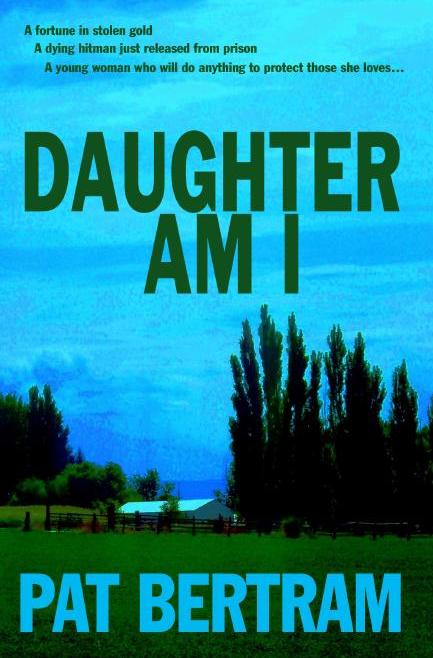
Pat Bertram is the author of the suspense novels Light Bringer, More Deaths Than One, A Spark of Heavenly Fire, and Daughter Am I. Bertram is also the author of Grief: The Great Yearning, “an exquisite book, wrenching to read, and at the same time full of profound truths.” Follow Pat on Google+. Like Pat on Facebook.

From Conception to Birth: One Book’s Journey to Publication

Today’s guest blogger is Margay Leah Justice, author of Nora’s Soul , available from Amazon and Second Wind Publishing. We are exchanging blogs, so I will be at Margay’s Blog. Margay writes:

Ah, the first blush of romance. The first time you see the idea, sitting there in the corner of your mind, trying to get your attention in that inconspicuous manner these ideas sometimes adopt. You look away, convinced that there is no way this idea could possibly go anywhere. It’s just a fluke, a fling. Surely, you’ll forget it by morning. But when you look back, the idea is still there, sitting in the corner, flirting with you. So what’s a harmless little flirtation? You approach the idea cautiously, in a manner you hope is suave and sophisticated, but as you get closer, your excitement rises. Your heart begins to race. You lick your lips in anticipation. It’s even more exciting up close. So you flirt with it, spend the night with it, take it home with you. In the morning, you’re surprised that it’s still with you. After two months, you begin to believe this idea has a future. So you cultivate it, give up sleep for it, nurture it as it grows within you. Soon, what began as a nugget of an idea in your mind blossoms into a full-blown creature. It grows within you, like a fetus in a womb, becoming bigger by the month, more substantial. You can almost feel it move within you; you carry it everywhere, wherever you go, it’s there with you. All of your energy is devoted to it.

After a suitable gestation period, your little nugget of an idea, which you have affectionately begun to call “the book” while you search for the right title, is ready to make its appearance. Your months of labor are about to pay off as you prepare to deliver your book into the capable hands of the publisher who will introduce it to the world. But wait, his assistant has to help you clean it up a bit first and you are struck by the niggling thought, What if my baby’s ugly? What if I put this out there and no one likes it? But with the reassurances of your publisher, you clean the book up and send it back, maybe with a prayer or two, and you wait. Now it’s time for your baby to prove its worth.

As you can tell from my whimsical tale above, writing and publishing, to me, often mimic conception and birth. The stages of both are remarkably similar. There is the courtship period when you are first introduced to the idea that will one day take over your life. Followed by the get-to-know you period during which you decide whether or not the idea has longevity and you want to commit to it. Once you make that commitment, there is the gestation period – I think you can guess what happens here. The idea grows and grows, taking on a life of its own, convincing you that you are mad, suffering from a hormonal imbalance, or both. But in the end, it’s worth it because you deliver a rollicking, three hundred page epic that someone is bound to love – and not because they’re related to you.

So I guess you could say that Nora’s Soul is the first of my literary babies. She is almost two months old now, having made her debut in November, and growing stronger every day. Bringing her to the attention of the public is similar to the care and nurturing of an infant, requiring constant vigilance. Yet the pay off is that people are noticing her, some are cooing over her, and others even want to take her home with them. She may just be crawling now, but soon she will gain her legs and walk on her own – -and I will sit back in amazement like any proud mother, thinking, Wow, I can’t believe I created that! And in the grand tradition of mothers everywhere, I will want to create another one, forgetting all of the pains and labor involved in the process. Keep your eyes open for the debut of Nora’s brother, Dante. Thank you for riding along with me on this whimsical journey into my take on writing. I hope you enjoyed the trip as much as I did.

Also see: Pat Bertram Introduces Dante, the Hero of Nora’s Soul by Margay Leah Justice.

Author Cheryl Kaye Tardif is “Finding Bliss” on her iPhone 3G

My guest blogger today is Cheryl Kaye Tardif, bestselling author of Whale Song, The River, and Divine Intervention. Cheryl writes:

Recently, I was a guest blogger on Book Marketing Floozy and I talked about how authors have to “think outside the book”. Sometimes a book can be marketed even before it has been published, and once in a while even before it has been written. That’s what I’ve done with my iPhone novel Finding Bliss, a novel that has only 2 chapters written yet has already received much media attention. 

It all started when I saw a commercial for Hershey’s Bliss chocolates in their individually wrapped foil packages. I saw the word BLISS on the TV and thought, “Wow, that would make a really neat girl’s name.” Almost instantly a picture came to mind of a teenaged girl with scraggly dirty-blond hair and torn jeans. Foster child, street child, pickpocket, unwanted, unloved-the complete opposite of the word “bliss”. And Finding Bliss was born. 

I didn’t want to lose any of my ideas for this novel, but I also didn’t want to stop watching the TV show that was on, so I grabbed my new iPhone 3G. There is a Notes application and this was the first time I used it. What was really great was that I was able to type in my notes on this new novel idea during the commercials and then email them to myself. Later, I went upstairs to my office, opened the email on my PC, copied and pasted the notes into a Word document and-voila!-I had started a new novel. 

About 2 years ago, a writing craze swept across Japan ; cell phone novels took the publishing world by storm in this small country. In the first six months of 2007, Goma Books and Maho i-Land published more cell phone novels than the major Japanese publishers did print books. And now, North America has its first English language cell phone novel platform through Textnovel

I am very familiar with Textnovel. CEO Stan Soper heard about my iPhone novel Finding Bliss and he personally invited me to check out Textnovel. Since I always like to try new things, I submitted three short stories, serializing them over a period of time. You can find my novelette Remote Control there. Stan has shown great interest in Finding Bliss, and there is a possibility that my iPhone novel might show up on Textnovel in the future. 

To date, I have appeared on a number of television and radio interviews, and in newspapers, because I have chosen to write a novel in a completely different way. Another major company contacted me about Finding Bliss a month or so ago, and they too would like to be the first company to “release” this novel to the public. Let the bidding wars begin!  

‘Finding Bliss’ will be an emotional, heartwarming story of a damaged teenage girl who must fight to survive in a world of abuse, lies and loss. As she struggles to find herself, Bliss will discover exactly where she belongs and she’ll learn that she is worthy of love after all.” 

There is no publish date on this book as I have not finished writing it. Once I am done, it will be handed to my wonderful agent Jack Scovil to pitch to publishers.

Cheryl Kaye Tardif

“Risk! Risk anything! Care no more for the opinion of others, for those voices. Do the hardest thing on earth for you. Act for yourself. Face the truth.” — Katherine Mansfield

The Future of Books: The Problem of Filtering (Part 2)

My guest blogger today is Dale Cozort, author of American Indian Victories. This is the second in a three part series discussing the future of books. Normally I don’t post such long articles, but I thought Cozort’s analysis was too important to edit down. Cozort writes: 

Part one looked at how the filters that keep readers from having to sort through a glut of really bad writing are breaking down.  This section will look at how authors and readers can adapt to a world where the traditional filters are less useful. Part three will look at how publishers might react to reestablish their role in filtering.  

New Types of “Brand Names”: With the glut of books, readers are looking for ways of to be sure they are getting good quality reading material.  In that environment, “brand names”-names that readers have heard of-sell books, even if the names have little to do with publishing.  Celebrity is its own brand name.  Oprah’s book selections come to mind.  Fortunately or unfortunately, talk show hosts with the ability to attract readers are scarce. We probably won’t see book recommendations from say Jerry Springer.  (Shudder) 

We will probably see celebrities of other kinds acting as filters in various ways though.  Politicians like Newt Gingrich and actors like William Shatner have gotten into the book business.  Celebrity “bookshelves” or endorsements on Amazon.com and the like would sell books too, but would probably be too expensive in most cases, though actors and celebrities in certain niches might find that it’s a good way to keep their names in the public eye.  Would you be more willing to try a book from someone you’ve never heard of if it was on an Amazon bookshelf from say Joss Whedon (creator of Buffy, Angel and Firefly) or one of the actors from his shows?  If you loved those shows you might, and if the quality was high, you might try others from his shelf (assuming that he had one).  Popular bloggers sometimes get into the book filtering business too, recommending books and sometimes writing their own books. 

Popular writers can act as filters too.  Authors do recommend promising new writers to agents and publishers.  They sometimes offer blurbs to promising young authors or recommend them in their blogs.  Some popular authors near the end of their careers as writers have taken to being “co-authors” with a collection of promising young authors, basically lending their name (and probably some polish) to books written mainly by the younger or lesser known author.  The popular author’s name on the book attracts readers, acting as kind of a filter while pointing fans to good new authors. 

I could see aging but still popular and intellectually active science fiction authors like Jerry Pournelle or Robert Silverberg doing virtual bookshelves of promising new science fiction on Amazon in exchange for a share of the revenue from any traffic driven to the books on their shelves. Another possibility: publishers could set up boutique brands of “X-famous author Recommends” books, letting the author act as screener and to some extent putting his status as a brand name on the line.  That might also be a way for an up and coming independent press to differentiate itself, though the cost of bringing a big name in may be prohibitive. 

Data Mining: In a world with a glut of choices in books, figuring out reader preferences and directing them to books they’ll like can be great for both authors and readers.  Amazon is often very good at this.  Their recommendations based on previous purchases can be extremely well targeted.  To some extent their data mining replaces the old bookstore owner who knew the customers tastes and could direct them to good new authors. 

From a reader’s point of view, sites like Goodreads or Shelfari can do some of the same things.  If I see a reader with ten or twenty percent of their Goodreads library in common with mine I know that there is a good chance I’ll like the other books they’re reading too.  Sites like that would be even more helpful for finding new books to read if readers could sort other readers by percentage of books in common.  Goodreads is to some extent an amplified word of mouth. 

Word of mouth/social networking: Speaking of word of mouth, it can be important as a filter too, but for some reason doesn’t seem to work as well for books as it does for movies.  Part of the problem is our diversity of tastes in books.  Social networking may amplify the role of word of mouth, but so many aspiring authors are trying to manipulate it in various ways that it may not be particularly effective. 

Websites/blogs: Author websites and blogs may give readers some idea if they are going to like an author or not.  From a reader’s point of view it’s probably a good idea to look for an author’s blog or website if you’re not sure you want to take a chance on a book.  If the blog or website is not professional the book may not be either.  If you don’t like the writing style on the blog, that’s a good sign you won’t like the writing in the book either.  The flip side of that is that authors need to make sure their websites look professional and make a good impression.  That’s a do as I say not as I do thing.  My website badly needs remodeling.  

“The Wisdom of Crowds”: A couple of years ago someone at social networking website Gather.com had what seemed to be a brilliant idea: Stage an American Idol-style contest for unpublished authors.  The winner would get a publishing contract with Simon and Schuster and a big boost in sales from their exposure during the competition.  It would be democracy in action.  Readers would choose who got published.  Well, for a variety of reasons it didn’t work out that way, though two reasonably worthy winners did eventually emerge. 

The concept has been tried a few times since then, both by Gather and by Amazon.com, but in both cases the ‘popular vote’ element has been toned down.  In both of the subsequent Gather contests, the eventual winner received little popular attention during the contest and little advertising boost from the victory.  I still think there’s potential in the approach, but nobody seems to have found the right formula yet.  All of the contests so far have suffered from a common problem: not enough impartial readers participating.  There is also an inherent problem with the approach.  If a publisher’s marketing people don’t like a book or understand its appeal that makes it hard for them to market that book effectively. 

Web forums: As an author, it’s a good idea to have some presence on various on-line forums related to your subject matter, but you’ve got to be careful not to let them eat up too much of your writing time.  You’ll also need to learn how to avoid trolls, flame wars and the usual Internet hazards.  If a major hunk of your potential audience decides you’re a jerk, then you probably aren’t helping yourself.  If you get a good reputation on the forums but don’t get stuff written you’ve defeated the purpose of the exercise.  Also, be aware that a good reputation in an Internet forum is a very transient thing, as are boosts from blogging and web posts.  If you don’t maintain a consistent presence any impression you have made will quickly be forgotten. 

Free samples: Baen Books, a science fiction publisher, has a program where people can download free e-books of some of their authors’ older books.  The idea is that readers will get hooked on the free samples and then go out and buy the newer books from those authors.  Apparently that has worked fairly well.  The key here though is that these are books that have already been through the filtering process at a traditional publisher, and the authors have other books that have also been through that process.  Giving away e-books is probably not going to work for most aspiring authors, though some other kinds of free samples may. 

New technology: The first few good writers who hop on a new technology that takes off can often establish a good readership.  In the early days of the World Wide Web it was relatively easy to establish a good-sized niche readership if you consistently had something interesting to say.  Good writers who jumped into blogging early and consistently did well.  Those niches fill up quickly though, and it becomes more and more difficult to attract readers.  Technology advances will undoubtedly open up more niches like that.  The key for aspiring authors is to recognize technologies that are likely to take off and get into them early.  That’s much easier said than done.  You can waste a lot of time on things that look promising but never really amount to much. 

So, do I have a magic key to solving the filtering problem and getting authors together with their audiences?  Yes, but I’m going to keep it a secret and use it to become fabulously rich.  Just kidding.  I don’t think any one thing is going to fix the problems or even that all of the things I’ve mentioned are going to solve the problems.  Readers, authors and publishers are going to be living in an environment where many times readers never find authors that they would love, where good authors often never find their audience, and where publishers never find authors the public would love.  At the same time we’ll be living in an environment where readers have more choice in their reading than ever before.  They’ll have to work harder to exercise it, but it will be there. 

Finally, if you’re an aspiring writer be a reader too.  Go out and do what you have to do to find good books from authors you’ve never heard of before and from publishers you’ve never heard of before.  You’ll find some “bad karaoke” writing, but you’ll also find some gems and reading those gems will make you a better writer.  When you find good writing tell your friends about it.

The Future of Books: The Problem of Filtering (Part 1)
The Future of Books: The Problem of Filtering (Part 3)

—– 

Dale Cozort is author of American Indian Victories.  Visit his website at www.DaleCozort.com

On Writing: Style and Cadence

Ken Coffman, my guest blogger today, is the author of eight books, including a popular technical book called Real World FPGA Design with Verilog. He could easily make money writing additional technical books, but has more fun writing absurd novels like Steel Waters and Glen Wilson’s Bad Medicine, available from fine online bookstores everywhere. Ken writes:

Recently, my friend Lisa said this to me: “You tend to like more baroque-type authors, gravitate towards writers with that style, and write in that style.  Ironically, I really do like Hemingway, in that when I read him way back when, I immediately liked and related to the prose style . . . ”

It’s true. We’re diverse, and different things float our metaphorical schooners. See, there I go. I could have simply said boat and your eye would have slid smoothly over the cliché. But, I didn’t want to.

Anyway, back to the point I’m laboring to make.

          Nick looked on at the moon, coming up over the hills.
          “It isn’t fun any more.”
          He was afraid to look at Marjorie. Then he looked at her. She sat there with her back toward him. He looked at her back. “It isn’t fun any more. Not any of it.”
          She didn’t say anything. He went on. “I feel as though everything was gone to hell inside of me. I don’t know, Marge. I don’t know what to say.”
          He looked on at her back.
          “Isn’t love any fun?” Marjorie said.
          “No,” Nick said. Marjorie stood up. Nick sat there, his head in his hands.
                — 
Ernest Hemingway, The End of Something

Of course, I can appreciate Hemingway’s sparse mastery. In feeble imitation, sometimes I report things in a flat tone to emphasize a point or work against the reader’s mental picture. But, generally, my ambitions lie elsewhere. I like prose that is more playful and convoluted.

Tom Robbins, who I like to call my neighbor, writes like this:

          A few months later, everyone of the bride’s relatives, including even distant cousins, decided that life was meaningless without that most talented, most delightful girl, not to mention her pious and generous family, and so the relatives, as well, set off for the hills and Fan Nan Nan. Their departure tore a hole in the fabric of the community; there was an abiding emptiness there.
               –
– Tom Robbins, Villa Incognito

The difference in style could hardly be more obvious. Tom’s zany prose dances.

          Then I looked at Dale, my sergeant, wringing out his shirt in a metal water drum. His back was brown, ridged with vertebrae, his ribs like sticks against his skin, the points of his black hair shiny with sweat. Then his lean Czechoslovakian face smiled at me, with more tenderness and affection in his eyes than I had yet seen in a woman’s.
          He was killed eight days later when a Huey tipped the treetops in an LZ and suddenly dipped sideways into the clearing.
                —  James Lee Burke, Heaven’s Prisoners

Burke has a huge vocabulary and is unafraid to take a risk. He sits on a limb and with careful, deliberate, thoughtful strokes, works his saw.

To my taste, the master of mixing the eloquent with the absurd is Nabokov.

          I thought I had crossed the frontier when a bare-headed Red Army soldier with a Mongol face who was picking whortleberries near the trail challenged me: “And whither,” he asked picking up his cap from a stump, “may you be rolling (kotishsya), little apple (yablochko)? Pokazyvay-ka dokumentiki (Let me see your papers).”
          I groped in my pockets, fished out what I needed, and shot him dead, as he lunged at me; then he fell on his face, as if sunstruck on the parade ground, at the feet of his king. None of the serried tree trunks looked his way, and I fled, still clutching Dagmara’s lovely little revolver. Only half an hour later, when I reached at last another part of the forest in a more or less conventional republic, only then did my calves cease to quake.
              — Vladimir Nabokov, Look at the Harlequins!

So, how am I doing? You judge.

          “I’m bored,” Nort said.
          “That’s because you’re not doing anything.”
          “And you can’t make me.”
          “Right,” Jake said. “Exactly.”
          “I’m not staying here. I’ll beg on the street.”
          Jake looked up.
          “It used to be that a man would rather die than be a beggar or take charity,” he said.
          “Things are different now.”
          “I can see that. Good luck out there.”
          “What’s wrong with you? You don’t care about me at all.”
          Jake licked the tip of his pencil.
          “When I was in Da Nang, I was stabbed in the gut with a sharp stick by a starving 11-year-old who wanted the three dollars in my wallet.” He lifted his shirt to show a twisted scar. “After I killed him with a brick, I realized either God either didn’t exist or was the biggest asshole of us all. I care about you, but out in the world you’ll die of AIDS or get stabbed in an alley by a cracked-out whore. It doesn’t pay to get emotionally attached to the doomed.”
               — Ken Coffman, Fairhaven 

You plant your butt in your chair and you face the demons that live in that blank screen. You spend hours and hours wringing words, situations, and plots from too-thin air.

Who are your influences? And, what are your ambitions?