Lost and Broken Things

During the first months after Jeff died, I lost my grip, not just figuratively, but literally. Things often slipped through my fingers for no apparent reason. I simply couldn’t hold on. It seemed as if when I lost the connection with him, I lost the ability to connect with anything. Or maybe grief sapped all my strength. One night, a mug slipped from my hand. My fingers were crooked through the handle, so I don’t know how it happened, but all of a sudden the mug hit the hard tile floor and exploded. It wasn’t an expensive mug, nor did I have a particularly sentimental attachment to it — it was one of two giveaways we’d received from the phone company during a local festival — but I wept as if my heart had broken. Or as if he had died again.

Gathering up the shattered pieces and slivers of the mug, I understood for the first time that as the months and years passed, all our things would break or wear out, and every loss would take me one more step away from our life.

Looking back, it seems odd that the broken mug affected me so much. I’d spent the first two months after he died getting rid of stuff — his clothes, his personal possessions, mementos of his life before me, food and supplies I couldn’t take with me to California, all sorts of things, perhaps a third of everything we owned. It was a horrific time, and I felt so lost and lonely and devastated that no one particular thing stood out as a loss, probably because anything that had a special resonance, I kept.

A couple years after that, there was another silly loss that sent me back into grief mode. My sister made a gorgeous decoration of ribbons and a bow for a gift she’d sent, and since I thought it was too beautiful to waste, I placed it around the hat I wore to keep off the desert sun. After a couple of weeks, it blew off in the wind, and when I realized it was gone, I went looking for it. Couldn’t find it. The bow wasn’t important in the grand scheme of life and death, but it was important to me. It made me feel good, for one thing, and it was a symbol, in a way, of my struggles to create a new life for myself.

After my father died, I went through the things I couldn’t get rid of after Jeff died and found I could dispose of quite a few more things. Then before I moved here, I got rid of still other things. More recently, I disposed of a damaged mug with only a brief pang when I remembered it was the mate to the one I had broken all those years ago.

You’d think after so much loss, one more thing out of my life wouldn’t make a difference, but apparently, it does. I’ve lost an iced tea spoon that once belonged to Jeff — the only such spoon we had — and I am devastated. I’m not crying over the spoon, though I can feel the tears in the back of my throat. I liked the spoon, liked that it reminded me of him, liked the connection to a previous time. And now, that, too is gone.

It’s not as if I don’t have other things of his. I do. We had a lot of duplication in kitchen stuff, for example — the things he brought to our home, the things I brought, the things we bought together. I still have his eating utensils as well as mine, enough to last me the rest of my life. But I don’t have that iced tea spoon.

The odd thing is, as I grow older and then older still, I’ll have to get rid of even more of our things until at the end, I’ll be gone, too. So the loss of this one dainty spoon shouldn’t be a problem.

But it is.

Now that I think about it, the lost and broken things that bother me are not those I chose to dispose of, but the those I didn’t. Just as I didn’t choose to dispose of Jeff.

Of course, I’ll get over losing the spoon, just as I got over breaking the cup and losing the bow and all the rest of the things that are out of my life. Of course I’m grateful for all the wonderful new things that have come into my life.

And yet . . . and yet . . .

Everything that happens, good or bad, takes me one more step away from my shared life with Jeff.

***

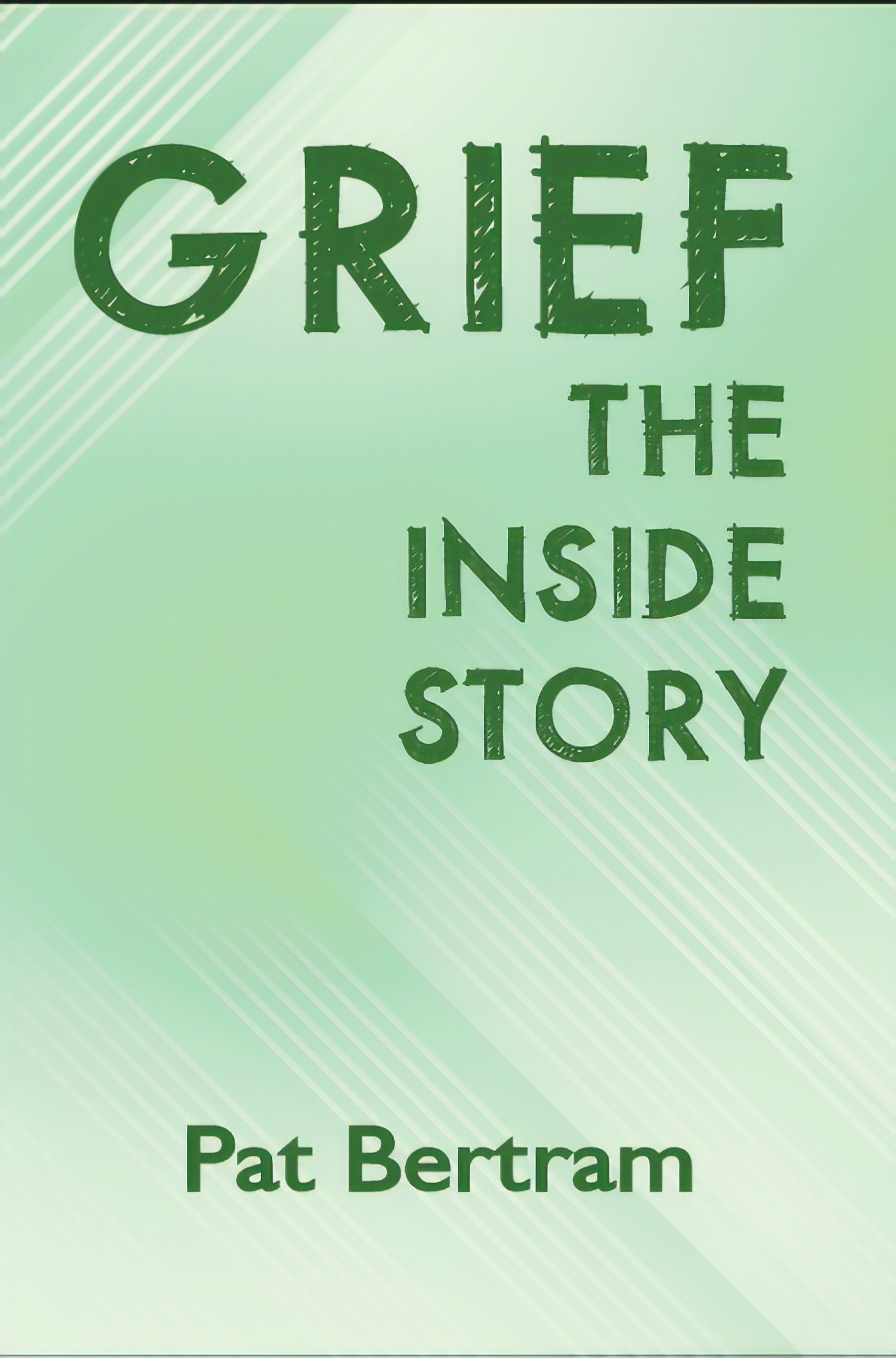
Pat Bertram is the author of Grief: The Inside Story – A Guide to Surviving the Loss of a Loved One. “Grief: The Inside Story is perfect and that is not hyperbole! It is exactly what folk who are grieving need to read.” –Leesa Healy, RN, GDAS GDAT, Emotional/Mental Health Therapist & Educator

Letter From a Griever

I received this email yesterday from a blog reader:

Dear Pat. Would you allow me a guest slot on your blog to talk about the book, and your grief writing in general?  I quite understand if you’d rather not needless to say, but I’d quite like to enthuse about your work if I may. — Treve

Of course, I said yes, not just because I was flattered but because what Treve has to say about me, my grief writing, and Grief: The Inside Story — A Guide to Surviving the Loss of a Loved One is important to both grievers and those who know grievers.

I first came across Pat’s blog in about 2015, about eighteen months after my wife died of cancer.  During that first year and a half, like most grievers I had experienced extraordinary emotional turbulence, the like of which I have never had before nor since.  It seemed to me that nobody ever tells you about what grief is really like, you just guess that it’s not nice and assume that it probably gets better after a while.  If only it were so simple!  I would occasionally browse the internet to see if there was some help or advice that would make sense to me, but it usually seemed to be written as if it were generic lifestyle advice, rather than designed for people experiencing profound turmoil. 

Be kind to yourself.  Everyone grieves differently.  Go out with friends and try to enjoy yourself.  Try to move on.  

It seemed to me that whoever wrote these sort of things had never actually experienced the kind of grief I was going through.  Perhaps it was just me, maybe this sort of advice would make sense to most people?

After 18 months, I chanced across Pat’s blog.  I can’t remember with absolute certainty, but I think the first of her posts I read was “The Five Major Challenges We Face During the Second Year of Grief” —  [https://bertramsblog.com/2012/01/08/the-five-major-challenges-we-face-during-the-second-year-of-grief].  I think I spent a whole evening reading through Pat’s writings about grief, and I was amazed.  For the very first time I was reading something that actually reflected what I was going through.  And the really weird thing was that Pat was an American lady some years older than myself (a British man in his early forties at the time), and yet she was the first – and only person – who was writing about grief in a way that made sense to me.  And I began to realise that a lot of the received ‘wisdom’ about grieving seemed to be based on various absurd notions, such as the so-called ‘five stages of grief’, that had no real basis in reality.  I was captivated, because for the first time it seemed to me that there might be some common pattern to grief, despite the profoundly different backgrounds of the grievers.  Seven years on I still occasionally read material about grief, often written by highly-trained ‘experts’, that bears no relation to what I went through (and I suspect what most grievers go through).

I was delighted when Pat published her book Grief: The Inside Story — A Guide to Surviving the Loss of a Loved One.  It was fascinating to be able to read her considered reflections about grief, not least because she had obviously had years of contact with fellow grievers who had shared their feelings with her.  Two chapters in particular are of great importance to me.  ‘Why Can’t Other People Understand My Grief?’, which discusses why so many folks seem to be embarrassed or uneasy when they around those who express their grief.  Likewise the chapter entitled ‘Metamorphosis’, on how grief changes us irrevocably.  This has shaped my thinking about grief, and continues to help me even today in trying to make sense of all that has happened to me in the last seven years.

I would sincerely urge any grievers reading this blog to buy Pat’s book, and keep it close to hand.  It covers the first few years of grief, and how its nature and impact change over time, written with great clarity by someone who has experienced it all first hand.   Nobody can take away the intense sting experienced at losing a loved one, but having a wise guide who can point out the emotional and practical road ahead (and also hazards along the way) is a huge help in dealing with grief.  I will always be grateful for the help Pat has given me through her writing.

Telling New Grievers the Truth About Grief

When new widows or widowers ask me about grief, such as how long it took me or when I stopped crying, I never know how much of the truth to tell them. For some people, the idea that grief will be the primary factor in their lives for three to five years before they find some sort of renewal, is a comfort because they know they won’t feel bad forever. For other people, three to five years is an astonishingly long time (which it is, when it comes to grief) and the thought adds to their despair. After the first year, it’s not such a dilemma for me — people have settled into their grief and knowing it will last years more, isn’t such a torment.

Because of my hesitation to tell the whole truth, I’ve gotten into the habit of telling new widows that grief “lasts a long time.” Oddly, when one is on the grief side of those years, it is an immensely long and dreary road, but on this side, the years of grief seem to have been over in an instant, probably because when things don’t seem to change much, when every day seems like every other day, all the emotional memories pile one on top the other like a deck of cards, rather than being laid out on the table so all of it can be seen at once. That sameness is also what gives grief, when one is going through it, a feeling of timelessness, as if we were always grieving and forever after, always would.

But no matter what things feel like, internal changes are being made, and those changes are generally manifested sometime in the fourth year when suddenly, it seems, life seems lighter, more hopeful. (Or it could be we are simply more used to their being gone, because the truth is, one can get used to almost anything, even death and loss and grief.)

Another example of not knowing what to tell is when a friend recently asked me if her going to visit a relative would help. I told her yes, because that is the truth. It’s good to get a respite from the emptiness, even if the effects of that respite don’t linger beyond the visit. What I didn’t tell her, because I didn’t want to ruin her vacation from herself, is the horror of walking into one’s home afterward to find the emptiness waiting to grab hold once more. But she learned the truth when she got home, and oh, my heart goes out to her. It really is a hard thing to deal with — that emptiness, that void, the knowing that for the rest of our lives, we have to live without that one person who gave us a deeper meaning, emotional support, love and companionship.

This same friend asked if the urge to flee would dissipate after she got back from her visit. I said, no. And when she asked how long it would take before that urge disappeared, I told her that everything takes years. It just won’t always be bad. That urge to flee turns into some sort of craving for adventure. And then, even that urge fades away with time.

I never thought “time” was an antidote for grief, since it’s what we do with that time that affects us more than time itself, but time does pass. The void shrinks but never goes away, so that even when we start to lose the memories of living a shared life because of the passing years, we always feel the absence. Do people need to know they will always feel the absence? At the beginning, it’s a burden, but as the years pass, that same void becomes a comfort, a way of keeping the memory even when the memory is gone.

Another lesser reason I hesitate is that the pattern of grief that so many of us deal with isn’t universal. In rare instances widows don’t fall into the black hole of grief but are able to go on, after a few months, as if nothing had happened.

But most of us have to wait until grief is finished with us.

And that takes longer than anyone wants to contemplate. Even ten, fifteen, twenty years later, something will happen (a daughter’s wedding, a grandchild’s birth, a debilitating illness) and grief, as fresh and as agonizing as the day our loved one died, will return.

What I try to emphasize more than anything is that no matter what people feel, no matter how long it takes, it’s normal. In the end, that’s more important that the specifics, because one thing that most new widows and widowers have in common is the feeling they are crazy when their bodies and minds go into overdrive as they try to process the death of the loved one and loss from their life. Death is the great unknowable, and having to confront that unknown as well as dealing with grief puts an unbelievable stress on the body.

People do need to know about that stress so they can do whatever is necessary to combat the stress. In my case, it was long rambling walks. In other cases, it’s sleeping for long hours or reading or keeping a grief journal or even talking to the deceased. It’s all about getting through the days, the weeks, the months, the years until a renewed interest in life asserts itself.

And it will. That I can tell you for sure.

***

Pat Bertram is the author of Grief: The Inside Story – A Guide to Surviving the Loss of a Loved One. “Grief: The Inside Story is perfect and that is not hyperbole! It is exactly what folk who are grieving need to read.” –Leesa Healy, RN, GDAS GDAT, Emotional/Mental Health Therapist & Educator
Cheering Up a Griever

I belong to an online site where people ask questions of self-professed experts. I’m often asked questions about grief, most of which I have already answered, but every once in a while, I’m asked a new question that flabbergasts me.

Today someone mentioned a friend who had lost their mother, and asked, “What can I tell them to ‘cheer them up’ and express how proud I am for them and the way they’re handling it?”

What the heck kind of question is that? And how smug and ignorant and insensitive does someone have to be to ask it?

The truth is, grief belongs to the griever. It has nothing to do with anyone else, no matter how close that anyone might be to the griever. What an onlooker sees might not show the bereaved person’s real feelings, and anything anyone says in that regard might make the bereaved feel even more alone than they already do because it will show that the “friend” doesn’t understand.

People need their grief, need to feel what they are feeling way more than they need to be “cheered up.” Cripes, if the questioner can’t stand to see the friend’s grief, think how much worse the griever feels at the loss. Wanting to cheer up a griever might be understandable, because grief is one of those things the uninitiated shy away from, but it’s a totally selfish desire. No one wants to have to confront the fact of death — it’s the great unknowable and puts the lie to our cozy existence.

And what the heck did the questioner mean by being proud of the way the friend handle “their” grief? Because they’re not crying in public? Because they’re continuing on with their life? Does that mean that if they were crying or showing their grief in some other way, the questioner would be upset with the bereaved person? Again, how a person handles grief has nothing to do with anyone but the griever. Each griever handles things the best they know how, though most grievers quickly learn to hide their grief so that others aren’t judging them, and letting someone know you are proud of them for how they are handling their grief is definitely a judgement.

Instead of cheering up a griever or voicing a judgement, you can hug the person if you are close friends. You can invite the person to lunch or provide a meal at their house. If you knew the mother, you can tell stories about the mother and say how much you liked her or miss her or whatever. If you didn’t know her, ask about her. People who are grieving sometimes need to talk about the deceased, but most people don’t want to mention the deceased for fear of making the bereaved person sad. They don’t understand that nothing will make the griever sadder. Sadness comes with the loss. There’s nothing you can do to “cheer up” a griever, but you can suspend all judgement. And you can be there for them.

That’s what counts. Simply being there.

***

Pat Bertram is the author of Grief: The Inside Story – A Guide to Surviving the Loss of a Loved One. “Grief: The Inside Story is perfect and that is not hyperbole! It is exactly what folk who are grieving need to read.” –Leesa Healy, RN, GDAS GDAT, Emotional/Mental Health Therapist & Educator

A Day for Dozing

I keep opening my laptop to write today’s blog, but then I play a game of solitaire, close the lid and go read a bit and end up taking a nap. I don’t know why I can’t stay awake. The heat perhaps, though it’s not all that hot in the house. It could be something to do with the falling barometric pressure and the storm that is on the way bringing rain and hail.

This area is notorious for hail, so much so that some insurance companies don’t include hail damage in house or car insurance policies, and the ones that do include some coverage, have a huge deductible. (The insurance companies say it’s the law in Colorado, but they aren’t fooling anyone — they want the law, policy holders don’t.) One good thing, my car is finally under cover, so I don’t have to worry about the poor things being pummeled by golf ball-size hail.

Although I don’t think it has anything to do with today’s sleepiness, today is Jeff’s birthday. That milestone doesn’t seem to have anything to do with me anymore — it just seems like another number and a reason to remember him as well as indulge in a bit of nostalgia.

Even though I feel good about my life now, I still miss him, still find myself confused at times about his being gone. I know it’s the way it is, and I have become used to it, but it still seems . . . off. As if maybe our being together was a dream. As if I dreamed him and none of that was real. Or maybe it’s this particular phase of my life that’s not particularly real. Either way, it doesn’t seem as if his life has anything to do with mine. Or mine with him.

It was a long time ago — our life together. His death.

I wrote a post seven years ago about how, in the movie Heaven Must Wait, Andrew McCarthy tells Louise Lombard that his mother died. She told him she was sorry. He said, “It was a long time ago.” At the time, the line struck me as particularly poignant, and I realized that someday, I too would say, “It was a long time ago.”

It is odd, and perhaps typical of such a loss as mine, that although time passes and other things in life supplant at least some of his influence, and although I don’t think of him all the time, I do always miss him. The void he left behind that I filled with tears is still there, but when I happen to brush against that void, I tend to shy away from it. I don’t need the tears as I once did, and there’s no real benefit to indulging in sadness anymore. It really was a long time ago.

And yet . . .

Maybe that’s reason enough for sadness — that he’s so far away the tears no longer come.

Considering body memory, I suppose it’s possible that the effects of this day are draining my energy enough to make me doze off. But whatever the reason, the truth — the still hurtful truth — is that I am here and he is not.

***

Pat Bertram is the author of Grief: The Inside Story – A Guide to Surviving the Loss of a Loved One. “Grief: The Inside Story is perfect and that is not hyperbole! It is exactly what folk who are grieving need to read.” –Leesa Healy, RN, GDAS GDAT, Emotional/Mental Health Therapist & Educator

Missing Jeff

I’ve been missing Jeff — my deceased life mate/soul mate — not in a grief-stricken, yearning, lonely sort of way, more like a missing puzzle piece sort of way.

Health, geography and various other circumstances isolated us. During the last decade or so of his life, we seldom saw other people. We only did our errands once a week and if we forgot something, we didn’t run out and get it, but did without until errand day came around again. We didn’t eat out — there were no nearby restaurants, and besides, we tried to stick to a healthy diet with lots of salads and stir fries and home-cooked meals of our own devising. Even the occasional baked goods or desserts we ate were our own creations. We tried to be as self-sufficient at possible, doing many things ourselves that people have others do for them, even to the point of my cutting our hair. We didn’t do car repairs or major things like that, but for the most part, we were on our own.

Sound familiar? Like sheltering at home? Like quarantine?

It’s as if he and I spent our lives together preparing for a crisis.

The crisis is now here.

But he is not.

During the first nine years after his death, although I was on my own and felt alone, I didn’t actually live alone. The first years lived with my nonagenarian father so I could take care of him. After he was gone and the house sold, I visited friends, traveled, house sat, and rented rooms.

When I moved here, I was out and about a lot — getting to know the town, meeting people, joining groups, volunteering, going to the library, walking to do errands. Now all that is temporarily suspended, and I am back to living the way Jeff and I had always lived. It feels wrong. As if he should be here with me. After all, he is part of the puzzle of my life, and we did prepare for these times together.

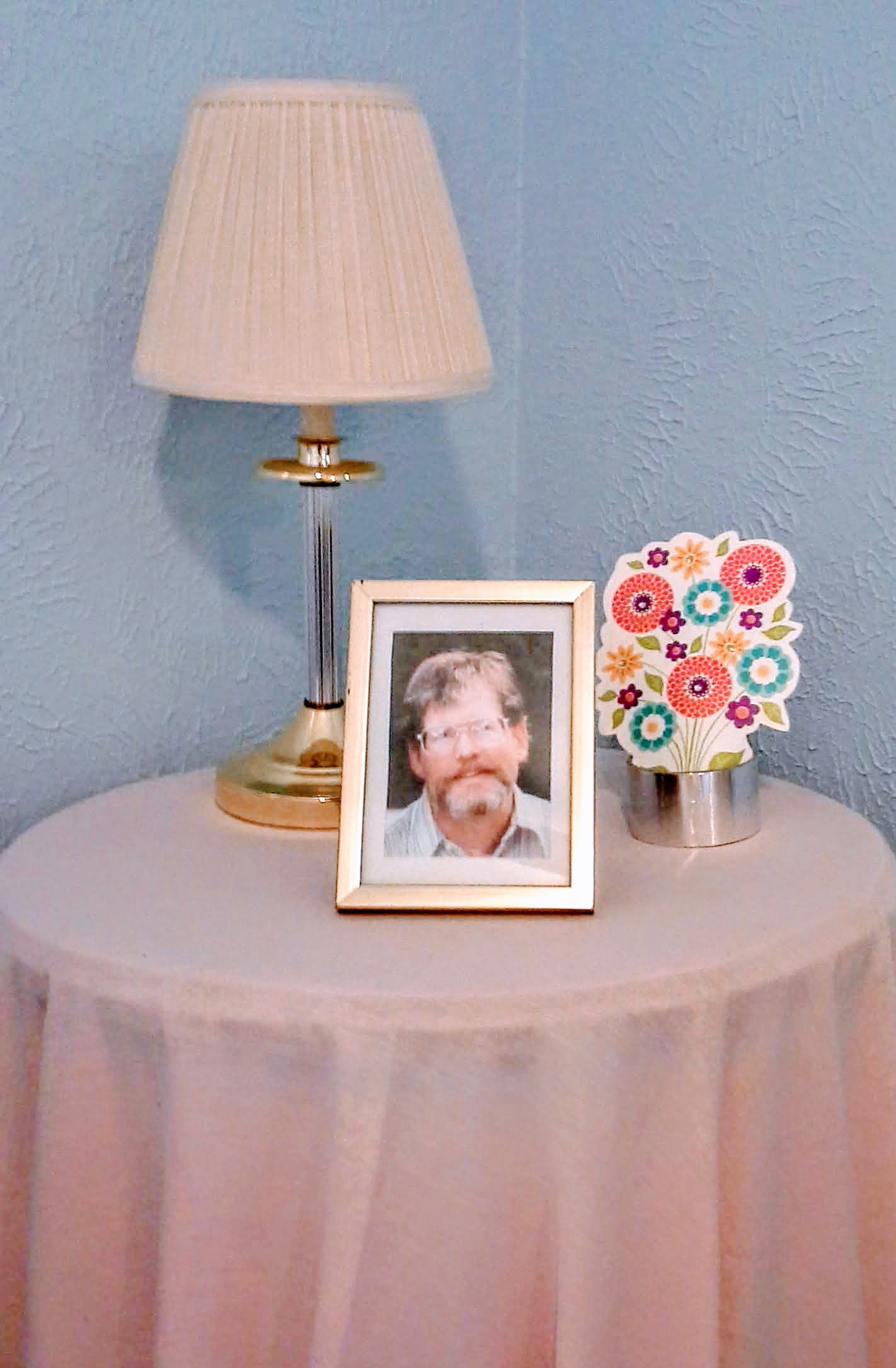
At the beginning of the stay-at-home order, I tweaked my knee to such a degree that I couldn’t walk. I spent the night on the daybed in my office/media room because the metal framework gave me something to grip to turn over or to sit up. I don’t need the bars so much now, but I’m still there. I don’t really know why I am hesitant to go back to sleeping in the bedroom, but perhaps with his photo there, I’d feel his absence more than I do where I am. Or maybe it’s that subconsciously I now think of it as his room and don’t want to have to confront that ever-present reality of his being gone.

It doesn’t really matter though. No matter where I spend nights — and days — I am aware he is gone. And I am missing him.

***

Pat Bertram is the author of Grief: The Inside Story – A Guide to Surviving the Loss of a Loved One. “Grief: The Inside Story is perfect and that is not hyperbole! It is exactly what folk who are grieving need to read.” –Leesa Healy, RN, GDAS GDAT, Emotional/Mental Health Therapist & Educator.

The Sorrow, Stress, and Solitariness of Grief

A friend asked me how long it took me not to cry every day after Jeff died. My first response was “months” because I didn’t want to freak her out with how long grief lasts, but when I realized that it was better to be forewarned, I told her the truth.

I don’t remember when I stopped crying every day, but I know it went on for years. In a way, it’s not as bad as it sounds. At the beginning I cried almost all the time, but as the months passed, even though I still cried every day, it was not as long or as often. Even years after Jeff died, I was still tearing up almost every day — not really crying, but not not-crying, either. Sometimes the tears came from missing him or loneliness or exhaustion or being around those who were still happily married. Other times, something happened to cause the upsurge of grief: a smell, a memory, something I read or saw.

Now, months go by without a tear, but then, I am not a new widow. I am used to his being gone, used to being alone, used to the void that remains somewhere deep inside.

Not everyone has that deep well of tears, but enough of us do that I know tears are a normal part of dealing with such a devastating loss. Losing a life mate ranks at the very top of stressful situations. On a scale of 1 to 100, the loss of a life mate or child tops all at 100. Divorce, the second worse stressor is 73.

Sorrow. Stress. Solitariness. Any one of those makes for a very rough time, but when they all come at once, as they do when one has suffered a profound loss, they create a near-impossible situation. No wonder tears are such a common occurrence after the loss of a spouse or soul mate or life mate.

Although none of us like to cry, and although we perceive tears to be a sign of weakness, tears are necessary to help us relieve the incredible stress of grief. What adds to an already stressful situation (not the least being that the one person we need to help us through our loss is the very person we are mourning) is the sporadic and chaotic nature of grief. We can be doing fine — fine meaning not tearful — when suddenly, we are overtaken by grief. When that bout of sorrow is over, we think we have a grip, and then we’re hit again with the realization of our loss, and there we are, back at the beginning.

Unsettled times such as this current world-wide crisis, as well as the enforced isolation, can make grief even worse since there is nothing to do to take one’s mind off the pain, nowhere to run to for a moment of solace.

But there are always tears. At the beginning, crying seemed to make me feel worse, but as time went by and I realized that there were worst things than crying — such as suffering the physical and mental effects of stress — I came to appreciate the relief. Later, I came to welcome any tears because they seemed to bridge the gap and make me feel closer to him, and if not to him, then to my grief.

And if there are no tears to relieve the sorrow, stress, and solitariness of grief? Then you can try screaming. That works, too.

***

Pat Bertram is the author of Grief: The Inside Story – A Guide to Surviving the Loss of a Loved One. “Grief: The Inside Story is perfect and that is not hyperbole! It is exactly what folk who are grieving need to read.” –Leesa Healy, RN, GDAS GDAT, Emotional/Mental Health Therapist & Educator.

I am a Ten-Year Grief Survivor

Today is the tenth anniversary of the day Jeff, my life mate/soul mate, died and to be honest, I don’t really know what to think of it. It seems such a very long time and yet no time at all. Has it really been ten years? It must be. I no longer feel that if I could just reach far enough I could touch him. I no longer expect him to call and tell me I can come home. I am home. For so long, my home was wherever he was, and now my home is where I am.

My life is so different now from what it was with him that it seems as if the loss happened to someone else. I miss him, of course, think about him almost every day, still feel a hole in my heart/life/soul where he once was, but there has been no real upsurge of grief this year. It could be that too many years have passed, but I think it has more to do with my current situation.

Physical pain somehow has a way of overriding any emotional pain, which is why so often, when new grievers get sick or injured, they get a respite from the effects of grief. I know I did. I’ve always hated being sick, hated colds especially since they linger so long in my system, and yet, those first few years after Jeff died, I welcomed those illnesses because it gave me a break from the worst of my grief.

When I was doing the research for my book, Grief: The Inside Story – A Guide to Surviving the Loss of a Loved One, I discovered that the answer to this anomaly has to do with brain fog and the role the brain plays in grief.

Those of us who have lost our mates know that grief is not merely emotional, but also spiritual, physical, and especially mental. The whole brain is involved in the grief process, but the prefrontal cortex is the part of the brain that seems to contribute the most to brain fog, the grief-induced amnesia, dazedness, and fogginess that shroud us after the death of a life mate — the prefrontal cortex is considered the executive branch of the brain and is associated with rational thinking and making sense of emotions, developing and pursuing goals as well as coordinating the brain’s activities. Because we grievers are on total emotional overload, our prefrontal cortex is unable to process all the information it is being fed from all parts of the brain. The more we try to suppress our emotions and try to think our way out of grief, the more overloaded the brain becomes.

When one is assaulted with some sort of physical trauma, such as an illness, the brain seems to heave a huge sigh of relief, as if to say, “This I understand!” No more scurrying around in the far recesses of our minds, looking for the truth of death . . . and life. No more lizard brain screaming for the loss of its survival unit. (We humans are essentially pack animals, and our very survival depends on the strength of this unit, one of the many reasons we are so deeply connected to our life mates.) No more conflicts between fight or flight hormones.

All the brain does is hunker down and send all its resources to getting the body well. And once that’s finished, grief again takes hold.

So what is my situation? A couple of weeks ago, I must have tweaked my knee while asleep because I woke up with a pain that wasn’t too severe, but kept me from doing things I normally would. I could still walk, and so I did. But the knee never got better. And yesterday, when I took a wrong step, my poor knee gave a loud crack (the kind of crack like knuckles cracking not like a bone cracking) and I felt a horrible pain. So not fun! (I now know that trekking poles make good canes.)

So today most of my energy is going toward taking care of my knee. And no, I’m not going to urgent care. (The last I heard, the closest urgent care was closed because of a case of The Bob.) And no, I’m not going to the emergency room. Considering I am in the high-risk group, I’d have to have a bone poking out of my skin before I’d take a chance on being around sick folks. And no, I don’t have a doctor. Even though I’ve been here a year, there was no reason to find one.

So here I am, taking care of my knee, doing the best I can to take care of myself even though I can barely walk. And the tenth anniversary is passing.

I miss not feeling the connection with Jeff — even though it’s only a connection of sorrow and loss — that I generally feel on the anniversaries. It’s the one time I can still feel him in my life, and I miss that. I miss him. I miss us. I miss who I was when I was with him.

The person I am today is a direct result of both my life with him and my grief after him. Is this a good thing? Am I a better person? I don’t know. I do know that, despite the constant barrage of news, all that’s going on in the world seems like . . . life as usual. When you’ve experienced one of the worst things a person can experience, all else seems rather tame.

Despite this almost blasé attitude, you can see that I still do not put myself in harm’s way if at all possible. I owe it to Jeff to live the best life I can, to savor the freedom his death gave to me. It was an inadvertent gift — his dying — but it has given me ten years of learning and experiencing and new beginnings rather than ten years of being worn down taking care of him.

Would I wish it were otherwise? I don’t know because I don’t know that woman any more. All I know is today.

And today, I am forcibly alone, missing Jeff, wondering about that road we could not take together. Would he be proud of the roads I did take? Would he be proud of me? Silly questions, I suppose. Considering the itinerary life handed me, I can’t be other than who I am today.

And today, I am a ten-year grief survivor.

And today, like every day, I miss him.

***

Pat Bertram is the author of Grief: The Inside Story – A Guide to Surviving the Loss of a Loved One. “Grief: The Inside Story is perfect and that is not hyperbole! It is exactly what folk who are grieving need to read.” –Leesa Healy, RN, GDAS GDAT, Emotional/Mental Health Therapist & Educator.


The Pat

I spent yesterday with a friend who was recovering from an operation. Her husband had to work and didn’t want to leave her alone, and since they’re like me, with no extended family in the area, we’ve adopted each other. So of course, because I’m family, he was able to go against his usual independent nature and ask me to stay with her. (Not a hardship, believe me. She is truly a delightful woman.)

While I was there, a friend of theirs stopped by to check on her. As our mutual friend slept, the woman and I got to talking. She mentioned that she’d lost her husband a year ago, and I commiserated with her. She seemed surprised that I understood, so I told her Jeff had died ten years ago.

Her eyes got big, and she exclaimed, “You’re the Pat! I have your book! As soon as you mentioned Jeff, I knew who you were.”

As astonishing as that encounter seemed (and yes, despite this being a small town, and despite the simple explanation that follows, it was astonishing), we quickly sorted out the coincidence.

Soon after I moved here, a new acquaintance mentioned that a friend of hers had recently lost her husband and was feeling bereft and alone. I gave the acquaintance my book Grief: The Great Yearning to give to the new widow. The widow called to thank me, and we talked for a while, but then I never heard from her again. I suppose I should have called her, but since I didn’t know her, I didn’t want to come across as a crazy stalker author, and eventually, her number disappeared from my phone.

Yesterday, we met again as old friends.

Life is truly a marvel at times. There we were, three women, now three friends, from three different countries. The United States. Thailand. Malaysia. (Before I knew where she was from, I’d asked the widow if she was from Singapore. It surprised her that I came so close geographically, but her accent was the same as a woman from Singapore I once knew. The widow acknowledged that the accents were very similar.)

Just think of all the living, all the stories, all the convoluted paths and journeys, all the intertwining fates and destinies, it took to get the three of us together in the same room.

Once, I craved adventure, but now, it seems, being “The Pat,” is itself a great adventure.

***

Pat Bertram is the author of Grief: The Inside Story – A Guide to Surviving the Loss of a Loved One. “Grief: The Inside Story is perfect and that is not hyperbole! It is exactly what folk who are grieving need to read.” –Leesa Healy, RN, GDAS GDAT, Emotional/Mental Health Therapist & Educator.

Closure and Acceptance

In a book I read the other day, the character mentioned that he found closure after the death of his wife, which led me to believe that the writer had not himself experienced such a loss because, when it comes to death, especially the death of a spouse or child, there is no closure. There can’t be. The circle of grief never closes because the loved one is always dead. They are always missing from our earthly life, and the void they leave behind is never filled. There is no time when we can say, “Okay, that’s done. Let’s move along.”

At some point we begin to find the road to life again, but we will always miss our loved one and will never forget. As time goes by it gets easier and we learn to cope with the necessary changes, but there will not be closure.

Another word that is often bandied about when it comes to grief is “acceptance.” Finding closure implies an acceptance of what happened, and yet, there is not way to ever “accept” the death of a loved one. It’s not our death to accept but theirs.

Acceptance is supposed to be one of the stages of grief, but I’ve never actually gone through that stage (nor did I experience most of the supposed stages of grief for the simple reason that they do not adequately reflect the reality of grief for a life mate, soul mate, spouse or child). I cannot accept that he is dead for the simple reason that it’s not my place to accept it. Acceptance to me suggests that it is okay, and I will never believe that it is okay for him to be dead (even though I do understand the necessity of it).

If “acceptance” means accepting the reality of our loss and understanding that they are gone, then there can be no acceptance “stage.” The truth is that we “accept” the reality from the beginning, and therein lies the problem. If we didn’t understand that they were gone, we wouldn’t feel so bad. But we do understand they are gone. We feel the loss in our bones, our souls, our very beings. We feel it with every breath we take. We feel it in the emptiness of our hearts and our homes. We have no choice but to face the reality.

The only way “acceptance” works in the grief equation is to accept that we have no control over the situation. Accept that we will always miss them. Accept that we will always grieve to some extent. Accept that we’ll never be the same as we were. Accept, too, that grief is not a negative. Grief is an important adjunct to a profound loss, a way to process the unacceptable and unfathomable, a means of moving from being part of a couple to being alone.

As a friend wrote me, ‘Acceptance needs to be viewed as a continuum. Acceptance does not mean “one and done”.’

Many people who have undergone such a loss have a need for adventure, as I did. I never understood this need, but seen in the light of “acceptance” or “non-acceptance,” it begins to make sense. We feel the changes, know we need to go along with the flow of our new life, but we don’t want to accept the new status quo. We didn’t want this new life, didn’t choose it. Even more, it seems such a betrayal of what we once were, what we once had. And so we are unsettled.

To a great extent I have let Jeff go. Somewhere during the past years, I realized that no matter how connected we were when he was alive, we are two distinct people, each on a special journey. For a while, our paths entwined, but now our roads have swung into two different directions. No matter how much I miss him, miss the me I was when I was with him, miss our shared dreams and goals, there is no turning back. The future beckons, and I must go where it leads me.

Perhaps that’s acceptance of a sort. It might even be considered closure of a sort. All I know is that, like the so-called stages of grief, any jargon that is associated with grief falls short of the reality.

***

Pat Bertram is the author of Grief: The Inside Story – A Guide to Surviving the Loss of a Loved One. “Grief: The Inside Story is perfect and that is not hyperbole! It is exactly what folk who are grieving need to read.” –Leesa Healy, RN, GDAS GDAT, Emotional/Mental Health Therapist & Educator.