Small Losses and Great Losses

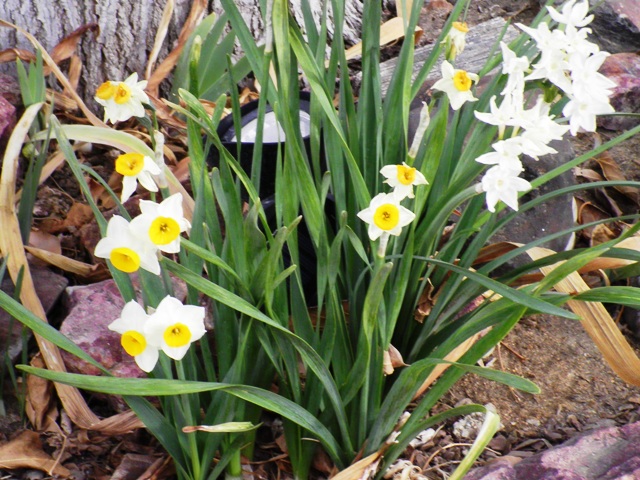
I lost something today. It wasn’t important in the grand scheme of life and death, but it was important to me. It made me feel good, for one thing, and it was perfect, for another. I can cobble together a replacement, but I will never find the joy that I did in the original item. It was a symbol, in a way, of my struggles to create a new life for myself, and now . . . well, now the symbol is gone. But only the symbol. My new life is still here. I am still here.

In two days, it will be the fourth anniversary of the death of my life mate/soul mate. The fourth anniversary of my new birth. I’ve come a long way in those years, so much so that I’m not sure the woman I was would recognize the woman I am today, but the inexplicable loss of this symbol reminded me of that other loss, the most important one I ever experienced, and I can’t stop crying. I haven’t cried for him in a long time. When I think of him, I don’t try to hold on to the thoughts as I have in the past. I just let them drift away. But today, when I felt that sick sinking feeling of an inexplicable loss, I was reminded once again that he is gone.

Sometimes it feels as if he’s been gone for decades, yet in some respects, his being gone is still very new. My plans, my thoughts, my dreams continue to be tinted through the dark glass of his goneness. Someday, as he recedes even further from me, the influence of his absence will wane. Or perhaps not. The truth is, it’s his death that inspires my life. He faced the end so courageously, I can only face my life with as much courage. In a strange sort of way, his death set us both free, he from pain, and me from being tied to an invalid (which he would have hated — he always told me that if he ever became incapacitated, I was to walk away. But I couldn’t). A small life, a life of not much, a life of not trying new things would dishonor that act of freedom.

I no longer expect him to call and tell me it’s time to come home, as I did for the first couple of years after he died. I no longer feel his vast goneness from my life, yet I always miss him. I’ve stepped back from the abyss of death, back into a celebration of life. I’m adding so much to my life — friends, excursions, dance — that I feel silly at times for still yearning for one more smile from him. I guess if I want smiles, I’ll have to generate them myself.

And I will. Just not tonight.

***

Pat Bertram is the author of the suspense novels Light Bringer, More Deaths Than One, A Spark of Heavenly Fire, and Daughter Am I. Bertram is also the author of Grief: The Great Yearning, “an exquisite book, wrenching to read, and at the same time full of profound truths.” Follow Pat on Google+. Like Pat on Facebook.

Excerpt From “Grief: The Great Yearning” — Day 359

GTGYthmbI’ve come a long way in the three years since I wrote the following journal entry.  I still don’t understand the point of it all, but the questions don’t haunt me quite as much as they did during the first years after Jeff’s death.  I’m learning to live without him, learning even to want to live without him. Sometimes I see his death as freeing us — me — from the horrors of his dying, and I don’t want to waste the sacrifice he made.

I no longer feel as if I am squandering time when I am doing trivial things because I have come to realize there are no trivialities. Everything we do is living, taking part in the great panoply of life. Whatever we do adds to the Eternal Everything.

I still yearn to talk to Jeff, of course. I miss talking to him, miss his insights, miss the conversation that began the day we met and continued for decades until he got too sick to hold up his end of the dialogue. I was truly blessed. He never misunderstood what I said. I could make a simple comment to him, and he understood it was a simple comment. He didn’t make a big issue out of it, just answered back appropriately. It seems now every remark I make to anyone becomes a major deal as I try to explain over and over again what I meant by the first remark. It’s exhausting.

I’m  grateful we met and had so many years together. Grateful for all the words we spoke to each other. Grateful I once had someone to love. Grateful that when my time comes to die, he won’t be here to see me suffer. Grateful he won’t have to grieve for me or be tormented by unaswerable questions.

Excerpt from Grief: The Great Yearning

Day 359, Dear Jeff,

I never felt as if I were wasting time no matter what you and I did—even something trivial like playing a game or watching a movie — so why do I feel I’m wasting time if I do those things alone? Don’t I have just as much worth now that I’m alone as I did when I was with you?

When I was out walking in the desert yesterday, I talked to you. You didn’t answer, of course, or if you did, I didn’t hear. We talked about meaninglessness. If you still exist somewhere, if you still have being, if life doesn’t end with death, then life has an inherent meaning — whatever I do or think or feel, no matter how trivial, has meaning because it adds to the Eternal Everything. If death brings nothing but oblivion, then there is no intrinsic meaning to life. So a search for meaning is meaningless (except on a practical level. We all need to feel we are doing something meaningful so we can get through our days and even thrive). Life either has meaning or it doesn’t. Meaning isn’t something to find but to be. So, I’m going to search for meaninglessness, or at least accept it.

Such thoughts seem as meaningless and as trivial as the rest of life. They get me knowhere. (I’m leaving that error, because . . . wow! So perfect!)

I’ve been watching your Boston Legal tapes again. Nicely meaningless since they put me to sleep. But they make me feel connected to you because we watched them a year ago during your last days at home.

This first year of your being dead is coming to an end, and I still don’t know how to survive the pain of your being gone, but I am surviving. Not thriving, not yet, but I will. There’s still so much to work through — all those years of your being ill, our unhappiness, our shattered dreams. Despite all the bad, we did have a good life, a fulfilling one. We journeyed together as long as we could, now it’s up to me to continue our journey alone. Will it continue to be “our” journey or will it become mine alone? I know who I was when I was with you. Now I need to find out who I am without you. To find worth in being alone.

Adios, compadre. I love you.

Click here to find out more about Grief: The Great Yearning

***

Pat Bertram is the author of the suspense novels Light Bringer, More Deaths Than One, A Spark of Heavenly Fire, and Daughter Am I. Bertram is also the author of Grief: The Great Yearning, “an exquisite book, wrenching to read, and at the same time full of profound truths.” Connect with Pat on Google+. Like Pat on Facebook.

Escaping the Cage

I have always been a highly civilized person. For the most part, I am considerate of others. I am never intentionally rude or bad mannered or insulting. I am not uncouth. I don’t make scenes in public (or private, for that matter). I seldom raise my voice. I listen more than I talk. I dress modestly. I use correct English and am not given to crudeties or foul language. If it’s in my power and nature, I almost always do what others ask. I try to be helpful. In other words, I am tame.

Wheprisonn I was young, a lot of this tameness came from being fearful of doing the wrong thing. I grew up in a shifting emotional atmosphere where from one minute to the next, I didn’t know how I would be treated, so I did the only thing I could — be a good girl. I obeyed. I never talked back. I keep my rebellious thoughts to myself. I did what was expected of me, often before such expectations were even expressed.

As an adult, I continued to be tame. I seemed to know instinctively that any fierce disagreement would only lead to fiercer disagreements, escalating until one of the parties killed the other. Of course, such hostilities generally don’t end in death because somewhere along the line, one of the combatants gives in. Since I knew that in any conflict I would be the one to give in, I never took up the battle in the first place. If I were going to give in, I figured I might as well do so before any damage was done.

I’m still tame, of course. By now it’s not just a habit, it’s who I am. Kind. Conciliatory. Even-tempered. I do experience anger once in a very great while, but those infrequent outbursts flare up quickly and die just as quickly.

Still . . .

There is a untamed side to me — an inner savage, a wild woman, a primitive and elemental being — that I get glimpses of once in a while. I first noticed this untameness when grief descended on me with the all the power of Thor’s hammer. I had no idea I was capable of such feral emotions. Even if I had wanted to, I could not have controlled my grief as I had always controlled my emotions. Grief came in an instant then grew and grew until there was so much pain I wanted to scream. And so I did. Mild-mannered me, tame me, good girl me screamed my agony to the winds.

For the past four years, ever since the death of my life mate/soul mate, I’ve been feeling an itch for “more.” I have never known what this undefined “more” is, but I’m getting an inkling that it is my wild side. I’m not sure how to unleash the wildness, though. Perhaps just by being aware of my connection to the earth. Perhaps by letting the winds take me where they wish. Perhaps by being spontaneous.

As John O’Donohue wrote in Aman Cara, “To be spontaneous is to escape the cage of the ego by trusting that which is beyond the self.”

To escape the cage. To be wild.

Oh, yes.

***

Pat Bertram is the author of the suspense novels Light Bringer, More Deaths Than One, A Spark of Heavenly Fire, and Daughter Am I. Bertram is also the author of Grief: The Great Yearning, “an exquisite book, wrenching to read, and at the same time full of profound truths.” Follow Pat on Google+. Like Pat on Facebook.

Challenges of the Fourth Year of Grief

The challenges we face during the first year after the death of a life mate/soul mate (or any other significant person in our lives who connects us to the world), are too great to enumerate. It’s all we can do to cope with the seemingly endless chores of laying our beloved to rest while dealing with the emotional shock, the physical pain, the psychological affront that are our constant companions. Sometimes the first anniversary of his death is one of peace when we realize that we managed to survive the worst year of our life, but then we wake up to the second year and find a whole other set of challenges to meet.

The five main challenges we face during the second year after the death of a life mate/soul mate are:

1. Trying to understand where he went.
2. Living without him
3. Dealing with continued grief bursts.
4. Finding something to look forward to rather than simply existing.
5. Handling the yearning.

There are other challenges, of course, some unique to each individual, but all the challenges are dealt with the same way: by continuing to feel the pain when it erupts rather than turning away from it to satisfy the concerns of those who don’t understand; by taking care of ourselves even when we don’t see the point; by trying new things.

In other words, we meet the challenges of the second year by living. It sounds simple, but nothing about grief for a life mate/soul mate is simple. By living, we begin to move away from our pain, but we also move away from the person we loved more than any other. For some bereft, this feels like a betrayal of their love — how can you continue to live when life on this earth is denied him? For others, it seems like a betrayal of themselves — how can you become the person you need to be without betraying the person you once were?

The third year of grief seems to be a year of transition with only one new challenge — beginning to rebuild our lives. (We still have upsurges of sadness, still miss our loved one, still yearn for him, but these feelings are not as prominent as they once were.) Most of us no longer feel that continued life is a betrayal of our love because we understand that we had no choice in the matter, either in his death or in our continued life. Nor do we feel we are betraying the person we once were — we are no longer that person, though we have not yet developed into the person we are to become. Most of us are still trying to figure out who that person is and what that person wants and needs.

You’d think by the fourth year there would be no challenges of grief left, but for most of us, this is the year where we make the necessary disconnect from our loved ones, and that is big though necessary step. No matter how close we were to our mates, no matter how much we felt as if we were two parts to a whole, we realize that in terms of life on this earth, we were two separate beings on two separate journeys. The questions that haunted us, such as the big question of who got the worst end of the deal, seem muted. Our mates had to deal with death and dying, and we had to deal with grief and living. It all seems the same now — life and death — though perhaps it’s more that we’re used to them being gone than that we made any great leap of understanding. We also don’t feel their absence the way we once did. The clawing yearning to see our mates once more has by now muted to a gentler feeling of intermittent melancholy.

Although my fifth year of grief doesn’t start for another two weeks, I am getting an inkling that this is going to be the main challenge of the coming year — dealing with grief’s absence. Grief was a part of my life for a very long time and the immensity of the loss and the enormity of the pain gave my life a feeling of epic importance, as if I were standing on the very edge of eternity. Well, eternity has retreated, and I am left with the ordinariness of life, and that ordinariness seems . . . well, it seems ordinary. Still, the lessons of grief taught me well, and so I will continue to take each day as it comes. Continue to find something to look forward to rather than simply existing. Continue to look for something to be passionate about, even if it’s just life itself.

***

(Pat Bertram is the author of the suspense novels Light Bringer, More Deaths Than One, A Spark of Heavenly Fire, and Daughter Am I. Bertram is also the author of Grief: The Great Yearning, “an exquisite book, wrenching to read, and at the same time full of profound truths.”) Connect with Pat on Google+. Like Pat on Facebook.

You Don’t Get Over Grief

I called a friend today to offer support on the third anniversary of her husband’s death. She is a strong woman, shouldering the burdens of an unemployed middle-aged daughter and a lively granddaughter, which takes her mind off her loss, but still, there are times (such as this anniversary) when grief descends on her once more.

During the conversation, she said, “I wish I could get over it.” The truth is, you don’t get over grief. Grief gets over you. The uninitiated, those who have never lost the one person who connects them to life, think we have a choice when it comes to grief, but most of the time, grief chooses us. We can, of course, choose to ignore our grief, burying it so deeply that we never have to acknowledge it, but doing so is like stuffing an inflated air mattress in a small storage pouch. Eventually, the pressures of the mattress will burst the seams of the pouch, and that unruly mattress will explode out into the open, causing all sorts of unforeseen damage.

As it is, even with accepting the dubious gift of grief, sometimes sorrow bursts wildly into the open, taking us unaware. For the most part, grief is leaving me alone. In fact, I thought I had gotten over the death of my life mate/soul mate, but on March 1, as I began the countdown to my fourth anniversary, sadness returned. My few tears are not at all stormy, more like a gentle mist. Strangely, I miss the grief tempests — they made me feel connected to him because I could feel the enormity of my loss.

To a great extent I have let him go. Somewhere during this past year, I realized that no matter how connected we were when he was alive, we are two distinct people, each on a special journey. For a while, our paths entwined, but now our roads have swung into two different directions. No matter how much I miss him, miss the me I was when I was with him, miss our shared dreams and goals, there is no turning back. The future beckons, and I must go where it leads me.

And yet, despite this acceptance, I still sometimes feel lost. We were together for thirty-four years, were business partners as well as life partners, making joint decisions about every aspect of our lives. He was my support, my inspiration, my cheering section. I enjoy my newfound independence and growing spontaneity, but I cannot forget why we are estranged. He is not somewhere else on this earth, happy and fulfilled. He is dead. Gone. Deleted from my life. Erased, at times, even from memory. (Which makes him seem doubly dead.)

My friend will get to this place soon enough. Grief will be through with her for the most part, and what she will be left with is . . . I don’t know. Herself, I suppose. In the end, that’s all we have for as long as we are here. Ourselves.

***

Pat Bertram is the author of the suspense novels Light Bringer, More Deaths Than One, A Spark of Heavenly Fire, and Daughter Am I. Bertram is also the author of Grief: The Great Yearning, “an exquisite book, wrenching to read, and at the same time full of profound truths.” Follow Pat on Google+. Like Pat on Facebook.

Counting Down to Four Years of Grief

I’m counting down to the fourth anniversary of the death of my life mate/soul mate. I used to count the minutes and hours, and now I count the months and years. One day I will count only the years, or maybe just the decades. He is gone, so very gone that I seldom think of him any more, though something deep inside of me will never forget.

I remember how hard it was for me even to take a breath right after he died — each gulp of air took all my strength and will. The pain consumed me — at times, all I could think about was getting through that very minute. And now I have managed to get through 2,065,726 minutes, one minute at a time.

At the beginning of my grief, a friend passed on words of wisdom from her mother that I never could quite figure out. The mother said that “you never get over losing someone. Their absence just becomes part of what their presence always meant.” And now, all of a sudden, I understand what she meant.

In my case, his presence gave me courage to be bold, to try new things, to be spontaneous and not to worry too much. At least, that’s the way it was at the beginning. When he got sick and continued to get sicker for many years, our lives became constrained, both because of financial troubles and because of the demands of his health. During those years, I sunk into myself, unable to bear what was happening to him, to us. Now that he’s gone, his absence gives me what his presence once did — the courage to be bold, to try new things, to be spontaneous and not to worry so much.

From the beginning of my grief, I knew I couldn’t continue to do the things that we did together. His hard-won death set us both free, and if I had continued to live the way we always did (or do what I so often wanted after he died — just go to bed and nurture my pain) — then I would have wasted his death. Instead, I used grief’s anger to propel me forward.

Like many bereft in my grief “age group” —- those who lost our mates about the same time — I have developed an inordinate need for adventure. I’m not sure why we feel this need except that perhaps both our love and our grief were so immense that only something equally immense will satisfy our souls. Oddly, few of us are able to indulge in adventure except in a minor ways — we seem be gripped by responsibilities, either taking care of young grandchildren or elderly parents. It’s possible that before we are able to set out on an adventurous life, the passing of the years will dim that craving for adventure, and we will shrink back into small lives.

I may not have the physical strength and necessary skills to undertake such an adventure as hiking the Pacific Crest Trail. I may not have the financial reserves to spend my life on the road, traveling around the country. I may not even have the desire to try to walk 1000 miles, live abroad for a year, or take a freighter to New Zealand. But I will do something epic, something just a bit beyond my desires, strengths, skills. His absence gives me the courage for such a step. In fact, his absence makes it necessary to live large.

But oh, just between us, I am tired of trying to live large, tired of trying to expand my sphere beyond the day-to-dayness of life. I’d give anything for one more comfortable day with him, one more conversation, one more small smile. But such is not possible. And so I continue on alone, living each minute to the fullest, with whatever courage, boldness, and spontaneity I can muster.

***

Pat Bertram is the author of the suspense novels Light Bringer, More Deaths Than One, A Spark of Heavenly Fire, and Daughter Am I. Bertram is also the author of Grief: The Great Yearning, “an exquisite book, wrenching to read, and at the same time full of profound truths.” Follow Pat on Google+. Like Pat on Facebook.

To Everyone Who Has Shared This Day With Me

I am always touched by the comments left on this blog from those who are also struggling to live and find meaning after the death of the one person who meant more than anyone else in the world. So often I feel as if I am merely indulging myself by continuing to chronicle my progress through grief and into a renewed interest in life, especially when all I have are dreams and tentative plans that might come to naught. The comments left here show me how narcissusconnected we are, those of us on this difficult path. Although our situations are different, although our grief is individual, many of us face the same blank future that we need to color with dreams, goals, fantasies, interests, and especially a renewed love of life.

It’s as if we are children again, carefully building our futures one dream at a time. As when we were children, these dreams might not come true, but they help us expand our “what is” into new paths of “what might be.”

It could be our time of life that makes this struggle so complex. Although young widows have the same struggles we do, life is still rushing in their veins. Often they have small children, which makes their loss at once easier and more difficult — easier because they have built-in meaning so they don’t have to go searching for it, more difficult because they have to raise the children alone without that special person to share in the joys (and worries) of caring for the young ones. (Please know I am not denigrating anyone’s loss. All losses are unbearably painful, but each of us has our own unique set of collateral losses to deal with.)

As we age, we lose many things we counted on, not just people but jobs, stamina, health, and we need to find a way around these limitations to some sort of revitalization otherwise the last decades of our life would be nothing more than waiting for entropy to win. When grief and the destruction of a shared life are thrown into the mix, it’s even more difficult to find a way through the murk to joy.

And yet, somehow we do find our way. Today is the 47th 27th since the death of my life mate/soul mate. (For those of you who are arithmetic-challenged, that means in one month it will be four years since his death on March 27, 2010.) Despite my complicated and sometimes stressful situation — looking after my 97-year-old father and dysfunctional brother — I am happier than I ever imagined I could be four years ago. And I expect to become even happier.

Life is full with new friends, new activities (mostly physical pursuits, which is odd considering that until recently, I preferred a more literary life), and new dreams.

None of us knows what the future holds, but those of us who have survived a profound loss seem especially aware of that truism, and we try to live each day to its fullest. It’s all we have. It’s all anyone has — this day.

To everyone who has shared this day with me, whether in person or online with a comment, thank you. You have made this day a joyful one.

***

Pat Bertram is the author of the suspense novels Light Bringer, More Deaths Than One, A Spark of Heavenly Fire, and Daughter Am I. Bertram is also the author of Grief: The Great Yearning, “an exquisite book, wrenching to read, and at the same time full of profound truths.” Follow Pat on Google+. Like Pat on Facebook.

Dreaming of Adventure

I’ve been spending way too much time lately thinking/talking/writing about hiking the Pacific Crest Trail, especially since I doubt I will ever travel more than small pieces of it. There are many problems to deal with when hiking the length of the trail — food (two pounds a day is recommended), water (either too much in the high sierras, with swollen rivers and icy trails, or too little in the deserts), heavy packs, wind, ticks and other unfriendly insects — and I would prefer a trouble-free life.

Still, just thinking and researching the logistics of such an adventure are an escape from my life. In looking after my 97-year-old father and dealing with a dysfunctional brother, I amcamping always aware of others, either listening for signs of distress from my father or listening to my brother’s moans and cries without knowing if these sounds come from pain or are a way of manipulating me. When one is hiking alone, away from civilization, away from other hikers, even, one only has to listen to oneself, only has to fulfill one’s own needs. That idea is restful to me. One foot in front of another, nothing to think about, no one to worry about.

Even more that that, thinking about such an adventure is like working a puzzle, helping to keep my mind active and alert despite too much loss of sleep. I’ve even gone so far as to join a few Facebook groups, including a couple just for woman hikers. Lots of good information in those groups, lots of things to consider. Planning such a trip gives me a new way of looking at ways of life we take for granted. Modern plumbing, for example, has made basic body functions easy for us. But what if there isn’t a restroom for hundreds of miles? How does one keep clean? How does one remain infection-free?

Thinking about living an adventurous life (simply thinking about it, not living it) has also helped me past the last hurdle of grief, giving me something to concentrate on besides what I have lost. It’s been almost four years since the death of my life mate/soul mate, and I have adjusted to life without him. In fact, sometimes I forget that I once had a different life, that once someone loved me. I don’t want to forget — I loved him deeply — but I can’t spend the rest of my life yearning for him, can’t be always looking to the past. Thinking about a life on foot makes me realize that, whether my life will be on my feet or on my behind, I do still have a life.

Throughout all these years of grief, I have been afraid of the future alone, afraid of becoming the crazy cat lady (sans cats, of course), afraid of settling somewhere and waiting for entropy to take its course. Thinking about other possibilities — hiking the PCT, walking to Seattle, car camping, going abroad and just winging it, taking a freighter to New Zealand — helps me realize that I don’t have to moulder. I can live. I can be adventurous. I can take chances. I can try new things. I can learn new things. I can become the sort of person who could hike the PCT if she so desires.

I don’t know what I want to do, and there’s no reason to make any plans since my stay here at my father’s house could continue for many more years. But I can prepare. In fact, tonight I will take a backpack on my Sierra Club walk (I walk with the club three nights a week) and fill it with a five pound weight. Five pounds is heavy! I cannot imagine trying to carry thirty pounds for any distance, but at least, this will be a start.

But a start of what? Maybe someday I’ll find out.

***

Pat Bertram is the author of the suspense novels Light Bringer, More Deaths Than One, A Spark of Heavenly Fire, and Daughter Am I. Bertram is also the author of Grief: The Great Yearning, “an exquisite book, wrenching to read, and at the same time full of profound truths.” Follow Pat on Google+. Like Pat on Facebook.

A Retrospective of Grief

Another 27th. This is the 46th twenty-seventh of the month I have survived since the death of my life mate/soul mate death on March 27, 2010. At the beginning of my grief, each minute, hour, day seemed unfathomably long. I felt as if I lived years during that first month. I still don’t understand how I made it through that eon. The pain started out unbearable and got progressively worse. Each breath took such effort that it seemed as if it would be easier to stop breathing altogether. And yet I continued to breathe, one agonizing gulp of air at a time.

For the first three years, I could feel the grief surging as each twenty-seventh crept up on me, but today I only knew the date by the calendar. Even so, I might not have noticed if I hadn’t advanced his perpetual calendar.

perpetual calendarAbout a month before he died, he told me he wanted me to keep the calendar. It was special to him — a family heirloom and a relic of his childhood — and he didn’t want me to throw it away with the rest of his effects. Which I probably would have done. I thought such calendars silly because if you don’t remember to advance the calendar each day, the calendar loses its effectiveness. He, of course, had the discipline to advance the calendar. No matter where we lived, no matter the state of his health or the stresses of our life, he always advanced the calendar first thing every morning.

And now so do I. It has become a way of honoring his life, of remembering him, of being connected to him in a small way. For a long time, I felt connected to him through grief. (Odd, that. It was the feeling of being disconnected from him that grieved me in the first place.) Now that my grief has waned, there is nothing to connect me to him. Unlike many who have lost someone important to them, I have never had a visitation, a sign, any indication that he still exists somewhere. He is simply gone — gone from my life, anyway.

The tears are gone, too.

It seems strange now that I grieved so deeply. I can barely remember loving someone so profoundly that his death tore me apart. Can barely remember that shattered woman who screamed her pain to the uncaring winds. Was that really me or simply a character in the book of my life? (I meant this as a metaphor, but I did write a book about my life, or rather my life of grief. That seems strange, too.)

We live each day as it comes, deal with each pain and sorrow, and somehow, through the years, we become something other than we were. I am no longer a schoolgirl dealing with the small dramas of grades, cliques, unacceptance. No longer a young woman desperately and radiantly in love with a man. No longer an adult struggling to live while her soul mate was dying. No longer a grieving woman.

At the moment, I am thrust in the role of caregiver for my 97-year-old father and homeless brother, but someday, I won’t be this woman, either. I don’t know what will become of me, don’t know what I will become (other than older), but chances are, I still will be advancing that ancient calendar in honor of the life that meant so much to me.

***

Pat Bertram is the author of the suspense novels Light Bringer, More Deaths Than One, A Spark of Heavenly Fire, and Daughter Am I. Bertram is also the author of Grief: The Great Yearning, “an exquisite book, wrenching to read, and at the same time full of profound truths.” Connect with Pat on Google+. Like Pat on Facebook.

Excerpt From “Grief: The Great Yearning” — Day 288

GTGYthmbI’ve come a long way in the three years since I wrote the following journal entry.  Saturdays have ceased to be difficult, though I still don’t understand the nature of life or death. Still don’t understand the point of it all, but the questions don’t haunt me quite as much as they did during the first years after the death of my life mate/soul mate.  I’m learning to live without him, learning even to want to live without him. Sometimes I see his death as freeing us — me — from the horrors of his dying, and I don’t want to waste the sacrifice he made.

I still yearn to talk to him, though. I miss talking to him, miss his insights, miss the neverending conversation. (“Neverending” is a misnomer — the conversation that began the day we met and continued for decades until he got too sick to hold up his end of the dialogue, did eventually end.) He was easy to talk to. He never misunderstood what I said. I could make a simple comment to him, and he understood it was a simple comment. He didn’t make a big issue out of it, just answered back appropriately. It seems now every remark I make to anyone becomes a major deal as I try to explain over and over again what I meant by the first remark. It’s exhausting.

I’m  grateful we met and had so many years together. Grateful for all the words we spoke to each other. Grateful I once had someone to love. Grateful that when my time comes to die, he won’t be here to see me suffer. Grateful he won’t have to grieve for me or be tormented by unaswerable questions.

Excerpt from Grief: The Great Yearning

Day 288, Grief Journal

Saturday, again. I stayed in bed all morning reading because I did not want to get up and face another Saturday. Friday nights and Saturdays continue to be difficult. I watched movies last night until my private witching hour of 1:40am.

The longer Jeff is gone, the more I see what I’ve lost. When we were together, everything was normal, so I couldn’t see how extraordinary our lives were. We created all our own recipes and fixed all our own meals, built our own business, spent years researching the mysteries of the world. And we had such wonderful marathon talks that lasted for days. We didn’t try to convince the other of our position—we each brought truth and thought to the conversation, and together we created a greater reality. There was no reason to argue—it was never about his opinion versus mine. It was about the truth—the truth as far as we could reconstruct it together.

A woman who lost her mate four months after I lost Jeff asked me the other day if I loved Jeff more now than when he was alive, and in a way I do. The problems of his growing ill health got in the way the last few years, clouding my vision of him. Now that those problems and my reaction to them are no longer a factor, I can see the truth of him again (or at least more of the truth than I did) and the love shines through.

Grief comes and goes, but love stays. And grows.

Click here to find out more about Grief: The Great Yearning

***

Pat Bertram is the author of the suspense novels Light Bringer, More Deaths Than One, A Spark of Heavenly Fire, and Daughter Am I. Bertram is also the author of Grief: The Great Yearning, “an exquisite book, wrenching to read, and at the same time full of profound truths.” Connect with Pat on Google+. Like Pat on Facebook.