Fearfulness and Grief

There are many changes that come with the death of a spouse or life mate. The abrupt change in circumstances, of course. The emotional and physical changes that grief and stress bring. A change in identity, both in how we see ourselves and how others see us. And a change in how we interact with the world.

After such a death, many of us left behind find ourselves unable to do the things we did with our mates. One woman I know had to change grocery stores and the brands she used because it was too painful going to “their” store. Some people change their eating habits because they can’t bear to eat the same foods or drink the same beverages. It took me years before I was able to make some of our favorite dishes, and even then, I mostly did it to prove to myself how far I’ve come because none of those foods are currently part of my diet.

Something else I’d forgotten about until an email discussion today with a person who’s dealing with the changes that death and grief bring to us, was how truly hard some things were, such as getting new glasses.

For decades, Jeff had gone to the eye doctor with me and helped me pick out new frames. After he died, even though I could tell my eyesight was changing, I didn’t go until I was forced to get new glasses so I could renew my driver’s license. The mere thought of going through the experience alone was simply too intimidating.

Now that I think about it, it’s such an odd thing — grown-up, independent people being intimidated by such simple chores. Admittedly, Jeff and I had done almost everything together for many years, and it did take a bit of adjustment to do those things on my own, sort of like the first time you step onto an escalator. But to be so intimidated by doing things like getting new glasses? Yes, definitely odd, at least in a non-griever’s world.

But grief changes things around you. And grief changes you. There is so much thrown at you all at once, from the horrendous pain as well as the hormone and brain chemistry changes to the way we do . . . everything. Much of life is habit. When we do the same things with the same person all the time, and suddenly that person is gone, we are suddenly thrust into a world where nothing is solid.

And in the fluid world of grief, we are easily overwhelmed and intimidated and fearful. I remember trying to find “rock bottom,” a place where I could stand to get my bearings, and there never was such a place. Well, not never. As much as anyone can find a footing, I have found mine now, though because of my years of grief, I am aware of how uncertain such a footing actually is. There is no certainty in this world, but there is definitely more certainty now in my life than there was after Jeff died.

All of that contributes to the feelings of being so intimidated by the new world we have to deal with that even something relatively common as a trip to the grocery store or an appointment to get new glasses becomes all but undoable.

The only other time as an adult that I felt so intimidated by life was when I destroyed my arm. My balance was off, my thinking was off, I couldn’t do anything the way I once had, and so I was easily intimidated. And fearful of people who came too close. (And angry at those who didn’t respect my new boundaries even when I asked them to.)

I sense this same feeling of fearfulness and being intimidated in old-elderly people for the same reasons — so much of what they knew — or thought they knew — is gone. Their sense of self and their physical abilities have changed. Their interaction with the world is different from what it once was.

I understand that if I wait long enough the same thing will happen to me when I get older, but it won’t be an unfamiliar sensation. (Unless, of course, I’d forgotten what grief felt like.)

I don’t know if this feeling of being intimidated as part of grief is something I ever wrote about before. Because I don’t like thinking of myself as a fearful person, it’s possible only the distance of all these years enables me to accept how intimidated I felt back then by something as simple as getting new glasses, though I do remember forcing myself to do new things so that I wouldn’t become paralyzed by the fear.

***

Pat Bertram is the author of Grief: The Inside Story – A Guide to Surviving the Loss of a Loved One. “Grief: The Inside Story is perfect and that is not hyperbole! It is exactly what folk who are grieving need to read.” –Leesa Healy, RN, GDAS GDAT, Emotional/Mental Health Therapist & Educator

Sweating the Small Stuff

I try to live by the saying, “Don’t sweat the small stuff, and it’s all small stuff,” but sometimes it is impossible to do especially since some of the really small stuff seems to be the biggest stuff.

Some of the small things I am currently sweating are mosquitoes, gnats, and other insects. They wouldn’t be a problem if they left me alone, but already, so early in the season, I am dealing with mosquito bites, gnats up my nose, grasshoppers eating my petunias. (Luckily, so far the petunias are all the hoppers seem to like, though they have nibbled on other plants to see if that foliage were to their liking.) There’s not much I can do about the gnats or the grasshoppers, but I have sprayed permethrin on my gardening clothes (khaki pants rather than my usual black because mosquitoes love black) and I use eucalyptus lemon oil on my face and hands, but they still manage to get me despite those precautions. It’s possible they get into the house at night and feast on me then, but I’ve only seen one mosquito in the house so far. (Although I would never hurt a fly, I have no compunction about offing critters that drink my blood.)

Another small thing that I sweated was an eyelash that got caught in my eye. I couldn’t get it out last night, though after a while I couldn’t find it anymore, so I thought perhaps I’d removed it without knowing I’d done so. Today, however, I woke up with a sore eye. I finally found the lash masquerading as an inflamed blood vessel. I eventually managed to work it over to the corner of my eye where I was able to scrape it off. That is one “small stuff” I had to sweat because it’s not good to have something foreign in one’s eyes.

And yet another small thing that looms large is that each of the past few evenings, I’ve had tearful moments of missing Jeff. After eleven years, most people would think that missing him should no longer be an issue, especially since I’m doing okay, but occasionally it is. I’ve been trying to be upbeat, to see the good in my present life, to not look back but not look forward, either. Neither looking back nor forward does me any good. There is nothing I can do about the past because it’s done and there’s nothing I can do about the future because that is out of my control. Besides, aging is a factor in my future, though people often disagree and tell me that it isn’t. The truth is, looking to the future, I can see myself getting older and feebler and trying to do the best for myself with diminishing strength and energy, and that’s not something I want to dwell on now.

So I look to today, but sometimes, as it has the past few evenings, that concentration on today seems . . . phony. As if I’m trying to be someone I’m not.

Still, there’s nothing I can do about Jeff being gone, and all I can do about missing him is let myself feel bad for a few minutes then dissipate the sadness with some sort of activity. Last night I dissipated those sad energies with dusting the furniture and dry mopping the floors.

Nor can I do anything about the other small stuff I’m sweating, including literally sweating — it was already eighty degrees when I went out to water the garden this morning. (It’s now 95 degrees Faranheit, 35 Celcius.)

Although a more positive or upbeat attitude seems phony to me, as if I’m not being true to myself, I tend to think it’s not really phony but simply another way of dealing with whatever comes my way. And what’s coming my way, for the most part, are a few flowers here and there.

I am glad to have the flowers, and glad that the hoppers around here aren’t as voracious as they were where Jeff and I lived. I blamed myself for my inability to grow a garden back then, thinking it was due to a brown thumb, but it was actually due to the large, brown grasshoppers that ate everything down to the ground, even the three-foot trees we planted. (The only things they left alone were lilacs and Siberian elms.) So I am grateful that I’ve managed to grow anything!

See? Even in a post about my various “small stuff” troubles, I end up with a glad and grateful attitude, though that wasn’t my intention.

Phony or not, that seems to be the way I am now.

***

Pat Bertram is the author of Grief: The Inside Story – A Guide to Surviving the Loss of a Loved One. “Grief: The Inside Story is perfect and that is not hyperbole! It is exactly what folk who are grieving need to read.” –Leesa Healy, RN, GDAS GDAT, Emotional/Mental Health Therapist & Educator
Remembering

During the past couple of years, I have tried to concentrate more on what I have gained rather than all that I have lost. The tally is still vastly weighted on the loss side, but good things have happened, such as finding a house and creating a home for myself.

The past few days, however, melancholy has gotten hold of me, and I remember the losses. I don’t know whether the plethora of dark clouds and rainy days are responsible or if it’s merely one of “those” times. That this is Memorial Day is entirely coincidental. In fact, I didn’t even remember it was Memorial Day until I went to the library and found it closed. Besides, although Memorial Day has become a day to remember all our dead, its original intent was a day for remembering those who died for their country in any of its various wars.

It’s true that most of my “losses” are loved ones who have died in the past decade or so — my parents, my brothers closest to me in age, and Jeff, of course — but there are other profound losses during those same years that still shape my life, such as the destruction of my arm (though I have become used to the deformity and the remnants of pain), the lack of dance classes, the inability to hike long distances, and losing my home not once but twice (once when Jeff died and once when my dad died). The home loss is especially poignant in an area where families have remained for generations. They might not have lived their whole lives in this very town; they might have come from a nearby town, but to someone who is new to the area, this seems inconsequential. It’s not as if they moved hundreds of miles. They are still within reach of where they grew up, within reach of family and memories.

But this isn’t about them. It’s about me feeling the losses and me feeling lost. Although I didn’t list it with my losses above, I think one of the greatest losses is of myself. Grief changes a person. Being semi-nomadic changes a person. Being isolated changes a person. Owning a home changes a person. I am getting used to who I have become and am still becoming, but it’s not the me I remember being all those years with Jeff. Somehow, our being together allowed me to be a truer version of me than I’d ever been before. I tend to think I am again living a true version of myself, but it’s a different version, one that sometimes strikes me as being . . . not me.

It might be that I spend too much time alone. Although I am comfortable living alone, I must admit I still miss having someone to do nothing with. Sometimes I have someone to something with, but those days of doing nothing in particular with someone are long gone. There are so many little nothings in a day — miniscule victories or insignificant happenings that aren’t worth talking about, but that we want to mention anyway. And there are times when we’re sad or lonely or restless, and just want a moment’s connection — perhaps nothing more than a shared look — before continuing our daily tasks. I can call people or text them, but it’s not the same thing. By the time I make the connection, the moment of nothing has become something.

I don’t mean to sound as if I feel sorry for myself. I don’t really, at least, not much. I just think it’s important to occasionally stop and remember what once was and is no longer.

***

Pat Bertram is the author of Grief: The Inside Story – A Guide to Surviving the Loss of a Loved One. “Grief: The Inside Story is perfect and that is not hyperbole! It is exactly what folk who are grieving need to read.” –Leesa Healy, RN, GDAS GDAT, Emotional/Mental Health Therapist & Educator
Let Grief Be

Sometimes people ask me questions on a Q&A internet site about grief that I cannot answer because the question makes no sense. For example, one person asked if interrupting the grieving process makes it harder to complete the process. Someone else asked how people could start the grief process for the loss of a loved one when they still haven’t even been able to process that the loved one was gone. And of course, there is the ever-popular question about how to help a griever move on.

To me, questions like this are like asking “How do you peel an orange if you only have an apple?” Totally nonsensical. I suppose it’s a good sign that people are asking questions about grief since it’s a subject few people understand, and I suppose it’s good that they know grief is a process even though they haven’t a clue what that process is.

Processing the loss of a loved one, processing that they are gone, is the grief process. It is how we move on.

From what I understand about grief, there is no real volition to the matter. You don’t start the grief process and you can’t interrupt it. Grief is in control. Some people can bury their grief; others can simply decide not to grieve, others don’t feel grief at all. Generally, though, if the person who died was an intrinsic part of the survivor’s life, such as a spouse or a child, grief is not a process you can direct or an emotion you can redirect, but is a thing of the body, mind, soul. Such a profound death leaves behind a void that the survivor can never fill. It creates enormous stress (and is in fact the most stressful life event a person can experience, causing a 25% increase in the chance of the survivor dying, too). The death of a person deeply connected to you changes your brain chemistry, makes hormones (especially adrenaline) go out of whack, kills your sense of self, and plunges your life into chaos because what once was — the pair bonding, for lack of a better word — is no longer.

Oddly, the more you try to process your grief, the more chaotic it all becomes. So much of life is habit, and when one’s habits are obliterated, as so often happens after the death of a spouse, then the brain goes into overdrive because not only is it trying to process the meaning of the person’s absence and trying to understand death, which is something it cannot understand, the brain has to think about how to do things that you once did out of habit. And some of those habits die hard — for example, if you’re used to making coffee for two people in the morning, sometimes you forget that there is only you, and you inadvertently make a whole pot instead of half.

I’m not sure what it would even mean to “complete the process.” To a certain extent, we who have lost our mates are always somewhere in the process because the death affects us for the rest of our lives. We might not always be actively mourning, might even find happiness again, might find new habits and new loves, but still, the loved one is always gone so the void they left behind will always be there.

When it comes to grief, all you can really do is let grief take you where you need to go. You don’t try to start it, don’t try to stop it, don’t try to interrupt it. For some people, especially those with young children or aged parents to take care of, or if the survivor has a serious illness, grief bides its time. When they no longer have to focus on other needs, then grief comes and helps them move toward the next phase of their life. (I met several of these people at my grief support group; even though the death they mourned happened years previously, the grief was new.)

There are, of course, people who have the ability to bury their grief, but it still makes itself known in various ways — in illness, in mental issues, in emotional traumas — so my theory is always to let grief be; to let it do what it wants to do. As so often happens, if you do this, there is a good chance that years later you will end up in a completely different place — mentally, emotionally, or geographically — a place you could not even imagine but that brings you comfort and perhaps even joy.

I make grief sound like a good thing, don’t I? Perhaps it is. Although it is painful, grief is not the problem. The problem is that a person we loved more than life itself is dead. Grief is how we move from a shared life with that person to a new life that is ours alone.

***

Pat Bertram is the author of Grief: The Inside Story – A Guide to Surviving the Loss of a Loved One. “Grief: The Inside Story is perfect and that is not hyperbole! It is exactly what folk who are grieving need to read.” –Leesa Healy, RN, GDAS GDAT, Emotional/Mental Health Therapist & Educator
Ten Things Everyone Should Know About Grief

According to the US Census Bureau, there are now more than 52 million people in the USA who are over the age of 65, and that number will increase to over 70 million by 2030. Many of the Baby Boomer generation (usually defined as those born between 1946 and 1964) are now in their late 60s and early 70s, and the unhappy experience of losing a spouse or partner is going to be a reality for increasing numbers of Americans. The need for clear and practical information about grief has never been more urgent.

Grief is often shoved out of sight, but grief, no matter how painful, is important.

1) Grief is a normal reaction to an abnormal situation. It’s how the body and mind deals with the death of a loved one. It helps the bereaved cope with the profound changes and trauma of the loss.

2) All losses aren’t equal for the simple reason that not all relationships are equal. Studies have shown that the most stressful event in a person’s life by far is the death of a life mate or a child. The closer the relationship, the more the survivor will grieve.

3) Grief does not come in neatly packaged stages. Grief for a life mate or child is more complicated and agonizing than any grief model can describe. Grief is not just emotional. It is also physical, spiritual, psychological, and affects all parts of the bereaved person’s life.

4) Tears are not a sign of weakness, but a way of relieving the stress of grief. Some scientists think that crying caused by grief is actually good for you. Biochemist Dr. William Frey says that people “may be removing, in their tears, chemicals that build up during emotional stress.”

5) Grief can manifest as illness, especially in those who cannot cry. If bereaved people find themselves frequently going to the doctor, they should mention their loss.

6) TV shows and movies often depict grieving as a process that lasts just a few weeks, but in reality fully adjusting to the loss of a partner or close family member often takes from three to five years.

7) Many bereaved people find that it is difficult to explain the emotions they feel and for their friends and family to understand. Being a good friend to someone who is bereaved involves showing patience, listening to them, and allowing them to grieve at their own pace without urging them to move on.

8) Upsurges of grief are common on anniversaries, such as the anniversary of the death. The body remembers even if the bereaved doesn’t, and this body memory accentuates the strong emotional impact of anniversaries. Understanding the process can help grievers and their loved get through these upsurges of sorrow.

9) Short-term memory problems, and a general inability to concentrate, are common effects of grief.  Making important decisions, such as whether to move to a new home, are often best delayed because of this.

10) Those who lost someone intrinsic to their lives, such as a life mate or child, can never go back to the way they were, but as grief wanes, they can go forward into a new life and eventual happiness.

***

Pat Bertram is the author of Grief: The Inside Story – A Guide to Surviving the Loss of a Loved One. “Grief: The Inside Story is perfect and that is not hyperbole! It is exactly what folk who are grieving need to read.” –Leesa Healy, RN, GDAS GDAT, Emotional/Mental Health Therapist & Educator
Dealing With Death

Death is such a strange thing. A person lives and then something happens, and they are gone. The survivors have to deal with all the terrible death tasks — arranging a funeral, taking care of finances, getting rid of the person’s effects. And then life closes around where the person used to be, and to the world at large, it’s as if the deceased has never been.

It’s only the loved ones left behind who feel the absence, who have to deal with the grief, the angst, the loss, the missing, the yearning. When grief is new, all of those chaotic feelings fill the void where the loved one used to be, and then years later, many years later, even those feelings dissipate, and what’s left behind is a photo that begins to seem like that of a stranger. Even the void left behind loses its name — it becomes just a feeling of something that should be there but isn’t.

Even with all my experience with grief, I’m just as tongue-tied as anyone when it comes to offering words of condolence. In my case, it’s not ignorance of what the person is feeling, but a recognition of the terrible angst they are going through and will continue to go through for a very long time.

Some people never get a chance to work through all those feelings. If an elderly woman loses a son, as did my mother, chances are she will die with those feelings. In my mother’s case, the death of her fifty-four-year-old son killed her. Oh, not immediately, but she never got over the shock of his death or the horror of seeing him in a casket. She got sick within a couple of months, and she died right before the one-year anniversary of his death.

A friend has recently lost her son, and I can’t help thinking of my mother and what the death of my brother did to her. In light of that, it’s almost impossible to find consoling words for something I know cannot be consoled. As I’ve often told people — it’s not what you say that matters, it’s what you do. It’s being there. It’s letting the bereaved find what comfort they can in your presence.

For a while, people do rally around the bereaved, and then gradually, they move on, getting back into the swing of their own lives, leaving the bereaved alone to deal with their grief the best way they can.

It’s not the best system, perhaps, but it is what it is. After all, as people often have said, life is for the living, and it’s the living who gradually fill in the void where the deceased used to be — someone will take over their job, someone will wear their clothes and use their things, someone will move into their house. Gradually, the remnants of the deceased’s presence will disappear and life will continue largely unchanged for most people. But for the people who lost their loved one? The void remains, and their life will never be the same.

***

Pat Bertram is the author of Grief: The Inside Story – A Guide to Surviving the Loss of a Loved One. “Grief: The Inside Story is perfect and that is not hyperbole! It is exactly what folk who are grieving need to read.” –Leesa Healy, RN, GDAS GDAT, Emotional/Mental Health Therapist & Educator
Twelfth Year

I got through the eleventh anniversary of Jeff’s death without a major upsurge of grief, just a feeling of nostalgia and a bit of sadness. For a moment, before I retired for the night, I wanted to cry if for no other reason than a recognition that he is gone, but no tears came. I think I’m cried out, which in itself is ironic because for so many years, it felt as if the tears would never stop.

I once heard a saying that I didn’t understand until after Jeff died: Nothing changes and then everything changes. For years, nothing changed in our lives. It seemed as if we would always be like that — him struggling with dying, me struggling with living. Then he stopped breathing, and in that moment, everything changed.

Well, not everything. One thing has never changed. After all these years, he’s still the person I most want to talk to. We shared so much over the years, it is bewildering to me that we can’t sit down and get caught up. Or stand up and get caught up — looking back, it seems as if we were always standing when we talked. Who better to help me make sense of our lives both before and after his death? I do talk to him, or rather to his picture, though my comments are nothing more than asides, mentioning my day, maybe listing something for which I am grateful, or asking him how he’s doing. It’s hard to have a deep meaningful conversation when it is all one-sided.

I discovered a strange thing this morning. Although I have picked a tarot card to read the first thing every morning, I noticed a blank spot on my tarot journal where yesterday’s card was supposed to be. My morning routine is quite rigid. I do some stretching exercises, make the bed, fold three origami cranes, then shuffle whatever tarot deck I am using, and pick a card. Somehow, after I folded the cranes, I must have become distracted, and spaced out the whole tarot thing.

It’s nothing major, just a weird lapse, but it makes me wonder if subconsciously I blocked it out. After all, the tarot readings are a sort of memorial to my brother, and he loathed Jeff. Or maybe I simply didn’t want to know what the card would say. Either way, it’s unsettling to me — I don’t like forgetting to do things that I thought had become habit. Though, to tell the truth, this sort of forgetting does happen with me.

When I was in my late twenties, I ran a mile every day for years, and then days would go by, and suddenly I’d remember that I’d forgotten to run. One day I stopped running altogether. I simply forgot. It’s the same reason I am adamant about blogging every day — if I don’t blog every day, the days might pass without my ever writing a word. I have forgotten to blog a couple of days, but remembered sometime the late in the evening, so I was able to do my daily stint. Would it matter if I forgot? Probably not, but I do like the discipline of writing something every day, and if I let a day lapse, and then another and another, chances are I won’t be as willing to get back to blogging. (If I do forget to remember to blog one day, don’t worry. It has happened in the past, and will probably happen again, though I do try to remember not to forget.)

But that’s not important. What is important is that today starts my twelfth year of living without the person I thought I’d grow old with. Well, I am growing old; it’s just that I’m growing old alone. I’m mostly okay with that, at least, today I am. Tomorrow might be different.

***

Pat Bertram is the author of Grief: The Inside Story – A Guide to Surviving the Loss of a Loved One. “Grief: The Inside Story is perfect and that is not hyperbole! It is exactly what folk who are grieving need to read.” –Leesa Healy, RN, GDAS GDAT, Emotional/Mental Health Therapist & Educator
What It’s All About

Today is the eleventh anniversary of Jeff’s death, and as with everything to do with grief, I am feeling a bit bewildered. None of it makes sense to me. Was I really that woman? That woman who watched a man slowly die, who wanted the suffering to end, yet whose love was so ineffectual she couldn’t make him well or take away a single moment of his pain? That woman so connected to another human being she still felt broken years after his death? That woman who screamed the pain of her loss to the winds?

I’ve always considered myself a passionless woman, so how could that woman be me? I’m mostly living in a state of relative equilibrium at the moment, feeling more like myself than I have at any time since his death, which makes that bone deep grief I lived with for so long seem even more unreal. Sometimes looking back, it almost seems as if all that emotion was an effort to make myself seem important, and yet I know it was real. It came from a part of me I didn’t even know existed. It makes me wonder if maybe that’s what changed over the years — not that I became more used to Jeff being gone, or that time healed my grief, but that the part of me that surfaced after he died has simply sunk back into the muck from which it rose.

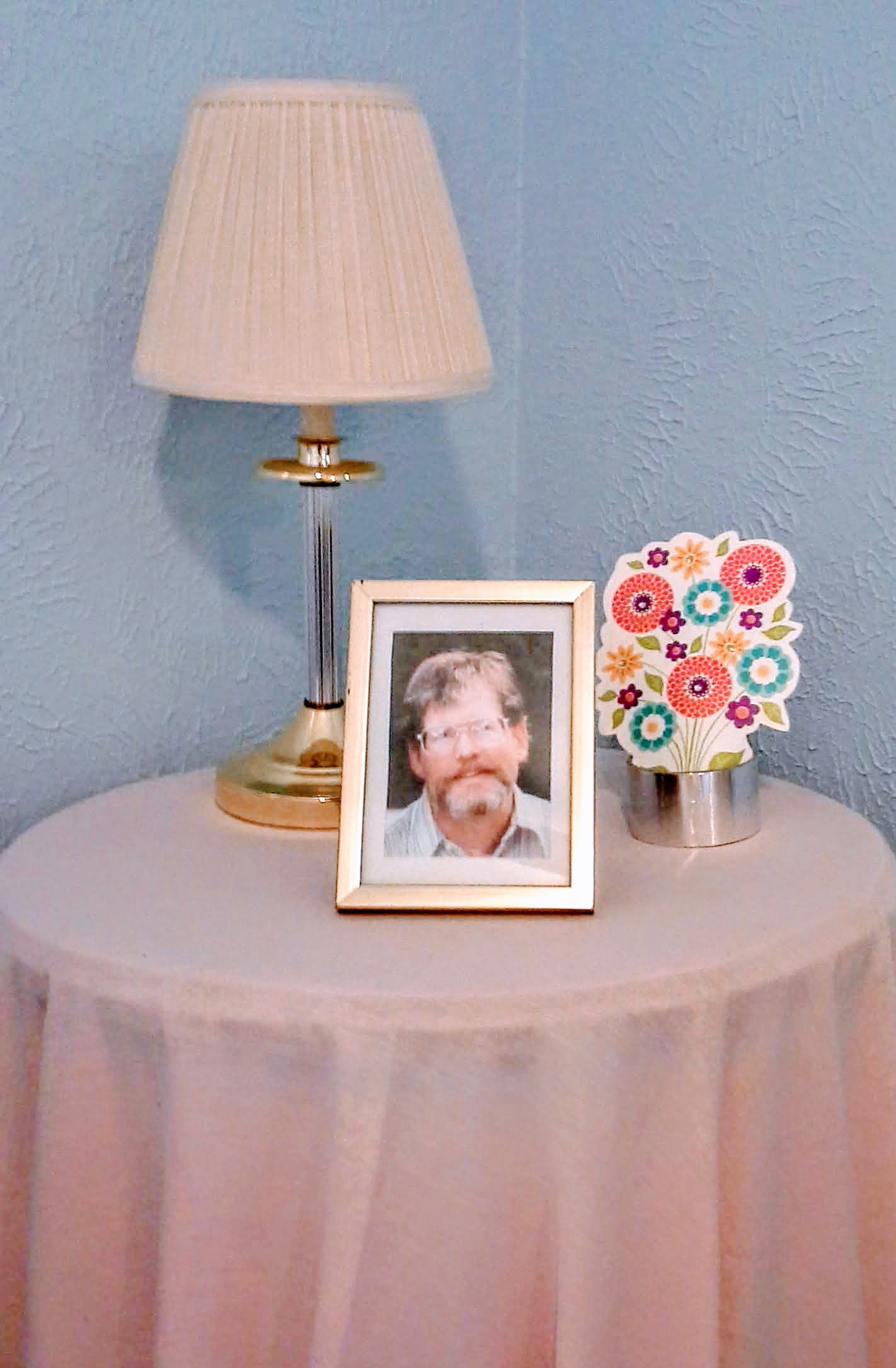
Making the situation even more unreal, I can barely remember what he looked like — I do not think in images, so it’s understandable (though distressing) that I have no clear image of him in my mind. Even worse, I don’t have a photo that matches what I remember of him. (The only photo I have was taken about twelve years before he died.) And so the image of him in my mind now is the image in that photo. I remember the first time I looked at the picture after he was gone — I was shocked that it no longer looked like him. I put the photo away, not wanting that false image to be the only picture of him in my head, but when I moved here, I put his photo on the bedside table, finding comfort in that now familiar image. Does it matter if it didn’t look like him at the end? When I was going through his effects and found a picture of him around the time we met, I didn’t recognize that image of him either. And yet, they were both good images of him at those times. So what difference does it make how I picture him? He was all those men, and none of them.

Nor do I have a clear sense of time. Sometimes it feels as if he died just a couple of months ago. Sometimes it feels like a lifetime ago. The demarcation between our shared life and my solitary life was once so stark it was like the edge of a cliff. All I could see was the past and what I had lost. The living I have done in the past eleven years has blurred that edge almost to the point of nonexistence, adding to the sense of unreality.

I didn’t really expect to grieve for him today, and I didn’t, though the day isn’t yet over, so there’s a chance a bout of sadness will visit me tonight as I prepare for sleep. What I did today is what I have done every day since he died — lived the best I know how, finding joy in simple things, finding life in novel experiences. He was so sick at the end, it seemed as by dying he set us both free — he from pain, me from a lifetime of servitude to his illness — and I have been careful not to waste that gift.

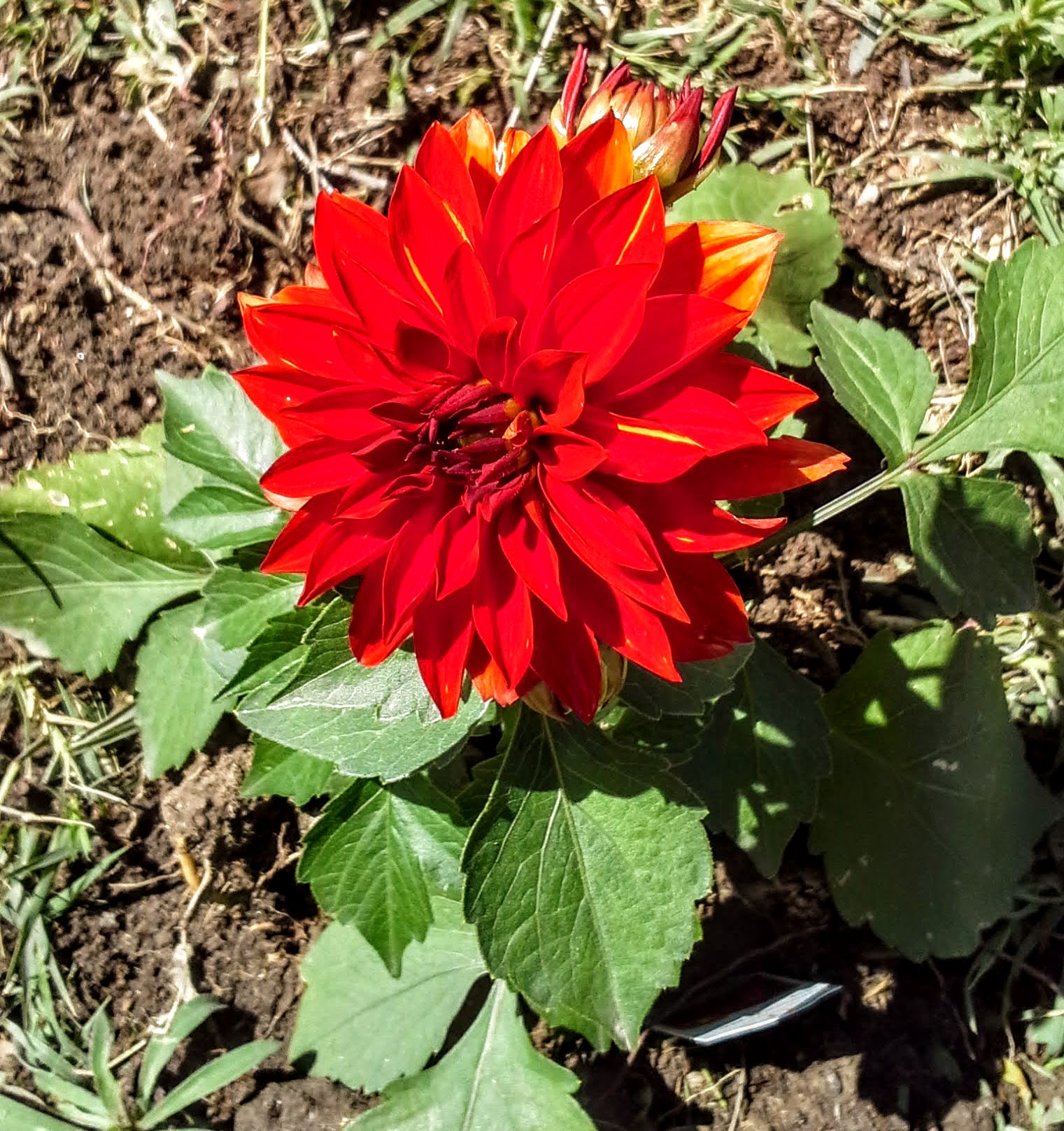
Today’s simple joy was the blossoming of the Glory of the Snow bulbs I planted last fall.

And the novel experience was getting to drive a baby John Deere. The worker who is laying rock around my house drove here in the tractor to make it easier to transport the rock from one side of the yard to another, and to my delight, he let me drive the thing up and down the street, and even showed me how scoop up the rocks.

Those two things in particular add to my bewilderment today about life and death and grief. If Jeff were still alive, I wouldn’t have had those treats. In fact, if he were alive, I would be someone else, more like the person I was eleven years ago rather than the person grief shaped me into.

Then I have to add in the aging factor to the bewilderment. He will always be the age he was when he died, and I am getting ever older. Sometimes I feel the injustice of it all — we were supposed to grow old together, and because of our healthful lifestyle, we were supposed to beat the odds and be vital to the end. And yet, he’s gone and I am trying to pick my way through the minefield of growing old by myself. I am glad he won’t have to deal with that. I’m also glad he didn’t have to deal with the angst of surviving the death of a life mate, though what do I know. It’s entirely possible, if the dead have any sort of consciousness, that they grieve for us as much as we grieve for them.

But what all this comes down to is that it’s been eleven years since he died, and I don’t have any clearer idea now of what it’s all about than I did back then.

***

Pat Bertram is the author of Grief: The Inside Story – A Guide to Surviving the Loss of a Loved One. “Grief: The Inside Story is perfect and that is not hyperbole! It is exactly what folk who are grieving need to read.” –Leesa Healy, RN, GDAS GDAT, Emotional/Mental Health Therapist & Educator
Grief Eve

Today is the eve of the eleventh anniversary of Jeff’s death. For several years after the first year, the day before the anniversary was painful, but the anniversary itself was not as much of a problem. I don’t know why that was except that perhaps I’d been focused on the anniversary itself and so was prepared for that, but I wasn’t prepared for what I felt in the days leading up to the anniversary.

So far, today isn’t any different from any other day, which kind of surprises me. The calendar this year is exactly the same as the year he died, so I expected to feel something . . . extra. Apparently, he’s been gone so long that I no longer feel the “calendar” of his absence. During the first years, even when I didn’t actually check to see what day it was, I could feel the various anniversaries (his diagnosis, signing up for hospice, his dying) in the marrow of bones, in the depths of my soul.

Body memory such as I experienced is often associated with extreme stress, and the death of a spouse/life mate/soul mate is about as stressful as everyday life gets. Body memory is not a flashback, where you are actually experiencing the trauma again, though that re-experience did happen often during the early years. Nor is it simply a vivid memory. In fact, the body memory comes first, and only afterward do we remember why we felt such an upsurge of emotional and physical grief reactions.

I’ve always felt that my internal clock was reset on the day he died, so that ever after I talk about that day as “the beginning.” Back then, I meant it as the beginning of my grief, but learned to see it as the beginning of a new stage in my life, one that was dictated by his absence, my grief, my struggles to find a new way of living. Now that clock, or at least the internal memory of him and his dying days, has wound down. As you can see, I still count my years from that day, but it is a conscious count, not a body memory.

Many memories of my life before that delineation, that beginning, have faded with the years. It annoys my sister when she asks me about things that happened in our childhood and I don’t remember. (And it annoys me that she still asks, knowing that I don’t remember.) It’s as if those years belonged to someone else’s life in the same way the characters I have read or written weren’t actually my life. Truthfully, I don’t want to remember my younger years. Nor do I have any particular desire to try to remember my years with Jeff — I feel those memories in the void of his absence even if I don’t recall a specific incident.

For many years, every Saturday, the day of the week he died, was a sadder day for me. I could always tell when it was Saturday even when I didn’t know. (I’m one of those people who, if they were in an accident and a medical professional would test my cognizance by asking me the date or the day of the week, I’d fail.) But back then, I did know Saturdays. It’s been a long time since I “felt” a Saturday. All my days, at least as they pertain to Jeff and his absence and my grief, are pretty much the same now. There is a deep running current of sadness that will never leave me, but it doesn’t affect me the way it once did. I can still be happy, can still find joy in the little things of my life, such as the flowers poking their pretty little heads above ground.

But this is how I feel today. Tomorrow is the first time since he died that the anniversary falls on Saturday, so who knows what I will feel, what my body will feel, what I will remember.

***

Pat Bertram is the author of Grief: The Inside Story – A Guide to Surviving the Loss of a Loved One. “Grief: The Inside Story is perfect and that is not hyperbole! It is exactly what folk who are grieving need to read.” –Leesa Healy, RN, GDAS GDAT, Emotional/Mental Health Therapist & Educator

Seven Things Everyone Needs to Know About Grief

1) Grief belongs to the griever. It’s no one else’s responsibility. No one should tell a griever how to grieve, when to grieve, or how long to grieve. No one can bind grief or limit it, usually not even the griever.

2) All losses aren’t equal for the simple reason that not all relationships are equal. The more deeply committed the relationship, the more roles a person played in your life, the more you will grieve.

3) Grief for a life mate takes much longer than everyone assumes that it does. Many people find a sense of renewed interest in life or at least a sense of peace between three and five years, and even afterward, they can experience grief upsurges.

4) The most stressful event in a person’s life by far is the death of a life mate or a child. Such a loss is so devastating that the survivor’s death rate increases by a minimum of 25% percent.

5) Grief is normal. The whole chaotic mess of new grief, no matter how insanely painful, is normal. Whatever a person does to help get through the shock and horror of losing a life mate or a child is normal.

6) Grief is physical, too. People often tell the bereaved to put the deceased out of our minds (at the same time they tell them that the deceased will always live in their hearts), but that’s hard to do because grief is also in our bodies.

7) Anger is an effect of grief. It is not a stage of grief, not a complication, but an intrinsic part of the process. In fact, we don’t need to be angry at someone or something to feel anger as part of grief. It is the body’s natural response to a perceived danger.

***

Pat Bertram is the author of Grief: The Inside Story – A Guide to Surviving the Loss of a Loved One. “Grief: The Inside Story is perfect and that is not hyperbole! It is exactly what folk who are grieving need to read.” –Leesa Healy, RN, GDAS GDAT, Emotional/Mental Health Therapist & Educator