An Exercise in Hope

I had a nice surprise today: snow! We haven’t had so much snow this winter that I’m sick of it, and anyway, it wasn’t much of a snow — just enough to cover the ground and my front ramp while leaving the sidewalks clear. But it was enough to make a day spent inside feel cozy, especially when accompanied by a book and a cup of lemony spiced tea.

More snow is expected for Thursday, along with frigid temperatures, but hopefully the intervening days will be warm enough for digging.

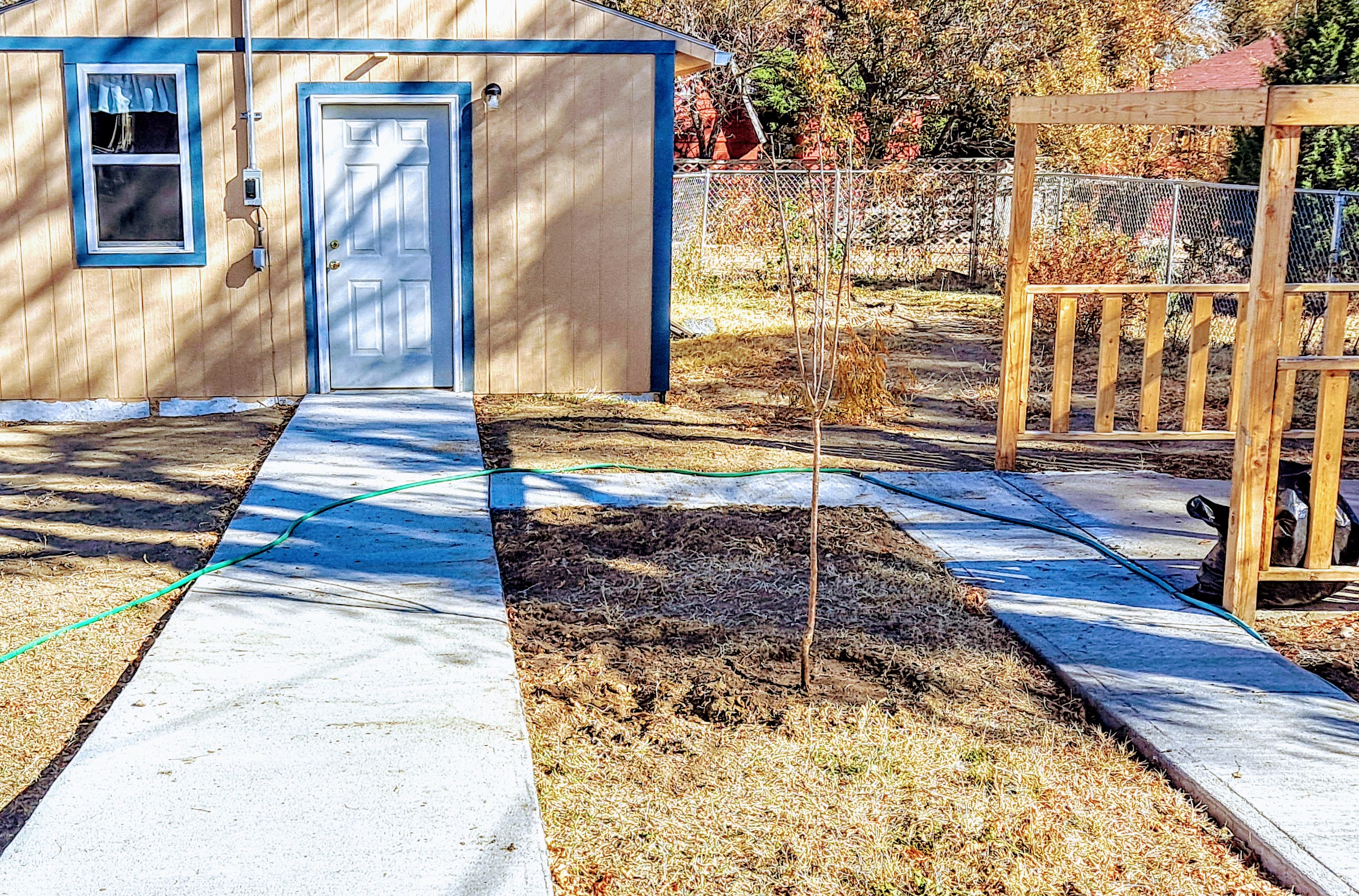
I’d planted three 6-foot- tall greengage plum trees at the beginning of last winter, which was supposed to be the optimum time for planting, so that’s when the nursery sent the trees. One of the trees did well, but two didn’t survive the winter, though sprouts did shoot out just above the graft mark. (I was hoping to get trees with greengage roots so the inevitable volunteers would turn the tree into a greengage forest, but I took what I could get.) I lopped off the trees just above the shoot, and one of truncated trees seems to be doing well, but still, the nursery said they’d replace both trees. (I had to pay shipping, which made those replacement trees rather expensive, but hopefully it will be worth it, especially since they won’t replace the replacement trees if there is a problem.)

They decided not to take a chance on the replacement trees not making it through the winter, so they promised to send them in March, which sounded good a year ago. Well, now it’s March. Those trees are slated to arrive tomorrow, which is why I’m hoping for decent digging weather. I can’t plant those trees by myself; even if I could dig the hole deep enough (which I can’t), I couldn’t hold the tree upright and fill in the hole at the same time. My contractor said he’d send someone to help, and I’m sure he will. Eventually.

Luckily, it will be cold enough that the trees shouldn’t come out of dormancy if they have to wait a bit. I suppose if worst comes to worst, I can do the planting myself over several days, but I doubt that will happen. I have been so patient with this contractor that generally when something is time-sensitive, he figures he owes me and he gets it done. (Oddly, these extra things he does so quickly for me are more in the line of favors since they are handyman jobs rather than typical contractor projects.)

As always, though, any gardening project is an exercise in hope. I hope the trees get here safely. I hope they get planted in time. I hope they grow. I hope they blossom. I hope someday to eat plums picked off my own trees.

A lot of hope!

But first, the snow.

***

What if God decided S/He didn’t like how the world turned out, and turned it over to a development company from the planet Xerxes for re-creation? Would you survive? Could you survive?

A fun book for not-so-fun times.

Click here to buy Bob, The Right Hand of God.

Upcoming House Anniversary

One week from today will be the third anniversary of “wedding” my house. It seems a weird way of describing the purchase, but the house offers me much that has been missing from my life since Jeff’s death — stability, a home, comfort. It also offers safety and security, at least as much as is possible in turbulent times. Of course, it can’t offer companionship or conversation or love, though it does give me something to love and care for, which is important when one is alone and hasn’t any inclination for pets.

Because of this upcoming anniversary, I feel as if I should get the house a gift, though the house is spoiled enough as it is, with all the money I’ve lavished on it — not just a new foundation for the porch, but a basement floor, landscaping, sod, a garage, and a whole slew of minor gifts.

Still, if I think of something, I might consider getting something to honor the occasion.

The traditional third anniversary gift is leather, though there isn’t anything of leather my house and I need. Come to think of it, I can’t even remember the last leather thing I bought. I doubt there is even a single strip of leather on my shoes.

The modern third anniversary gift is glass, but even though I do have and do use things of glass, I don’t need anything beyond what I have. I wouldn’t mind another goblet to add to my collection of miscellaneous goblets, but there isn’t room in the cabinet, and besides, I seldom use stemware. My water receptacle of choice is an old glass peanut butter jar because I can put a lid on it to keep from spilling and to keep bugs out in the summer. (Too many times at night I’d reach over for the glass of water on my bedside table and miss. By the time I got out of bed and cleaned the mess, that would be the end of any chance of sleep. Even worse are the times I accidentally drank a bug a night. Eek.)

In the end, I doubt I’ll get anything to mark the occasion. After all, I celebrate this wonderful house and home every day.

I did get a present from my sister, though, which is very nice. She thought these bowls would make me smile, and they do. The house has yet to let me know what it thinks of our gift.

***

Pat Bertram is the author of Grief: The Inside Story – A Guide to Surviving the Loss of a Loved One. “Grief: The Inside Story is perfect and that is not hyperbole! It is exactly what folk who are grieving need to read.” –Leesa Healy, RN, GDAS GDAT, Emotional/Mental Health Therapist & Educator.
An Itch to Camp

I just finished a book where the characters went camping in the mountains, and it made me itch to go camping again. The fact that the campers in the novel ended up dead or maimed didn’t affect that yearning, and maybe even made it stronger for some perverse reason — perhaps for the feeling of putting in a total effort, pitting oneself against nature. Chances of my ending up with a wilderness guide who is also a serial killer like the characters in the book aren’t that great especially since I never used a guide on any of my treks, and probably never would.

The book I am reading now takes place not far from the Organ Pipe Cactus National Monument, which is intensifying the camping itch. I so enjoyed that area that it was one of the few places where I extended my stay. Not only did it feel as if I were living in a southwestern botanical garden, but I met some interesting people. One woman, who was the age I am now, more or less stayed there all winter, even though there is a limit to how long you can stay at one time. The people running the place let her stay because the place wasn’t packed, and because of her financial situation, I think. She camped out for long periods of time because she was alone and her teacher’s pension didn’t afford her enough money to live otherwise. I often thought I would do what she did, and in fact I’d planned on it, figuring I would go north in the summer and south in the winter, but fate intervened and I ended up with a permanent place to stay.

Despite the itch, I will probably never go camping again, though “never” is a long time. For now, I’m still enamored of my house, and don’t particularly want to spend a night away (I’d worry more about the house than my own safety, which seems a recipe for disaster). But as time goes on, and the feeling of newness wanes while the feeling that the house will still be safe waxes, I might head for the hills.

Although I stopped at many campgrounds on the cross-country trip I took several years ago, I didn’t visit any of the most prominent national parks, such as Yellowstone and the Grand Canyon. And while I took several trips back to Colorado when I was away, I didn’t camp out here either. So there are a lot of unlived adventures if I ever want to answer the itch.

Apparently, despite my saying “never” to camping, I haven’t totally given up the idea since I’ve kept all my camping gear — all the big and heavy stuff for campground camping and all the super lightweight stuff for backpacking.

It’s funny, though, how different things are when you are leading an intermittent nomadic life (periods of staying in one place punctuated by periods of being on the move). I was able to take chances back then because I was still under the influence of grief and felt I had nothing to lose, so any worry about driving a car that’s a half century old into remote areas was shoved to the back of my mind. Now that particular worry doesn’t want to be shoved. And rightly so, perhaps.

But who knows. I might be considered elderly (statistically speaking), but I’m still a young elderly and haven’t yet reached my dotage, so many things are still possible. Perhaps even camping.

***

Pat Bertram is the author of intriguing fiction and insightful works of grief.

The Thing About Time

The anniversary of buying my house is coming up next month. It’s all still so fresh to me — the surprise and amazement, the joy far outweighing the frustrations — that it seems inconceivable I’ve been here three years. The time simply slipped through my fingers, three years gone in a flash.

During my first years of grief, time seemed to pass slowly, probably because I was grasping onto time itself, counting down the minutes, the hours, the days, as if time were a lifeline keeping me from falling into the black hole of agony and angst. But even those years passed, and the twelfth anniversary of Jeff’s death will also be coming up next month.

It is interesting to me that the anniversaries of these two life-changing events — Jeff’s death and the buying of my house — occur in the same month. The dates are three weeks apart, so my celebrating the house won’t bleed over into my honoring his life, though it wouldn’t make any difference if it did. Next month won’t be the emotional roller coaster it might appear to be, with the happy anniversary coming up at the beginning of the month and the sad one at the end because time tends to even things out. The highs get eroded and the lows gradually get filled, perhaps with the sediment of the erosion.

Also, although on the face of it, the two events don’t have anything in common, they are inextricably entwined in my mind because of the enigma — if Jeff hadn’t died, I wouldn’t be here. I couldn’t have one without the other. I sometimes wander around the house, wondering how he would fit into my life and my house, and I can’t see it.

But it doesn’t matter. It can’t matter. He’s gone. He will never have to fit himself into my current life. It is confusing, nonetheless.

Still, time passes, and there will come a time I will never even think of trying to fit him into my life. I might even break my relatively new habit of talking to his photo. (In fact, that would probably be a good idea. It reminds me . . . again . . . that he is gone and that any sense of connection is just an illusion, which makes me feel alone. And sad.)

It’s funny to me that my car’s fiftieth birthday passed without my remembering. You’d think that would be a significant date, considering that the car has been with me most of my life and has outlasted almost all relationships, but apparently not since I lost track of the days. It’s possible, with enough time, Jeff’s date will also pass unrecognized, not that I would forget him, but that I would lose track of the days. And the same goes for my house.

That’s the thing about time. It passes, and with its passing, all things pass, too.

***

Pat Bertram is the author of Grief: The Inside Story – A Guide to Surviving the Loss of a Loved One. “Grief: The Inside Story is perfect and that is not hyperbole! It is exactly what folk who are grieving need to read.” –Leesa Healy, RN, GDAS GDAT, Emotional/Mental Health Therapist & Educator.

The Clever North Wind

At the beginning of the movie Chocolat, on a winter day, a sly wind blows in from the north, bringing a chocolatier and her six-year-old daughter to town, and the people and the place will be forever changed.

At the end of the movie, after all the changes, the narrator changes her tune, and instead of calling the north wind “sly,” she called it “clever: “But still the clever north wind was not satisfied. It spoke to Vianne of towns yet to be visited, friends in need yet to be discovered, battles yet to be fought…

Yesterday, a north wind blew through here, though I don’t know how sly or clever it was. It simply blew, fierce and cold.

I suppose it’s just as well. As romantic as the north wind’s gifts might be, a chocolate store would be too tempting. I wouldn’t listen if it spoke to me of towns yet to be visited since I’m still settling into my not-so-new town (my three-year anniversary of moving here is coming up in another few weeks). I’m not actively looking for new friends in need or otherwise, though I am always appreciative when I do make new friends. As for battles or any kind of strife? Not my style. I’m more into peace and contentment and even laziness.

What my north wind did bring was frozen air. As I walked home from work, wrapping my coat tightly around me and bending into the wind to keep from being blown off my feet, I could see what looked like the beginning of a snow shower, but the barely visible ice particles never made it to the ground. At least not during my walk. There was some snow this morning when I woke, though luckily not enough to have to sweep away.

I always walk home from work (well, not always — there was one cold evening when it rained too heavily to be safe, so I did accept a ride then), but last night, I almost turned back to catch a ride. By then, I was halfway home so it wouldn’t have done me any good. I tried walking backward, as I used to do when the wind blew into my face, but apparently, as well as my knees are behaving, they didn’t appreciate the backward maneuver. Still, I got home safely, and though the wind blew through the night, by this morning it had moved on to tempt other folks in other place with dreams of towns yet to be visited, friends in need to be discovered, and battles yet to be fought.

***

Pat Bertram is the author of Grief: The Inside Story – A Guide to Surviving the Loss of a Loved One. “Grief: The Inside Story is perfect and that is not hyperbole! It is exactly what folk who are grieving need to read.” –Leesa Healy, RN, GDAS GDAT, Emotional/Mental Health Therapist & Educator.

Exchanges

A common “exchange” at Christmas is a cookie exchange, where everyone involved makes a big batch of cookies. The exchangers then get together to trade cookies, so at the end, each person comes away with an assortment of cookies they didn’t have to take the time to bake.

There are two problems with this — too often the various bakers have different skill levels, so the person who spends a lot of time and effort on their cookies can come home with cookies they couldn’t eat themselves and certainly wouldn’t serve to guests. The second problem is that many people are on prescribed diets to limit sugar intake, which takes away the fun of such an exchange.

A different sort exchange I recently heard of is a book exchange, where each person buys their favorite book and includes a note as to why they liked it so much. This would actually work better as a group gift idea for one person, so that person would end up with a whole slew of books as well as a great insight into each of her friends, but it still works nicely for an exchange with a group of book lovers, where each person gets one new book. As nice as that sounds, though, it’s not all that special. I frequently do book exhanges — it’s called “going to the library.”

Another idea is a plant exchange. The woman I work with and her daughters exchanged plants for Christmas — each of the women set up plants for all the others. After the exchange, each ended up with four new house plants. So very clever!

In an oblique way, I am a participant in this exchange. I didn’t end up with any plants (whew!) but I get to enjoy seeing the plants grow up.

I’ve never had any luck with house plants so I shied away from them. Oddly, I have done well with a couple of plants I’ve been gifted with since I moved to this house, and as long as the plants stay small enough to sit in front of my south-facing kitchen window, they do fine. Elsewhere in my house, it’s too dark or too cold or no space for them. But at that window? Perfect! In fact, one plant grew so large I had my own private plant exchange, the big plant for a little one.

But that’s just to explain the “whew” a couple of paragraphs ago and is not really part of today’s story.

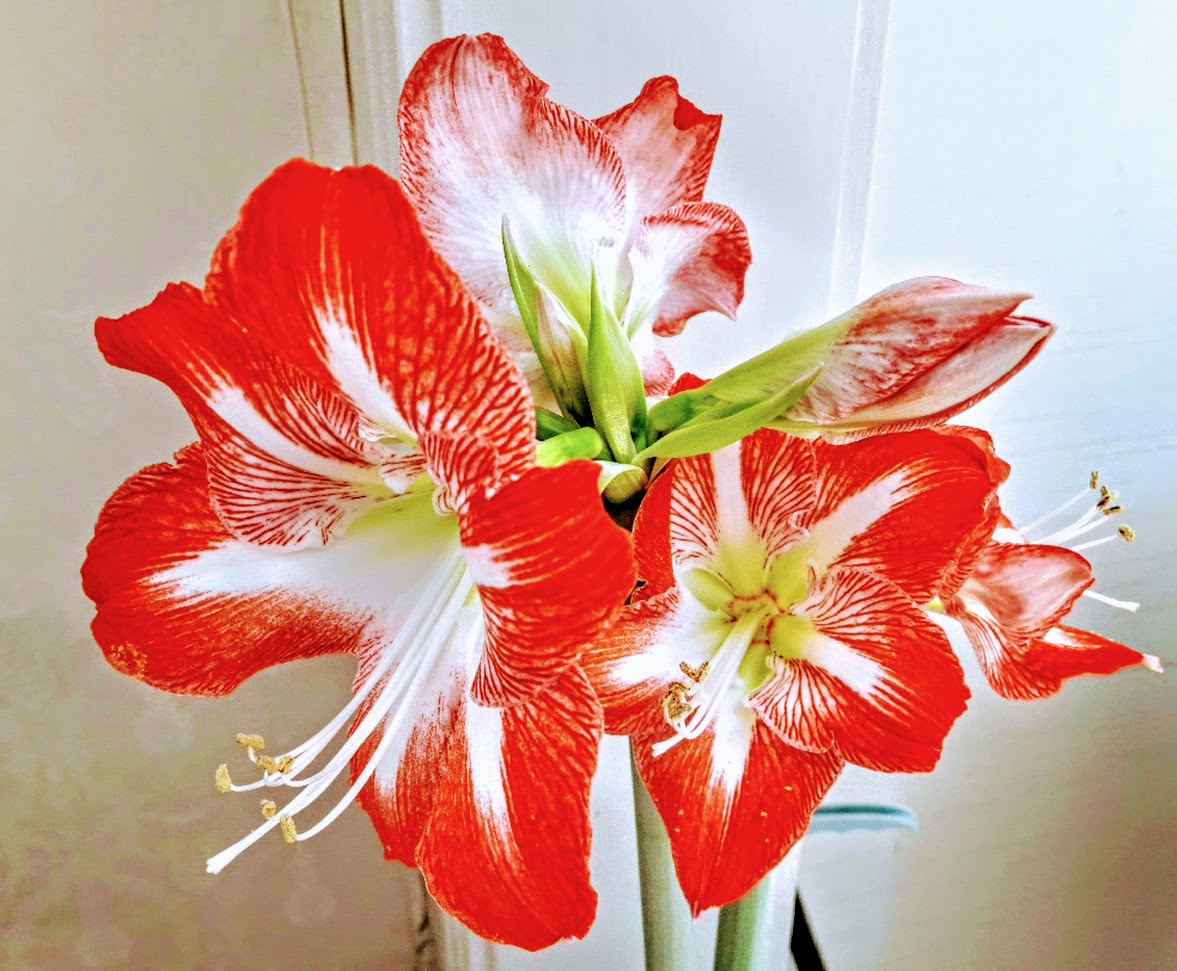
One of the plants that was gifted in the group plant exchange was an amaryllis. I don’t think I’ve ever seen one in real life, so I have enjoyed seeing the flowers bloom. Not only are they spectacularly pretty, but they brightened the dreary winter days we’d been having. Too bad they don’t grow outside in Colorado. I’d certainly love to see a whole garden filled with such gems! Still, being able to see even one amaryllis plant in bloom is a joy.

***

Pat Bertram is the author of intriguing fiction and insightful works of grief.

Water Saga

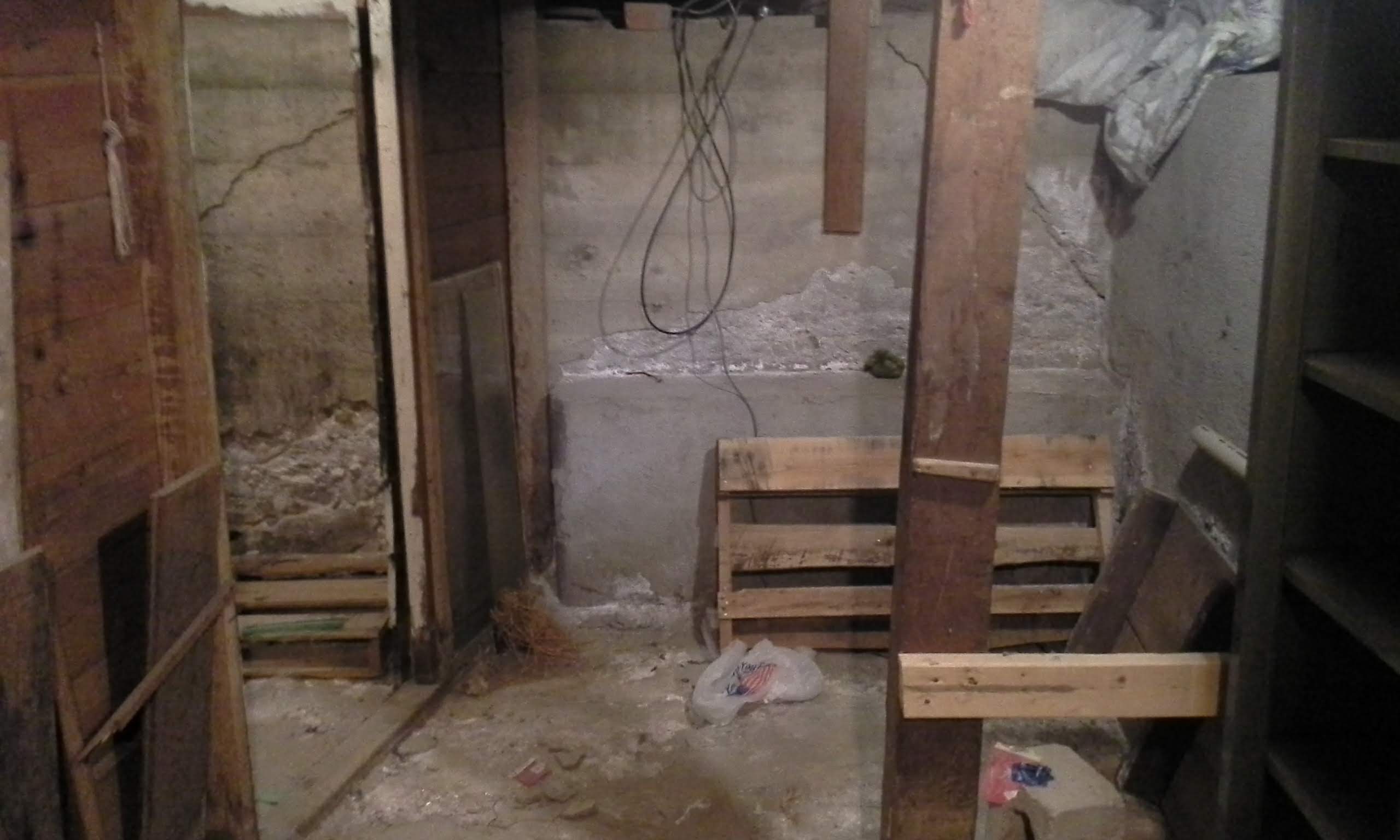
I was a bit disappointed when I moved here and saw my creepy basement because I’d imagined a finished room. Instead, I got a dark dungeon-like space with a rotted floor from too much flooding, crumbling half walls, and spooky nooks, though no crannies. (A nook is a corner or other small space; a cranny is a gap or a crack in a wall.)

Above and beyond the walls shown in the photo are deep crawlspaces with all the pipes and ducts and other arteries of a house exposed.

As it turned out, the new garage with plenty of storage space precluded any need for basement storage. Still, I had the basement cleaned out, the floor concreted, the walls painted white, all of which made the place look a trifle less like a dungeon and a bit more like what it is — a utilitarian space for the water heater and furnace, as well as those “arteries.” It’s still not pretty any way you look at it, but it does the job.

The best thing about the basement turns out to be the thing I really didn’t appreciate — the visibility of all those pipes and ducts (visible in real life, that is; they’re not visible in the attached photo). When I got my water bill with the hugely inflated water usage, it was easy enough for me to go down to the basement and look for any drips or flooding. I didn’t see anything. A worker who came to help me find the leak didn’t see anything, either.

This is a basic house, fairly simple with not much hidden besides the buried pipes leading to (and from) the house — the gas line, the sewer line, and the water pipe. So, if there is no leak in the house, no water running anywhere in the house, there are only two places for a leak — where the buried water pipe connects to the meter and where it connects to the house. The pipe itself should not be a problem — the old lead pipe was replaced before I got here as a condition of the sale. (I even have the receipt somewhere.)

Unfortunately, with all the snow that was dumped on us, as well as the frigid temperatures we’re going to be treated with the next few days, no one will be able to get out here to probe for water leaks. But that’s beyond my control. What I can do — I did: go down to the basement and look for leaks and listen for water movement through the fully exposed pipes.

***

Pat Bertram is the author of Grief: The Inside Story – A Guide to Surviving the Loss of a Loved One. “Grief: The Inside Story is perfect and that is not hyperbole! It is exactly what folk who are grieving need to read.” –Leesa Healy, RN, GDAS GDAT, Emotional/Mental Health Therapist & Educator.

Stitches of Togetherness

Small talk — conversation about unimportant or uncontroversial matters — is a staple of my life now. When I visit with friends, we talk about small town life, ourselves, their pets and children and grandchildren, people we know. The only time I have a conversation about something more vital is if I know they more or less feel the same as I do because I simply have no energy to discuss anything anyone feels passionate about. Their passion for their beliefs about the “issues” of the day exhausts me.

For many years, I didn’t engage in small talk. At least not that sort of small talk. Jeff and I talked about everything that was important, both in our lives, in history, in health, in myth, in the world. We generally agreed, and if we didn’t, we’d discuss things, listening to each other without interruption, until we came to a middle ground. Mostly, though, through the decades, we formed our ideas in tandem. These ideas weren’t based on feelings but on in-depth reading (thousands upon thousands of books) on a multitude of subjects, including many things we didn’t necessarily agree with but wanted to know more about.

Then there was the other sort of talking we did. Small talk so small it wasn’t really small talk, more like the stitching that holds two lives together. You know the sort of thing I mean. Things said more or less in passing: “We didn’t get any mail today.” Or “I saw so-and-so today.” Or “They were out of something at the store today.” Or “I’m home!” Nothing of importance beyond the moment.

Several years ago, I wrote that one of the collateral aspects of losing a life mate was having no one to do nothing with. Although Jeff and I worked and played and talked for more than three decades, we often did nothing together. We were just there, a presence in each other’s lives. I’ve found other people to fulfill some of the roles he played in my life, such as someone to do something with, but I have no one to do nothing with.

I’m now realizing it’s the same with talking, and why I so often talk to his photo. I have people to talk with, both small talk and sometimes larger talk, but there’s no one around for the smaller than small talk. If I am sad or lonely, I can call someone, or I can go to the library and chat with the librarians while they check out my books, or I can do any number of things. But there’s no one around for the sub-small talk. I can’t call someone to say, “I didn’t get any mail today.” Just the effort to call would turn the idle comment into something it wasn’t meant to be and would give my not getting mail an importance it didn’t deserve. And yet, a shared life is made up of these passing comments, these “stitches” of togetherness.

Those stitches are another of the many things no one really notices until they are gone. In my case, other things were so much more overwhelming — not just the pain and angst of his being dead, but the silence of my life, the yearning for one more word or smile from him, the lack of someone to do nothing with, the stark aloneness of being alone (it’s completely different having alone times in a shared life than being alone in an unshared life).

When grief started leaving me, I became engrossed in other activities, such as dancing and traveling, moving from place to place and trying to figure out what to do with my life. So many of those activities are no longer a factor. I’ve bought a house and moved to my perhaps final home, so now the subtler and more permanent aspects of living alone after the death of a life mate are making themselves felt.

And apparently, this lack of “stitching” is one of those aspects.

***

Pat Bertram is the author of Grief: The Inside Story – A Guide to Surviving the Loss of a Loved One. “Grief: The Inside Story is perfect and that is not hyperbole! It is exactly what folk who are grieving need to read.” –Leesa Healy, RN, GDAS GDAT, Emotional/Mental Health Therapist & Educator.

Adventurous Trek

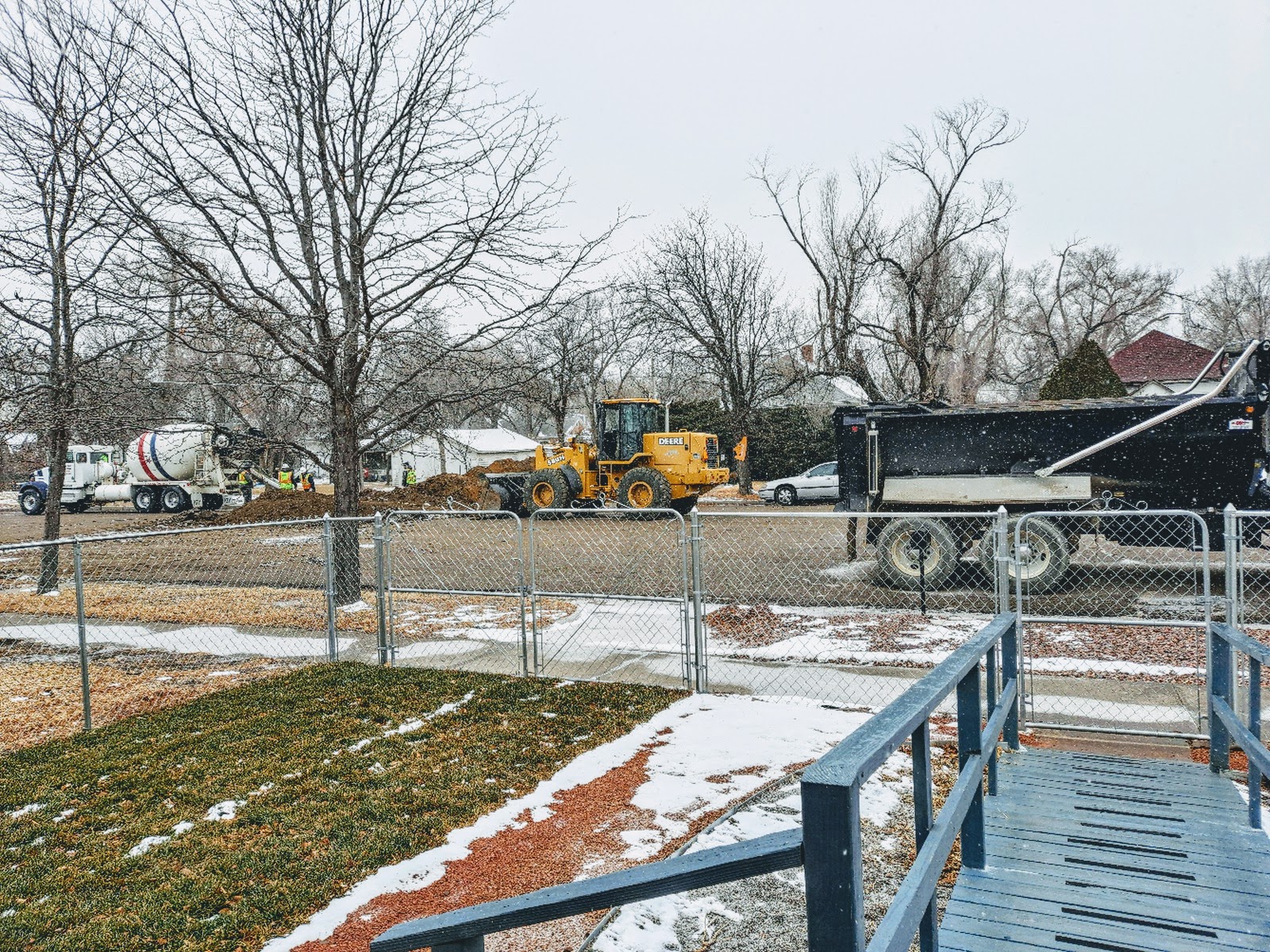
I was awakened when the day was just breaking by the beep-beep-beep of construction trucks backing up. I have a hunch they wanted to get in some work before the snow got heavy, though it never really did. The good thing is that they were fixing the sewer lines, so it wasn’t something I had to pay for, at least not directly.

Although you can’t tell from the photo, snow was falling lightly when I took the picture, and it continued most of the day. Temperatures hovered around freezing, so whatever snow fell melted right away, leaving mud and puddles behind, which made walking to work a real adventure.

Although it’s only two blocks to my client’s house, there was no way to get there without making a mess of my shoes, unless I wanted to walk several blocks out of my way. The sewer dig went straight down the alley and across the street (they’d had a machine out here a week or so ago that chomped up the tarmac, leaving the strip unpaved). Because of the snow and the digging, that ten-foot-wide strip turned into pure mud. Just as bad, the way they do the storm drainage around here is to hump the middle of the street, creating a ditch on either side of the road, which fill with water because it was an inefficient concept for drainage. The good thing is that I was able to wash off my muddy shoes in the puddles. The bad thing is that my socks got wet, and I didn’t bring a second pair of socks as I usually do during wet times. (I can’t blame myself for forgetting the socks because we’ve had so little wet weather it was easy to forget my wet-weather routine.) I did remember to bring dry shoes, a sweater, and my lunch as well as all my regular staples such as phone, water, and a variety of small emergency items.

With all the stuff I bring, you’d think I was going on a major expedition instead of a mere two blocks!

I mentioned yesterday that when I’m at work and the client is asleep, sometimes I read, but sometimes I also play games on my phone. I get tired of the one I have (a word game where you unscramble a bunch of letters to form words of various sizes). I deleted most of the other games that came with the phone because they seemed boring, but it would be nice to have another game or two. The game I have inundates me with ads for other games, but although some sound interesting, I don’t have a clue what to get. Do you play a game on your phone? If so, do you mind telling me what it is? (I hesitate to ask because the games we play seem so personal — they tell more about us than we might want others to know.)

Luckily, the weather will improve for a few days to let the mud dry out, so I only have one more hazardous walk to deal with until the middle of next week when icy weather returns.

***

What if God decided S/He didn’t like how the world turned out, and turned it over to a development company from the planet Xerxes for re-creation? Would you survive? Could you survive?

A fun book for not-so-fun times.

Click here to buy Bob, The Right Hand of God.

Walking Backward

The “walking backward” in the title of this piece isn’t a euphemism. I mean it literally.

It snowed last night, not enough to cover the sidewalks or trees with anything other than a dusting that quickly melted, but snow seems to accumulate on my front ramp, and since there is frigid air above and below the ramp, the snow stays around. I didn’t have a chance to sweep the ramp before I left for work, so I did the next best thing: I walked down the ramp backward so that it looked as if I had arrived home (in case anyone was looking for trouble) rather than that I’d left for the day. I was careful, of course, stepping warily and holding on to the railing, so I made it down the ramp safely.

The thieving neighbor moved, so perhaps such a maneuver wasn’t as important today as it has been in the past when he trolled the streets, but still, I keep getting tarot cards reminding me to be prudent, so I’m being especially cautious nowadays. Of course, I don’t need the cards to tell me to be prudent since I generally am careful, but it’s always good to be reminded that the world isn’t as safe as I would wish it to be.

The snow was melted by the time I got back, so it’s possible my footsteps didn’t hang around long, but still, it did tickle me seeing my shoe prints leading up to the house as I was walking away, so the exercise was worth it on that account alone.

This cold, cold, cold weather will hang around for a few days, with possibly a few flakes of snow drifting our way again, which is fine with me. I do well when the temperature remains fairly consistent, but bobbing barometers wreak havoc with my system. Either I tend to fall asleep during the day or I lie awake most of the night, or both. It’s also easier to figure out how to dress appropriately. And that’s important to me. Even though the people I work for are more than willing to give me a ride home when the weather is inclement, I insist on walking, which seems to bemuse them. To me, it’s about a habit of independence, to keep me on my feet as long as possible. That, too, is literal, and not a euphemism. Being able to stand and walk — backward and forward — are so very important, especially to those of us who are no longer young.

***

Pat Bertram is the author of intriguing fiction and insightful works of grief.