Librarier

There is an anecdote going around the internet where a mother asks her little girl what she wants to be when she grows up.

The girl responds, “A librarier.”

“Don’t you mean a librarian?” the mother asks.

“No,” the girl says. “A librarier. Someone who goes to the library and reads.”
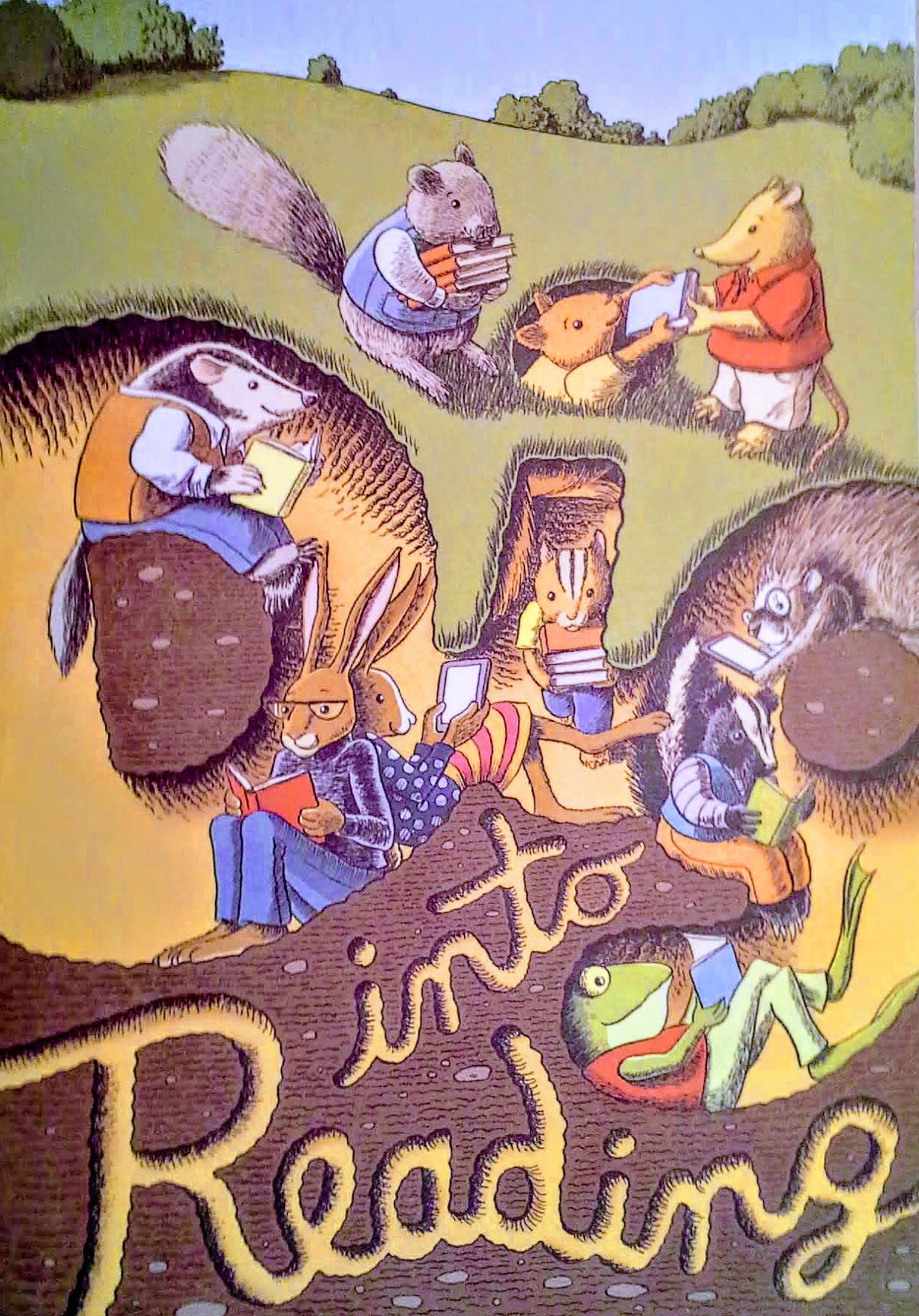
This could be a true story because kids can be that precocious, but even if someone besides a little girl made up the word, it’s a good one. And since I identify with the term, I would modify it to simply mean “someone who goes to the library.” I don’t do well reading in public — I need the mental space and freedom to relax into the book, and I can’t do that — don’t want to do that — when people are around. I feel too vulnerable.

Since I’m such a good and reliable librarier, I get to check out more than the maximum. (Being a “good girl” sometimes has its privileges!) But I still go quite frequently.

I have a friend who also reads a lot, but she does read at the library. She once said to me, “People always tell me that life’s too short to spend it reading. I say life’s too short not to spend it reading.”

That’s basically my philosophy. In my younger years, that’s what I did — read. It’s all I ever wanted to do. It’s not a good career choice since there’s no money in it (I could have been a librarian, I suppose, but then I’d have to watch everyone else read while I worked, and that’s not the same thing.) Still, I managed to mostly read my life away.

After Jeff died, everything changed, even reading. For the first time in my life, I couldn’t stand to read fiction. Too many books involved death, and I couldn’t face that faceless beast. Other books involved couples getting together, which was excruciatingly painful since I no longer had anyone. Still other books involved couples not getting together, which was just as bad, because it reminded me of my situation. And I was too unfocused to read non-fiction.

I did struggle with books for a while, but when the library closed for asbestos cleanup, I didn’t miss reading. I did buy an occasional book, but my finances don’t really lend themselves to such an indulgence.

Now, though my finances are even in greater disrepair than ever before, I have a library a few blocks away, a decade’s worth of reading to catch up on, and even better, death’s sting has receded.

So once again, I am a librarier.

***

Pat Bertram is the author of Grief: The Inside Story – A Guide to Surviving the Loss of a Loved One. “Grief: The Inside Story is perfect and that is not hyperbole! It is exactly what folk who are grieving need to read.” –Leesa Healy, RN, GDAS GDAT, Emotional/Mental Health Therapist & Educator.

 

Being Centered

After Jeff died, I feared I would stagnate, so I tried to get into the habit of saying “yes” to invitations and to following people’s suggestions about things to do. This led me to many interesting activities, including a short road trip along Route 66, learning to shoot various guns, and many meals with friends. (Going against people’s suggestions also netted me interesting activities, such as my cross-country road trip. Many people warned me of the dangers and said I couldn’t go alone, but I could and I did.)

More recently, ever since I heeded the suggestion to buy a house in southeastern Colorado, I’ve again been saying a lot of yesses. These yesses, too, have let me to interesting activities, including a train ride through the Royal Gorge, artistic endeavors such as painting gourds and making wreaths, and many, many meals with friends.

During the ten days after Christmas, there were no activities, so I spent the time by myself. It felt good. Centered. As if I were pulling my life back into my life.

It felt especially good to be able to structure my days. A bit of writing in the morning, walking around noon when the sun had taken the chill off the winter air, making raw vegetable salads and other healthy things in the afternoon. And reading in the evening.

I am so often torn — being disciplined or treating myself; being alone or visiting with friends; being structured or acting spontaneously. Being centered helps to mend the tear, to find a balance between what I want to do and . . . well, what I want to do. I want to do all of it, because obviously, if I didn’t want to be disciplined, I wouldn’t even try. If I didn’t want to treat myself, I wouldn’t give in. If I didn’t want to be alone, I would add to my activities, if I didn’t want to be with people, I’d say “no” more often.

Daily blogging began the process of centering me. It’s both a discipline and a treat, a way of being alone and visiting, a way of being structured and spontaneous. Writing has always been important to me, and it’s good to have an excuse to indulge myself (though truly, one needs no excuse to write).

A center needs to be held loosely — if you hold on too tightly, the pressure can blow it apart. If you hold on too loosely, it turns in “a widening gyre” and the center cannot hold. Still, without doing any harm, I can certainly be more careful what I say yes to. I’ve backed away from one of the clubs I joined, will back away from some shared meals, and am backing into a healthier regime.

Oddly, I no longer fear I will stagnate. Perhaps what I called stagnation was simply being centered.

***

Pat Bertram is the author of Grief: The Inside Story – A Guide to Surviving the Loss of a Loved One. “Grief: The Inside Story is perfect and that is not hyperbole! It is exactly what folk who are grieving need to read.” –Leesa Healy, RN, GDAS GDAT, Emotional/Mental Health Therapist & Educator.
Think

Whenever someone in offline life tells me they read my blog, I find myself scrabbling around in my mind frantically trying to remember if I’d said something that could hurt them. If I think I might have, I review the blog and sigh in relief if whatever I’d said that seemed so vile turned out in retrospect to be rather mild. Only once did I hurriedly edit the piece to tone down a comment, though whatever I’d said had been the truth, just not necessarily kind.

I suppose I should think about such things before I write, or at least before I hit “publish,” and I generally do, but my posts reflect whatever happened to me or whatever I’d been thinking, and I get caught up in telling my story. Often my posts are emotionally driven. Even more often, the posts are moral-driven — not moral as in virtuous, but moral as in finding lessons in the little things, such as removing a potential hazard when I notice it rather than after it does its damage as I wrote in The Trip of a Lifetime.

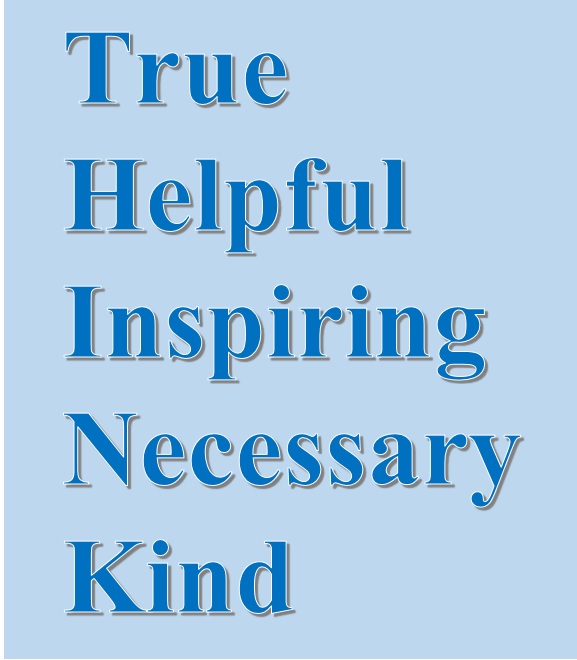
An acronym for “think” is True, Helpful, Inspiring, Necessary, Kind. Supposedly, before we say something, we need to T.H.I.N.K. To ask: is it true, is it helpful, is it inspiring, is it necessary, is it kind? If we stopped to remember all that, we probably would forget what we were saying in the first place, and for sure it would add an uncomfortable lull to the conversation (assuming that people would wait patiently for us to speak).

And the same goes for blogging. If I paused to reflect on every sentence I write, I would forget the next thing I planned to say since for me, blogging is strictly stream of consciousness: what I think ends up in the article. If I dam the stream, obviously nothing would come out.

But that whole THINK thing is only part of the issue of being connected online to people I know offline. Since most people who read my blog are people I don’t know, people I have never met in real life, or people I seldom see, I feel comfortable (or at least more comfortable) turning myself inside out than I do for people I see almost every day. No one wants to wear their heart on their sleeve (I had to stop here and look up that saying. It’s from Shakespeare. Othello.)

No one wants to feel exposed.

And yet . . .

Why not?

Those who would be most likely to peck at my poor exposed heart are those who wouldn’t be reading what I wrote anyway. Besides, if everyone wrote a blog from the heart every day, life would be so much easier since we would know what the people around us are really thinking.

The great benefit of my writing without always second guessing myself or doing too much thinking is that every once in a great while I end up writing something inspiring. And being able to inspire someone is worth any discomfort that might come from being so exposed.

I hope it’s also worth any hurt feelings I might inadvertently engender.

***

Pat Bertram is the author of Grief: The Inside Story – A Guide to Surviving the Loss of a Loved One. “Grief: The Inside Story is perfect and that is not hyperbole! It is exactly what folk who are grieving need to read.” –Leesa Healy, RN, GDAS GDAT, Emotional/Mental Health Therapist & Educator.

Powdered Coffee Creamer? Eek!

I always thought the danger in powdered coffee creamer was in the ingredients, such as partially hydrogenated oil, cottonseed oil, high fructose corn syrup solids, sodium caseinate, dipotassium phosphate, and other unpronounceables, but in a novel I am reading, the cop asked the character if she was armed, and she said “I have coffee creamer.” The cop just stared at her, and the character said, “Look it up.”

I don’t know if the cop Googled “powdered non-dairy coffee creamer self-defense,” but I sure did. And guess what? This kind of creamer can be used as a weapon. In fact, it’s banned in many prisons for that very reason. If someone doesn’t have the supplies to make a flame thrower to direct the flaming coffee creamer, such as PVC pipe, end caps, pressure gauges, air hoses, couplers and a whole bunch of other things cheaply and readily available at the hardware store, all you have to do is throw a handful of the powder in the air and light it. Oh, my!

Powdered non-dairy coffee creamer is used by hikers and campers to start a fire. They use less than a teaspoon, let one spark hit it, and it will stay lit longer than a match. Of course, you have to be careful. If you accidentally lit the whole container, you’d end up with a fireball. (Here’s a video from mythbusters showing the firepower of a whole lot of creamer: https://www.youtube.com/watch?v=yRw4ZRqmxOc&feature=related.

I doubt such a weapon would be much of a deterrent since not that many people would know to be afraid of coffee creamers (though now I am!). “Stop or I’ll creamer you,” doesn’t have the same impact as “Stop or I’ll shoot.” Besides, by the time you threw the coffee creamer at the assailant and thumbed a lighter, you could be dead, either from a bullet or from an ill-fated wind sending the creamer bomb back to you. Still, it’s an interesting idea to store away for some future book.

***

Pat Bertram is the author of Grief: The Inside Story – A Guide to Surviving the Loss of a Loved One. “Grief: The Inside Story is perfect and that is not hyperbole! It is exactly what folk who are grieving need to read.” –Leesa Healy, RN, GDAS GDAT, Emotional/Mental Health Therapist & Educator.
Surprising Myself

“May your coming year be filled with magic and dreams and good madness. I hope you read some fine books and kiss someone who thinks you’re wonderful, and don’t forget to make some art — write or draw or build or sing or live as only you can. And I hope, somewhere in the next year, you surprise yourself.” — Neil Gaiman

I friend sent me this quote last year, and asked me to pinky promise that I would fulfill these hopes.

Did I surprise myself? Oh, yes! I don’t particularly like owning things — they weigh heavy on my soul — and I especially never wanted to own a house (so many possible problems and such a responsibility), but after the death of my homeless brother a couple of summers ago, the idea got planted in my head, and I let it blossom. In a way, the dream of owning a house and the good madness of buying it unseen was his final gift to me.

The whole experience has been magic — meeting new people, finding myself at home, not just in my own house, but in a community.

I’m almost embarrassed to admit how many books I read last year (more than 300), and I’m sure at least some of those were fine books. I enjoyed most of them, anyway, but even more than that, I’ve loved having a library within walking distance.

Last year, I met people who think I am wonderful, and I also wrote (blogs and murder mystery games) and I for sure lived as only I can live.

I can honestly say, I lived up to my promise.

Again this year, she sent the quote and asked me to pinky promise, and I did. It’s an easy enough promise since I always live as only I can live, though magic and dreams and good madness seem to be things that can’t be forced, but come only when one is open to possibilities. And I am open.

Now let’s see if I can surprise myself once more and indulge in a bit of good madness.

Please feel free to join me in this quest!

***

Pat Bertram is the author of Grief: The Inside Story – A Guide to Surviving the Loss of a Loved One. “Grief: The Inside Story is perfect and that is not hyperbole! It is exactly what folk who are grieving need to read.” –Leesa Healy, RN, GDAS GDAT, Emotional/Mental Health Therapist & Educator.
Celebrating the Newness

I’ve never really celebrated the New Year because it doesn’t mean much to me. It’s a relatively arbitrary date. The calendar numbers change, but that’s all. It’s not a universal new beginning. The Chinese New Year this year is on January 25, the Jewish New Year is on September 18, the Persian New Year is March 19, the Korean New Year is January 25, the  Tibetan New Year begins on February 24, and various communities in the Hindu religion have different dates for their celebration.

January 1 is not even the beginning of a new season or of a solar cycle such as a solstice or an equinox. Nor is there any personal demarcation — no black line separates the old from the new. The world is no different today from yesterday, nor are we. We carry the old year with us because you have the same problems, sadnesses, hopes, fears.

There is a newness to January 1, though, and that is the newness of a new calendar.

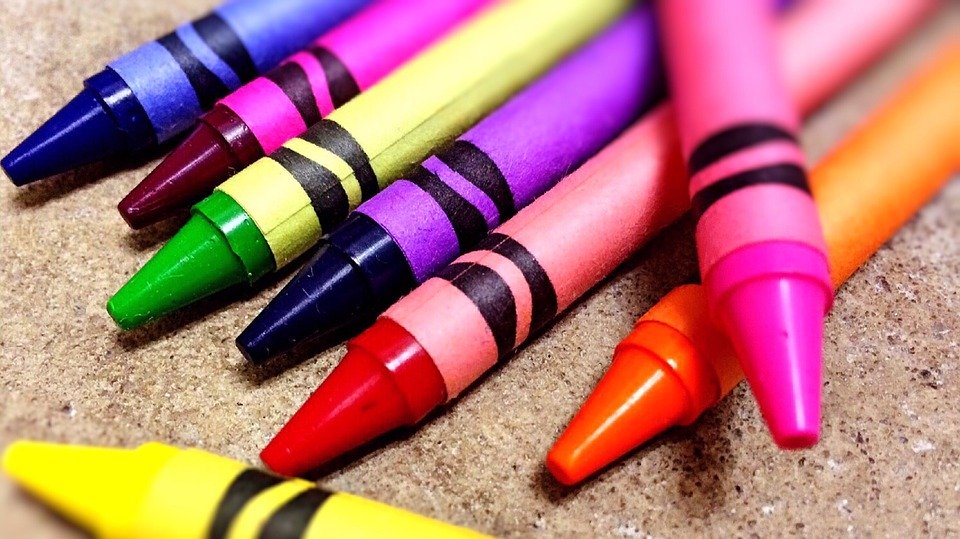
Like school kids with stiff new clothes and a satchel full of crayons, unread books, and blank paper, we are ready to set out on an adventure, trembling with both trepidation and excitement. Our new calendars have 365 blank squares. How will we use those squares? With notations of appointments and special days, of course. Perhaps with reminders of bills to pay and chores to do. But many of those days will be blank. What we will do with those blank days? Will we search for happiness or a new love? Will we recommit to an old love? Will we strive to attain a better level of health? Will we experience new things, meet new people, visit new places, sample new foods?

I do feel that particular newness today, that hope.  I’ve had marvelous adventures the past past year — buying a house, settling into a new home and community, making new friends. And now I have 365 blank days on my new calendar. I plan on getting out my box of crayons and coloring those days brightly with the glow of a smile, laughter shared, and moments of appreciation for the world around me.

I hope your days will be filled with color, new adventures, and much joy.

Happy New Year.

***

Pat Bertram is the author of Grief: The Inside Story – A Guide to Surviving the Loss of a Loved One. “Grief: The Inside Story is perfect and that is not hyperbole! It is exactly what folk who are grieving need to read.” –Leesa Healy, RN, GDAS GDAT, Emotional/Mental Health Therapist & Educator.
Struck Home

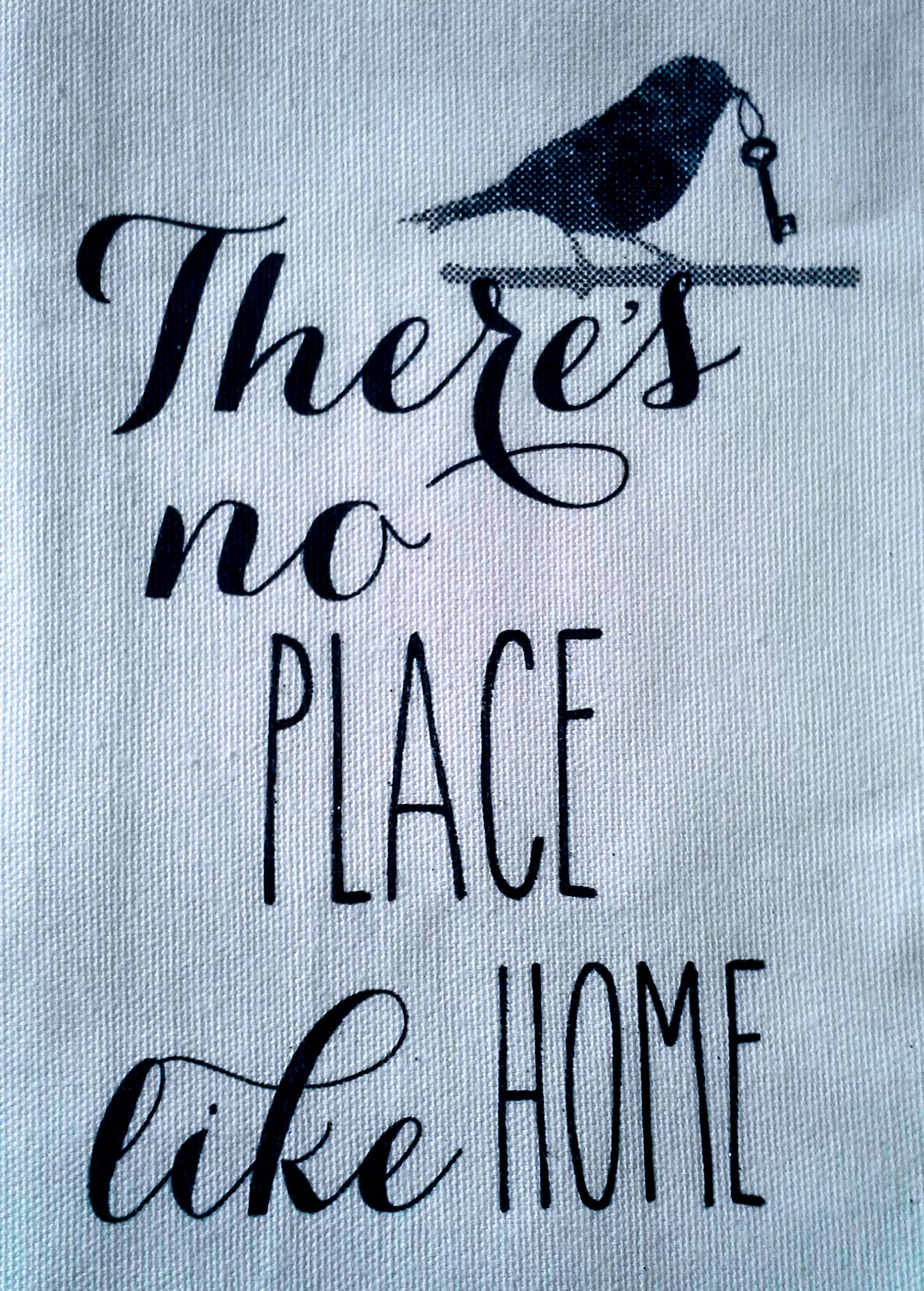
For Christmas, I received a tea towel with the saying “there’s no place like home” on it, and when I saw towel lying there in the box, the saying really struck home.

Ever since Jeff died, even though I’ve always found a place to rest my head at night, I often felt homeless. He had been my home. Wherever the two of us were, that was home.

After he died, I went to stay at with my father. His house wasn’t the place where I’d grown up, and though I was comfortable at my father’s house, somehow it never felt like home. Although he mostly took care of himself, I had to always keep an ear out in case he needed me so I couldn’t completely relax, and even more than that, I was aware that those living arrangements were only temporary.

When I took my cross-country road trip, I felt at home in national parks and monuments. After all, as a citizen, those parks did belong to me, and the space where I pitched my tent especially was mine. Gradually, as the months passed, I learned to find home within myself, so that I felt at home no matter where I was, not just in a campground, but in a motel room or at a friend’s house.

When I returned from the trip, I lived in a series of rented rooms, rooms I was able to make my own, though I was always aware the house — and the rules — belonged to someone else.

Life has a way of taking unexpected turns, and now here I am in my own house. At home.

And I know for sure, there truly is no place like home.

***

Pat Bertram is the author of Grief: The Inside Story – A Guide to Surviving the Loss of a Loved One. “Grief: The Inside Story is perfect and that is not hyperbole! It is exactly what folk who are grieving need to read.” –Leesa Healy, RN, GDAS GDAT, Emotional/Mental Health Therapist & Educator.
It’s Never Too Late to Make a New Year’s Resolution

Only 8% of people keep their New Year’s resolutions until the end of the year. Most people abandon them in the first month or even the first week.

This sad state of affairs makes us seem wishy-washy at best and lazy at worst, but there is something more at work than simply a lack of . . . well, a lack of resolve.

I’ve come to realize that instead of losing our resolve, we lose the clean-slateness. After only a few days, the sense of a new beginning dissipates. We become used to writing the new year on our checks. We’re back into the routine of our lives, probably more tired, more broke, and fatter than we were before the holidays. And somehow, in the comfort of our old lives, we forget the idealism we had when embracing a new year. We forget that for a moment we believed anything was possible, that we could become better, stronger, healthier, wiser, richer, more beloved if only we . . .

I abandoned the practice of making resolutions when still a child after I realized that by the end of that first week, I’d completely forgotten my resolution. (I only remembered when the next new year rolled around and I tried to, once again, make that same undoable commitment.)

Too many things happen during the year to make us either forget our resolve or to make us stop caring. So perhaps another reason we can’t keep New Year’s resolutions is that we make them too early in the year. What if we made the resolutions after birthday celebrations, Valentine’s Day, anniversaries, summer, Halloween, Thanksgiving, Christmas are passed?

Today seems a perfect day to make New Year’s resolutions for 2019 — especially since I started these resolutions yesterday. So from now until the end of the year, I resolve eat more vegetables, drink more water, and do a bit of exercise.

Now I have to remember those resolutions.

Oh, the pressure!

***

Pat Bertram is the author of Grief: The Inside Story – A Guide to Surviving the Loss of a Loved One. “Grief: The Inside Story is perfect and that is not hyperbole! It is exactly what folk who are grieving need to read.” –Leesa Healy, RN, GDAS GDAT, Emotional/Mental Health Therapist & Educator.

In and Out of Kilter

The origin of “out of kilter” is unknown, though the phrase itself has been in use since the 1600s. Kilter or kelter means good condition, so you can be both in kilter or out of kilter, though generally at separate times. “Off kilter,” which is a variation “out of kilter” and means the same thing, seems to have originated in the 1920s.

The origin of “out of whack” is also unknown, though the word “whack,” meaning to hit something, was used as early as the 1700s, and “out of whack” itself has been used since 1885. It’s been conjectured that “out of whack” refers to machinery that needs to be whacked to get it going, but the truth is anyone’s guess.

The origin for haywire is known, however, and is a relatively new term, only about a hundred years old. The etymology is obvious when you think about it: hay + wire. Haywire or baling wire is a thin, flexible wire that is used to hold bales of hay together, and was the equivalent of today’s duct tape. I’m sure you’ve heard of old vehicles being held together by baling wire. So not only does haywire refer to shoddy or makeshift work, the wire itself, once it’s off the spool, gets easily tangled. Hence something that is out of whack or off kilter is also haywire.

So why all this talk of things being out of order?

I seldom break things. Though stuff does slip through my fingers all too frequently, the items are either unbreakable or they fall softly without breaking, but last night I knocked over a champagne flute that was on the kitchen counter, (I was toasting the day after my first Christmas in my first house with sparkling cider). Although the flute simply fell over onto its side, it shattered. Took me forever to clean up all the crystal crumbs!

Then later, as I was lounging on the couch drinking tea and reading, I got a text. After responding to the text, I reached out to put my phone on the table and knocked over the empty mug. It too shattered.

Neither of these breakages meant anything (except that I had one less flute and one less mug), but it showed how far I’ve come in the last ten years. About seven months after Jeff died, I dropped a mug. It shattered on the hard tile kitchen floor, and set me back into full grief mode. I couldn’t stop crying for days. It was one more thing gone out of the life we shared, and it struck me as horrendously sad that stuff was going to break, wear out, get used up until there was nothing left of “us”?

Last night, there was no emotional aftershock. The things broke, and I cleaned them up. End of story. Well, except for the part of wondering why things were so off kilter. Which of course, led me to wonder what kilter meant, which led me to out of whack, which led to haywire.

Which leads to my New Year’s wish for you — that your life remains in kilter all next year.

***

Pat Bertram is the author of Grief: The Inside Story – A Guide to Surviving the Loss of a Loved One. “Grief: The Inside Story is perfect and that is not hyperbole! It is exactly what folk who are grieving need to read.” –Leesa Healy, RN, GDAS GDAT, Emotional/Mental Health Therapist & Educator.
A Gift for You

Merry Christmas, Happy Holidays, Season’s Greetings, Peace and Joy, Warmest Wishes, Happy Solstice, Good Yule, Noel, Good Cheer, Good Tidings, Merry Xmas, Happy Holy Holidays, Warm Greetings, Holly Jolly Holidays, Let it Snow, Ho Ho Ho, Feliz Navidad, Joyeux Noel, Mele Kalikimaka, Buon Natale, Buone Feste Natalizie, Feliz Natal, Nollaig Shona, Fröhliche Weihnachten, God Jul, Wesołych Świąt, as well as any other greeting you use to acknowledge this special day.

Click on the gift to open. Have fun!

***

Pat Bertram is the author of the suspense novels UnfinishedMadame ZeeZee’s Nightmare, Light BringerMore Deaths Than OneA Spark of Heavenly Fireand Daughter Am IBertram is also the author of Grief: The Great Yearning, “an exquisite book, wrenching to read, and at the same time full of profound truths.” Connect with Pat on Google+. Like Pat on Facebook.