Immersing Myself in Southern/Island Culture

My visit to St. Simons Island, GA to speak at the Scribbler’s Retreat Writers’ Conference was my first trip to the south, and I made sure that I immersed myself in the culture (at least as much as one can in a few days). I walked on the beach, climbed the lighthouse, toured a Civil War era cemetery, strolled among live oaks dripping with Spanish moss (which is neither Spanish nor moss but a member of the pineapple family). And ate. She-crap soup. Crab cakes. Shrimp and grits. Red beans and rice. Key lime pie. Fried oysters. Fried green tomatoes. Fried dill pickles. Vidalia onion pie. I was disappointed in the fried green tomatoes and the beans and rice. Both dishes were seasoned heavily with rosemary, which is my least favorite herb. And I was disappointed not to find such haute cousine as fried Twinkies, but I’m sure my stomach thanks me for the oversight.

I also met a woman I considered to be a quintessential fading southern belle. She was still beautiful despite being past her first youth, and hospitable (she took me on a tour of the island on Sunday in the hours between hotel check-out and my flight home). She was also charming, sweet,  and  . . .  from Maine. Just shows one should not assume anything.

Several of my meals were eaten in the company of fellow speakers Phillip Margolin, Chuck Barrett, and Jane Wood, (and Chuck’s delightful wife who taught me that “the store is always open,” meaning that authors always need to be ready to promote themselves. Maybe I’ll even heed her words and carry my bookmarks with me!)

I’m still trying to collect the photos that people took of me, but until then, you’ll have to be satisfied with photos I took.

The Hotel where I spent Wednesday and Thursday night

My room at the Village Inn

Atlantic Ocean

Pier at St. Simons Island

Civil War Cemetery

Southern Gothic

Fried Green Tomatoes, Fried Oysters, Vidalia Onion Pie, Fried Dill Pickles

St. Simons Island Lighthouse

I mentioned in my previous post that I went visited the lighthouse on St. Simons Island instead of working on my presentation for the Scribblers Retreat Writers’ Conference, and it was time well spent. How often does one get to roam around a lighthouse unsupervised? Luckily there was a handrail, because 129 narrow steps is a long climb!

Lighthouse at St. Simons Island, GA

Lighthouse tower entrance

View from the top of the lighthouse -- Jekyll Island and the Atlantic Ocean

One foot forward -- Beginning the dizzying descent.

Dazzling the Audience

When I was invited to speak at the Scribbler’s Retreat Writers’ Conference in St.Simons Island, I accepted, though I hadn’t a clue how to give a speech. The last time I stood in front of a group to give a formal talk was during a speech class freshman year in high school. We were supposed to give a demonstration speech, I remember, and I decided to be clever. So, when my scheduled day came, I stood in front of the class and announced I was the representative of the Emperor’s New Clothes Manufacturing Company. I held up one invisible garment after another and proceeded to describe every style, every fabric, every frill. When I finished, the teacher frowned at me and said, “Your speech was very good, but it would have been better if you had used real clothes.”

Just goes to show you, one shouldn’t try to be too clever. And I took that to heart when I wrote my speech on “Creating Incredible, but Credible, Characters” for Scribbler’s Retreat. It was simple, more of an introduction to the art of creating characters than a full-blown exposition. I wanted to spend most of my hour showing them how to create great characters, not telling them, so I prepared a character questionnaire to help them delve deeper into the social, physical, and psychological aspects of their character. My plan was to have them create a character as a group so they could see how conflicts, plot, and subplots grow along with a character.

I didn’t have time to practice my speech before I left, so I figured I’d do it on the plane. Yeah, right. It had been so many years since I’d flown that I didn’t realize how impossible it was to do anything on a flight except get through the hours. When my idea of studying my speech on the plane didn’t work out, I figured I could do it once I got to St. Simons. That would have been a good idea except for . . . Did I mention this was a resort area? Right on the ocean? In the south? I went for a walk on the beach, and happened upon a trolley leaving for a tour of the island. I hopped aboard and was entertained with tales (and some tall tales) of the island’s history. When we returned, I was still in tourist mode, so I went to the lighthouse, and walked up all 129 steps to the top. And so the time went.

Despite not studying my speech, I wasn’t nervous. Until . . .

I’d met fellow speaker Chuck Barrett, author of The Savannah Project, so I particularly wanted to hear his speech, which came right before mine. He talked about point of view, a difficult topic that he handled well, and at the end, everyone applauded. All of a sudden, it occurred to me that people would applaud at the end of my speech, and that thought panicked me. So I went to the front of the group, thanked the woman who introduced me, and froze. Just for a second. Then I remembered that this was my party, and I could do what I wanted, so I smiled, told the story about my Emperor’s New Clothes Speech, and sailed right through the rest of my talk. I think I might have stammered a few times, but people were kind. Then, when we got to the questionnaire, I dazzled!!

Well, it was more that the audience dazzled me. When they caught on to what we were doing, their eyes lit up, and I knew I had them. Many people contributed to our character — a beautiful 27-year-old woman of French descent and a shady past. A certain fellow in her life wanted her to make them a fortune as a stripper, but she was resisting him. She wanted a simpler life, the life of a writer. She had a best friend, who loved her, and a sister who hated her. And she had a daughter she’d given up for adoption when she was sixteen.

We could all see this woman, as if she were a part of the group. Afterward, several people told me that I helped them see how to overcome problems they were having with their own characters, which is exactly what I’d hoped for. Oddly, I can’t remember the applause. I only remember looking at each of the participants and thanking them for making the experience so wonderful.

Leaving on a Jet Plane

My bags are packed, I’m ready to go, but I have a few minutes before I have to start donning my traveling togs, so I thought I’d say good-bye. Unlike Mary Travers, I do know when I’ll be back again — late Sunday night. I’m going to take notes and photos to show you, but most of all, despite 100% humidity (yikes!!), I’m going to have fun. It’s been so long since I’ve had fun, I’m not even sure what the word means any more, but I intend to find out.

I had an interesting revelation today, and oddly, it wasn’t even my revelation. I showed the preparations for my Scribbler’s Retreat Writer’s Conference presentation to a couple of people at different times the past two days. One said, “You have enough here for a book.” The other said, “This would make a good book.” And it would. I’m surprised I didn’t think of it, but sometimes we’re too close to things to see the truth. So, I haven’t even left for my conference, and I already have what I hoped to gain from it — a new direction and the confidence to go where it takes me.

Knowing I have something to do after my grief book is published will give me the impetus to type and edit the writings from my year of grief. My first year of grief. I’m still not over it, though I am healing every day. And perhaps I’ve outlived my stay at my grief support group. One woman brought a poem to read today, purportedly from our loved ones on the other side. At the end, everyone was wiping away tears but me. I was horrified by one of the lines: “everyday is the same here.” When I mentioned my horror, it sort of broke the mood. Ah, well. I’m mostly there for the hugs and to help the newly bereft however I can. They (whoever “they” is) say that grief brings strange blessings, and mine appears to be the ability to put into words what others are thinking.

The past few days have been so busy, I’m looking forward to doing nothing but sitting back and letting the plane take me where it wills. And even the five hour layover in Atlanta is even looking good. I was on top of the situation the whole time until Facebook decided to archive my old groups unless I acted immediately, so I couldn’t wait till I get back.

I have a favor to ask. If you belong to one of my facebook groups, and if you have time, will you go to the group, scroll down the wall (and click “older posts” when you get to the botttom of the page), look for discussion threads and make a comment? That brings the discussions to the top of the group page, and is a way of keeping them from getting lost. I’ll do it when I get back, of course, but any help will be appreciated.

My facebook groups: Suspense/Thriller Writers, Genre Book Club, and Second Wind Publishing.

I already did Help Support Independent Publishers,, but feel free to stop by and comment in a discussion anyway, especially the one where we are posting the first sentences of our books.

My ride is here. Gotta go!

What’s Next? Updating My Life.

It’s hard for me to believe, but exactly a week from now, the Scribbler’s Retreat Writers’ Conference will be over, my speech will all but be forgotten, and I will be on an airplane, probably over Kansas somewhere, heading back here.

I’m not sure what to think about that. I’ve used this conference as a beacon, something to light my way through the darkness of my grief, and soon I will have to figure out what to do when the conference is over. I’ll work on my grief book, of course, and I’ll have to figure out what to do with all my facebook groups. For some reason, they are “new and improving” them to the point of unusability, at least for my non-nefarious purposes. We had some great discussions, and the discussions will no longer be available. Don’t know what the point of that is. All of that collected wisdom just  . . . gone. I also can’t procrastinate too long in upgrading the groups, or I will lose all the members. Sheesh. What a mess.

To a certain extent, it’s the impetus I’ve needed to rethink my promotional efforts both for me and for my publisher, Second Wind. To that end, I will be doing something I’ve never considered — emailing lists. At least they are something I would have control over. Don’t worry — I won’t be adding anyone who doesn’t want to be on the list. (Unless you responded to giveaways, and most of those had a note to the effect that your email address could be used to notify you of future giveaways and contests.)

But after that? Haven’t a clue. I was talking to someone today about the conference, and she asked if I’d ever taught before “other than on the internet”, and it occurred to me that in a roundabout way I have been teaching writing all along. So perhaps I’ll do writing workshops here on this blog. It wouldn’t be that much different from my various online discussion groups, but it would be more structured. Perhaps post a tutorial every Sunday night? And something similar to my presentation for the conference — creating incredible but credible characters — would be a good place to start. Besides, I need a new focus for this blog.  Grief only goes so far.

I’m not in the throes of grief anymore, at least not much — I keep myself too busy. I figure, if my life mate doesn’t want me to be thinking about him, he shouldn’t have died. Can you detect a hint of anger here? He used to tell me I needed to keep a pilot light of anger. He said it would fuel without consuming me. And what do you know — there it is. And it does help.

Funny how life coalesces at times. Everything of my old life (both online and offline) seem to heading for another turning point. Of course, that could be an illusion (or a delusion), but it’s true that this is another time of many changes.

I’ll keep you posted. And for sure I’ll get photos of the conference.

Speaking of photos, you’ve all seen the rather blurry photo of me I use as an icon. The photo accompanying this post is the picture it’s cropped from — my parent’s 60th wedding anniversary party, just a couple of months before my mother died. Happy mother’s day, Mom. Hope you’re at peace.

Grief Update: Looking For Adventure and Whatever Comes My Way

In exactly one week, I will be on my way to St. Simon’s Island, GA to speak at the Scribbler’s Retreat Writers’ Conference. It’s been a long time coming — I was originally scheduled for last August, but I had to postpone due to the illness and then the death of my life mate. These past months I’ve been looking to this conference as a borderline of sorts, a life-changing experience, maybe because it’s something concrete to plan for rather than a hazy future of aloneness to drift into.

And now the conference is only a few days away.

Several people asked me recently if I’m excited, others asked if I’m scared, but the truth is, I’m just tired. I’m tired of grieving, tired of trying to make sense of life, and most of all, I’m tired of shopping.

Shopping? Yep. Of all the subjects I never expected to discuss on this blog, shopping would head the list. I’ve never liked shopping for clothes, and the truth is, I never had to. When one is a virtual hermit, one doesn’t need very much. But a world-class author (according to the Scribbler’s Retreat people, anyway) does need more than a simple top to throw over comfortable slacks when she is being introduced at a banquet, giving a presentation, attending a reception. I’ve been lucky in that a couple of weeks ago, two friends took me shopping to pick out the clothes they think I look best in, and then this past week, my sister came and picked the things she liked on me. This leaves me with a wardrobe that is not me. Or at least not the pre-death me. Perhaps it’s who I’ll become — a bit classy, a bit dramatic, a bit arty. Not a bad image if I can pull it off. And there’s no reason I can’t. I’ve survived fifty-eight weeks of grief. I can do anything.

It’s strange to think I’m going somewhere my life mate never visited, stranger to think I’m going without a single article of clothing he ever saw. There will be nothing on this trip (except my lingering sadness) to remind me of what I lost. There will be just me, heading out on an adventure, accepting whatever comes my way.

I Am a Thirteen-Month Grief Survivor

Yesterday at my grief support group we were asked to complete the sentence, “After he died, I was surprised that . . .” Everything that happened in the thirteen months since the death of my life mate — my soul mate — has surprised me. No, not surprised me. Shocked me.

I was shocked that the end came so quickly. He’d been sick such a very long time, his health fading slowly, that his dying became our way of life. When he was finally diagnosed with inoperable kidney cancer, we were told he had three to six months to live. He had only three weeks. And those weeks seemed to evaporate in just a few hours.

After he died, I was shocked by the very presence of grief. My brother died four and a half years ago, and my mother died a year later. I handled both deaths well, so I thought I could cope with the death of my mate. I didn’t know, had no way of knowing, that one didn’t grieve the same for every loss. I didn’t know, had no way of knowing, that there was a physical component to the death of a long time mate, that it would feel like an amputation.

After he died, I was shocked by the depth and breadth of my feelings. During the last year of his life, and especially the last six months, he’d begun withdrawing from the world and from me. This withdrawal, this lessening of a need to be with others is a natural part of dying, and my response to his withdrawal was just as natural — an increased determination to live. He might be dying but I wasn’t, and I had to untangle our lives, find a way to survive his dying and his death. I thought I had successfully completed this task, but his death rocked me to the core of my being.

After his death, I was shocked by his sheer goneness. Because I’d spent so much time alone that last year, I thought life without him would feel much the same, but it isn’t like he is in another room or another city or another country — it’s like nothing I’d ever experienced before. I still have no words to describe the finality, the undoableness, the vacuum of death. He was part of my life for thirty-four years. We breathed the same air. We were connected by our thoughts, our shared experiences, the zillion words we’d spoken to each other. And then he was gone from this earth. Erased. Deleted. I still can’t wrap my mind around that.

After his death, I was shocked that I felt so shattered. So broken. And I am shocked that I still feel that way at times. I am shocked that no matter how strong you are, how well you are healing, grief can slam into you at any time, especially after a good day when you’re not expecting it, and the pain feels as raw as it was at the beginning.

After his death, I was shocked by the scope of grief. You grieve for the one who died and you grieve for yourself because you have to live without him. You grieve for all the things you did and the things you didn’t do. You grieve for what went wrong in your shared life and what went right. You grieve for the past and you grieve for the lost future. You grieve for all the hopes and dreams and possibilities that died with him. It’s amazing that anyone can survive all that pain, but we do, and that shocks me, too.

After his death, I was shocked by how complicated human emotions can be. You can feel sad and unsad at the same time. You can be determined to live, yet not care if you live or die. You can know in your depths he’s gone, but still listen for him, still yearn for him, still worry about him.

Mostly I’m shocked that I am still the same person I was before he died. Such emotional trauma should have changed me, made me stronger and wiser perhaps, yet I’m still just me. Sadder, but still recognizably me. Well, there is one change. I’ve always been a worrier, but now I try not to fret about the future, try not to wonder how I’m going to cope with growing old alone. After his death, I am no longer shocked that life can remain the same year after year. Nor am I shocked that it can change in an instant.

Grief: Blindsided by Lilacs

Who knew I would find lilacs in this desert community?

My life mate — my soul mate — loved lilacs. We once saw a house with lilacs lining the long driveway, and he wanted to live there, but we couldn’t afford such luxury. Shortly after we moved to the house where we were to spend the rest of his life, we dug up the lilacs that blocked a gate and replanted them around the perimeter of the yard. When we moved to that house, it was like living in an aquarium — there was absolutely no privacy. By the time he died, it was such a lush environment, it was like living in a terrarium — and there was total privacy. And the gate was once again blocked with lilacs. Apparently, we’d left just enough rootstock that the bushes grew back.

We planted all sorts of bushes and trees in addition to those lilacs, and the thrill of watching our seedlings grow to adulthood was another thing we shared in a twinned life that was all about sharing. It should have been hard leaving the place, but I was in such grief over his death that one more loss didn’t really make much difference to my sorrow.

I still don’t miss the place, or not that much. A place is just a place. I am homesick, but homesick for him. He was home. I miss him. I miss our life together. If he were to call and tell me he was waiting for me, I’d go to him wherever he was — mountains or desert, city or country, there I would be. But he’s never going to call. For months after I came here to the desert to try to figure out what comes next, I’d listen for the phone, hoping he would call and tell me that he was well and I could come home. That feeling is finally fading, but the loss of that feeling just makes me sadder — he is gone and I have to deal with the vicissitudes of life by myself.

I have minor upsurges of grief a couple of times a day, but I try to be upbeat. I have a new book published. I am getting new clothes, trying to reinvent myself from the outside in. I have made new friends (mostly people who have lost their mates. It’s amazing how quickly you can get to know someone when you cry together). I’ve been handling myself well.

And then . . .

Today, strolling around the neighborhood (it was too windy to walk in the desert), I happened to smell lilacs, and instantly, I was back in full-fledged grief mode. People keep telling me one never gets over grief, you just learn to live with it, and that appears to be true. Grief seems to lurk in dark places, ready to gush forth when one is least expecting it. And I was not expecting it today. How could I have known I would encounter lilacs growing in this desert community?

Grief Update: A Yearning as Deep as the Black Canyon

I haven’t been writing much about grief lately. Partly I’ve been trying to keep an upbeat attitude so I can focus on promoting my new book, Light Bringer, which was published on the anniversary of my soul mate’s death, and partly I haven’t wanted to admit how much his being gone still hurts. It seems a bit pathetic since there are so many earthshaking and earthquaking events happening in the world today, and it has been more than a year since he died (a year and fifteen days to be exact). I am doing okay, but I still feel his absence from the earth, still miss him, still yearn for one more word or one more smile.

Fridays and Saturdays are particularly hard. He died at 1:40 am on a Friday night (which made the actually date a Saturday) and my body can’t decide which day is the right time to mourn, so my upsurge of grief spans both days. I say my body can’t decide, because there is an element of physicality to grief, especially when it comes to the death of someone who shared more than three decades of your life. You feel his absence in your cells, in your marrow, in your blood. I can sometimes feel (or imagine I feel) his vibes still surrounding the things he used, the things we shared. I find myself stupidly hugging a dish before I use it, remembering him eating off that plate.

Most of our stuff is packed away because of my temporary living arrangements. Yesterday, I felt a moment of panic when I realized that eventually I would unpack and begin using our household goods, and I would feel his energy permeating them. Usage will dissipate that energy, but for now, it’s still there. Perhaps when I need those items, the psychic remnants of him will bring me comfort, the way using a few of our things bring me comfort now, but it could just as easily set off a whole new strata of pain.

But I won’t — can’t — think of that. It still takes almost everything I have just to get through the days, to concentrate on this day. I can live today. What is one day without him when we had so many? I am most at peace when I forget that he is dead, when somewhere in the far reaches of my mind I feel that he is back in the house we shared, waiting for me. It’s not that I can’t live without him. I can. It’s that the world is such an alien place now that he is gone. I still remember how right the world felt when I met him. I had no expectations of having any more of him than that first relationship of customer (me) and storeowner (him), but back then, just knowing a person such as he existed made the world a more radiant place. When he died, he took the radiance with him.

It’s sort of odd, but I can’t identify that specific quality of radiance he brought to my life. He was sick for so very long, we gradually untwinned our lives, he to dying, me to aloneness. And yet, that connection, that depth, that radiance remained until the end. In his last weeks we even found a renewed closeness, a renewed commitment, but before that, we endured months, maybe years of unhappiness.

And, childishly, I am still unhappy. I want what I cannot have. I try to find in myself the radiance (the center? the heart? the home? — whatever it was that he gave me). I will need that to keep me going through the coming decades, and I fear I am not enough. At times, I think I have depths enough to plumb, other times those depths seem an illusion, an opaqueness that masks my shallows.

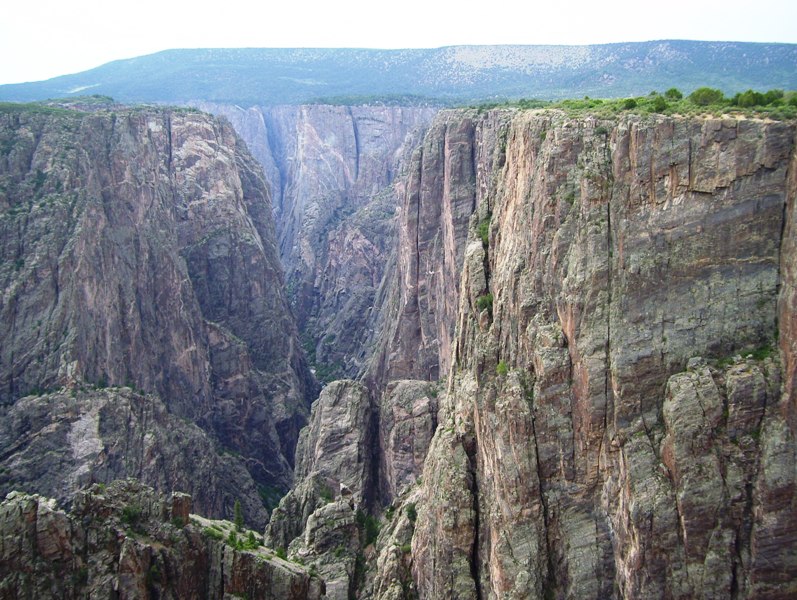
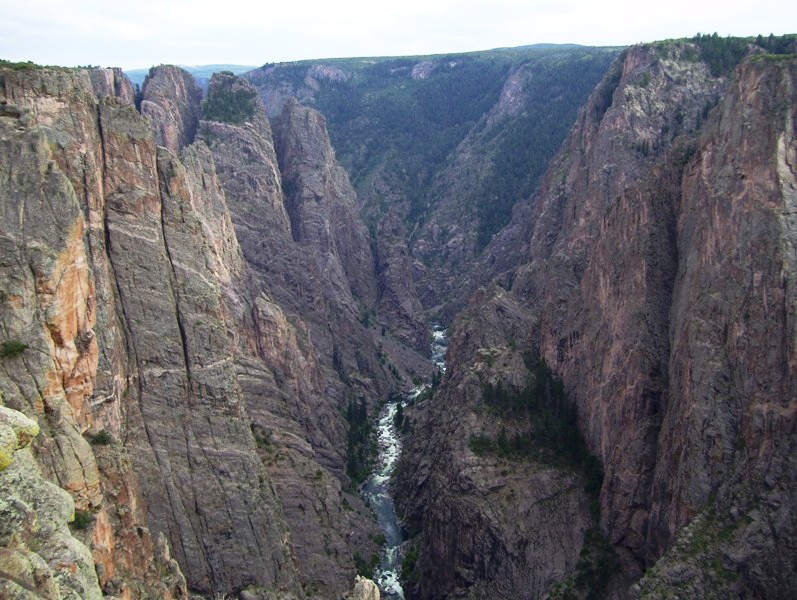
But what isn’t shallow is how much I miss him. That yearning is as deep as the Black Canyon.

A Life-Long Quest for Truth

When I was eleven years old, I overheard my brother ask our dad if he believed in Atlantis, and something inside of me leapt with recognition. I knew, without any doubt, that there had once been a wondrous place called Atlantis, though I hadn’t any idea what or where that place might be. The very word seemed like a beacon, illuminating an incredible and mysterious past. Until then, I’d never heard of Atlantis, never even had a concept of lost civilizations, and yet, there it was . . . that instantaneous knowing.

(This recognition happened only one other time in my life, and that was when I met the man who would share more than three decades of my life, but that came years later, and only has a bearing on this story because he also shared my need for truth.)

I seemed to have an innate belief that great truths (and even lesser ones) were being kept from us, though this belief could have stemmed from my being a child, and much is kept from children, but still, I wanted to know. And so started a life-long quest for truth — the real truth, not the sketchy half-truths and self-serving lies we are taught to accept as fact, both in school and on the news.

There have been so many mysteries to study and to ponder: UFOs; the Kennedy assassinations; mysterious places such as the pyramids and Stonehenge; ancient, lost, and forgotten civilizations; the origins of mythology; historical truth; the war on gold; alchemy; who our true leaders are.

And there were many surprises. For example, when I first started delving into mysteries, I came across the idea of continental drift, that all the continents had once been connected and had drifted apart. At the time, it was only discussed in esoteric circles, because the scientific community did not recognize the validity of the theory. Years later, when revisiting the topic, I discovered that the theory of continental drift had become standard.

Another surprise came from the study of “The New World Order.” Those words have been bandied about for centuries, sort of a slogan for conspiracy researchers who were aware that the goal of many secret groups throughout the ages has been to develop a one world government — a new world order — and then George Bush used that very phrase. Shocked the heck out of me. But it shouldn’t have. Many once secret groups, such as the Council for Foreign Relations, have become mainstream.

But the biggest surprise came when all those mysteries, those fields of study began to converge. Some of the players in the Kennedy assassination drama, such as Guy Bannister and Fred Crisman, showed up in UFO literature. Modern technologies began to mirror mythological technology, such as plasma guns, fusion torches, weather manipulation.

The past emerged into the present, science merged into history and politics, and a larger picture took shape. Whether this big picture has any truth to it or is simply the result of a mind seeking patterns where none exist, doesn’t really matter, at least not to me, not any more. I never had an emotional stake in the resolution of the mysteries. I simply wanted to know the truth.

It does make a great story, though, the pattern of truth I found. At least, I hope it does. This lifetime of research into arcane subjects is the foundation of Light Bringer, my newest novel.

As for Atlantis, I have no idea if such a place by that name existed, but there is no doubt that civilization did not begin with us, that there have been many civilizations that rose to prominence and disappeared, leaving only traces of stone behind.