
Pandemics, Fictional and Otherwise

I just finished reading a novel about a pandemic written about twenty years before the onset of The Bob. It reminded me of the original prognostication about the death toll when the virus first showed up, and how over 80% of the world’s population was supposed to succumb. With so many people getting sick and with the death tolls still rising, I’m sure it feels that terrible to a lot of people (especially those who are sick themselves or have to deal with the death of a loved one), but that original estimate is upside down. 80% of the world’s population did not get infected. In fact, WHO says 90% did not get infected.

About 98% percent of the people who get infected recover, which means that a huge percentage of the world’s population didn’t die. (Less than two percent.)

Again, for those who got ill or know someone who did, these statistics seem a slap in the face because for them the percent was 100%, but the point I’m trying to make is that we are a far cry from an 80% fatality rate.

It’s almost impossible to imagine such a scenario (and it is understandable why leaders and health leaders freaked out about it), but I don’t have to imagine it because I just lived through such a pandemic in the book I mentioned. In fact, most books I have read with a pandemic theme were of that variety, where huge swaths of populations disappeared, and life would never be the same.

It will be interesting to see if there is any sociological residual to The Bob. There is what is called “the great resignation,” which seems to have come about because the momentum all the corporate drones and service workers and everyone else who did what they were supposed to do was broken, giving people time to think about what they really wanted. Or more probably, what they didn’t want. But for the most part, life seems to go on as before.

In novels about vast pandemics, life is unalterably changed. Oh, don’t get me wrong — I’m fine with the status quo (mine anyway) right now. I certainly wouldn’t want to put anyone through the horror of a broken civilization and bodies piled everywhere. (Or thrown in a pit, as I had my characters do in A Spark of Heavenly Fire.)

Still, it was interesting reading the book during this particular time. One thing I found interesting was the “blood passports.” There was no vaccine for this fictional plague, but people had to carry a small book that recorded their blood test results. Sound familiar? It was spooky in the book, and spooky in real life, where people need to show vaccine cards and test results before they can do group activities.

Luckily for me, I’m fine without concerts and major shopping expeditions and traveling. Quite frankly, you couldn’t pay me to get on an airplane right now, or ever again, actually.

So that’s my residual to The Bob — doing what comes naturally without any guilt.

***

Pat Bertram is the author of intriguing fiction and insightful works of grief.

Creative Air

A few weeks ago, I checked the online catalogue for this library, and found a book on my reading list, so I placed a hold on the novel. Although the book was supposed to be on the shelf, the librarians never set it aside for me, so I checked the shelves myself and didn’t find it. I asked about the book. They looked it up and discovered that although they were supposed to have two copies, they had none. Apparently, right before I moved here, the books disappeared.

They ordered the book from another library for me, and since that copy never showed up, it got me thinking. Suppose someone is out there removing all copies of this book? It certainly would make an interesting story, and who knows, someday I might even try to develop the plot. An obvious conundrum to figure out would be if the book is disappearing everywhere or just in this vicinity. Another one would be what the book thieves are looking for or trying to accomplish.

There must be creative air circulating around me, because not only did I come up with an idea for a book, but I also got a yen for cooking. Normally, if I get a rotisserie chicken, I throw away the bones and skin because chemicals and heavy metals like lead can settle in the bones, but the chicken I got today was enormous, and it seemed wasteful tossing out what in olden days would have been turned into a nutritious broth, so I went ahead and made a soup stock from all that waste. Another reason I don’t bother with making broth isn’t so much the question of health but that I’m not particularly fond of soup. But you never know — the creative air might descend another day and give me an idea for using the broth.

I also chopped up peanuts to mix in with a creamy peanut butter. I can’t find a natural crunchy peanut butter without sugar, so I made my own. Sort of.

And I fixed a meal that took an inordinate number of pots and pans, dishes and cans. It might have been creative, that meal, but it wasn’t all that tasty despite the benefits of chili powder and cumin and garlic and onion.

It’s funny, though, that this creativity air would descend right before I go back to a regular schedule at work. For the past couple of months, I’ve been more or less on call, just working sporadically because of quarantines and such, and now I will be working more days than I don’t. It’s as if my brain is scurrying around, thinking of all it could have done the past couple of months with so much free time, and suddenly, it wants to do two months of creative thinking in one day.

Or maybe my brain thinks this is the perfect time for a jolt of creativity because it knows I can’t feel guilty about not following through if I am otherwise engaged.

Not that I would feel guilty. I am mostly just going with the flow. Tomorrow the flow will be whatever it will be, but today the flow was through a creative air.

***

Pat Bertram is the author of intriguing fiction and insightful works of grief.
Too Old to Shovel Snow?

I read an article today in the local paper that said a person should probably stop shoveling snow after they turn 45 years old, and definitely stop after 55. It sounds like an ad for snowblowers, though this was advice from a doctor, not a hardware store. (And anyway, snowblowers create their own risks.) The strenuousness of shoveling is exacerbated by the cold, so shoveling overstresses the heart, increases blood pressure, and constricts the arteries, which puts anyone with heart problems in the danger zone for a heart attack, and oh, yes: apparently studies have shown that perhaps 85% of adults have some sort of underlying arteriosclerotic cardiac disease even though most don’t know it. All this leads to approximately 1,000 heart attack deaths from shoveling every year, as well as thousands of other injuries, including approximately 4,000 back injuries from overextension of the back.

It doesn’t really help knowing this, because there is so much left unsaid. Are those who die sedentary folk who suddenly put their body through the tremendous workout of shoveling snow? If a person is otherwise healthy and physically active, is it still a problem to shovel snow after 45, or 55, or even 65? If you are aware of your physical limitations, can you do small sections of the work at a time without harm?

Mostly, though, it doesn’t help me knowing about the risk of heart attacks and other injuries because I am the only one here to shovel the snow, though occasionally a neighbor will do my walk along with his (but not often because he isn’t a kid, either). “Shoveling,” in my case is rather a misnomer. We mostly get light dry snow around here, so a couple of good sweepings with a stiff broom — one in the middle of a storm and one at the end — keep the need for shoveling to a minimum. And if by chance I do have to shovel, I push the snow with a bent-handled shovel (which is ergonomically designed to reduce stress on the back). And I stop frequently to look around and enjoy the day, because clearing my ramp and sidewalk are about the only times I go outside during snowy times. (I am cognizant of iciness and falls risks, so even if I feel like going out for a walk in such weather, I generally don’t.)

I reduce my snow-related risks in other ways to make up for possible shoveling hazards, such as not driving at all when the roads aren’t completely clear, and I wear heavy all-weather hiking shoes and use trekking poles if I do have to walk on treacherous surfaces.

It’s ironic, now that I think of it: this article was on the same page as an article about the dangers of climate change in Colorado, though (facetiously speaking), you’d think that less snow would be healthier for us considering the dangers of snow removal.

***

Pat Bertram is the author of intriguing fiction and insightful works of grief.
Dedusted

I actually felt like playing house today and had the energy to do it, so I dry mopped then wet mopped the floor and dedusted all hard surfaces.

Yes, I know — dedusted is not a word, but it should be. The way the word stands, “dust” as a verb is the opposite of itself. For example, when snow dusts the ground, it means that a light coating of snow was deposited on the ground. Some cookie recipes require you to dust the finished cookie with powdered sugar, which means to putting a light coating of sugar on the cookie. I dusted today, but I did not leave a coating of dust on the ground. In fact, the rooms were already dusted with a powdering of dirt particles. So, see? When I cleaned off that dusting, I dedusted. If I had redusted, then I could say I dusted the room, but I didn’t add another layer of dust; I removed what was there.

Look at it a different way: if you bug a room, you place electronic bugs in the room. If you debug the room, you remove the bugs. If you code a text, you put that text into code. If you decode it, then you remove the code to reveal the plain text. If you clutter a room . . . You see where I am going with this.

It is interesting to me though, that a whole slew of words mean the opposite of themselves, not just “dust,” as I pointed out here, but “cleave,” which means both to cling and to unite and “trim” which means to add something or remove something. In fact, there are so many such autoantonyms, they have their own category name: contranyms.

I just realized that spell checker didn’t underline dedust, so I looked it up, and lo and behold, it is a word, and means exactly what I said it should — to remove fine particles and to free something of dust. Who knew? Not me, obviously, because I thought I was being so very clever and whimsical. The truth sort of puts the kibosh on this whole essay, but I’m posting it anyway because whether I dusted or dedusted, the house is clean.

***

Pat Bertram is the author of intriguing fiction and insightful works of grief.
Dark and Dreary

It wasn’t a dark and stormy night, but it was a dark and dreary day, which is almost as bad. I’d planned to clean today, but in the gloom, the dust wasn’t visible, so I put it off. As a friend said, the dust will still be there when I’m ready.

I did go for a walk, but it was just a walk. A grey walk. Skies were gray, streets were gray, the buildings I passed, despite their color, all seemed gray, too. You’d think with all this talk of gray, my perceptions were gray, too, but no. It was truly the lowering clouds that created the gloom. I’m fine, though come to think of it, I am dressed in a gray jacket to help stave off the chill. The house does keep its temperature, but there’s always that spell when the temperature drops and before the heater kicks in to remind me of the cold.

The only thing in my mind of interest — to me, anyway — is my ongoing study of the tarot. (If a few minutes a day can be called a “study.”)

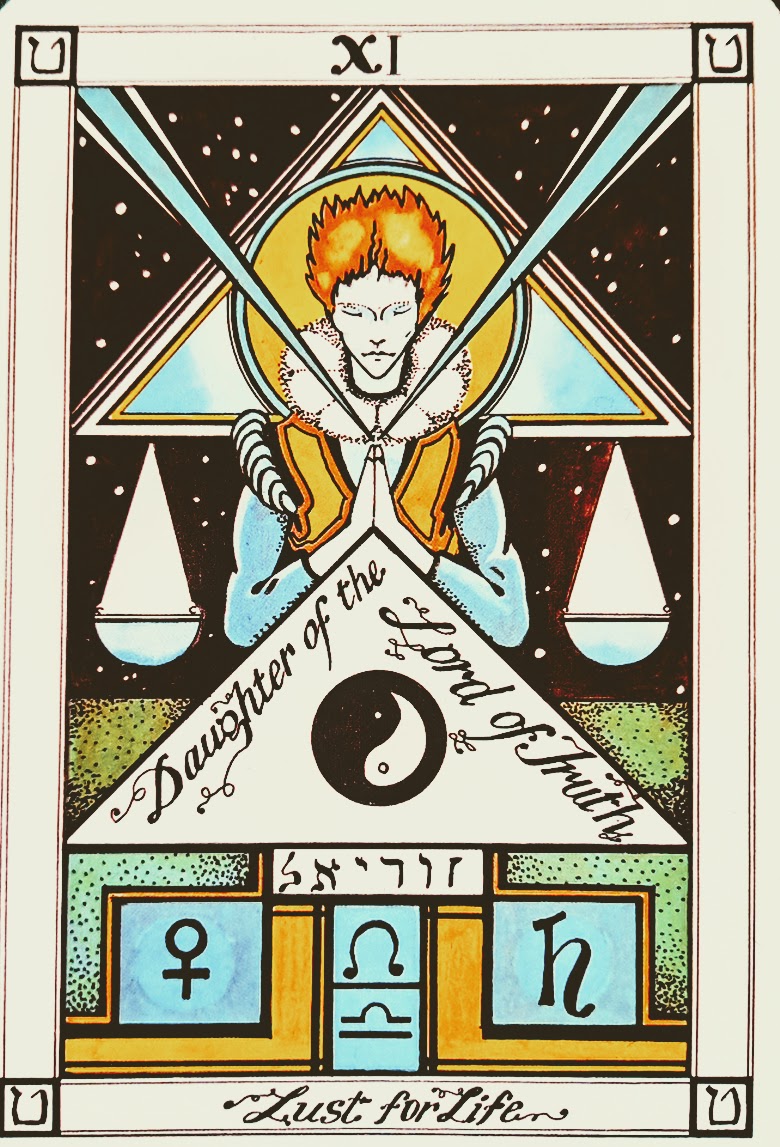
The card I picked today to represent my situation was the 11 of Trumps. In some decks, this card is called Justice, while the 8 of Trumps is called Fortitude. In some decks, the 11 of Trumps is called Fortitude or Lust, while the 8 of Trumps is called Justice. In this deck, the card is called Lust for Life, because supposedly Aleister Crowley, the occult scholar, who updated the tarot at the beginning of the last century, thought that naming the card either Strength or Lust would limit its function in the eyes of many to the material plane. In essence, though, the card is about spiritual strength (linking up with spiritual roots), mental strength (courage and fortitude in the face of difficulties), and physical strength (stamina, resistance to ailments, and applying effort with joyful purpose — hence, Lust for Life).

To me, all this shows the rather arbitrary nature of the tarot. It seems as if most people are okay with the shifting sands upon which the tarot is built, but I need more of a foundation. Without a foundation, one can only blindly follow those who have gone before, who have blindly followed those who have gone before, who have . . . etc, etc. Then you get to people like Crowley who don’t blindly follow, but recreate everything according to his own mystical and “magickal” (the word he used to describe himself) inclinations.

If, as so many books about the Tarot say, that they are a help for mediation, then shouldn’t any stack of cards help? Christmas cards, birthday cards, get well cards — I bet there are enough out there to create a “Hallmark” version of the tarot.

And for those who use the simple explanations of the cards, such as justice or fortitude or strength, when doing a reading, then shouldn’t a plain deck of cards with just those words on them mean the same as the “official” picture/symbol cards?

And if the cards are about getting in touch with our own spiritual roots, then . . . I don’t know. I’m obviously missing a big part of the big picture when it comes to the tarot. I suppose if I stick with it long enough, something will click, and I’ll suddenly get the whole tarot thing, but so far, that’s not happening. Maybe when I find the deck that speaks to me (this particular deck definitely is not it) and stick with it for a while, I might start sensing some of what I am supposed to sense. Meantime, it’s a good daily discipline, as is writing this blog even when (like today!) I have nothing to say.

I do have one thing to add to the “nothing to say.” Not about the tarot but about the gloom. There’s no more gray to this day, no more dreary. Night fell while I was writing this post, and now it’s dark, or as dark as it can be with all the outdoor (and indoor) lighting.

***

Pat Bertram is the author of intriguing fiction and insightful works of grief.
Lost in Time

Last evening, for just a minute, I mentally lost track of the days. I normally don’t keep track if I go for long periods with nothing planned, so I frequently don’t know what day it is, but I generally have a sense of where I am in the week, whether it is at the beginning, middle, or end. But yesterday, I hadn’t a clue.

It was a bit disorienting, sort of like being on the verge of waking up from a deep sleep and thinking you have to go to school then you remember it’s Saturday and anyway, you’ve been out of school for decades. I couldn’t immediately go check my phone to find out the day of the week, so I tried to think of something I did during the day to give me an idea of where I was.

I finally remembered I emailed my time sheet that morning, something I do only on Thursdays, so I was able to reorient myself. But yikes. What a strange feeling that was, being lost in time.

It makes me wonder how important time is for our well-being.

[I had to pause here to look up the spelling of well-being. I wanted to use two words without a hyphen, but spellcheck insisted it was one, unhyphenated word. It turns out that the hyphen is correct because when you combine an adjective and a verb, the hyphen is necessary for the words to become one. It used to be that the hyphenated version was correct in the USA and Canada, and the non-hyphenated version prevalent in other English-speaking countries, but the word has started to lose its hyphen in North America now.]

Whether knowing where I am in time is important for my well-being, obviously, being grammatically correct is.

Before there were days of the week to keep track of, maybe it didn’t matter. People were always where they were supposed to be, in their family or clan or tribe or whatever, so it didn’t really matter what day it was. Until increasing populations and civilization made days of the week and calendars imperative, I imagine there were no days but today and yesterday and perhaps tomorrow.

[Why isn’t it tomorrowday? I had to stop to find out this vital fact. “Morrow” is an archaic word meaning “the following day,” so tomorrowday would be redundant. Tomorrow used to be hyphenated — to-morrow — until the fifteenth century when it became one word, so losing hyphens isn’t simply a sign of modern laziness.]

I seem to have strayed far from my topic, which is . . . me. Well, me being lost in time. So far today, I know exactly where I am. Saturday, perhaps. Or maybe it’s Sunday. I’m joking; actually, it’s Friday. I think.

***

Pat Bertram is the author of intriguing fiction and insightful works of grief.
Back to Normal

It was cold this morning, with supposedly a wind chill of 25 below. The weather service issued a warning to be careful, that such a chill could give exposed skin frostbite within 35 minutes. I wasn’t concerned because I always bundle up, then I remembered — my face! I don’t wear a ski mask or anything like that, not even a muffler pulled up over my nose, because it tends to fog my glasses, and then the fog freezes. It’s so much better to simply stay inside.

So I did.

Because I’ve been spending so much time inside lately, the Christmas clutter has been getting to me. I figured today was a good day to start putting things away, and to my surprise, not only did I start, but I finished!

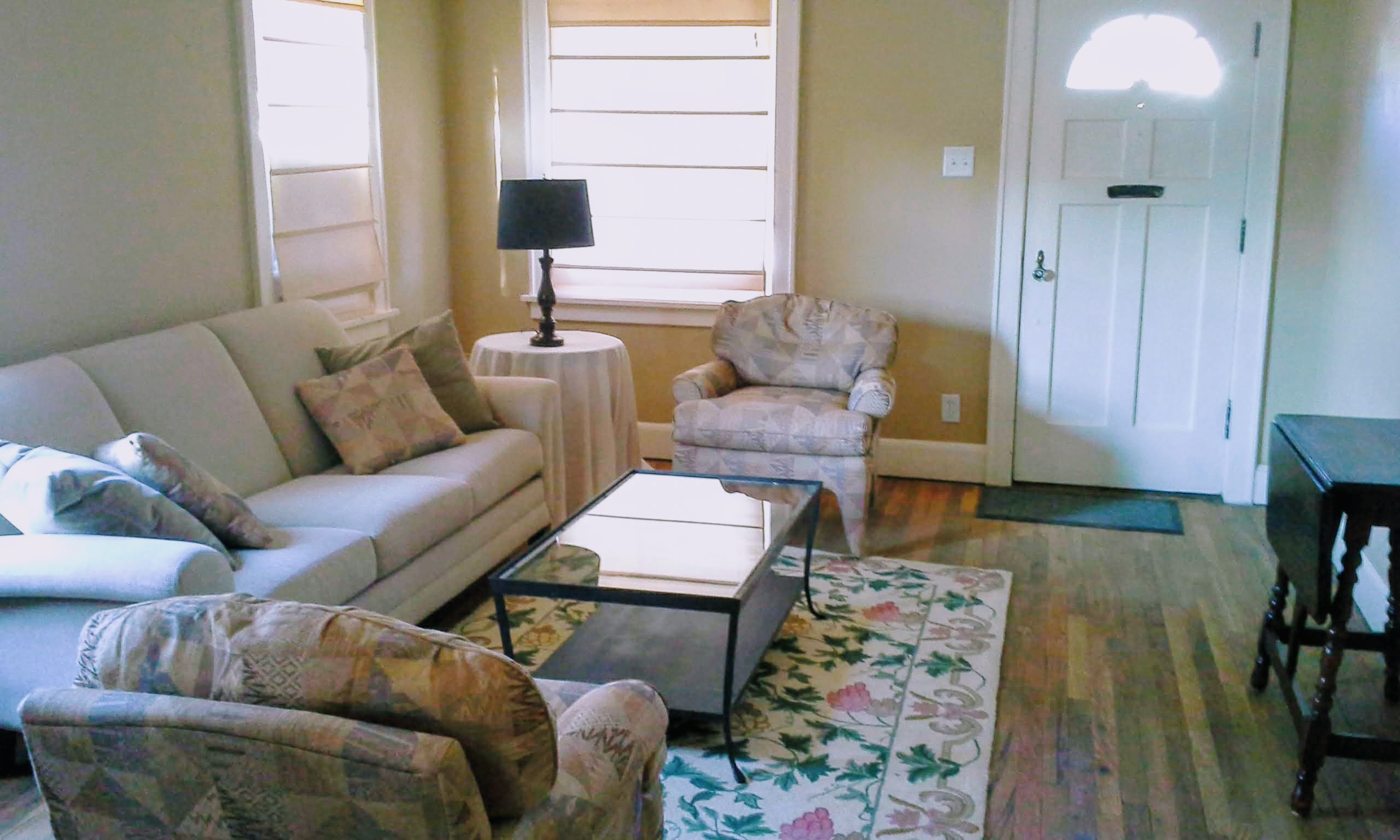
Without all the decorations and Christmas boxes and ribbons and such, the living room seems bare, but by tomorrow I will be used to the bareness again.

It’s funny to me how so often in mystery stories, a character who lives in a stark place with no pictures and knickknacks strewn around is suspect. Such a person has to be secretive, burying a shady past or hiding a felonious present.

I hope that’s not true in real life, that people who see my empty walls and lack of knickknacks don’t automatically assume I am not as I appear. And if it is true, I don’t suppose it matters. Mostly, though, people seem to be comfortable when they are here. Without being suffocated by my stuff, visitors can — for the time they are here — write themselves into the place. Many people love to have photos and knickknacks everywhere, which does put a personal touch to their space, but it can be overwhelming to live with. For me, anyway. Hence my empty walls and tables.

I do have a couple of personalizing touches — a book shelf and a glass-fronted cabinet — so my space isn’t a complete blank, but there’s nothing on the coffee table and the only things on the lamp tables are lamps.

There is one room with clutter, and that is my work/play room, but the clutter is that of living — electronics and books and notes and started projects. Oh, and a shelf for all my tarot cards.

I’m hoping for one more cold stay-inside day so I can do a thorough cleaning. I did vacuum up as much of the glitter as I could, but I’m sure a lot of sparkles drifted under the couch and bed the way dust does. Of course, no matter how well one cleans, there will always be a bit of glitter hiding in corners and cracks, so it’s a lost cause, but I would at least like to make an effort now that my living room is back to normal.

***

Pat Bertram is the author of intriguing fiction and insightful works of grief.

Hitting the Floor. Or Not.

Although the afternoon temperatures today got up into the forties, they were still in the thirties (Fahrenheit) when I set out for the library this morning. I had to pick my way over some slick spots, but for the most part, it was an easy walk, even with a heavy load of books in my pack. It was actually a lovely morning — blue skies and still air — and I was bundled appropriately in winter gear, so when I got home, I dropped off my books and went for a longer walk.

I noticed that I walk slower than I did a couple of years ago, but I moved well and with little effort, so I felt pretty good about myself.

For a while, anyway.

I was reading one of the books I picked up today, a mystery about a woman who researched personal histories for people. The book started out fine, with a lot of the history of New Mexico (before it was named New Mexico), but then the character got in too deep. At one point, her room was broken into, and her new friend (who just happened to have been in Special Forces) told her to stay behind him. Worried about people with guns, he said, “If I tell you to drop, you immediately hit the floor.”

I laughed out loud. So much for feeling good about myself! The character was young and could do what she was told, but if I were in her shoes? Well, first of all, I wouldn’t be in her shoes. I’m not that interested in other people’s histories so I wouldn’t be ferreting out their secrets. Second of all, I can’t imagine ever knowing someone that young and capable who was interested enough in me to make sure I was safe and on the ground when bullets began to fly. And third of all . . . um, hit the floor? If I were ever in such dire straits, I’d be done for. By the time I managed to get down on the floor below the level of gunshots, I’d be riddled with holes. Even assuming adrenaline would be rushing through my system, making me feel as if I could do anything, well, the truth is, I couldn’t. There’s too much I simply can’t do, and quickly getting down on the floor is one of them. It’s the same if I ever were in a situation where I’d have to run for my life. Hobble for my life? Possibly. Walk faster than normal? Probably. Run? Definitely not.

I don’t know why I laughed at the bit about “hit the floor,” because it really isn’t funny that I wouldn’t be able to drop quickly in an emergency. Still, I don’t generally end up in situations where a gun is pointed at me, and I do try to be careful and to be cognizant of people around me. Nevertheless, it’s a sobering thought (as well as a laughable one, obviously) about how age has caught up to me. I realize there are people my age who can drop to the ground and/or outrun larcenous folk, but I am not one of them, and though my knees are doing well and acting the way knees are supposed to act, they are, like the rest of me, not young.

I won’t have to worry about such things tomorrow, that’s for sure. With the winter advisory and wind chill warnings, I doubt I will be leaving the house. I’ll still do my knee therapy, of course, and spend a couple of minutes on the elliptical, but that’s about it.

Mostly, I’ll spend the day reading about younger folk getting into — and out of — trouble, and hope I don’t hurt myself laughing.

***

Pat Bertram is the author of intriguing fiction and insightful works of grief.
Consuming Time

It’s amazing to me how much time is consumed by paying a couple of bills and running a few errands. The errand part might, of course, have something to do with my not actually running. In fact, today I had to pick my way along slick, snow-packed roads, wearing cumbersome hiking shoes and using a couple of trekking poles.

And that was the easy way. I gave up on the sidewalks shortly after moving here. With a few happy exceptions, the sidewalks around here are cracked and buckled and downright dangerous during the dry seasons, but when they are covered in snow (because only those same few happy exceptions shovel the snow), the sidewalks are truly treacherous.

The slow trudging to get from place to place wasn’t the only thing that consumed time. I talked to the librarian for a while, then at a store I visited I happened to meet up with a person I needed to talk to, and when I was on my way out, I visited with another acquaintance. I had to cut that visit short — she kept moving closer, and I kept moving away. Whatever happened to keeping a six-foot distance?

But now I’m home safe, and though several hours simply disappeared out of my day, there is still plenty of unconsumed time for the important things of life, such as reading and perhaps cooking a meal for a change.

As it turns out, the books I mentioned yesterday that I had to pick up at the library and was hesitant to read, are books I’d already read, so that frees up time, too. I don’t know what glitch in their system sent the books to me twice, but I’m just as glad not to have to read them, though now I wonder if I should try to get the two I haven’t yet read before I completely phase out that author.

The snow is rapidly melting, so when I have to return these books to the library in the next day or so (there’s no point in keeping them for the entire checked-out time), the errand should be finished quickly.

I’m also caught up with bills, so yay! No more time consumers for a while.

***

Pat Bertram is the author of intriguing fiction and insightful works of grief.
Feeling the Cold and the Creeps

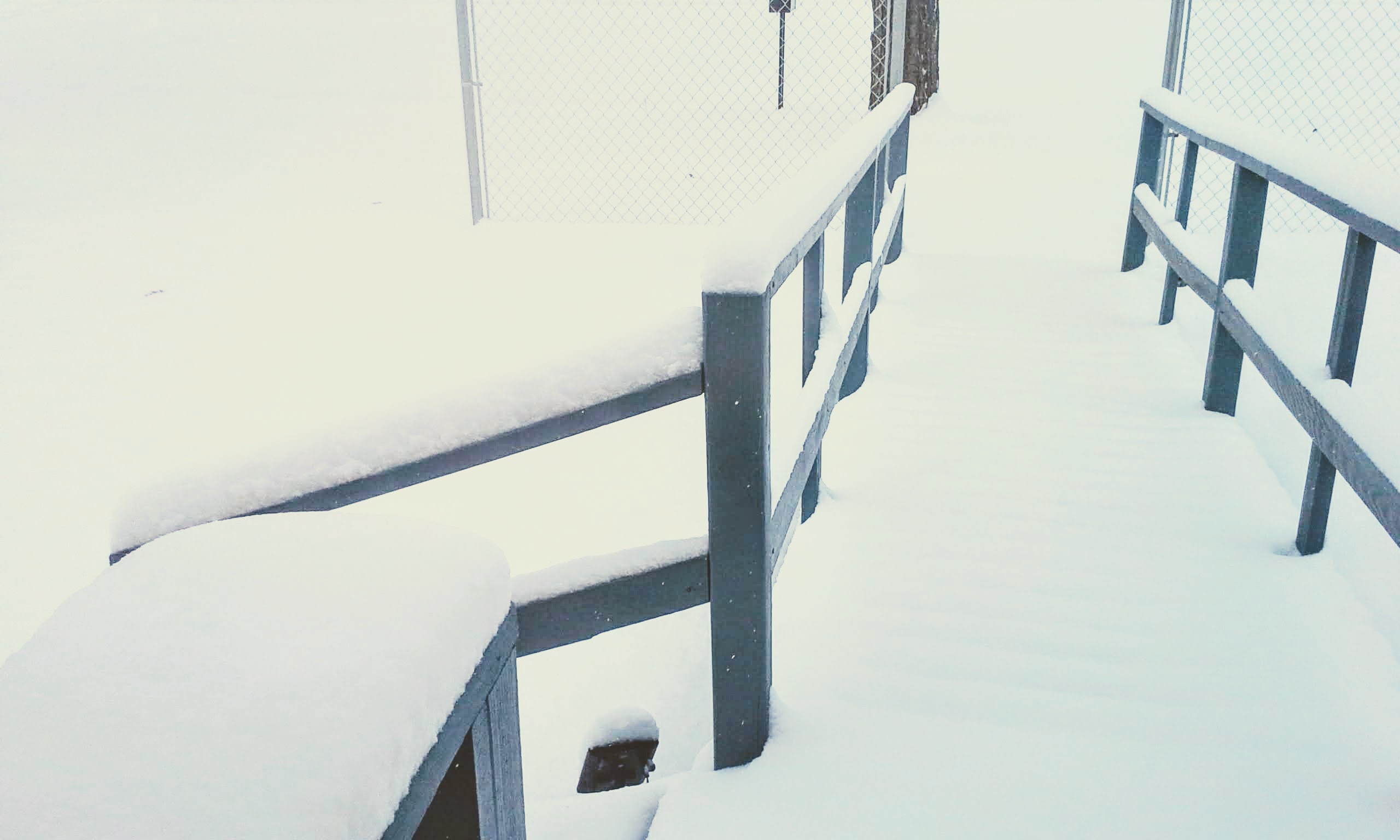
It warmed up a mite. A couple of mornings ago, it was minus eight degrees Fahrenheit, and this morning when I walked to work, it was twelve degrees. A veritable heat wave! Despite the high temperature being just above freezing this afternoon, the heat from the sun was so intense, the snow is almost melted. There will be another day or two with single digit lows, then it will get back into the temperatures I’d become accustomed to — lows in the twenties, highs in the fifties.

That also means I’ll be back to watering my grass occasionally. And the streets will be clear and dry so I can go to the library. They are holding a couple of interlibrary loan books for me, and I need to go pick them up, though I’m not sure I really care to read them. I ordered these books months ago — maybe even a year ago — but because of all the closures and slowdowns due to The Bob, I didn’t get the books until now. In fact, I’d completely forgotten about them.

Meantime, what was once an author (Louise Penny) I enjoyed reading became one who gives me the creeps. This author, like one I have abhorred for a very long time whose initials are JP, is teeming up with a politician to write a book. I have no idea why an author who is respected in her own right needs the name of such a controversial politician (initials HRC) to further her career or why she would want to further the needs of the politician. It makes me feel manipulated, as if hands on my back are steering me in a direction I don’t want to go. I realize I shouldn’t let her decision to team up with another person make me rethink the books she wrote before the teaming, but it does. I will never be able to unsee those two names together on a book without shuddering. (It’s not the same with James Patterson and the other Clinton because I lost respect for Patterson and his writing franchise decades ago.)

Life seems to be taunting me, getting the books to me now when I don’t care rather than long ago when I especially wanted to read them. But I will try to remember that these books were written pre-HRC when I still thought Penny was worth reading, and slog my way through them. If nothing else, maybe I’ll finally find out how her detective ended up in the tiny village of Three Pines. The first books I read had him living in the big city. The last books had him living in the village. Without the intermediary books, it’s an additional mystery, so I will watch for the move, enjoy the books as best as I can, and console myself with the thought that these will be the last books of hers I will ever read.

And anyway, with winter here, it seems only fitting to be reading mysteries that take place in the far north (farther north than here, anyway). One thing that fascinates me about books that take place in Canada is the peek at a country and culture that is so similar to USA, and at the same time, vastly different. Although we’re becoming a country divided by myriad languages, this is more by default than by design. Canada seems to have always been a country defined by its two languages and two cultures. Or maybe three when you include the First Nations. Unless I’m wrong about that? I have to admit, the only things I really know about Canada are from the authors I’ve read, not just Louise Penny, but Robertson Davies, Lucy Montgomery, and Margaret Atwood. And, of course, from people I’ve met online.

But I’m getting far from where I started this essay, which is the cold. Brrr! I hope you’re keeping warm this winter, wherever you are.

***

Pat Bertram is the author of intriguing fiction and insightful works of grief.




