Assumptions

In my wanderings through the internet, I came across one of those ubiquitous articles trashing the USA, written from the perspective of people from other countries. I don’t know why I even looked at it since I don’t appreciate such articles, mostly because they don’t reflect my life at all. What people hate about us are so often the policies enacted by politicians without regard to any of us — neither those of us living here, nor those living elsewhere. And if it’s not those policies that earn us such disregard, it’s the international corporations that destroy us as much as anyone else. (Why such corporations are considered to be American, I don’t know. Maybe because it’s easier to talk about how horrible the people in the USA are then point the finger at themselves?)

What stuns me is how much contempt people have for us while at the same time they have their hand out for the USA taxpayer’s money. (I read somewhere once that the United States should declare itself a third world country, that way some of our foreign aid could go to fix our own problems.) As for why we are handing out money — I don’t understand that, either. For example, we send money to China, yet we borrow money from China so that we can send it to them. Even more absurd, the people we send aid to hate us just as much as everyone else. And most absurd of all, so many of those same people want to move here so they can change this country to be just like theirs.

But none of that was in the article I mentioned above. It was more about cultural expectations and assumptions. Some people found it shocking that each of the states and each section of each state has its own particular culture and history and lifestyle. Others found the level of patriotism a bit over the top. Others were appalled at both the level of fitness in the country as well as the level of obesity. Some were shocked by the huge open spaces while others were stunned by the reality of the big cities, as if they’d assumed New York and Chicago were sets created as backdrops for various movies, even though neither are in the top ten of the largest cities worldwide. Some people thought the number of stores ridiculous, even though some areas (such as where I live) have very few stores. Some people were shocked that contrary to the hype, we generally are a friendly bunch. And on and on and on.

To me, this article wasn’t about the terribleness of the United States, but about the ignorance of the people who made these assumptions. A few minutes spent with Google, for example, can tell people that New York is real, and as large as it is, other cities in other countries are so much more populous.

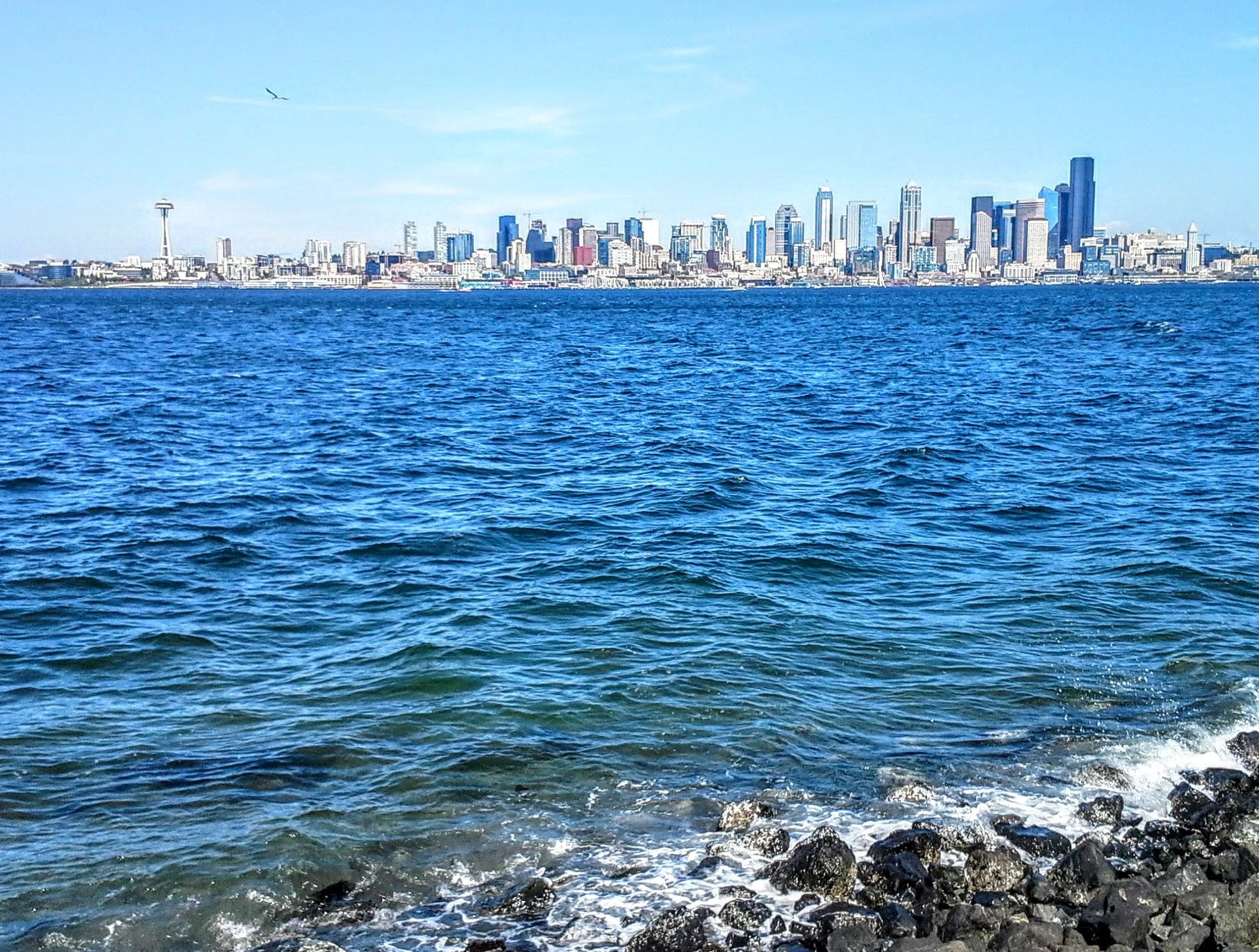
Also, a brief look at statistics can show why assumptions of any kind regarding the USA are ridiculous, especially for those who are looking for some sort of uniformity throughout the country. Although the corner of Colorado where I live is approximately the size of the Netherlands, only about 100,000 people live here compared to the 17.4 million living in Holland, and yet this area is part of the same country that includes unwieldy cities such as New York, Chicago, and Seattle. And that’s not all. The USA and Europe are roughly the same size, though there are twice as many people living in Europe as live in the USA and 45 times more countries in Europe than in the USA. (45 European Countries vs. 1 USA country.)

So, what have I learned from all this other than that assumptions are simply assumptions and not fact? That’s easy. Stay away from articles purporting to tell me how terrible we in the USA are.
***

What if God decided S/He didn’t like how the world turned out, and turned it over to a development company from the planet Xerxes for re-creation? Would you survive? Could you survive?

A fun book for not-so-fun times.

Click here to buy Bob, The Right Hand of God.
The Limelight

I’ve never thought of myself as particularly conceited or self-absorbed beyond what is normal and healthy. In fact, I tend to be more self-effacing than is probably good for me and am seldom comfortable seeking the limelight.

[I had to pause here to look up “limelight.” Interesting to note that it actually was a “lime” light — a cylindrical piece of the mineral lime that when lit produced a bright white light that was used to light theater stages in the early l800s. By the late 1800s, “limelight” had already taken on its present meaning of being the center of attention.]

Despite my unease at being the center of attention, there are times that I enjoy being noticed, or should I say, there are things about me that I enjoy being noticed. For example, my car. When I took my various trips, from coast to coast and border to border, it thrilled me that so many people noticed and commented on my vintage VW. It’s the same with my hats — people notice me because of my fancy headgear (actually, it’s not me they notice but the hats. Without a hat on my head, I’m not sure as many people would recognize me).

And now, I have my grass. When I am out there watering, passersby all comment on my gorgeous lawn. The color is bright, for one thing, and for another, there I am, in the middle of November, watering the greenery when everyone else has let their grass turn brown. Of course, “everyone else” hasn’t recently spent a small fortune on their lawns, so it behooves me to take care of my investment.

[Yet another aside: my silly self is acting up, wondering if a horse can be said to be behooved.]

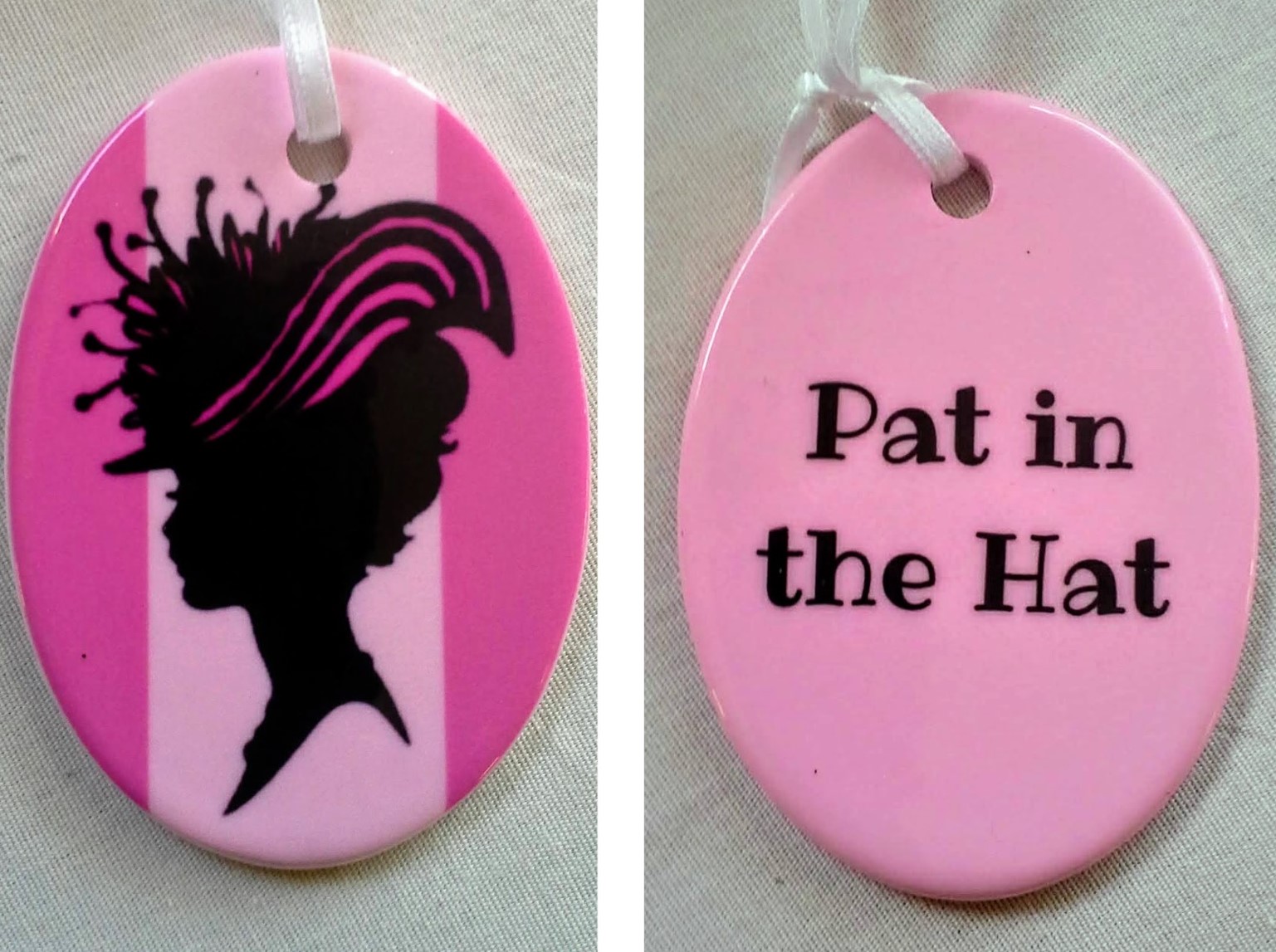
You’d think my books would be on that list of accoutrements that bring me notice, but although they originated with me, they’re not part of my personage. You can’t tell I’m a writer by looking at me the way you can tell that I am “Pat in the Hat.” In some way, my books don’t feel as if they are a part of me at all, though I do take the credit when someone tells me they like one or another of my tales. Now, if I were a recognized “name,” things might be different, and who knows, there still could come a time when I can test that theory.

But for now, I take my fame — and the limelight — where I can get it.

***

What if God decided S/He didn’t like how the world turned out, and turned it over to a development company from the planet Xerxes for re-creation? Would you survive? Could you survive?

A fun book for not-so-fun times.

Click here to buy Bob, The Right Hand of God.
Pointless and Plotless

I accidentally checked out a Christian novel at the library the last time I went. Normally I don’t care what I read because almost every book has passages and even pages that I skip, such as graphic sex in romance, over-the-top violence in thrillers, and gory scenes in horror stories, so it’s no problem to skip the proselytizing in books written for a religious-oriented readership.

But this book . . . ai-yai-yai. Not a page went by without a sermon, and most of those “sermons” were given by the loving husband, which if they were given to me, would have turned me against him and religion both. He wasn’t a preacher by trade, which would have made his preaching understandable. I think he was a fireman, but that bit of information was swallowed up in the excess of religious rhetoric, so I’m not even sure if that’s the truth. He wasn’t a dynamic character, that’s for sure!

I did like one point he made, though, that when Jesus calmed the waters, he not only saved his disciples, but also all the little boats that were in the turbulent sea at the same time. It’s always interesting to think about those who we might have influenced that we never knew about. (Although I looked, my name was not listed at the back of the book with all the folks who unwittingly influenced another person.)

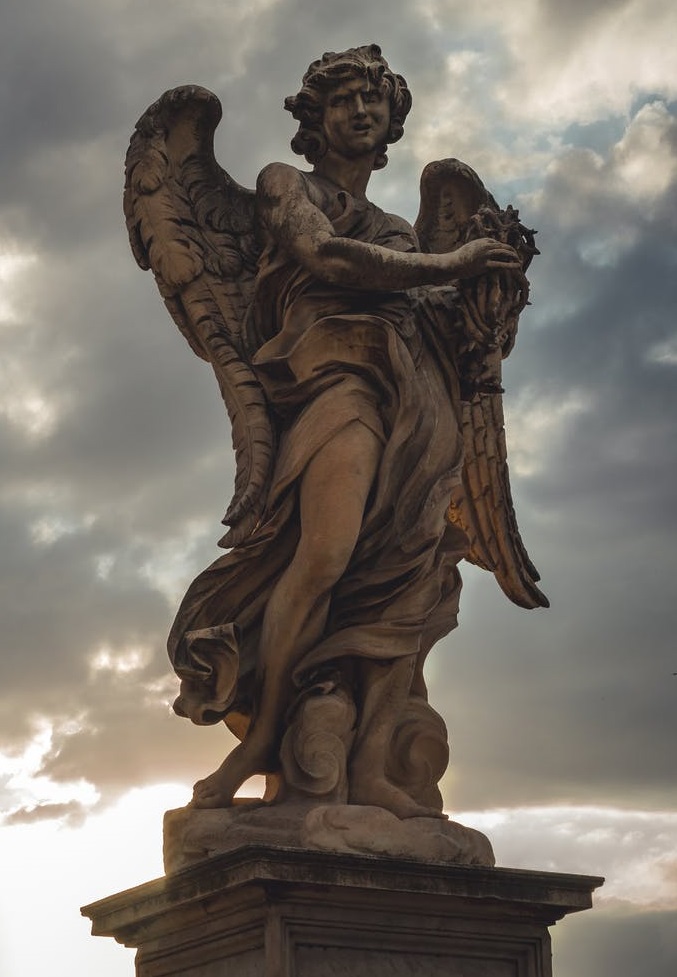
Still, one point does not make a story, and the story in this particular book was a cheat, mostly because there was no plot. (And despite the preaching, there was no real point to the story, either.) No matter what happened, God saved the heroine. For example, she found out later in life that killers had been set upon her when she was young. When she finally met one of her nemeses and found out about the contract on her, she asked why he didn’t kill her as he’d been paid to do. He told her it was because of the ten armed bodyguards that always surrounded her. (Not bodyguards with ten arms like the goddess Durga, but ten bodyguards with guns.) Apparently, they weren’t bodyguards but angels. Still angels with guns? But that’s an issue for another time.

That wasn’t the only case of her being rescued by angels. Oddly, there was nothing in the book that made her so special that she was surrounded at all times by an army of angels, and why other characters were so unspecial they were left to their fate. But ignoring that whole issue and going strictly by a literary rather than religious perspective, where’s the suspense? What could have been chilling encounters ended up being . . . nothing. Because nothing happened. Basically, she did what she wanted, and everything turned out for her. The only conflict was of her own making, if the mild unease the character experienced from time to time could be called conflict.

Oh, well, I can’t say this is the worst book I ever read. Some well-respected works that won major awards I found even more ridiculous, but that’s the risk one takes when one grabs a handful of books without spending time vetting them.

***

What if God decided S/He didn’t like how the world turned out, and turned it over to a development company from the planet Xerxes for re-creation? Would you survive? Could you survive?

A fun book for not-so-fun times.

Click here to buy Bob, The Right Hand of God.
Settling In, Not Setting Out

A blog I wrote the other day reminded me of one I’d written a long time ago called “The Importance of Being Important,” and I wanted to quote from that old post. I never did find the post; apparently, I had planned to write it, had written the title down on a list of blog topics that eventually got thrown away, and then I forgot all about it. I have no idea what I wanted to say about why we need to be important, but at one time, the idea must have been important to me.

I do think we humans have a need to feel important — to ourselves, if no one else. Importance could be tied in with a need for purpose, for being needed, for feeling that life does mean something, because feeling as if we aren’t important in the scheme of life is a crushing burden.

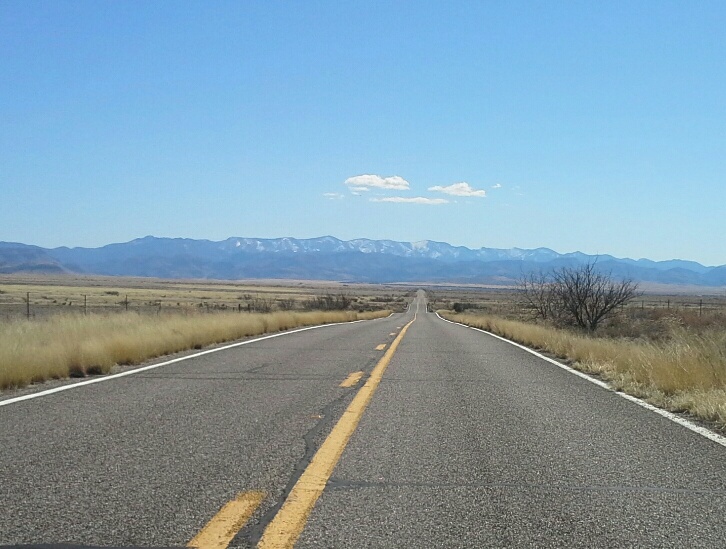
But that’s not what I want to talk about. In searching for that non-existent post in my archives, I came across essay after essay about my dreams for an epic adventure, plans for such an adventure, preparation for such an adventure, as well as actually setting out on various ventures. It struck me how different my life is now, and how different I am. Instead of setting out to experience more of the world, I am settling in to a world of my own making.

Even if it’s not actually a world I am making, it’s definitely a home — a place of refuge, a place where I belong, and most especially, a place that connects me to the rest of the world. In that respect, it is a way of experiencing more of the world, or at least experiencing the world in a different manner.

After Jeff died, I was afraid of settling down. Since I was well aware of my penchant for being a quasi-hermit (though it’s possible it’s more laziness than an actual penchant because sometimes it takes too much energy to be social), I feared that in settling, I would become a crazy cat lady (sans cats, of course, since I don’t want that much responsibility) and that when my expiration date came, weeks would go by before anyone would know I was gone. Luckily, I have neighbors who keep an eye out for me, and anyway, the role of crazy cat person in this neighborhood is already taken by a man who lives across the street.

[If I ever do write my small-town novel, there are certainly plenty of archetypes to choose from — the aforementioned crazy cat person; the hoarder who won’t let anyone in his house; the neighborhood talker; a generous and civic-minded man and his greedy slumlord brother; the tireless club woman who is active in just about every organization in town; the neighborhood drug dealer and thief. Except for the clubwoman, all the characters are men, which puts a bit of spin on the archetypes.]

Until the Bob issue, I did a good job of finding people to socialize with, but oddly, it’s my place itself that makes me feel as if I am settling in (which to me means taking an active interest in making a comfortable life for myself) rather than settling down (which to me connotes staidness and passively accepting the status quo).

The place seems almost like a presence in my life, as if it wraps itself around me in a comforting way. (I’m laughing here. That sounds almost like the premise of a horror story rather than a pleasant feeling, and perhaps, that’s how crazy old ladies living alone become crazy.)

It’s still early days, of course. I have been here less than three years, and I am just now beginning my journey into elderliness, so who knows how the experience of settling in will turn out. But so far, although I sometimes miss the excitement of setting out, settling in has been good for me.

***

Pat Bertram is the author of Grief: The Inside Story – A Guide to Surviving the Loss of a Loved One. “Grief: The Inside Story is perfect and that is not hyperbole! It is exactly what folk who are grieving need to read.” –Leesa Healy, RN, GDAS GDAT, Emotional/Mental Health Therapist & Educator.

Eternal Good Luck

1000 origami cranes is called a senbazuru, which translates as “1000 cranes.” Legend says the crane lives for 1000 years, and from that legend arose the mystique behind the senbazuru. Paper cranes have come to be a symbol of peace. Before that, they meant healing. Before that, a person who folded a 1000 paper cranes was said to have one special dream come true. Originally (at least I think it was originally — the legend has become so entwined with the story of Sadako and Hiroshima that it’s hard to find the original meaning), folding 1000 paper cranes gave a person longevity and happiness — one crane per year for a thousand years — as well as eternal good luck. (Which is why the cranes are often associated with weddings.) Further, the cranes must all be folded within a year. 

I had no special wish when I started folding my 1000 cranes at the beginning of this year, though I was taken with the idea of good luck forever.

I’m not sure my 1000 crane project is strictly a senbazuru because from what I can gather, a senbazuru has come to mean 1000 cranes strung together and mine are in plastic bags, 10 cranes per sandwich bag, ten sandwich bags per gallon bag. That was the easiest way for me to keep track of how many I had folded, and now that I am finished and my good fortune stowed so neatly, I see no reason to string them. (Though I did string some other origami birds and hung them in my garage so I know where to stop when I pull into the garage.)

Whatever the name — “senbazuru” or simply “1000 paper cranes” — I just finished folding my origami cranes, well within the required time frame. So now it’s a matter of waiting to see what will happen.

Even if the cranes came with a guarantee of eternal good luck, I don’t expect my life to change all that much. I used to think I was bedeviled by bad luck, but over the years I have come to see that I have more good luck than perhaps I deserve. So often, I don’t get what I want (becoming a better selling author, for example) but more often, I get what I need (a temporary job, for example,) Even better, I sometimes don’t get what I neither want nor need (the Bob, for example. I didn’t want it, didn’t need it, and didn’t get it even though I was definitely exposed to the virus).

The biggest example of more luck than I deserve comes in the form of my house and even perhaps my yard, which, with a little more luck will one day be breathtakingly beautiful as well as safe for an aging woman to navigate.

Whatever the future holds, I know I did my part by folding 1000 origami cranes this year.

***

What if God decided S/He didn’t like how the world turned out, and turned it over to a development company from the planet Xerxes for re-creation? Would you survive? Could you survive?

A fun book for not-so-fun times.

Click here to buy Bob, The Right Hand of God.

Back to Work

My hiatus — my isolation — is over. I go back to work tomorrow, and I’m feeling a bit ambivalent. Not that my job is onerous — it’s not — it’s just that I have become used to an unscheduled life. My ideal has always been to wake in the morning with an empty day stretching ahead of me. The day doesn’t stay empty, of course — there is always something to do, whether undertaking a chore, exercising, writing a blog post, playing on the computer, or reading. (Always, there is reading.) And then there are the unexpected treats, such as a visit from a friend. So it’s not doing nothing that I particularly crave, it’s having a wide open day to do with as I wish.

On the other hand, working gives me focus, company, and . . . yep, money to pay some bills. And in a way, it’s its own special blessing. There will come a time when the job ends, and all I will have are empty days stretching ahead of me. I wonder if those empty days will seem as fraught with possibility when there is nothing to compare them to.

But that isn’t a conundrum I have to face quite yet.

What I do have to face is inclement weather. Tomorrow is supposed to be the coldest day we’ve have so far this fall, with low temperatures barely in the teens. Since I will be going to work, I won’t be able to stay cozied up all day as I’d planned but instead will have to go out and brave the chill. Brrr. I’m shivering just thinking of it. But then, I have warm coats and hats and mufflers in which to bundle up, and anyway, the walk is only two blocks, so I’m sure I will survive the indignity.

Luckily, in this time off, I managed to get caught up on all the little chores that have been niggling at me, such as the last of the planting and a couple of minor paint jobs (a door frame and the handrail on my front ramp), so I can enjoy my day at work without thinking about what else I could be doing.

So, work or not work. — it’s all good.

***

Pat Bertram is the author of Grief: The Inside Story – A Guide to Surviving the Loss of a Loved One. “Grief: The Inside Story is perfect and that is not hyperbole! It is exactly what folk who are grieving need to read.” –Leesa Healy, RN, GDAS GDAT, Emotional/Mental Health Therapist & Educator.

Servants of the Light Tarot

The Servants of the Light are or were supposed to be one of the leading schools of the occult and magical science. (Isn’t that an oxymoron? Isn’t magic antithetical to science? Or perhaps it’s science that is antithetical to magic? Or perhaps they are the same in which case, wouldn’t the term be redundant?) Anyway, the Servants created their own tarot deck, which is interesting to me because not only are they teaching occult and magical science, they also seem to be making it up as they go along, creating their own suits and names of the court cards.

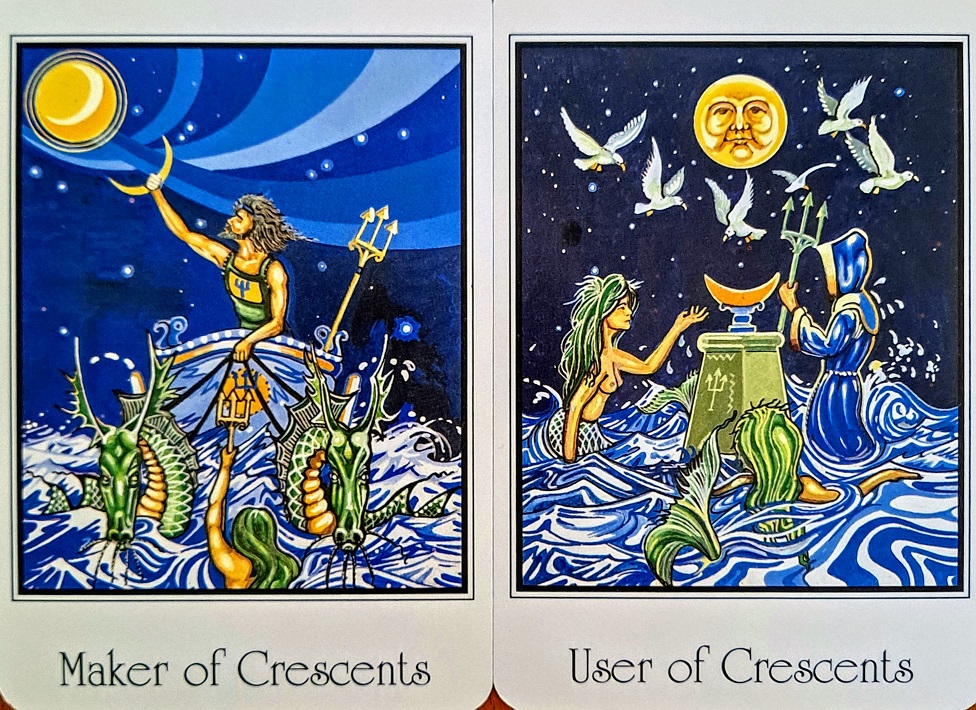
For example, my two-card tarot spread for today was comprised of the Maker of Crescents and the User of Crescents, traditionally known as the King of Cups and the Knight of Cups. Why the change in nomenclature? I have no idea. They say it’s to create a mini mythology where the Maker (the former king) makes the symbol or artifact of the suit, in this case a crescent, the Giver (the former queen) takes the artifact and gives it to the User (the former knight), who uses the artifact to protect the Keeper (the former page or princess), who keeps the artifact in trust for the future.

It seems a lot of rigamarole that adds nothing to the mystique of the tarot, though perhaps the problem is with me. After all this time, I still have no real conception of what the tarot is all about, but I do know I won’t be using this deck in the future — it seems to confuse the whole issue since although the pictures on the cards seem to reflect the mini mythology, none of the purported meanings of the court cards seem to have anything to do with that mythology.

For example, the first of today’s cards, the Maker of Crescents, stands for a man who is highly regarded in the business world. He is also an entrepreneur who makes the most of every chance.

The second card, the User of Crescents stands for a person who is ready to make sacrifices for what he believes in. Once committed, he will follow through.

So what do these two cards together mean for me? Perhaps that I am ready to make the most of every chance, and once committed I will follow through. Or something like that.

***

What if God decided S/He didn’t like how the world turned out, and turned it over to a development company from the planet Xerxes for re-creation? Would you survive? Could you survive?

A fun book for not-so-fun times.

Click here to buy Bob, The Right Hand of God.

“The Loved One Becomes Your Inner Energy”

An email correspondent sent me this French quote: “L’être aimé devient votre énergie intérieure” meaning “The loved one becomes your inner energy.” I don’t know if the quote originally was about a deceased loved one or any loved one, but it does seem to fit those of us whose mates have died. At least, it seems to fit me.

Jeff was the first person to accept me as I was, who actually seemed to enjoy my stray and strange thoughts, and who often could do me one better. Until I met him, the best I could hope for from my friends was a bewildered look as they listened to whatever I had to say before they changed the subject to something more mundane. I was stunned on the day I met Jeff when he threw the conversational ball back at me. That truly had never happened before. It was intoxicating, having a back and forth and up and down and all around conversation dealing with things I was thinking about.

Being with Jeff allowed me to be myself in a way I had never been before. The world does not treat its unwitting and naïve noncomformists well, and I was both. I had no idea why people thought I was different, and obviously, I had no idea how to be like them, because whenever I tried, I became even more different.

With Jeff, I wasn’t different. I just . . . was.

Now that the pain of his being gone has dissipated, and now that I am used to living on my own without my special friend — the one with whom I could do everything, the one with whom I could do nothing (finding people to do something with is fairly easy, but finding someone to do nothing with is special indeed) I notice that whatever energy we generated between us that allowed me the freedom of self is still with me.

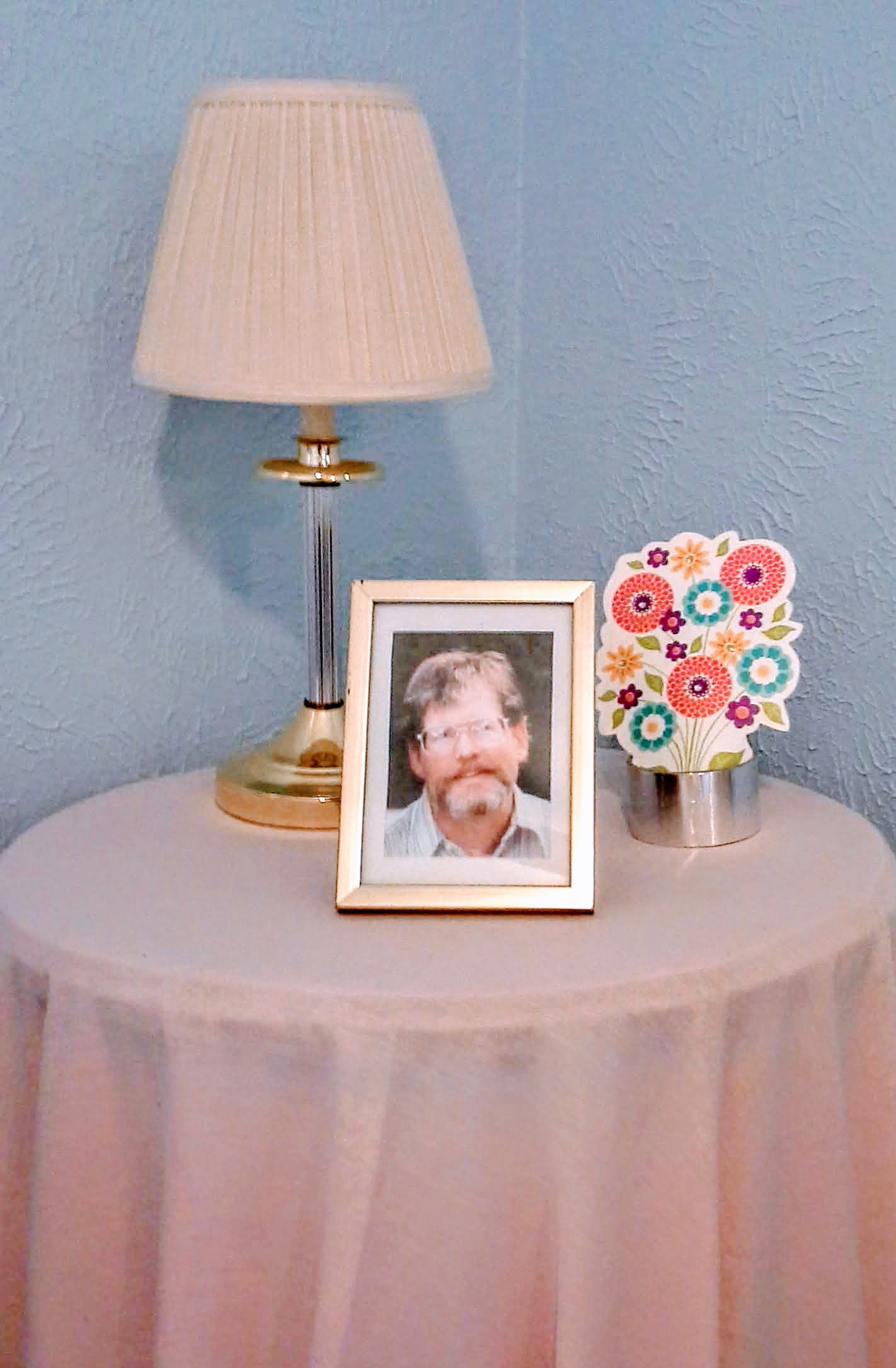
I don’t in anyway think that he himself is actually with me — I have no idea if he still exists anywhere in any form — but I do feel that energy. It could be why I talk to him (or rather to his picture on my bedside table). Even though I still feel the void where he once was, I also feel that somehow he is still part of my life. This energy could simply be generated by memories of him, though despite the fact that I draw comfort from thinking of him in general, specific memories tend to make me sad because so many of those memories are tinted by his ill health. (For example, if I have a sweet memory of us sitting on the living room floor playing a board game, then it is followed by the memory that the time came too soon when he could no longer concentrate to play.)

When I was new to grief, a woman told me something her widowed mother said, that the loved one’s absence comes to mean what their presence once did. This is sort of the same thing as the French saying. In both cases, I draw strength from having known him, from being with him, from steeping in the courage with which he met his end.

Part of the eventual acceptance of my new life and my new/old self came from a belief — possibly a nonsensical belief — that he wouldn’t have left me if I wasn’t going to be okay. It’s what kept me going for years when I was so bewildered by all that grief threw at me. And it’s given me the inner energy to fuel all the changes in me and my life that have happened since he died.

It truly is odd to think that though he has been gone almost twelve years, he is still so important to me and influential to my life. But then, it’s no odder than any other weirdness encompassed in the experience we call grief.

***

Pat Bertram is the author of Grief: The Inside Story – A Guide to Surviving the Loss of a Loved One. “Grief: The Inside Story is perfect and that is not hyperbole! It is exactly what folk who are grieving need to read.” –Leesa Healy, RN, GDAS GDAT, Emotional/Mental Health Therapist & Educator.

Forty Days and Forty Nights

For someone who is supposed to be in isolation, I have a rather active social life, at least I did today. I got one phone call from a friend, made a call to wish another friend happy birthday, got a few emails, and spoke to a few people out in the wilds of my neighborhood. Whew! That’s more socializing than I do when I’m not isolating myself!

It was such a nice afternoon, still and warm, that several people were out and about when I went for a short walk. When I stopped to talk, I made sure I was far away from them, at least twenty feet, so both parties were protected. Tomorrow will be a bit chillier, then the next two days will be warm again. After that, I’ll be out of isolation, but I’m sure it will feel more isolating than these past days because the temperature will drop, and we’ll all be isolating ourselves in the coziness of our homes.

It is interesting, though, that in the computer age, isolation feels a lot less like isolation than it did when quarantines were first created in the 14th century. I paused here to check the internet, and actually, I’m wrong about the isolating factor of quarantines. The practice of quarantine started during plague times. To keep the plague from spreading to Venice and other coastal cities, ships were required to sit at anchor for forty days before landing. So back then, people were quarantined en masse. No isolation for them. They certainly didn’t need computers and such to make them feel less alone.

Quarantine today is a matter of fourteen days, not forty, so I’m not sure the practice can still be called a quarantine since the word comes from the Italian phrase quaranta giorni, which means 40 days. I wonder if they knew that’s how long it would take the plaque to remove itself from the ships, or if it was a biblical thing since Noah endured 40 days and 40 nights of rain, and Jesus fasted in the wilderness for forty days and forty nights. (So why weren’t the ships kept at anchor for quaranta giorni e quaranta notti? Or maybe they were, and like everything else, over time the phrase was shortened to make it less unwieldy.)

Whatever the meaning of quarantine, and despite my rather social time of isolation, I’m glad I don’t have to be alone for forty days and forty nights. Not that the addition of “nights” matters — I’m always alone at night. And anyway, technically I’m self-isolating rather than quarantining since no one is keeping me at home but me, and I can go and do wherever I want as long I stay far away from people. Which tends to be my inclination anyway.

***

What if God decided S/He didn’t like how the world turned out, and turned it over to a development company from the planet Xerxes for re-creation? Would you survive? Could you survive?

A fun book for not-so-fun times.

Click here to buy Bob, The Right Hand of God.
Creatures of Words

I’ve long thought that what makes us human — and what separates us from other creatures — is our ability to tell and appreciate stories. From the beginning, as early humans huddled around the fire, they exchanged stories, and the best storytellers were revered.

Stories are our foundation, as necessary to us as love and probably always have been. Stories help us figure out who we are as individuals, and who we are as a people. Stories take us away from our problems, yet they also help us solve them because we can learn how to cope with tragedy, for example, from the stories of those who have dealt with a similar tragedy.

With all our sophistication and technology today, we haven’t come far from our primitive beginnings. Where once we huddled as a group around flickering fires, we now huddle singly before our flickering screens, but the need, the basic human need for stories is the same.

Underlying all this storytelling is language. Without language, there would be no stories. Some people believe that without language, there wouldn’t even be any thought because we need words for thoughts. Making the situation circular, without thought to think up words, there would be no language, either. Did the capability for language evolve at the same time as language itself? Did language create us as we were creating it?

There had to have been a time in our early history where communication was done by gestures and grunts, where any story had to be a simple matter of show rather than show and tell, but it’s hard to imagine such a time.

In trying to perceive a world without words, it becomes understandable that people who have to deal with various forms of dementia where they lose the ability to process words become isolated not just from others but themselves because more important than the stories we tell others are the stories we tell ourselves — about what we are thinking and feeling, what we want, what we hope for, what we regret, what we grieve for.

Memories aren’t just pretty pictures in our minds; since they are often accompanied by words, they too become stories we tell ourselves. In fact, stream of consciousness is all about the story of us that we tell ourselves, and stream of consciousness is words. The reverse is true, too. Without memory, we have no story to tell ourselves.

Words help us define what we are feeling, help us connect to those feelings, and ultimately help us leave those feelings behind. Without words, a feeling is simply that . . . a feeling.

Words must have some sort of survival benefit, otherwise they probably would never have come about, but as I once wrote:

Is language a tool of human evolution, or is it a tool of devolution? Are words a way of dumbing us down while smartening us up? Words seem to keep us focused on the humanness of our world, keep us connected to each other both when we are together and when we are far apart. But are those very words keeping us from a greater connection? Some people believe Earth is a living, breathing creature. Some people think solar systems and galaxies are also alive. Some even believe the universe  — all that exists, ever existed, will ever exist  — is a living, sentient being. If this is true, are words filling our heads and airways with so much noise that we can no longer feel the breath of Mother Earth, can no longer hear the music of the spheres?

I don’t suppose any of this matters. We are creatures of words. Words create us, and we create them. And even in a world where the spoken word seems to be in danger of being displaced by the various tools at our disposal, those tools themselves — texts, emails, blogs — need words to work.

In other words, words — ever changing though they might be — are here to stay.

***

Pat Bertram is the author of Grief: The Inside Story – A Guide to Surviving the Loss of a Loved One. “Grief: The Inside Story is perfect and that is not hyperbole! It is exactly what folk who are grieving need to read.” –Leesa Healy, RN, GDAS GDAT, Emotional/Mental Health Therapist & Educator.