The Redundancy of the Horror Genre

I’m in the middle of reading a horror story, and it struck me that the whole horror genre has been made redundant by the insanity of this year. The Bob, dehumanizing masks, the reorganization of businesses and schools, double hurricanes, riots, wildfires, defunding the police. How insane would an author have to be to come up with such a mélange? But there was no author writing the story of the past few months.

A quote from Dean Koontz, who is talking about fairy tales: “Instead of stealing the queen’s newborn daughter, Rumpelstiltskin was foiled, and in his rage, tore himself apart. In real life during the last decade of the twentieth century, Rumpelstiltskin would probably get the queen’s daughter. He would no doubt addict her to heroin, turn her out as a prostitute, confiscate her earnings, beat her for pleasure, hack her to pieces, and escape justice by claiming that society’s intolerance for bad-tempered, evil-minded trolls had driven him temporarily insane.”

Now we come to the end of the second decade of the twenty-first century, and the difference is that people want to defund the police so that . . . what? Rumpelstiltskin won’t even be arrested? They’ll send a social worker to talk to him to see if he’ll release the poor girl? Maybe try to educate him away from his vileness? Let the poor girl continue to suffer while they pamper the co-called victim of intolerance?

Of all the insanities of this year, the vast criminality that is going along with the defund the police movement seems to show that we are in no shape to ease up on restrictions. (And yes, when there are billions of dollars of damage done plus many millions of dollars of merchandise looted plus lives lost plus untold injuries, the perpetrators have gone way beyond protesting to committing crimes.) Although there might need to be some sort of change (if nothing else, to take the cops with a bias off the streets) it seems that the defund the police movement favors the wrongdoers more than the victims.

If they don’t disband the police departments entirely, but instead divide the funds among various quality-of-life programs, how is that going to work? The various groups fight among themselves in a sort of bureaucratic triage to see who answers the call while the poor victim is left helpless? If someone is being mugged by a person high on drugs, do they send a cop for the victim or a counselor for the perpetrator?

It seems that defunding the police should come in a time of self-discipline and responsibility rather than a period of license and licentiousness.

But I could be wrong.

I live in a town that is trying to reestablish their police force, which could be a good thing since the local cops would ideally be more cognizant of the problems in town than the county sheriffs would be. Still, from what little contact I’ve had with the sheriff’s department, they seem to know the usual suspects quite well.

All I know is that I don’t commit crimes. I don’t disrespect the police even if they don’t respect me. (Which has happened.) Unfortunately, not everyone is like me or the people I know. If they were, then there wouldn’t be any issue of defunding the police because there wouldn’t be any police because there wouldn’t be any crime or drugs or abuse. There wouldn’t be any talk of man-made viruses escaping from laboratories because people like us don’t create such monsters. Nor would there be riots or burning or looting or killing or maiming.

And the horror genre could go back to being horrific in comparison.

***

Pat Bertram is the author of Grief: The Inside Story – A Guide to Surviving the Loss of a Loved One. “Grief: The Inside Story is perfect and that is not hyperbole! It is exactly what folk who are grieving need to read.” –Leesa Healy, RN, GDAS GDAT, Emotional/Mental Health Therapist & Educator
Seedling Forest

We’ve talked before on this blog about the changes that are happening or might be happening because of having to wear masks. Without being able to see smiles, we don’t connect as well with others. Without being able to see mouths forming words, we don’t hear as well. (Which is a serious problem for the hard of hearing.) Without the humanization of faces, we are in danger of becoming dehumanized. And, as I’ve been discovering, they make us cranky, especially me.

I’ve been shopping at the local market partly as a rebellion against the closures — it seems so wrong to keep Walmart, Home Depot, Lowes, and other corporate businesses open, but forcing smaller businesses to close their doors. You’d think the local grocer would be pleased to have such a loyal customer, but what was once a pleasant experience has become decidedly less so. Out of the last three visits, twice I was overcharged, twice the clerk was rude, twice I ended up fuming and thinking that maybe shopping at Walmart isn’t so horrible after all.

(This rudeness is something I’ve often wondered about when it comes to small independent stores. They don’t offer the discounts that the major stores do, they don’t offer service, they don’t smile or make the visit anything more than a ho-hum shopping trip. They act as if they’re that pretty girl who knows she’s pretty and so has to do nothing to foster a relationship but accept one’s homage.)

Today the shopping experience was especially unpleasant, and I know it was the crank factor.

The skies are cloudy, though there are no clouds — that cloudiness is the smoke drifting here from the fires in Colorado and California. Because the air is still, the smoke just hangs around. (Such irony! There have been strong winds most of the summer, and now that we need to move out the smoke, the winds have disappeared.) Although I can see (and taste) the smoke, I can’t smell the air — I am allergic to smoke, so my poor aching sinuses have closed off my smeller. It’s hard enough to breathe without the mask, but once that’s added, oh, my. So not fun! (Hence the tendency toward crankiness.) I should, of course, have thought of this before I went to the store, but I needed to drive my car and I wanted to get various healthy snacks to take to work tomorrow. (We always have an afternoon snack, so I’ve been eating things that are in her house but aren’t on my diet, such as cookies. I don’t have to have them, but the sharing of a meal is even more important than the snack itself.)

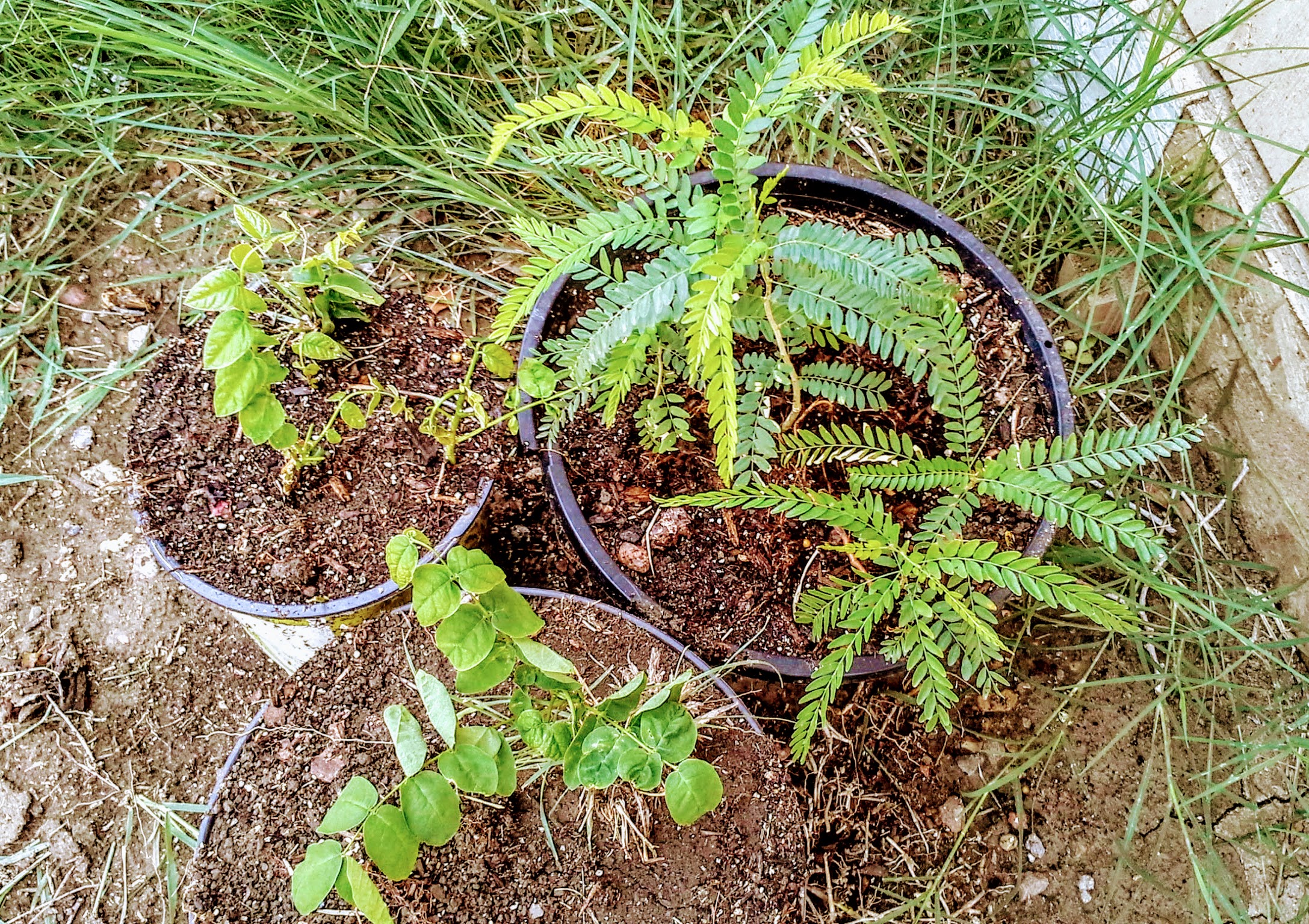
So what does all this have to do with my seedling forest? Not a whole lot, really, except that it pleases me to be growing trees at a time so many trees are being destroyed. Admittedly, these seedlings will not in any way offset the millions of trees being burned, but then, there’s not much any one person can do about any of the horrors that are defining our world today — the fires, the riots, The Bob, wearing masks. Still, it’s something.

Most of the seedlings are locusts that planted themselves in my yard, though one was grown from a seed in the pot itself. Previously, I’ve tried transplanting the seedlings into the ground directly, and they just died. (I have a hunch it has to do with the harsh sun burning their tender shoots before they got over their transplant shock). Oddly, the seedlings seem to like the pots. A couple of the seedlings are Kentucky coffeetrees, new additions from my next-door neighbor. Apparently, these trees are rare in this area, and her next-door neighbor ending up cutting down his coffeetree (to the horror and sorrow of the tree cutter) as well as a couple of my neighbor’s trees (a property line dispute, which makes me even happier that I had my property surveyed), so she and I are trying to repopulate the area with these gems.

Planting trees seems such a hopeful, non-cranky thing to do, and best of all, I don’t need to wear a mask to tend to my seedling forest.

***

Pat Bertram is the author of Grief: The Inside Story – A Guide to Surviving the Loss of a Loved One. “Grief: The Inside Story is perfect and that is not hyperbole! It is exactly what folk who are grieving need to read.” –Leesa Healy, RN, GDAS GDAT, Emotional/Mental Health Therapist & Educator
The Shadow of Family Trees

I live in a small town where people tend to stay when they’re grown, or if they leave, they come back to retire. I thought there would be a problem, since the residents of many such towns tend to stick together and not welcome newcomers, but not here. Everyone (well, almost everyone — there’s always that one person who aggravates) has been kind and welcoming. Now that I’m sorting out the family trees just a bit, this welcome amazes me even more. It seems as if almost everyone is related within one or two degrees of separation.

For example, I met the grandson of the woman I am working for (with?) and today, talking to another friend, she mentioned her grandson of the same name. Turns out, it’s not a coincidence of names — the same boy is the grandson of both women. In another case, one friend’s grandfather is another friend’s uncle. I can’t even wrap my mind around that!

I may never get all these relationships straight, but it doesn’t matter. The shadow of their family trees doesn’t fall on me like it does with those who grew up here. I can take people are they are, rather than what limb they came from.

Another thing I discovered (that has nothing to do with family trees, though it does have to do with plants) is that at one time, 92% of all zinnia seeds came from this area. It must have been beautiful, driving down a highway lined with jewel-toned fields, all the colors mixed together in a riot of joy. It certainly explains why zinnias seem to like me — it’s not me so much as that they feel at home.

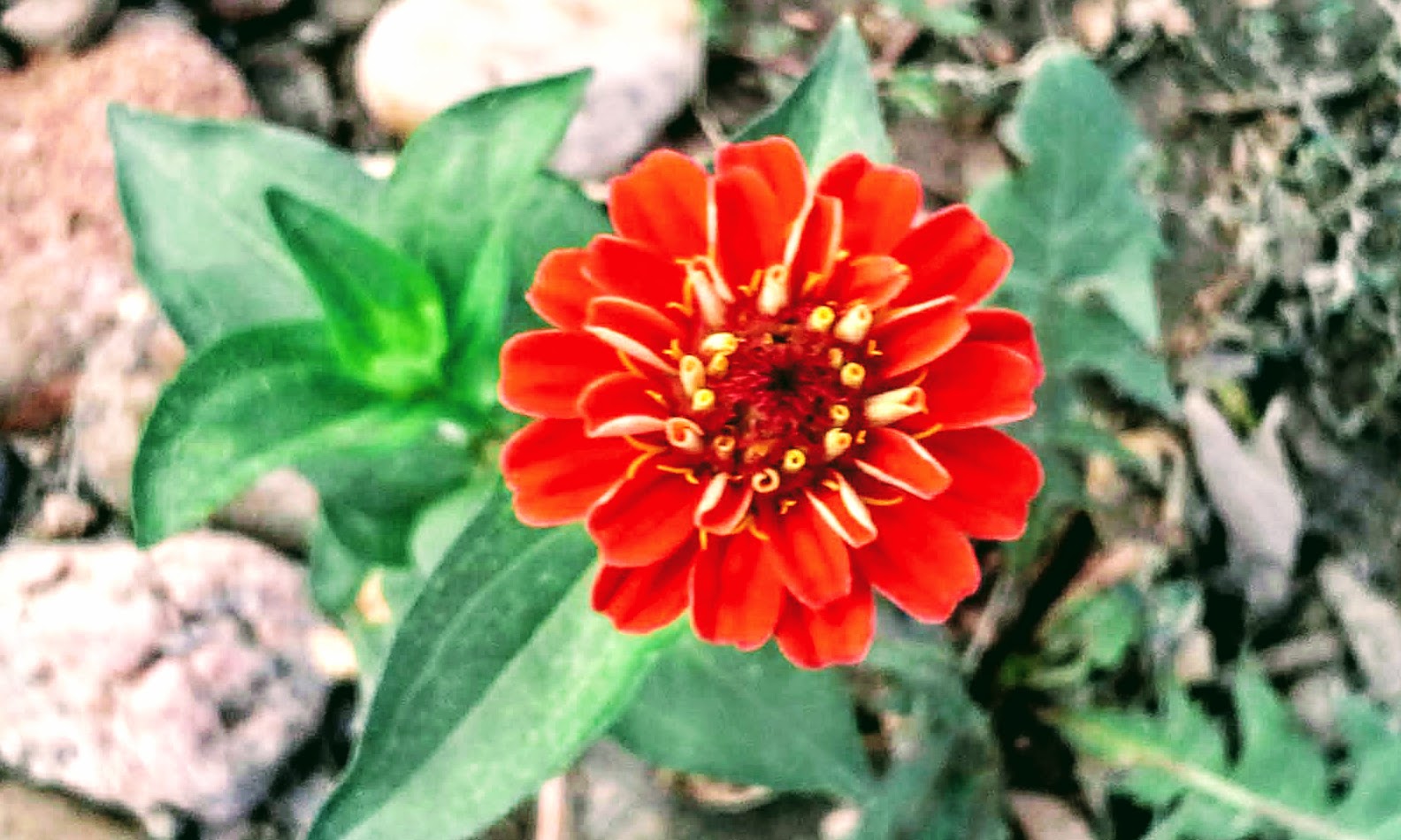
It would be nice to think that the zinnias I found growing in my yard were descendants of the original flowers, but I doubt it. Although I was surprised to find the zinnias, it’s only because I forgot that I planted them. Well, in a way, I planted them. I had some old seeds that I threw out into the yard instead of tossing the unopened packet in the trash. Most of the seeds did nothing, but the zinnias decided to grow. So nice of them!

I’ve never really had any special feeling for zinnias, but after this summer, seeing the cheerful blooms and knowing they belong in the area, might even belong to the same family tree as those original zinnia fields, I’m considering planting a yardful of them next year.

One of my new friends (one of the grandmothers) told me about a seed store in a town up the road a piece. They might even have seeds grown around here, which would be nice.

What is also nice is being able to plan for next year, knowing that unless something traumatic happens, I’ll still be here in this small town. And probably still trying to sort out the shadows of all those family trees.

***

Pat Bertram is the author of Grief: The Inside Story – A Guide to Surviving the Loss of a Loved One. “Grief: The Inside Story is perfect and that is not hyperbole! It is exactly what folk who are grieving need to read.” –Leesa Healy, RN, GDAS GDAT, Emotional/Mental Health Therapist & Educator

Dilemmas

The women I work with and for invited me on a drive this afternoon. We went out in the country and saw where the one woman grew up, where their relatives once lived, where various other people I don’t know once lived, as well as a lesson on the water dynamics of the area. Some of the big farmers and ranchers saved their water rights, but people with smaller acreages and adult children who didn’t want to farm, sold their rights to be able to stay in their houses.

I understand this was a tough decision for people, but not being a rancher/farmer, all I can do is shake my head and wonder if they’d ever seen a western movie. It seems that a huge number of westerns revolve around water rights, generally, with the evil banker trying to corner the valuable water market, and so the idea that anyone would sell their water rights seems self-defeating. Money now, of course, but not later when/if it comes time to sell the property. Still, not my dilemma.

My dilemma is a different one, though still in the financial realm. A relative had some very bad luck, and my first inclination was to send her a check to help her out. Then I got to thinking about it, and realized that I accepted a job to help my own financial situation, and if I sent her anything, in essence, then, I would be working for her benefit, not mine, that all the money for the work I will be doing for the next several months would be going in her pocket.

Oddly, the tarot card I picked today — The King of Pentacles — reminded me to stay in control of my energies and resources in pursuit of a larger goal (such as a solution to my own precarious financial situation). Although this is also a card of generosity, I am tending toward the less generous outcome, more because of the job than anything. Still, I feel bad for her, so who knows.

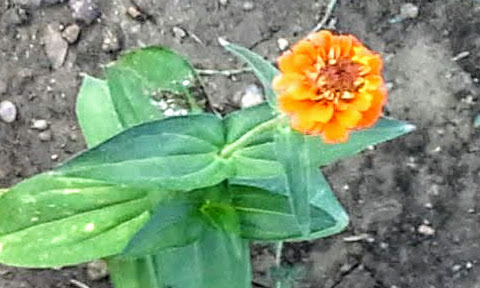
Since these dilemmas are not pleasant to contemplate (if they were pleasant, they wouldn’t be dilemmas, I’m sure), I’m adding photos my zinnias. They might not have anything to do with anything I’m writing about today — they pose no dilemmas — but they do make me smile, and I can use a few smiles right about now.

***

Pat Bertram is the author of Grief: The Inside Story – A Guide to Surviving the Loss of a Loved One. “Grief: The Inside Story is perfect and that is not hyperbole! It is exactly what folk who are grieving need to read.” –Leesa Healy, RN, GDAS GDAT, Emotional/Mental Health Therapist & Educator
Grist for My Mill

When I accepted the job of part-time caregiver, I thought both women — the fulltime caregiver who interviewed me and the woman I would be caring for — were total strangers.

As we learned a couple of days ago, all three of us had attended the same function last year — Thanksgiving dinner at the senior center. I didn’t talk to either of these women at the time, though in retrospect, I remember the director of the center pointing them out and telling me who they were.

It seems odd that the two people I see most in my life now, who in some ways are the most significant, were so insignificant to my life back then, that I didn’t even remember the encounter. Admittedly, this is a small town, so such coincidences would not be uncommon, and yet, I do sometimes wonder how often two lives cross before the two people finally connect.

A lot of times when people meet, not just friends, but soon-to-be marriage partners, they trace their lives and find many points of intersection, and yet, they didn’t make the all-important connection during those earlier near-encounters.

Jeff and I didn’t find many such points of intersection, though we spent our lives within a couple miles of each other. We did find that we had been in many of the same places, though not necessarily at the same time.

Not that it matters. Or maybe it does. Maybe it’s not the crossing lines themselves that matter but the time of the actual connection. If we had met before we met, would we have connected? Would we have even liked each other? So many things happened in the years immediately preceding our connection that primed us for that ultimate encounter, a previous meeting might have passed unnoticed.

It’s sort of the same thing with these women. If we had talked at Thanksgiving, would things have been different? Would they not have wanted me to work with them? Would the job be working out as well as it is? One of the things that helps all of us, I think, is the novelty. Those two spend so much time together, that a third person adds a bit of spice (or at least a bit of a change), especially now, when the vulnerable are still mostly isolated. If we’d met before, perhaps we would have lost the novelty factor.

Obviously, despite my new job, I am still spending too much time alone, too much time in my head thinking thoughts that have no value other than to keep my mental mill working.

Luckily, I am meeting some friends for a picnic in a little while, which will give me more — and different — grist for my mill. All social distancing and mask wearing guidelines are supposed to be followed, of course, though how one eats wearing a mask, I don’t know. See? Already something new to think about!

***

Pat Bertram is the author of Grief: The Inside Story – A Guide to Surviving the Loss of a Loved One. “Grief: The Inside Story is perfect and that is not hyperbole! It is exactly what folk who are grieving need to read.” –Leesa Healy, RN, GDAS GDAT, Emotional/Mental Health Therapist & Educator

Men’s Romance Novels

Sometimes I think best-selling authors have no idea what makes their books sellable. I’m sure they figure they can throw anything out there, and their name will do the rest, which, truthfully, is often the case. But until they get to where their name is the selling point? Not a clue.

I’m reading a whole library’s worth of books by a guy who wrote adventure novels. The adventures are all thrilling, of course, and there is always a matter of heroics — generally a last-minute saving of the world from some calamity that will wipe us all out. The glue that holds all these books together is the romance. Not the male/female sexual romance, but the male bonding sort of romance. I understand that men — and men writers — don’t think this bonding has anything to do with romance, but it is a special sort of romance, often deeper and more meaningful than the romances conceived by women. The relationships in women’s books so often revolve around passion, feelings, family, while the relationships in men’s books revolve around loyalty, commitment, connection. Men might call it bonding, but it’s really a sort of romance.

These men characters respect each other, rely on each other, save each other’s lives and are more involved with their quest (and hence each other) than with the women they meet. I used to think the dismissal of women as secondary characters was a sort of dismissiveness of women in general, when in fact, it’s all about the romance of the men. The bonding. The adventures they share.

It’s this romance — not just the romance of the adventure, but the romance of the shared bonds — that make such books enduring (and perhaps even endearing).

But what is foremost in the author’s mind, and maybe even readers’ is the thrill of the adventure, and though they might feel the “glue” of romance that holds the story together, they don’t stop to dwell on it. (Unless you’re a person who’s isolated from the world because of a pandemic, and the library is closed, and all the person has to read are these books borrowed from another reader.)

So, moving on to a new adventure series by the same author, an adventure that should be romantic, involving as it does a loving married couple, but falls short of romance and adventure. The deep loyalty is missing. The unswerving trust is gone. (The husband always tells the wife to “wait here,” and after a bit of back and forth, he gives in. You’d think after years together, the automatic trust, commitment, and wordless communication would be there.) Even worse, the underlying importance of the adventure is gone.

In the first series, as I said, the adventurers were always on a quest to save the world from some enormity, and so any shenanigans, such as burglary and abduction and murder are minor infractions by comparison, and are usually done as a reaction to what the evildoers have done to them. But in the second series, the couple are merely curious. There’s no reason for them to burgle or kill except for their own ends. Nor is there any reason for them to be the instigators of such crimes. It helps no one, saves no one, and is only justified in the story because the victim is even worse than they are. (Though any money made from the treasures is donated to a worthy cause.)

The second series might sell well — after all, there is that famous name, even though it seems that most of the books were written by someone else — but they fall flat. Luckily, I have only two of these books and am almost through with the second. Whew!

I keep calling this the second series, though it might be the third or fourth. Apparently, the author, although now deceased, has a whole industry going with all sorts of people writing his books. But none seem to have the power and romance of the first series. Does anyone else notice? Probably not.

Would anyone else call them men’s romance novels? I doubt it. But that’s what they are.

***

Pat Bertram is the author of Grief: The Inside Story – A Guide to Surviving the Loss of a Loved One. “Grief: The Inside Story is perfect and that is not hyperbole! It is exactly what folk who are grieving need to read.” –Leesa Healy, RN, GDAS GDAT, Emotional/Mental Health Therapist & Educator
Time’s Illusion

Time is supposed to be an illusion created by our brains to organize events into past, present, and future. (I’m sure there are other, more scientific reasons for the illusion, but as a practical application, in day-to-day living, that’s what it seems like.)

Everything that exists or has ever existed is supposed to exist in the eternal right now. We project onto that reality our own perspective. Time does not flow, nor do we flow through time, but whatever the truth, time’s illusion seems to be getting stronger. I can’t tell if I am standing still and time is slipping away beneath my feet or if I am floating on the river, but either way, whatever this thing we call “time” really is, it seems to be slipping away from me.

I just started a new job, and already, I am into my third week, (I’ve already had my first paycheck, and boy, did that feel good!) All that time . . . gone. And so fast! When I got the woman’s house yesterday, she asked what I’d done on my weekend, and for the life of me, I couldn’t think of anything specific. She thought I didn’t want to tell her, but to be honest, I couldn’t remember doing enough things to have filled in all those hours. I watered my plants, took a walk (three miles!), read copiously, probably ate too much, probably didn’t drink enough, and the time slipped by.

Even today, though I had plenty of time to do whatever I wanted, here it is, almost time to go to work, and I’m scrambling to finish this blog. Where did the time go? I took a walk — only two miles, today. Then I relaxed with a cup of tea. Afterward, I fixed salads for the next few days, cleaned the kitchen, talked to my sister for a few minutes on the phone, ate lunch (one of those salads) and then, here I am — sitting at the computer wondering where all the morning hours had gone.

Part of the feeling of time slipping away (or me slipping past time) comes from the practicing the art of living in the moment — trying not remember too much of the past, trying not to project myself into the future (the job helps with that — with enough money to live on for now, I don’t have to worry as much about the future). It’s a great way to live, most of the time, anyway. (See? Can’t get away from time, even in such a careless usage!) The exception comes when I try to figure out what I did while time slipped through my fingers.

A lot of things have become habit — my one-card tarot study each morning, blogging, reading whenever I have a free moment, doing household chores — so none of those things stand out when someone asks what I did.

I suppose I could have told the woman I sailed away on a sea of time, or that I succumbed to time’s illusion, but my sense of philosophical whimsy doesn’t always translate to casual conversations, especially with those who are hard of hearing.

In a novel I read the other day, one of the characters expounded on the importance of war and trauma and atrocities because those are the things that make us feel alive, that create instances of courage and sacrifice, greatness and nobility. According to that character, there’s no purpose to a life of peace and calm because we never learn what we are made of.

I don’t know — a peaceful life cocooned in time’s illusion seems plenty acceptable to me. Do I need to be great or noble or self-sacrificing? Admittedly, dealing with such an adrenaline-laden life would slow down the flow of time, but I’m old enough now that a gentle sail on the sea of time is eventful enough. So what if I can’t immediately recall one specific day out of several similar days? It all comes down to the same thing anyway — if there is no past, did those things even exist? (Now I’m being silly. Of course they did, but I still wonder what happens to those things we did that we forgot.)

I’ve floated into a side stream here and gotten way off the track, which is about how time is slipping away from me. Time might be an artificial construct, but that illusion of the flow of time is getting stronger all the time.

And yep, just sitting, time managed to slip away from me again.

***

Pat Bertram is the author of Grief: The Inside Story – A Guide to Surviving the Loss of a Loved One. “Grief: The Inside Story is perfect and that is not hyperbole! It is exactly what folk who are grieving need to read.” –Leesa Healy, RN, GDAS GDAT, Emotional/Mental Health Therapist & Educator
Telling New Grievers the Truth About Grief

When new widows or widowers ask me about grief, such as how long it took me or when I stopped crying, I never know how much of the truth to tell them. For some people, the idea that grief will be the primary factor in their lives for three to five years before they find some sort of renewal, is a comfort because they know they won’t feel bad forever. For other people, three to five years is an astonishingly long time (which it is, when it comes to grief) and the thought adds to their despair. After the first year, it’s not such a dilemma for me — people have settled into their grief and knowing it will last years more, isn’t such a torment.

Because of my hesitation to tell the whole truth, I’ve gotten into the habit of telling new widows that grief “lasts a long time.” Oddly, when one is on the grief side of those years, it is an immensely long and dreary road, but on this side, the years of grief seem to have been over in an instant, probably because when things don’t seem to change much, when every day seems like every other day, all the emotional memories pile one on top the other like a deck of cards, rather than being laid out on the table so all of it can be seen at once. That sameness is also what gives grief, when one is going through it, a feeling of timelessness, as if we were always grieving and forever after, always would.

But no matter what things feel like, internal changes are being made, and those changes are generally manifested sometime in the fourth year when suddenly, it seems, life seems lighter, more hopeful. (Or it could be we are simply more used to their being gone, because the truth is, one can get used to almost anything, even death and loss and grief.)

Another example of not knowing what to tell is when a friend recently asked me if her going to visit a relative would help. I told her yes, because that is the truth. It’s good to get a respite from the emptiness, even if the effects of that respite don’t linger beyond the visit. What I didn’t tell her, because I didn’t want to ruin her vacation from herself, is the horror of walking into one’s home afterward to find the emptiness waiting to grab hold once more. But she learned the truth when she got home, and oh, my heart goes out to her. It really is a hard thing to deal with — that emptiness, that void, the knowing that for the rest of our lives, we have to live without that one person who gave us a deeper meaning, emotional support, love and companionship.

This same friend asked if the urge to flee would dissipate after she got back from her visit. I said, no. And when she asked how long it would take before that urge disappeared, I told her that everything takes years. It just won’t always be bad. That urge to flee turns into some sort of craving for adventure. And then, even that urge fades away with time.

I never thought “time” was an antidote for grief, since it’s what we do with that time that affects us more than time itself, but time does pass. The void shrinks but never goes away, so that even when we start to lose the memories of living a shared life because of the passing years, we always feel the absence. Do people need to know they will always feel the absence? At the beginning, it’s a burden, but as the years pass, that same void becomes a comfort, a way of keeping the memory even when the memory is gone.

Another lesser reason I hesitate is that the pattern of grief that so many of us deal with isn’t universal. In rare instances widows don’t fall into the black hole of grief but are able to go on, after a few months, as if nothing had happened.

But most of us have to wait until grief is finished with us.

And that takes longer than anyone wants to contemplate. Even ten, fifteen, twenty years later, something will happen (a daughter’s wedding, a grandchild’s birth, a debilitating illness) and grief, as fresh and as agonizing as the day our loved one died, will return.

What I try to emphasize more than anything is that no matter what people feel, no matter how long it takes, it’s normal. In the end, that’s more important that the specifics, because one thing that most new widows and widowers have in common is the feeling they are crazy when their bodies and minds go into overdrive as they try to process the death of the loved one and loss from their life. Death is the great unknowable, and having to confront that unknown as well as dealing with grief puts an unbelievable stress on the body.

People do need to know about that stress so they can do whatever is necessary to combat the stress. In my case, it was long rambling walks. In other cases, it’s sleeping for long hours or reading or keeping a grief journal or even talking to the deceased. It’s all about getting through the days, the weeks, the months, the years until a renewed interest in life asserts itself.

And it will. That I can tell you for sure.

***

Pat Bertram is the author of Grief: The Inside Story – A Guide to Surviving the Loss of a Loved One. “Grief: The Inside Story is perfect and that is not hyperbole! It is exactly what folk who are grieving need to read.” –Leesa Healy, RN, GDAS GDAT, Emotional/Mental Health Therapist & Educator

Gadgets, Gizmos, and the Exasperating Mysteries of Life

I wondered if the smoke alarm’s tendency to chirp at 2:00 in the morning when the battery is old had anything to do with the temperature, so I read a few articles, and apparently I was right. The cooler temperatures in those pre-dawn hours affect the battery output, and if the battery is getting low, the smoke alarm chirps. I was excited at seeing this confirmation of my surmise until it occurred to me that this scenario did not fit with my 2:00 am chirping because I’d turned off the air conditioner, and the temperature at that time was the highest it had been for several hours. Since I know that high temperatures also affect batteries (my car battery went dead in July one year, which is how I found out), it’s possible the high temperature had an effect, but the house had been hotter earlier in the day.

So I’m back to thinking that the early morning chirping is one of those exasperating mysteries of life, like the annoyance of a cricket in the house, the irritation of mosquitoes in the bedroom, the disturbance of a dripping faucet, the nuisance of a running toilet valve.

One of the articles I read was really an ad for a smoke alarm that had a built-in 10-year battery, which is all fine and dandy, but what happens in ten years when the thing starts chirping at 2:00 am and a simple battery substitution doesn’t eliminate the noise? I’ll stick with what I have for now. Maybe the next time I need to replace the smoke alarms, the ten-year devices will last to my expiration date, and will annoy the folks who end up in the house. A present from me, so to speak.

Considering the success I had in changing all the batteries by myself, even to the point of dragging a ladder from the garage into the house, I thought I’d tackle another little project involving a gadget that I’ve been putting off — installing an automatic garage-door closer.

My door is equipped with a non-automatic closer — me! — but since I am preparing for my old age, and since I tend to be a bit absentminded at times, I figured an automatic closer would be nice. I followed all the steps of the instructions, even found the “learn” button on the opener and set up the ladder so I can reach it, but somehow, the closer and opener didn’t connect. I tried again, but got the same non-result, though the two gadgets are supposed to be compatible. Another exasperating mystery.

If I can’t figure out what I’m doing wrong, and if The Bob ever declines enough that travel is again an option for more people, I’ll see if my brother can get the gizmo to work the next time he comes to visit. (The closer was his idea in the first place, so he should be able to.)

Meantime, I am trying to get in the habit of being patient and waiting until the door is completely closed before taking off. Considering that not everyone in the neighborhood is as honest as my immediate neighbors, I figure it’s best not to give the larcenous neighbors an opportunity to sneak in before the door is completely closed. (That’s one of the ways felonious folk break into people’s houses, and even though the garage isn’t connected to the house, I wouldn’t want anyone in my garage illegally anyway.)

Gadgets, gizmos, and the exasperating mysteries of life. What a day!

***

Pat Bertram is the author of Grief: The Inside Story – A Guide to Surviving the Loss of a Loved One. “Grief: The Inside Story is perfect and that is not hyperbole! It is exactly what folk who are grieving need to read.” –Leesa Healy, RN, GDAS GDAT, Emotional/Mental Health Therapist & Educator

Joys of Modern Life

It’s horrendously early in the morning as I am writing this, hours before I generally get up, but I had to deal with a chirping smoke alarm, and now I can’t get back to sleep.

It’s my own fault, really. I should have changed the batteries a month ago since that’s when the alarms were originally installed, or even a week ago when I changed the batteries on the thermostat, but I don’t have a talent for ladders, so I hoped to get someone else to do the job. But I put it off. And there was no one around tonight (this morning!) to stop the chirping but me.

I looked up the instructions on how to change the batteries, and they were more complicated than I wanted to deal with, having to do with danger warnings, shutting off the power, flathead screwdrivers, and removing battery locks. I was sure the person who installed the alarms showed me a battery drawer in the side of the device so I wouldn’t have to dismantle the device before changing the batteries, but when the drawer didn’t easily open, I thought I might be mistaken.

So, YouTube to the rescue.

I was right about the drawer, and I managed to change the batteries on one alarm, but the chirping continued. When two alarms are close together, it’s almost impossible for me to figure out which one is chirping, and I’d picked the wrong one. I got the drawer of the second alarm open, but couldn’t remove the battery. A bit of finagling and a minimum of swear words, and the battery finally came out. Luckily, the new battery slid right in.

Ahhh. Silence.

I still have two more smoke alarms to do, but to get to the one in the back room, I will have to drag a longer ladder in from the garage. The smaller step ladder I’d used for the others won’t work because there is nothing for me to grab hold in that room to help me keep my balance. At least the others were near doorways, which gave me some purchase.

I know these smoke alarms are lifesavers, but do I really need four of them? One is in the bedroom, one in the hallway, and one near the kitchen as is required, but that puts all three of them within a few feet of each other.

Oh, well. There shouldn’t be a problem after this — I’ll write down the date I changed the batteries and will make sure I change them within the year so I can do it at a reasonable time rather than in the middle of the night.

I didn’t have to change the batteries tonight, of course — according to the instructions, I had a week in which to make the change. A week of that chirping? I don’t think so. I couldn’t even deal with an hour.

Now that the adrenaline of being so rudely awakened has drained away, maybe I can get back to sleep.

And so ends another saga of the joys of modern life.

***

Pat Bertram is the author of Grief: The Inside Story – A Guide to Surviving the Loss of a Loved One. “Grief: The Inside Story is perfect and that is not hyperbole! It is exactly what folk who are grieving need to read.” –Leesa Healy, RN, GDAS GDAT, Emotional/Mental Health Therapist & Educator