Taking a Break

I don’t know when I last took a break from working out in the yard — from what I remember, I’ve been out there every day for months — so today was a rare treat.

I had considered pre-digging some holes for the bulbs that are due to arrive today and tomorrow, and I should have watered the grass (it’s still so new that it needs to be watered at least once a day, though I only managed a double watering once) but when a friend asked if I’d like to go to the “big” town (7,000 people!) for a shopping trip, I dropped everything and went with her.

I doubt it will hurt the grass any to be neglected one day. I gave it a good soaking yesterday, and will do so again tomorrow. Nor will I miss out on the sunshine. Tomorrow will be warm — perhaps the last warm day until next year — so I will be out for longer than is probably practical trying to plant as many of those bulbs as possible.

Besides, it was good to be able to fill up my refrigerator, which had been almost empty. And I had the opportunity to shop for Thanksgiving dinner since I doubt I’ll be going back there until December sometime.

I got a turkey breast, and to be honest, I’m not expecting it to be very good since the additives are about 20% of the weight. It might make for easy cooking, especially since it’s a freezer-to-oven product, but I also bet it will have a plastic feel as such highly processed meats often do. But in this case, it truly is the thought that counts. Neither my friend nor I want to be included in other people’s family plans, so we’re going to celebrate on our own. We really don’t have to fix a traditional meal, I mean, it’s not a requirement, but at least this way we won’t waste time trying to figure out an alternative menu. And anyway, who knows — the turkey might be excellent after all. One thing I know, we won’t have to worry about the grief upsurges that are so often brought about by being with couples. After all this time, it’s still hard for me, and she’s coming up on her third anniversary, which would make it doubly hard for her.

This day does show that there is life after gardening when it gets too cold to be out working, though today was a bit of a cheat because of the companionship and the shopping expedition. But as with all other changes I’ve dealt with, I’ll survive the coming winter.

And anyway, there’s always next spring to look forward to.

***

Pat Bertram is the author of Grief: The Inside Story – A Guide to Surviving the Loss of a Loved One. “Grief: The Inside Story is perfect and that is not hyperbole! It is exactly what folk who are grieving need to read.” –Leesa Healy, RN, GDAS GDAT, Emotional/Mental Health Therapist & Educator.

Confusing Thoughts For A Confusing Day

During the last year of Jeff’s life, we sometimes talked about what I was going to do after he was gone. We knew I couldn’t stay in that house for very long — there was nowhere around there for me to work, and I couldn’t pay the expenses on my own — so we knew a move was necessary. (We couldn’t have known how short a time I’d have afterward to figure things out, but it turns out I was evicted almost immediately. I have no idea why except that the landlady seemed to think I had designs on her husband. For some reason, widows get a bad rap; she’s not the only one to think we are a rapacious lot, looking to replace what we lost with someone else’s husband.)

Jeff wanted me to go stay with my father because he said I’d have a place to stay where I’d be safe, but I absolutely refused to even consider the matter. My parents and perhaps even my brothers had always taken for granted that I would be the “designated daughter,” the one who would take care of her parents when they couldn’t take care of themselves, and having had to cater to my father at various times in my life, I truly dreaded the possibility of doing it for the rest of his life. As long as Jeff was alive, I was safe from what I thought would be a hell, but when his life drew to an end, the dread returned. (Strangely, I never considered that I would grieve. I figured I’d be sad for a while, but would continue on without a blip. What a shock it was to find out what grief really was!)

Even after Jeff pointed out that taking care of my father wouldn’t be forever, I still refused to consider the matter. It wasn’t until the end, when Jeff was comatose, that I changed my mind and told him I would go stay with my father. A few hours later, Jeff died. Apparently, even unconscious, he was worried about what would happen to me and couldn’t leave until he knew I’d be okay.

My father was 93 at the time, and though he was doing well, he really did need someone to stay with him. He was terrified of the night terrors he sometimes got as well the sundowners hallucinations he’d experienced during a hospital stay. The two of us worked things out. Although he would have liked me to wait on him, I wanted him to be as self-sufficient as possible, so I talked him into continuing the routine he’d adopted after my mother died. And he did keep it up until he couldn’t any longer.

Those years seemed interminable at the time, made worse by the arrival of my dysfunctional older brother, but as Jeff had said, the stay with my father wasn’t forever. He died four and a half years after my arrival.

Today is the seventh anniversary of my father’s death, and it perplexes me to think he’s been gone more years than I stayed with him. How did all those years slip by? The hardship of my time with him (though admittedly, it wasn’t as hard as I expected it to be) now seems like a hiccup in my years of grief over Jeff.

It’s odd to think that those men — Jeff, my father, my older brother — who were so significant to my life are now gone. Odd, too, to think of how each of those deaths has contributed to my current well-being.

Confusing thoughts for a confusing day.

***

Pat Bertram is the author of Grief: The Inside Story – A Guide to Surviving the Loss of a Loved One. “Grief: The Inside Story is perfect and that is not hyperbole! It is exactly what folk who are grieving need to read.” –Leesa Healy, RN, GDAS GDAT, Emotional/Mental Health Therapist & Educator.

The Long and Short of Grief

A therapist friend wanted to know the difference in grieving between someone who lost their life mate/soul mate at the beginning of their relationship and someone who had many years with their mate.

I hesitate to compare grief because we all grieve in many ways for many things, but after a grievous loss, such as that of a spouse, there is a general pattern to grief that one’s mind and body seem to follow. If there weren’t similarities, then no one’s story would have any relevance to any one else, and I do know that what I have written about my experiences with grief resonates with many people. So my answer doesn’t have to do with the depth of grief. There is no way to measure that. I’m mostly discussing the two cases on the base of the patterns of grief.

A long life with a loved one and a short life that was cut off before the relationship could deepen aren’t the same — can’t be the same — and yet, in some respects they are similar. We grieve the loss of an entire lifespan of a person and a relationship. I grieved for both the time I had with Jeff and the time I didn’t have. The fiancé of an acquaintance died right before their wedding. She didn’t have the same amount of time with her fiancé that I did with Jeff, but she will still grieve for the time she had and the time she didn’t have. I had more loss looking back, perhaps, but she has more loss looking forward. For both of us, too many plans and hopes didn’t come to fruition, but especially in the case of the woman who went to a funeral instead of to her wedding.

Losing a loved one to death is always hard. It’s possible in the long run, the fiancé will have it a bit easier in that she won’t have as many habits that are abruptly cut off. When you spend a lifetime with someone, you develop habits to enable to you to cohabit, and then when the habits come to an end because of the loss, your brain goes into overdrive. We do so much by habit, and then suddenly, after the death of a spouse, you have to think how to do everything. (It’s like trying to remember how to walk instead of simply walking.)

Also, when you spend a lifetime with someone, you have the whole problem of your lizard brain going haywire because the other half of your survival unit is gone and when it doesn’t return, your lizard brain suddenly realizes that it too will someday die, and what a horror show of chemical and hormonal imbalances that part of your brain can foment! She won’t have that, but she might have other issues I don’t know about, such as a feeling of unfairness. We all feel the unfairness, of course. My parents had 60 years together. Jeff and I had half that. And oh, did that seem so unfair to me! I imagine the sense of unfairness the fiancé felt was off the charts, because it was incredibly unfair. She didn’t have even one year with her mate, and I got 34. For those of us who have spent many years with our loved one, eventually we are left with a feeling of gratitude for the years we did have to balance the unfairness, and I’m not sure there is much to balance the unfairness of what the fiancé experienced. She’s happy now, married to a widower, and has children, but still, there is always that grief for a love cut short, regret for a life that might been.

There is the terrible shock of death we all feel. There is also a sense of waiting. In my case, I kept waiting for Jeff to call and tell me I could come home, and the fiancé had that, too. Waiting. Always waiting to hear from someone who is so utterly gone from this earth.

And confusion, of course. As confused as I was after Jeff died over where he was and how he was doing, it must have been even greater for the fiancé. Even thinking about it, I feel confused. How is it possible that such things happen? So unfair.

A major factor in the loss of a mate, long-standing or not, is the nearness of death. When you are deeply connected to someone who has died, you feel as if you are standing on the edge of the abyss, as if any loss of balance will pull you into eternity.

That feeling of being able to reach out and touch the love one depends on your level of connection. Some people who have been together many years never had (or have lost) such a deep connection, while some new couples feel it immediately. Still, the presence of death is never easy to handle.

I’m not sure I helped my therapist friend with this analysis, but it was the best I could come up with. All I know for sure is that the death of a person intrinsic to our live dims the light of the world and it takes many years before we adapt to that dimming.

***

Pat Bertram is the author of Grief: The Inside Story – A Guide to Surviving the Loss of a Loved One. “Grief: The Inside Story is perfect and that is not hyperbole! It is exactly what folk who are grieving need to read.” –Leesa Healy, RN, GDAS GDAT, Emotional/Mental Health Therapist & Educator.

A Place That’s Uniquely My Own

It’s hard for people to understand one another because each of us come with particular problems, needs, and perhaps even assets that help define who we are. If we don’t take all that background information into consideration, we can never truly understand another person’s point of view. That’s a good thing for me to remember as a writer because it might make for a deeper character portrayal or put the story in a different light, but in real life, it’s not so interesting.

I talked to someone yesterday who harangued me for quite a while about my keeping the same contractor. The word “sucker” was even bandied about. To be honest, most people don’t approve of this particular choice, but they tend to keep their opinions to themselves. And admittedly, they do have a point since the contractor is way behind on the work he’s promised to do, but that’s not the issue here.

The person I talked to is young (well, younger), married, strong, has an extended family in the vicinity, has lived in the same area his whole life so he has a solid place in the community and knows where to go and who to call to get things done that he can’t do himself. He probably also has people who owe him favors from years back.

Then there’s me. Old. Alone. No family in the area. No ties to the community except those I’ve managed to secure in the past couple of years. No idea how to take care of a house or where to find honorable people who will get things done.

Not surprisingly, the only person who agrees with me about sticking with the same contractor is also an older widow with a house to take care of and no family nearby. She knows, because she’s been there, how almost impossible it is to find someone who will do all that is necessary, and who will respond to calls and concerns, and who will show up in an emergency. All of that is as important as the work getting done.

I do get frustrated at times, but the truth is, in some odd way, it doesn’t really matter. The work will get done. Or it won’t. Someone told me that the Chinese have a proverb that when your house is done, you will die. At the rate I’m going, I will live forever. (And, since I’m paraphrasing proverbs, the Irish have one they’ve used since the 1300s about better the devil you know.)

The other thing that’s hard to admit to anyone but myself is that I’m not sure I want the work to be finished. Certainly, I want the jobs that are started to be completed because I get tired of tripping over things that are in the way, but there is an excitement to having people come and work on my place and even offer suggestions. (Some of the unfinished projects are ideas they’ve come up with that I would never have thought of and that will vastly improve the accessibility of the property as I age.) It’s almost . . . familial . . . having someone else care about and get invested in creating a safe and attractive place for me to live out my final years.

And when the work is all done, that part of my life will be finished.

Perhaps these are simply excuses for keeping the status quo, but they’re my excuses, coming from a place and a point of view and a set of requirements that’s uniquely my own.

***

Pat Bertram is the author of Grief: The Inside Story – A Guide to Surviving the Loss of a Loved One. “Grief: The Inside Story is perfect and that is not hyperbole! It is exactly what folk who are grieving need to read.” –Leesa Healy, RN, GDAS GDAT, Emotional/Mental Health Therapist & Educator

Family Lore

I’m reading a book about Roosevelt’s Island in New York. It was named Roosevelt’s Island in 1973. Before that, it was Welfare Island. And before that, it was Blackwell’s Island. Although it has a sad and appalling history as a place to house the unwanted — criminals, sick people, mentally ill folks, people who were lost and didn’t speak enough English to explain where they wanted to go — I have a personal interest because a woman who might be my great-grandmother was once incarcerated there.

According to family lore, our family comes by its insanity naturally — we inherited it. My great-grandfather was a scientist and inventor. He worked with Edison and other renowned scientists of the day, perhaps even Tesla. He invented the postmarking machine and foolishly sold the patent to get funds to invent a subway sweeper that never caught on. The people who supposedly did him a favor by buying the patent, became very rich because that postmarking machine was used continuously until the digital age made it obsolete. This otherwise intelligent man — my grandfather — had been married twice. One wife he threw down the stairs. The other he consigned to the Lunatic Asylum on Blackwell’s Island.

The asylum was supposed to be a state-of-the-art facility, with patients classified as to their illness, rather than all thrown in together, the violent and harmless alike. The Asylum was also supposed to be moral, treating the patients like humans rather than like depraved animals. This humane mental institution never materialized. Instead, the asylum was a dreadful place that journalist Nellie Bly described as a “human rat trap.” Even worse, since convicts from the nearby penitentiary were used as guards and attendants, the patients were “abandoned to the tender mercies of thieves and prostitutes.”

No one knows which of my great-grandfather’s wives is my great-grandmother, but even if she weren’t the one committed (especially since there’s a chance he had her committed for his own reasons rather than her mental state), the insanity could come from dear old great-grandfather himself because there seems to be a portion of insanity in incarcerating one woman and tossing another down the stairs

His son, an embezzler who never quite measured up to his father, went to prison for a while and died an alcoholic at 96.

My father kept himself on a tight rein to keep from turning into his father, which was an imbalance of a different sort, and caused all sorts of problems, especially with his oldest children.

My older brother seemed to have inherited all the family craziness — he was a brilliant inventor and electronic genius at the age of twelve, and then he succumbed to the same devils that had tormented his progenitors.

For all I know, I might have inherited some of these problems, but I have more of the Polish placidity of my mother’s family than the German genius and volatility of my father’s family. And besides, it seems to be a sort of insanity that is passed down from father to son.

Not that any of this makes any difference. All those people are gone now, and nothing can change anything that happened, but I do sometimes think of my great-grandfather and his wives and wonder what happened to the poor woman who was sent to Blackwell’s Island.

***

What if God decided S/He didn’t like how the world turned out, and turned it over to a development company from the planet Xerxes for re-creation? Would you survive? Could you survive?

A fun book for not-so-fun times.

Doing the Best We Can

Yesterday was the third anniversary of my older brother’s death. He’d been homeless, possibly bipolar, and driven by rage. As another sibling said, “I will probably always be tormented by thoughts of the torture his demons inflicted upon him.”

We are a myth-making species, and the myth another sibling has adopted is that our homeless brother took upon himself the demons that haunted our family so the rest of us could be free. It’s a pretty myth that allows her to make sense of his life, and for all I know, it could be true, but I can’t shrug off his problems that easily.

My brother hated Jeff, partly, I think, because my brother felt abandoned when he discovered he and I weren’t in the same boat — loners with never a chance at a real relationship. He also felt he should be the one to look after me, though he couldn’t even look after himself.

Back when his problems started showing up, no one even considered the possibility of mental illness; they just thought he was a troublemaker. He and my father were so much alike. They both thought they knew the right of things, and they often fought. For most of my life, they used me as the rope in their game of tug-of-war, and I wasn’t smart enough or hard enough to discover a way out. I remember as a young woman thinking I’d never have any peace until they were both dead, and that the depressed me to no end, not only that I would think such a thought, but that it might be true.

For many years with Jeff, I did managed to evade much of their conflicts and the despair those conflicts (and my divided loyalties) engendered in me. After Jeff, died I went to look after my then ninety-three-year-old father, and when my brother showed up shortly afterward, the fighting escalated. And again, I was caught between the two of them. This lasted until my father’s death.

Oddly, although I often think of my brother, I don’t usually think of the horror those demons put us through. I think of the irony that because of his homelessness and his demons, I have a home. It was his death that started a whole cascade of events that led me here, to this house. In a way, I benefitted from his demons, though I don’t feel guilty. It’s just something I ponder.

We can never know the truth of someone else’s life. I learned this after Jeff died. I was wailing to a hospice social worker that he hadn’t had much of a life since he was so often sick, and she told me that he did have a life. It might not have been a happy life, but it was his life. It took years for that particular lesson to soak in because our lives had been so entwined and we thought so much alike that it was often hard to tell who had what thought first, but the truth is, it was his life. I might have been a part of his life, but I wasn’t the whole of it.

It’s the same with my brother. Whatever I think of his life, the choices he made and those that were thrust on him, I try to allow him the dignity of owning his own life.

One other thing I’ve learned from all of this — the conflicts, the deaths, and especially my grief — is that we all do the best we can with what we are given. It’s hard sometimes to separate out the unfairness of life, since some people are given so much — good physical health, good mental health, wealth, joy, companionship — while others get by on a paucity of such gifts.

And even when we, in hindsight, think that others could have, should have done better with their meager gifts, if we’d been inside their heads, with their demons poking at us, we might realize that yes, they did the best they could.

If there is anything I do feel guilty about, or at least unsettled by, it’s that I was right all those decades ago. It’s only now that both my father and my brother are gone that I’ve truly found peace. It’s a horrible thought, made even worse by the truth of it. The one mitigating factor is that if my belief is true — that we all do the best we can — then not only did they do the best they could, but so did I. It’s not as if I wished them dead. I didn’t. I simply wished for peace, not just for me, but for them, too.

***

Pat Bertram is the author of Grief: The Inside Story – A Guide to Surviving the Loss of a Loved One. “Grief: The Inside Story is perfect and that is not hyperbole! It is exactly what folk who are grieving need to read.” –Leesa Healy, RN, GDAS GDAT, Emotional/Mental Health Therapist & Educator

Stepping Out

A few days ago I happened to encounter some friends at the library. We talked for a while, then they asked if I were going to a tea for a local artist. I said no, and added that I wasn’t yet comfortable being in group. One woman asked me if my reluctance was because of the virus or because I didn’t want to be around people.

I had to chuckle at her perspicacious comment. I was doing well trying to be sociable until the restriction on gatherings was put in place, and then suddenly, I was back in my milieu (being by myself). It’s one of the reasons that when a job opportunity arose, I took it — not only would it help with my bills, but it would keep me from being a total hermit in those hermitage times. I never felt uncomfortable, either with the women or with the prospect of getting sick, because we more or less formed our own little family group.

The truth is, though, now that things are opening up again, I really am hesitant to be around people. During the past year and a half, I never got sick. I had allergy flareups, but I never caught anything at all, no colds, no “regular” flu, no infections of any kind. I must admit, I did like that. A lot.

Still, the woman’s comment did make me rethink my ways. If I let the reluctance at being around people get any stronger, it could become a stranglehold. Though I didn’t go to that tea, I did attend a meeting of the local art guild, and when the opportunity arose to attend another get together, I waffled, but I did go.

It’s possible I’ll retreat into my lovely shell again (a reference to my house, of course), but I don’t know. I do know I enjoyed being around people again, so I might continue stepping out.

Unless I get sick, of course; then all bets are off.

***

What if God decided S/He didn’t like how the world turned out, and turned it over to a development company from the planet Xerxes for re-creation? Would you survive? Could you survive?

A fun book for not-so-fun times.

Click here to buy Bob, The Right Hand of God.
Remembering

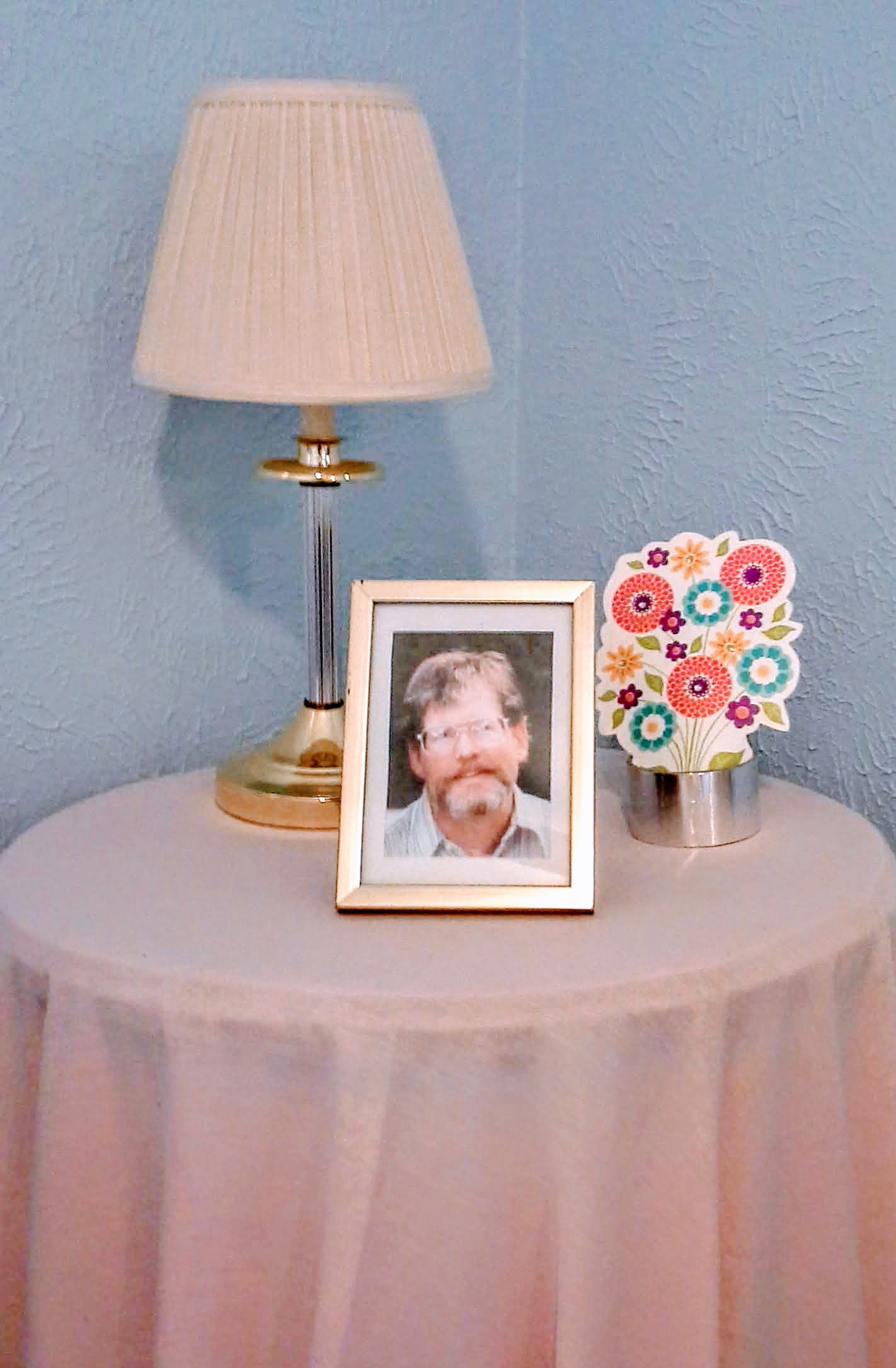
During the past couple of years, I have tried to concentrate more on what I have gained rather than all that I have lost. The tally is still vastly weighted on the loss side, but good things have happened, such as finding a house and creating a home for myself.

The past few days, however, melancholy has gotten hold of me, and I remember the losses. I don’t know whether the plethora of dark clouds and rainy days are responsible or if it’s merely one of “those” times. That this is Memorial Day is entirely coincidental. In fact, I didn’t even remember it was Memorial Day until I went to the library and found it closed. Besides, although Memorial Day has become a day to remember all our dead, its original intent was a day for remembering those who died for their country in any of its various wars.

It’s true that most of my “losses” are loved ones who have died in the past decade or so — my parents, my brothers closest to me in age, and Jeff, of course — but there are other profound losses during those same years that still shape my life, such as the destruction of my arm (though I have become used to the deformity and the remnants of pain), the lack of dance classes, the inability to hike long distances, and losing my home not once but twice (once when Jeff died and once when my dad died). The home loss is especially poignant in an area where families have remained for generations. They might not have lived their whole lives in this very town; they might have come from a nearby town, but to someone who is new to the area, this seems inconsequential. It’s not as if they moved hundreds of miles. They are still within reach of where they grew up, within reach of family and memories.

But this isn’t about them. It’s about me feeling the losses and me feeling lost. Although I didn’t list it with my losses above, I think one of the greatest losses is of myself. Grief changes a person. Being semi-nomadic changes a person. Being isolated changes a person. Owning a home changes a person. I am getting used to who I have become and am still becoming, but it’s not the me I remember being all those years with Jeff. Somehow, our being together allowed me to be a truer version of me than I’d ever been before. I tend to think I am again living a true version of myself, but it’s a different version, one that sometimes strikes me as being . . . not me.

It might be that I spend too much time alone. Although I am comfortable living alone, I must admit I still miss having someone to do nothing with. Sometimes I have someone to something with, but those days of doing nothing in particular with someone are long gone. There are so many little nothings in a day — miniscule victories or insignificant happenings that aren’t worth talking about, but that we want to mention anyway. And there are times when we’re sad or lonely or restless, and just want a moment’s connection — perhaps nothing more than a shared look — before continuing our daily tasks. I can call people or text them, but it’s not the same thing. By the time I make the connection, the moment of nothing has become something.

I don’t mean to sound as if I feel sorry for myself. I don’t really, at least, not much. I just think it’s important to occasionally stop and remember what once was and is no longer.

***

Pat Bertram is the author of Grief: The Inside Story – A Guide to Surviving the Loss of a Loved One. “Grief: The Inside Story is perfect and that is not hyperbole! It is exactly what folk who are grieving need to read.” –Leesa Healy, RN, GDAS GDAT, Emotional/Mental Health Therapist & Educator

Wild Raft Ride of Thoughts

In the book I am currently reading, a couple was chosen by the birth mother to adopt her soon-to-be born baby. All goes well until the child is nine-months old. Then the birth father decides he wants the baby he has never even seen.

This scenario has me whitewater rafting on a wild stream of thoughts, starting with the oft-quoted presumption that a woman’s body is her right. She gets to choose to have an abortion or bring the baby to term. But when does her right end? When the baby is born? If so, why would that be? The child is still part of her, and if you doubt that, ask any bereaved woman who has lost her child — at whatever age — how she feels, and she will tell you she feels as if part of her has died too, as if a limb has been amputated, as if her heart has been scooped out of her body and stomped on.

In other words, whether inside or outside a mother’s body, the baby is still a part of her. So what about father’s rights? In this scenario, it seems as if the only rights he has are those the mother confers on him. Why else would he have any rights? Adding to the whole weird situation, if a woman had a child by another man, then that man’s DNA can migrate to her body from the fetus, so any subsequent baby could have the first man’s DNA, too.

Even if the baby only had the father’s DNA, being a sperm donor or a DNA imparter doesn’t really change anything because our DNA doesn’t necessarily belong to us. It belongs to whoever mines it from our bodies.

That sounds dramatic I know, but the truth is, every time you have blood drawn or any other invasive test, the doctors are mining your body for information. They send it to various labs to be processed. And that part of your body no longer belongs to you. There have been scenarios where a person’s blood was so valuable that the lab company laid claim to it legally. And if the person ever finds out how valuable their blood is (for example, if the person’s blood produces antibodies against The Bob that would protect people forever and against all variants) the person can’t sell it to the highest bidder or even give it away because someone else owns their blood.

In addition, it seems as if aborted babies belong to the abortionist or whoever the person works for because so much medical research, including stem cell research, is done with fetal cells, and where else would the researches get all those fetal cells, unless they are growing them in incubators, which adds a whole other level of insanity to the equation.

Then who does the baby belong to? The midwife or doctor who delivers it? Of course not. It’s the mother’s. She “baked” it. It came from her body. In that case, how could anyone but the mother have any rights? (Though it was not my intention, this would seem to negate the whole child-support question.)

And if we do have rights to our bodies, how can any government mandate any sort of medical procedure, even those they consider as innocuous as inoculations?

I told you this was a wild raft ride of thoughts. As with any wild ride, I’m not sure where I’m going with all these hypothetical questions (meaning I’m not sure what I think and I’m not looking for answers). Mostly I’m taking certain political and scientific presumptions to a logical conclusion, or what seems logical to me. It for sure has nothing to do with my thoughts on abortion, which basically are nonexistent since the issue has nothing to do with me. I have no right to decide what anyone does with any part of their body, though I do give serious thought before I let anything be taken out of — or put into — my body.

***

Pat Bertram is the author of Grief: The Inside Story – A Guide to Surviving the Loss of a Loved One. “Grief: The Inside Story is perfect and that is not hyperbole! It is exactly what folk who are grieving need to read.” –Leesa Healy, RN, GDAS GDAT, Emotional/Mental Health Therapist & Educator

Ten Things Everyone Should Know About Grief

According to the US Census Bureau, there are now more than 52 million people in the USA who are over the age of 65, and that number will increase to over 70 million by 2030. Many of the Baby Boomer generation (usually defined as those born between 1946 and 1964) are now in their late 60s and early 70s, and the unhappy experience of losing a spouse or partner is going to be a reality for increasing numbers of Americans. The need for clear and practical information about grief has never been more urgent.

Grief is often shoved out of sight, but grief, no matter how painful, is important.

1) Grief is a normal reaction to an abnormal situation. It’s how the body and mind deals with the death of a loved one. It helps the bereaved cope with the profound changes and trauma of the loss.

2) All losses aren’t equal for the simple reason that not all relationships are equal. Studies have shown that the most stressful event in a person’s life by far is the death of a life mate or a child. The closer the relationship, the more the survivor will grieve.

3) Grief does not come in neatly packaged stages. Grief for a life mate or child is more complicated and agonizing than any grief model can describe. Grief is not just emotional. It is also physical, spiritual, psychological, and affects all parts of the bereaved person’s life.

4) Tears are not a sign of weakness, but a way of relieving the stress of grief. Some scientists think that crying caused by grief is actually good for you. Biochemist Dr. William Frey says that people “may be removing, in their tears, chemicals that build up during emotional stress.”

5) Grief can manifest as illness, especially in those who cannot cry. If bereaved people find themselves frequently going to the doctor, they should mention their loss.

6) TV shows and movies often depict grieving as a process that lasts just a few weeks, but in reality fully adjusting to the loss of a partner or close family member often takes from three to five years.

7) Many bereaved people find that it is difficult to explain the emotions they feel and for their friends and family to understand. Being a good friend to someone who is bereaved involves showing patience, listening to them, and allowing them to grieve at their own pace without urging them to move on.

8) Upsurges of grief are common on anniversaries, such as the anniversary of the death. The body remembers even if the bereaved doesn’t, and this body memory accentuates the strong emotional impact of anniversaries. Understanding the process can help grievers and their loved get through these upsurges of sorrow.

9) Short-term memory problems, and a general inability to concentrate, are common effects of grief.  Making important decisions, such as whether to move to a new home, are often best delayed because of this.

10) Those who lost someone intrinsic to their lives, such as a life mate or child, can never go back to the way they were, but as grief wanes, they can go forward into a new life and eventual happiness.

***

Pat Bertram is the author of Grief: The Inside Story – A Guide to Surviving the Loss of a Loved One. “Grief: The Inside Story is perfect and that is not hyperbole! It is exactly what folk who are grieving need to read.” –Leesa Healy, RN, GDAS GDAT, Emotional/Mental Health Therapist & Educator