Promoting LIGHT BRINGER

Light BringerWhen I mentioned to a friend that I promote my publisher and pretty much any author who asks me to, she asked why I didn’t promote myself.

To be honest, I thought I was promoting myself in a minimalist, non-spammy sort of way, writing blogs and keeping up with people on Facebook, but apparently, I’m not doing a very good job of promoting. My books are fading into obscurity, and this blog, too, is sliding down in the ranks.

Right before he died, Jeff told me that since I had written such good books, it was my responsibility to see that they sold. I’m glad I don’t have to admit how dismally I am doing, especially with Light Bringer. Light Bringer was published as a memorial to him on the first anniversary of his death. Although it had been written while he was still alive, it was the only novel I wrote that he didn’t get to read, so I’d like others to read it in his place.

The problem I have with promoting this book is that anything I could say to attract the right readers would also give away a major part of the plot. It begins ordinarily enough with strange lights in the sky, a way too precocious baby, NSA agents coming to the door of a man’s apartment, the man being rescued by an invisible owl-like creature and miraculously finding himself in the same town where a youngish woman is searching for the mystery surrounding her birth. (Those sort of things do happen to you every day, don’t they?)

It ends with the two protagonists, a bevy of antagonists, a ghost cat, the invisible owl man, and a whole slew of conspiracy theorists all clashing in a resounding riot of color in a secret laboratory far underground in Western Colorado. Whew! I didn’t give anything away, but I didn’t exactly get this into a one-sentence response to what Light Bringer is about.

If I tell people this is my magnum opus, they shy away, but the truth is, I spent my whole life doing research for this book, though of course, I didn’t know the research would culminate in a such a story. I just went where the research took me.

And worst of all, there is no true genre for this novel. The mention of crashed space ships and aliens make this seem like a science fiction book, but oddly, the book was never meant to be anything other than a way of putting together the puzzle of our origins, relying heavily on Sumerian cosmology and modern conspiracy myths.

In “Light Conquers All,” a guest post I did for Malcolm R. Campbell, author of Jock Stewart and the Missing Sea of Fire, The Sun Singer (which, with any luck will be republished during this millennium), and the proud owner of even more blogs than I have, I talked about the plot demanding “extensive information about mythology, conspiracies, UFOs, history, cosmologies, forgotten technologies, ancient monuments, and color. Especially color. Color is the thread connecting all the story elements, and all the colors have a special meaning. (You can find a brief listing of color meanings here: The Meaning of Color.)”

Try distilling that into a single (short!) sentence!

Click here to read an Excerpt from LIGHT BRINGER

***

Pat Bertram is the author of the suspense novels Light BringerMore Deaths Than OneA Spark of Heavenly Fireand Daughter Am IBertram is also the author of Grief: The Great Yearning, “an exquisite book, wrenching to read, and at the same time full of profound truths.” Connect with Pat on Google+. Like Pat on Facebook.

A Fighting Optimist

I was on the yearbook committee senior year in high school. I can still remember sitting in someone’s living room looking for quotes to put under our classmates’s photos. We were laughing and having a good time matching our friends with the appropriate saying until it came to my photo. A few hems and haws and a lot of silence. I was never quite sure what silence meant, but I just shrugged and picked my own quote: The only truly happy man is always a fighting optimist. (I was naïve about feminist ways at the time and took “man” to mean “humankind.” I still don’t make an issue of such words — I include myself in even if the male-oriented words were meant to include me out.) Some people called me negative back then (or rather pessimistic since “negative” as a buzzword didn’t show up until much later) but I knew the truth: I was a realist who fought to be optimistic.

Double RainbowIt’s odd that I have remembered the quote all these years when so much else has slipped into the muck at the bottom of my mind, but perhaps it’s because I often think of it. This is a world where optimism and positivism are almost religions, and if you don’t believe, or if you believe in truth no matter what form the truth takes more than in being positive at all costs, you’re called negative.

My copy of the yearbook is long gone. (I lent my high school yearbooks to the son of my mother’s best friend because he wanted to look up a girl he was infatuated with, and I never saw them again.) So when that quote popped into my head again today, I looked it up online to see where it came from. The quote I used is only half of it. The full quote is: The only truly happy man is always a fighting optimist. Optimism includes not only altruism, but also social responsibility, social courage and objectivity. — W. Beran Wolfe, author of How To Be Happy Though Human

Natural optimists might be happy, but so often they live in a fantasy world where the truth is fogged in under a pink cloud of hope, denial, and lack of objectivity. (I’m not referring to you, of course.)

It’s entirely possible I misinterpreted the quote — he seems to be saying that to be happy you need to be optimistic and fight for what is right, not just fight to be optimistic, but either way, the saying seems to hold true.

So what does this have to do with my present life? Not much, I suppose, except that I notice more moments of happiness and optimism — feeling uplifted even when there is no particular reason to feel uplifted. It’s as if somewhere inside of me, something is smiling.

Twice in my life I heard a voice deep inside of me speaking without my volition. The first time was a few minutes after I met Jeff, the man who was to share my life for thirty-four years. “But I don’t even like men with beady brown eyes and blond hair,” the voice wailed. I didn’t hear it again until a year before he died. At the time, we knew he was bad off, just not how bad. I’d made a point of hugging him every morning, thinking that each hug would be the last. One morning I inadvertently touched his ear, and he shoved me away. (I now know the cancer had crept up his left side from his kidney to his brain, and every bit of that quadrant was one huge mass of pain.) We were connected in some profound way that neither of us understood, and I thought that when he died, he’d pull me with him. But that day when he pushed me away, I heard the voice again. “You might be dying, but I have to live,” it said. And I knew then that he would be dying alone.

I wonder if that’s who is smiling inside me, whoever or whatever it is that spoke those two times.

I’m sitting here smiling at the whimsical thought. Who knows? It could be true. Maybe someday I’ll even meet her. Or be her.

Meantime, during the not so uplifting times, I will still fight to be an optimist.

***

Pat Bertram is the author of the suspense novels Light Bringer, More Deaths Than One, A Spark of Heavenly Fireand Daughter Am I. Bertram is also the author of Grief: The Great Yearning, “an exquisite book, wrenching to read, and at the same time full of profound truths.” Connect with Pat on Google+. Like Pat on Facebook.


I’ve Got Nothing to Say Except . . .

HELLO

***

Pat Bertram is the author of the suspense novels Light Bringer, More Deaths Than One, A Spark of Heavenly Fireand Daughter Am I. Bertram is also the author of Grief: The Great Yearning, “an exquisite book, wrenching to read, and at the same time full of profound truths.” Connect with Pat on Google+. Like Pat on Facebook.

Posted in life, writing. Tags: . 3 Comments »

A New Crop of Writers

I’ve been helping a new crop of writers get a toehold in the social networking world, and many are already discouraged because they are not getting immediate results. Social networking is not like advertising. It’s like . . . hmmm, let me think . . . It’s like going to a movie theater and trying to sell your books to the people around you when all they want to do is watch the movie. Even worse, there are other writers in the theater trying to do the same thing you are, so the viewers are not just focused on the movie, they are purposely shutting out everything else. The challenge is to get their attention and make them more interested in you and your book than in the movie.

That’s what I never figured out — how to grab people’s attention online long enough for them to buy a book. Some people have bought my books, of course, and many of these people have become good friends, which has its own rewards. In fact, a couple of years ago when I realized that the vast majority of my almost 5000 Facebook connections had zero interest in me and only wanted to peddle their own books, I culled my list to a more manageable number. I still don’t know most of the people I’m “friends” with, but there is a growing number of people I do know, which makes Facebook seem so much friendlier. But my books are still slowly fading into obscurity.

The problem with using social media for book marketing is that the majority of the people I’m connected to are other authors. Authors do buy books, but mostly, they are trying to sell their own books. Readers buy books, of course, but generally they read the same authors they have always read (don’t get me started on James Patterson!) with a couple of new authors thrown in to season the pot.

Whenever a book goes major big time like 50 Shades of Gray, it goes big because non-readers buy it. Which means we can’t promote to other authors and we can’t promote readers, so we need to promote to non-readers, who, of course, will not pay attention because . . . they don’t read unless a book goes big.

That is the conundrum I have struggled with for seven years. The best thing, of course, would be if I were the first (or even second) to try something new. The first guy who promoted his books on FB sold a lot of books, but he made his fortune with his subsequent book on how to make a fortune selling books via Facebook.

It’s hard to explain all this to newly published authors. And I don’t really want to, anyway. One of the new crop might be able to figure out a fabulous new idea for promoting that I can steal!

Meantime, I’m doing interviews with these authors on my Pat Bertram Introduces . . . blog. Feel free to join the fun!

***

Pat Bertram is the author of the suspense novels Light Bringer, More Deaths Than One, A Spark of Heavenly Fireand Daughter Am I. Bertram is also the author of Grief: The Great Yearning, “an exquisite book, wrenching to read, and at the same time full of profound truths.” Connect with Pat on Google+. Like Pat on Facebook.
Pinning Interest in Pinterest

In a recent discussion about promotion for writers, someone asked what the benefit of Pinterest would be for authors.

I answered: I’m not a fan of Pinterest, so I can’t really tell you the benefits. I do know authors post all sorts of things related to their books, things they are interested in, quotes, whatever. The truth is, though, that anything you do on the internet helps get you noticed, which is a good thing. The secret is to do what is fun for you. Me, I prefer blogging, with a bit of Facebooking. I mostly use Twitter, Tumblr, Google+ and Linkedin to post blog links. I also used to be a major presence on a couple of now defunct social networking sites that I enjoyed.

Sherrie Hansen does a lot with Pinterest. Maybe she can help answer your question. Sherrie? Sherrie? Any thoughts about Pinterest?

I’ve known author Sherrie Hansen for several years now (online only so far), and she is someone I have grown to admire tremendously. By day, Sherrie operates the Blue Belle Inn B&B & Tea House and tries to be a good pastor’s wife. By night, she writes. I don’t know how she ever manages to do anything else, but she also keeps up with Facebook, Twitter, Pinterest, and probably all the other networking sites, too. And she posts a perfect blog every month for the Second Wind Publishing blog. She uses many lovely photos, tells a bit about her life and how it intersects with her novels, and ends with an inspiring message. Can’t get much better than that! Question Marks and Other Things That Make You Think by Sherrie Hansen is her most recent post. Check it out.

Sherrie kindly posted the following response to my question:

I agree with Pat completely when she said, “Do what is fun for you.” I love Pinterest and think of it as a big file cabinet with color-coded folders for fun things – except that I don’t have to dig through a bunch of papers when I want to go back and find what I need.

One fun way to use Pinterest is to make a folder for each of your books and use them like a story board – pictures of people who look like your characters, links to the location where your story takes places, sites you’ve used for research, clothes of the period or style your characters would wear, basically whatever you want handy when you’re working on your book, and whatever gets you in the mood to write or helps you to visualize people and places important to the story. I’ve also tagged the style of font and photos I want to use on the cover.

On a personal note, I use Pinterest to pin things that I like – songs I want to learn so I can play them with my music group, ideas of things to make with my nieces and nephew, places I’ve traveled to or want to see one day when I’m rich, recipes to use in my tea house or at church events, garden and landscape ideas, and of course, my love of rainbows. If nobody ever sees them but me, that’s fine, because I like using it to organize the things that are important to me and to keep track of things I don’t want to forget about. If someone looks at my pin and thinks – I have a lot in common with this person, or hey, we like almost all the same things, or wow – this lady has great taste, and wants to give my books a try, that’s wonderful. And I have had that happen.

When you pin things, you can click a box to have them shared simultaneously on Twitter and or Facebook. The general rule for social media is to post 80% personal posts so that you are building relationships (which is what social media is all about), and no more than 20% business posts designed to promote yourself or your books. When it comes to sharing personal things or what’s going on in my head, or the bigger scope of my world, it’s a lot easier to quickly pin something than it is to stop and try to think of something clever to say about my day. Both are windows to your personality. Both are important… but it’s nice to have variety – and pictures for those of us who are visual learners and relaters.

***

Thank you, Sherrie. You’ve even got me interested in playing around with my still mostly empty Pinterest site.

***

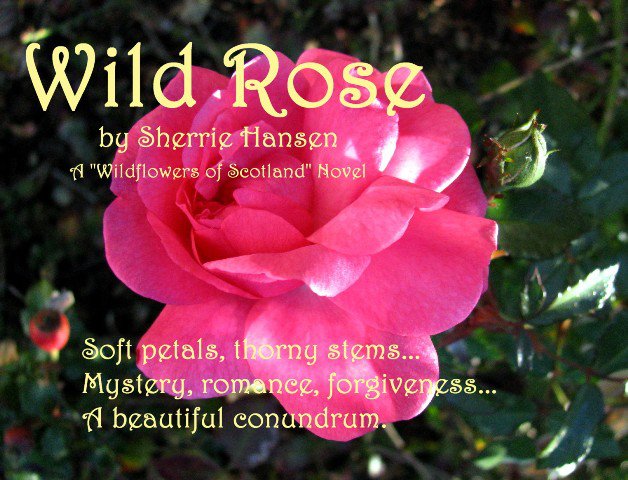
Sherrie Hansen writes romance. Her novels, Shy Violet (coming soon), Blue Belle, Wild Rose, Thistle Down, Love Notes, Night & Day, Stormy Weather, Water Lily & Merry Go Round are available from SecondWindPublishing.com.

And So It Begins . . .

The real estate agent was here today, taking photos of the house and putting a lock box on the door. She was kind to me, understanding that it’s different for me than for my siblings. For them, selling the house is just a task to be completed or ignored. For me, it’s . . . well, it’s the first step into a whole new anchorless life.

Having anchors isn’t always good because anchors keep us trapped. But anchors also keep us grounded, connected. And I will no longer have an anchor. First Jeff (my life mate/soul mate) died, then my father (not that I was deeply connected to my father, but I did come to look after him after Jeff died, which gave my life an anchor), and now his house is being sold. All I have left will be a storage unit full of stuff. (And friends. I do have a lot of those, both online and offline.)

It feShipels at times as if I’ve stepped off a curb into empty space, and I’m sure that feeling will be even stronger in the days to come.

No one, including me, thinks the house will be on the market long. It’s too nice, too almost-new with a fantastic view. And it’s in a wonderful, quiet, safe neighborhood. The thought of a quick sale is good because I won’t be inconvenienced for very long by visiting realtors and buyers. (Should be interesting. They want me out of the house when lookers come. “Just take a short walk,” they said.) But then, after the house is sold . . . (here again are those ubiquitous ellipses signifying nothing!)

Yesterday I felt as if I were being punished for coming here to look after my father. Today I’ve gained a bit of equilibrium, though the tears I couldn’t stop shedding yesterday are still close to the surface.

Ah, those pesky tears! They make me feel like such a baby, but I’ve come to understand that most often my tears aren’t a result of self-pity. They are more of a reaction to the incomprehensible. And unfortunately, I keep running into emotionally unfathomable and intellectually inconceivable situations. In other words — life.

Not only am I losing my anchor, I’m feeling rudderless. (Weird that I’m using all these nautical clichés — me, who’s never been on a boat in my life except for a ferry once eons ago, and an amphibious vehicle a few years back). I’ve mostly finished my packing. Except for furniture and what I need for daily living, the house is empty.

I’m living out of tubs. In this case, “tub” is not some sort of nautical term, but is literal. I have small tubs for my personal items so that I can quickly scoop them off the bathroom countertop and stash them out of sight. Same with my dishes and computer accessories.

And so it begins, another transitional stage in my life.

***

Pat Bertram is the author of the suspense novels Light Bringer, More Deaths Than One, A Spark of Heavenly Fireand Daughter Am I. Bertram is also the author of Grief: The Great Yearning, “an exquisite book, wrenching to read, and at the same time full of profound truths.” Connect with Pat on Google+. Like Pat on Facebook.

Now Interviewing Authors

I was talking to someone who writes childrens’ books. He has a publisher, but is on his own to find an artist. He said he hates working with artists, that they make him want to pull out his hair. I understand because I feel the same way about writers. (Except for you, of course!)

I have a couple ofearf blogs where I promote other authors because . . . To be honest, I forget why. Maybe because I thought by helping other authors, the karmic energy would help catapult my books out of obscurity, but it didn’t work that way. And now doing the author interviews has become a bad habit.

I’ve been posting a lot of such interviews lately, and oh, my. I have come to believe that authors don’t know how to read. Or maybe they have such an overweening sense of entitlement because of their “talent,” they think the directions don’t apply to them. Whatever the reason, too many of them don’t follow directions, give only half the required information (such as book title), leave off the questions and post answers that make no sense without the questions, and the most heinous sin of all — write boring responses.

I’d mostly been taking a break from this self-imposed task, so I thought I’d be able to handle the idiocies of it once again, but apparently not. Of course, it could be I’ve just gotten too crotchety to take lightly the idiocies of the world.

I like being nice, but not when being nice makes me feel . . . not nice.

Still, I do have the blogs, and I do have the time, so if you wish me to interview you, and if I haven’t scared you off, click here to find the directions for my Author Questionnaire.
Click here to find the directions for my Character Questionnaire.
Click here to Let me post your excerpt!
And please, please click here learn How To Do an Online Interview

I promise I won’t be crotchety. At least not much.

***

Pat Bertram is the author of the suspense novels Light Bringer, More Deaths Than One, A Spark of Heavenly Fireand Daughter Am I. Bertram is also the author of Grief: The Great Yearning, “an exquisite book, wrenching to read, and at the same time full of profound truths.” Connect with Pat on Google+. Like Pat on Facebook.

A Kind of Screwtape Letter

One thing I love about the internet is that you meet people you’d probably never meet in real life. Either they are mired in a different profession, live halfway around the world, or are of a poles-apart generation.

Just like real life, online folk can break your heart or make your day. Rob M. Miller is one who has been very kind to me. He recently said (wrote):

There are lots of facets to you, no doubt, but of equal certainty, one of them bears the hallmark of a warrior. I like that — a lot. You’re the best.

Oh, I so needed to hear those words, especially from someone I admire, like Rob.

Rob is knowledgeable, witty, and generous to other writers. His infrequent comments to members of Suspense/Thriller group on Facebook are memorable and worth repeating. In fact, I’ve posted a couple of those comments here on this blog to make sure they didn’t get lost in the great maw of Facebook. (Is Talent More Important Than Passion andPersistence? and How many subplots in a novel areacceptable?)

When I posted a new rule to the group a few days ago telling the members they were not allowed to discourage other writers, Rob was the lone dissenter. Not that he thought it a bad rule, more that it was too specific, making new rules for other offenses probable and ultimately chaotic in the same way the tax code has become incomprehensible and unwieldy. To that end, he posted a kind of Screwtape Letter to break the rule without breaking the heart of it. (The Screwtape Letters is a satirical and spiritual novel written by C. S. Lewis.) Rob’s letter was just as satirical. And written off the cuff in a few minutes. Oh, my. To be so talented!

Besides wanting to break my rule, Rob wished to show (as he said) the use of figures of speech, and, in this case, the use of an extended figure(s). Personification, of course, was used by having an epistolary piece written by the Devil, but the overall figure was that of tapeinosis, which means to say something in the negative to infer a positive. More modern examples of this figure is when one might hear a person say something akin to: “That movie looks bad … can’t wait to see it,” or calling something “the bomb,” or describing something as “sic,” meaning it’s “cool.”

In other words, by writing a letter to discourage authors, Rob actually encouraged us. Even I have the urge to write!

Thank you, Rob, for letting me post your wonderful and witty piece.

A Kind of Screwtape Letter by Rob M. Miller

Haven’t written in awhile?

Didn’t know “a while” should be two words?

Then maybe you should quit.

After all, writers write. Everyone knows that!

Don’t like the process? Are you like that primadonna:

“I hate writing … but love having written.”

Then maybe you should quit.

Have poor english, but great story …

… spot-on English, but a lousy tale?

Do quit, quitquitquit.

Why face all those ugly hurdles:
• the impossible-to-write query that works
• the agent you’ll never land
• the house for which you will NOT get signed

Quit, quit, quit.

You’ve bills to pay, are already retired (and surely way, waaay too old), are caring for an ailing loved one, and gawd! there’s those kids to raise, have been told you’ve no talent—and they were right!—are better at doing this, or that, or the other thing, but not really writing.

Not at all.

And you already know that.

The many rejection letters have proven it.

Just quit.

The challenges never end: all that marketing, Facebooking, blogging, websiting, plugging, blurbing, and what-the-hell’s a tweet?

Just stop.

And do remember, even if you’re successful, even if you were to write the Great American Novel, like with Harper Lee, I’ll make sure your troubles never end, with exploitation, impossible schedules, horrible critics, IRS hassles, and crazed number-one-fans just waiting to hobble your ankles.

I’ve no stomach for writers. They’re human, yes. Some are ugly, some are fat, some have this disorder or that, some are indefatigably optimistic, while others are suicidal, there’s writers with talent, many with only a smidge, some want to publish, some do not care, but all are drawn to the page, compulsively or intermittently, but drawn all the same. They are dragon fighters, archers, brave men and women (even when they do not know it), courageously putting down what others are unable or unwilling to put down.

I hate them.

Do me a solid then and quit.

I might even give you a break now and then—just to show my thanks.

With both fiction and non, writers illuminate on the human condition, and I most certainly do not want that.

All my best,

Most affectionately from your left shoulder,

Scratch

***

SideshowAbout Rob M. Miller: With a love for reading and writing that started in his youth, Rob has traveled far to get to the place where he can now concentrate on breaking into the horror market.

Born and raised in the “micro-hood” of Portland, Oregon, he grew up as the oldest of three children, the son of a book-lover and a book-hater.

It was after two years of free-lance stringer work, and a number of publishing credits, that he tired of non-fiction and decided to use his love of the dark, personal terrors, and talent with words to do something more beneficial for his fellow man -– SCARE THE HELL OUT OF HIM.

Rob edited and contributed to Sideshow, a horror anthology.

Kindness and Generosity Trump Free Speech

People who don’t like the way I run my writers’ group on Facebook often cite “free speech” as a reason for leaving.

I suppose they have a point. The group has a very narrow niche — discussions about the craft of writing and the sharing of tips and techniques. Nothing else. All the crap that destroys the value of other writing groups, such as promotion and discourtesy, is simply not allowed. The offending posts are deleted, and often the violators are banned. Making matters worse (from my detractors’ point of view), I don’t keep many posts permanently. Too often, the discussions are repetitions of those that have already gone sheriffbefore, and how many times can you pay attention to the same people claiming the same bad writing techniques are acceptable? Once is too many, in my opinion. Still, I don’t police the comments for good information. (In fact, I seldom police comments, though sometimes someone will contact me to point out a nasty remark, and sometimes I stumble upon an inappropriate remark, such as one member trying to discourage another from writing.)

But it does make me wonder at times if I have the right to delete disrespectful comments and posts that have overstayed their welcome. Maybe it’s just me who finds them repetitive and offensive. But . . . (There’s always a but in my posts, isn’t there?)

Offline conversations have an expiration date. They only hang around as long as one person remembers what was said, and sometimes the conversations are so unmemorable no one remembers them an hour or two later. We don’t walk around like cartoon characters with permanent dialogue bubbles over our heads, making our words available for everyone to see ad nauseam. (Literally, to the point of nausea. Who could deal with all that vomitus?)

That’s all I try to do — keep the discussions fresh.

I’m not really a fan of free speech anyway, at least not the way most people use the term. The USA First Amendment gives us and the press the right to express our opinions without government interference, which is important. According to Cornell Law School, however, the Supreme Court recognizes that the government may prohibit some speech that may cause a breach of the peace or cause violence. Also, the level of protection any speech receives depends on the forum in which it takes place.

So basically, freedom of speech is whatever the Supreme Court says it is. Pornography. Bullying. The right to fling insults. That’s what they protect at all costs. But say something against the government or mention God in certain venues, and wham. The gates of free speech close.

Despite what people seem to think, there is nothing in the constitution about all of us being able to say whatever we want whenever we want. The only concern here for me is that free speech in no way pertains to insignificant venues such as my group. We’re on our own. And in my world, kindness and generosity trump free speech anytime.

If you are concerned about comments you left here on this blog, don’t worry. Only spam is deleted. I’ve kept even the insulting comments, though my first impulse was to delete them. But here, I only have my own sensibilities to worry about. When it comes to a group, especially a long-standing online writers group, it’s more important to create a safe environment where incipient writers as well as professionals feel free to talk about their writing woes.

Oh, heck. Maybe that’s all rhetoric and I’m just a petty despot exerting whatever power I can.

***

Pat Bertram is the author of the suspense novels Light Bringer, More Deaths Than One, A Spark of Heavenly Fireand Daughter Am I. Bertram is also the author of Grief: The Great Yearning, “an exquisite book, wrenching to read, and at the same time full of profound truths.” Connect with Pat on Google+. Like Pat on Facebook.

Curiosity, the Passive Cousin of Passion

I hear a lot of talk about passion. Characters, of course, are supposed to be passionate. Apparently, passion is what makes a character compelling and memorable. Who can forget Scarlett O’Hara, with her overweening and narcissistic passion? Like her or hate her, people find it hard to look away. Her passions make her the center of attention for everyone, including herself. Well, everyone except for me. Her passion exhausts me.

We living characters are exhorted to be passionate also, to embrace life and follow our passions, which sounds like good advice for those with high levels of energy. I am too phlegmatic to be truly passionate, though I have my moments, particularly when unfairness comes into play. I despise unfairness. Yeah, I know — life is unfair, but why should it be? Is that a natural law of the universe? Thou shalt be unfair? But I digress. As you can tell by the title of this post, the topic is not unfairness or even passion, but curiosity.

Curiosity is every bit as important a motivator as passion when it comes to life and reading. I am not one for romance novels. The passion is not to my taste, and there isn’t much curiosity involved. You know the characters will get together if the story is a category romance. And you know they won’t get together if the story is not a category romance. Did Lara and Dr. Zhivago get together? Did Cathy and Heathcliff? Did Scarlett and Rhett? (As an aside, you and I would never use such spellings of names. Double tees for both major characters? How coincidental — and cutesy — can you get?)

I’ve always been motivated by curiosity, the passive cousin of passion. When it comes to reading, I want to know who did it, how they did it, why they did it. Curiosity has often kept me reading far into the night.

Desert pathsIt’s the same with life. During the long years of grief for my life mate/soul mate, it was curiosity that kept me going. (I describe him as my soul mate for lack of a better term. Despite the passion such a term might seem to invoke, we were not passionate people, not romantic, not even especially happy, but we were connected — for good and bad — on what seemed to be a cosmic level. Of course, for all I know, it could have been a folie à deux.)

I once wrote: I called for you when I was out walking in the desert today, but you didn’t answer. Well, of course you didn’t answer — you’re dead.

I kept walking, following the winding road wherever it took me. No view on the road was different from another. The road didn’t lead to any particular place. The point was just to go. To see. And so it is with my life right now. I have no real reason to do anything. There is no meaning in my life, no reason to live except for curiosity.

Since his death, I’ve often wondered what will happen to me. Where would life take me? Who would I turn out to be now that I am . . . just me? That same curiosity will continue to keep me going into whatever future there may be.

When I researched long-term walking, I came across mention of a woman who called herself the Peace Pilgrim. In her forties, the Peace Pilgrim responded to a spiritual awakening by getting rid of everything she owned, and setting out on foot to promote peace. She traveled for tens of thousands of miles with only the clothes on her back and a pen, toothbrush, comb, and map in her pockets.

I envy the belief, focus, and agenda that allowed her to travel so lightly. I’m not sure I am capable of the sort of belief it takes to travel with nothing but the clothes on my back. Don’t have an agenda, either, but as a friend told me, “I don’t think you need belief or agenda…seems to me you just need curiosity!”

Yep. Curiosity. Not passion, just curiosity. The need to see what is around the next bend. If I’m lucky and willing to take risks, the power of curiosity could lead me into a lot of adventure!

***

Pat Bertram is the author of the suspense novels Light Bringer, More Deaths Than One, A Spark of Heavenly Fireand Daughter Am I. Bertram is also the author of Grief: The Great Yearning, “an exquisite book, wrenching to read, and at the same time full of profound truths.” Connect with Pat on Google+. Like Pat on Facebook.