I Don’t Believe in Women’s Issues

I made a comment to a friend today about a writer with an over-inflated sense of his talents, and the friend responded, “Did you know he’s a champion of women’s issues?” That made me stop to think. I came to three conclusions: first, women’s issues don’t have much if anything to do with good writing; second, I don’t know what women’s issues are, and third, whatever they are, I don’t believe in them because they are, by definition, gender specific. I don’t even know what plain non-gender-specific “issues” are, so I’ve spent the last hours researching issues and women’s issues, starting with “issue.” “Issue” tugofwarmeans 1) an important topic or problem for debate or discussion and 2) personal problems or difficulties.

Whatever my personal problems or difficulties, I don’t consider them “women’s” issues. They are my issues, and I don’t primarily define myself by gender. Frankly, I don’t define myself at all. For a while, after the death of my life mate/soul mate, I defined myself by his absence since his goneness was so much a part of my very being, but now that the void isn’t as apparent, I’m just me again — a work in progress, a being in flux.

As for women’s issues — the right to bodily integrity and autonomy, to vote, to hold public office, to work, to fair wages or equal pay, to own property to education, to serve in the military or be conscripted, to enter into legal contracts, to have marital or parental rights, and whatever else is on the agenda — they seem more a matter of politics, and I am not a political creature. To be honest, I don’t believe in conscription for anyone, and I’d just as soon we all got along so we could get along without any sort of military. I don’t believe in contracts, either. Since contracts can be broken, entered into with bad faith, ignored, they are only as good as the lawyer you hire, and . . . well, I don’t believe in lawyers, either. (Do you see a pattern here?)

The issues I believe in are the non-gender issues of fairness, freedom, truth, love, kindness, respect, purpose, generosity of spirit. Any so-called women’s issue falls into one of these areas of belief. Equal pay is a matter of fairness. No rape is a matter of freedom, respect, and kindness. Pregnancy/abortion is a matter of freedom, sometimes love, often purpose or fairness. Equal responsibilities for both partners in a domestic situation is a matter of fairness, love, kindness, respect.

Men’s issues are also incorporated into the issues I believe in, especially fairness. Yes, men have “issues.” Although most of the high paying jobs are held by men (at least that’s what is said) some men have a hard time getting any sort of work at all. Sometimes men get passed over because of women’s issue politics — if experience and expertise are equal, the job often goes to a woman for no other reason than she’s a woman. Men are discriminated on the basis of height. Tall men (and women) have the advantage when it comes to high paying jobs because height connotes power. We want leaders we can look up to, not down on. Although height is something we have no control over, short people, especially men, are sometimes seen as weaker unless they have something else going for them — money, aggressiveness, a resounding voice. Men also have more problems with homelessness, violence, workplace deaths than women do, and almost as many problems with domestic abuse and depression.

In a perfect world, everyone’s “issues” would be addressed. And this could be a perfect world. We all — men and women alike — have the capacity for fairness, freedom, truth, love, kindness, respect, purpose, generosity of spirit.

Maybe I should start with myself and refrain from making ungenerous comments about other writers’ abilities.

***

Pat Bertram is the author of the suspense novels Light Bringer, More Deaths Than One, A Spark of Heavenly Fire, and Daughter Am I. Bertram is also the author of Grief: The Great Yearning, “an exquisite book, wrenching to read, and at the same time full of profound truths.” Follow Pat on Google+. Like Pat on Facebook.

Patterns of Grief

I’d like to clarify what yesterday’s post, Challenges of the Fourth Year of Grief, was all about. I did not mean to imply that everyone’s grief is the same, that we all face the same challenges, and I especially did not mean to imply that these “challenges” are stages people are going through or will go through. I am not a therapist or a grief counselor, so of course I don’t know how a wide range of grievers feel. Nor am I dispensing advice. I do have many friends who are pretty much on the same grief track that I am, however, and all I did was express publicly the things we are talking about privately.

I certainly am not trying to undermine the grief community’s efforts to get rid of the whole “Stages of Grief” mindset. I have railed against the stages of grief from the beginning. Kubler-Ross’s supposed stages of grief do not in any way reflect what my friends and I have gone through and continue to go through, which is why I started writing about grief in the first place — to provide a more realistic view of grief, even if it is just a recounting of my own grief experiences.

Even though everyone’s grief is different, there are still patterns of similarity.

For example, most of us (most of my friends, that is, not most grievers) are being swept by an inordinate need for adventure. This need seems to be a reflection of our birth age as well as our grief age (by grief age I mean how long it’s been since our mates have died). Younger woman still have families to care for, and in older women the need for adventure seems muted (though several have admitted to being more adventuresome then when they were married). Maybe it’s the long, empty, years that stretch before me and my friends that make adventure a necessity. Maybe it’s that grief is so epic that only an epic adventure can make us come alive. I truly don’t know where this need for adventure comes from, but the truth is, most of the women I know who are on the same grief track as I am, desperately crave adventure. Again, I don’t mean to imply that all grievers go through this, but it is a pattern, and more than anything else, I am drawn to patterns.

Which is all I was doing by describing some of the little known challenges of grief — showing a pattern.

And one of the patterns I found is that during the fourth year, most of the people I know did make the big disconnect from their mates, realizing in the depth of their being that we are each on our own path, and that whatever we do or do not do cannot affect the deceased. We only have to deal with ourselves. This understanding is why so many women wake up on the fourth anniversary to find a renewed interest in life. Maybe find they are happy. Maybe find they are in love with life again. For some people, of course, this understanding comes much later, occasionally earlier, and sometimes not at all.

The truth is, no matter what the pattern of grief, your own or someone else’s, grief is hard work. Sometimes it’s nice to know how others feel. It’s especially nice to know that we aren’t alone in how we feel.

***

Pat Bertram is the author of the suspense novels Light Bringer, More Deaths Than One, A Spark of Heavenly Fire, and Daughter Am I. Bertram is also the author of Grief: The Great Yearning, “an exquisite book, wrenching to read, and at the same time full of profound truths.” Follow Pat on Google+. Like Pat on Facebook.

More “More Deaths Than One”

I seem to be fascinated by characters who die “more deaths than one.” In my novel of that name (taken from Oscar Wilde’s “The Ballad of Reading Gaol” — he who lives more lives than one / more deaths than one must die), poor Bob Stark returns home after living in Southeast Asia for eighteen years to discover that the mother he buried before he left is dead again.

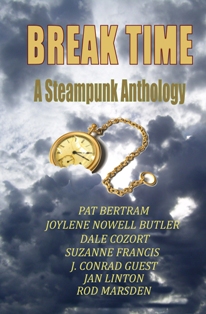
The steampunk anthology I am helping put together begins with my story about Florence Giston, Flo for short. (I couldn’t resist that name. Flo Giston. Phlogiston. Seemed appropriate.) The opening paragraphs of that story read:

The first time her husband died, Florence Giston felt such feral grief, she feared she’d never survive. She’d always tried to look on the bright side of things, but she could find no bright side to this situation. Her husband was dead, and she felt as if she had died, too.

“You can’t let it get you down,” said Alexander Giston, her father-in-law. “Just because Robert and Mary died, it doesn’t mean they are gone forever.”

The second time Robert died, Florence’s already broken heart shattered beyond repair. Robert had been her whole life, and to lose him twice seemed unbearably cruel. She vowed never to go through such trauma again, yet when Al announced he intended to try to save his wife and his son again, Flo begged to go with him.

“I need to see Robert once more,” she said. “Need” seemed a paltry word to describe the yearning that clawed at her, but Al must have understood her desperation, because he agreed to let her accompany him on his second trip to their shared past.

Time travel brings with it delicious ironies. In this case, Flo’s view of Robert — and herself — isn’t exactly what she expected.

A young woman stepped outside. “What’s going on?” she asked, her voice soft and tremulous.

Flo stared at herself, at the brown lace stockings, the brown gored skirt, the brown jacket, the brown plumed hat. What was I thinking? She vowed to throw out all the brown clothes she owned, including the brown shirtwaist she now wore.

“This is dad from the future,” Mary said. “He’s come to save us from certain death.” Catching the irony in her mother-in-law’s voice, Flo wondered if she’d underestimated the woman. Mary had always seemed so drab despite the bright colors she chose to wear. Was nothing as she remembered?

“Good of him,” Robert said. There was no irony in his voice, no affection. “We can take the aeroship.”

“Well, no.” Al scuffled his feet. “I already saved you once. I came back and made you take the aeroship, and it crashed. They never found your bodies.”

Flo stifled an urge to laugh, but Robert didn’t even crack a smile. “I’ll drive the Steamer,” he said.

“Couldn’t you just stay home?” Al asked, a note of pleading in his voice.

Mary shook her head. “It’s my father’s funeral. I have to be there.”

“We’ll be fine,” Robert said. “The Stratosphere Steamer is the safest automobile on the road.”

Also the fastest, Flo thought, but she kept her mouth shut. So far, the Gistons hadn’t noticed her, and perhaps it was just as well. Robert had never seemed to be able to handle one of her; two might overtax his feeble imagination.

Appalled at the direction of her thoughts, Flo slipped back into the lab. She’d loved Robert dearly, had mourned him twice, so what prompted her to be so dismissive of him now? Remembering how besotted she’d been, she wondered if love hadn’t been the blessing she’d always presumed it to be, but had instead been a prison, keeping her emotionally shackled to a man for whom she had little respect.

This anthology is scheduled to be published in May. I’m looking forward to seeing it finally in print.

breaktime-3bsmall

***

Pat Bertram is the author of the suspense novels Light Bringer, More Deaths Than One, A Spark of Heavenly Fire, and Daughter Am I. Bertram is also the author of Grief: The Great Yearning, “an exquisite book, wrenching to read, and at the same time full of profound truths.” Follow Pat on Google+. Like Pat on Facebook.
Steampunk Anthology Coming Soon!

Two years ago, a couple of authors approached me about doing a collaborative novel similar to the Rubicon Ranch collaboration I’d been writing with other Second Wind authors. We invited a few other authors to do this new collaboration. Two of the authors suggested we do steampunk.I’d never heard of steampunk. Couldn’t even guess what it was. To be honest, I’m not sure I know even now what it is. Still, we all agreed. Such a collaboration is about stretching ourselves as authors, and how better to stretch than by doing something we’ve never done before.

The two authors who talked us into doing steampunk ended up walking away, leaving us with a story no one knew how to write. The rest of us decided to stick with the project anyway. Why not? We’re writers. We can fake it. We also got the internet with all its research capabilities to help us.

Wikipedia defines steampuSteamnk as “a sub-genre of science fiction, fantasy, alternate history, horror, and speculative fiction that came into prominence during the 1980s and early 1990s. Steampunk involves a setting where steam power is widely used — whether in an alternate history such as Victorian era Britain or “Wild West”-era United States, or in a post-apocalyptic time — that incorporates elements of either science fiction or fantasy.”

In “How Do I Write A Steampunk Story?” Dru Pagliassotti says, “Steampunk fiction consists of two elements — the steam, or gaslamp aesthetic, iconography specific to the genre — and the punk, a critical ideology or political stance that satirizes, challenges, or subverts societal trends.”

Most of us writers were in a strange non-writing mode, so it was hard finding the time or the words. Although a chapter was supposed to be written each week, with each of us taking a turn, life often got in the way, and those weeks turned into months. Instead, the others decided we should finish the book not as a collaborative novel but as an anthology.

The anthology is almost finished now, and it’s actually quite an interesting collection of stories, all written around a single theme of time travel and “killing steam.” (The time traveler’s wife and son were killed in a steam engine accident, and since he couldn’t bring them back, he decided steam was to blame and so traveled back in time to try to divert the progress of the steam engine.)

I feel good about finally winding up this project. I have no real desire for longterm projects right now. My life is up in the air, and I don’t know from day to day what is going to happen. (Well, that’s true of everyone, of course, but generally people feel at least a bit settled.)

The anthology will be published both as a book and as a blog. I’ll let you know when it’s finally available.

***

Pat Bertram is the author of the suspense novels Light Bringer, More Deaths Than One, A Spark of Heavenly Fire, and Daughter Am I. Bertram is also the author of Grief: The Great Yearning, “an exquisite book, wrenching to read, and at the same time full of profound truths.” Follow Pat on Google+. Like Pat on Facebook.

Requiem for a Website

In October of 2007, I entered a contest on gather.com — the Court TV Search for the Next Great Crime Writer contest. The winner of the contest would win a $5,000 advance and a publishing contract. My entry, More Deaths Than One, was not a detective story, and it certainly was not a cozy mystery, but it is the story of a crime: identity theft. This theft is an actual theft of a man’s identity, not a paper one.

I did very well in that contest, too. As of November 17, 2007, I was ranked number one, but I finished up about sixth or seventh. (I could tell you it was because my mother died and I had to go to California for her funeral and I broke my ankle while there and was off the internet for a week, but the truth is . . . come to think of it, I don’t know what the truth is.)

The contest started out being great fun but devolved into all sorts of infighting, faked votes, and terrible reviews that RIPwere posted for no other reason than meanness. Still, it turned out to be a pivotal point in my writing career.

I became friends with many of the contestants, and casual acquaintances with others. I met other writers that I am still connected with today.  Because of the contest, I eventually found a publisher. The link to the publisher’s website was posted as a comment on one of the writer’s articles, and since I was in querying mode, I immediately shot off a query letter. The publisher loved my book A Spark of Heavenly Fire, and sent me a contract. Turns out, I already knew him through the contest, and he asked if More Deaths Than One was still available. It was. Second Wind Publishing has now published five of my books — four novels and one non-fiction book, Grief: The Great Yearning.

Until the crime writer contest, my online presence had been confined to my blog, but after the contest I posted articles on gather, and I also migrated to other sites, such as Facebook, Goodreads, and Twitter. I mostly hang around Facebook now because of my discussion groups there, but I always return to Gather, especially on Thursday evening when I used to do a live chat with my No Whine, Just Champagne discussion group. I started out knowing only a few people online, now I know hundreds.

And all because of a contest.

Now, Gather is in its death throes. Because of the spam that clogged the site, Google stopped referencing its content in searches. The site has been sold a couple of times, and neither of the new owners seemed to have any interest in revitalizing this once active online writers community.

Most of my Gather posts have been posted elsewhere, usually here on this blog, but a lot of the discussion topics were too brief for a blog post, so I’ve been mining the site so my content doesn’t get lost. Considering that there were almost two hundred live chats alone in my discussion group, that’s a lot of content! I hope I get time to go through the discussions and look for pithy comments I might have made, but if I don’t, well, no problem. Maybe my comments should pass into oblivion along with the site. And who knows, maybe someday the site will be resuscitated.

Until then, rest in peace, Gather.

***

Pat Bertram is the author of the suspense novels Light Bringer, More Deaths Than One, A Spark of Heavenly Fire, and Daughter Am I. Bertram is also the author of Grief: The Great Yearning, “an exquisite book, wrenching to read, and at the same time full of profound truths.” Follow Pat on Google+. Like Pat on Facebook.
Amtrak’s New Onboard Writer’s Residency Program

In response to comments on twitter, Amtrak says they are planning to set up an onboard residency for writers. Select writers will get a free trip to give them time to write, and the only requirement as of right now is for the writers to send in a few tweets during the trip.

As soon as I heard of this plan, I tried to sign up, but there is no place to sign up yet, nowhere to submit a request. So far, only a couple of writers have been given a free ride to “test drive” the program, but so many people have professed an interest in a residency that they are currently formulating an outline to expand the program. The main traindrawback for Amtrak, of course, is that while the residency might be free to authors, the rail company will still have expenses, and they will need to recoup those expenses somehow. A drawback that they might not have considered is the sheer numbers of writers in this country. Millions of them. (I mean, millions of us. I tend to forget that I am a writer.) And who wouldn’t want a free train ride to wherever you wanted to go, as well as all that uninterrupted time to write? If they opened the residency to submissions, rather than just pick candidates on twitter (as they did with the first couple of writers), they would have to sift through hundreds of thousands of submissions, especially if they open the program to all writers: published, unpublished, self-published, journalists, bloggers. They would have to decide what would constitute a writer, and what that writer could do for their business. Although they are saying there would be no quid pro quo, they also admit they would be looking for writers with a strong social media presence.

I have a hunch such a program would end up being a lottery, where only a few lucky people would even be considered, either because they caught Amtrak’s attention or because theirs was the first possible request to be considered. Some writers are hoping Amtrak will consider an entire car dedicated to writers. I have a hunch that is a bit optimistic, but who knows — writers conferences are big money. Why not do a conference aboard a train?

I guess it’s just as well there is no place to sign up yet. The train comes through here at 3:00 in the morning, and although I’ve made many friends, no one is such a good friend that they would volunteer to get up so early to drive me to the tracks. And I do mean tracks. There is no train station here. I’d have to stand by the tracks in the dark and hope they stop to let me board.

Still, it would all be part of the adventure. So, Amtrak, if you are reading this, my hands are in the air, and I am waving them wildly, begging, “Choose me, please! I promise to blog about my trip.”

***

Pat Bertram is the author of the suspense novels Light Bringer, More Deaths Than One, A Spark of Heavenly Fire, and Daughter Am I. Bertram is also the author of Grief: The Great Yearning, “an exquisite book, wrenching to read, and at the same time full of profound truths.” Follow Pat on Google+. Like Pat on Facebook.
In Every True Woman’s Heart

I used to be a guest on various internet radio shows, but I got burned out on the whole idea, so I haven’t been accepting any invitations. When the shows were less than an hour and focused mostly on me, they were fun, but so many of the shows featured several guests and a couple of hosts, so it was hard to know who was supposed to be talking. Also, shows with many guests to be very long, and I am not fond of talking on a phone for any length of time.

Still, when Shannon Fisher invited me to be the first guest on a new show she will be hosting, I immediately agreed. I’ve never met Shannon in person, but we are good friends. We’ve often talked about life and death via Facebook and this blog, and I admire her greatly. She’s on the board of directors of UniteWomen.org, director of Unite Against Rape, and active in various other organizations. And now she’s accepted a position as host of a show on Authors on The Air.

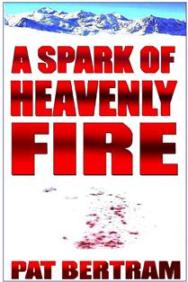
A Spark of Heavenly FireNot only was I invited to be Shannon’s first guest, but A Spark of Heavenly Fire was chosen to be the first book featured on her new show: “The Authentic Woman – with Host Shannon Fisher – Perspectives on the Female Experience.”

Washington Irving wrote: “There is in every true woman’s heart a spark of heavenly fire, which lies dormant in the broad daylight of prosperity; but which kindles up, and beams and blazes in the dark hour of adversity.” As I read these words a decade ago, I could see her, a drab woman, defeated by life, dragging herself through her days in the normal world, but in an abnormal world of strife and danger, she would come alive and inspire others. And so Kate Cummings, the hero of my novel A Spark of Heavenly Fire was born. But born into what world?

I didn’t want to write a book about war, which is a common setting for such a character-driven story, so I created the red death, an unstoppable, bio-engineered disease that ravages Colorado. Martial law is declared, rationing is put into effect, and the entire state is quarantined. During this time when so many are dying, Kate comes alive and gradually pulls others into her sphere of kindness and generosity. First enters Dee Allenby, another woman defeated by normal life, then enter the homeless — the group hardest hit by the militated restrictions. Finally, enters Greg Pullman, a movie-star-handsome reporter who is determined to find out who created the red death and why they did it.

Kate and her friends build a new world, a new normal, while others, such as Pippi O’Brien, Greg’s fiancée, think of only of their own survival, and they are determined to leave the state even if it kills them.

The world of the red death brings out the worst in some characters while bringing out the best in others. Most of all, the prism of death and survival reflects what each values most. Kate values love. Dee values purpose. Greg values truth. Pippi, who values nothing, learns to value herself.

The women drive the book, their sparks of heavenly fire lighting up the bleak world of quarantined Colorado, showing us love in all its guises: caregiving, motherly love, friendship. romantic love, love of life.

It’s fitting that that this book is being highlighted because Shannon herself is a true woman who embodies the spark of heavenly fire the world so desperately needs.

So look for me online on March 2, 2014 at 8:00pm ET at “The Authentic Woman – with Host Shannon Fisher – Perspectives on the Female Experience.”  I’m sure Shannon and I will have much to talk about!

***

Pat Bertram is the author of the suspense novels Light Bringer, More Deaths Than One, A Spark of Heavenly Fire, and Daughter Am I. Bertram is also the author of Grief: The Great Yearning, “an exquisite book, wrenching to read, and at the same time full of profound truths.” Follow Pat on Google+. Like Pat on Facebook.

One More Post About Philip Seymour Hoffman (Or Rather, Philip Hoffman)

I hadn’t intended to write about Philip Hoffman — there have been more than enough blog posts written about him — but I’ve been thinking of the first time I saw him in a movie, so here is one more post about the deceased actor.

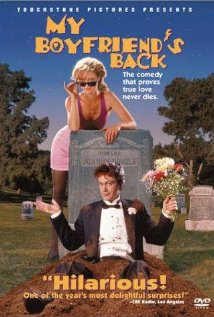
One of my favorite movies is the 1993 film My Boyfriend’s Back. The first time I ever saw Philip Seymour Hoffman was in that black comedy, though back then, he only called himself Philip Hoffman. Of course, that was long before he got his reputation for being such a great actor, so perhaps two names were all he needed. Still, his small role made MyBoyfriendsBack_a big impression on me. Made a big impression on his head, too. In the film, the hero, Andrew Lowry, comes back from the dead because the prettiest girl in school had agreed to go to the prom with him. (He’d saved her life, so what else could she do? Besides, he was dying . . .)

There is considerable prejudice in the high school against “dead kids,” and Philip Hoffman tried to kill Lowry — Chuck, Philip’s character, wasn’t exactly the brightest kid in school, so it never occurred to him he couldn’t kill someone who was already dead. Still, he took the axe from the emergency box on the wall (um . . . please tell me no one actually puts axes in schools anymore!). He swung the axe back to get momentum for a good swing, and because he was holding the axe backwards, he axed himself in the head. It doesn’t sound funny as I write this, but then, so often that is the nature of black comedy — the humor is in the moment.

The writer, Dean Lorey, penned some great lines.

For example, Dr. Bronson, who examines Chuck tells Big Chuck, Hoffman’s father, “I’m afraid I have some bad news. Your boy is very sick. He’s lost a massive amount of blood, and his pulse and retinal response are poor, and as you can see there’s an axe sticking out of his head.

Big Chuck: He’s not sick, you idiot, he’s dead!

Dr. Bronson: Oh, everybody’s a doctor. You think maybe I could make the diagnosis?”

Missy (the prettiest girl in school) tries to renege on her promise to go to the prom with the dead kid, and Lowry responds. “You may not know this, Missy, but I ate Chuck for YOU!” Missy’s friend tells her how lucky she is: “God, my boyfriend won’t even pump gas for me.”

I’m not sure why I’m telling you this, except that all the talk about Philip Seymour Hoffman reminded me of this movie, and it makes me smile. As great an actor as Hoffman is purported to be, he still had to start somewhere, and his “somewhere” was in a little known, badly acclaimed, poor money maker that is one of filmdom’s hidden gems.

It reminds me that no matter how serious we are about our writing, there is always room for a bit of humor, even black humor. It’s what makes our writing — and characters — memorable.

(An odd little mystery — Traci Lind, who played Missy, seems to have disappeared, at least disappeared from movies and the internet. Wherever she is, I hope she is happy. I always enjoyed seeing her.)

***

Pat Bertram is the author of the suspense novels Light Bringer, More Deaths Than One, A Spark of Heavenly Fire, and Daughter Am I. Bertram is also the author of Grief: The Great Yearning, “an exquisite book, wrenching to read, and at the same time full of profound truths.” Follow Pat on Google+. Like Pat on Facebook.

Another Blessing For You

Concerned about my struggles with my rage-ful brother, yesterday a friend sent me a blessing by John O’Donohue, an Irish poet, author, priest, and philosopher.  Today she sent another one that really speaks to my longing for freedom. May you, too, find harmony between your soul and your life.

Blessing by John O’Donohue

May you listen to your longing to be free.
May the frames of your belonging be generous enough for your dreams.
May you arise each day with a voice of blessing whispering in your heart.
May you find harmony between your soul and your life.
May the sanctuary of your soul never become haunted.
May you know the eternal longing that lives at the heart of time.
May there be kindness in your gaze when you look within.
May you never place walls between the light and yourself.
May you allow the wild beauty of the invisible world to gather you, mind you and embrace you in belonging.

***

Pat Bertram is the author of the suspense novels Light Bringer, More Deaths Than One, A Spark of Heavenly Fire, and Daughter Am I. Bertram is also the author of Grief: The Great Yearning, “an exquisite book, wrenching to read, and at the same time full of profound truths.” Follow Pat on Google+. Like Pat on Facebook.

A Blessing for You

Concerned about my struggles with my rage-ful brother, a friend sent me the following blessing by John O’Donohue, an Irish poet, author, priest, and philosopher.  And now I am passing it on to you in the hopes that it will make your day a bit brighter.

moonOn the day when the weight deadens on your shoulders and you stumble, may the clay dance to balance you.
 
And when your eyes freeze behind the grey window and the ghost of loss gets into you, may a flock of colors, indigo, red, green, and azure blue come to awaken in you a meadow of delight.
 
When the canvas frays in the currach of thought and a stain of ocean blackens beneath you, may there come across the waters a path of yellow moonlight to bring you safely home.
 
May the nourishment of the earth be yours.
May the clarity of light be yours.
May the fluency of the ocean be yours.
May the protection of the ancestors be yours.
 
And so may a slow wind work these words of love around you, an invisible cloak to mind your life.
_

***

Pat Bertram is the author of the suspense novels Light Bringer, More Deaths Than One, A Spark of Heavenly Fire, and Daughter Am I. Bertram is also the author of Grief: The Great Yearning, “an exquisite book, wrenching to read, and at the same time full of profound truths.” Follow Pat on Google+. Like Pat on Facebook.



