Justifying Our Sex Scenes

Lazarus Barnhill, a fellow author at Second Wind Publishing, is planning to rerelease his novels to include the sex scenes he removed for the sake of keeping the familial peace. I understand why he wants to include the scenes — he wishes to reclaim his literary perogative and publish the books the way he wrote them, which is as it should be. Besides, with the scenes included, the books will probably go viral.

Though I wouldn’t admit it to him, I like the books the way they are now, with the focus more on the mystery in The Medicine People and the romance in the Lacey Took a Holiday. The truth is, I’ve never been fond of sex scenes. I read for mental titillation — expanding my mind, letting my thoughts wander into the realms of what if — and sex scenes leave little scope for such meanderings.

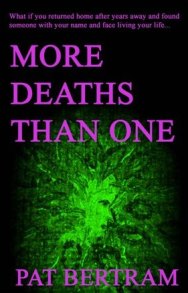
Despite tMore Deaths Than Onehat, I did write one very graphic sex scene for my first book More Deaths Than One. The scene appalled my father (by then my mother was gone, so I never got to hear her words on the subject. Whew!), but that was an important scene in the book.

The story is about a man who is so ordinary he almost seems invisible. Everyone assumes they know him, seeing him as a reflection of themselves. And yet, he has hidden depths that only one woman, Kerry, managed to see. As Kerry told Bob, trying to explain why he interested her, “I’d like to say it’s because you have hidden depths, but your depths aren’t hidden, they’re obvious.” She chuckled. “Maybe you have hidden shallows.”

The graphic sex scene wasn’t with Kerry, though eventually they did make love. The scene was with Bob and another woman, a woman who taught him about prolonging the pleasure and satisfying a woman. If you didn’t know why Bob had such a talent, it would have been unbelievable when you discovered that such a seemingly weak man would have such discipline. The scene also set up the love scene with Kerry. The scent of frangipani had always reminded him of that first woman, and yet when he and Kerry finally got together, he realized that from now on, whenever he caught a whiff of that scent, it would remind him of Kerry, of the teasing look in her eyes, of the moment he fell in love with her. (But then, don’t we all justify our sex scenes as important to the book?)

Oddly, each of my novels had less sex in that the previous one, and the last one had none. It’s hard to write sex scenes that are consistently new and fresh, and I’d said it all in that first book.

Someone dared me once to write an erotic novel, and I even accepted the dare, at least verbally, but I doubt I will ever write the book. The only reason I can see for writing is to write what only I can write, and it’s hard to bring individuality to sex scenes. (Which is probably why bondage and masochism are so prevalent right now — they are different from what people are used to.) Still, I’m young in author terms. I’ve only written five books. Anything could linger in all those as unwritten books of mine!

As for Lazarus Barnhill’s books, I’m keeping the versions I have for now. When he gets rich and famous, those expurgated copies will be worth a fortune, and I will be set for life!

***

Pat Bertram is the author of the suspense novels Light Bringer, More Deaths Than One, A Spark of Heavenly Fire, and Daughter Am I. Bertram is also the author of Grief: The Great Yearning, “an exquisite book, wrenching to read, and at the same time full of profound truths.” Connect with Pat on Google+. Like Pat on Facebook.

A Gift for a Grief-Stricken Friend

Grief: The Great Yearning by Pat BertramI haven’t really promoted my book Grief: the Great Yearning. It seemed crass and insensitive to capitalize on people’s grief, but the book has been a big help to many who have suffered a significant loss such as a husband or a parent. If you need a gift (or a stocking stuffer) for someone who is grieving, please consider giving them a copy of Grief: the Great Yearning. It might help to bring them comfort knowing that someone else has felt what they are feeling.

The print version of Grief: The Great Yearning is available from Second Wind Publishing, Amazon, Barnes and Noble. You can even give the ebook in any format as a gift. Just go to Smashwords and click on “Give as Gift”.

If there are people on your Christmas list who like to read, please check out my other books. I’m sure they’d like at least one of them!

***

More Deaths Than OneBob Stark returns to Denver after 18 years in SE Asia to discover that the mother he buried before he left is dead again. At her new funeral, he sees . . . himself. Is his other self a hoaxer, or is something more sinister going on?

Click here to read the first chapter: More Deaths Than One

***

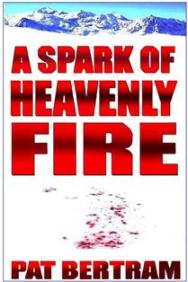
A Spark of Heavenly FireIn quarantined Colorado, where hundreds of thousands of people are dying from an unstoppable, bio-engineered disease, investigative reporter Greg Pullman risks everything to discover the truth: Who unleashed the deadly organism? And why?

Click here to read the first chapter of: A Spark of Heavenly Fire

***

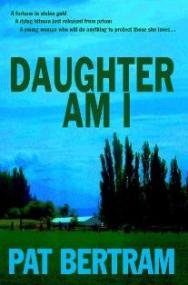
DAIWhen twenty-five-year-old Mary Stuart learns she inherited a farm from her recently murdered grandparents — grandparents her father claimed had died before she was born — she becomes obsessed with finding out who they were and why someone wanted them dead.

Click here to read the first chapter of: Daughter Am I

***

Thirty-seven years after being abandoned on the doorstep of a remote cabin in Colorado, Becka Johnson  returns to try to discover her identity, but she only finds more questions. Who has been looking for her all those years? And why are those same people interested in fellow newcomer Philip Hansen? And what do they have to do with a secret underground laboratory?

Click here to read the first chapter of: Light Bringer

***

Pat Bertram is the author of Light Bringer, More Deaths Than One, A Spark of Heavenly Fire, and Daughter Am I.All Bertram’s books are available both in print and in ebook format. You can get them online at Second Wind Publishing, Amazon, B&N and Smashwords.  At Smashwords, the books are available in all ebook formats including palm reading devices, and you can download the first 20-30% free!

“Ordinary People Becoming Extraordinary”

Sometimes we have to laugh at ourselves and our conceits. Yesterday I wrote a blog post Whose Book Is It? about readers who saw something different in my books than I intended. I wrote:

A Spark of Heavenly FireA reader once pointed out that A Spark of Heavenly Fire was about love in all its guises. He was right, that is a major theme, though that hadn’t been my intention. I wanted to write a big book, an important book with ordinary people becoming extraordinary in perilous times. Since I didn’t want to do a war story, I did the next best thing — created an epidemic so deadly that the entire state of Colorado had to be quarantined to prevent the spread of the disease. To “personalize” the catastrophe, I told the story from several points of view, not just character POV, but the various ways the characters viewed the epidemic. And what shone through, by the time all the stories were told, was the theme of love in all its guises.

It wasn’t until this morning that I remembered that I hadn’t intended to write an important book with ordinary people becoming extraordinary in perilous times. Well, the important book part is right — I wanted to write a classic story that most people would be able to identify with. But I never used the phrase about ordinary people becoming ordinary until I received a rejection letter from an agent, in which the agent thanked me for sending them my excerpt since they “were always looking for such stories about ordinary people becoming extraordinary, but . . .”

Oddly, I don’t remember what followed the “but.” There was always a “but.” “We liked the concept of your story but we didn’t fall in love with your characters as we had hoped.” “Your book is excellent, but we only publish literary books and yours is more commercial.” “We loved your book, but we don’t know how to sell it. It has too many science fiction elements to be mainstream fiction and not enough to be science fiction.”

But I digress. The point is, that is where I got the idea of A Spark of Heavenly Fire being a story of ordinary people becoming extraordinary. I figured if I got a personalized rejection letter rather than a badly Xeroxed form letter or even just a “no thanks” scribbled on my query, that maybe I was on to something. So I started using the phrase “ordinary people becoming extraordinary” to describe the book in subsequent query letters. I did it so often that it stuck even after I learned the truth — the rejection letter that had so impressed me had been a form letter after all. (I thought that since they had expressed an interest in my writing, I’d query them about another book and got the exact response as I did the first time.)

The truth of why I wrote A Spark of Heavenly Fire is that I wanted to write about society turned upside down. I wanted to create conditions where the successful folk didn’t have the skills to be successful in the new world, but the unhappy, the failures, and the outcasts were able to find happiness, success, and fulfillment. I mostly achieved that, but one character — a beautiful young woman — turned out to have good coping skills, which gave the book more of a dimension than if she’d ended up in the gutter.

***

Pat Bertram is the author of the suspense novels Light Bringer, More Deaths Than One, A Spark of Heavenly Fire, and Daughter Am I. Bertram is also the author of Grief: The Great Yearning, “an exquisite book, wrenching to read, and at the same time full of profound truths.” All Bertram’s books are published by Second Wind Publishing. Connect with Pat on Google+
Whose Book Is It?

We writers do the best we can to tell an engaging story, hoping readers will like what we have written, but often readers see something in the story that we didn’t purposely put there.

Sometimes this “extra” is good. A reader once pointed out that A Spark of Heavenly Fire was about love in all its guises. He was right, that is a major theme, though that hadn’t been my intention. I wanted to write a big book, an important book with ordinary people becoming extraordinary in perilous times. Since I didn’t want to do a war story, I did the next best thing — created an epidemic so deadly that the entire state of Colorado had to be quarantined to prevent the spread of the disease. To “personalize” the catastrophe, I told the story from several points of view, not just character POV, but the various ways the characters viewed the epidemic. And what shone through, by the time all the stories were told, was the theme of love in all its guises.

DAIsmallBut sometimes the “extra” that readers find is not so good. Daughter Am I is the story of old time gangsters. A young woman inherits a farm from murdered grandparents she didn’t know she had — her father had claimed they died before she was born. When she confronts her father with his lie, he merely responds, “They were dead to me.” She becomes obsessed by the mysteries of why her grandparents had been murdered and what they had done that was so terrible their only son cut them out of his life.

She tracks down her grandfather’s friends, most of whom had lived nefarious lives, and she gradually learns who her grandfather was. At the end of the book, her actions mirror what she has learned about her grandfather, and so she learns the truth of him.

This is the book I had written — a young woman searches for her grandfather, and finds him in herself, in her outlook on life, in her dealings with others.

One friend who read the book was reticent to tell me what she thought. She admitted she loved the characters and the writing, but then she finally said, in a hesitant voice, “But the ending isn’t exactly moral, is it?”

In thinking about it, I had to admit it wasn’t strictly moral, but the ending was inevitable since it fit the search-for-identity story I’d written. I didn’t really think anything more about it until I saw a review where someone liked the book and the characters, but didn’t like cynicism of the book — that anything is justifiable as long as you treat your friends right.

These two comments made me wonder about the truth of the story. Was it really cynical? Really immoral? I wasn’t trying to make such points. I merely wanted to tell a “hero’s journey” story about gangsters. And gangsters, by definition are immoral. If they weren’t, if they were law-abiding citizens, they wouldn’t be gangsters, they’d be corporate executives. (Well, maybe that’s a bad example, considering how many stories of larcenous corporative executives end up in the newspaper.)

In the end, it doesn’t really matter what story they read, at least not from my perspective. The truth of any story is in the minds of readers. We writers can only write the story we know how to write, then send them out into the world to make whatever they can of themselves.

***

Pat Bertram is the author of the suspense novels Light Bringer, More Deaths Than One, A Spark of Heavenly Fire, and Daughter Am I. Bertram is also the author of Grief: The Great Yearning, “an exquisite book, wrenching to read, and at the same time full of profound truths.” All Bertram’s books are published by Second Wind Publishing. Connect with Pat on Google+

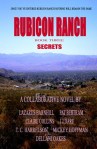
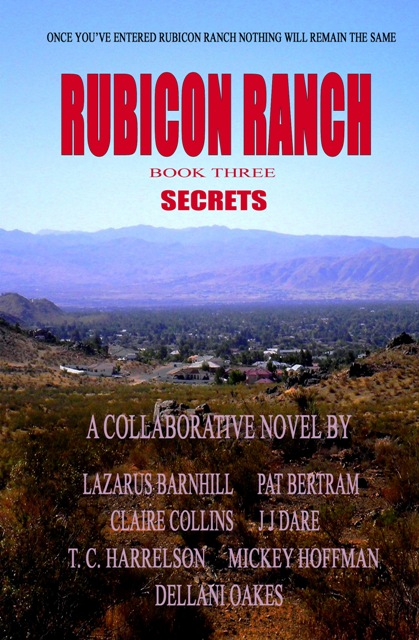
Rubicon Ranch: Secrets — The Mystery Continues

RRBookThreemidsizeRubicon Ranch is a collaborative and innovative crime series set in the fictional desert community of Rubicon Ranch and is being written online by the authors of Second Wind Publishing.

In the current story, the  body of a local realtor is found beneath the wheels of an inflatable figure of a Santa on a motorcycle. The realtor took great delight in ferreting out secrets, and everyone in this upscale housing development is hiding something. Could she have discovered a secret someone would kill to protect? There will be suspects galore, including a psychic, a con man, a woman trying to set up an online call-girl service, and the philandering sheriff himself. Not only is the victim someone he had an affair with, but he will also have to contend with an ex-wife who has moved back in with him and a jilted lover, both with their own reasons for wanting the realtor dead.

We hope you will enjoy seeing the story develop as we write it. Let the mystery continue! Whodunit? No one knows, not even the writers, and we won’t know until the very end! If you don’t want to miss further chapters, please go to the blog and click on “sign me up” on the right sidebar to get notifications of new chapters.

Chapter 22: Lydia Gavin
by Pat Bertram

Sunday, December 23, 5:25pm

Seth sat tall behind the desk in his tidy office, like a king receiving a subject. “What are you doing here?”

Lydia Galvin leaned back in the uncomfortable metal chair and gave the sheriff a serene smile, surprised to find that she felt no fear at facing him. “Your deputies brought me here.”

Seth glowered. “You know that’s not what I meant.”

“You want the whole story? I needed to get some groceries, so I walked up Delano Road to where I’d parked my car, and apparently your deputies found it and staked it out, because even before I could unlock the door, they jumped out of their vehicle, arrested me, and brought me here.”

“They didn’t arrest you. They just offered you a ride. I wanted to talk to you.” Seth gave Lydia one of his oh-so-familiar looks, the one that said she meant no more to him than an annoying insect.

“How did you know I was in the area?” Lydia kept her voice neutral, not wanting to seem confrontational. No point in arousing the beast in him until absolutely necessary.

“We checked out the bystanders’ videos of the burning crime scene, and there you were.” He drew in a quick breath as if upset with himself for responding. “But you’re supposed to be answering my questions. What are you doing in Rubicon Ranch?”

“Having fun. It’s quite a spectacle out there, you know.” Lydia crossed her legs, and felt a flash of satisfaction when he cut a glance at her thighs. All that running since she’d been fired had paid off—she now had the body she’d always wished for.

He remained calm, but his thinned lips and tensed shoulders told her how much that unruffled air cost him. “Why did you come to Rubicon Ranch?”

“Why do you think I came? To see what other lives you were ruining, of course. I had no intention of staying, I just wanted to check out Melanie Gray—according to the newspapers you two were quite a team—but then I met Nancy and when she let slip that you and she were sleeping together, I thought I’d hang around to see how you got out of that affair when it turned against you.” Lydia made a show of inspecting a fingernail. “I guess I’m lucky. You only ruined my career. Poor Nancy ended up in the morgue.”

“You think I killed Nancy?” Seth cocked his head like an eagle and stared at Lydia for a moment. Then he nodded. “I see. You think that by accusing me, I will assume that you’re innocent, because if you believed I killed her, then you couldn’t have.”

“Did you kill her?” Lydia waited for an answer that didn’t come. “She would have ruined you. She loved nothing but herself and power and money. She loved secrets, too, of course, but only because the secrets gave her power over people and were a source of great income. She said she used to be an actress and a model, but once when we had a few drinks, she admitted that was a front. She’d really worked as a call girl. I figured she gave up the life when she realized how much more lucrative secrets were than her body.”

Seth rose to his feet and paced the office. “You say she would have ruined me. Like you ruined me?”

Lydia forced out a small laugh. “I ruined you? No. You manipulated me. You began by treating me as if I were the most important woman in the world. You flattered me, paid attention to me, offered me words of love and the endearments I hungered for. When I was hooked, you stepped back, left me feeling bereft. And every time I spoke of leaving you, you’d pay attention to me again.” She felt tears beginning to gather behind her eyes. He doesn’t matter. Think of fire. Flames. Heat.

She drew in a deep breath, surprised Seth didn’t jump in to defend himself. He kept pacing the office as if she weren’t even there, which made it easier for her to confess. “You were my grand passion. I know you don’t believe that, but it’s the truth. I never expected you to leave your wife. I just wanted you to notice me. To put me first once in a while.”

Seth stood over her, his eyes icy as they locked onto hers. “But you turned me into the department. Said I misused my authority.”

“You did abuse your authority. I never wanted an affair with you. I had enough trouble with my husband. I didn’t need another abusive man in my life. You never knew about my husband, did you?” Lydia didn’t even try to modulate her bitter tone. “The great detective never noticed that his girlfriend had a husband who beat her. I wouldn’t have told your wife about us. Even though I threatened to tell her, I couldn’t have made our affair public. My husband would have beat me when he found out. And after you dragged your wife to my house so she could confront me, my husband did beat me. I had to go to the emergency room that time. But oh, no, everything that happened was my fault.”

“Good story,” Seth said. “Too bad none of it is true.”

“The all-wise Seth Bryan says it isn’t true, so that means it isn’t true?” Lydia shook her head sadly. “The law might be about what you can prove, but life isn’t like that. Some things are true no matter how much we don’t want to believe them.” Things like her husband’s abuse. Things like Seth’s disregard. Things like death and fire. “You men are all so blind you can’t see what’s in front of your eyes. I loved you but you threw me away, calling me a vituperative bitch. Yet Nancy, who didn’t love you at all and who truly was a vituperative bitch, you kept. But I’m through with all of you now.”

Seth sneered. “Turning into a lesbian?”

“That’s beneath even you, Seth, my love.”

“True. Perhaps the only true thing you’ve said today.” The phone rang. Seth took two long strides to the desk, and grabbed the receiver. “Yes?” A pause, then, “She’s home now? Stay there. Make sure she doesn’t leave. I’ll be there in just a few minutes.”

He hung up the phone, and turned to face Lydia.

She quirked her lips in an unamused smile. “Still on your wife’s leash? I’m surprised you haven’t killed her, too.”

“Just go,” he said wearily. “Keep my office informed of your whereabouts. We still have lots to talk about.”

Lydia rose, straightened her skirt, and settled the strap of her purse firmly on her shoulder. “There’s nothing left to say but good-bye. I didn’t kill Nancy. You did. But don’t worry, I won’t testify against you.”

***

Pat Bertram is the author of the suspense novels Light Bringer, More Deaths Than One, A Spark of Heavenly Fire, and Daughter Am I. Bertram is also the author of Grief: The Great Yearning, “an exquisite book, wrenching to read, and at the same time full of profound truths.” All Bertram’s books are published by Second Wind Publishing. Connect with Pat on Google+

Dona Nobis Pacem

Thousands of bloggers from all over the globe are Blogging for Peace today.

One subject. One voice. One day.

Words are powerful . . . this matters.

***

Pat Bertram is the author of the suspense novels Light Bringer, More Deaths Than One, A Spark of Heavenly Fire, and Daughter Am I. Bertram is also the author of Grief: The Great Yearning, “an exquisite book, wrenching to read, and at the same time full of profound truths.” Connect with Pat on Google+. Like Pat on Facebook.

Season’s Creepings — A Halloween Story in Miniature

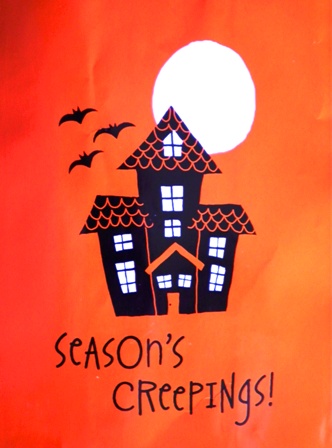
A drabble is a short story of exactly one hundred words with a beginning, a middle, and an end. I have been experimenting with this story form as a way of improving my writing, trying to get as strong an image as possible in just a few words. Here is a miniature story for Halloween:

       Cuddling her baby, Cassie went to answer the door.

       Anna, eyes bright beneath hooded lids, smiled at her. “I came to see my newest neighbor.” She bent forward and peered into the baby’s face. “Oooh, he’s so sweet I could just eat him up.” She held out her arms. “May I?”

       Pride welled up in Cassie’s chest. “Sure.”

       With a sudden sinuous motion, Anna took the baby, popped him in her mouth, and swallowed him whole.

       Unable even to scream, Cassie stared at the bulge in the woman’s midsection.

       “What?” Anna gave her a puzzled look. “You said I could.” 

***

Pat Bertram is the author of the suspense novels Light Bringer, More Deaths Than One, A Spark of Heavenly Fire, and Daughter Am I. Bertram is also the author of Grief: The Great Yearning, “an exquisite book, wrenching to read, and at the same time full of profound truths.” Connect with Pat on Google+. Like Pat on Facebook.   

The World’s Mine Oyster

The book world is changing rapidly. Now you can have an entire library of ebooks at your fingertips for less than $10.00 a month.

According to Smashwords, who will be delivering books for the new Oyster app:

oysterA reader downloads the beautiful Oyster app, available for the iPhone and iPad. If they subscribe to the $9.95/month service, the customer gains access to a massive catalog of ebooks, of which Smashwords books will soon be included. Readers can read as much as they want or as little as they want. The books are contained within the Oyster app, and cannot be transferred or shared. If the customer ends their subscription, they lose access to the book. This is fair and reasonable. The customer is subscribing to a service, and for as long as they maintain their subscription, they read whatever they want. It’s a very similar offering to Spotify in music and Netflix for film and television entertainment.

A single Oyster user could conceivably read multiple books by the same Smashwords author in a single month, and the author will be paid for each book. As a Smashwords author or publisher, you’ll earn 60% of you book’s retail list price whenever an Oyster subscriber reads more than 10% of your book, starting from the beginning of the book forward. It’s an author-friendly model. That’s the same rate Smashwords authors earn when we sell ebooks through the major retailers such as Apple and Barnes and Noble.

Oyster’s subscription service will help you connect with a segment of the reading audience you’re not reaching anywhere else. Oyster will also give authors yet another reason to steer clear of exclusivity and embrace full distribution with Smashwords.

The first books to be delivered to Oyster by Smashwords will be their bestsellers, but eventually, my books will be available, too. Although this seems like a good deal for everyone, I doubt I’d ever subscribe to such a service. It spooks me that someone would keep track of what I am reading, and would know as soon as I read more than 10% of a book. Besides, by the time I got used to such a book delivery system, something newer and even more innovative will come on the market.

And anyway, I don’t have an iPad, iPod, iPhone or any other iProduct.

***

Pat Bertram is the author of the suspense novels Light Bringer, More Deaths Than One, A Spark of Heavenly Fire, and Daughter Am I. Bertram is also the author of Grief: The Great Yearning, “an exquisite book, wrenching to read, and at the same time full of profound truths.” Connect with Pat on Google+. Like Pat on Facebook.

Elegant English

In The Dimwit’s Dictionary, Robert Hartwell Fiske describes elegant English as that which is “expressed with music as well as meaning, with style as well as substance.” He goes on to say that “It is time we aspire to becoming who we were meant to be. It is time to aspire to expressing ourselves well. Elegant English is grammatically correct English, it is uncommon or forgotten English. In all instances, elegant English is English rarely hear, English seldom spoken.”

Everyday English uses such constructions as “It is me,” “okay,” “the fact that,” “I don’t think so.” The corresponding elegant constructions are “It is I,” “as you wish,” “that,” and “I think not.” Everyday English commonly uses “how come?” where elegant English uses “how is it that?”

MusicEven though I don’t like what Fiske calls “quack equations,” I still find myself using them on occasion. Quack equation are expressions such as “a deal is a deal,” “a rule is a rule,” “what’s right is right.” He says such quack equations “readily explain behavior that the dimwitted otherwise find inexplicable, and justify attitudes they otherwise find unjustifiable.”

Occasionally such phrases are inescapable. They are a way of acknowledging that some events are inexplicable, for example: it is what it is. No matter how we try to find the meaning in inexplicable happenings, sometimes the meaning eludes us. Sometimes there is no explanation besides “it is what it is.”

(I have a hunch he would have despaired at the definitions of elegant and elegance in my dictionary. Elegant is defined as “marked by elegance,” and elegance is defined as “something that is elegant.”)

He also rails against plebian sentiments such as “a little knowledge is a dangerous thing,” “I just work here,” “that’s life,” or “you think too much.” “That’s nice” is particularly plebian because it is used to dismiss what a person has said, though it suggests interest. He asserts that plebian sentiments reflect the views and values of the least thoughtful among us, that they blunt our understanding and quash our creativity, and “actually shield us from our thoughts and feelings, from any profound sense of ourselves. People who use these expressions have not become who they were meant to be.”

I consider myself well spoken. I don’t use a lot of colloquialisms or bad grammar, but even I have found my English slipping way past elegant into banal. In my case, it started out as protective coloring. I had a big vocabulary when I was young, though I didn’t always know how to pronounce the words. (I still remember the laughter that greeted me many years ago when I said something was mackaber instead of macabre.) But still, if I wish to lead a more elegant life, and aspire to be who I am meant to be, I should relearn how to speak (and write) more elegantly.

***

Pat Bertram is the author of the suspense novels Light Bringer, More Deaths Than One, A Spark of Heavenly Fire, and Daughter Am I. Bertram is also the author of Grief: The Great Yearning, “an exquisite book, wrenching to read, and at the same time full of profound truths.” Connect with Pat on Google+. Like Pat on Facebook.

Life After the Death of a Soul Mate

What I love most about blogging is that sometimes when I start writing a post, new or buried thoughts percolate to the surface, ending up on the page and surprising me with insights. Yesterday, when I wrote Living Offline, I had no idea I was starting to look forward to the rest of my life. I’ve kept my head down, plodding along, trying new things, meeting new people, visiting new places, and apparently, somewhere along the line, I went through a renewal of sorts.

Many people who had gone through a grievous loss have told me that it takes three to five years to find a renewed interest in life, and so it is with me. In just a few days, it will be three years and seven months since the death of my life mate/soul mate, and I find myself involved deeply in life, not just with such difficult matters as looking out for my 96-year-old father and dealing with problematic family members, but also with taking care of myself and my well-being.

Sierra Club conditioning walkI’m physically active, eat right, and have accidentally become part of an intelligent and talented coterie. I say “accidentally” because when I joined a group of walkers, I didn’t expect to end up going to art shows that feature members’ work, hearing one member in a choir of madrigal singers, and seeing others dance. Because of these people, I’ve also learned not to fear old age. Although people of all ages walk with us, some of the most active members could be considered elderly, but I can barely keep up with those in their seventies. I have no idea what life has is in store for me, of course, but I do know that getting older doesn’t necessarily mean getting feeble. It just takes a bit of luck and a lot of physical activity and mental stimulation.

Grief goes in cycles, so chances are I will still be experiencing occasional grief surges (especially on the weekends when I can’t feast on the endorphins and friendship of the group walk), but now I know the truth: there is life after the death of the person who connected you to the world. There is even laughter. Maybe even joy.

***

Pat Bertram is the author of the suspense novels Light Bringer, More Deaths Than One, A Spark of Heavenly Fire, and Daughter Am I. Bertram is also the author of Grief: The Great Yearning, “an exquisite book, wrenching to read, and at the same time full of profound truths.” Connect with Pat on Google+. Like Pat on Facebook.