Dreaming Time is Here

After profound grief winds down, there should be a more noble state than the period of disgruntlement and dissatisfaction I am now experiencing. It’s possible this dissatisfaction is a precursor to taking action as some people have suggested, but the truth is, I still have no idea what action to take. I have no real dreams, no list of wants left unfulfilled, no idea of where to go with my life.

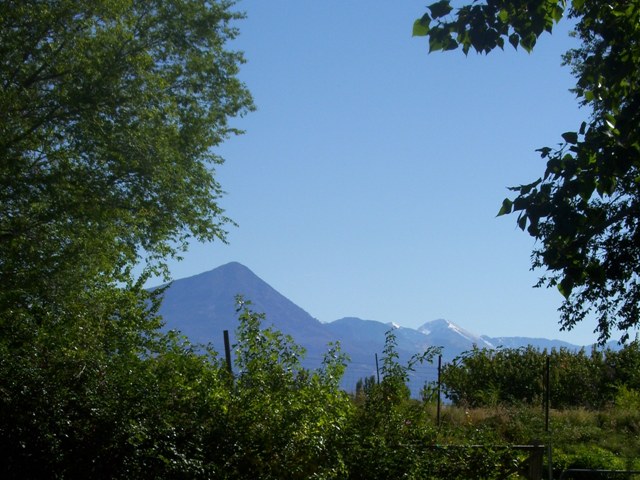
To be honest, I can’t go anywhere, not yet. I am still looking after my 96-year-old father, which limits me to some extent, yet at the same time offers me enough freedom to roam the nearby desert, to indulge myself in small ways, to dream.

One benefit of having let myself feel every cyclonic and cyclic aspect of my grief is that I have experienced the worst it can throw at me (at least I presume I have), so I don’t have to keep busy to prevent myself from thinking. I am free to let my mind roam without fear of where it will take me. Sometimes I think of where I’d like to travel, what I’d like to do, what I’d like to be. Other times, I let the cool desert winds blow all thoughts out of my head and wait to see what flows back to me.
Someday I will travel. Someday I will finish my poor work-in-pause. Someday I will set up my barbells. Someday I will . . .

But today, now, I am content to let the thoughts flow, dreaming up possibilities, like a child, with no regard to probability.

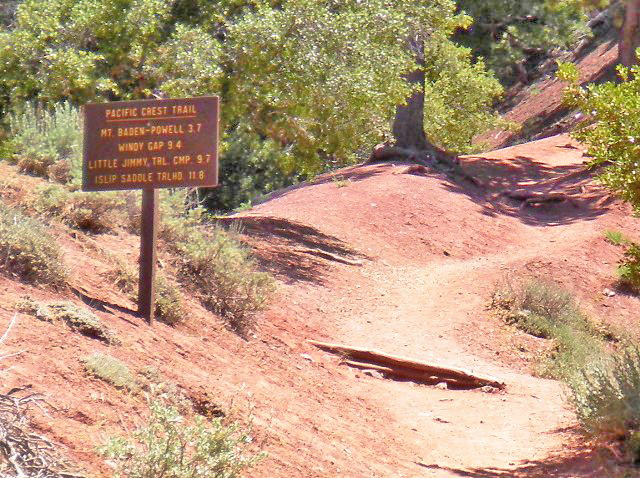
I am in no shape to trek the length of the Pacific Crest Trail and yet I can dream and perhaps one day I will hike a small part of it. I don’t have the knees for running anymore, yet I can still dream of the freedom it once gave me. I am basically a hermit, yet I can dream of making friends and charming people wherever I go.

Perhaps fantasizing is a more noble state to follow the waning of profound grief than disgruntlement. Or not. Either way, dreaming time is here.

***

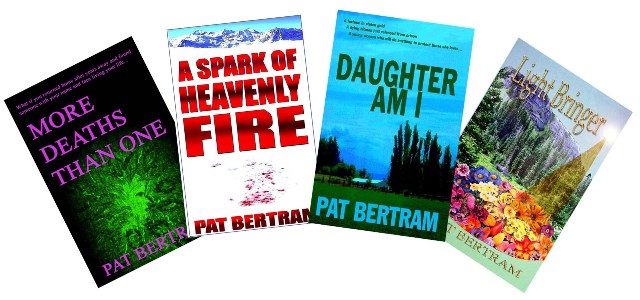
Pat Bertram is the author of the suspense novels Light Bringer, More Deaths Than One, A Spark of Heavenly Fire, and Daughter Am I. Bertram is also the author of Grief: The Great Yearning, “an exquisite book, wrenching to read, and at the same time full of profound truths.” Follow Pat on Google+. Like Pat on Facebook.
Sample Sunday

If you’ve been wanting to check out my books, now is your chance to read the first chapter of each novel online. Who knows, you might get so intrigued you will want to buy one of the  book to take with you to the beach this summer or read on an airplane. (Or, for my friends in the southern hemisphere, you might decide one is the perfect companion to read by the fire on a chilly winter’s eve.) I hope you will enjoy sampling a “Pat Bertram” book.

More Deaths Than OneBob Stark returns to Denver after 18 years in SE Asia to discover that the mother he buried before he left is dead again. At her new funeral, he sees . . . himself. Is his other self a hoaxer, or is something more sinister going on?

Click here to read the first chapter: More Deaths Than One

***

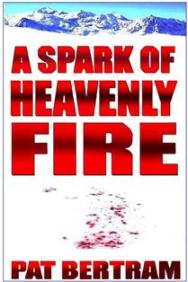
A Spark of Heavenly FireIn quarantined Colorado, where hundreds of thousands of people are dying from an unstoppable, bio-engineered disease, investigative reporter Greg Pullman risks everything to discover the truth: Who unleashed the deadly organism? And why?

Click here to read the first chapter of: A Spark of Heavenly Fire

***

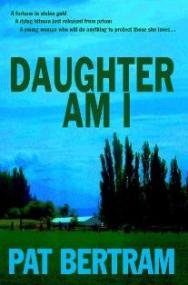
DAIWhen twenty-five-year-old Mary Stuart learns she inherited a farm from her recently murdered grandparents — grandparents her father claimed had died before she was born — she becomes obsessed with finding out who they were and why someone wanted them dead.

Click here to read the first chapter of: Daughter Am I

***

Thirty-seven years after being abandoned on the doorstep of a remote cabin in Colorado, Becka Johnson  returns to try to discover her identity, but she only finds more questions. Who has been looking for her all those years? And why are those same people interested in fellow newcomer Philip Hansen? And what do they have to do with a secret underground laboratory?

Click here to read the first chapter of: Light Bringer

***

Pat Bertram is the author of Light Bringer, More Deaths Than One, A Spark of Heavenly Fire, and Daughter Am I.All Bertram’s books are available both in print and in ebook format. You can get them online at Second Wind Publishing, Amazon, B&N and Smashwords.  At Smashwords, the books are available in all ebook formats including palm reading devices, and you can download the first 20-30% free!

Serial Killers and Sociopaths

Despite fads and new genres, serial killers endure as a favorite villain for writers and readers alike, though I lost my taste for such books years ago. For one thing, too many writers use killing as a cheap way of escalating tension, with each murder upping the ante. For another thing, too many writers perpetuate the serial killer myth of the white, middle-class, intelligent, charming male about thirty-five years old.

Dr. Katherine Ramsland, a forensic psychologist, debunks this stereotype in a guest post she did for this blog: Serial Killers and the Writers Who Love Them: Facts about Popular Myths. As Ramsland points out, “Serial killers are not all alike. They’re not all male. Some have been as young as eight or older than fifty. They’re not all driven by sexual compulsion. They’re not all intelligent, nor even clever – often, they’re just lucky. They’re not all charming. A single killer may choose different weapons or methods of operation, although they will tend to stay with whatever works best. Even with rituals, the basis of a ‘signature,’ they often experiment and change things. They might be profit-driven, in search of thrill or self-gratification, or compelled by some other deep-seated desire, fear or need. Occasionally, serial murder is about revenge or it’s inspired by a delusion. In most cases, the killer does not wish to be stopped or caught. Yet a few do intentionally undermine themselves or stop of their own accord. Some rare killers have even professed remorse or killed themselves.”

Far more fascinating to me are the sociopaths who don’t kill. Some psychologists estimate that there are thirty thousand mindpsychopaths who are not serial killers for every one who is. (Some professionals use “sociopath” and “psychopath” interchangably as I am doing and some argue there is a difference, but oddly, no one seems to agree on what those differences are.)

So who are these non-killing psychopaths? Your neighbor, perhaps, or your mother-in-law. Probably many politicians and scientists. Possibly even you.

(In A Spark of Heavenly Fire, Peter Jensen says: “I have a theory, entirely unproven, that a lot of psychopaths gravitate to the sciences, biology especially, where they can hide behind that famed scientific detachment. They can also torture animals in the name of science, and no one calls them insane.”)

Even if you don’t write crime fiction, familiarity with the sociopathic personality can help you create dynamic characters and even interesting dialogue. For example, sociopaths frequently use contradictory and illogical statements such as “I never touched her, and anyway, she wanted it.”

A sociopath has difficulty connecting to others, though people often like them. They can be charming, glib, witty, and use captivating body language. (Sounds like a politician, doesn’t it?) Because of their impulsiveness, need for excitement, no need to conform to societal standards, poor behavior controls, and lack of responsibility, they can be fun companions, but because they lack empathy, conscience, and remorse, they can never truly connect with anyone.

One characteristic that keeps a sociopath from being a good fiction hero is that in fiction heroes need to change during the course of the novel, and sociopaths have solid personalities that are extremely resistant to outside influences. But, being the manipulative creatures that they are, they can make us believe they have changed.

In a relationship, such manipulation might be intolerable, but in fiction, it makes for a interesting character, even if the character isn’t a killer.

***

Pat Bertram is the author of the suspense novels Light Bringer, More Deaths Than One, A Spark of Heavenly Fire, and Daughter Am I. Bertram is also the author of Grief: The Great Yearning, “an exquisite book, wrenching to read, and at the same time full of profound truths.” Follow Pat on Google+. Like Pat on Facebook.
Today I Will Be . . . At Fault

Or maybe I’ll be fautless. It all depends on how the day goes.

I’m smiling as I write this, hoping you find my pun as groaningly amusing as I do. The truth is, a couple of friends and I are going on a trip to look for the San Andreas Fault. It’s not as simple a matter as it might seem. Apparently, there is no giant crack in the earth. According to the San Andreas Fault website (yep, the SAF as it is so affectionately called, has its own website): “The SAF has not had a major ground-rupturing earthquake since 1906. Virtually all traces of the ‘giant crack in the ground’ that so many people image the SAF to be have been erased. Erosion fills and covers the fault, plows and bulldozers reshape the surface, roads and neighborhoods are built on the fault. The actual surface trace of the fault is subtle. What one has to look for are the land forms that the plate motion has created.”

Really? Neighborhoods are built on the fault? I suppose it makes sense — that would have been the last bit of available land in many places, and probably relatively cheap, such as all the trailer parks that were build on flood plains and in tornado alleys.

Even though a “big one” is expected sometime this century, you don’t have to worry about my being swallowed up by an earthquake. According to a publication called Putting Down Roots in Earthquake Country, “A popular literary device is a fault that opens during an earthquake to swallow up an annoying character. But unfortunately for principled writers, gaping faults exist only in novels. The ground moves across a fault during an earthquake, not away from it. If the fault could open, there would be no friction. Without friction, there would be no earthquake.”

So, not only will I not fall in, I can’t use that idea for a story, which I’d actually thought of doing.  Still, if I disappear, you will no where to find me.  Hmmm. “No where” instead of “know where?” I thought it apropros, so I left in the typo. I hope it’s not a portent for the day.

***

Pat Bertram is the author of the suspense novels Light Bringer, More Deaths Than One, A Spark of Heavenly Fire, and Daughter Am I. Bertram is also the author of Grief: The Great Yearning, “an exquisite book, wrenching to read, and at the same time full of profound truths.” Follow Pat on Google+. Like Pat on Facebook.

How To Describe a Person Who is Drowning

In almost all movies I have ever seen or books I have ever read where a person is supposedly drowning, there is lots of thrashing around, calling and waving for help, and other panicky behavior, but the truth is completely different from what we’d expect.

In the Fall 2006 issue of On Scene: The Journal of U.S. Coast Guard Search and Rescue, Aviation Survival Technician First Class Mario Vittone and Francesco A. Pia, Ph.D explain how to recognize the instinctive drowning response:

1. Except in rare circumstances, drowning people are physiologically unable to call out for help. The respiratory system was designed for breathing. Speech is the secondary, or overlaid, function. Breathing must be fulfilled, before speech occurs. 2. Drowning people’s mouths alternately sink below and reappear above the surface of the water. The moutpuget soundhs of drowning people are not above the surface of the water long enough for them to exhale, inhale, and call out for help. When the drowning people’s mouths are above the surface, they exhale and inhale quickly as their mouths start to sink below the surface of the water.

3. Drowning people cannot wave for help. Nature instinctively forces them to extend their arms laterally and press down on the water’s surface. Pressing down on the surface of the water, permits drowning people to leverage their bodies so they can lift their mouths out of the water to breathe.

4. Throughout the Instinctive Drowning Response, drowning people cannot voluntarily control their arm movements. Physiologically, drowning people who are struggling on the surface of the water cannot stop drowning and perform voluntary movements such as waving for help, moving toward a rescuer, or reaching out for a piece of rescue equipment.

5. From beginning to end of the Instinctive Drowning Response people’s bodies remain upright in the water, with no evidence of a supporting kick. Unless rescued by a trained lifeguard, these drowning people can only struggle on the surface of the water from 20 to 60 seconds before submersion occurs.

Yikes. Makes me glad I’m not a lifeguard or someone who writes books with drowning victims since it would be hard to recognize such stillness as someone in distress. (Makes me even gladder I have a healthy fear of deep water.) Still, if I ever had to write about someone who is drowning, I know how to do write the scene. Hmmm. Maybe a short story someday. After all, I’ve already done the research! Or rather, Francesco Pia did.

***

Pat Bertram is the author of the suspense novels Light Bringer, More Deaths Than One, A Spark of Heavenly Fire, and Daughter Am I. Bertram is also the author of Grief: The Great Yearning, “an exquisite book, wrenching to read, and at the same time full of profound truths.” Connect with Pat on Google+. Like Pat on Facebook.

Does your understanding of the story you are writing change during the course of the book?

Before I wrote A Spark of Heavenly Fire, I did extensive research into pandemics and into the government’s response to such emergencies (I based my fictional response on actual executive orders that Clinton signed), so there wasn’t much change in my understanding of these matters during the course of the book, but there was a big difference in my thoughts about what “they” want us to know and what they don’t. When I learned about Pingfan, the Japanese biological warfare installation where they did horrendous experiments on POW’s and nearby villagers, I thought I’d stumbled onto something really explosive. Yet, as happened to a character in A Spark of Heavenly Fire, the very next novel I picked up used Pingfan as a setting. It got me to thinking about the nature of cover-ups, and many of the discussions in the last half of the book were actual discussions I had with a friend while I was writing the book.

Here are some responses from other authors about how their understanding of the story changes during the course of the book. The comments are taken from interviews posted at Pat Bertram Introduces . . .

From an interview with Sherrie Hansen, Author of “Love Notes”

I start the story, my characters finish it. Themes come to me as the book goes on, and often, when it’s totally finished. Sometimes I have to rewrite the beginning of the book, because by the time I’m done, I know the characters so well that I think they would never say or do the things they did at the beginning of the book.

From an interview with Cynthia Vespia, Author of “Sins And Virtues”

Sometimes. That makes it fun though. You expect it to go one way and instead it veers off course and takes you to an entirely new level. For me, when that happens, it feels like I’m reading it myself.

From an interview with Alan Place, Author of “Pat Canella: The Dockland Murders”

My understanding is constantly changing as the character evolve their own lives, I never try to force them to do things that I feel don’t fit.

What about you? Does your understanding of the story you are writing change during the course of the book?

(If you’d like me to interview you, please check out my author questionnaire http://patbertram.wordpress.com/author-questionnaire/ and follow the instruction.)

***

Pat Bertram is the author of the suspense novels Light Bringer, More Deaths Than One, A Spark of Heavenly Fire, and Daughter Am I. Bertram is also the author of Grief: The Great Yearning, “an exquisite book, wrenching to read, and at the same time full of profound truths.” Follow Pat on Google+. Like Pat on Facebook.

Describe your writing in three words

Three words to describe my fiction writing:

colorful, character-driven, conspiratorial

Here are some responses from other authors about three words they would use to describe their writing. The comments are taken from interviews posted at Pat Bertram Introduces . . .

From an interview with Donna Galanti, Author of “A Human Element”

Haunting. Dark. Hopeful.

From an interview with Siobhán Nolan, Author of “Old Man Harry”

Silly, relatable, fanciful.

From an interview with Andrew Scorah, Author of “Homecoming Blues”

Dark, gritty, cool

What about you? How would you describe your writing in three words?

(If you’d like me to interview you, please check out my author questionnaire http://patbertram.wordpress.com/author-questionnaire/ and follow the instruction.)

***

Pat Bertram is the author of the suspense novels Light Bringer, More Deaths Than One, A Spark of Heavenly Fire, and Daughter Am I. Bertram is also the author of Grief: The Great Yearning, “an exquisite book, wrenching to read, and at the same time full of profound truths.” Follow Pat on Google+. Like Pat on Facebook.

Waiting Quietly For an April Time

It’s been three years and two months and two weeks since the death of my life mate / soul mate. It’s been a rough time for me, working through the pain of his death and our separation, adjusting to life without him, learning to think of him with gladness instead of sadness, searching for new ways of being and new reasons for living, realizing that he is he and I am I and we have separate paths in life.

Every once in a while now, beneath the bleak frozen ground of grief, I can feel the first green stirrings of hope, maybe even a promise of new life.

These feelings are right on time. Everyone I have talked to who has dealt with such a grievous loss has said it takes four years to find a renewal of life. (Apparently four years is the half-life of grief.)

As one woman who has been there told me, “Our partners are gone. We can either live in this world without them, experiencing a full, active life . . . or we can half live a life while we are still connected to our dead great loves through the ether, which we can’t navigate or understand this side of death.

It isn’t a choice; you can’t “just get there.” But you will get there. And everything will suddenly feel new again. You will see possibilities as something toward which you want to leap, and you will suddenly feel untethered and able to make that leap.”

In ten months, by next April, I will have passed my fourth anniversary. April. A time of renewal. Maybe a time of my renewal.

In her book The Stillwater Meadow, Gladys Tabor wrote: “People have seasons . . . There is something steadfast about people who withstand the chilling winds of trouble, the storms that assail the heart, and have the endurance and character to wait quietly for an April time.”

And so, I will continue dealing with the upsurges and downswings of grief, with the tears and loneliness, with the uncertainty and confusion, and wait quietly for my April time.

***

Pat Bertram is the author of the suspense novels Light Bringer, More Deaths Than One, A Spark of Heavenly Fire, and Daughter Am I. Bertram is also the author of Grief: The Great Yearning, “an exquisite book, wrenching to read, and at the same time full of profound truths.” Follow Pat on Google+. Like Pat on Facebook.

Writing (And Reading) On the Edge

A friend recently taught a class about writing on the edge — writing at the edge of possibility and freedom; exploring the shapeless, the uncertain, the indefinite and the incoherent; accepting the endless, the multiple, the fragmented, the collaged, the ambiguous, the disjunctive, the long forgotten realms of the mysterious and the wild.

Her point was that we are addicted to easy reading as something to lull our senses and to provide respite from our daily lives, and that challenging ourselves to move beyond that changes our perspective and makes us better able to deal with the increasingly complex world.

I would have liked to take the claVenice Beachss since it seemed a good way to discover unreached recesses of my mind, but the 1000-mile commute would have been a killer. Besides, although I would like to explore the long forgotten realms of the mysterious and wild, I’m not a fan of complicated writing. I like books that are easy to read but that have depth or something new for me — a new idea, a new place, a new insight into life or humanity or something. If it’s just a rehash of the same old stories and ideas, I get depressed.

Once a long time ago, I gave my mother a stack of books I had finished reading, and the language in one of them dismayed her. I didn’t know what she was talking about, couldn’t remember any such passages, and said so. She gave me an appalled look and responded, “I’d hate to think that any daughter of mine was so naïve as to not know what the words meant or so jaded that they didn’t bother her.” I just shrugged and said, “I don’t read words.”

That really shocked her, and I could never make her understand the truth of it. I don’t read words when I read a novel. I read by some sort of osmosis. Reading words is dreary task, especially if the passages are complicated and not easy to understand.

The truth is, as my friend suggested, I do read to lull my sentences. (I mean senses, but I left the typo because . . . what a cool faux pas!) For me, the whole point of books being easy to read rather than convoluted and incomprehensible is not so much to find a respite from daily life but a way of running toward the truth, toward real life, and the lull provides a space so the hard work can go on beneath the surface. (The story and words keeps my conscious mind busy and frees me for the important task of inner exploration and assimilation.)

During one horribly depressing time in my life back in my late twenties, I couldn’t stand to read anything that didn’t have a happy ending, so I descended further and further into easy reading — ending up with Harlequin romances. And then I really got depressed! It took me about three months to make the correlation with the books I was reading and my suicidal thoughts, and when I did make the connection, I gave up reading for several months until I found a bit of equilibrium. Now, all books give me that same “harlequin” feeling, which is why I can’t read any more. There is nothing in books but the easy reading. There is nothing to fill the space created by the lull.

Maybe someday when grief is no longer defining my life, I’ll be able to read again, but for now, I’m finding that the lull created by not reading is as important as the lull once created by reading.

Meantime, I’ll see if I can find my own edge and then figure out how to write beyond it to see what lurks in the wilds of my mind beyond the lull of daily life.

***

Pat Bertram is the author of the suspense novels Light Bringer, More Deaths Than One, A Spark of Heavenly Fire, and Daughter Am I. Bertram is also the author of Grief: The Great Yearning, “an exquisite book, wrenching to read, and at the same time full of profound truths.” Follow Pat on Google+. Like Pat on Facebook.

What to Do When You’ve Finished Writing Your Book

Someone asked me what to do once they have completed their book and gone over it and fixed everything that needed to be fixed.

The first thing you do is celebrate. You’ve accomplished something wonderful!

After that, what I suggest (and what I do) is let the book lie fallow for six weeks or so, then go over it one more time, looking at every single sentence, every bit of dialogue, checking to make sure each is important to the story and are the very best sentences possible. This is especially important with dialogue. In real life, we often can’t think of the perfect thing to say until the opportunity is long past, but ochampagneur characters don’t have to be so tongue-tied. We have hours — days — to come up with the perfect response for them to make.

Since you’ve spent so much time on the book, you know what you are trying to prove. For example, in a mystery, you are often trying to prove that someone is a killer, has a good motive, but deserves to get caught by your hero; in a romance, that the two main characters belong together. Go through the book and remove all stray commentary and side stories that do not show who your characters are and do not help prove whatever it is you are trying to prove.

If you are a first-time novelist, get rid of your first chapter. When people start out writing a book, they tell much about the characters at the beginning under the assumption that readers need all that information to understand the story. They don’t. I bet you will find that everything in the first chapter shows up later in the story when it’s important for the reader to have that particular bit. If not, you can always add a sentence or two at the proper moment. By deleting that first, probably redundant chapter, it puts readers right smack dab in the middle of the action and makes them a part of the story.

Next, even if you aren’t a first-time novelist, go through the book and get rid of your weakest scene. This will make your story tighter and more powerful.

Then read the story aloud, paying attention flow, bad grammar, typos, anything that makes you (or the person you are reading to if you managed to corner someone) pause or that pulls you out of the story. Make those changes.

Now you are ready to decide what you want to do. Self-publish? Find an agent? Submit to small independent presses? If you want to self-publish, sorry, I can’t help. I don’t have any interest in such matters, and so never bothered to figure out how to do it.

If you want to try for an agent or a publisher, learn how to write query letters. That’s your basic tool for getting them interested in your work. Then search for agents and publishers and pay attention to their requirements. Don’t send more (or less) than they ask. Preditors and Editors is a good place to start, as is Association of Authors’ Representatives.

When your book is published, however it happens, I bet you think you can finally relax now that the hard part is behind you. Wrong! Now the even harder part of promotion begins.

Best of luck, whatever you decide to do.

See also:

Grammar Guide for Self-Editing
Self-Editing — The List From Hell
How to Write a Query Letter
What Works When It Comes to Book Promotion?

***

Pat Bertram is the author of the suspense novels Light Bringer, More Deaths Than One, A Spark of Heavenly Fire, and Daughter Am I. Bertram is also the author of Grief: The Great Yearning, “an exquisite book, wrenching to read, and at the same time full of profound truths.” Follow Pat on Google+. Like Pat on Facebook.