T
his was an interesting article and an extensive discussion about cursive writing that I thought you might like to see. (This was one of my few attempts at reblogging, but if I ever do such a thing again, I’ll do it by hand so I have more control of what is posted. There is no way for me to resize the photo, or to break the article off at a better breaking point. Sorry it’s such a mess. I’ll know better next time.)

Me? I write my novels long hand because that is the easiest way for me to delve into into myself for the story. I’m not one of those writers who can sit down and let the words flow. I have to sit and think about everything I want to say, and to figure out the best words to show what I decide to say. Sort of anachronistic, I know, but it helps me get deeper into the story. And I’m not the only one. Studies have shown that there is a direct mind/hand connection, that you think better when writing by hand, so it makes sense to teach both keyboarding and cursive, since both types of writing use different parts of the brain.

I write my blogs on the computer, for instance, because blogging for me is more stream of consciousness, and those words flow. I generally don’t have to sit and think about what I want to say. At least, not often. Sometimes writing a blog takes me hours.

What about you? Do you still write anything long hand, or do you strictly use the keyboards of your various devices? Or perhaps you use voice recognition technology? Such technology makes both cursive and keyboarding obsolete.

robincoyle's avatarRobin Coyle

An article in today’s paper gave me pause. Cursive handwriting has one foot in the grave.

A debate wages as 45 states adopt school curriculum guidelines for 2014 that exclude cursive handwriting, but do require keyboard proficiency by the time students exit elementary school.

You can read the full article here, but some highlights are:

“ . . . it has teachers and students divided over the value of learning flowing script and looping signatures in the age of touchpads and mobile devices. Some see it as a waste of time, an anachronism in a digitized society where even signatures are electronic, but others see it as necessary so kids can hone fine motor skills, reinforce literacy, and develop their own unique stamp of identity.”

“When a kid can text 60 words a minute, that means we’re headed in a different direction. Cursive is becoming less important.”

“School assignments…

View original post 402 more words
What Do You Do If Someone Posts an Insulting Comment on Your Blog?

I don’t often get negative comments on this blog.

For one thing, my posts tend not to be controversial — they’re more of a way of chronicling my journey through life and the writing life. It’s hard for someone to argue that I’m getting it wrong when I can’t get it wrong. I’m being me, and who can argue with that?

For another thing, my readers tend to be intelligent and kind, and they give thoughtful responses that add to the conversation instead of posting negative comments that bring the discussion to an abrupt end.

The other day, however, someone left an insulting comment on my article How Many Books Are Going to be Published in 2012? (Prepare for a Shock) that I didn’t know how to handle. That is not my favorite post by any means, in fact, it’s one of the few I wish I had never written. I’d only written the article as a way of trying to make sense of the current book climate and to show the meteoric increase in the number of books available, not to establish myself as any authority on the subject. And yet it’s become my most quoted article, and the one most frequently linked to.

It’s no wonder that an insulting remark landed on the post. Someone commented: “why would anyone bother to pay attention to a blog which starts off with uninteresting stuff about the author, and then gives data without a source? takes all types, I guess.”

I guess it does take all types. When I see an article that doesn’t lead up to the hype, I merely pass on by without stopping to leave a comment. But, for whatever reason, that person left a comment. I didn’t know whether to delete it or approve it. And if I posted it, I didn’t know whether to respond to it or ignore it. Admittedly, it’s not much of an insult, but it still put me in a quandary.

I asked my blogger friends on Facebook what they do in such a circumstance, and got a whole range of answers from “delete it” to “find where the person lives and go beat them up.” Some people thought that if it had merit or if it said more about the commenter than me, that I should post it but not respond. Some said that if it was a business blog, to delete the comment, that it wasn’t good to have snipers in your store.

The comment now seems innocuous, and the commenter has a point, why would anyone bother to pay attention to that particular blog post? (Though I did give a source, just not a link to the source.) Still, I left his remark in comment limbo until just a few minutes ago. I found the deciding factor in You and Your Blog Suck: 7 Steps to Responding to Negative Comments, a blog post by Marc Ensign. He said, “By deleting it you are telling your readers that they are welcome to say whatever they want as long as they agree with you. The only time I would consider deleting a post is if it was obscene or offensive to your readers.”

Since the comment under consideration is not obscene, not offensive to my readers, not even much of an insult, I took a deep breath and approved the comment.

So, what do you do if someone posts an insulting remark on your blog? Do you delete it or do you approve it so posts where everyone can see it? If you post it, do you answer it or ignore it?

***

Pat Bertram is the author of the conspiracy novels Light Bringer, More Deaths Than One, A Spark of Heavenly Fire, and Daughter Am I. Bertram is also the author of Grief: The Great Yearning, “an exquisite book, wrenching to read, and at the same time full of profound truths.” Connect with Pat on Google+

The Next Big Thing

A couple of months ago, Malcolm R. Campbell, author of “The Sun Singer” and “Sarabande”, invited me to participate in a blog chain, where everyone who is tagged answers a few questions about their work in progess, their next big thing. Since then, I have been asked to participate by Sheila Deeth and Dellani Oakes, and I was tagged by Emma McCoy  and Rami Ungar.

I’m not really working on anything of my own right now. I have a half-finished novel in hiatus, disjointed chapters of another novel (my attempt at doing NaNoWriMo a couple of years ago), and a short story I intended to finish this month but keep forgetting about. So, I’ve chosen to talk about Rubicon Ranch, a serial I’m writing with several other Second Wind authors. The first book in the series, Rubicon Ranch: Riley’s Story is available online or as a free download in the format of your choice. Currently, we are working on the second book in the series, and when this book is finished, we will continue with the serial in the hopes that one day it really will be the next big thing.

What is your working title of your book?

Rubicon Ranch: Necropieces

Where did the idea come from for the book?

This is a continuation of the Rubicon Ranch serial. It was conceived as a blog promotion, and it captured the imagination of several Second Wind authors. We each created a character and have sole creative control of that character, which makes the serial seem like a cross between a novel and a role playing game.

What genre does your book fall under?

Mystery, suspense, thriller. Take your pick.

Which actors would you choose to play your characters in a movie rendition?

My character is a forty-something widow, five feet five inches tall, grey eyes, brown hair, fit, oval face, flawless skin. Does that sound like anyone you know? If not, I’d choose any famous actress to play the part to make sure the movie was a success.

What is a brief synopsis of your book?

Residents of Rubicon Ranch are finding body parts scattered all over the desert. Who was the victim and why did someone want him so very dead? Everyone in this upscale housing development is hiding something. Everyone has an agenda. Everyone’s life will be different after they have encountered the Rubicon. Rubicon Ranch, that is.

Will your book be self-published or represented by an agency?

It will be published by Second Wind Publishing since they are the ones sponsoring the project.

How long did it take you to write the first draft of your manuscript?

We’ve been working on the current Rubicon Ranch story about eight months, and it’s not yet finished. You can find the work in progress here: Rubicon Ranch: Necropieces

What other books would you compare this story to within your genre?

I don’t know of any other book like this. It’s written by eight different authors, each taking a turn to write their chapter. We are writing blind — no outline, no idea of who is the killer, and we won’t know until the end. The authors are all presenting their character as a villain, and at the end, we will decide which one did it.

Who or what inspired you to write this book?

I did a round robin with a writers group, where someone started a story, and each writer took a turn at continuing the story. So many of the authors seemed to sabotage the story and other characters by introducing ridiculous elements, that I wondered what would happen if there was a bit more control, where one author could not sabotage another’s efforts. And so Rubicon Ranch was born.

What else about your book might pique the reader’s interest?

You can sign up on the Rubicon Ranch blog to receive notification of new chapters of Rubicon Ranch: Necropieces as they are posted, or you can check back every week. Things are heating up, and each character’s secrets are being revealed. I hope you will stop by Rubicon Ranch and join the fun! Several wonderful Second Wind authors are involved in the project: Dellani Oakes, Deborah J Ledford, Lazarus Barnhill, Mickey Hoffman, JJ Dare, Claire Collins. And me, of course.

Several gallant bloggers have agreed to continue with this blog chain. During the week of December 3rd, look for The Next Big Thing blog posts by Joylene Nowell Butler, A.F. Stewart, Sherri Hansen, Jerold Last, and A. J. Race.  It should be interesting to find out what everyone is working on!

***

Pat Bertram is the author of the conspiracy novels Light Bringer, More Deaths Than One, A Spark of Heavenly Fire, and Daughter Am I. Bertram is also the author of Grief: The Great Yearning, “an exquisite book, wrenching to read, and at the same time full of profound truths.” Connect with Pat on Google+

Promoting Other Authors

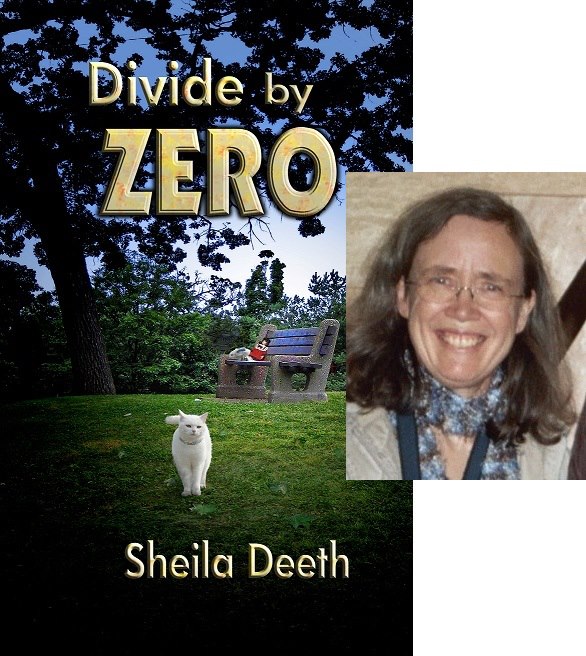
Author, blogger, reviewer Sheila Deeth, interviewed me for her blog, and here is one of the questions she asked, followed by my response:

You are always such an encouragement to other writers, posting excerpts, interviews, character interviews, offering advice, sharing experiences. . . . What do you think drives your generosity?

I don’t consider such online activities as generosity, just part of the internet experience. I never quite knew what to do on Facebook, for example — I don’t like games or sharing cute animal photos or any of the other things that clog the news feed — so I built up a couple of discussion groups. It gave me a way of interacting with people and besides, I love talking about the whole writing process. As for the interviews and such. Well, that was a fluke. My personal blog is blue, but I figured out how to change the color, so just for fun, I did an orange blog, a green one, a red one, a purple one, and then I had to figure out what to do with all of them. A book blog and an interview blog seemed the obvious use for two of them since I came in contact with so many authors. The interview blog especially has a fairly good rating, and it seems a waste if I don’t have an interview to post, so I keep promoting it.

In the back of my mind, I hoped that all the author karma I’m building up would somehow help catapult my books to stardom, but so far, it hasn’t happened. But that was never the point of promoting authors on my blogs. As I said, that was mostly a fluke.

(You can find the rest of the interview here: My thanks to author Pat Bertram)

That is only part of why I promote other authors on my blogs. The truth is even less altruistic than I made it sound. I’ve had those two author blogs for several years and just posted sporadically until a couple of years ago. After the death of my life mate/soul mate, I got addicted to a few of the games on my computer — Spider Solitaire, Mahjong Titans, and FreeCell. I so desperately needed for something to work out, I kept playing the games over and over until I won. I couldn’t redo my life, so there was some sort of comfort in redoing something — anything — until it came out right. And the games were a way of taking a vacation from the pain that all but consumed me at times.

When I realized how obsessed I had become, I decided to go cold turkey and give up the games, but I still needed something to do to break the hold of grief when it got too much for me to handle, so I substituted blogging — posting excerpts and author interviews to promote other authors in addition to daily blogging here on Bertram’s Blog. I figured that at least I would be doing some good with my online activities, which is something that cannot be said about computer games.

As for why I keep up with promoting other authors now that my grief is dissipating . . . well, it’s the right thing to do. If you want me to interview you, you can find the questions and instructions here: Author Questionnaire

***

Pat Bertram is the author of the conspiracy novels Light Bringer, More Deaths Than One, A Spark of Heavenly Fire, and Daughter Am I. Bertram is also the author of Grief: The Great Yearning, “an exquisite book, wrenching to read, and at the same time full of profound truths.” Connect with Pat on Google+

What Difference Do You Want to Make as a Writer?

In Worlds of Wonder, David Gerrold says, “As a human being, you make a difference. Simply by existing, simply by being in the room you make a difference. What kind of difference do you want to make as a writer?”

This is a time of flux for me, and I no longer know what difference I want to make as a writer or what I want to say.

The first book-length piece I wrote was a fictional autobiography (sort of). I had a lot of matters I needed to work through and thought it would be a good way to do it. The writing helped, as I’d hoped, but the book was so bad I don’t consider it one of my finished novels, but I do consider it my apprenticeship.

The first real novel I wrote because I wanted (needed) to make some money. Silly me! I didn’t know at the time how few people ever made a living off their books. I also wanted to talk about the Vietnam war, and get rid of a lot of misconceptions that had arisen about why it happened and what it was supposed to accomplish. Most of those parts ended up being deleted in the rewrites, and the book became more about mind control and less about Vietnam.

The second novel I wrote because of Albert Zuckerman’s book How to Write the Blockbuster Novel. I wanted to write a blockbuster novel and make a ton of money and to expose some of the experiments that had been perpetrated on humans. In many ways that book is my best work, but so far, it hasn’t reached anywhere near the readership I had hoped for.

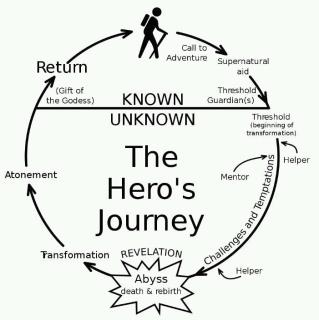
The third novel I wrote because I read The Writer’s Journey by Christopher Vogler and I wanted to write a mythic journey story. And debunk a lot of the Hollywood myths about the mafia. And make a lot of money.

The fourth novel I wrote to present a different way of looking at the world and to debunk UFO myths. And to make money, of course. This was actually the first book I conceived after I finished my apprenticeship. It just took me five years to get the whole thing worked out and to finish the massive amounts of research necessary.

My current novel — more of a work-in-pause than a work-in-progress — was supposed to be my declaration of independence from the dictates of the publishing industry and my efforts at making a living by writing. It was supposed to be a silly story, and when it started turning into something deeply metaphysical, I lost my way. And so it sits, waiting for me.

The thing I’ve always said to people via my books is: “Beware. Nothing is as it seems. You are being lied to, and have always been lied to,” but I’m not certain I want to continue with that theme. Don’t know where I am going with my writing. Can you get anywhere if you haven’t a clue?

I’ve never really had any interest in writing the great American novel (or the great global novel), but for some reason lately, I’ve been getting the feeling that I want to get so good at both storytelling and writing that I will not be ignored. I have a hunch I am at still at the beginning of my journey as a writer, though I have no idea where I will end up. I’m hoping I will be the hero in my own journey, transformed into a powerful writer who can make a difference, even in a small part to people who might someday read my books.

Meantime, I’m sticking with blogging. That’s part of my journey, too.

What about you? What difference do you want to make as a writer?

***

Pat Bertram is the author of the conspiracy novels Light Bringer, More Deaths Than One, A Spark of Heavenly Fire, and Daughter Am I. Bertram is also the author of Grief: The Great Yearning, “an exquisite book, wrenching to read, and at the same time full of profound truths.” Connect with Pat on Google+

Giving Thanks for Words

Every day I find something to be grateful for, even if it’s only that the sun is shining,  that I once had a great love, that I have open spaces to explore (both in my head and in the world). Even when all else seemed bleak these past thirty-one months since the death of my life mate/soul mate, even when I had no hope, there was always something to be grateful for (most often that he was no longer suffering), so I don’t need to set aside a special day of thanksgiving.

Still, during this season of giving thanks, there is something I am especially grateful for, something worth celebrating . . . words.

Words convey thoughts, ideas, hopes from one person to another. They connect us from continent to continent, enabling us to bond with like-minded people all around the world. I have exchanged words — and friendship — with people from New Zealand, Australia, Canada, the Nederlands, India. And for this I am grateful.

Words allow us to read and to write, to find entertainment and enlightenment in worlds created out of nothing but letters strung together. Words allow a story, concocted in one mind, to come to full realization in another. For most of my life, these worlds of words have been my life, or at least a major part of it. Now that I too am a world-creator, I am grateful for the words with which I build my stories.

Words give comfort, especially when distance (either geographic or emotional) does not allow a touch of commiseration. I am especially grateful for all the words of encouragement you (the readers of this blog) have given me during my time of grief, words that touched me. I hope some of my words touched you.

Words mean hope. With words, there is always the hope that we will be able to come to an understanding of each other, and perhaps find peace. (Of course, people would have to shut up long enough to listen to each other’s words; one-way words cause conflict and confusion.)

Words mean community and continuity. Words, both spoken and written, presuppose that there is someone to listen, and that is community. Telling our his-stories and her-stories to each other creates both community and continuity. They tell us who we were, who we are, and who we hope to become.

If there were no one to hear our words, if we existed solely in ourselves, we’d still need words to communicate our feelings and ideas to ourselves. This ability to put our thoughts into words gives us the power to know ourselves and to understand greater truths.

So this week, whether you celebrate the U.S. Thanksgiving or not, stop for a moment to give thanks for words. They are we.

***

Pat Bertram is the author of the conspiracy novels Light Bringer, More Deaths Than One, A Spark of Heavenly Fire, and Daughter Am I. Bertram is also the author of Grief: The Great Yearning, “an exquisite book, wrenching to read, and at the same time full of profound truths.” Connect with Pat on Google+

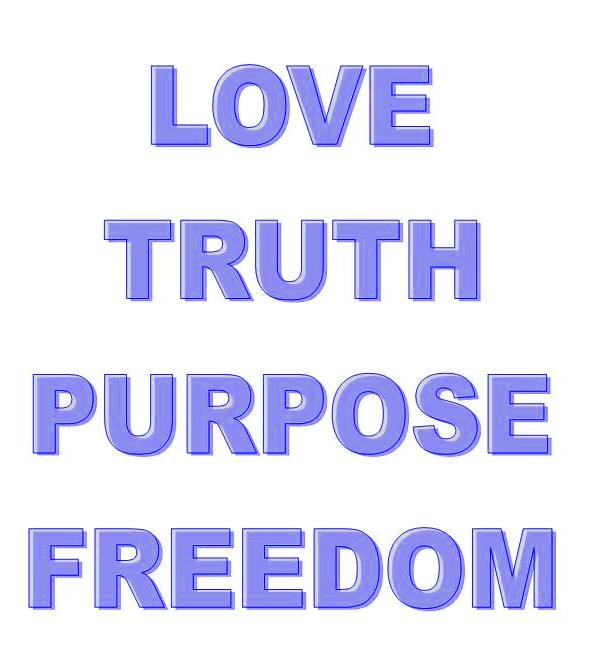
Love, Truth, Purpose, Freedom

Linda Bonney Olin interviewed me for her blog the other day, and the interview turned out to be special, at least for me, because it made me realize what my values are and how those values find a place in my books.

Linda asked me: Why did you choose to write A Spark of Heavenly Fire?

I responded: “A Spark of Heavenly Fire came about because of a Washington Irving quote: ‘There is in every true woman’s heart a spark of heavenly fire, which lies dormant in the broad daylight of prosperity; but which kindles up, and beams and blazes in the dark hour of adversity.’ When I read those words, I could see her, a drab woman, defeated by life, dragging herself through her days in the normal world, but in an abnormal world of strife and danger, she would come alive and inspire others. And so Kate Cummings, the hero of my novel A Spark of Heavenly Fire was born. But born into what world?

“I didn’t want to write a book about war, which is a common setting for such a character-driven story, so I created the red death, an unstoppable, bio-engineered disease that ravages Colorado. Martial law is declared, rationing is put into effect, and the entire state is quarantined. The world of the red death brings out the best in Kate and some of the characters she comes in contact with while bringing out the worst in others. Most of all, the prism of death and survival reflects what each of the major characters values most. Kate values love. Dee values purpose. Greg values truth. Jeremy values freedom. Pippi, who values nothing, learns to value herself.”

Next Linda asked if my fiction reflected my personal values, and I realized that of course my fiction (and non-fiction) reflects my values. Like Kate, I value love. Like Dee, I value purpose. Like Greg, I value truth. Like Jeremy, I value freedom. Like Pippi, I am learning to value myself. (You can read the entire interview here: Love, Truth, Purpose, Freedom: Pat Bertram.)

More than those qualities, though, I value kindness, and an innate kindness permeates all of my books despite the horrors the characters have to contend with. Though my heroes all have a love interest that helps form the story, none of my books can be classified as romances. The romance angle is not the main focus, and the romance is never conflicted. My couples in love treat each other kindly, showing a united front against the horrors of their world. For the most part, that’s the way I lived, so my characters can do no less.

***

If you would like to interview me, please let me know. I don’t usually open up this way, preferring to interview others, but turnabout is fair play. You can supply the questions, or I can, whichever you wish.

If you would like me to interview you instead, you can find the questions and instructions here: Author Questionnaire.

***

Pat Bertram is the author of the conspiracy novels Light Bringer, More Deaths Than One, A Spark of Heavenly Fire, and Daughter Am I. Bertram is also the author of Grief: The Great Yearning, “an exquisite book, wrenching to read, and at the same time full of profound truths.” Connect with Pat on Google+

You Are Invited to Participate in a Blog Chain — “The Next Big Thing”

I accepted an invitation to participate in a blog chain called “The Next Big Thing,” and since I don’t like to artbitrarily tag people, I’m extending an invitation to anyone who would lke to participate.

The idea is to answer 10 questions about your WIP or a new project and in turn “tag” 5 other writers who will write posts on their blogs.

My post will be up on this blog during the week of 11/26 – 12/02, so yours (which I’d link to) would be any time the following week, 12/03 – 12/09. You’d then invite 5 authors to do the same thing you’re doing, & link to their blogs, as well as back to mine (as the one who invited you to partake). Obviously, I’ll be linking to your blogs rather than the specific posts since those won’t be up yet when I post mine.

In step form:

1. I write a blog answering the interview questions, and put links to your blog (and 4 others whom I invite). I also credit the blogger who invited me.

2. You write a blog answering those questions and put links to 5 others of your choice, as well as linking back to my blog. (All our blogs will follow the same format, so when mine is posted, you will be able to see how to format yours.)

You are now finished!

3. The 5 authors you invite answer the questions; each one puts that blog up the week after yours goes up (yours would post the week of 12/03 – 12/09; theirs go up the following week) and each one credits you as the inviter & puts a link to your blog.

4. They in turn, tag 5 other authors, & the cycle continues.

So, you’re done once you put your own blog up and list your 5 authors.

The idea is that each person gets shouted out a) as an invited author, and then b) 5 times as the one who invited.

Would you be interested in taking part? The questions are below.

Ten Interview Questions for the Next Big Thing:

What is your working title of your book?
Where did the idea come from for the book?
What genre does your book fall under?
Which actors would you choose to play your characters in a movie rendition?
What is the one-sentence synopsis of your book?
Will your book be self-published or represented by an agency?
How long did it take you to write the first draft of your manuscript?
What other books would you compare this story to within your genre?
Who or what inspired you to write this book?
What else about your book might pique the reader’s interest?

Leave a comment if you’d like to take part in this blog chain. Nothing dire will happen to you if you don’t participate, of course, since this isn’t anything like a chain letter, but saying yes might get you a few new readers.

***

Pat Bertram is the author of the conspiracy novels Light Bringer, More Deaths Than One, A Spark of Heavenly Fire, and Daughter Am I. Bertram is also the author of Grief: The Great Yearning, “an exquisite book, wrenching to read, and at the same time full of profound truths.” Connect with

Showing My Particular Vision of the World

All the books about writing I ever read stressed the importance of genre. The books recommended choosing a readily recognizable genre and sticking to it. Apparently, readers like to know what kind of book they are reading and don’t take well to authors who hop from one genre to another (and if readers do accept it, agents and editors sure don’t). The books also suggested developing a series character in that specific genre, one who is so compelling people will be waiting for the next book. And readers who come late to the series go back to read earlier books, so sales take on a life of their own, each book helping to sell the others.

Seems simple enough, but I ignored the advice. Each of my books is a stand-alone novel without a series character, and each straddles a shadowy line between genres. Since I didn’t create a series that helps promote me and my oeuvre, I have to start over each time a new book of mine is published, promoting each book individually, finding a new readership.

I’ve experienced all the setbacks that bedevil authors — too little support, too many rejections, too much time dedicated to writing-related activities, such as editing and promotion, and not enough time dedicated to writing. But the most disheartening of all is the difficulty of generating momentum with non-genre, non-series books.

And yet . . .

We can only write what we are compelled to write. We each have a vision, and we must be true to that vision, true to ourselves, true to our stories.

Diane Arbus, noted American photographer, said, “I really believe there are things nobody would see if I didn’t photograph them.” And so it is true with writers. We see things, either in the world or in the world of our imagination, that nobody would see if we didn’t photograph them with our words.

Each of my books shows a particular vision of the world as I know it. A Spark of Heavenly Fire shows the horror of an all-too-possible pandemic, the even more horrific steps the government is ready to take, and the various ways, both heroic and craven, people might react to such an eventuality. More Deaths Than One shows the unthinkable results of mind control experiments, experiments that have actually been perpetrated without our knowledge. Daughter Am I is a more light-hearted romp, a treasure-hunting tale of finding oneself in a most unlikely way. And Light Bringer, my latest novel, hints at a world where the Sumerian myth of a tenth planet — a planet of doom — is fact.

The disheartening aspects of writing without the scaffolding of a genre are more than offset by the joy of having created four unique visions of the world, dozens of characters who would not have life without me, vivid word pictures that exist only in my books. Like my lake of flowers from Light Bringer:

Becka kept running, needing no footpath to lead her to their destination. She could feel the music tugging at her, guiding her, singing her forward.

At first a faint red trumpeting, the music swelled into a full orchestra: orange church bells, yellow bugles, green violins, blue flutes, indigo cellos, violet woodwinds.

Beneath it all, she could hear the grasses murmuring, “Hurry, hurry.”

And then there it was, spread out before her in a shallow thirty-foot bowl. A lake of flowers— chrysanthemums and tulips, daisies and daffodils, lilies and columbines and fuchsia—all blooming brightly, all singing their song of welcome.

What things would people be deprived of seeing if you didn’t photograph them with your words?

***

Pat Bertram is the author of the conspiracy novels Light Bringer, More Deaths Than One, A Spark of Heavenly Fire, and Daughter Am I. Bertram is also the author of Grief: The Great Yearning, “an exquisite book, wrenching to read, and at the same time full of profound truths.” Connect with Pat on Google+

A Romance with Books

I watched the 1987 movie 84 Charing Cross Road yesterday, and it struck me as particularly poignant considering the current state of the book business. Some people call this movie a romance, though basically, the relationship between Helene Hanff and Frank Doel is little more than a business relationship. The true romance is Helene’s love of books — not just the content of the books, but the volumes themselves.

With the advent of Kindles, Nooks, Palm Pilots, IPads and other reading devices, bound books seem to be valued less and less. Ebook readers sneer at those who profess to love the smell of the book and the feel of the pages, but the truth is, there is a mystique about a printed volume. It exists as a thing separate from its words. You can hold the tome in your hands, riffle the pages, sample a word here and there. There is a tactile connection between reader and story, linking the two parties in a very physical way.

You love your ereader. I get that. I understand you love the ease of being able to cart around an entire library of downloaded stories and novels for a minimal cost. I understand that ereaders, with their ability to zoom in (or do I mean out?) and make the words larger for those with vision problems allow people to keep reading long after their eyes have given up on them. I also understand that such reading devices are the wave of the future.

But . . . here’s my dirty little secret. (Not much in the way of dirty little secrets, I admit, but it’s the only one I have.) I don’t own an ereading device, and I have no intention of getting one until I am forced to. For me, reading has always been a Zen-like experience where I become the book. Not the story. The book. My eyes would be focused on the page. One hand would be grasping the book while the other turned the page, quite mindlessly, I might add. The book might be resting on sternum or stomach, depending on my position. And the story osmosed through my body and into my soul without referencing the words.

For most of my life, I was a constant reader. That’s all I wanted to do, so for several years I did temp work to give myself maximum amount of time to read. To feed my habit, I would take out stacks of books from the library and buy bagfuls of new and used books. Often, I would pass the purchased books on to my mother. One time, I included Oh, God in a stack of books I gave her, and the language appalled her. I shrugged it off, saying I didn’t notice. That really upset her. “I don’t know which is worse,” she said, “that you would be so blasé as not to be bothered by the words, or so naïve as to not know what they mean.”

I tried to explain to her that I didn’t read words, but that upset her even more. I suppose it does sound weird, but it’s the truth. At least, it used to be. As I got older and my eyes weaker, the osmosis didn’t work as well, and I had to start reading words. I did not like that at all! Oddly, my eyesight has changed, and I now have perfect vision about nine inches from my eyes, (though I can’t see beyond that) so I can do the Zen reading thing again, but since I have a hard time finding non-trivial stories to osmose with, I don’t read much any more. (I used to feel guilty at having “wasted” my life reading, but now I’m glad I did.)

Anyway, the point is that while some people love their reading devices, others don’t seem to find the relationship rewarding, and I bet Helene Hanff would have been such a one. All those books she ordered from 84 Charing Cross Road are probably now available free from Google books (because really, who among us except die-hard literature students like Helene would pay to read the unabridged prose of John Dunne), but reading the books on a Kindle wouldn’t be the same for her as reading a leather-bound book with gilt edging. And, although my reading tastes are much more plebian than hers, reading on a device wouldn’t be the same for me, either. I don’t see myself having a Zen-like experience with a Nook or a Kindle.

The lesson of this movie is that it’s important to do things when you can, because one day it will be too late. Helen supposedly carried on a great friendship with Frank — or at least with the bookstore where he worked — but she never once called him, never once sprung for a ticket to London until after the store closed for good. (I’m not giving away any spoilers — the movie begins with her visiting the empty store.) And so it was with me and my romance with books. If I hadn’t wasted my youth reading but waited until now to carry on my romance with books, the romance would have been over before it had even begun.

***

Pat Bertram is the author of the conspiracy novels Light Bringer, More Deaths Than One, A Spark of Heavenly Fire, and Daughter Am I. Bertram is also the author of Grief: The Great Yearning, “an exquisite book, wrenching to read, and at the same time full of profound truths.” Connect with Pat on Google+