An Accidental New Year’s Resolution

UntitledtWhen I first got the internet in 2007, I embraced it as if it were a wonderful new friend. At the time, my mother was dying and my life mate/soul mate was sick. There was nothing I could do about either of those circumstances, and the internet gave me a place to escape from my real life.

The terrible times continued. My mother died, then three years later, my soul mate died, and one of the few ways I could escape from the grief was to spend time online. (Screaming also helped alleviate the grief, but being online was so much easier on my throat.) I moderated writing groups, connected to thousands of people, dived headfirst into blogging. I used a couple of my blogs to promote other authors because  . . . well, because the blogs were there and it seemed like the right thing to do.

Several unsettling incidents happened recently that made me rethink what I’m doing online. These incidents didn’t amount to much. A contretemps over an excerpt someone wanted me to post. The discovery that a terrible writer I know who writes awful books is making a fortune. A discussion about talent vs. persistence (most writers seem to believe that talent is more important, which disheartens me — are writers really so arrogant in their belief of their talent?). Just trivial things, but they got to me more than they should have, and it suddenly dawned on me that if I turned off my computer, these things don’t exist.

The truth is, except for this blog, I’m not having any fun online. I seem to have fallen into an alternate universe of self-published writers. I’m even getting known as a promoter of self-published writers, but I find this new world of publishing very discouraging. Many of the excerpts I post on my blog are not well written or are excerpts from books I’d never read if they were the last books left on this earth. And that’s saying a lot since once I read everything that fell into my hands. So why am I promoting such books? I no longer know.

It used to be that self-published writers were iconoclasts, following a dream at any cost. Now so many self-published writers are conformists, following a dream at no cost. Even worse, they are a militant lot, demanding regard for no apparent reason. I have become friends with numerous self-published writers in an online sort of way, and I know that many are good at the craft and strive to get better, but just as many self-publishers dash out a book in a month (sometimes even in a week) and expect to be taken seriously.

To be honest, I have no regard for most of the authors published by the big six, either, so this isn’t a self-published vs. traditional-published discussion. It’s about me. I am not self-published, though many people assume I am (guilt by association). Nor am I published by a major publishing company. Authors who were published by small independent presses used to called “indie authors” but self-publishers have adopted that name for themselves, so now there is no name for us.

In my case, it no longer matters what kind of author I am since I am not writing much fiction. Being around so much bad writing and so many self-aggrandizing writers has stifled any urge I might have to contribute words of my own.

So, to save my sanity, I’ve decided to escape from my online life. I’m going to keep up this blog, of course, but I’ll be cutting back on other online activities, especially those that involve promoting authors I don’t know and don’t like.

This resolution isn’t accidental — I’ve been giving a lot of thought to where I want to go with my online life. What’s accidental is the timing. What was supposed to be simply a resolution has accidentally become a New Years resolution.

***

Pat Bertram is the author of the suspense novels Light Bringer, More Deaths Than One, A Spark of Heavenly Fire, and Daughter Am I. Bertram is also the author of Grief: The Great Yearning, “an exquisite book, wrenching to read, and at the same time full of profound truths.” Connect with Pat on Google+

2102 Year in Blogging Annual Review

I received my 2102 Year in Blogging Annual Review from WordPress today. According to WordPress:

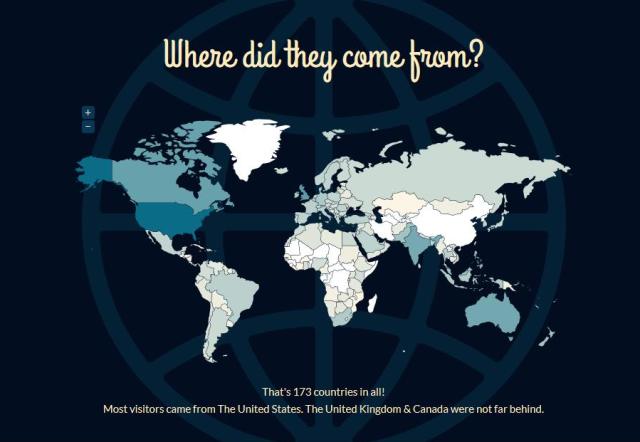
19,000 people fit into the new Barclays Center to see Jay-Z perform. This blog was viewed about 77,000 times in 2012. If it were a concert at the Barclays Center, it would take about 4 sold-out performances for that many people to see it.

In 2012, there were 365 new posts, growing the total archive of this blog to 1,099 posts. There were 358 pictures uploaded, taking up a total of 53 MB. That’s about 7 pictures per week.

The busiest day of the year was December 3rd with 1,683 views. The most popular post that day was Thirty-Two Months of Grief.

These are the posts that got the most views in 2012 (Some of your most popular posts were written before 2012. Your writing has staying power! Consider writing about those topics again):

  1. Sex With Sister Tips. Um…Yeah (July 2009)
  2. Describing a Winter Scene (February 2008)
  3. How Many Books Are Going to be Published in 2012? (Prepare for a Shock) (April 2012)
  4. Describing a Scene in an Interesting Way (November 2007)
  5. Meaningful Names (December 2008)

The top referring sites in 2012 were:

  1. wordpress.com
  2. facebook.com
  3. dsync.blogspot.com
  4. twitter.com
  5. 36ohk6dgmcd1n-c.c.yom

The top commenters were:

  1. Rami Ungar The Writer
  2. Joylene
  3. Rod Marsden

Visitors:

stats

***

Pat Bertram is the author of the suspense novels Light Bringer, More Deaths Than One, A Spark of Heavenly Fire, and Daughter Am I. Bertram is also the author of Grief: The Great Yearning, “an exquisite book, wrenching to read, and at the same time full of profound truths.” Connect with Pat on Google+

Close Encounters of the Coyote Kind

SANYO DIGITAL CAMERAIn A Spark of Heavenly Fire, I had a character meeting up with a coyote as a way of showing that the character was becoming “untamed,” that she was finding her inner savage.  She went from searching for self-affirmation from the men in her life to finding affirmation in herself. But more than that, she overcame her squeamish nature to do whatever she needed to do to survive.

Although her communion with the coyote seemed a bit trite or maybe just too pointedly mystical, I couldn’t think of a better way to show the change in her. And perhaps it only seemed trite because such things do happen. Yesterday, while walking in the desert, I came across not one but three coyotes. They were far enough away that I was never in danger, but they all stopped and stared at me. I stared back. We stood there for a minute or two, then I got distracted by a noise, and when I looked for them a second later, they were gone.

Perhaps this encounter was symoblic, a way of showing me that like my character, I am becoming untamed, embracing my inner savage, willing to do whatever I need to do to survive. More probably, the coyotes had come close to civilization in an attempt to find food. Either way, it was an interesting synchronicity of life imitating art.

***

Here is the coyote excerpt from A Spark of Heavenly Fire:

She had traveled only a mile or two when she felt a presence. Someone. Something. The awareness vibrated in her body, jangled her nerve endings. She stopped. Looked around. Although she didn’t see anyone, she knew she was no longer alone.

On full alert, she walked farther, and suddenly, there he stood, silhouetted on a hill.

A coyote.

Pippi froze, afraid that if she made a single move, he would spring on her. She thought of the knife, but it didn’t give her any comfort; the knife was so small and the coyote so large.

She tried to remember what you were supposed to do in a situation like this. Look the animal in the eyes? Look past it? Look at the ground?

Too late. Her eyes locked onto the coyote’s.

As she looked into him and he looked into her, she could feel her fear draining away.

They stood motionless, staring at each other for a long time — eons. Then the coyote’s ears pricked up. He cocked his head as if listening to something in the distance.

Pippi cocked her head, too, but all she heard was a quickening breeze.

Casually, as if he had more important things to do than to stare at this insignificant human, the coyote trotted off.

He turned to give her one last look, then he was gone.

***

Pat Bertram is the author of the suspense novels Light Bringer, More Deaths Than One, A Spark of Heavenly Fire, and Daughter Am I. Bertram is also the author of Grief: The Great Yearning, “an exquisite book, wrenching to read, and at the same time full of profound truths.” Connect with Pat on Google+

Indigo Sea Press's avatarIndigo Sea Press Blog

Spin the wheel of fortune and win a free ebook! Each number represents a Second Wind novel — even numbers for romance and chick lit; odd numbers for mystery, mainstream, and adventure. So, do you feel lucky? Choose a number!

colorwheel

Since this is only a virtual spinning wheel, you decide what number you landed on. Just pick a number from the wheel and post it as a comment below this article or email it to us at secondwindpublishing @ gmail.com (no spaces before and after the @, of course). We will send you a coupon for a free download of the ebook. The book might not change your life, but it will help while away the time until good fortune finds you. (You can pick a number someone else already chose, they don’t all have to be different numbers.)

If you prefer instant good fortune, click on a fortune cookie…

View original post 68 more words

iTunes, Anyone?

I just discovered that all of my books are available on iTunes, so if you receive a new iPhone, an iPod or any other iProduct this gift-giving season (or if you already have such a product), think of me! If you don’t have such a device, you can download a free  iTunes app for your computer — just click on any of my titles, and at the top of the page is a button to click for a free iTunes app.

A SPARK OF HEAVENLY FIRE Embodies the Essence of Christmas

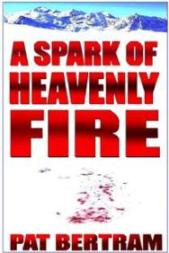
Washington Irving wrote: “There is in every true woman’s heart a spark of heavenly fire, which lies dormant in the broad daylight of prosperity; but which kindles up, and beams and blazes in the dark hour of adversity.” As I read these words several years ago, I could see her, a drab woman, defeated by life, dragging herself through her days in the normal world, but in an abnormal world of strife and danger, she would come alive and inspire others. And so Kate Cummings, the hero of my novel A Spark of Heavenly Fire was born. But born into what world?

I didn’t want to write a book about war, which is a common setting for such a character-driven story, so I created the red death, an unstoppable, bio-engineered disease that ravages Colorado. Martial law is declared, rationing is put into effect, and the entire state is quarantined. During this time when so many are dying, Kate comes alive and gradually pulls others into her sphere of kindness and generosity. First enters Dee Allenby, another woman defeated by normal life, then enter the homeless — the group hardest hit by the militated restrictions. Finally, enters Greg Pullman, a movie-star-handsome reporter who is determined to find out who created the red death and why they did it.

Kate and her friends build a new world, a new normal, to help one another survive, but other characters, such as Jeremy King, a world-class actor who gets caught in the quarantine, and Pippi O’Brien, a local weather girl, think of only of their own survival, and they are determined to leave the state even if it kills them.

The world of the red death brings out the worst in some characters while bringing out the best in others. Most of all, the prism of death and survival reflects what each values most. Kate values love. Dee values purpose. Greg values truth. Jeremy values freedom. Pippi, who values nothing, learns to value herself.

Though this book has been classified by some readers as a thriller — and there are plenty of thrills and lots of danger — A Spark of Heavenly Fire is fundamentally a Christmas book. The story begins on December 2, builds to a climax on Christmas, and ends with renewal in the Spring. There are no Santas, no elves, no shopping malls or presents, nothing that resembles a Christmas card holiday, but the story — especially Kate’s story — embodies the essence of Christmas: generosity of spirit.

(Why does A Spark of Heavenly Fire begin on December 2 instead of December 1? Glad you asked that. All through the writing of the book, I kept thinking: if only people could get through the first fifty pages, I know they will like this book. So finally came my duh moment. Get rid of the first fifty pages!! With all the deletions and rewriting, I couldn’t make the story start on December 1 as I’d originally intended, but that’s okay since it didn’t end on December 25 as I had hoped. The story overgrew it’s bounds, but the symbolism still held since it ends around Easter.)

ASHFiTunes: https://itunes.apple.com/us/book/a-spark-of-heavenly-fire/id407886976?mt=11

Second Wind Publishing: http://www.secondwindpublishing.com/product_info.php?manufacturers_id=17&products_id=47&osCsid=de3fad213c6baa1c6fa9982f221c8c74

Amazon: http://www.amazon.com/Spark-Heavenly-Fire-Pat-Bertram/dp/1935171232/ref=ntt_at_ep_dpt_4

Barnes and Noble:http://www.barnesandnoble.com/w/spark-of-heavenly-fire-pat-bertram/1100632312?ean=2940015574395

Smashwords: http://www.smashwords.com/books/view/1842 (You can download the book in any ebook format, including a format for palm held reading devices!! Even better, you can download 30% absolutely free to see if you like the story.)

***

Pat Bertram is the author of the suspense novels Light Bringer, More Deaths Than One, A Spark of Heavenly Fire, and Daughter Am I. Bertram is also the author of Grief: The Great Yearning, “an exquisite book, wrenching to read, and at the same time full of profound truths.” Connect with Pat on Google+

Going with the Flow of the Story

SWhen I write fiction, whether a short story or a novel, I always need to know who the main characters are, what they want, who is trying to keep them from getting what they want, and if they are successful in their quest. In fact, the ending is so important to me, that I often write the ending somewhere in the middle of the project. By then, the characters have been developed, most of the story has been laid out, and I can see how the pieces fit and know exactly where I am going. (I just thought of something — my unfinished novel has been paused for several years now. Only part of that is a loss of focus due to the changes in my circumstance. The rest comes from a lack of inclination to continue. It is the first novel I worked on that I did not write the ending in middle. I wonder doing so would get me back on track?)

The one project I am involved with that turns this need to know the ending on its head, is the Rubicon Ranch serial I am writing with other Second Wind authors. In the first book, we postulated a murder, then each of us created a character who might have reason to want to kill the little girl. That is all we had of the story when we began to write it. We knew, of course, that the killer would be found, but we didn’t know who did it, why it was done, or how the story would be resolved. We simply took turns writing our chapters in round robin fashion, and hoped readers would forgive us if all those different POVs made the story seem disjointed at times. (Normally, when you write a novel, you get to go back and fix any problems during rewrites, but when you write a novel online, you are stuck with what you wrote.)

My character Melanie Gray is a grieving woman. We started the project just a few months after the death of my life mate/soul mate, and I couldn’t conceive of any other sort of character — at the time, grief was all I knew. To make her a widow, I had to get rid of her husband, so I killed him in an accident before the story began. That was the sole point of the accident, yet in a later chapter, the sheriff seemed to insinuate that there could be a connection between Melanie’s husband and the little girl — perhaps they had both seen something and been killed to protect it.

Well, it turned out that the two deaths were unrelated, but later the sheriff (as written by Lazarus Barnhill) told Melanie he concluded that the accident had been deliberate.

Now, during the second book, even more information about Alexander is being revealed — he had, in fact, been murdered, and the car tampered with in such a way that it had to have been done by a skilled professional.

I find that development interesting since when I created the character of the dead husband, he had a single role — to make Melanie a widow — but because of the flow of the story, the husband is developing into a character in his own right, and a nefarious one at that.

Melanie, too, is developing in response to the needs of the story, or at least to the needs of her backstory. She and her husband were the authors of a successful series of coffee table books. They’d traveled the world, he taking photos, she writing the text, so obviously she isn’t the weakling her grief makes her seem. One of the ironies of her life is that while living in places where human rights weren’t respected, she never had a problem, yet now, in the safest place she’d lived in her adult life, she is steeped in death and in trouble with the authorities. (If you’ve read any of my books, you will know that I like ironies.)

It’s a refreshing change of pace being involved in the Rubicon Ranch project. All I need to do is write my chapter when it is my turn; make sure it is consistent with what I know of the character, her background, and what has already been written; and not worry about what is coming next — just go with the flow.

***

Pat Bertram is the author of the suspense novels Light Bringer, More Deaths Than One, A Spark of Heavenly Fire, and Daughter Am I. Bertram is also the author of Grief: The Great Yearning, “an exquisite book, wrenching to read, and at the same time full of profound truths.” Connect with Pat on Google+

Is Talent More Important Than Passion and Persistence?

In my Suspense/Thriller Writers’ group on Facebook, one author mentioned that she was skeptical of her ability to come up with an interesting idea. Horror writer Rob M. Miller gave a wonderful response that I’m reposting here. Considering the ephemeral nature of Facebook, in a couple of days his comment would have disappeared into the great maw of FB, and I didn’t want it to be lost forever. As to why Rob leaves such helpful and detailed comments, Rob told me, “I’ve been very blessed.  Have had several incredibly talented writers, authors, and editors … well, just give, and give so freely.  Facebook, and blogs like yours, offer opportunities to pay-it-forward.” So, here’s Rob’s take on talent:

Let’s shoot the elephant first: Maybe you have no talent.

Ouch.

But, hey, maybe…?

Talent, though, is over-rated. Heart trumps talent. As does persistence. Talent, or natural ability, only carries a person so far, and then it comes down to heart, passion, time, and yeah, work. Workworkwork. This holds true with just about anything. Certainly with the arts, but also with athletics. Is Michael Jordan a gifted athlete? Absolutely. But such an assertion also masks, or can easily gloss over all of Michael’s hard work.

Personally, I do believe that writers are born with some kind of special something, some X-factor, some proclivity for story, character, situation. It’s indefinable. Writers often don’t necessarily have genius intelligence quotients (I.Q.), but often do have very high emotional quotients (E.Q.).

One might theorize that writers are most often inherently empathetic, or for our sci-fi lovers, are empaths.

Maybe that’s it. At it’s core, maybe it’s about the ability to feel the pain of others.

Author and writing instructor Maralys Wills has put out that in her many decades of experience, she’s found quality writers to have two domineering traits: a) that the writer has been through trauma; and b) they tend to be optimists.

I tend to side with Mrs. Wills on this. (God help the writer who’s a pessimist.)

With that out of the way, let’s presume (’cause it’s better to be an optimist) that you have been born with that magical W chromosome that producers writers, then it can be a confidence issue.

This is common.

Jack Ketchum (or Dallas Meyer), one of Stephen King’s favorite authors — and one of mine — has mentioned more than once of having a writing friend, a gentleman with more “talent” than Jack, but who keeps his writing to himself, afraid to have it seen, afraid of rejection.

And, of course, even amongst the greats, or the commercially successful, one might be surprised to find that even these icons are still (and always have been) quite human. Stephen King has talked about finishing one’s various projects, that even when a writer thinks they’re producing crap, they can be wrong. The cliche is true: We are our own worst critics.

With writing books, classes, critique groups, online writing groups (like this one), etc., there’s often an arrogance involved. Even a necessary degree of arrogance — after all, if a writer didn’t have passion, and passionate opinions, what would they have to say or write about? End of the day, though, despite there actually being sound writing principles worthy of a craftsman taking the time to learn, writing well is often more about what not to do than what to do.

Proof?

Look at the number of times writing rules are broken, and with great impact, such as with Cormac McCarthy work “The Road,” where established guides of good and proper grammar were tossed for the sake of story and delivery.

Sometimes a writer, even those blessed with talent, needs to simply put in the time. Often, this is easy, what with the necessary and very true maxim of: write write write, read read read, write write write.

Sure. But write what? Read what? Practice with what?

As a general rule, I say have your car book, your bedroom book, and yes, a bathroom book … works that are always being read. Always be reading something within your favorite genre of fiction, but always reading a non-fiction work, too, as well as a work on the craft of writing, and another tossed in that’s outside of your favorite genre … perhaps even a work that’s in a field you might not normally consider. For me, that’s chick lit. Though it was akin to pulling teeth, I determined to read Billie Letts’s work “Where the Heart is,” and “The Divine Secrets of the Ya-Ya Sisterhood” by Rebecca Wells. With Letts, I remember being alone in my apartment, taking a bath, reading the final pages, and bawling my eyes out, thankful that no one was around to see me break down. (So much for ever denigrating chick lit again.) And, of course, the novel by Wells is simply brilliant, and brilliantly written.

What else might a writer do?

The could — and probably should — write a bestseller.

In 2001, I attended the annual World Horror Convention in Seattle, Washington, where I met the iconic Michael Slade (pseudonym for Jay Clarke). This brilliant author, during one panel, suggested that developing writers could do far worse than sitting down and transcribing, word for word, one of their favorite bestselling works of fiction, the entire book, front to back.

Sound tedious? It is. And, at times, can be boring. But it helps. A lot. In my case, I spent a bit more than a week transcribing Stephen King’s novel “The Dark Half.” The rewards were many.

Doing such an exercise helps to force a writer to reverse engineer the structure of a book, of a part (i.e., Part I, II, III, etc.), of a chapter, of a scene, and yes, even with paragraphs and sentences. Grammar and punctuation is absorbed as well. So’s how to build suspense … how to characterize. Hell, a lot of things.

I’m thankful I took Mr. Slade at his word; I know many did not — and still don’t. It’s not hard to imagine, is it, that such an exercise would be off-putting? After all, it seems like work.

But that’s the answer for the writer, or a significant chunk of it: putting in the work. Optimism and work. Passion and work.

We should read garbage once in a while to bolster our self-confidence and the greats to remain humble. We should be happy where we’re at, but never satisfied.

And we should work.

We can do that.

Was I born with that amount of talent? With that? Have I been mightily blessed, or merely cursed with a love and desire to write, but without that special something?

Such questions don’t really help. They can, however, hobble an artist, which is never a good thing.

Better to persevere, remembering that those things which are too easily given are often too lightly valued. Better, perhaps, to, through blood, sweat, and tears, develop ourselves.

In the meantime, for something practical, if your own work appears to be missing some needed bit of pixie dust (and maybe it’s not), you might consider Michael Slade’s advice.

And do consider mine: there’s always better and worse writers out there besides ourselves. We are what we are, and we are stuck with ourselves. We have a tendency to flip back and forth between being very thin-skinned (’cause we’re emotionally connected), and covered in rhino-hide (a covering we also need), but let’s never get too wrapped up in comparing ourselves with others, or our work with the work of others. It’s a fruitless waste of time.

All we can really do is write the best we can, practice and learn, and do it all over again.

What fun, what pain, what adventure.

***

With a love for reading and writing that started in his youth, Rob has traveled far to get to the place where he can now concentrate on breaking into the horror market.

Born and raised in the “micro-hood” of Portland, Oregon, he grew up as the oldest of three children, the son of a book-lover and a book-hater.

It was after two years of free-lance stringer work, and a number of publishing credits, that he tired of non-fiction and decided to use his love of the dark, personal terrors, and talent with words to do something more beneficial for his fellow man -– SCARE THE HELL OUT OF HIM.
Desensitizing People to Violence

Clint Eastwood posted a status update on his FB profile today. No, I’m not a “friend” or a fan, don’t “like” him or “subscribe” to him, but his comment is making the rounds of FB, and it ended up on in my news feed. Several times. I found the comment interesting because of my research for More Deaths Than One, a book about mind control, and what I learned about how the military desensitized recruits to killing.

Eastwood wrote: With a lot of thought on this in light of all the shootings in the past few weeks I am very concerned that the left is now going to hit hard on pushing the 2nd Amendment over the cliff.

This is the only amendment that the ‘O’ can attack with any chance of repealing. If this, and God help us if he does, will lead to a barrage of attacks on all the amendments and socialism will be a forgone conclusion.

If anything should be shut down it should be the violent video games. Really, and I know everyone likes their electronics but these are the things that are taking kids and young people out of interacting with society and their peers.

I know I will probably take a lot of flack for that last observation but I’ve taken the flack before.

Have a great Sunday and hug your family.

I’ve written about this before, most recently in If Everyone Wants Peace, Why are there Wars? As I said, many of today’s — and yesterday’s — video games were developed by the military because studies had shown that repeated images of violence and death inured people to killing. During World War Two, as many as 85% of soldiers fired over enemies’ heads or did not fire at all. After World War Two, there was a concerted effort by the military to overcome this natural reluctance to kill, and apparently they succeeded because during close combat in Vietnam, only about 5% of soldiers failed to aim to kill. These same desensitizing “games” were later released as toys for children. Is it any wonder that many people — teens and adults — now seem desensitized to violence? They are playing games that were purposely created to foster killing.

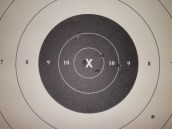
I am not a fan of guns, though I have attended a couple of shooting clinics sponsored by a local gun club. As an author, I thought it important to know how it felt to shoot a weapon at a target. The targets we used were the round kind rather than a silhouette of a human. (Not so incidentally, those human-like targets were also created by the military to get soldiers used to firing at people.) I enjoyed learning how to shoot, but handling the pistols, revolvers, shotguns and rifles did not create in me any desire to shoot at another human being. Guns by themselves do not encourage violence or a desire to kill. Certain video games do. Sociopathic tendencies do. Psychotic characteristics do. Military think tanks do.

Author Lee Child says that we don’t write what we know, we write what we fear, and that certainly is true in my case. I fear the machinations of the powerful, deadly, and calculating men and women who control our lives behind the scenes. And I fear politicians and celebrities who use tragedies to further their own ends.

***

Pat Bertram is the author of the suspense novels Light Bringer, More Deaths Than One, A Spark of Heavenly Fire, and Daughter Am I. Bertram is also the author of Grief: The Great Yearning, “an exquisite book, wrenching to read, and at the same time full of profound truths.” Connect with Pat on Google+

Story Excerpt From “Second Helpings” ~ The Gift by Pat Bertram

Second Helpings
An Anthology of Holiday Recipes and Short Stories
From Authors of  Second Wind Publishing

Second Helpings

A perfect gift for short story lovers and food connoisseurs!

From sweet childhood remembrances to fanciful solutions of family dramas to romantic relationships that begin–or end–during the holidays, Second Helpings is an anthology of stories and memories, but most especially of recipes. Our end-of-year celebrations are occasions that bring reunions with unforgettable feasts and that one special, treasured dish. At the end of each story, vignette, reminiscence, you’ll find a recipe or collection of recipes that will make your next holiday memorable as well.

EXCERPT FROM:

The Gift
By
Pat Bertram

Monica Dryden hummed along with the Christmas carols on the radio as she pulled the chocolate chip cookies out of the oven. They were David’s favorite, and she’d baked them for him every Christmas Eve for as long as they’d been together—five years now—continuing a tradition his mother started when he was a boy.

Still humming, Monica transferred the baked goods from the cookie sheet to a plate she’d purchased for the occasion—white china with a cheerful holly border. Her family had been too poor and too indolent to do much for Christmas, so making the holidays special for David brought her extra joy.

David Hollister. Even his name seemed to promise holiday cheer.

She put the plate of cookies and a glass of milk on a tray, added a sprig of holly from the bowl in the center of the table, and bore her offerings to the living room where David watched television.

He didn’t take his eyes from the screen when she nestled against him, but he didn’t pull away either, as he sometimes did. She smiled to herself, thinking how pleased he would be with the burgundy sweater and pinstriped shirt she’d bought him.

“Do you have to do that?” David asked.

“Do what?”

“You’re humming.”

She clapped a hand to her mouth. “I’m sorry. I didn’t realize—”

“Are those chocolate chip cookies?”

“Of course.”

He clicked off the television and turned to face her. “We have to talk.” He spoke the words softly, almost kindly, but still they chilled her.

“Talk about what?” she asked warily.

“It’s not working out.”

“What’s not working out?”

“Us. We’re not right for each other. You’re too . . . predictable.”

She stared at him as if he’d spoken in an alien tongue. “Predictable? Me? You’re the one who insists on my doing the same things the same way. Remember those throw pillows I bought? You said—”

“That’s the old me. The new me wants . . . change.”

Her head snapped back as if she’d been hit. David wanted change? Since when? She opened her mouth and said the only thing that came to her stupefied mind. “Do you want me to make you a different kind of cookie?”

“This isn’t about cookies. It’s about . . .” He looked at her, expecting her to supply the words as she often did. She usually knew what he was thinking and could easily fill in his missing words, but now she couldn’t even hazard a guess.

David’s eyes shifted from side to side as if he were searching frantically for a way out of the conversation. Finally his gaze settled on his hands. “I want a divorce.”

Monica froze, then, getting control of herself, she pulled her shoulders back and lifted her chin. “You can’t have a divorce.”

He jumped to his feet and all but screamed, “I knew you’d be difficult about this. Why can’t I have a divorce?”

“We’re not married,” Monica said evenly.

He gaped at her for a moment, then a grin that broke her heart spread across his face. “That’s right. I forgot.”

Monica slumped forward, elbows on knees, head in her hands. He forgot? How was that possible? Just last week they’d talked about getting married. No . . . wait. She’d talked about getting married. He’d nodded with a faraway look in his eyes that made her think he’d been seeing their future together but apparently only meant he hadn’t been listening.

David’s voice seemed to come from a long way off. “I’ll guess I’ll be leaving.”

Monica jerked upright. “You’re leaving? But this is your apartment.” And then, all in an instant, she understood. “Who is she?”

***

Second Helpings is available in print and all ebook formats from Second Wind Publishing.

***

Pat Bertram is the author of the suspense novels Light Bringer, More Deaths Than One, A Spark of Heavenly Fire, and Daughter Am I. Bertram is also the author of Grief: The Great Yearning, “an exquisite book, wrenching to read, and at the same time full of profound truths.” Connect with Pat on Google+