Trusting in My Journey as a Writer

I am not a natural storyteller. It took me my whole life to learn the elements of storytelling and to learn to write in a manner that pulls readers into my stories. After that, it took years to get published, because at the same time I was writing my first four novels, I had to learn the industry, such as what was required and who required it. I finally found a publisher who loved my books, and when the first two were released simultaneously, and a third six months later, I thought I stood poised for greatness. I was prepared to do what it would take to make a name for myself, but then, before that could ever happen, the gates of the book business burst open, and a horde of self-publishers surged into the arena. Not only did I have to compete with the established writers, I had to compete with millions of unknowns who were much better at marketing than I could ever hope to be.

Well, fate had other challenges in store for me. Five months after Second Wind Publishing released my third book, my life mate/soul mate/best friend/personal editor died, shattering me and my life beyond all recognition. One of the problems with losing the one person who connects you to the earth is that you no longer know who you are. For more than two years now, I’ve been tormented with the question of my place in the universe. With so many billions of people alive today, what is the point of being me?

I recently realized that the point of being me is simply to be me. I am the only me in the universe as far as I know, unique in a way only I can be. In the past few months, I have learned to trust in my life’s journey. I am trying to believe I am where I am supposed to be, being who I am supposed to be.

I now have five books released — the final novel my life mate helped me edit, and a journal of my grief — and I still have not reached the readership I’d hoped to find. I’ve been feeling as if I were adrift in an ocean of books, and I haven’t been able to find a reason to continue writing fiction. The books that apparently appeal to book buyers seem to have been written to capitalize on a trend — vampires, zombies, eroticism, bondage, symbols, serial killers — and my books are completely different from any of those. With so many millions of people publishing today, what is the point of my being one more unbestselling author?

If you’ve been reading my recent articles, you know how much this question about the meaning of writing has plagued me, and yesterday I found the answer. The point of writing is the same as the point of living — to be me. No one else can write the books I write. No one else sees the world in the same way as I do. Even better, most people who read my books love them. Such an incredible thing — to have written a book that even one person truly loves, and there are many who love my books. Would it be nice to make a living by writing, to be a bestselling author? Yes, of course, but in truth, it’s important for me to just write.

Now all I have to do is learn to trust in my journey as a writer. To believe I am where I am supposed to be. To write what only I can write. To be me.
The Future of Publishing

Some people have predicted a dire end to the publishing industry as we know it, and perhaps it needs to die. The old system of advances, where publishers subsidized the careers of a few specially chosen writers (literary authors or potentially lucrative authors who had not yet garnered a lot of attention) with the proceeds of bestselling commercial writers is a ridiculous anachronism in this world of corporate monoliths, and it is already being phased out.

The new publishing model of anyone publishing anything, no matter how trivial or poorly written, is no better. It still comes down to the same thing — that only a few writers will ever be able to make a living at the profession. As the anachronistic industry conforms more to the digital age of “content creators,” there will be fewer writers making millions and millions more writers making almost nothing.

In the old system, the publishers made the profits, not the writers. In the new system, the content distributors, such as Amazon, will make the profits. To Amazon, it makes no difference if they sell a million books by one author or one book by a million authors. It still comes down to the same thing — one million books sold (with absolutely no capital outlay). In fact, it doesn’t even matter if those books were sold or given away — Amazon still makes money from advertisers.

The price of books is constantly sliding downward. The $.99 ebook is becoming expensive in a world where readers expect books to be free. Unless there is a book they want to read (generally because everyone else is reading it) and so will plunk down cash, readers will most often choose the free item. In other words, writers will become drones feeding the machine with an ever-devalued product. There will always be a few writers making big bucks, of course, simply because hopes of financial success oil the machine. (In the same way, ordinary people occasionally become millionaires, perhaps by winning the lottery, which keeps taxes for the rich at a relatively low level, since people won’t vote to tax the rich if they expect one day to become rich themselves.)

In the end, what does all this say about the publishing industry? Perhaps nothing. Writers will still write. Most of us write not to make money, but to write and ultimately to be heard, if only by a few discerning readers. (Though a living wage would be nice.) People will still want stories. That is, after all, what we humans are — storytellers.

Print books will become scarce, but will probably always be available for those who want them, since books can be printed one at a time. (At least until the machinery breaks down.) Ebooks themselves will eventually be replaced by something else — interactive stories, perhaps, where the readers get to choose the ending. Or maybe stories that are fed directly to our heads via implanted computer chips. Who knows — certainly not me. All I know is that technology changes so rapidly that in twenty-five years, a book might bear as little resemble to today’s ebook as an ebook does to a print book.

There’s also a vague chance that the entire industry will burn itself out. When everyone can do something now, without working for it — such as publishing a book — there is no dream for the future. And what are we if we have no dreams?

(Perhaps that last paragraph needs an explanation. Many businesses were fueled by unfulfilled dreams of the young.  For example, the miniature business. So many girls didn’t get the dollhouses they wanted when they were young, that when they hit middle age and had the money to fulfill their love of the miniature world, they fueled an entire business. However, their daughters and granddaughters, who got the houses those women made, did not have unfulfilled dreams of a miniature world,  and now that those women are aging beyond the need for hobbies, the miniature business is fading.  I look at the publishing world and see how many writers middle-aged and older have come to writing because of unfulfilled dreams of being published. The new generations don’t have those dreams because they can write what they want and publish it. They don’t have to strive for the dream of publishing — they can get it immediately. So how is that going to affect the future of publishing? That’s all I meant.)

Do Writers Need To Be Supportive Of Each Other?

Do writers need to be supportive of each other, as if we are all part of one big dysfunctional family, as if all writers are the same, or at least connected in some way? I can see that it’s important not to be envious of those who make it big, since envy destroys the envier, but I see no reason to be glad of the success some writers attain, especially those who write books I would not read if they were the last books left on the face of the earth. Nor do I see any reason to celebrate the success of someone I have never met or have never exchanged so much as a single eword. Nor do I see any reason to encourage writers to write. Those who want to write, write. It’s as simple as that.

To some extent, almost all people are writers, even if they just jot shopping lists, post status updates, and respond to email messages, but this doesn’t make me connected to them except in the cosmic sense that we are all connected. (To be crankily honest, some who call themselves writers should have stayed with writing shopping lists.)

I’ve never felt any great bond to other writers, perhaps because I never really considered myself a writer. I don’t always write — sometimes I do, more often I don’t. I have no great passion or deep need for writing, no burning desire to create, no characters that scream to be born, no story that demands to be written or that writes itself. I don’t define myself by what I’ve written or what I might plan to write. My books are not my children, my characters are not my friends. When I write, I do have moments of being in the “zone,” but mostly I have to dig for each word, which is okay since that’s the part of writing that’s fun for me — finding the perfect word to say exactly what I mean. (The other day someone posted a question in a writing group asking for help figuring out a word since he didn’t have time to find it for himself. To me, that’s not a writer. Words make a writer. If you have no time for words, what’s the point of writing?)

Speaking of words, I don’t understand why so many writers brag about their word counts. What does a word count mean? It doesn’t impart anything about the quality of writing. For all I know, the authors could have been stringing nonsense syllables together or writing shopping lists, so why should I care how many words they wrote? Word counts mean nothing, what counts is the meaning of the words.

I really do sound cranky, don’t I? Well, perhaps I am, but it does irk me that just because I’ve written a few books and gotten them published, I am supposed to accept other writers as my “family.” Someone who slaps together a draft and posts it on Amazon as a published book doesn’t have anything in common with me. Someone who sits down and spews out thousands of words — good or bad — doesn’t have anything in common with me. Someone who scribbles an erotic book that catches the fancy of the masses doesn’t have anything in common with me. (Nothing I write will ever go viral. I have taste.)

Still, I do what I can to be supportive of other writers. I have two blogs that cater to writers — one is for book excerpts, and one is for interviews. (Feel free to send me an interview or book excerpt according to the instructions on the blogs.) I also have a writing discussion group on Facebook to help writers develop their craft, and I host a self-promotion extravaganza every Saturday to give writers a forum to promote. So maybe this is a case of my actions speaking louder than my words.

Is the Internet a Good Place for Aspiring Writers?

I had several topics I wanted to talk about today, but then I checked in with my discussion group on Facebook where they were talking about aspiring writers attacking other aspiring writers, and now that topic is the one foremost on my mind.

I never encountered attacks when I was learning to write because I didn’t get on the internet or meet other authors until I was already an accomplished writer. In the beginning, it was just me, pencils and paper, and an idea. (I didn’t even have a typewriter, let alone a computer.) Later, it was just me, pencils and paper, an idea, and a steady stream of books about writing — hundreds of them. Writing coaches often remark that you learn about writing by writing, but it takes a lot of writing (some say 10,000 hours, some say 1,000,000 words) to become adept at the craft. I thought that by studying how to write I could hurry things along so I could start making money from my books. (Hard to believe I was ever that naïve — the money part, that is. Learning to write was the right thing to do.)

I’ve hidden my first novel so I don’t come upon it by accident — it’s that bad. Of course, while writing it, I thought it sounded wonderful. Words added up to sentences, sentences added up to paragraphs, paragraphs added up to . . . well, you get the picture. Later, when I learned to write, I saw the horror of it. To this day, no one has read any of that draft, and no one ever will until I rewrite it. And re-rewrite. And edit. And re-edit. And copyedit. (I still like the premise, so it’s on my exceedingly short list of ideas for books.) I can’t imagine what sort of horrendous attack posting any part of that book online would have garnered, but as much as the attacks would have hurt, they would have been deserved, though I would not have known that.

One of the first things I did after getting the internet and learning my way around was to start this blog. (On September 24, this blog will celebrate its fifth anniversary. That day will also mark 365 days of daily blogging and my 1000th post +2. Any suggestions for a gala celebration?)

A couple of weeks after beginning to blog, I entered a writing contest where people left comments on the first chapter of a novel. By asking some people to vote, I enraged them since they considered such messages spam, and they retaliated with some of the most scathing commentary I’ve ever encountered. After those comments — and the 200 rejections I received before I found a publisher who loved my work — I became inured to attack.

The disparaging remarks never cease. Once my books were published, I got a few low ratings from other writers who thought (foolishly) that by giving me single stars it will make their ratings look better. I also got bad reviews (or at least mediocre ones) from people who simply didn’t understand the books, mistook the genre, or realized too late the books were outside their comfort zone.

I spent years on my books — perfecting the craft, rewriting and editing, following the suggestions of my editors to make them even better. They are the exact stories I wanted to write with the exact words I wanted to use. If people don’t like my books, that is their prerogative, and they are welcome to say so, but I’m not changing a single word to reflect the tastes of the few who dislike or who misunderstand my books. The way I see it, reviews are for other readers, not me — I already know what the books are about.

Most readers say nice things about my books, and most of the reviews are wonderful. Many of the reviews seem to have been written by my friends, but generally it worked the other way around. I became friends with my reviewers. How could I not? They have such great taste!

The internet is a great tool for writers, but I wonder if it hinders just as much as it helps. If I had put myself out there too soon, I’d have taken attacks personally, and maybe followed a different path with my writing. By waiting to put myself out there after I’d become an accomplished writer, it didn’t matter so much what anyone said. I knew the truth.

Don’t Buy My Books

With millions of people out there urging you to buy their books, I’m going to do the opposite and tell you not to by mine. Considering the books that make it big in this anything-goes book world, chances are you won’t like my novels, anyway. Here’s the truth of it — don’t buy my books if:

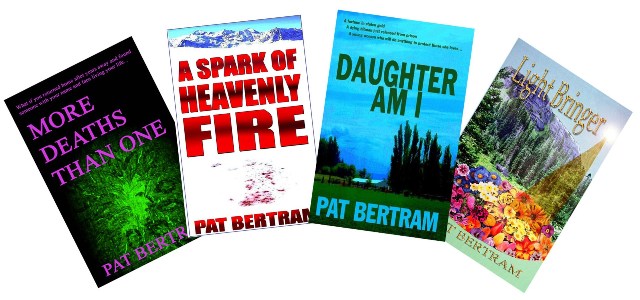
You are looking for vampire, ghouls, zombies. There are no such beings in my novels, though there is a brief mention of zombies in A Spark of Heavenly Fire, and there are plenty of sub-humans, such as unscrupulous scientists and bureaucrats, but they bleed and eat the same as any human.

You are a romance junkie. Love is a theme in each of my books, but the conflicts are never romantic ones. The characters gradually fall in love as they band together against a greater villain than their own feelings could ever be.

You are a fan of Fifty Shades of Grey. There is no eroticism in my books, no women who want to be subjugated by men, no kinky sex. In fact, the only graphic sex scene is in More Deaths Than One. Each of my books had less sex in it than the previous one, so my last novel, Light Bringer, had no sex. The story did not call for it, and it never occurred to me to add a few gratuitous sex scenes to help the books sell. (Also, unlike FSofG, my books are well-written.)

You only read thrillers. Although my books all have thrilling moments, and although people often stay up late to finish reading one of my books, they are not thrillers as such. In thrillers, the reader knows who did it from the beginning and learns why from the villain since part of the book is told from the villain’s point of view. In my books, the villain’s identity is not revealed until the end, except in Light Bringer, where the villain turned out to be maybe not so villainous after all.

You want books that are the same as all the rest, only different. My books aren’t the same as all the rest. I’ve read over 15,000 works of fiction, and I made sure my books weren’t like any of them. The endings are not predictable. If by chance you do guess the ending, there will still be a bonus surprise for you.

You like stories with flawed heroes. Not one of my characters was purposely flawed to make them more interesting. They are real in their own right, struggling to survive as best as they can, learning the truth of themselves and their world, growing into who they need to become.

You like raunchy humor. There is much humor in my books, particularly Daughter Am I, but the humor comes from character interaction without a single tinge of raunch, or it comes from a sly sense of irony.

You like a particular genre. My books have no particular genre. When I was growing up, the libraries had small sections for genres such as mystery, science fiction, romance, westerns, but the rest of the books were all shelves alphabetically. That’s where my books belong — with the rest. When I have to pick a genre, I usually say the books are conspiracy fiction since they are all based on various so-called conspiracies. Some readers call Light Bringer science fiction , but to be honest, it was written as myth fiction — based on modern conspiracy myths and ancient cosmological myths.

You only “buy” free books. My books are not free, and except for rare promotions, they never will be free. You can, however, download 20-30% free at Smashwords to give you a sense of what my books are like. (You can find my Smashword’s profile here: Pat Bertram. Scroll down below the book trailers to find my books. Click on the one you’d like to download.)

I Don’t Call Myself An American

I just saw a photo on Facebook: I’m not a Democrat. I’m not a Republican. I’m an American and I want my country back.

I was going to keep my mouth shut, but this American thing has been griping me for a long time. The following diatribe is not a political commentary but a semantical one. (I don’t want arguments, but I’m already getting one — I’m writing this on MSWord, and MS says there is no such word as semantical and there definitely is such a word.)

I have no politics, but I am a word lover, and I believe in using proper terms.

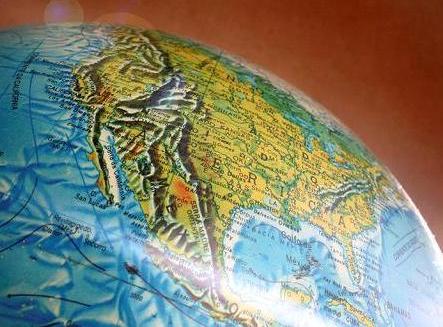
Everyone from the top of Canada to the tip of South America is an American. We who live in the United States are OF America. We are not America, nor are we the only Americans, though somewhere along the way, the term was usurped by people in this country for their sole use, perhaps because Unitedstatesian is awkward.

We were never supposed to be Unitedstatesians, anyway — we were supposed to be Coloradans and Minnesotans and Oregonians. Each state was to be a strong political entity, a sovereign territory loosely united under a weak central government. That is not how things have ended up and that is not the issue here (though anyone who has read my books knows how I feel about strong central governments). The point is that we in the United States are not Americans. Or rather, the United States is not “America.” We don’t even have our own continent. We share the North American Continent with Mexico, Canada, and Central America. In fact, in Europe (or so I’ve read), North America is not even considered a continent in its own right — it’s a subcontinent of America. So most Americans are not even “American.” Although the United States is the most populous of the American countries by far, most Americans are actually Peruvians and Canadians, Brazilians and Panamanians, Mexicans and Columbians.

I don’t call myself an American. The term is too general to have any meaning, and it is too ethnocentric. Despite what my fellow Unitedstatesians believe, The United States of America is not the center of the world, though geographically, it might be in the center of the American continent. But still, that is no reason to act as if we are the only Americans.

You say you’re an American and you want your country back? What country is that?

Writing as a Metaphor for Life

I love to talk about the elements of storytelling and the mechanics of writing even though I seldom write fiction any more. For me, writing is a metaphor for life. People don’t seem to want to talk about the philosophical aspects of human motivations or the meaning of life, but if I phrase these questions as part of a discussion about fiction, writers are more than willing to share their ideas.

I’ve had online discussions about the importance of feeling important, about our self-concept and how it motivates us, about how we are only as good as that which angers us, how kindness can drive our lives, how our family and our background creates us, what we win by losing and what we lose by winning. Outwardly, all these discussions were about creating believable characters so real they come alive, but beneath the discussions of characters and place and background, we were talking about us. What gives us worth. What makes us real. What life means.

Life, like writing, is all about connections. Writing coaches often describe a story and its conflicts as war, but a different way of looking at story conflict is connection and disconnection. Like our characters, we relate to other human beings in a constantly changing series of connection and disconnection — from birth to death, from falling in love to grieving, from listening to ignoring, from embracing to turning away, from anger to forgiveness.

Life, like writing, is about learning, perfecting one’s craft, whether breathing life into words or simply breathing life.

Life, like writing, is a puzzle. We follow our story however and wherever it leads us, trying to fit all the pieces into a coherent whole. In writing, we must find the coherency. In life, sometimes coherency eludes us, yet we still puzzle it out the best we can.

Someday, perhaps, I’ll get back to writing fiction. In that case, I’ll probably stop talking about writing. Or maybe it works the other way around. If I stopped talking about writing, maybe I could write.

Do Readers Have an Obligation to Writers?

In a current writing discussion on Facebook, authors are trying to figure out why so few readers leave reviews of books, even books the readers loved. This expectation of reviews seems just another example of the upside-down book world that exists today. Writers have come to feel that because they publish a book and make it available for people to read that readers have an obligation to them, but readers have no obligations to writers.

Writers have obligations to readers, and they often fail to honor those obligations. Writers have an obligation to make sure what they write is readable and free of error. They have an obligation to present a finished product, one that has been edited and presented in the best possible manner. And they have an obligation to fulfill the promise of the book. If a story starts out strong, tantalizing readers with a wonderful premise, the author has an obligation to fulfill the implied promise of an equally dazzling ending, but so often books simply fizzle at the end, as if the writer ran out of ideas. (Many big name writers do this, yet people still continue to buy their books. Maybe they keep hoping that one day the ending will be spectacular? I’ve given up hope, and no longer read books by these authors, but considering their continued success, I can see I am a very small minority.)

Writers ask readers for their money, for their time, for their suspension of belief. Even if the book is a free download or a library checkout, authors are still asking for time, and time is worth more than money these days. So why should readers be obligated to pay for the book — again — with a review?

Not only do many writers expect reviews, they expect readers to critique their books, to tell them what works and what doesn’t. This is one of the many ridiculous results of the current anyone-can-publish-anything world — people do publish anything. They publish first drafts as if the drafts were finished books and expect readers to tell them what works and what doesn’t. It is not the readers’ obligation to help writers hone their craft — it is the writer’s responsibility to present an already honed product. (Writers have actually told me they publish their book to get feedback. And they charge readers for the privilege. There is something dreadfully wrong about knowingly publishing a first draft and selling it as a finished book.)

It’s amazing to me not that so few readers follow through with reviews, but that so many do. I am grateful for every review I have received, and I am thrilled every time someone tells me they love my books either via email or through a review left on Amazon or Goodreads, but I don’t expect it. I know readers have no obligations to me as a writer, just as I have no obligation to the writers of the books I read.

A Kinder, Gentler Grief

A few days ago, I posted an article on this blog saying that a story begins when the world becomes unbalanced. If this is also true in real life, then my story began when my life mate/soul mate died. Nothing else I have ever experienced unbalanced my world the way his death did. It rocked me to my very core, and I am just now recovering a sense of equilibrium.

In a story, as the character strives to restore the balance, matters get worse. That usually happens in the case of grief, too (though generally not because of anything the bereft did — it’s simply the way life is). In some cases, the bereft had to move soon after the funeral, sending them further into grief. In other cases, more losses followed, leaving the bereft feeling as if they were drowning in death. Sometimes nothing happened, which at times is even worse, since it leaves the bereft alone in a limbo of sorrow.

I am on my way to finding a new balance, but I am not there yet. I still have upsurges of grief, though for the most part the surges are gentler and easier to handle. A few nostalgic tears, a brief indulgence of remembering, an acknowledgement that I miss him and want to go home to him, then I continue on with my life.

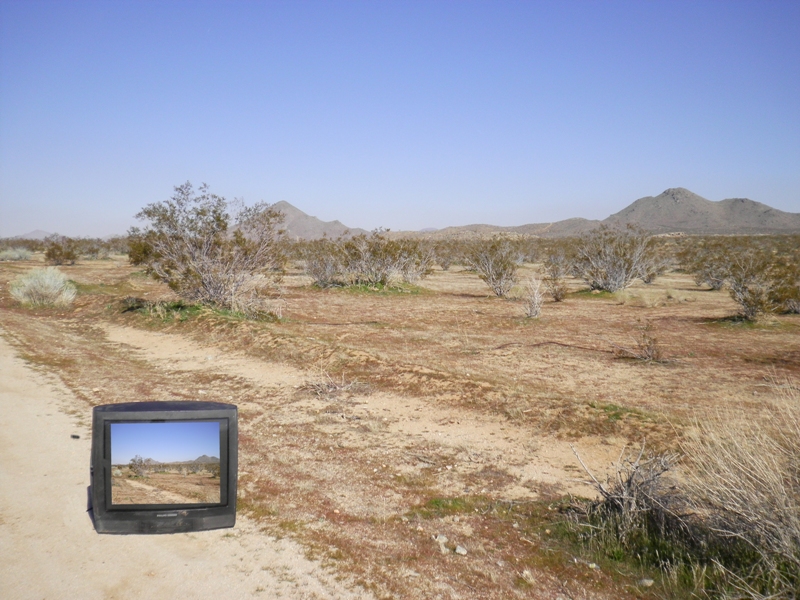
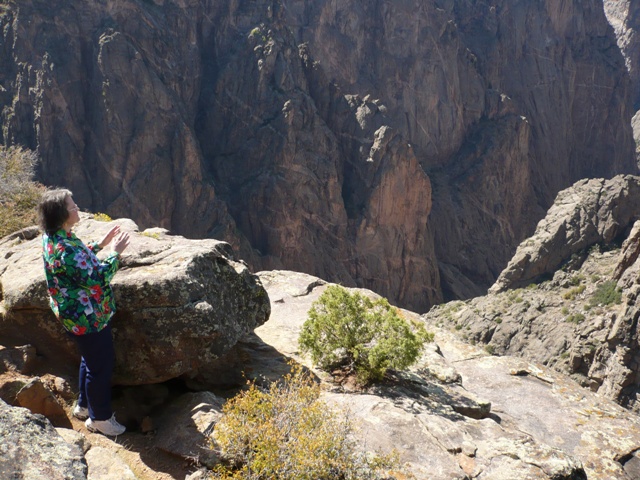
My most recent upsurge began on Saturday, always a sad day, and culminated in a walk in the desert. I haven’t called out to him in a long time, though I still talk to him, but today, I desperately needed to feel some sort of connection, so I yelled, “Can you hear me?” He didn’t answer, at least not in any way I understood.

I’m not sure how one finds a new balance after such a devastating imbalance as losing a life mate. Perhaps it’s a matter of making additional changes, the way small controlled fires can help put out major fires. Maybe it’s a matter of continuing to take one step at a time and waiting until the world rights itself. Or it could be a matter of being present, of being in one’s body, of simply being.

I’ve had to make changes, of course — I had to leave our shared home so I could look after my father — and I will be making other changes when this part of my life comes to an end. Meanwhile, I am trying to take life one step at a time, to capture each moment as it comes, to be present in my life, to be. In a story, of course, such passive actions don’t create a compelling plot, but in real life, sometimes “being” is the best we can expect at any given moment.

And anyway, my story hasn’t ended yet. In some respects, it feels as if this new story hasn’t even begun, as if I’m still in the first chapter, sorting out the imbalance.

Murder in the Wind

Murder in the Wind is an anthology of crime/mystery short stories contributed by the authors of Second Wind Publishing. Murder, mayhem and the unexpected are rife in each riveting story.

I’m a bit biased, but my favorite story is “The Stygian Night” by . . . drum roll . . . me! As a reviewer said, “In this delicious little story by the master of misdirection, Pat Bertram so draws us into the fantasy life of would-be author Silas Slovatksy that we scarcely recognize a “real” story unfolding in the background.” Poor Silas, he wants so much to be an author, but he just doesn’t get it.


***

Excerpt from “The Stygian Night”:

It was a dark and stormy night.

Silas Slovotsky leaned back in his chair and studied the words he’d typed into his computer.

He grinned. Perfect. The very words he needed to set the scene. And they had the added benefit of being true. It was a dark and stormy night. Except for his porch light, of course. And the thunder and lightning—

He leaned forward and peered at the computer screen. Did the sentence seem a bit trite? Maybe he needed to spiffy it up. He opened his thesaurus to the word “dark” and ran a finger down the page. “Stygian”. That might work.

He cleared his computer screen and typed: It was a stygian night.

Nope. Didn’t have the euphoniousness of the original sentence. Perhaps if he reread what he’d already written he could figure out how to proceed.

He printed out the manuscript he’d been working on for the past four months and read the single page. Dark as Night by Jack Kemp.

A thrill ran up his spine. He could see it on the shelf in the bookstore. Kemp, King, Koontz. He’d chosen his pseudonym specifically so the reviewers could call them the unhallowed trinity. And he deserved the accolade.

A knock on the door startled him out of his dream.

Who could that be? His friends—all two of them—knew he didn’t like to be disturbed when he was writing.

***

A few of the other stories included in the anthology are:

 “A Whiff of Murder” by Lazarus Barnhill: Barnhill reintroduces a pivotal character from The Medicine People. Old, wiser, sober and cynical, Bob Vessey hasn’t lost his touch in examining crime scene evidence.

“Hanging Around” by J J Dare: This marvelous tale begins playfully with squirrels sporting around a human body, hung seventy feet off the ground and quickly suspends the reader.

“This Time” by Claire Collins: A swiftly moving, smoothly written love story that turns into serial murder and mayhem. Well, all’s fair in love and revenge.

“The Strange Disappearance of Comrade Wang” by Mickey Hoffman: Becka, an innocent and vulnerable girl, finds herself at the mercy of the authorities in a strange and hostile place.

“Murder at the Manor” by Juliet Waldron: To read Waldron’s work is to be not transported but immersed in different, distant times and places. We genuinely regret it when her story ends.

“The Spot” by Deborah J Ledford: The Spot is just what Ledford hits in this awesome little tale of revenge, remorse and restoration.