How Many Years Do You Have Left?

Sometimes research gets so bizarre and obtuse that the results seem meaningless. For example, Brazilian physician Claudio Gil Araujo came up with a test to predict how many years we have left.

The test was for 51 to 80 year olds, but so far I haven’t found anyone that age who could perform the test perfectly, not even the dancers I know. For the test, you’re supposed to stand in the middle of the room, cross your legs, then gracefully lower yourself into a cross-legged sitting position without using your hands, elbows, or knees. You get 5 points if you can get down into a sitting position. If you can do it but are clumsy, you lose a point. Every time a hand or knee touched the ground, you lose another point. Next, you’re supposed to stand up, legs still crossed, without any part of you touching the ground. This gains you another five points, but again, if you are clumsy, you lose a point. Every time a body part touches the ground, you lose a point.

The maximum is ten points. Araujo’s research indicated that if you score less than 8 points, you are twice as likely to die within the next five years as those who scored more than 8, and if you score less than 3 points, you are five times more likely to die.

According to these statistics, I should have been dead long ago. I have never in my life, except perhaps as a small child, been able to do simply cross my legs and sink gracefully into a cross-legged sitting position.

Beyond that, the parameters of the test were ridiculous — there is a vast difference in mortality and fitness, health and agility from the ages of 51 to 80. The test would have had more validity if it centered on a single age or at least narrowed the age grouping. 51 to 60, 61 to 70, 71 to 80. It should also have been divided by men and women.

A 51-year-old male has a .59% chance of dying within a year, and a 51-year-old woman has a .35% chance of dying. An 80-year-old man has a 6.16% chance of dying within a year, and an 80-year-old woman has a 4.39 chance of dying. Considering that as a rule men have shorter life expectancies, and 68% of the participants were men, the test results would have been skewed even further. Supposedly, they adjusted for such factors, but there was no indication of what those adjustments comprised. Besides, genetics is a huge factor. If one’s parents lived to a very old age, you have a better chance of doing so yourself regardless of your ability to sit crosslegged. (The test does not apply to those less than 50 since the results are vastly different.)

The way I figure, f you want to know how long you have left to live — just live life to the fullest, and one day you will arrive at the end. Then you will know.

***

Pat Bertram is the author of the suspense novels Light Bringer, More Deaths Than One, A Spark of Heavenly Fire, and Daughter Am I. Bertram is also the author of Grief: The Great Yearning, “an exquisite book, wrenching to read, and at the same time full of profound truths.” Connect with Pat on Google+. Like Pat on Facebook.


Grief: Yes, There is Hope

A woman whose husband died six months ago contacted me to say she’s reading Grief: The Great Yearning and is finding comfort from knowing that what she is feeling, others have felt. She mentioned that some things I wrote were identical to things she wrote in her journal, which goes to show that grief is individual, and yet much is the same when it comes to losing a husband or a soul mate. The pain goes down so deep, it hits places in our psyches we didn’t even know existed.

The woman asked how I was doing, then posed the question that haunted me for years: “Is there hope for me?”

It’s hard to believe, when you are lost in the cyclone called grief, that there will ever come a time of peace. Since I had no such belief, I held tight to the belief of others that the pain will ebb, that I will find renewal. TheCalifornia sunrisey kept telling me to be patient, that it takes three to five years, but around four years most people find a renewed interest in life. And so it is with me. I feel alive again. I still have an underlying sadness. I miss him, of course, and always will — I even cry for him occasionally, though the tears pass easily without lingering pain.

I am finding that certain songs, movies, days, memories, bring about an upsurge of grief, and apparently, from what others have experienced, this will be true for the rest of my life, but at least I feel as if I am alive. I felt disconnected from life for a long time, as if I too had died. And partly, that is true — the person I was when I was with him did die. But now I need to be the person I am when I am with me. I can no longer take him into the equation of my life. My being alive does not make his being dead any less significant, though oddly, his being dead does make my being alive more significant. I once loved deeply. I once was so connected to another human being that his death sent me reeling for years.

But now, I am me. Just me. Not a bad thing to be.

This change in me is obvious. I met someone on my walk today, someone I’d talked to sporadically over the past three and a half years. He stopped me, asked me how I became such a star. (Radiant, he meant.) He barely recognized me, even though I was wearing the same sort of comfortable and inelegant clothes I always wear when walking. In fact, he said at first he thought I was young enough to be my daughter. He hunched his shoulders forward to show me how I used to walk — like an old woman.

So yes, there is hope. If you’re still grieving or feeling unalive after suffering a significant loss, take heart. If I can find my way back to life, so can you. Just grieve, find comfort where you can, try new things, and be patient with yourself. The pain does ebb, and chances are, around the fourth or fifth-year anniversary, you will find a renewed interest in life. Until then, wishing you peace.

***

Pat Bertram is the author of the suspense novels Light Bringer, More Deaths Than One, A Spark of Heavenly Fire, and Daughter Am I. Bertram is also the author of Grief: The Great Yearning, “an exquisite book, wrenching to read, and at the same time full of profound truths.” Connect with Pat on Google+. Like Pat on Facebook.
“Ordinary People Becoming Extraordinary”

Sometimes we have to laugh at ourselves and our conceits. Yesterday I wrote a blog post Whose Book Is It? about readers who saw something different in my books than I intended. I wrote:

A Spark of Heavenly FireA reader once pointed out that A Spark of Heavenly Fire was about love in all its guises. He was right, that is a major theme, though that hadn’t been my intention. I wanted to write a big book, an important book with ordinary people becoming extraordinary in perilous times. Since I didn’t want to do a war story, I did the next best thing — created an epidemic so deadly that the entire state of Colorado had to be quarantined to prevent the spread of the disease. To “personalize” the catastrophe, I told the story from several points of view, not just character POV, but the various ways the characters viewed the epidemic. And what shone through, by the time all the stories were told, was the theme of love in all its guises.

It wasn’t until this morning that I remembered that I hadn’t intended to write an important book with ordinary people becoming extraordinary in perilous times. Well, the important book part is right — I wanted to write a classic story that most people would be able to identify with. But I never used the phrase about ordinary people becoming ordinary until I received a rejection letter from an agent, in which the agent thanked me for sending them my excerpt since they “were always looking for such stories about ordinary people becoming extraordinary, but . . .”

Oddly, I don’t remember what followed the “but.” There was always a “but.” “We liked the concept of your story but we didn’t fall in love with your characters as we had hoped.” “Your book is excellent, but we only publish literary books and yours is more commercial.” “We loved your book, but we don’t know how to sell it. It has too many science fiction elements to be mainstream fiction and not enough to be science fiction.”

But I digress. The point is, that is where I got the idea of A Spark of Heavenly Fire being a story of ordinary people becoming extraordinary. I figured if I got a personalized rejection letter rather than a badly Xeroxed form letter or even just a “no thanks” scribbled on my query, that maybe I was on to something. So I started using the phrase “ordinary people becoming extraordinary” to describe the book in subsequent query letters. I did it so often that it stuck even after I learned the truth — the rejection letter that had so impressed me had been a form letter after all. (I thought that since they had expressed an interest in my writing, I’d query them about another book and got the exact response as I did the first time.)

The truth of why I wrote A Spark of Heavenly Fire is that I wanted to write about society turned upside down. I wanted to create conditions where the successful folk didn’t have the skills to be successful in the new world, but the unhappy, the failures, and the outcasts were able to find happiness, success, and fulfillment. I mostly achieved that, but one character — a beautiful young woman — turned out to have good coping skills, which gave the book more of a dimension than if she’d ended up in the gutter.

***

Pat Bertram is the author of the suspense novels Light Bringer, More Deaths Than One, A Spark of Heavenly Fire, and Daughter Am I. Bertram is also the author of Grief: The Great Yearning, “an exquisite book, wrenching to read, and at the same time full of profound truths.” All Bertram’s books are published by Second Wind Publishing. Connect with Pat on Google+

Whose Book Is It?

We writers do the best we can to tell an engaging story, hoping readers will like what we have written, but often readers see something in the story that we didn’t purposely put there.

Sometimes this “extra” is good. A reader once pointed out that A Spark of Heavenly Fire was about love in all its guises. He was right, that is a major theme, though that hadn’t been my intention. I wanted to write a big book, an important book with ordinary people becoming extraordinary in perilous times. Since I didn’t want to do a war story, I did the next best thing — created an epidemic so deadly that the entire state of Colorado had to be quarantined to prevent the spread of the disease. To “personalize” the catastrophe, I told the story from several points of view, not just character POV, but the various ways the characters viewed the epidemic. And what shone through, by the time all the stories were told, was the theme of love in all its guises.

DAIsmallBut sometimes the “extra” that readers find is not so good. Daughter Am I is the story of old time gangsters. A young woman inherits a farm from murdered grandparents she didn’t know she had — her father had claimed they died before she was born. When she confronts her father with his lie, he merely responds, “They were dead to me.” She becomes obsessed by the mysteries of why her grandparents had been murdered and what they had done that was so terrible their only son cut them out of his life.

She tracks down her grandfather’s friends, most of whom had lived nefarious lives, and she gradually learns who her grandfather was. At the end of the book, her actions mirror what she has learned about her grandfather, and so she learns the truth of him.

This is the book I had written — a young woman searches for her grandfather, and finds him in herself, in her outlook on life, in her dealings with others.

One friend who read the book was reticent to tell me what she thought. She admitted she loved the characters and the writing, but then she finally said, in a hesitant voice, “But the ending isn’t exactly moral, is it?”

In thinking about it, I had to admit it wasn’t strictly moral, but the ending was inevitable since it fit the search-for-identity story I’d written. I didn’t really think anything more about it until I saw a review where someone liked the book and the characters, but didn’t like cynicism of the book — that anything is justifiable as long as you treat your friends right.

These two comments made me wonder about the truth of the story. Was it really cynical? Really immoral? I wasn’t trying to make such points. I merely wanted to tell a “hero’s journey” story about gangsters. And gangsters, by definition are immoral. If they weren’t, if they were law-abiding citizens, they wouldn’t be gangsters, they’d be corporate executives. (Well, maybe that’s a bad example, considering how many stories of larcenous corporative executives end up in the newspaper.)

In the end, it doesn’t really matter what story they read, at least not from my perspective. The truth of any story is in the minds of readers. We writers can only write the story we know how to write, then send them out into the world to make whatever they can of themselves.

***

Pat Bertram is the author of the suspense novels Light Bringer, More Deaths Than One, A Spark of Heavenly Fire, and Daughter Am I. Bertram is also the author of Grief: The Great Yearning, “an exquisite book, wrenching to read, and at the same time full of profound truths.” All Bertram’s books are published by Second Wind Publishing. Connect with Pat on Google+

My Midnight Visitor

The title of this post isn’t entirely accurate. It wasn’t a midnight visitor, more like an evening visitor, but “midnight visitor” sounds mysterious, which is fitting for such a mysterious visitation. Besides, it seems apt for this Yule season.

Last night I visited with a friend who wants to start a blog to spread the word about her faith. She hadn’t realized I knew how to blog, and was delighted when I offered to send her a blog tutorial I had written and to help if she had questions. She told me it must have been God’s will for her to come see me, and I agreed. (Although my faith might be so weak as to be almost non-existent at times, I am always respectful of other people’s beliefs.) A minute or two later, I happened to look out the window. The sky was a bright, happy orange. I told her, “See, God likes the idea of your blogging.”

We laughed and hugged, then she went out to take photos and I went to get my camera. I was so excited by the sunset — I had never seen such a vivid sky — that I left the door to the patio wide open. When I went back inside, a bird was caroming all over the living room. I try to shoo it out, but it hid behind a sideboard. Yikes.

Birds in the house scare me. They’re not like bugs that you can capture in a bottle and either throw away or release outside. Birds are big and wild and alien and frightened. Once when a bat crawled through a half-inch space between the screen and the casement of an open window, we waited until it fell asleep clinging to the curtains, then we used a very large container to capture it. But last night’s bird was huge. Poor thing, it was as upset by the episode as I was. Even though the door was open, it didn’t seem to be able to find its way out. My friend suggested opening the door wider, and as I did, the bird must have caught a whiff of freedom, because he flew over my head and was gone.

All in all, a very colorful evening.

009c

***

Pat Bertram is the author of the suspense novels Light Bringer, More Deaths Than One, A Spark of Heavenly Fire, and Daughter Am I. Bertram is also the author of Grief: The Great Yearning, “an exquisite book, wrenching to read, and at the same time full of profound truths.” All Bertram’s books are published by Second Wind Publishing. Connect with Pat on Google+

Rubicon Ranch: Secrets — The Mystery Continues

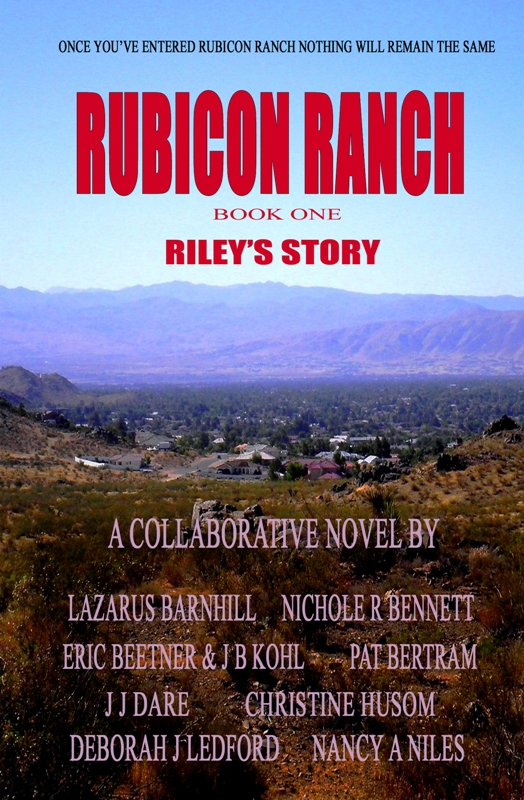
RRBookThreemidsizeRubicon Ranch is a collaborative and innovative crime series set in the fictional desert community of Rubicon Ranch and is being written online by the authors of Second Wind Publishing.

In the current story, the  body of a local realtor is found beneath the wheels of an inflatable figure of a Santa on a motorcycle. The realtor took great delight in ferreting out secrets, and everyone in this upscale housing development is hiding something. Could she have discovered a secret someone would kill to protect? There will be suspects galore, including a psychic, a con man, a woman trying to set up an online call-girl service, and the philandering sheriff himself. Not only is the victim someone he had an affair with, but he will also have to contend with an ex-wife who has moved back in with him and a jilted lover, both with their own reasons for wanting the realtor dead.

We hope you will enjoy seeing the story develop as we write it. Let the mystery continue! Whodunit? No one knows, not even the writers, and we won’t know until the very end! If you don’t want to miss further chapters, please go to the blog and click on “sign me up” on the right sidebar to get notifications of new chapters.

Chapter 22: Lydia Gavin
by Pat Bertram

Sunday, December 23, 5:25pm

Seth sat tall behind the desk in his tidy office, like a king receiving a subject. “What are you doing here?”

Lydia Galvin leaned back in the uncomfortable metal chair and gave the sheriff a serene smile, surprised to find that she felt no fear at facing him. “Your deputies brought me here.”

Seth glowered. “You know that’s not what I meant.”

“You want the whole story? I needed to get some groceries, so I walked up Delano Road to where I’d parked my car, and apparently your deputies found it and staked it out, because even before I could unlock the door, they jumped out of their vehicle, arrested me, and brought me here.”

“They didn’t arrest you. They just offered you a ride. I wanted to talk to you.” Seth gave Lydia one of his oh-so-familiar looks, the one that said she meant no more to him than an annoying insect.

“How did you know I was in the area?” Lydia kept her voice neutral, not wanting to seem confrontational. No point in arousing the beast in him until absolutely necessary.

“We checked out the bystanders’ videos of the burning crime scene, and there you were.” He drew in a quick breath as if upset with himself for responding. “But you’re supposed to be answering my questions. What are you doing in Rubicon Ranch?”

“Having fun. It’s quite a spectacle out there, you know.” Lydia crossed her legs, and felt a flash of satisfaction when he cut a glance at her thighs. All that running since she’d been fired had paid off—she now had the body she’d always wished for.

He remained calm, but his thinned lips and tensed shoulders told her how much that unruffled air cost him. “Why did you come to Rubicon Ranch?”

“Why do you think I came? To see what other lives you were ruining, of course. I had no intention of staying, I just wanted to check out Melanie Gray—according to the newspapers you two were quite a team—but then I met Nancy and when she let slip that you and she were sleeping together, I thought I’d hang around to see how you got out of that affair when it turned against you.” Lydia made a show of inspecting a fingernail. “I guess I’m lucky. You only ruined my career. Poor Nancy ended up in the morgue.”

“You think I killed Nancy?” Seth cocked his head like an eagle and stared at Lydia for a moment. Then he nodded. “I see. You think that by accusing me, I will assume that you’re innocent, because if you believed I killed her, then you couldn’t have.”

“Did you kill her?” Lydia waited for an answer that didn’t come. “She would have ruined you. She loved nothing but herself and power and money. She loved secrets, too, of course, but only because the secrets gave her power over people and were a source of great income. She said she used to be an actress and a model, but once when we had a few drinks, she admitted that was a front. She’d really worked as a call girl. I figured she gave up the life when she realized how much more lucrative secrets were than her body.”

Seth rose to his feet and paced the office. “You say she would have ruined me. Like you ruined me?”

Lydia forced out a small laugh. “I ruined you? No. You manipulated me. You began by treating me as if I were the most important woman in the world. You flattered me, paid attention to me, offered me words of love and the endearments I hungered for. When I was hooked, you stepped back, left me feeling bereft. And every time I spoke of leaving you, you’d pay attention to me again.” She felt tears beginning to gather behind her eyes. He doesn’t matter. Think of fire. Flames. Heat.

She drew in a deep breath, surprised Seth didn’t jump in to defend himself. He kept pacing the office as if she weren’t even there, which made it easier for her to confess. “You were my grand passion. I know you don’t believe that, but it’s the truth. I never expected you to leave your wife. I just wanted you to notice me. To put me first once in a while.”

Seth stood over her, his eyes icy as they locked onto hers. “But you turned me into the department. Said I misused my authority.”

“You did abuse your authority. I never wanted an affair with you. I had enough trouble with my husband. I didn’t need another abusive man in my life. You never knew about my husband, did you?” Lydia didn’t even try to modulate her bitter tone. “The great detective never noticed that his girlfriend had a husband who beat her. I wouldn’t have told your wife about us. Even though I threatened to tell her, I couldn’t have made our affair public. My husband would have beat me when he found out. And after you dragged your wife to my house so she could confront me, my husband did beat me. I had to go to the emergency room that time. But oh, no, everything that happened was my fault.”

“Good story,” Seth said. “Too bad none of it is true.”

“The all-wise Seth Bryan says it isn’t true, so that means it isn’t true?” Lydia shook her head sadly. “The law might be about what you can prove, but life isn’t like that. Some things are true no matter how much we don’t want to believe them.” Things like her husband’s abuse. Things like Seth’s disregard. Things like death and fire. “You men are all so blind you can’t see what’s in front of your eyes. I loved you but you threw me away, calling me a vituperative bitch. Yet Nancy, who didn’t love you at all and who truly was a vituperative bitch, you kept. But I’m through with all of you now.”

Seth sneered. “Turning into a lesbian?”

“That’s beneath even you, Seth, my love.”

“True. Perhaps the only true thing you’ve said today.” The phone rang. Seth took two long strides to the desk, and grabbed the receiver. “Yes?” A pause, then, “She’s home now? Stay there. Make sure she doesn’t leave. I’ll be there in just a few minutes.”

He hung up the phone, and turned to face Lydia.

She quirked her lips in an unamused smile. “Still on your wife’s leash? I’m surprised you haven’t killed her, too.”

“Just go,” he said wearily. “Keep my office informed of your whereabouts. We still have lots to talk about.”

Lydia rose, straightened her skirt, and settled the strap of her purse firmly on her shoulder. “There’s nothing left to say but good-bye. I didn’t kill Nancy. You did. But don’t worry, I won’t testify against you.”

***

Pat Bertram is the author of the suspense novels Light Bringer, More Deaths Than One, A Spark of Heavenly Fire, and Daughter Am I. Bertram is also the author of Grief: The Great Yearning, “an exquisite book, wrenching to read, and at the same time full of profound truths.” All Bertram’s books are published by Second Wind Publishing. Connect with Pat on Google+

A Dearth of Matches

Early in the twentieth century, Ivar Kreuger, a match manufacturer and financier, managed to corner the match market. Through various deals, he ended up with the exclusive rights to sell matches in many countries, including most of Europe, but this monopoly was not enough for him. Back then, it was a common practice for two or three people to light their cigarettes from the same match. Ivar realized that if he could somehow keep that third person from using the match, he could greatly increase his sales, so he had his advertising department start the rumor that it was unlucky to light thflameree cigarettes from the same match. Tales were told of dreadful things happening to the third person who used a match, like the bride who had been left at the altar and the soldier who was killed after each had lit a cigarette from a match that two others had already used. Even today, the superstition that it’s unlucky to light three cigarettes from the same match persists.

Oddly, though the superstition still exists, matches don’t. I needed some matches yesterday, a couple of books or even a box of old fashioned kitchen matches, and I didn’t find a single one. One major retailer sold fireplace matches, the long kind, but they were out of stock. A convenience store/mini market didn’t have any. The clerk said they usually had some, but were out. I even went to a smoke shop. Where there’s smoke, there’s fire, right? Wrong. No matches.

I used to collect matchbooks, but when I had to leave my home of twenty years and put my stuff in storage, I got rid of the matches. I thought it was too dangerous to pack them away, but now I wish I had them, for curiosity’s sake if nothing else.

Matches were an incredible invention. I remember reading stories about frontier days, and how if the fire went out, they had to get live embers from a neighbor’s fire, protecting it through all the miles of travel. There were flints, of course, and before that, rubbing two sticks together, but eventually people realized that it’s a lot easier to start a fire with two sticks if one was a match. Other means of lighting fires are more prevalent now, which perhaps explains the scarcity of matches, but still, it seems odd that a simple little tool that was once so valuable it sparked a financial empire is so hard to find today.

***

Pat Bertram is the author of the suspense novels Light Bringer, More Deaths Than One, A Spark of Heavenly Fire, and Daughter Am I. Bertram is also the author of Grief: The Great Yearning, “an exquisite book, wrenching to read, and at the same time full of profound truths.” Connect with Pat on Google+. Like Pat on Facebook.

Taking “Z” Things With Gratitude

When it comes to life the critical thing is whether you take things for granted or take them with gratitude. ~~ G. K. Chesterton

All this month, I’ve been taking with gratitude some of those things I often take for granted — an entire alphabet’s worth! Since today is the twenty-sixth day of this surge of gratitude, I am giving thanks for “Z” things.

I am especially grateful for:

zany hatZaniness. There is not enough zaniness in the world. There is plenty of idiosyncrasy and unconventionality, but these are so often serious choices and serious pursuits without the fun and amusement that are necessary for zaniness. Still, there is some zaniness in the world, for which I am grateful, and in the coming years, I will do my part to add to that zaniness, if by nothing else than my amusing hats.

Zebras. I am grateful for zebras and other mythical creatures. I call zebras mythical because although they are supposed to exist, I have never seen one. I’m not a big fan of zoos (another Z!) since I can’t bear to see anyone or anything caged, but I am grateful for zoos because someday, perhaps, I will be able to see such a beast.

Zeal. I am grateful that I can still muster up enough zeal to start such projects as this alphabet of gratitude.

Zenith. And I am grateful for the zenith (meaning culmination) of this project. I’m not sure I learned much from it, nor am I sure it made me any happier, but at least I pondered for a few minutes each day about what to take with gratitude. So many things for which to be grateful. Such a wonderful world!

Wishing you many zzzzzzs.

So what “Z” things are you taking with gratitude?

***

See also:
Taking “V” Things With Gratitude, Taking “W” Things With Gratitude, Taking “X” Things With Gratitude, Taking “Y” Things With Gratitude

***

Pat Bertram is the author of the suspense novels Light Bringer, More Deaths Than One, A Spark of Heavenly Fire, and Daughter Am I. Bertram is also the author of Grief: The Great Yearning, “an exquisite book, wrenching to read, and at the same time full of profound truths.” Connect with Pat on Google+. Like Pat on Facebook.

Taking “Y” Things With Gratitude

When it comes to life the critical thing is whether you take things for granted or take them with gratitude. ~~ G. K. Chesterton

For the rest of November, I’m going to take with gratitude some of those things I often take for granted — an entire alphabet’s worth! Since today is the twenty-fifth day of this surge of gratitude, I am giving thanks for “Y” things.

I am especially grateful for:

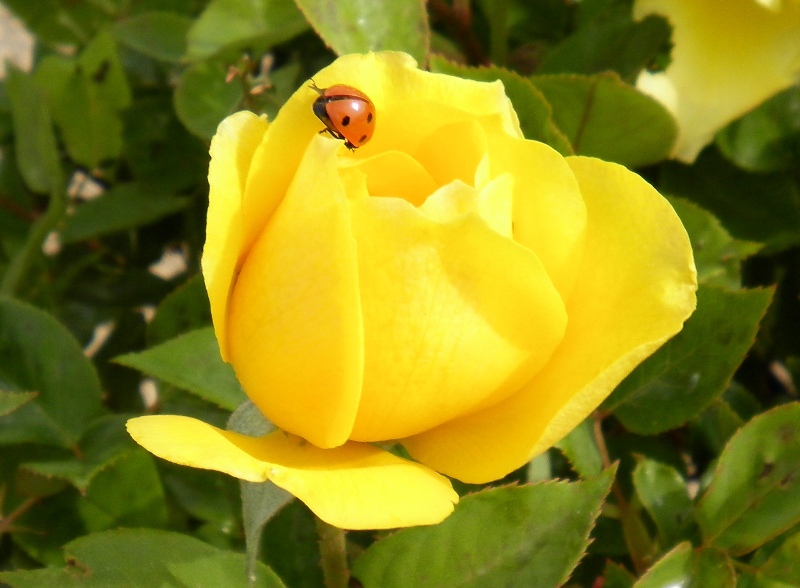
Yellow. Such a lovely, sunny color that mostly shows it face in the flowers of spring or the changing leaves of autumn. It’s hard to be unhappy in the presence of yellow — yellow makes us optimistic and brings clarity of thought. (Hmmm. Makes we wonder if I need to get a yellow shirt or even a scarf since I don’t own anything yellow, though at one time it was my favorite color.) So, today, I will be looking for yellow, and taking whatever I find with gratitude.

Yesterday. We take yesterday for granted. What else can we do? Yesterday is gone. And yet, and yet . . . I am grateful for all my yesterdays, for where I’ve been, what I learned, who I loved.

Yes. In recent years, I have made a practice of automatically saying “yes” to any opportunity that might arise, which has taken me to so many wonderful places. I said yes to a trip to Seattle to see Shen Yun, said yes to speak at a writers’ conference at St. Simons Island, said yes to fairs and festivals, said yes to shows and classes, said yes to merry-go-rounds and Ferris wheels, said yes to bizarre experiences and enjoyable excursions. After years of a constrained lifestyle where I didn’t have the luxury of accepting invitations (which, to be honest, were few and far between), “yes” has changed my attitude. Someday, “yes” might even change my life. So, today I will take with gratitude that simple little word, “yes.”

Youthfulness. Although I am not really youthful in years, appearance, or even outlook, there is still in me a youthfulness of spirit — a willingness to embrace new things, an ability to look around me with wonder, a yearning for adventure. I am grateful for that youthful spirit, and looking forward to wherever it might take me.

So what “Y” things are you taking with gratitude?

***

See also:
Taking “V” Things With Gratitude, Taking “W” Things With Gratitude, Taking “X” Things With Gratitude

***

Pat Bertram is the author of the suspense novels Light Bringer, More Deaths Than One, A Spark of Heavenly Fire, and Daughter Am I. Bertram is also the author of Grief: The Great Yearning, “an exquisite book, wrenching to read, and at the same time full of profound truths.” Connect with Pat on Google+. Like Pat on Facebook.
Taking “X” Things With Gratitude

When it comes to life the critical thing is whether you take things for granted or take them with gratitude. ~~ G. K. Chesterton

For the rest of November, I’m going to take with gratitude some of those things I often take for granted — an entire alphabet’s worth! Since today is the twenty-fourth day of this surge of gratitude, I am giving thanks for “X” things.

I am especially grateful for:

XX. There is a single page in my dictionary for X, so there’s not a lot of X things to take with gratitude. I could be grateful for X-ray machines (and I am when I need one, just not today). I could be grateful for xeriscaping, and I am — elder care is hard enough without adding lawn care to the duties. I could be grateful for xylophones, and I will be if ever I get one. So what “X” thing am I taking with gratitude today? Just that — X.

X marks the spot, and this spot — this blog — is something to take with gratitude. I’ve been blogging for more than six years, and daily blogging for more than two years, and still, I find comfort, companionship, caring, and contemplation here. So I am very grateful for this opportunity.

X stands for the unknown, and I am grateful for all the unknowns (unknown to me, that is) who stop by. And I’m grateful to those I have come to know by their comments. You have helped make me feel at home here, made me even feel wise at times.

I’m also grateful for the unknowns who helped prepare today’s meal. Since my 97-year-old father (who I am looking after) eats very little and since his idea of haute cuisine is Ensure, there was no reason to cook a holiday dinner from scratch, so I made it simple — rotisserie chicken, boxed stuffing, canned cranberry sauce, bottled gravy, bakery pumpkin pie, and yams. (Those I did cook — just plain yams, no carmelizing or marshmallowing). It was very good, actually, and the best part was that the whole things — the preparation, the meal, and the cleaning up — took little more than an hour, which leaves me the whole day to do . . . X. (Whatever that might be.)

So what “X” things are you taking with gratitude?

***

See also:
Taking “A” Things With Gratitude, Taking “B” Things With Gratitude, Taking “C” Things With Gratitude,Taking “D” Things With Gratitude, Taking “E” Things With Gratitude, Taking “F” Things With Gratitude, Taking “G” Things With Gratitude, Taking “H” Things With Gratitude, Taking “I” Things With Gratitude, Taking “J” Things With Gratitude,Taking “K” Things With Gratitude, Taking “L” Things With Gratitude, Taking “M” Things With Gratitude, Taking “N” Things With Gratitude, Taking “O” Things With Gratitude, Taking “P” Things With Gratitude, Taking “Q” Things With Gratitude, Taking “R” Things With Gratitude, Taking “S” Things With Gratitude, Taking “T” Things With Gratitude, Taking “U” Things With Gratitude, Taking “V” Things With Gratitude, Taking “W” Things With Gratitude

***

Pat Bertram is the author of the suspense novels Light Bringer, More Deaths Than One, A Spark of Heavenly Fire, and Daughter Am I. Bertram is also the author of Grief: The Great Yearning, “an exquisite book, wrenching to read, and at the same time full of profound truths.” Connect with Pat on Google+. Like Pat on Facebook.