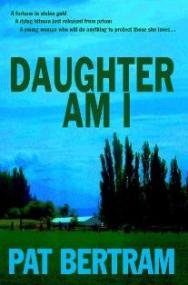
Excerpt From “Grief: The Great Yearning” — Day 159

I’ve come a long way in the three years since I wrote the following letter.  I still don’t understand the nature of life or death. Still don’t understand the point of it all, but I am embracing life, trying to create my own meaning out of small occurrences.  The main difference is that the wound where he was amputated from me has healed. I don’t worry about him — at least not much — but I’m still sad and l always miss him.

And oh, yes. I did finally get to the point where sometimes I make his chili when I need to feel the continuity of our shared life — too often now, our life together doesn’t seem real, as if it were but a story in a book. And in a way, it is a story in a book. Grief: The Great Yearning is not simply the story of my grief after his death, but the story of us, our connection, our love.

Excerpt from Grief: The Great Yearning

Day 159, Dear Jeff,

There is such a hole in me, such an inability to grasp the meaning of your absence, that I am totally lost and bewildered. I want—need—something I can never have. It’s like a hunger—a skin hunger, a mind hunger. I cannot comprehend what your death means except that I’m left alone to find my own way.

Damn it! I know we’re not the only people this ever happened to—I’ve heard so many sad tales these past months—but it happened to us.

You worked so hard to be healthy, you deserved to be healthy. You worked so hard to be strong, you deserved to be strong. Even with all the reality we had to face, I believed somewhere, somehow it would all work out for you, for me, for us. I know you were impatient with that belief—you wanted me to face the truth and to understand what was going to happen, but I was naïve in so many ways. I had no idea what death meant—the total end, the line that can never be recrossed, the sheer absence of the dead one. I still don’t know what it means, still can’t comprehend your goneness.

Does anything happen by our choice? In small matters, yes. But in big ones? I don’t see it. I look back at the past few years, trying to figure out what we could have done differently so that everything would have worked out for us, but all our efforts seemed to have led inexorably to your end.

What’s the point of it all? Why do we cling so much to life? In the eternal scheme of things, does it matter how long or short a life is? Does it matter that you only had sixty-three years? It sure matters to me! I want you in my life. I want you to have a life.

I read an article in the paper today that talked about stream-of-consciousness being the brain’s default mode. The journalist said that in depression, the default mode network appears to be overactive, that a depressive brain shows a pattern of balky transitions from introspective thought to work that requires conscious effort, and it frequently slips into the default mode during cognitive tasks. A depressive brain also shows especially weak links between the default mode network and a region of the brain involved in motivation and reward-seeking behavior.

Is this why I so seldom see the point in anything, why it’s hard to find a reason to do things? Is this why stream-of-consciousness writing is easy for me, but fiction is so difficult?

I’m surprised I’m not severely depressed with your being gone. I’m sad and in pain, but not in the black hole of despair. I can cry and be sad, but when the episode passes, I’ll be fine. Or I can be fine until something tilts me over the edge. Taking supplements does that occasionally. I cry as I swallow them, thinking of how you always cared enough for me to make sure I was getting the right nutrients. Other times, taking the supplements brings me comfort for the very same reason.

I still can’t eat the meals we ate together, so mostly I’m snacking. Just what I need, right? I usually have a salad though, so that’s good. I have a craving for your chili, but I’ll probably never eat it again. It won’t taste the same—I never could make it the way you did—and it would make me too sad.

It’s been nice visiting with you here—I wish it were for real and not just in memory. I think often of how brave you were. I need to be brave, too. I thought I’d just need courage to get through the final stages of your illness and the first months of grieving, but now I know I’m going to need courage to live the rest of my life without you.

I love you, Jeff. I hope you’re well. Adios, compadre.

Click here to find out more about Grief: The Great Yearning

***

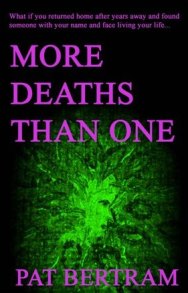
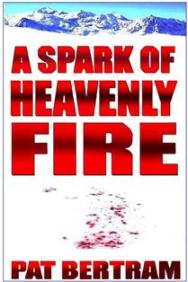
Pat Bertram is the author of the suspense novels Light Bringer, More Deaths Than One, A Spark of Heavenly Fire, and Daughter Am I. Bertram is also the author of Grief: The Great Yearning, “an exquisite book, wrenching to read, and at the same time full of profound truths.” Connect with Pat on Google+. Like Pat on Facebook.

Good Grammar is like Good Etiquette

I often hear new writers and self-published writers say that it’s okay not to follow the rules. That they can write however they want. That it’s more important to be creative than to be pay attention to grammar. That they need to break new ground.

Um. No.

Certain rules are necessary because they help clarify our writing and convey to the reader exactly what it is we want them to understand. I admit that in many cases readers don’t care. They just want something to titillate them. (How else can one explain the success of the appallingly awful 50 Shades of Gray?)

gift2Still, good grammar is like good etiquette. It’s a matter of respect. You might not think it necessary to thank someone for a gift, but that someone sure think it’s necessary. Besides, it’s the right thing to do, especially if you want them to continue sending you gifts. (Good grammar is also like good etiquette in that both are considered old fashioned and unecessary.)

I’ve given up trying to read self-published books because it’s too hard to weed the good books from the bad ones. So many self-published books seem to have been thrown in the Amazon river without any editing. If those authors don’t have the courtesy or respect to make sure the book is readable, then I certainly see no reason to give them the gift of my time and money. (Yeah, I know — it’s a different world out there. Many writers post a draft on Amazon and use reviews to find out what needs editing.)

A common problem involves wrongly used participial phrases that end in ing. According to The Elements of Style by Strunk and White, a participial phrase at the beginning of a sentence must refer to the grammatical subject.

The example Strunk and White give is: Walking down the road, he saw a woman accompanied by two children. Who is walking? He is, of course, since he is the subject of the sentence, and the ing phrase always refers to the subject. If the woman is walking, you have to rephrase the sentence: He saw a woman, accompanied by two children, walking down the road. You, I’m sure, would never have to worry about who is walking because you’d never use such an ambiguous sentence in the first place!

The other examples of wrong phrases Strunk and White give are humorous and show why it’s important to follow the rule (the parenthetical comments are mine):

Being in dilapidated condition, I was able to buy the house cheap. (If I was in dilapidated condition, how did I have the strength to buy the house?)

Wondering irresolutely what to do next, the clock struck twelve. (Hmm. The clock wondered what to do next? Smart clock!)

As a mother of five, with another on the way, the ironing board was always up. (Wow! That’s a lot of ironing boards!)

In case you don’t know how to rephrase the above sentences, here are my quick efforts:

Because of the dilapidated condition of the house, I was able to buy the place cheap.
As I wondered what to do next, the clock struck twelve.
A mother of five, with another on the way, I was never able to put the ironing board away.

Another ing problem comes from simultaneous actions, when an author has a character do something that’s physically impossible. For example: Pulling out of the driveway, he drove down the street. He cannot be pulling out of the driveway at the same time he’s driving down the street. He pulled out of the driveway, then drove down the street.

I know you know all this, but such sentence structures do slip into our writing. It’s up to us to wring the “ings” out of our work, and show respect for our readers.

***

Pat Bertram is the author of the suspense novels Light Bringer, More Deaths Than One, A Spark of Heavenly Fire, and Daughter Am I. Bertram is also the author of Grief: The Great Yearning, “an exquisite book, wrenching to read, and at the same time full of profound truths.” Connect with Pat on Google+. Like Pat on Facebook.

Grief Update: Forty-One Months

Forty-one months ago, my life mate/soul mate died of inoperable kidney cancer. At times his death seems recent, as if he’s just beyond reach, at home maybe, waiting for me to finish with my present responsibilities. At the same time, his death seems very far away. Last night I looked at his photo and was perplexed to realize he no longer seems real to me. I have no concept of him as a person. It’s as if he were merely an idea I had once a long time ago or maybe a character I created for a book. And yet I know he lived, loved, laughed. I know he was real. I feel the loss in the depth of my being, and tears of sadness and yearning for him are always close to the surface, though the tears seldom fall any more.

starbMy life doesn’t seem real, either. I walk, write, make friends, lose friends, make plans and break them, try new activities, see new places, sample new foods, wish on the first star I see at night. (Okay, so it’s Venus — from here, it looks like a star.) Despite all that I’m doing to create a life for myself, I feel as if I’m just going through the motions. I don’t want to live alone, yet I don’t want to live with anyone, either. I don’t want him back to suffer more, yet I wish desperately to see him once again.

Even if I did get a chance to see him, I wouldn’t know what to say — grief has changed me in some fundamental way, and I don’t know if we’d have anything to talk about. Of course, I’d ask him what his life was like, if he were happy, if I seem as abstract to him as he now does to me. We might reminisce a bit, and I’d probably tell him of a few worldly developments, but to be honest, nothing that has happened in the past forty-one months is so important that I’d drag him back from the dead to talk about.

I’ve been looking forward to a time when grief no longer has me in thrall (they say it takes three to five years to find a renewed interest in life, though from talking to people who have gone through a similar grievous loss, I found out it’s more like four to five years). And yet, if I feel this way now — as if he isn’t real — then I’m not sure I want to find out what’s ahead. But I have no choice. In seven months, it will be four years since his death, and twelve months after that, it will be five years. And he will seem even more gone than ever.

***

Pat Bertram is the author of the suspense novels Light Bringer, More Deaths Than One, A Spark of Heavenly Fire, and Daughter Am I. Bertram is also the author of Grief: The Great Yearning, “an exquisite book, wrenching to read, and at the same time full of profound truths.” Connect with Pat on Google+. Like Pat on Facebook.

Negativity Is in the Ear of the Beholder

People who tell me I’m negative make me feel . . . well, they make me feel negative, and for no good reason. I might not be a sunny person, always looking on the bright side, and I might not be one of those who believe you fake it until you make it, but I’m not negative. I’m pragmatic. A thinker. A truth seeker. And the truth is, people who call others negative often want things their own way and are peeved if the others don’t like it.

For example, a friend invited me to go to lunch, so I arranged my schedule around the time she chose. An hour before we were to meet, she called and changed the time. The new time would interfere with my plans for later in the afternoon, so I told her I wasn’t sure I could make it. She called me negative.

Another friend often emails me and asks if I’m available at such and such a time so we can talk, and many times I wait for a call that never materializes. If I express my disappointment or say I’d appreciate being informed of a change of plans, I get called negative.

The other day I mentioned I couldn’t do something, and a person I’d met a scant hour earlier, said, “I hate negativity. Don’t ever say you can’t do something in my presence again.” Huh? I couldn’t do it. That didn’t mean I wouldn’t try to do it or wouldn’t try to learn to do it. Nor was I being negative. It was a simple statement of fact. Being positive and saying I could do it would be a falsehood — a negativity — which is anathema to a truth seeker.

During those horrendous first days, weeks, months, after the death of my life mate/soul mate, grief would so overwhelm me at times that I would scream to the heavens, “I can’t do this!” And at that very moment, I couldn’t. Sometimes it took everything I had to simply breathe, let alone attempt one of the myriad end-of-life chores. Sometimes the pain of grief would well up, obliterating everything but raw agony and angst. But . . . I did what I needed to do. I used the heat of my anger and despair as fuel to accomplish such impossible tasks as clearing out his “effects” or boxing our things to be stored.

Two months after he died, I got up early, cleaned out the few remaining items I’d been using, packed my car ready for the trip to my nonagenarian father’s house so I could look after him. I walked through our rooms, remembering with what hope my mate and I had moved there, remembering the good times, remembering the more frequent bad times. Remembering his last hug, his last kiss. His death.

As I was shutting the front door, I thought of all that lay ahead of me. Pain welled up in me, and I cried out, “I can’t do this.” Then, it dawned on me: Yes. I can. Because I did. I got out my camera, and went through the house one last time, taking photos of the empty rooms to prove to myself that all those things I thought I couldn’t do, I did.

I still have times of screaming “I can’t do this” when life overwhelms me, but it’s not a sign of negativity. It’s merely an expression of the moment. And if someone doesn’t like my saying I can’t do something without finding out why I think so, it’s too bad. I can’t live my life to suit those who call me negative.

***

Pat Bertram is the author of the suspense novels Light Bringer, More Deaths Than One, A Spark of Heavenly Fire, and Daughter Am I. Bertram is also the author of Grief: The Great Yearning, “an exquisite book, wrenching to read, and at the same time full of profound truths.” Connect with Pat on Google+. Like Pat on Facebook.

It Is What It Is

I talked to a friend today about the various problems we are facing in this, our fourth year of grief, and she said, “It is what it is.”

Robert Hartwell Fiske calls such sayings “quack expressions,” saying they “readily explain behavior that the dimwitted otherwise find inexplicable, and justify attributes that they otherwise find unjustifiable.”

He’s right to a certain extent, and yet . . .

My friend is anything but dimwitted. She, like me, is struggling with life, death, grief, change, and other life experiences that are inexplicable to everyone, dimwitted, brightwitted, or somewhere in between. Sometimes it truly is what it is, quack expression or not.

Desp077cite what the positive thinkers and those who believe we create our own reality profess, much of life is beyond our control. We don’t decide who lives and dies. We can’t choose who we love or despise (though we can choose what we do with those feelings). We can’t always help people who need to be helped. We can’t hurry along or slow down natural processes, such as childbirth or old age. Nor can we recreate the world to suit our desires. The sun always rises in the eastern sky and sets in a westerly direction. The moon always affects our world, though  myths tell of a time before the moon came to stay. And, as they say, time and tide wait for no man. (Though I suppose, being a woman and not a man, I should be able to sway such natural phenomena.)

It is what it is.

Lately, I’ve been struggling with a couple of situations that are not of my making, that I have no control over, that don’t affect me in a primary way (besides tearing me apart by conflicted loyalties). I can’t solve any of the problems that have arisen, can’t walk away from them, can’t change anything. All I can do is realize each situation is what it is, and let it go as best as I can. (It helps to realize that in a case of divided loyalties, my loyalties belong to myself.)

In my writing, of course, I stay away from such expressions since I like my writing to have a tinge of elegance, but life is not always elegant.

It is what it is.

***

Pat Bertram is the author of the suspense novels Light Bringer, More Deaths Than One, A Spark of Heavenly Fire, and Daughter Am I. Bertram is also the author of Grief: The Great Yearning, “an exquisite book, wrenching to read, and at the same time full of profound truths.” Connect with Pat on Google+. Like Pat on Facebook.

Planning a Themed Road Trip

I’ve been meeting some well-traveled people lately, which has made me wonder how I want to approach my cross-country trip when I’m finally free set out. I could simply go where the spirit moves me, but when I’m on a road trip, where the spirit moves me is generally on down the road. I am destination oriented, and even though I always plan to make stops and take things easily, I drive straight through. One reason I seldom stop is road hypnosis. Another reason is that I worry what would happen if the car wouldn’t start on one of those back roads with no cell towers within range. But if it doesn’t matter where I am — because no matter where I am, there I will be — I might be more willing to stop every few miles or so. But without a set destination, I have a hunch I’d become subject to road hypnosis, and just keep on driving.

Highway

One possibility to prevent such mindless driving is to plan the trip. Reserve hotels and motels. Be prepared. But the point of an extended trip is to embrace irresponsibility. (At least to a certain extent. I don’t think I would enjoy being completely reckless.) I’ve always been the responsible one, and when my responsibilities end, I need to become free, spontaneous. Capricious, even.

Village Inn and Pub

Another possibility is to decide on a theme for the trip. Some people collect lighthouses, going from one to another, filling in their lighthouse passport books. For some reason, lighthouses have never been that important to me. On the other hand, I’ve fallen in love with piers, especially the long wooden pathways built over the ocean without restaurants, rides, and other amusement. So I could make a circuit around the county, hunting piers.

Ventura Pier at Sunset

Or Ferris wheels. Or any number of things: haunted houses, caves, waterfalls, oddities like the Winchester Mansion.

If everything else fails, I could simply hope that one day I would get tired of driving and find somewhere interesting to hang out for a while.

If you were to take an extended theme-based trip, what would you do, where would you go?

***

Pat Bertram is the author of the suspense novels Light Bringer, More Deaths Than One, A Spark of Heavenly Fire, and Daughter Am I. Bertram is also the author of Grief: The Great Yearning, “an exquisite book, wrenching to read, and at the same time full of profound truths.” Connect with Pat on Google+. Like Pat on Facebook.

Open Sesame!

I had lunch with a friend today, and she asked if I was writing anything, so I told her the story of my grieving woman, one of the two moribund works I’ve been slowly resurrecting.

It was gratifying to see her rapt face as the story unfolded, and her attention gave me a boost of ambition to finish the story. To be honest, though, I don’t need the boost — I’ve been enjoying working/playing with the manuscript.

I say working/playing, because it isn’t work — work connotes toil and energy expended with perhaps a monetary reward at the end, and though I have been working on the book, it hasn’t been work. More like puzzle play. I wrote many of the scenes a few months after my life mate/soul mate died, attempting to deal with my grief and record the pain before I NaNoWinnerforgot some of the particulars. It’s been long enough now that the pain is mostly a faint and bewildering memory, so working on the book, even the agonizing scenes, isn’t a hardship.

I started the novel as a NaNoWriMo project to see if I could meet the challenge of 50,000 words in a month. Despite being a slow writer, I did complete the required number of words, though to do so, each day I had to write whatever scene came to mind. I have a stack of scenes that have to be put into some sort of order before I do the difficult scenes, the fill-in sections, the transitions, the descriptions — all the parts that are hard for me to write but need to be included. That could take a while, since I only have about 40,000 words, which falls short of a full novel.

Now, however, I am typing up what I’ve written and trying to put the pieces of the puzzle together. For example, I have a flashback scene that shows her dying husband laboriously filling page after page with what looks like his daughter’s name, and he keeps talking about his “sesame.” (Like my life mate/soul mate, the poor guy is not able to find the correct words to say what he means.)

In another scene, my grieving woman checks his computer to see if she can find his estranged mother’s address so she can notify her of her son’s death, and she comes across a file labeled “journal.” She clicks on the file, curious, because she’d never known him to keep a journal, and finds it password protected. Though she tries all the passwords she’s known him to use, she can’t open the file.

Now here’s the problem — which scene should come first? The sesame flashback or the journal scene? “Sesame” of course, is short for “open sesame,” which is what his poor cancer-addled brain is calling a password, though she doesn’t know that. If the sesame flashback came first, would it be obvious when the journal scene comes around that he’d been trying to figure out the password? If the journal scene comes first, would it be obvious when the sesame flashback comes around that he’d been trying to figure out the password?

Oh, that all my problems should be so insignificantly significant!

***

Pat Bertram is the author of the suspense novels Light Bringer, More Deaths Than One, A Spark of Heavenly Fire, and Daughter Am I. Bertram is also the author of Grief: The Great Yearning, “an exquisite book, wrenching to read, and at the same time full of profound truths.” Connect with Pat on Google+. Like Pat on Facebook.

My Tree Bark Heart

When I lost my life mate/soul mate to inoperable kidney cancer a little more than three years ago, people told me that my shattered heart would heal, and that it would grow back bigger. In this respect, apparently, hearts are like tree trunks. The bark on a tree is where the trunk breaks to allow new growth. So now I have a tree bark heart, but instead of being more receptive to love, I seem to be more receptive to grief. Or maybe the bark hasn’t hardened yet, and the soft, easily hurt trunk is still showing through.

IBroken heart’ve been going through a series of upheavals in my life recently, most of which I can’t talk about. One is a family situation and the people involved would be terribly hurt if I were to make the drama public. It’s a sadly inevitable predicament, with roots dating back to my childhood, and it grieves me deeply.

The other situation has weaker roots since it dates back only a couple of years, but still, it saddens me. I’d agreed to do the online promotion for an internet company in return for a percentage of the profits, and those hopes disappeared this weekend in a series of emails and a cloud of dust as some of the major players decamped, leaving me rootless. I hadn’t realized until it was over how much I needed feeling as if I were part of something, even if it was more hope than reality.

I’ve also lost a couple of friends who have moved beyond me, either into committed relationships or . . . whatever. I still am not sure what is going on with one friend.

When my mate died, I played endless games of computer solitaire. It was a mindless way of passing the time, and I find myself doing that again. Just game after game after game.

Restless. Sad. Lost. Expanding that poor shattered tree bark heart.

***

Pat Bertram is the author of the suspense novels Light Bringer, More Deaths Than One, A Spark of Heavenly Fire, and Daughter Am I. Bertram is also the author of Grief: The Great Yearning, “an exquisite book, wrenching to read, and at the same time full of profound truths.” Follow Pat on Google+. Like Pat on Facebook.

Is the Unwitnessed Life Worth Living?

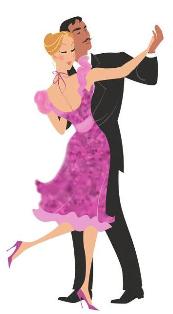
In the movie Shall We Dance, Beverly Clark (Susan Sarandon) says: “We need a witness to our lives. There’s a billion people on the planet . . . I mean, what does any one life really mean? But in a marriage, you’re promising to care about everything. The good things, the bad things, the terrible things, the mundane things . . . all of it, all of the time, every day. You’re saying ‘Your life will not go unnoticed because I will notice it. Your life will not go un-witnessed because I will be your witness.’”

twinsAfter the death of my life mate/soul mate, I felt that whatever happened to me in the future wouldn’t matter. He had been the witness to my life. He gave it meaning by that witnessing. During these years of grief, I have used this blog as my witness, writing about all that I have been going through. This witnessing of my grief gave it importance — because of what I have written, I’ve connected with people in a similar situation, and we’ve helped each other get through each new phase of grief.

For all these months (years, now!), I’ve been worried about becoming one of those forgotten old women who lives alone in a dingy apartment, with no one to care about and no one to care about her. It’s not an unusual fear — many women in my situation have the same worries, but we go on with our lives and hope that the fates are kind to us somewhere along the way.

The truth is, even if no one witnesses our life, it still has meaning because each of us witnesses our own live. It has meaning because we live it. That forgotten old woman living in her dingy apartment remembers who she is, who she once was, who she hoped to be. She remembers that she once was loved. She remembers that she once had worth. I only hope she knows she is still important because she still is.

***

Pat Bertram is the author of the suspense novels Light Bringer, More Deaths Than One, A Spark of Heavenly Fire, and Daughter Am I. Bertram is also the author of Grief: The Great Yearning, “an exquisite book, wrenching to read, and at the same time full of profound truths.” Connect with Pat on Google+. Like Pat on Facebook.
Writing: Art vs. Commerce

Ever since the death of my life mate/soul mate, I’ve been struggling to find reasons to write. It didn’t seem important to write another book that would languish in the dark alleys of non-bestsellerdom, and it especially didn’t seem important to write if he, my most avid fan, were no longer here to read what I wrote.

Today, though, I had an epiphany. Writing is separate from selling books. Writing is art, a thing of the spirit, eternal. Selling books is merely commerce, and so is everything that goes along with the business — writing to be read, finding readers, trying to make a niche in the publishing world.

Often, we writers are told that we need to write what people want to read. It’s good advice, especially if we want to make a living as an author, but in my case, I can only write the books I can write. Even if I knew what readers wanted, I couldn’t 531da618f5363c22_mwrite those books. Someone else is already writing them.

Although it would be nice to make a living off writing, money is not the only reason to write. In fact, contrary to popular belief, money is not the reason behind most of what is worth living for.

Take a smile for example. That curvature of the lips and sparkle in the eye is fleeting and ephemeral, not to be stored or purchased anywhere here on this earth, and yet, a smile from a loved one is precious. I would give anything to see my life mate/soul mate smile at me once more, but now his smiles exist only in my memory.

Smiles aren’t the only valuable thing that has no meaning beyond the moment. We go walking on a cool sunshiny day without ever stopping to think what we will get out of it other than a pleasant interlude. We watch a movie or read a book simply to pass the time, without ever worrying about its importance. We talk with friends, and those words become lost in the eternal spectrum of sound waves. Sometimes we talk to a person who is no longer here, such as I do with my lost mate, and as seemingly meaningless as those conversations might be, they are important.

Is writing any different?

Some writers, of course, are so full of their importance they believe their words are immortal, no matter how trite or uninspiring their writing is, but many of us need the possibility of readers to give our writing importance, or at least purpose.

And yet, there is the side of writing that is often ignored in the business of writing — writing is art, or it can be. Art is the expression or application of human creative skill and imagination. Nowhere in that definition does it say art needs readers or viewers or buyers to be art. Art is merely expression. And that is what writing should be.

In a perfect world, writers would never consider their readers, would never put commerce above inspiration, would never count words or the hours spent creating. They would simply write.

For myself, I can create that perfect world

The past few weeks, I have been working a bit on a novel I started three years ago about a grieving woman. Maybe when the book is finished, I will turn the manuscript over to my publisher, but for now, I’m not even considering the commerce of writing. The book is for me — an expression of my grief, inspired by all I’ve gone through the past few years.

My writing.

My art.

***

Pat Bertram is the author of the suspense novels Light Bringer, More Deaths Than One, A Spark of Heavenly Fire, and Daughter Am I. Bertram is also the author of Grief: The Great Yearning, “an exquisite book, wrenching to read, and at the same time full of profound truths.” Connect with Pat on Google+. Like Pat on Facebook.