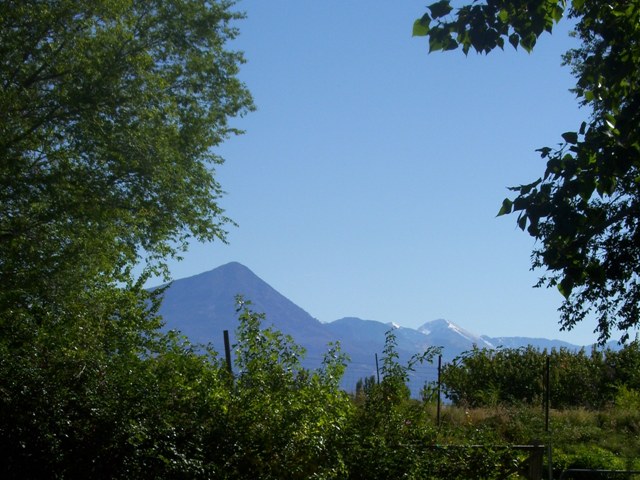
Is Our Grief Necessary to the Dead?

I talked to my deceased life mate/soul mate while I was out walking in the desert this morning. I apologized for keeping him tied to me with my grief, told him I hadn’t meant to shed so many tears for him or grieve for so long, and explained that much of my grief came from somewhere so deep inside that I had no conscious control over it.

I told him I was doing okay, so perhaps I wouldn’t be bothering him as much, and I wished him well.

I continued wandering, wondering about the incomprehensibleness of grief, and the thought came to me that perhaps such profound grief is a beacon, as necessary to the dead as it is to the living.

During the last weeks of my mate’s death, he was often agitated and confused due to both the cancer in his brain and the morphine he needed to control his pain. Once he woke screaming. I went to calm him, but he was frantic. He couldn’t remember who he was. “Do you remember me?” I asked. He studied my face, nodded his head, and immediately started to calm down. A few minutes later, he’d recovered enough to remember who he was.

What if after he died, he felt as horribly and as bewilderingly amputated as I did? What if his new world felt as alien as mine did? What if my grief, so incredibly powerful, served as a beacon the same way my presence did that night? What if my grief showed him where I was and gave him something familiar to focus on until he could get his bearings?

We are indoctrinated by religion and by stories of near death experience into believing that death is an immediate rebirth into the light, but no one knows the truth of it. (Many people who have near death experiences do not see the light, but see darkness. Some people whose heart stops have no experiences. The truth is, the brain releases powerful psychedelic chemicals during trauma that can induce such mystical experiences. Many people who took LSD or DMT and had good trips returned to themselves believing they had died and experienced God and the after life. But although many people think they know the truth of it, no one on this side of death can know for sure.)

Someone who died abruptly might not know what happened. Someone who died slowly but in confusion and disorientation might not know what happened. This sort of thing isn’t unheard of; it occurs here on Earth. A person who is given sight after being blind since birth often cannot immediately see except a fuzzy light. The brain needs to be trained so that it knows what it is seeing. Perhaps the newly dead also need to be trained to see through their new eyes. And if so, the grief of a loved one could provide a beacon until they get their bearings.

The desert is known for inducing mysticism in people who wander those empty spaces, so there could be some truth to this. On the other hand, it was very hot, and I might have had sunstroke. Either way, the idea of grief being a beacon is an interesting concept, one that will stew in my brain pan for a while.

***

Pat Bertram is the author of the suspense novels Light Bringer, More Deaths Than One, A Spark of Heavenly Fire, and Daughter Am I. Bertram is also the author of Grief: The Great Yearning, “an exquisite book, wrenching to read, and at the same time full of profound truths.” Follow Pat on Google+. Like Pat on Facebook.

Searching for Faults

When I unexpectedly and quite surprisingly found myself a few miles from the San Andreas Fault, I was at first appalled and then fascinated. Such a mythical place! Who hasn’t heard the warnings of “the big one” and the quite erroneous assertion that when it hits, Arizona will become beachfront property?

I have plenty of faults of my own, so I don’t  need to go searching for personal faults, but I did go in search of the myth. As I mentioned yesterday, there is no giant crack in the earth, and in many places there is no indication at all of the fault line. Erosion, bulldozers, plows, and buildings have all helped to eradicate any “line.”

Still, there are signs. This “lake” (more of a pond, really) is actually a fault sag, a place where the land sank as a result of earth movement along the fault. Water is collected in the lake from rain, snow melt, and underground springs.

Somewhere down in these narrow gorges is the fault line. Supposedly it is visible as it dips south and west, though I couldn’t see whatever it was I was supposed to see.

I could see better indication of the fault line here, because it is marked by the red sedimentary rock. The gray schist is the local rock, but fault action shifted the red rocks to their present location.

This search was an incredible journey, and as you can see, a beautiful one. Wouldn’t it be wonderful if all our personal faults were as hard to find as this geographical fault and as colorful and dramatic when we did catch a glimpse of them?

***

Pat Bertram is the author of the suspense novels Light Bringer, More Deaths Than One, A Spark of Heavenly Fire, and Daughter Am I. Bertram is also the author of Grief: The Great Yearning, “an exquisite book, wrenching to read, and at the same time full of profound truths.” Follow Pat on Google+. Like Pat on Facebook.

Today I Will Be . . . At Fault

Or maybe I’ll be fautless. It all depends on how the day goes.

I’m smiling as I write this, hoping you find my pun as groaningly amusing as I do. The truth is, a couple of friends and I are going on a trip to look for the San Andreas Fault. It’s not as simple a matter as it might seem. Apparently, there is no giant crack in the earth. According to the San Andreas Fault website (yep, the SAF as it is so affectionately called, has its own website): “The SAF has not had a major ground-rupturing earthquake since 1906. Virtually all traces of the ‘giant crack in the ground’ that so many people image the SAF to be have been erased. Erosion fills and covers the fault, plows and bulldozers reshape the surface, roads and neighborhoods are built on the fault. The actual surface trace of the fault is subtle. What one has to look for are the land forms that the plate motion has created.”

Really? Neighborhoods are built on the fault? I suppose it makes sense — that would have been the last bit of available land in many places, and probably relatively cheap, such as all the trailer parks that were build on flood plains and in tornado alleys.

Even though a “big one” is expected sometime this century, you don’t have to worry about my being swallowed up by an earthquake. According to a publication called Putting Down Roots in Earthquake Country, “A popular literary device is a fault that opens during an earthquake to swallow up an annoying character. But unfortunately for principled writers, gaping faults exist only in novels. The ground moves across a fault during an earthquake, not away from it. If the fault could open, there would be no friction. Without friction, there would be no earthquake.”

So, not only will I not fall in, I can’t use that idea for a story, which I’d actually thought of doing.  Still, if I disappear, you will no where to find me.  Hmmm. “No where” instead of “know where?” I thought it apropros, so I left in the typo. I hope it’s not a portent for the day.

***

Pat Bertram is the author of the suspense novels Light Bringer, More Deaths Than One, A Spark of Heavenly Fire, and Daughter Am I. Bertram is also the author of Grief: The Great Yearning, “an exquisite book, wrenching to read, and at the same time full of profound truths.” Follow Pat on Google+. Like Pat on Facebook.

The Loosening Spiral of Grief

Yesterday I wrote about The Unchanging Face of Grief, and how a journal entry I wrote exactly three years ago mirrored what I was feeling — Just drifting. Marking time. Hoping . . .

But the truth is, there is a vast difference between yesterday’s feelings and those of three years ago. Three years ago, when I wrote that entry, I had accomplished most of what I needed to do immediately after the death of my life mate/soul mate. I had him cremated as he wished, opened a new checking account, disposed of most of his effects and a lot of “our” things that weren’t desert knollsworth storing, got myself to my father’s house to look after him since he could no longer live alone. There was nothing I needed to do, that day three years ago, and the great pain of grief provided insulation from the normal irritations and aggravations of life, offering me the illusion of freedom. I just drifted in a fog of pain, spending hours in the desert, thinking not much of anything. Just wandering. Marking time. Hoping my life was actually going somewhere and wouldn’t always feel so stagnant.

People often talk about the “stages” of grief, as if grief were a staircase you ascend, step by agonizing step, until you climb out of the pit, but grief is more like a spiral that slowly unrolls, returning you over and over to the same places, each time with a bit less pain and emotion. At the beginning, these changes from vast pain to numbness, from despair to hope, from determination to helplessness come so quickly, it’s as if you’re inside a slinky that some over-active child keeps tossing around. You don’t even have time to acknowledge one state of mind before you’re in a different state.

My spiral of grief is still unrolling, but now, after more than three years, the changes come slowly and have little power. And the upsurges of angst are over quickly. But this feeling of waiting, of stagnation, seems to be ever present.

I don’t seem to be going anywhere with my life. I remember at the beginning, I was anxious to be done with my grief so I could embrace my new life with arms outstretched. I expected wonderful things to happen, and why shouldn’t they? Doesn’t it make sense that great happiness should come to balance out such great pain? But here I am, long past the worst of my pain, and I still seem to be running in place.

Admittedly, I am stuck in place geographically, unable to make plans except for a few days in advance since my father’s health takes precedence, but my life has more often been a life of the mind instead of action, and that mental life seems stuck too. Even worse, the waning pain of grief no longer protects me from the aggravations of life. (And right now there seem to be more aggravations than normal.)

I have had a couple of revelations out walking in the desert though, so perhaps I am not stagnating as much as I think I am. A few days ago, I was talking to my deceased mate, complaining about all the aggravations I have to deal with, and telling him that when I was free to live my own life, I still wouldn’t be free since I have other commitments to consider. A few minutes after I shut up and the walking lulled my mind, the thought entered my head, “Don’t consider other people. Do what you want.”

(I’m pretending this thought came from him in response to my complaints, but more probably it came from my subconscious.) Doing what I want is easy. Figuring out what I want is hard, but maybe someday it will come to me as I wander.

Another revelation, that I’m not sure I understand, is that life is a tool that we write with, much as we write with a pen. I’m still thinking about that one.

Despite the feelings of going nowhere, I am still trying to keep open to “somewhere.” Still trying to embrace life. Still trying . . .

***

Pat Bertram is the author of the suspense novels Light Bringer, More Deaths Than One, A Spark of Heavenly Fire, and Daughter Am I. Bertram is also the author of Grief: The Great Yearning, “an exquisite book, wrenching to read, and at the same time full of profound truths.” Follow Pat on Google+. Like Pat on Facebook.

The Unchanging Face of Grief

Sometimes it amazes me how little things have changed over the course of the three years of grief since the death of my life mate/soul mate. The pain, of course, has dissipated significantly, and I seldom have the falling-elevator feeling of panic at the thought that he is gone. Even the thought of his being dead at the moment isn’t making my stomach churn (though I still don’t like it and never will).

In fact, right now, I’m not feeling much of anything — no great sadness, no inclination to tears, no inclination to anything, if the truth be told. Because of this, I’ve been procrastinating about writing today’s blogpost: upgrading a defunct blog, learning a bit more about some of the widgets wordpress offers. I finally procrastinated so much that I ran out of time and decided to do an excerpt from my grief book as a fill in. And guess what? Exactly three years ago today, I felt the same way as I do now. Just drifting. Marking time. Wandering in the desert. Hoping . . .

Excerpt from Grief: The Great Yearning

Day 83, Grief Journal

I’m not doing much. Just drifting. Getting through the days. Pretending to be real. I hope the rest of my life isn’t going to be just marking time like this. It sounds . . . feeble. Mostly I’m babying myself, as if I’m recovering from a long illness. And I am—a soul sickness.

I spend hours every day wandering in the desert. I’m as restless as Jeff was at the end, and walking seems to be the only thing that keeps me pacified. The past couple of weeks have felt like a perfect summer from childhood that was always warm and sunny, at least in memory. It’s been hot here, of course, and windy, but I’ve been roaming like a child newly freed from restrictions.

I hope I am going somewhere. I hope I’m growing, developing, doing something besides stagnating, which is how I feel.

Click here to find out more about Grief: The Great Yearning

***

Pat Bertram is the author of the suspense novels Light Bringer, More Deaths Than One, A Spark of Heavenly Fire, and Daughter Am I. Bertram is also the author of Grief: The Great Yearning, “an exquisite book, wrenching to read, and at the same time full of profound truths.” Follow Pat on Google+. Like Pat on Facebook.

Live Like It’s Heaven On Earth

I came across this saying earlier today (apparently it was written by William Watson Purkey, but now is in the public domain. The word art is mine, however). It caught my attention because I’ve been struggling to figure out how to live now that I am uncoupled due to the death of my life mate/soul mate.

LIve like it's heaven on earth

Most of this saying doesn’t pertain to me. Occasionally, I dance around the living room by myself, a sort of dance therapy, as a way of helping me feel lighter in spirit. And a couple of weeks ago I danced to the light of the moon. (It seemed appropriate at the time.)

But I never sing, seldom even listen to music except during my brief stints of dance therapy, and at the moment, I am fresh out of people to love. Well, family and friends, of course, but no one special to plan a future with. Perhaps someday
. . . or not. Life gives, and life takes away, and I am learning to deal with that.

I don’t believe in heaven, either, especially not the harp and clouds sort of patriarchal afterlife so often touted by religions, but something about that last sentence caught my imagination. Live like it’s heaven on earth. So what does that mean to me? Live with abandonment, saving nothing for another life. Live joyfully. Live.

I have no idea how to do that, but it seems a good basis for planning a new life.

Besides, if life and death are simply different facets of being, then this is heaven on earth even though it so often feels like hell.

***

Pat Bertram is the author of the suspense novels Light Bringer, More Deaths Than One, A Spark of Heavenly Fire, and Daughter Am I. Bertram is also the author of Grief: The Great Yearning, “an exquisite book, wrenching to read, and at the same time full of profound truths.” Follow Pat on Google+. Like Pat on Facebook.

My Punctuated Life of Equilibrium

I never understood evolution, especially Darwin’s version of how it happens. I mean, a bat is always a bat. Bats beget bats and have been begetting bats for millions of years. So how does a bat become something else? And how did something else become a bat? Stephen Jay Gould’s idea of punctuated equilibrium is the only evolution theory that ever made sense to me since batsit mirrored what I knew — that bats always beget bats until . . . they don’t.

Punctuated equilibrium says (at least the way I understand it) that everything exists in a state of equilibrium, with very few evolutionary changes except on a local level. (By “local level” I mean within a species. A species of creatures that becomes separated by a river, for example, will undergo minor changes as time goes on, with those individuals most able to adapt to the new environment surviving to procreate. But still, the adapted creature is recognizably the same species as its forebears.) These vast times of stasis are occasionally punctuated with relatively short (on a cosmic scale) periods of genetic changes, and then things settle down into another long, long, long, period of equilibrium.

This is what my life feels like — long, long, long periods where everything is static, and then brief but frenetic periods of change before stasis sets in once more.

During all the years when my life mate/soul mate was dying, our lives seemed stagnant. We did things of course, but there were no major changes, nothing to yank us out of our torpidity. Day after day, year after year, he got sicker and weaker and I became more emotionally anesthetized since I could not bear what was happening to him and I couldn’t do anything to help him get better.

As the years passed, I felt as if it would always be that way — he dying, me struggling to live. And then one day, things changed. He bent down to pick something up, and a horrendous pain shot through him. He bore the pain as long as he could — three unbelievably agonizing weeks — because he knew that any drug strong enough to kill the pain would also destroy him. And it did. When he finally got on morphine, it made him disoriented. Sometimes he didn’t remember me, and sometimes he didn’t remember himself.

I hunkered down for a long siege since the doctor said he had three to six months to live.

And just like that, three weeks later, after one last breath, the long years of stasis were over. I went through a few months of rapid changes, getting rid of his stuff, putting mine in storage, moving in with my father to take care of him.

These past years of grief have masked the truth. That my life is still basically the same. Stagnant. Living with a man (my father this time) who is declining. Struggling to find a way to survive live despite the situation. I’ve agreed to stay to the end, which could be years, and I’m okay with that. (Designated Daughter, don’t you know.)

The end of this stage of equilibrium will be punctuated with another brief but frenetic period of change as I adjust to the new situation of having no one but me to be responsible for. And then . . .

I’m hoping to figure a way out of this punctuated equilibrium of mine, maybe find a way to incorporate small but steady changes to punctuate my future and keep things from becoming one long run-on sentence, to keep me ever-evolving until the inevitable period is put on the end of my life.

Of course, this is easy to say. It’s harder to do. No matter what we plan, life scatters punctuation marks where it will.

***

Pat Bertram is the author of the suspense novels Light Bringer, More Deaths Than One, A Spark of Heavenly Fire, and Daughter Am I. Bertram is also the author of Grief: The Great Yearning, “an exquisite book, wrenching to read, and at the same time full of profound truths.” Follow Pat on Google+. Like Pat on Facebook.

How To Describe a Person Who is Drowning

In almost all movies I have ever seen or books I have ever read where a person is supposedly drowning, there is lots of thrashing around, calling and waving for help, and other panicky behavior, but the truth is completely different from what we’d expect.

In the Fall 2006 issue of On Scene: The Journal of U.S. Coast Guard Search and Rescue, Aviation Survival Technician First Class Mario Vittone and Francesco A. Pia, Ph.D explain how to recognize the instinctive drowning response:

1. Except in rare circumstances, drowning people are physiologically unable to call out for help. The respiratory system was designed for breathing. Speech is the secondary, or overlaid, function. Breathing must be fulfilled, before speech occurs. 2. Drowning people’s mouths alternately sink below and reappear above the surface of the water. The moutpuget soundhs of drowning people are not above the surface of the water long enough for them to exhale, inhale, and call out for help. When the drowning people’s mouths are above the surface, they exhale and inhale quickly as their mouths start to sink below the surface of the water.

3. Drowning people cannot wave for help. Nature instinctively forces them to extend their arms laterally and press down on the water’s surface. Pressing down on the surface of the water, permits drowning people to leverage their bodies so they can lift their mouths out of the water to breathe.

4. Throughout the Instinctive Drowning Response, drowning people cannot voluntarily control their arm movements. Physiologically, drowning people who are struggling on the surface of the water cannot stop drowning and perform voluntary movements such as waving for help, moving toward a rescuer, or reaching out for a piece of rescue equipment.

5. From beginning to end of the Instinctive Drowning Response people’s bodies remain upright in the water, with no evidence of a supporting kick. Unless rescued by a trained lifeguard, these drowning people can only struggle on the surface of the water from 20 to 60 seconds before submersion occurs.

Yikes. Makes me glad I’m not a lifeguard or someone who writes books with drowning victims since it would be hard to recognize such stillness as someone in distress. (Makes me even gladder I have a healthy fear of deep water.) Still, if I ever had to write about someone who is drowning, I know how to do write the scene. Hmmm. Maybe a short story someday. After all, I’ve already done the research! Or rather, Francesco Pia did.

***

Pat Bertram is the author of the suspense novels Light Bringer, More Deaths Than One, A Spark of Heavenly Fire, and Daughter Am I. Bertram is also the author of Grief: The Great Yearning, “an exquisite book, wrenching to read, and at the same time full of profound truths.” Connect with Pat on Google+. Like Pat on Facebook.

Does your understanding of the story you are writing change during the course of the book?

Before I wrote A Spark of Heavenly Fire, I did extensive research into pandemics and into the government’s response to such emergencies (I based my fictional response on actual executive orders that Clinton signed), so there wasn’t much change in my understanding of these matters during the course of the book, but there was a big difference in my thoughts about what “they” want us to know and what they don’t. When I learned about Pingfan, the Japanese biological warfare installation where they did horrendous experiments on POW’s and nearby villagers, I thought I’d stumbled onto something really explosive. Yet, as happened to a character in A Spark of Heavenly Fire, the very next novel I picked up used Pingfan as a setting. It got me to thinking about the nature of cover-ups, and many of the discussions in the last half of the book were actual discussions I had with a friend while I was writing the book.

Here are some responses from other authors about how their understanding of the story changes during the course of the book. The comments are taken from interviews posted at Pat Bertram Introduces . . .

From an interview with Sherrie Hansen, Author of “Love Notes”

I start the story, my characters finish it. Themes come to me as the book goes on, and often, when it’s totally finished. Sometimes I have to rewrite the beginning of the book, because by the time I’m done, I know the characters so well that I think they would never say or do the things they did at the beginning of the book.

From an interview with Cynthia Vespia, Author of “Sins And Virtues”

Sometimes. That makes it fun though. You expect it to go one way and instead it veers off course and takes you to an entirely new level. For me, when that happens, it feels like I’m reading it myself.

From an interview with Alan Place, Author of “Pat Canella: The Dockland Murders”

My understanding is constantly changing as the character evolve their own lives, I never try to force them to do things that I feel don’t fit.

What about you? Does your understanding of the story you are writing change during the course of the book?

(If you’d like me to interview you, please check out my author questionnaire http://patbertram.wordpress.com/author-questionnaire/ and follow the instruction.)

***

Pat Bertram is the author of the suspense novels Light Bringer, More Deaths Than One, A Spark of Heavenly Fire, and Daughter Am I. Bertram is also the author of Grief: The Great Yearning, “an exquisite book, wrenching to read, and at the same time full of profound truths.” Follow Pat on Google+. Like Pat on Facebook.
Describe your writing in three words

Three words to describe my fiction writing:

colorful, character-driven, conspiratorial

Here are some responses from other authors about three words they would use to describe their writing. The comments are taken from interviews posted at Pat Bertram Introduces . . .

From an interview with Donna Galanti, Author of “A Human Element”

Haunting. Dark. Hopeful.

From an interview with Siobhán Nolan, Author of “Old Man Harry”

Silly, relatable, fanciful.

From an interview with Andrew Scorah, Author of “Homecoming Blues”

Dark, gritty, cool

What about you? How would you describe your writing in three words?

(If you’d like me to interview you, please check out my author questionnaire http://patbertram.wordpress.com/author-questionnaire/ and follow the instruction.)

***

Pat Bertram is the author of the suspense novels Light Bringer, More Deaths Than One, A Spark of Heavenly Fire, and Daughter Am I. Bertram is also the author of Grief: The Great Yearning, “an exquisite book, wrenching to read, and at the same time full of profound truths.” Follow Pat on Google+. Like Pat on Facebook.