Things Are Happening

I dragged out my hoses today and watered my plants. I don’t know if it was the right thing to do, since I don’t know if they need water, but I am erring on the side of wetness. We haven’t had any moisture for several days now, and the last time it rained for any length of time was more than a couple of weeks ago. Considering that today was the first of a series of 80 degree days, the water seemed called for, but I might be sorry when the temperatures drop again. And they will. The last frost around here is around the fifth of May, and that’s still a month away.

The problem with an area like this with early warm temperatures and late frosts is that so often plants grow expecting it to be spring and then go into shock when they realize they woke too early.

Eventually, I’m sure, I’ll be more confident when it comes to gardening, but for now I have to do what I think the plants will appreciate during these unseasonably warm days, and that is give them water and hope I’m not overwatering.

So far, it seems, most of my bushes came through the winter okay. The only ones that seem to have given up the ghost are those that struggled all last summer. Luckily, I am in this for the long haul, so the garden spots in my yard don’t have to be perfect. It’s more important for me to cultivate plants that will survive the wide swings of temperatures.

The most surprising thing so far this spring is that bulbs are springing up all over the place. The first fall I was here, I planted 300 bulbs all around the front lawn area, hoping to see flowers midst the green, but not only did a scant few of the bulbs peek out of the ground, the grass remained inert, too. I figured the bulbs were a lost cause, but apparently not.

It’s amazing what even a sort of wet winter will do! So far, though, only the greenery is visible. No buds. The crocuses bloomed, but they were short-lived. Now the glory of the snow is coming up, and they seem to be hanging around a bit longer than the crocuses did.

Someday, maybe, I will have a yard to be proud of, but for now, the bushes are still tiny, the greengage plums are trying to decide if they want to live here, and many of my fall plantings seem to be hibernating.

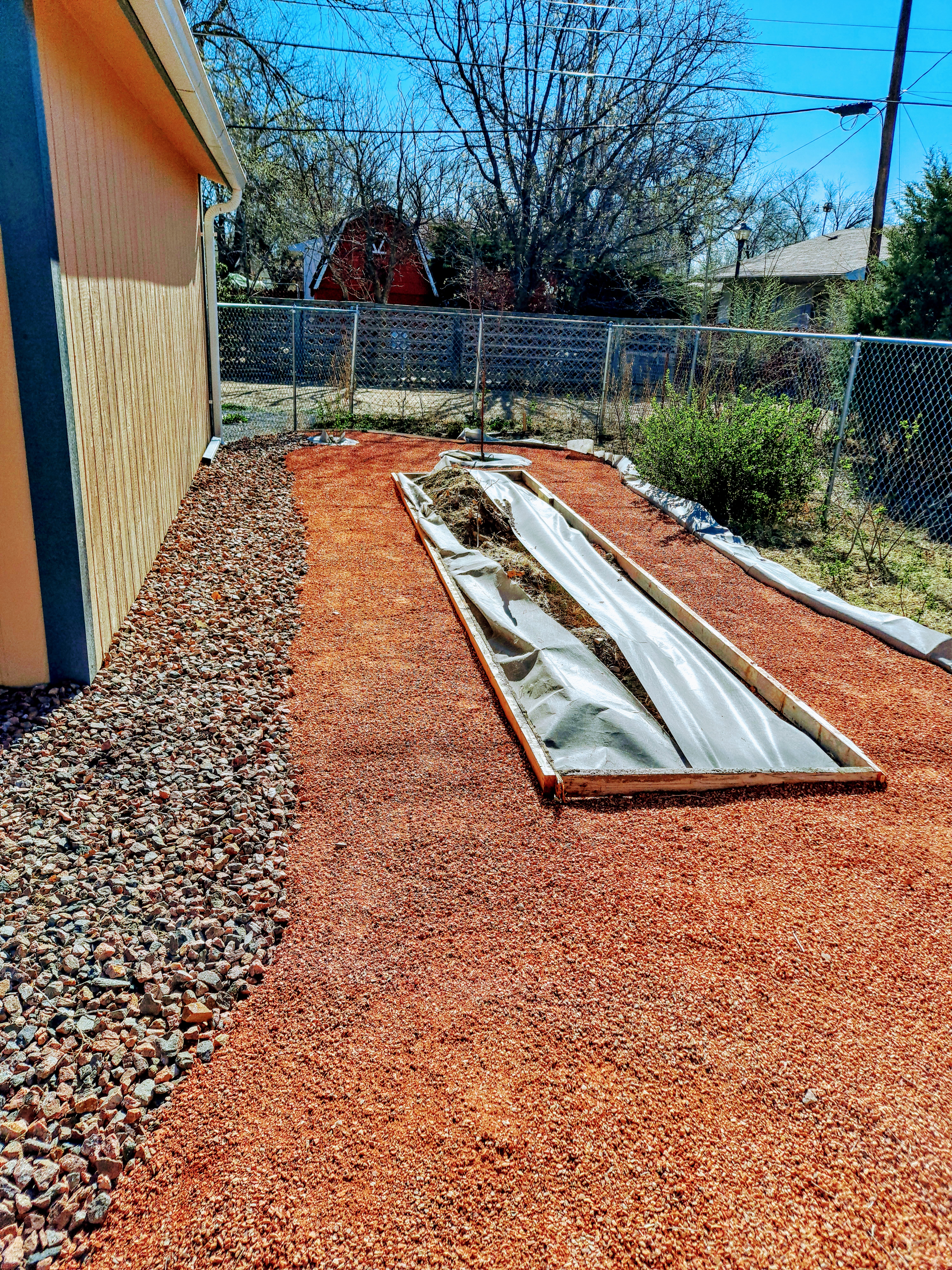
Tomorrow, perhaps, a couple of the workers will come to lay out more rock. (Another reason I watered today. I didn’t want to get in their way if they do show up.)

So little by little, things are happening.

***

What if God decided S/He didn’t like how the world turned out, and turned it over to a development company from the planet Xerxes for re-creation? Would you survive? Could you survive?

A fun book for not-so-fun times.

Click here to buy Bob, The Right Hand of God.

Happiness and Contentment

In a book I’m reading, a character described herself as happy but not contented or satisfied. Can you be happy if you’re not content? I thought happiness and contentment were pretty much the same though, though some people equate happiness with a more robust feeling than contentment, sort of like an inner effervescence that bubbles outwardly to affect those around them.

But then, what do I know. I say I’m happy, but what I really am is at peace, contented, grateful, accepting of my life. Anything more than that, at least to me, seems to be overkill. People make a lot of effort to be happy, though happiness was never my goal in life. I was more interested in reading, learning, trying to lead a meaningful life. I do enjoy the moments of effervescence, though there’s always a letdown afterward, but I don’t live for them.

Unless I’m wrong about what happiness is?

(A pause here while I look up “happiness” in an online dictionary.)

Well, that sure was productive! According to the definition I found, happiness is the state of being happy. Sheesh. So I looked up “happy.” “Happy” is defined as an enjoyable or satisfied state of being.

Now, of course, I’m more confused. Or maybe the author of that book was. Unless by “happy” the author meant being problem-free, able to get or to do whatever one wants? The character certainly had that, at least up to the point where she was killed, ostensibly for being too happy.

I don’t suppose it really matters what happiness is, how it is defined, if we pursue it or wait until it finds us. It’s something each of us knows we have.

Actually, no. That’s not true. Studies have shown that happiness is found mainly in retrospect. When someone is involved in a challenging situation that takes all their time and energy, they don’t realize until later they were happy. In fact, often while going through this “happy” situation, people think they are decidedly unhappy.

So what does it all mean? Who knows. I don’t, and that author sure didn’t. Maybe you do?

***

What if God decided S/He didn’t like how the world turned out, and turned it over to a development company from the planet Xerxes for re-creation? Would you survive? Could you survive?

A fun book for not-so-fun times.

Click here to buy Bob, The Right Hand of God.

Fountain of Youth

I’m reading a book about a group of scientists who discovered the so-called fountain of youth. I say “so-called” because it wasn’t a fountain, it was an injection of a substance that prevented telomeres from malfunctioning or wearing out. From what I understand, telomeres are a compound structure at the end of chromosomes that keep the long strands of DNA from getting tangled during cell replication. When they malfunction, you get cancer. When they wear down, you grow old. Apparently, if there is a way to keep telomeres at peak performance, you won’t get cancer, won’t grow older, won’t get any of the diseases of old age. You wouldn’t be immortal, of course, since you could die from any number of other causes, such as car accidents or non-DNA-related diseases. And I suppose you’d have to be especially careful of yourself to keep from being like the women in the movie Death Becomes Her.

Although it was an interesting premise, the story breaks down because the only way this group of exceedingly smart “immortals” thought of to keep their eternal youthfulness from being discovered is to find younger doppelgangers every twenty years or so, kill them off, and take over their identity. Ignoring the immorality and illegality of such a drastic solution, there would be myriad problems, such as fingerprints not matching. (I almost didn’t get my driver’s license renewed because my thumbprints didn’t match. They finally figured out that the previous thumbprint was printed at the tip rather than the meat of the thumb like the current print.)

It reminded me of a novel I once planned to write. I’d have to check my notes to find out why this particular character didn’t age (I think it had to do with a project they were working on that killed everyone else in the lab and left her unable to get older), but I do remember the first scene. She’s in a stall in a restroom while people she knows are primping at the mirror and talking about her, something to the effect of, “Who is she trying to kid? All that makeup she wears doesn’t fool me. She’s nowhere near as young as she pretends to be.” The character in the stall realizes it’s time to move on because the truth is she is trying to hide her age. The heavy make-up is to make her look older rather than younger.

But that’s not what I want to talk about.

Mostly I’m wondering if such a serum were available, would you take it? Would you want to be eternally young? To live forever, or as forever as possible?

I wouldn’t, though to be honest, I wouldn’t mind finding a true fountain of youth. I wouldn’t drink the water, though I might bathe my cheeks to plump them up (I don’t mind my wrinkles, but the crepey skin on my cheeks is sort of creeping me out.) And I’d like to bathe my legs in the water to keep them young, but for the rest of it, not so much.

In a way, I’m viewing the experience of aging the same way I now view grief. Although grief was utterly painful and angst-ridden while it had me in its grip, I’m glad I had the experience. It was way beyond anything I could have ever imagined, way beyond anything I’d ever read about. I tend to think aging is the same. As long as a self-aware person retains her ability to think and can process what she is thinking and feeling, it could be (and is) interesting to see some of the changes — not just physically but mentally and emotionally.

Besides, I think eternity could be utterly boring. I mean, what do you do with eternity? It’s the same thing I’ve wondered about when it comes to after-death eternity, though with pre-death eternity, at least you have a body to do things with, emotions to experience, things to see and hear and taste, but after a while, all things pall.

Even more than that, either you stay away from people entirely and miss out on the joy of love and friendships, or you remain alive while everyone you know and will ever know ends up dead. All that grief would be too much to handle, and if it isn’t, if one can lose and keep on losing without ever being affected, would life be worth living?

I guess I’m lucky in that I won’t ever have to make this choice, though in a certain sense, I make it every day because every day I do something to try to improve my life, my body, my mind. As far as I know, that’s all anyone can do without having access to a fountain of youth.

***

Pat Bertram is the author of Grief: The Inside Story – A Guide to Surviving the Loss of a Loved One. “Grief: The Inside Story is perfect and that is not hyperbole! It is exactly what folk who are grieving need to read.” –Leesa Healy, RN, GDAS GDAT, Emotional/Mental Health Therapist & Educator
My Take on the World

People who have blogs generally stick to one topic in order to develop a strong readership. I started out that way, concentrating on books and writing and the various aspects of promotion, but after Jeff died, my focus changed to grief. I didn’t really have a choice if I wanted to continue blogging since grief became my life. Besides, I was so shocked by what I was feeling, shocked that I didn’t even know it was possible to feel that way, shocked by the insensitivity so many people showed toward grief, that I felt compelled to tell the truth. Then later, as my grief started to wane, I wrote about my travels. Now, I write about . . . whatever. The topics range from grief to home ownership to gardening to books to aging.

The problem with writing a blog with such a wide range of topics is that every topic has its followers and every topic has its detractors. For example, those who wish me to focus on grief aren’t really interested in my ruminations on other matters. Some people think I should write more about aging since aging, like grief, is rather a taboo topic in our eternal-youth oriented society. (There’s something almost embarrassing about growing old, as if its our fault that we don’t remain young.) Other people, of course, think I talk too much about growing old.

I suppose it would be nice to have a single topic, and just post once a week on that particular topic, but I’ve done grief. I don’t really have much more to say about it. And I’ve done traveling as a topic, and now I’m pretty much done with traveling itself since I spent my traveling money on my house. Although I sometimes mention the books I’m reading, I don’t want to have a book blog. Writing reviews and critiques seems so much like writing book reports for school, and I never much liked doing that. I read, I think while I’m reading, I finish the book, and immediately start another. What else is there to say?

I really don’t want to talk about age, though it is a focus right now since I’m trying to age-proof my yard. And I can feel changes in myself — not just physically and mentally, but how I view the world, other people, and myself. So it’s hard not to let those things filter into my writing.

Basically, I really only know one subject intimately — me. And that’s what this blog has always been about — my take on the world around me and within me.

Is there a point to this particular piece? Probably not. It is fair warning, though, that the topics I write about will continue jumping all over the place. You don’t need me to tell you to feel free to skip any post that’s not to your liking since I’m sure you do it anyway. But I do need to say (it can’t be said enough!) that I appreciate your stopping by to read any of the things I write.

***

What if God decided S/He didn’t like how the world turned out, and turned it over to a development company from the planet Xerxes for re-creation? Would you survive? Could you survive?

A fun book for not-so-fun times.

Click here to buy Bob, The Right Hand of God.

Tarot Update

It seems as if this month just started, as if only a couple of days ago I started using a new tarot deck, but in another couple of days, I need to pick a new deck to use during April. Well, I don’t have to use a new deck, but that’s one of the reasons for my picking a card every day and for learning the tarot — to use my deceased brother’s tarot collection.

Although I am getting familiar with the tarot, I still don’t quite see how it fits in my life. It’s supposed to be a way to get to know oneself, and unless I am extremely obtuse, I’m not learning anything I don’t already know. Most people think of the tarot as a way of learning the future, or at least how to decide to go forward into the future, but that also doesn’t seem to fit with my life. Partly, of course, I don’t want to know. And partly, I already know the future, if not in specifics, then in general. If the past is anything to go by, the future will bring good things to my life, and it will bring a lot of not so good things. Either way, the knowing isn’t important — it’s being able to deal with what comes that’s important, and the lessons I’ve learned from grief lessons tell me I’ll find a way to accept whatever happens.

Besides, even if the purpose of the tarot was to learn the future, it’s nothing special. We can all learn what the future holds just by living. I mean, tomorrow is today’s future, and when I wake up tomorrow, I will know what the future holds. To a certain extent, anyway. Sometimes things change drastically from morning until night, witness all the people who woke up fine and ended up with The Bob by the evening.

Still, although a deep psychic connection with the tarot eludes me (perhaps because any psychic powers I might have are rather weak), I am continuing with my studies.

To date, the deck I like the most is this month’s deck, The Tarot of the Stars. It’s larger than most, which was a problem until I figured out how to shuffle them, and they aren’t slick enough to easily fan out, but other than that, they seem to be a quintessential tarot deck, with plenty of symbolism if I ever get into that aspect, as well as a key word to help figure out the meaning.

Today’s card was the magician, which is about knowledge, willpower, ability, eloquence, beginnings. It’s about harnessing the magician’s power to create the world you want. It’s about a lot of other things too, depending on whose interpretation you go by, but this brief interpretation seems to fit this particular card.

I still have a couple of dozen decks to try out to see if they speak to me, but so far, this is the closest. Oddly, it’s also the one I gravitated toward at the beginning when I first unpacked the decks, but since the instruction booklet that came with the deck is in an obscure dialect of Italian, I couldn’t use the cards until I developed my own guidebook. Once I’ve gone through all the decks, once I’ve gone through all the cards (some cards still haven’t shown up in my daily reading, though I’ve been doing this since July), and once I’ve started doing multi-card readings and need something to do on the off days (you’re not supposed to do a daily spread for oneself, though I know why) and need something to do the off days, I might try to translate the book via Word and Google.

Meantime, there are still two more days of enjoying this deck before I have the onerous task of picking a new one.

***

What if God decided S/He didn’t like how the world turned out, and turned it over to a development company from the planet Xerxes for re-creation? Would you survive? Could you survive?

A fun book for not-so-fun times.

Click here to buy Bob, The Right Hand of God.

Twelfth Year

I got through the eleventh anniversary of Jeff’s death without a major upsurge of grief, just a feeling of nostalgia and a bit of sadness. For a moment, before I retired for the night, I wanted to cry if for no other reason than a recognition that he is gone, but no tears came. I think I’m cried out, which in itself is ironic because for so many years, it felt as if the tears would never stop.

I once heard a saying that I didn’t understand until after Jeff died: Nothing changes and then everything changes. For years, nothing changed in our lives. It seemed as if we would always be like that — him struggling with dying, me struggling with living. Then he stopped breathing, and in that moment, everything changed.

Well, not everything. One thing has never changed. After all these years, he’s still the person I most want to talk to. We shared so much over the years, it is bewildering to me that we can’t sit down and get caught up. Or stand up and get caught up — looking back, it seems as if we were always standing when we talked. Who better to help me make sense of our lives both before and after his death? I do talk to him, or rather to his picture, though my comments are nothing more than asides, mentioning my day, maybe listing something for which I am grateful, or asking him how he’s doing. It’s hard to have a deep meaningful conversation when it is all one-sided.

I discovered a strange thing this morning. Although I have picked a tarot card to read the first thing every morning, I noticed a blank spot on my tarot journal where yesterday’s card was supposed to be. My morning routine is quite rigid. I do some stretching exercises, make the bed, fold three origami cranes, then shuffle whatever tarot deck I am using, and pick a card. Somehow, after I folded the cranes, I must have become distracted, and spaced out the whole tarot thing.

It’s nothing major, just a weird lapse, but it makes me wonder if subconsciously I blocked it out. After all, the tarot readings are a sort of memorial to my brother, and he loathed Jeff. Or maybe I simply didn’t want to know what the card would say. Either way, it’s unsettling to me — I don’t like forgetting to do things that I thought had become habit. Though, to tell the truth, this sort of forgetting does happen with me.

When I was in my late twenties, I ran a mile every day for years, and then days would go by, and suddenly I’d remember that I’d forgotten to run. One day I stopped running altogether. I simply forgot. It’s the same reason I am adamant about blogging every day — if I don’t blog every day, the days might pass without my ever writing a word. I have forgotten to blog a couple of days, but remembered sometime the late in the evening, so I was able to do my daily stint. Would it matter if I forgot? Probably not, but I do like the discipline of writing something every day, and if I let a day lapse, and then another and another, chances are I won’t be as willing to get back to blogging. (If I do forget to remember to blog one day, don’t worry. It has happened in the past, and will probably happen again, though I do try to remember not to forget.)

But that’s not important. What is important is that today starts my twelfth year of living without the person I thought I’d grow old with. Well, I am growing old; it’s just that I’m growing old alone. I’m mostly okay with that, at least, today I am. Tomorrow might be different.

***

Pat Bertram is the author of Grief: The Inside Story – A Guide to Surviving the Loss of a Loved One. “Grief: The Inside Story is perfect and that is not hyperbole! It is exactly what folk who are grieving need to read.” –Leesa Healy, RN, GDAS GDAT, Emotional/Mental Health Therapist & Educator
What It’s All About

Today is the eleventh anniversary of Jeff’s death, and as with everything to do with grief, I am feeling a bit bewildered. None of it makes sense to me. Was I really that woman? That woman who watched a man slowly die, who wanted the suffering to end, yet whose love was so ineffectual she couldn’t make him well or take away a single moment of his pain? That woman so connected to another human being she still felt broken years after his death? That woman who screamed the pain of her loss to the winds?

I’ve always considered myself a passionless woman, so how could that woman be me? I’m mostly living in a state of relative equilibrium at the moment, feeling more like myself than I have at any time since his death, which makes that bone deep grief I lived with for so long seem even more unreal. Sometimes looking back, it almost seems as if all that emotion was an effort to make myself seem important, and yet I know it was real. It came from a part of me I didn’t even know existed. It makes me wonder if maybe that’s what changed over the years — not that I became more used to Jeff being gone, or that time healed my grief, but that the part of me that surfaced after he died has simply sunk back into the muck from which it rose.

Making the situation even more unreal, I can barely remember what he looked like — I do not think in images, so it’s understandable (though distressing) that I have no clear image of him in my mind. Even worse, I don’t have a photo that matches what I remember of him. (The only photo I have was taken about twelve years before he died.) And so the image of him in my mind now is the image in that photo. I remember the first time I looked at the picture after he was gone — I was shocked that it no longer looked like him. I put the photo away, not wanting that false image to be the only picture of him in my head, but when I moved here, I put his photo on the bedside table, finding comfort in that now familiar image. Does it matter if it didn’t look like him at the end? When I was going through his effects and found a picture of him around the time we met, I didn’t recognize that image of him either. And yet, they were both good images of him at those times. So what difference does it make how I picture him? He was all those men, and none of them.

Nor do I have a clear sense of time. Sometimes it feels as if he died just a couple of months ago. Sometimes it feels like a lifetime ago. The demarcation between our shared life and my solitary life was once so stark it was like the edge of a cliff. All I could see was the past and what I had lost. The living I have done in the past eleven years has blurred that edge almost to the point of nonexistence, adding to the sense of unreality.

I didn’t really expect to grieve for him today, and I didn’t, though the day isn’t yet over, so there’s a chance a bout of sadness will visit me tonight as I prepare for sleep. What I did today is what I have done every day since he died — lived the best I know how, finding joy in simple things, finding life in novel experiences. He was so sick at the end, it seemed as by dying he set us both free — he from pain, me from a lifetime of servitude to his illness — and I have been careful not to waste that gift.

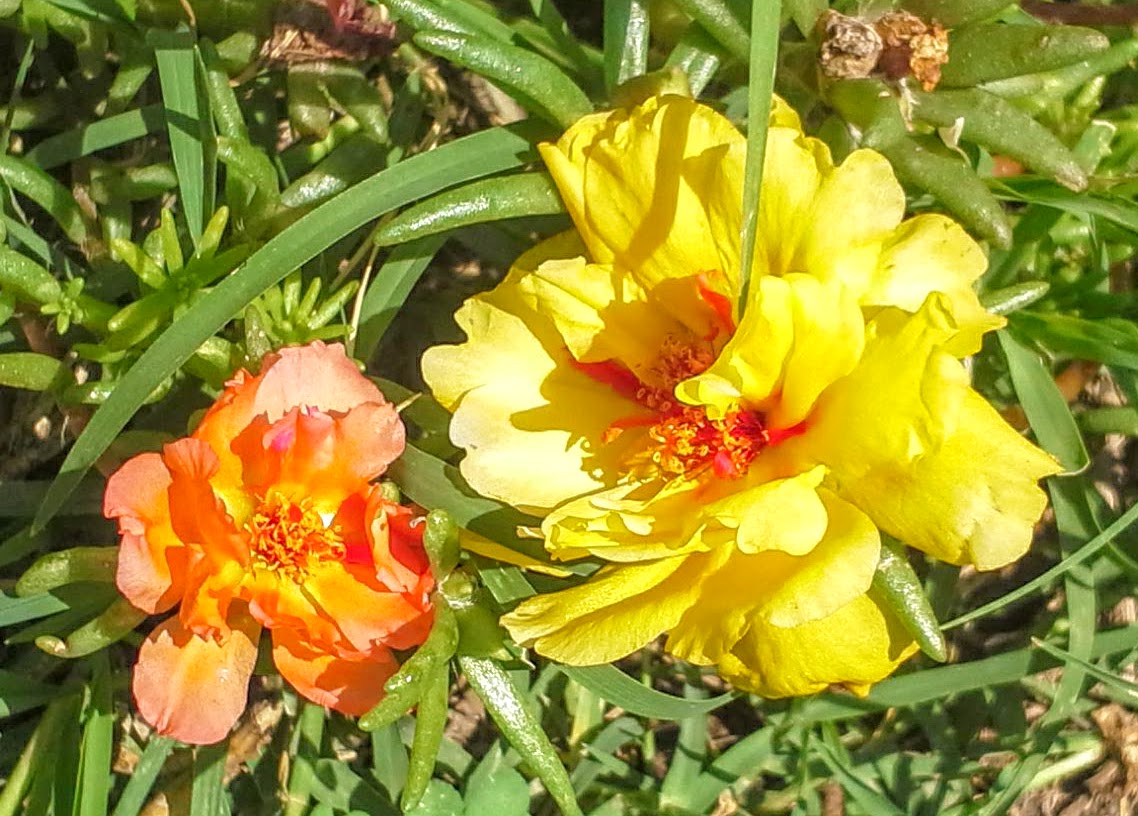
Today’s simple joy was the blossoming of the Glory of the Snow bulbs I planted last fall.

And the novel experience was getting to drive a baby John Deere. The worker who is laying rock around my house drove here in the tractor to make it easier to transport the rock from one side of the yard to another, and to my delight, he let me drive the thing up and down the street, and even showed me how scoop up the rocks.

Those two things in particular add to my bewilderment today about life and death and grief. If Jeff were still alive, I wouldn’t have had those treats. In fact, if he were alive, I would be someone else, more like the person I was eleven years ago rather than the person grief shaped me into.

Then I have to add in the aging factor to the bewilderment. He will always be the age he was when he died, and I am getting ever older. Sometimes I feel the injustice of it all — we were supposed to grow old together, and because of our healthful lifestyle, we were supposed to beat the odds and be vital to the end. And yet, he’s gone and I am trying to pick my way through the minefield of growing old by myself. I am glad he won’t have to deal with that. I’m also glad he didn’t have to deal with the angst of surviving the death of a life mate, though what do I know. It’s entirely possible, if the dead have any sort of consciousness, that they grieve for us as much as we grieve for them.

But what all this comes down to is that it’s been eleven years since he died, and I don’t have any clearer idea now of what it’s all about than I did back then.

***

Pat Bertram is the author of Grief: The Inside Story – A Guide to Surviving the Loss of a Loved One. “Grief: The Inside Story is perfect and that is not hyperbole! It is exactly what folk who are grieving need to read.” –Leesa Healy, RN, GDAS GDAT, Emotional/Mental Health Therapist & Educator

Grief Eve

Today is the eve of the eleventh anniversary of Jeff’s death. For several years after the first year, the day before the anniversary was painful, but the anniversary itself was not as much of a problem. I don’t know why that was except that perhaps I’d been focused on the anniversary itself and so was prepared for that, but I wasn’t prepared for what I felt in the days leading up to the anniversary.

So far, today isn’t any different from any other day, which kind of surprises me. The calendar this year is exactly the same as the year he died, so I expected to feel something . . . extra. Apparently, he’s been gone so long that I no longer feel the “calendar” of his absence. During the first years, even when I didn’t actually check to see what day it was, I could feel the various anniversaries (his diagnosis, signing up for hospice, his dying) in the marrow of bones, in the depths of my soul.

Body memory such as I experienced is often associated with extreme stress, and the death of a spouse/life mate/soul mate is about as stressful as everyday life gets. Body memory is not a flashback, where you are actually experiencing the trauma again, though that re-experience did happen often during the early years. Nor is it simply a vivid memory. In fact, the body memory comes first, and only afterward do we remember why we felt such an upsurge of emotional and physical grief reactions.

I’ve always felt that my internal clock was reset on the day he died, so that ever after I talk about that day as “the beginning.” Back then, I meant it as the beginning of my grief, but learned to see it as the beginning of a new stage in my life, one that was dictated by his absence, my grief, my struggles to find a new way of living. Now that clock, or at least the internal memory of him and his dying days, has wound down. As you can see, I still count my years from that day, but it is a conscious count, not a body memory.

Many memories of my life before that delineation, that beginning, have faded with the years. It annoys my sister when she asks me about things that happened in our childhood and I don’t remember. (And it annoys me that she still asks, knowing that I don’t remember.) It’s as if those years belonged to someone else’s life in the same way the characters I have read or written weren’t actually my life. Truthfully, I don’t want to remember my younger years. Nor do I have any particular desire to try to remember my years with Jeff — I feel those memories in the void of his absence even if I don’t recall a specific incident.

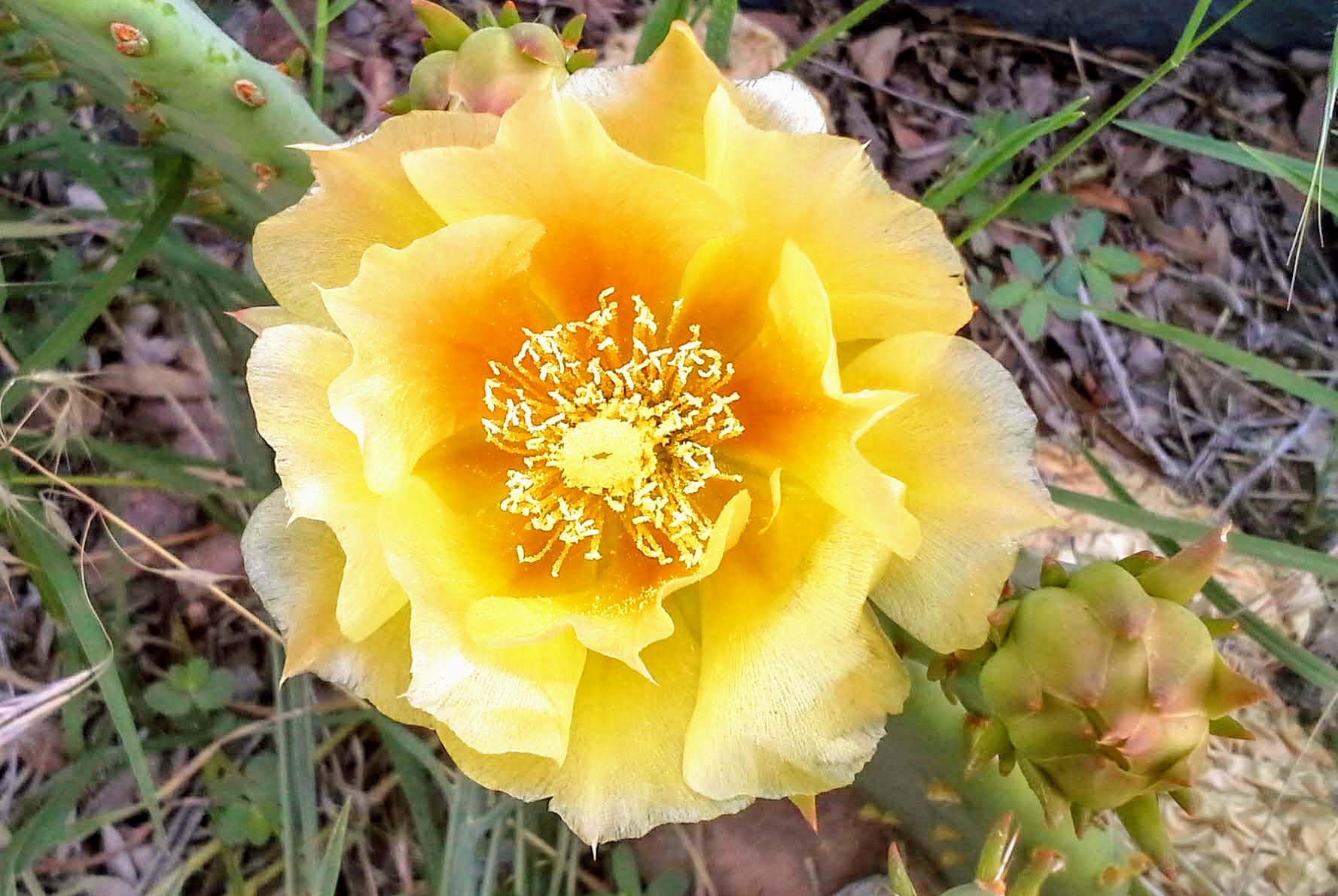
For many years, every Saturday, the day of the week he died, was a sadder day for me. I could always tell when it was Saturday even when I didn’t know. (I’m one of those people who, if they were in an accident and a medical professional would test my cognizance by asking me the date or the day of the week, I’d fail.) But back then, I did know Saturdays. It’s been a long time since I “felt” a Saturday. All my days, at least as they pertain to Jeff and his absence and my grief, are pretty much the same now. There is a deep running current of sadness that will never leave me, but it doesn’t affect me the way it once did. I can still be happy, can still find joy in the little things of my life, such as the flowers poking their pretty little heads above ground.

But this is how I feel today. Tomorrow is the first time since he died that the anniversary falls on Saturday, so who knows what I will feel, what my body will feel, what I will remember.

***

Pat Bertram is the author of Grief: The Inside Story – A Guide to Surviving the Loss of a Loved One. “Grief: The Inside Story is perfect and that is not hyperbole! It is exactly what folk who are grieving need to read.” –Leesa Healy, RN, GDAS GDAT, Emotional/Mental Health Therapist & Educator

Satisfying

There is something so very satisfying about living — and shopping — in a small town. A friend and I had an errand we needed to run, and on the way back, we stopped at the grocery store. After we walked out carrying our purchases, I noticed the truck of a dear friend I hadn’t seen in a long time, so I ran back inside to find her. We said a few words, exchanged a couple of hugs, then I had to get back to where the other woman was waiting.

I was almost to her car when I saw a neighbor drive up. I’d talked to him a couple of hours before that, and he had lamented that his hens were laying, four new eggs today, and he didn’t know what to do with them. He said he wished he knew someone who wanted them. I raised my hand, of course, and said, “Me!” Since he was busy and couldn’t get the eggs for me right then, we decided he’d come by later and leave them on the back porch. Which he did. So I made the detour in the parking lot to see him and thank him for the gift, then hurried back to my friend’s car before I saw anyone else I knew.

It’s very nice being able to see people I know when I’m out and about. I’ve never really lived anywhere, either in a smaller area or a larger city, where just serendipitous meetings happened. It’s these casual encounters, I think, more than anything, that make this such a nice place to live. Well, that and the frequent conversations like, “She’s the daughter of the son of the uncle of his cousin’s husband.”

It still surprises me, that in a town where people have lived for generations, people welcome newcomers. Other towns I’ve been to where the same families have lived and held sway for generations have been so insular, they never bothered to get to know anyone new, though of course, they sure liked the money newcomers brought in!

As soon as I finish writing this blog, I’m going to do another small town thing — walk to work and visit with one of those folks who have spend their whole life here.

Besides all that, the sun is shining, the air is still and warm.

Yes, so satisfying!

***

What if God decided S/He didn’t like how the world turned out, and turned it over to a development company from the planet Xerxes for re-creation? Would you survive? Could you survive?

A fun book for not-so-fun times.

Click here to buy Bob, The Right Hand of God.

Seven Things Everyone Needs to Know About Grief

1) Grief belongs to the griever. It’s no one else’s responsibility. No one should tell a griever how to grieve, when to grieve, or how long to grieve. No one can bind grief or limit it, usually not even the griever.

2) All losses aren’t equal for the simple reason that not all relationships are equal. The more deeply committed the relationship, the more roles a person played in your life, the more you will grieve.

3) Grief for a life mate takes much longer than everyone assumes that it does. Many people find a sense of renewed interest in life or at least a sense of peace between three and five years, and even afterward, they can experience grief upsurges.

4) The most stressful event in a person’s life by far is the death of a life mate or a child. Such a loss is so devastating that the survivor’s death rate increases by a minimum of 25% percent.

5) Grief is normal. The whole chaotic mess of new grief, no matter how insanely painful, is normal. Whatever a person does to help get through the shock and horror of losing a life mate or a child is normal.

6) Grief is physical, too. People often tell the bereaved to put the deceased out of our minds (at the same time they tell them that the deceased will always live in their hearts), but that’s hard to do because grief is also in our bodies.

7) Anger is an effect of grief. It is not a stage of grief, not a complication, but an intrinsic part of the process. In fact, we don’t need to be angry at someone or something to feel anger as part of grief. It is the body’s natural response to a perceived danger.

***

Pat Bertram is the author of Grief: The Inside Story – A Guide to Surviving the Loss of a Loved One. “Grief: The Inside Story is perfect and that is not hyperbole! It is exactly what folk who are grieving need to read.” –Leesa Healy, RN, GDAS GDAT, Emotional/Mental Health Therapist & Educator