Creating Incredible but Credible Characters: Sex Scenes (Part 1)

Many new writers (and even some published authors) have a difficult time writing sex scenes. They worry about how their friends and family will deal with idea that their son/brother/daughter/mother knows about sex. They worry about when and where to insert a sex scene, and they worry about how graphic to get. One thing writers don’t seem to worry about is the purpose of their sex scene, and that is something they should worry about.

Some romance genres require a lot of hot sex, other genres, like science fiction, don’t put much emphasis on sex, so be sure to find out the expectations of your genre. Even when titillation is the goal, the scene should also fulfill a story need, should respond to the demands of the story.

An effective scene—sex or not—serves multiple objectives. Scenes advance the story, show us more about the characters, show us how the action changed the hero or show a change in the relationship between the participants. Scenes are always about change, about action and about reaction.

Once you know the objective, you can write a fitting action/reaction sequence (which is the basic building block of a scene). If comfort is the objective, you can show the couple together at the beginning, close the door during the action, and show them cuddling afterward. If tenderness is the objective, you can show a bit of the action in addition to the before and after. And of course, if their desperation for each other is the objective, you will need to leave the door open during the scene.

As with all resonating scenes, when it is over there must be some reaction, some change to the character or the direction of the story. And the objective dictates that reaction. If the scene is about bringing comfort to the characters, we need to know whether they found comfort or failed to find it, and we need to know the characters’ emotiosex scenenal response to the success or failure of that objective. This reaction, in turn will help set up the next scene.

A good use of a sex scene would be to show the ebb and flow of human connection. For example, you could have three scenes spread throughout the story. In the first scene, perhaps, the man climaxes, feeling connected to the woman. When he immediately goes to sleep, she feels disconnected. In the second scene, he can’t get it up, leaving him feeling disconnected, but since he tries to make it up to her by cuddling her, she feels connected. In the third scene, they climax together, perhaps cuddle afterward, so they both feel connected.

In addition to the sex, then, you show a pattern of connection and disconnection between the couple (in other words, conflict), you show a new perspective of the characters, and you show a change in their relationship. You also end up with a subplot that adds to the overall richness of the story. In other words, you end up with a series of sex scenes, not just sex scenes.

Scenes help show who the characters are, and where better to do this than when the characters are at their most vulnerable. One of my favorite scenes in A Spark of Heavenly Fire is when Jeremy King, a world famous actor, has sex with Pippi O’Brien, a woman he just met in a bar.

The sound of weeping woke Jeremy. He turned his head toward his companion and saw one trembling shoulder and a tangle of gleaming hair.

He stretched luxuriously. The red hair hadn’t lied. The girl had been all fire, kindling a passion in him he hadn’t felt in years. The memory of it made him hard.

He reached over and pulled the girl into his arms. He smoothed back her hair and kissed away her tears, murmuring, “Honey,” and “Sweetheart,” and “Dear.”

“I’m such a terrible person,” she said, sobbing.

“Shh. Shh,” he whispered between tiny kisses.

Her arms stole around his neck, and her lips sought his. In a surprisingly short time she bucked beneath him, calling out his name.

You’ve still got it, King, he thought exultantly. Then, after one final thrust, he tumbled into oblivion.

That scene might not be very graphic, but it did what I wanted it to—define the characters, Jeremy especially. Pippi called out his name, but he didn’t care enough about her to think of her by name. He cared only about himself and his performance. It shouldn’t come as any surprise that, during other times of vulnerability in the story, he also thought only of himself.

A sex scene is a good time to show a character confronting her essence, to play on her self-concept (the treasured idea the character has of herself). What if a character were making love to a person other than a spouse? Would this lovemaking enhance his or her self-concept, or would it go against it? If the scene enhanced the character’s self-concept, we would learn much about the character. Perhaps she sees herself as a great lover, in which case nothing mattered except the lovemaking—not her marriage vows, not her husband, not her children—and so we would learn kind of character she is. If the scene went against the character’s self-concept, then we have a character with inner conflicts. Perhaps the character sees herself as a faithful, till-death-do-us-part wife. In which case, no matter how exciting or tender the scene, it leaves her in turmoil.

In the previously quoted scene from A Spark of Heavenly Fire, Pippi is obviously experiencing turmoil. She had been in the bar to meet her boyfriend, Greg Pullman, to accept his marriage proposal, and instead she ran off with Jeremy. She’d been dazzled by the actor’s star power and hadn’t given poor Greg a single thought, but in the night, after her passion diminished, she confronted her truth.

***

This article is anthologized in the Second Wind Publishing book: NOVEL WRITING TIPS AND TECHNIQUES FROM AUTHORS OF SECOND WIND PUBLISHING, which was the 100th book released by Second Wind.

“As someone who constantly evaluates novels for publication, I was astonished at the breadth and clarity of the wonderful advice contained in this handbook. It addresses concerns as grand as plot development and as simple but essential as formatting your submission. It offers crucial advice on literary topics ranging from character development to the description of action. Virtually every subject that is of great concern to publishers — and therefore to authors — is covered in this clear, humorous and enormously useful guide.” –Mike Simpson, Chief Editor of Second Wind Publishing

***

Pat Bertram is the author of the suspense novels Light Bringer, More Deaths Than One, A Spark of Heavenly Fire, and Daughter Am I. Bertram is also the author of Grief: The Great Yearning, “an exquisite book, wrenching to read, and at the same time full of profound truths.” Connect with Pat on Google+. Like Pat on Facebook.


Creating Incredible but Credible Characters: Change

Change is the reason for a story. Without change, you have an anecdote, perhaps a description of a life or a time, but no story.

Whenever there is change during the course of the story and—more immediately—during a chapter, a scene, a page, even a paragraph, it advances the story. These changes should be interesting and compelling in themselves, but they should also worsen or improve the status of a character, raise new questions in readers’ minds as to the story’s outcome, and prepare for scenes to come.

Changes can be major alterations in a character’s life, such as the death of a loved one, or they can be as subtle as the touch of a hand. Changes can jolt the reader or give them a false sense of security so you can hit them with a major changechange later to better effect.

Writing doesn’t just happen, nor does it happen in a vacuum. Our stories change us every bit as much as we change our stories, in an ever tightening spiral. We create episodes of change so that the characters will change, which in turn change the plot, which in turn change the whole focus of the story, which in turn changes our relationship to the story.

While writing A Spark of Heavenly Fire, I researched Pingfan and the human experiments that were being done there (some on American POWs) and I thought I’d found something that few others knew. Afterward, in every novel I picked up, there was a mention of Pingfan, so I had to change the focus of the book, which in turn changed the characters and how they got to the end. (The end was a given—I’d written that chapter about halfway through — I just needed to find a way to get there.) Many of the conversations I had about this Pingfan oddity ended up in the book, which gave the story an added depth.

Some psychologists say we never change in any basic way, that our characters and essential personalities are our foundation. We can only change in small ways, such as changing our habits, changing our focus, changing our perspective. This is at odds with those who say that a character must do a complete about face. That about face is possible if it is motivated, if there is a reason for your character’s basic change. Normally, a smart person doesn’t become stupid overnight and a stupid person doesn’t become smart, though abnormal situations can create such changes. Flowers for Algernon, for example, or Regarding Henry.

Although change is important, many characters don’t change—take detective novels, for example. Most of the classic detectives were the same from the first page to the last. But other characters in the stories change, and the situations change, which keep the detectives changing direction and focus. So while they themselves didn’t go through any sort of metamorphosis, the stories still seemed to be about change. And perhaps the truth, as uncovered in a detective story, is a change in itself.

Sometimes a character’s inability to change is the story. For example, if a character was tortured and despite the horrors, never changed, it would tell you a lot about the character, and how his non-change changed the world around him. Forrest Gump comes to mind.

Almost anything can bring about a change. Lies can bring about change, the truth can bring about change, a knock on the door, a trip. Even something so simple as losing weight. I had a friend, a lively teenager who was quite obese. Everyone kept telling her she would be pretty if she lost weight. She did lose a lot of weight—started a diet before school let out and spent the whole summer being active and eating right. She wasn’t more attractive. And she wasn’t more popular. This broke her heart. She became sullen and morose. And depressed. And regained all the weight. Which is an example of another type of change—where the character changes but ends up the same as at the beginning.

Here are some questions to ask yourself if you need to delve deeper into the changes that occur during the course of your book:

  • What changes do your characters undergo?
  • Do you keep the changes coming at an ever dizzying rate or do you throw small changes at your characters, changes that add up over time?
  • Are your characters the same at the end of all these changes? Is their situation the same?
  • Is the final outcome a major upheaval for the character or merely a change in focus?
  • Do all your characters change, or just the main character?
  • How do you bring about the changes?
  • Are these changes logical and believable?
  • Are the changes an intrinsic part of the story or just thrown in for the sake of change?

***

This article is anthologized in the Second Wind Publishing book: NOVEL WRITING TIPS AND TECHNIQUES FROM AUTHORS OF SECOND WIND PUBLISHING, which was the 100th book released by Second Wind.

“As someone who constantly evaluates novels for publication, I was astonished at the breadth and clarity of the wonderful advice contained in this handbook. It addresses concerns as grand as plot development and as simple but essential as formatting your submission. It offers crucial advice on literary topics ranging from character development to the description of action. Virtually every subject that is of great concern to publishers — and therefore to authors — is covered in this clear, humorous and enormously useful guide.” –Mike Simpson, Chief Editor of Second Wind Publishing

***

Pat Bertram is the author of the suspense novels Light Bringer, More Deaths Than One, A Spark of Heavenly Fire, and Daughter Am I. Bertram is also the author of Grief: The Great Yearning, “an exquisite book, wrenching to read, and at the same time full of profound truths.” Connect with Pat on Google+. Like Pat on Facebook.
Creating Incredible but Credible Characters: What Does Your Character Want?

The most compelling characters are those who want something desperately and who will do anything to get it, which is why Scarlett O’Hara is such a perennially popular character. Frankly, my dear, I find her a bit over the top—selfish and greedy and way too egocentric. Still, her wanting does make for a compelling character.

At its most basic, a story is about want. The main character wants something, and someone or something is preventing her from getting it. The want can be as simple as a good night’s sleep, as personal as a lover, or as complicated as world peace. In the end, the character gets what she wants or she doesn’t get it. Sometimes she gets what she needs, which is just as satisfying for the reader because such an ending gives a story a sense of rightness, of poetic justice.

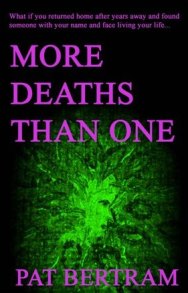
BOB STARK, the point-of-view character of More Deaths Than One, wants serenity, though what he gets are nightmares, both the sleeping and the waking kind. Debilitated by headaches, he doesn’t have the energy to discover the truth, but Kerry, a young woman he meets in a coffee shop, goads him into it. When Kerry is threatened, though, he becomes what he needs to be to keep her safe.

A Spark of Heavenly Fire has four point-of-view characters, all of whom want something.

All KATE CUMMINGS wants is a good night’s sleep.

Her husband, a semi-invalid, committed suicide thirteen months ago. Many times during the years of his illness she could have treated him a little better than she did, and she is haunted by her own mean spirit.

wantThen the red death descends on Colorado, the entire state is quarantined, and martial law is declared. As a patient’s advocate and an insomniac, forty-two-year-old Kate sees more than her share of the horror. People with bright red eyes spewing blood, then falling down—dead. Tanks and trigger-happy troops patrolling the streets. Men in biohazard suits throwing bodies into the back of delivery vans.

Now she wants not to be afraid.

All JEREMY KING wants is to leave Colorado.

He has everything. Two Oscars for best actor. A vast Montana ranch. Wife, son, daughter. He also looks better now, at fifty-eight, than he did when he was young.

Having grown up poor in Grand Junction, he hates Colorado, and only came to Denver to finish a film. As soon as the director yells cut, he’s in his rented Lexus on his way to the private airfield where his jet is supposed to be ready for take-off. It isn’t. Instead, armed National Guardsmen inform him that airspace is restricted. Furious that he’s being treated like one of the peasants, he decides to drive home, but the mountain highway is clogged with a thousand cars going nowhere. He returns to Denver, determined to leave Colorado if it’s the last thing he ever does.

All GREG PULLMAN wants is to know the truth.

Since childhood he’s been consumed with the need to know why creatures act the way they do. It is no different with the red death.

After discovering that the disease is a bio-engineered organism, he tries to find out who would develop such a thing, and why. He learns that despite the ban on bio-warfare experimentation, all over the world deadly organisms are being produced and stockpiled. Bubonic plague. West Nile fever. Green monkey virus. Combinations such as smallpox with Ebola and encephalitis.

Burdened by the awful truth, he turns to his friend Kate for comfort, and finds he wants her, though he is engaged to Pippi O’Brien.

All PIPPI O’BRIEN wants is . . . well, she doesn’t know what she wants.

After college, she wanted a job at a New York television station, but accepted a position as weathergirl in Denver. Now, at thirty, she wants to marry handsome Greg Pullman, but when he takes the hint and proposes, she says she’ll think about it. A few days later, deciding she does love him after all, she says yes. While waiting in a bar for him that very evening, she meets Jeremy King. Feeling the full force of his personality, she leaves with him, forgetting about Greg. Now she has a new dream: lovely consort to the charismatic King.

She is signing autographs with Jeremy on a downtown street when UN soldiers arrive, level their weapons at the assembled fans, and order everyone to drop to the ground. Fighting back the urge to scream, she obeys. Those who don’t obey are immediately gunned down.

Now all she wants is to accompany Jeremy on his quest to escape from Colorado.

So, that’s what the characters of More Deaths Than One and A Spark of Heavenly Fire want. What do your characters want? What do they need? And in the end, do they get what they want, or do they get what they need?

***

This article is anthologized in the Second Wind Publishing book: NOVEL WRITING TIPS AND TECHNIQUES FROM AUTHORS OF SECOND WIND PUBLISHING, which was the 100th book released by Second Wind.

“As someone who constantly evaluates novels for publication, I was astonished at the breadth and clarity of the wonderful advice contained in this handbook. It addresses concerns as grand as plot development and as simple but essential as formatting your submission. It offers crucial advice on literary topics ranging from character development to the description of action. Virtually every subject that is of great concern to publishers — and therefore to authors — is covered in this clear, humorous and enormously useful guide.” –Mike Simpson, Chief Editor of Second Wind Publishing

***

Pat Bertram is the author of the suspense novels Light Bringer, More Deaths Than One, A Spark of Heavenly Fire, and Daughter Am I. Bertram is also the author of Grief: The Great Yearning, “an exquisite book, wrenching to read, and at the same time full of profound truths.” Connect with Pat on Google+. Like Pat on Facebook.
Sample Sunday

If you’ve been wanting to check out my books, now is your chance to read the first chapter of each novel online. Who knows, you might get so intrigued you will want to buy one of the  book to take with you to the beach this summer or read on an airplane. (Or, for my friends in the southern hemisphere, you might decide one is the perfect companion to read by the fire on a chilly winter’s eve.) I hope you will enjoy sampling a “Pat Bertram” book.

More Deaths Than OneBob Stark returns to Denver after 18 years in SE Asia to discover that the mother he buried before he left is dead again. At her new funeral, he sees . . . himself. Is his other self a hoaxer, or is something more sinister going on?

Click here to read the first chapter: More Deaths Than One

***

A Spark of Heavenly FireIn quarantined Colorado, where hundreds of thousands of people are dying from an unstoppable, bio-engineered disease, investigative reporter Greg Pullman risks everything to discover the truth: Who unleashed the deadly organism? And why?

Click here to read the first chapter of: A Spark of Heavenly Fire

***

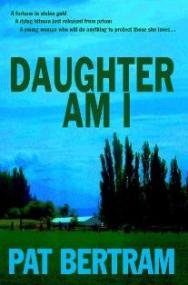
DAIWhen twenty-five-year-old Mary Stuart learns she inherited a farm from her recently murdered grandparents — grandparents her father claimed had died before she was born — she becomes obsessed with finding out who they were and why someone wanted them dead.

Click here to read the first chapter of: Daughter Am I

***

Thirty-seven years after being abandoned on the doorstep of a remote cabin in Colorado, Becka Johnson  returns to try to discover her identity, but she only finds more questions. Who has been looking for her all those years? And why are those same people interested in fellow newcomer Philip Hansen? And what do they have to do with a secret underground laboratory?

Click here to read the first chapter of: Light Bringer

***

Pat Bertram is the author of Light Bringer, More Deaths Than One, A Spark of Heavenly Fire, and Daughter Am I.All Bertram’s books are available both in print and in ebook format. You can get them online at Second Wind Publishing, Amazon, B&N and Smashwords.  At Smashwords, the books are available in all ebook formats including palm reading devices, and you can download the first 20-30% free!

My Favorite of the Books I Have Written

A friend asked me if I had a favorite of the books I have written. The truth is, each is a favorite in it’s own way.

More Deaths Than OneMore Deaths Than One is my favorite because of all the rewrites. I rewrote it four different times, each time making it better, and so I learned to rewrite and to edit. I also liked the ironies that showed up in the book.

Click here to read the first chapter: More Deaths Than One

***

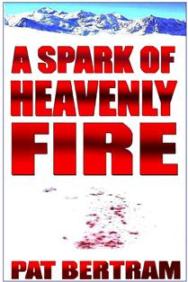
A Spark of Heavenly FireA Spark of Heavenly Fire is my favorite, because halfway through I realized I’d learned how to write, and because it is a solid, classic story of life and love in impossible times.

Click here to read the first chapter of: A Spark of Heavenly Fire

***

DAIDaughter Am I is my favorite because of the fun we (my mate and I) had coming up with the great characters, and because it was the fulfillment of a desire to write a “hero’s journey” story.

Click here to read the first chapter of: Daughter Am I

***

Light Bringer is my favorite because it’s the culmination of a lifetime of research, combining modern and ancient myths into a plausible whole, and because some of the descriptions were stunningly beautiful.

Click here to read the first chapter of: Light Bringer

***

Grief: The Great Yearning is my favorite because writing it helped me get through the worst year of my life, and because unwittingly, it turned out to be the story I always wanted to write, the story of a love that transcended time and physical bonds, told with wisdom and sensitivity.

***

Pat Bertram is the author of the suspense novels Light Bringer, More Deaths Than One, A Spark of Heavenly Fire, and Daughter Am I. Bertram is also the author of Grief: The Great Yearning, “an exquisite book, wrenching to read, and at the same time full of profound truths.” Connect with Pat on Google+

The Doors of Grief

Years before my life mate/soul mate died, I wrote a character who grieved for her dead husband. It astonishes me that I got any of the effects of grief right since at the time, I hadn’t a clue what the loss of a mate really did to you, how it turned you inside out and upside down and left you reeling with shock and disbelief, regrets and sorrow. A Spark of Heavenly Fire begins:

Kate Cummings counted backward from one hundred, though she knew it wouldn’t help her sleep. Dead people didn’t slumber, and she hadn’t felt alive for a long time. Not since before Joe’s funeral, anyway.

Three. Two. One. She raised her head, squinted at the illuminated face of the alarm clock, and flopped back against the pillow. Five-fifteen. Six hours of thrashing around in bed. She blinked away the sting in her eyes. All she wanted was one good night’s sleep. Was that too much to ask?

One hundred. Ninety-nine. Ninety-six. . . . A sound startled her awake. A siren’s scream, fading now. She checked the time. Five-thirty. Even if she could doze off again, she’d have to rise in less than an hour. Not worth the effort.

She hauled herself upright and groped for her eyeglasses. After sitting on the edge of the bed for a moment, gathering her strength, she dressed and wandered through the house. She hesitated by the closed door of the second bedroom where her husband had lived during the last years of his protracted illness, touched the knob with her fingertips. Yanked her hand away.

This is ridiculous. Joe’s been gone for thirteen months.

Taking a deep breath, she grasped the knob, but could not force herself to turn it. She rested her forehead on the door for a minute, wondering if she’d ever be able to face the ghosts of sorrow and regret locked inside, then squared her shoulders and headed for the front closet to grab a coat and hat.

***

Later, she explains to a new friend:

“About two weeks after the funeral, I decided to clean Joe’s room. I didn’t feel up to sorting out his things, but I thought I should dust and vacuum in there. I cracked opened the door, as if expecting Joe, or at least his spirit, to inhabit the room. I stepped inside, but seconds later I scrambled out again and slammed the door.

“Memories of all the shameful, petty, inconsiderate things I had done over the years haunted the room, and I couldn’t bear to face my own mean spirit. Too many times I snapped at him or purposely waited a few minutes before going to see what he wanted when he called out. Other times I felt so angry at the way life had treated us, I stomped around the house, slamming doors and kicking furniture. Usually, though, I pounded my pillow, or cried. I’m embarrassed to admit how many times I cried, wishing I had a normal life with healthy children to take care of instead of an uncommunicative and disabled man. Sometimes I even hated him for what he had become, as if he chose to get sick. Can you believe that?”

She didn’t pause for a response, but hurried on, wanting to get it all out.

“Worst of all, I realized I was not a strong woman who had shouldered her burden with courage, but a weak woman who lacked generosity of spirit.”

***

doorI didn’t have a real door to close — I had to leave our home and come look after my aged father — but there are plenty of doors in my head that I slammed shut. It’s only now, after thirty-four months that I’m able to open them a crack, peek at the ghosts of my ungenerous and petty moments, and understand.

For the most part, I handled the stress of his dying well, but there were times I resented him, even hated him, though now I know it wasn’t he I resented or hated, but his dying. Everything that irked me — his skinniness, his rocking when he stood talking to me (he was so weak, it was the only way he could keep his balance), his inability to carry on a conversation, and his testiness — were all facets of “dying man” not the man himself. To a certain extent, he died long before his last breath. He never blamed me for my resentment because he too hated what he had become. He once admitted he didn’t even recognize himself anymore.

Death does appalling things to people, not just to those who are dying, but to those who have to continue living. Whatever our problems, those last terrible months, we had a chance to reconnect for a few weeks before he died, and I got to say good-bye to the man I love, not just the shadow of that man he had become.

And that is what I will remember — not all the petty secrets I’m gradually bringing out from behind closed doors, but our sweet good-bye.

***

Pat Bertram is the author of the suspense novels Light Bringer, More Deaths Than One, A Spark of Heavenly Fire, and Daughter Am I. Bertram is also the author of Grief: The Great Yearning, “an exquisite book, wrenching to read, and at the same time full of profound truths.” All Bertram’s books are published by Second Wind Publishing. Connect with Pat on Google+

Close Encounters of the Coyote Kind

SANYO DIGITAL CAMERAIn A Spark of Heavenly Fire, I had a character meeting up with a coyote as a way of showing that the character was becoming “untamed,” that she was finding her inner savage.  She went from searching for self-affirmation from the men in her life to finding affirmation in herself. But more than that, she overcame her squeamish nature to do whatever she needed to do to survive.
Although her communion with the coyote seemed a bit trite or maybe just too pointedly mystical, I couldn’t think of a better way to show the change in her. And perhaps it only seemed trite because such things do happen. Yesterday, while walking in the desert, I came across not one but three coyotes. They were far enough away that I was never in danger, but they all stopped and stared at me. I stared back. We stood there for a minute or two, then I got distracted by a noise, and when I looked for them a second later, they were gone.

Perhaps this encounter was symoblic, a way of showing me that like my character, I am becoming untamed, embracing my inner savage, willing to do whatever I need to do to survive. More probably, the coyotes had come close to civilization in an attempt to find food. Either way, it was an interesting synchronicity of life imitating art.

***

Here is the coyote excerpt from A Spark of Heavenly Fire:

She had traveled only a mile or two when she felt a presence. Someone. Something. The awareness vibrated in her body, jangled her nerve endings. She stopped. Looked around. Although she didn’t see anyone, she knew she was no longer alone.

On full alert, she walked farther, and suddenly, there he stood, silhouetted on a hill.

A coyote.

Pippi froze, afraid that if she made a single move, he would spring on her. She thought of the knife, but it didn’t give her any comfort; the knife was so small and the coyote so large.

She tried to remember what you were supposed to do in a situation like this. Look the animal in the eyes? Look past it? Look at the ground?

Too late. Her eyes locked onto the coyote’s.

As she looked into him and he looked into her, she could feel her fear draining away.

They stood motionless, staring at each other for a long time — eons. Then the coyote’s ears pricked up. He cocked his head as if listening to something in the distance.

Pippi cocked her head, too, but all she heard was a quickening breeze.

Casually, as if he had more important things to do than to stare at this insignificant human, the coyote trotted off.

He turned to give her one last look, then he was gone.

***

Pat Bertram is the author of the suspense novels Light Bringer, More Deaths Than One, A Spark of Heavenly Fire, and Daughter Am I. Bertram is also the author of Grief: The Great Yearning, “an exquisite book, wrenching to read, and at the same time full of profound truths.” Connect with Pat on Google+

A SPARK OF HEAVENLY FIRE Embodies the Essence of Christmas

Washington Irving wrote: “There is in every true woman’s heart a spark of heavenly fire, which lies dormant in the broad daylight of prosperity; but which kindles up, and beams and blazes in the dark hour of adversity.” As I read these words several years ago, I could see her, a drab woman, defeated by life, dragging herself through her days in the normal world, but in an abnormal world of strife and danger, she would come alive and inspire others. And so Kate Cummings, the hero of my novel A Spark of Heavenly Fire was born. But born into what world?

I didn’t want to write a book about war, which is a common setting for such a character-driven story, so I created the red death, an unstoppable, bio-engineered disease that ravages Colorado. Martial law is declared, rationing is put into effect, and the entire state is quarantined. During this time when so many are dying, Kate comes alive and gradually pulls others into her sphere of kindness and generosity. First enters Dee Allenby, another woman defeated by normal life, then enter the homeless — the group hardest hit by the militated restrictions. Finally, enters Greg Pullman, a movie-star-handsome reporter who is determined to find out who created the red death and why they did it.

Kate and her friends build a new world, a new normal, to help one another survive, but other characters, such as Jeremy King, a world-class actor who gets caught in the quarantine, and Pippi O’Brien, a local weather girl, think of only of their own survival, and they are determined to leave the state even if it kills them.

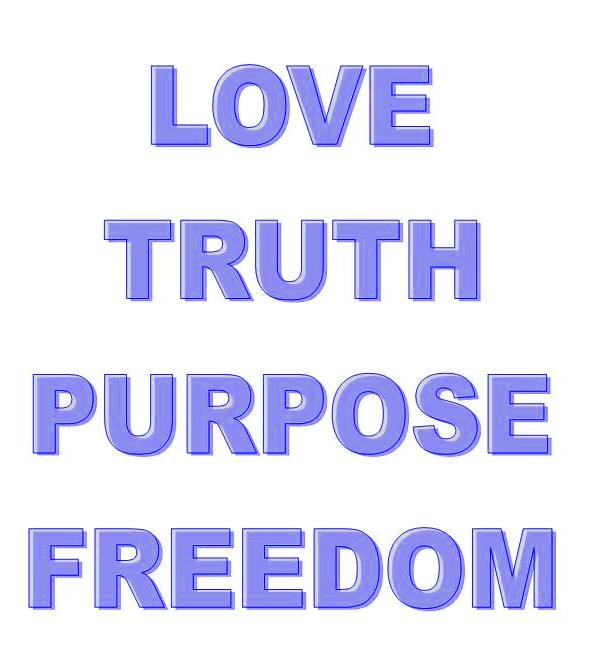
The world of the red death brings out the worst in some characters while bringing out the best in others. Most of all, the prism of death and survival reflects what each values most. Kate values love. Dee values purpose. Greg values truth. Jeremy values freedom. Pippi, who values nothing, learns to value herself.

Though this book has been classified by some readers as a thriller — and there are plenty of thrills and lots of danger — A Spark of Heavenly Fire is fundamentally a Christmas book. The story begins on December 2, builds to a climax on Christmas, and ends with renewal in the Spring. There are no Santas, no elves, no shopping malls or presents, nothing that resembles a Christmas card holiday, but the story — especially Kate’s story — embodies the essence of Christmas: generosity of spirit.

(Why does A Spark of Heavenly Fire begin on December 2 instead of December 1? Glad you asked that. All through the writing of the book, I kept thinking: if only people could get through the first fifty pages, I know they will like this book. So finally came my duh moment. Get rid of the first fifty pages!! With all the deletions and rewriting, I couldn’t make the story start on December 1 as I’d originally intended, but that’s okay since it didn’t end on December 25 as I had hoped. The story overgrew it’s bounds, but the symbolism still held since it ends around Easter.)

ASHFiTunes: https://itunes.apple.com/us/book/a-spark-of-heavenly-fire/id407886976?mt=11

Second Wind Publishing: http://www.secondwindpublishing.com/product_info.php?manufacturers_id=17&products_id=47&osCsid=de3fad213c6baa1c6fa9982f221c8c74

Amazon: http://www.amazon.com/Spark-Heavenly-Fire-Pat-Bertram/dp/1935171232/ref=ntt_at_ep_dpt_4

Barnes and Noble:http://www.barnesandnoble.com/w/spark-of-heavenly-fire-pat-bertram/1100632312?ean=2940015574395

Smashwords: http://www.smashwords.com/books/view/1842 (You can download the book in any ebook format, including a format for palm held reading devices!! Even better, you can download 30% absolutely free to see if you like the story.)

***

Pat Bertram is the author of the suspense novels Light Bringer, More Deaths Than One, A Spark of Heavenly Fire, and Daughter Am I. Bertram is also the author of Grief: The Great Yearning, “an exquisite book, wrenching to read, and at the same time full of profound truths.” Connect with Pat on Google+

Love, Truth, Purpose, Freedom

Linda Bonney Olin interviewed me for her blog the other day, and the interview turned out to be special, at least for me, because it made me realize what my values are and how those values find a place in my books.

Linda asked me: Why did you choose to write A Spark of Heavenly Fire?

I responded: “A Spark of Heavenly Fire came about because of a Washington Irving quote: ‘There is in every true woman’s heart a spark of heavenly fire, which lies dormant in the broad daylight of prosperity; but which kindles up, and beams and blazes in the dark hour of adversity.’ When I read those words, I could see her, a drab woman, defeated by life, dragging herself through her days in the normal world, but in an abnormal world of strife and danger, she would come alive and inspire others. And so Kate Cummings, the hero of my novel A Spark of Heavenly Fire was born. But born into what world?

“I didn’t want to write a book about war, which is a common setting for such a character-driven story, so I created the red death, an unstoppable, bio-engineered disease that ravages Colorado. Martial law is declared, rationing is put into effect, and the entire state is quarantined. The world of the red death brings out the best in Kate and some of the characters she comes in contact with while bringing out the worst in others. Most of all, the prism of death and survival reflects what each of the major characters values most. Kate values love. Dee values purpose. Greg values truth. Jeremy values freedom. Pippi, who values nothing, learns to value herself.”

Next Linda asked if my fiction reflected my personal values, and I realized that of course my fiction (and non-fiction) reflects my values. Like Kate, I value love. Like Dee, I value purpose. Like Greg, I value truth. Like Jeremy, I value freedom. Like Pippi, I am learning to value myself. (You can read the entire interview here: Love, Truth, Purpose, Freedom: Pat Bertram.)

More than those qualities, though, I value kindness, and an innate kindness permeates all of my books despite the horrors the characters have to contend with. Though my heroes all have a love interest that helps form the story, none of my books can be classified as romances. The romance angle is not the main focus, and the romance is never conflicted. My couples in love treat each other kindly, showing a united front against the horrors of their world. For the most part, that’s the way I lived, so my characters can do no less.

***

If you would like to interview me, please let me know. I don’t usually open up this way, preferring to interview others, but turnabout is fair play. You can supply the questions, or I can, whichever you wish.

If you would like me to interview you instead, you can find the questions and instructions here: Author Questionnaire.

***

Pat Bertram is the author of the conspiracy novels Light Bringer, More Deaths Than One, A Spark of Heavenly Fire, and Daughter Am I. Bertram is also the author of Grief: The Great Yearning, “an exquisite book, wrenching to read, and at the same time full of profound truths.” Connect with Pat on Google+

The Kind of Fiction I Grew Up On

On Malcom Campbell’s blog post yesterday, BOOK BITS: ‘Black Beauty,’ Plagiarism, Donna Small, Larry McMurtry’s ‘Custer,’ Book stories for the election, he described “traditional fiction” as the kind of fiction we grew up on before novels started getting whittled down to novella-lengths and forced into marketing categories. Dare I say, literary fiction is what’s left after publishers and booksellers have sliced and diced readers and books into every possible pigeonhole, slot and category they can possibly imagine? We are, I think, so scared of making our own decisions about what we read these days, that we cannot pick up a book without knowing how it’s been tagged, labeled, categorized and genrefied.”

Ah! Now I have a term for the sort of fiction I write, and it’s the perfect term — traditional fiction. My novels are not genre fiction in any way, and those who try to fit the stories into such pigeonholes end up not liking them. There is not enough romance for the romance readers, not enough horror for the apocalyptic crowd, not enough villainry for the thriller lovers, not enough grue for the horror aficionados, not enough science or fantasy for the scifi folks.

Each of those elements has a place in my books, of course, since each aspect is part of the story’s big picture (in the same way those elements make up the big picture of our lives), but none overwhelms the basic intent of my stories, which is to tell a satisfying tale with archetypal characters and classic themes that can last beyond the fads of the day. In other words, a traditional novel.

In A Spark of Heavenly Fire, for example, there is plenty of horror, such as the gruesome end of those afflicted with the red death, but generally the horror is more subtle than visceral — empty streets instead of bodies piled everywhere, struggles to maintain a semblance of normality instead of rioting. The experiments done on humans during both the hot wars and the cold wars twentieth century are not experienced first hand by the characters, but the slow reveal of those old horrors affect them deeply nonetheless.

A Spark of Heavenly Fire explores the theme of love in all its guises, not just romance, but friendship, caring, trust. There is love mixed in the villainry, too, because someone had to have lovingly created the organism that caused the red death. Unlike genre stories, there is no hero trying to stop the villain before he can release his “baby.” The deed had been committed before the story even began. We don’t see the story from the villain’s eyes as in a thriller, and it’s only at the end that we realize with what love and glee the villain had set his creation free.

More than horror or history, romance or mystery, A Spark of Heavenly Fire is the story of ordinary women who found only failure in the ordinary world where everyone else seemed to find success, but when the world turned upside down, they found their place and their worth, and they came alive. As Washington Irving wrote, “There is in every true woman’s heart, a spark of heavenly fire, which lies dormant in the broad daylight of prosperity, but which kindles up and beams and blazes in the dark hour of adversity.

This is the kind of fiction I grew up on as a reader, the sort of traditional story that digs deep so that what affects the characters also affects the readers, the sort of ungenrefied story I have always loved. And it’s the kind of fiction I grew up on as a writer. It was halfway through writing A Spark of Heavenly Fire that everything clicked and I became a writer.

***

Pat Bertram is the author of the conspiracy novels Light Bringer, More Deaths Than One, A Spark of Heavenly Fire, and Daughter Am I. Bertram is also the author of Grief: The Great Yearning, “an exquisite book, wrenching to read, and at the same time full of profound truths.” Connect with Pat on Google+